
अंधेश्वर महादेव मंदिर
अमलसाड, तालुका गानदेवी, जिल्हा नवसारी
Andheshwar Mahadev Temple
Amalsad, Tal. Gandevi, Dist. Navsari
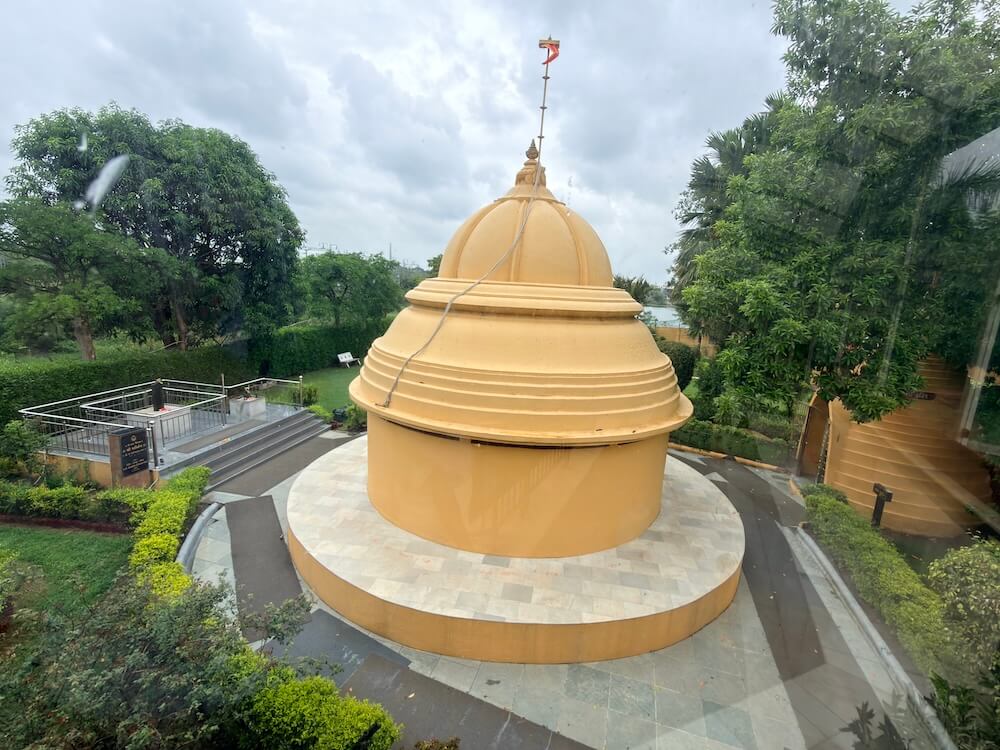
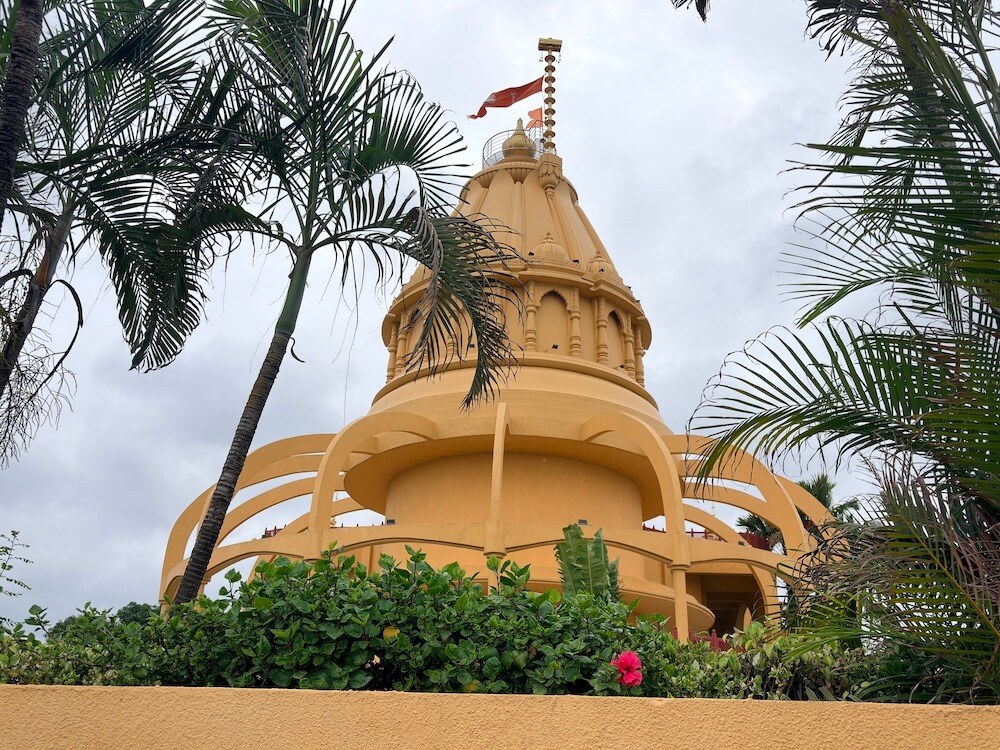
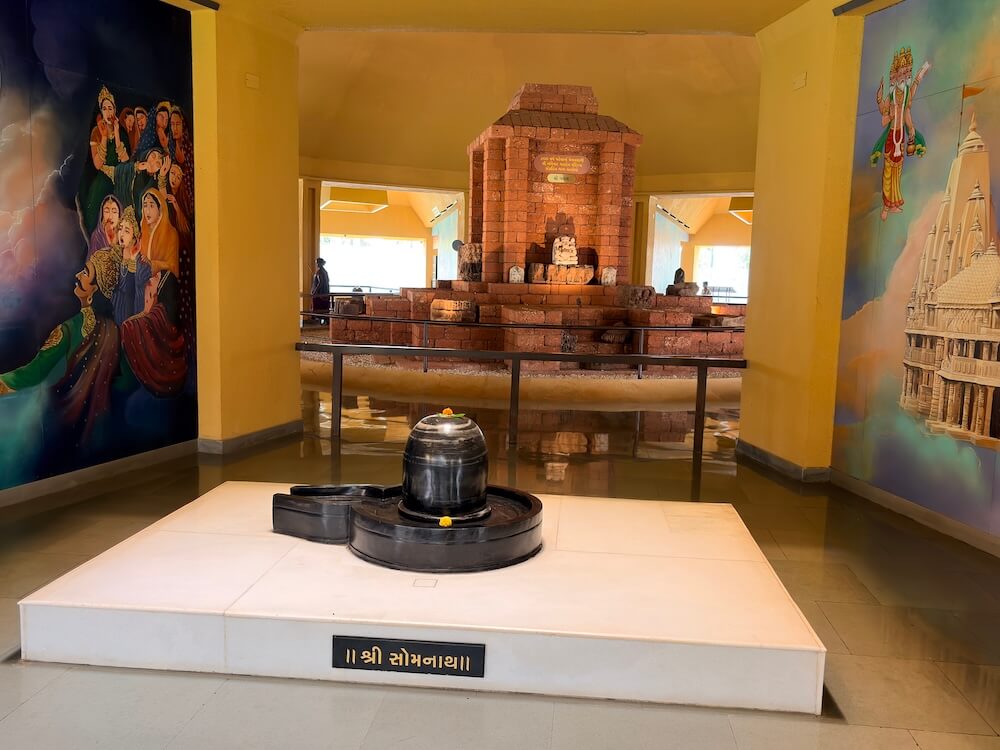
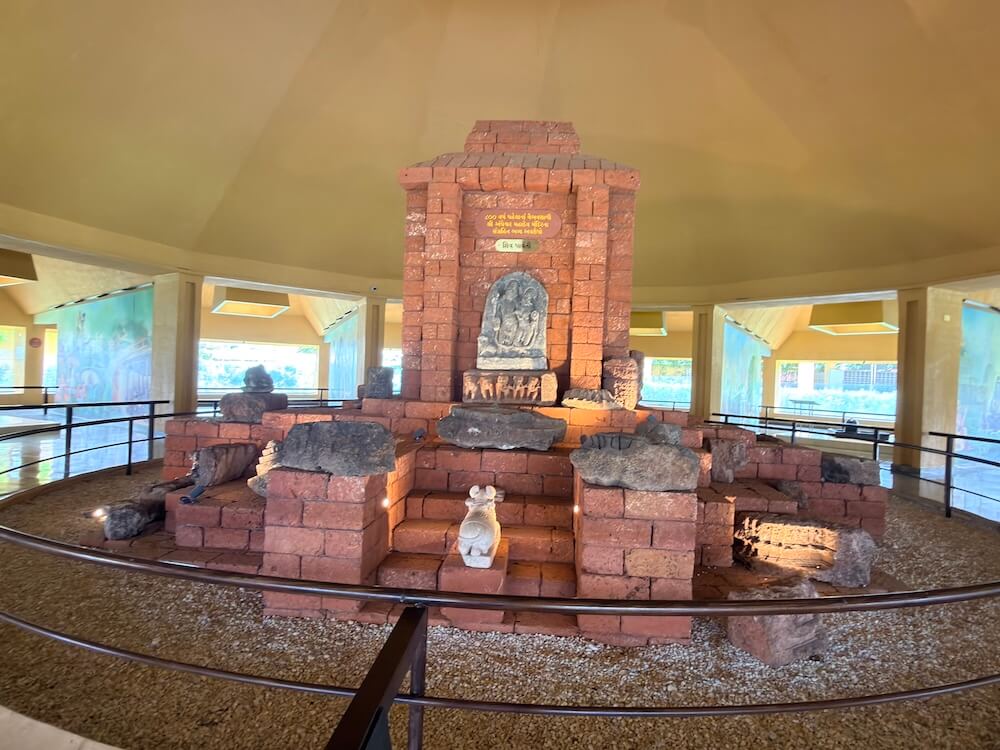
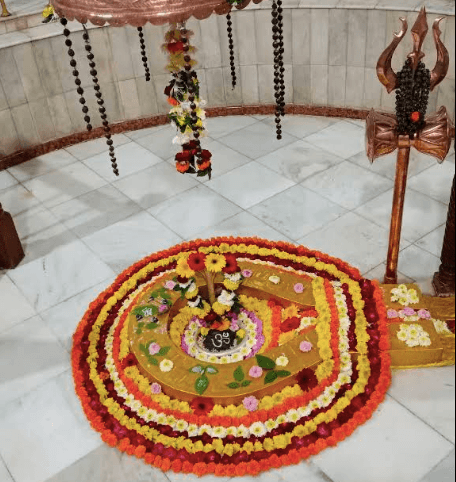 The village of Amalsad in Navsari District, renowned for its rich historical heritage, is home to the magnificent Andheshwar Mahadev Temple. According to local tradition, the temple dates back to the thirteenth century and its history is associated with the Chaulukya (Solanki) rulers of Anhilwad Patan. Several ancient sculptures and architectural fragments discovered in the surrounding area have been carefully preserved within the temple complex. Devotees believe that the Shivlinga enshrined here is Swayambhu (self-manifested) and spiritually awakened. It is also said that the temple was restored during the period of Peshwa rule. Its antiquity, the legends associated with it and the replicas of the twelve Jyotirlingas within the complex have made it one of the most important centres of devotion in the region.
Temples dedicated to Lord Shiva under the name ‘Andheshwar’ are rare in India. The origin of this name is linked with the demon Andhaka. His story is narrated in texts such as the ‘Shiva Purana’ and the ‘Linga Purana’. 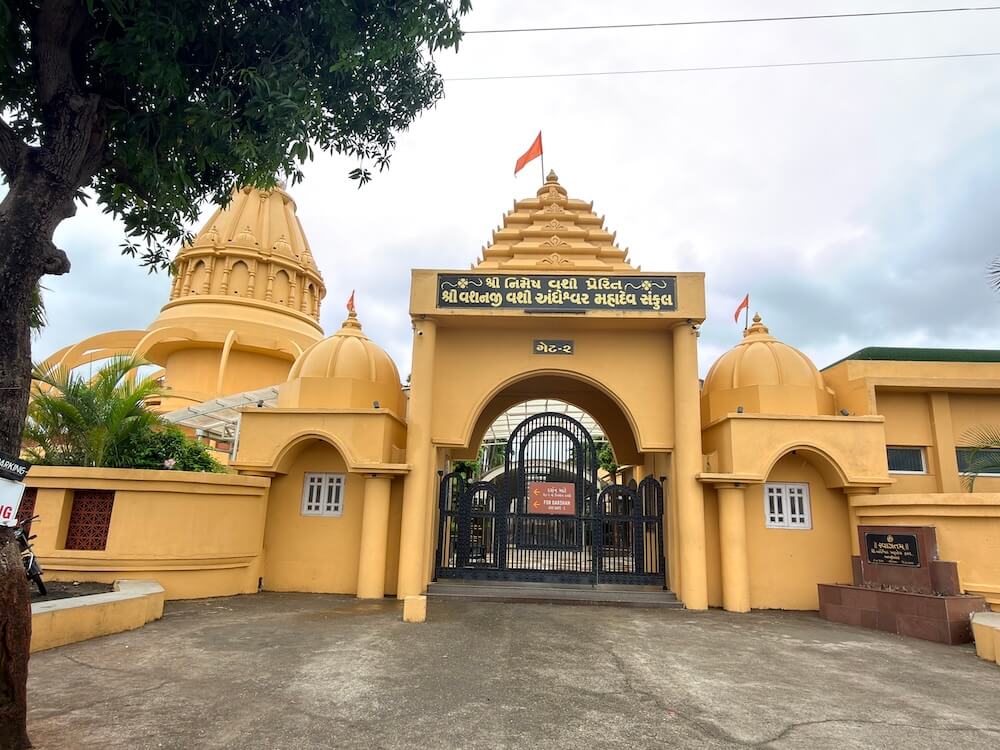 According to the Shiva Purana Andhaka was regarded as a son of Lord Shiva. The legend says that while Shiva was engaged in battle against the demon Jalandhara, a drop of sweat fell from his forehead onto the earth. From that drop Andhaka was born. Because of his dark complexion, he came to be known as Andhaka. He was raised by Hiranyaksha, the king of the demons.
Another version of the legend states that Andhaka was the son of King Hiranyaksha, who was slain by Lord Vishnu in his Varaha incarnation. After Hiranyaksha’s death Andhaka became the ruler of the demons. Through severe penance, he obtained a boon from Lord Brahma that rendered him invincible. According to the boon, he could be killed only if he developed a desire for his own mother. Empowered by this blessing Andhaka became arrogant and challenged the gods in his quest to conquer heaven.  During this time, he beheld Goddess Parvati and desired to marry her. Intending to abduct her, he marched to Mount Kailash and challenged Lord Shiva. A fierce battle followed. Andhaka possessed extraordinary strength and, by virtue of Brahma’s boon, every drop of his blood that touched the ground produced thousands of new demons.
Lord Shiva then invoked Goddess Kali and the Saptamatrikas, instructing them to drink Andhaka’s blood before it reached the earth, thereby preventing the birth of more demons. According to the fourth section of the Shri Rudra Samhita in the Shiva Purana, Shiva struck Andhaka in the heart with his trident and lifted him upon it. His body was then scorched by the blazing rays of the sun, drenched by torrential rain and torn apart by masses of ice. Some traditions state that Shiva ultimately slew the demon. 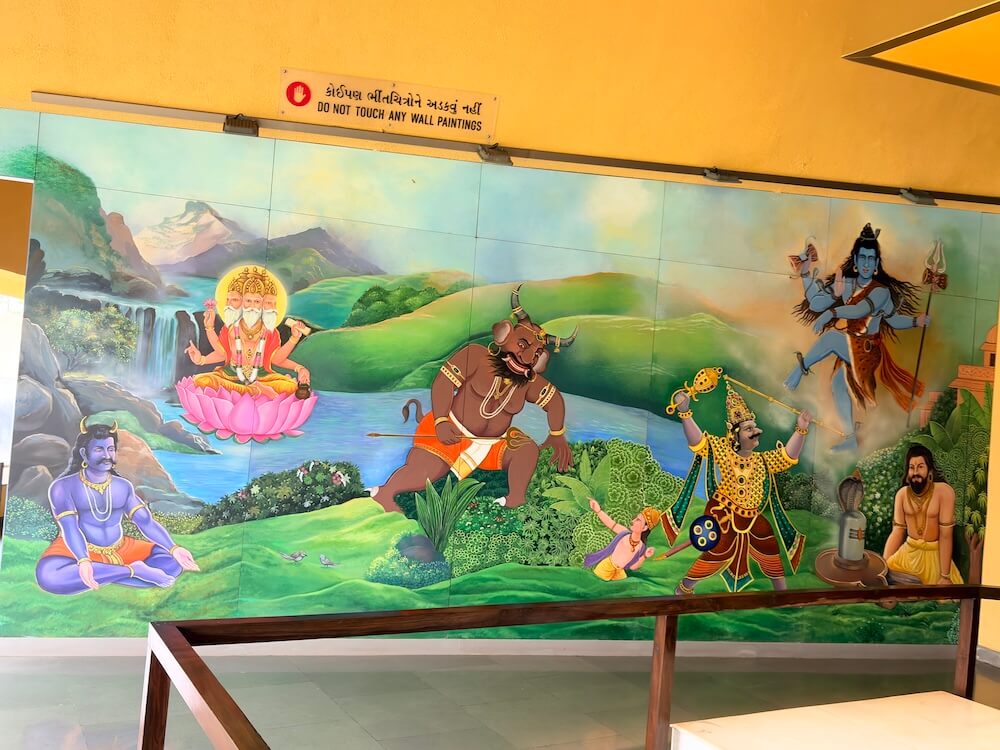 Others say that Andhaka surrendered to him and was purified by Shiva’s touch, after which he became one of Shiva’s attendants (Ganas). As the Lord of Andhaka, Shiva came to be known as ‘Andheshwar’.
The history of the Andheshwar Mahadev Temple is closely associated with the Solanki (Chaulukya) dynasty. Mularaja, the founder of the Solanki dynasty, was the nephew and commander of Samantsinh, the Chavda ruler of Anhilwad. Samantsinh had raised him from childhood. According to the ‘Kumarapala Charita’ of the eminent Jain scholar Hemachandra and ‘History of the State of Gujarat’ by Lokhitwadi (Gopal Hari Deshmukh), Mularaja killed his maternal uncle Samantsinh and established the Solanki dynasty at Anhilwad in AD 942. 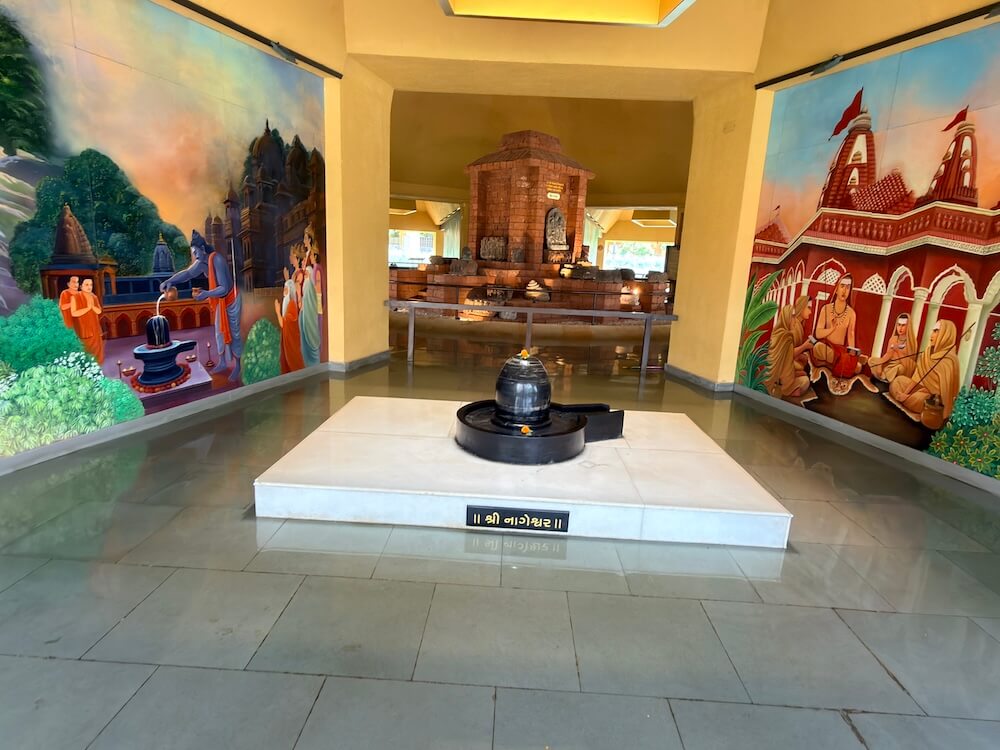 The Solanki rulers were devoted worshippers of Lord Shiva. Mularaja built the grand Rudramala Temple and, acting upon a divine vision received from Lord Shiva, launched a campaign against Graharipu, the ruler of Vamanasthali in the Girnar region, who was notorious for plundering wealthy pilgrims travelling to Somnath.
In AD 1074, the Navsari region came under the rule of the Chaulukya king Karna. Siddharaj Jaysinh (reigned 1094–1143), one of the greatest rulers of the Solanki dynasty, was also a devout Shaivite and commissioned numerous Shiva temples during his reign. His successor Kumarapala (reigned 1143–1172), although later initiated into Jainism, continued to patronise the construction of Hindu temples. 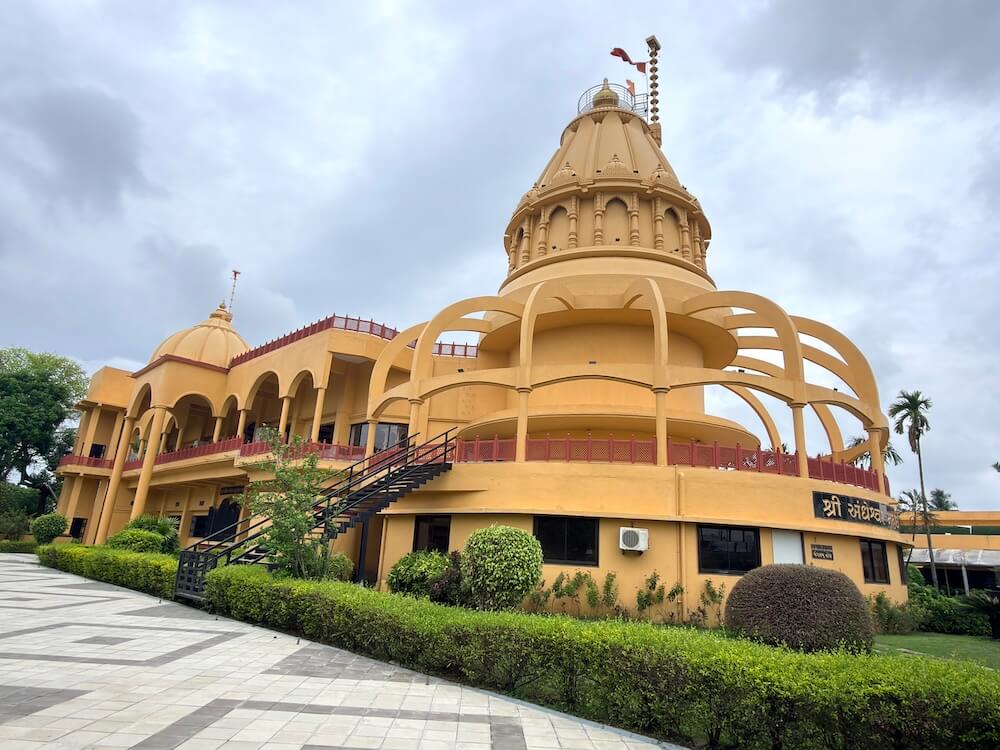 King Bhimadeva II ruled from AD 1178 to 1240 and scholars believe that the Andheshwar Mahadev Temple may have been built during his reign.
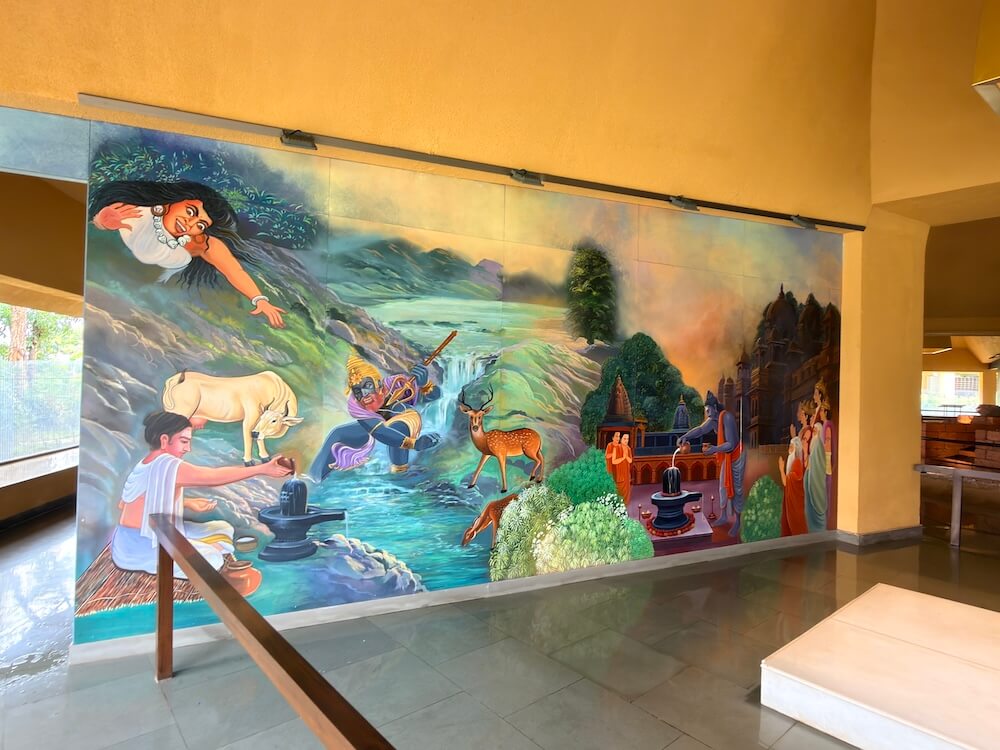
According to local tradition, about eight hundred years ago, the area around Amalsad was covered with dense forest. A blind cowherd from the Banjara community used to bring his cattle here for grazing. One day, he noticed that one of his cows regularly stood at a particular spot and allowed milk to flow onto the ground. From that day onwards, he began offering prayers there with deep devotion. Some time later, he miraculously regained his eyesight. When he searched the place, he discovered a self-manifested Shivlinga. Since the Linga restored sight to the blind cowherd, it came to be known as Andheshwar Mahadev.
A temple was subsequently built at the site. It is said that the Desais of Gandevi restored the temple around AD 1400 and that it was renovated again during the Peshwa period. Further restoration was undertaken in 1974. In 2011, another major renovation costing approximately ₹2 crore gave the temple its present magnificent appearance.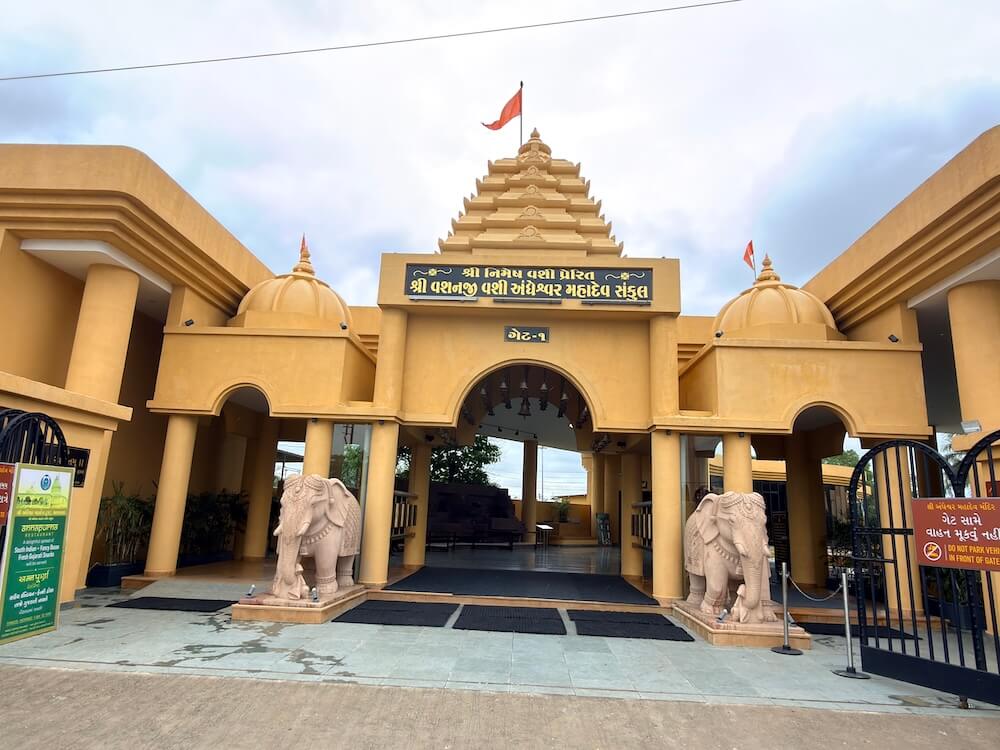
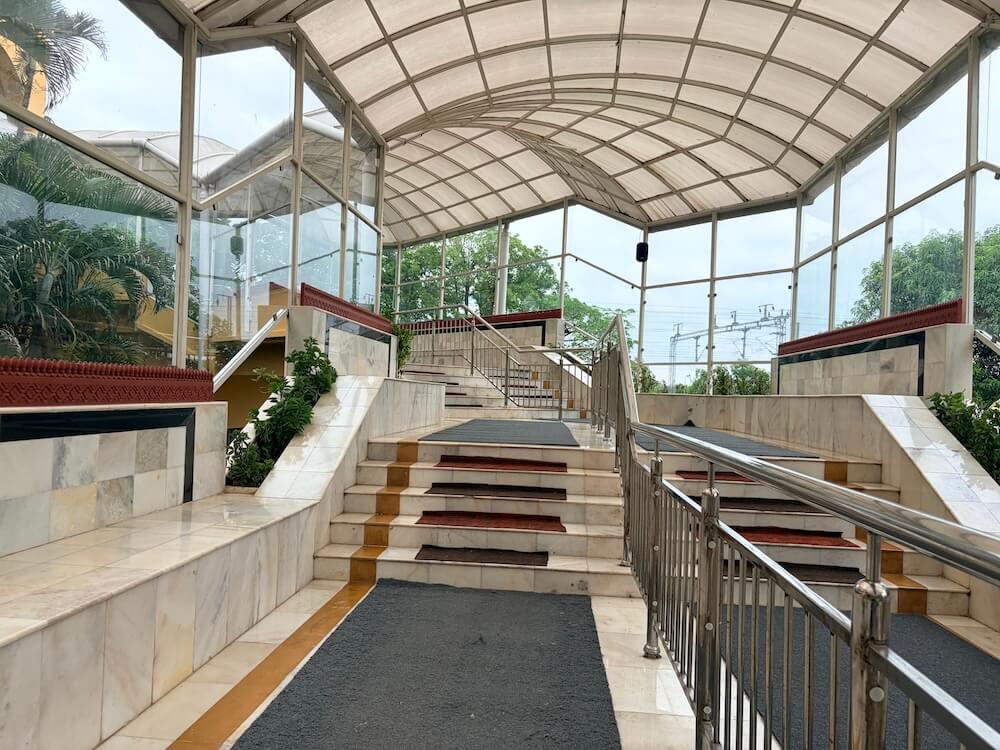
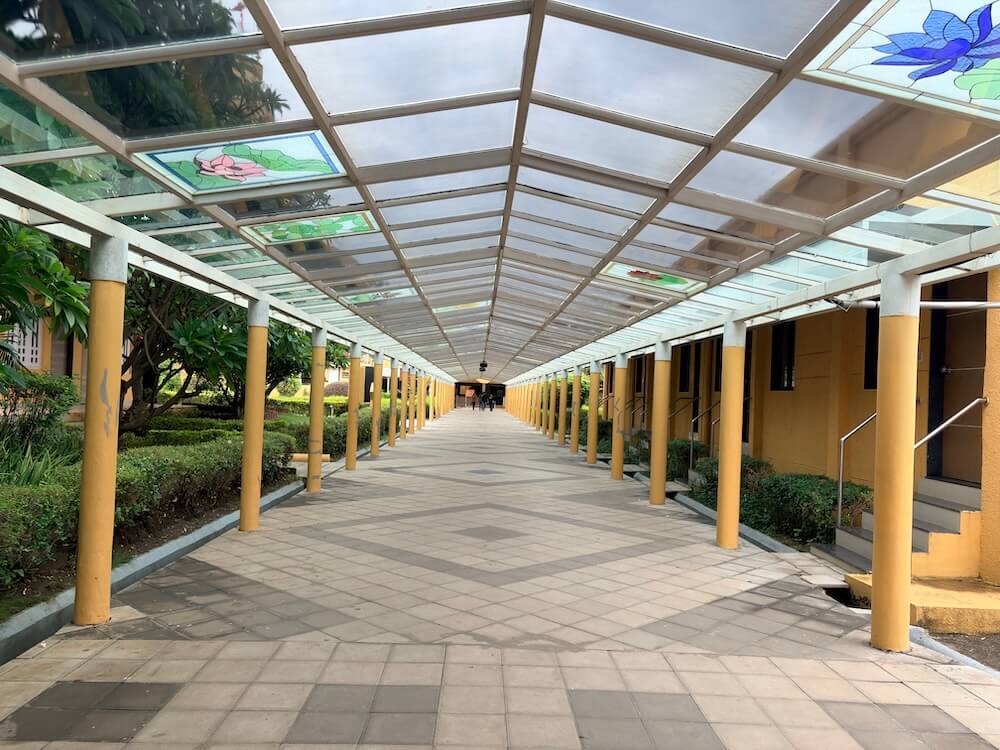
The temple entrance is lofty and imposing. Two large elephant sculptures stand beside the gateway, which is flanked by domed structures on both sides. Inside the entrance, several important remains from the original ancient temple have been carefully preserved. These include sculptures of Nandi, a tortoise, Goddess Ganga, Goddess Durga and a graceful tribhanga sculpture of Uma-Mahesh. From the gateway to the main shrine, the pathway is paved with marble and covered by a protective roof. Ornamental and flowering plants line both sides of the walkway.
The entrance to the main temple is supported by square marble pillars. 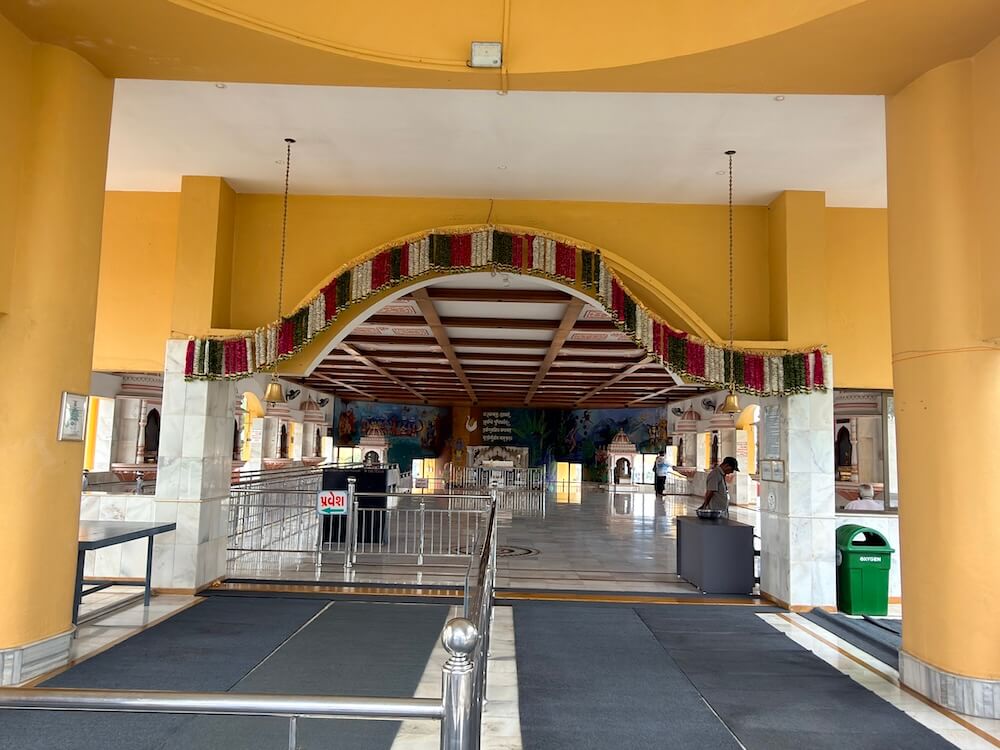 The spacious assembly hall contains niches housing the idols of various deities. On the left are Jalaram Bapa, Rang Avadhoot Maharaj, Lord Dattatreya, Sai Baba and Radha-Krishna. On the right are Lakshmi-Narayan, the Meru Shri Yantra, Goddess Saraswati, Amba Mata, Gayatri Mata and Sita-Ram. At the centre of the hall, upon a raised platform, stand the idol of Nandi and, before it, a stone tortoise.
Beyond the assembly hall lies the sanctum. Small shrines dedicated to Lord Ganesha and Lord Hanuman stand respectively to the left and right of its entrance. Beautiful murals depicting Lord Shiva with his entire divine family, a forest landscape and the sacred cow adorn the side walls of the sanctum. As the sanctum lies below the level of the hall, devotees descend a few steps before entering. At its centre, set into the floor, is the Shivlinga of Andheshwar Mahadev, 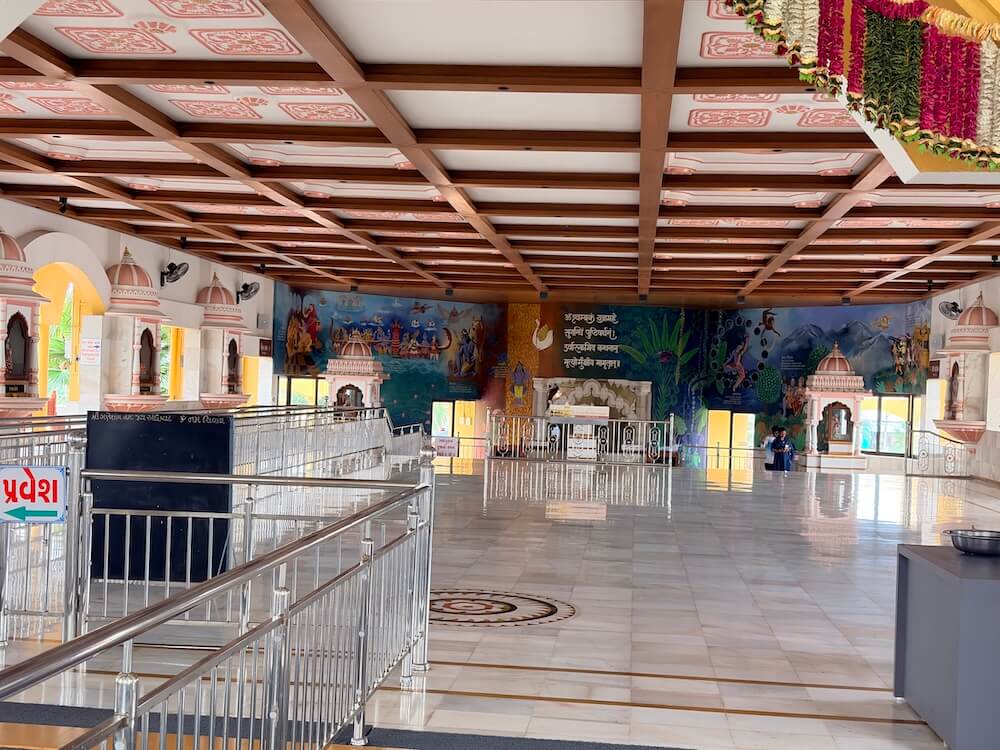 clad in brass. A serpent deity spreads its hood protectively above the Linga.
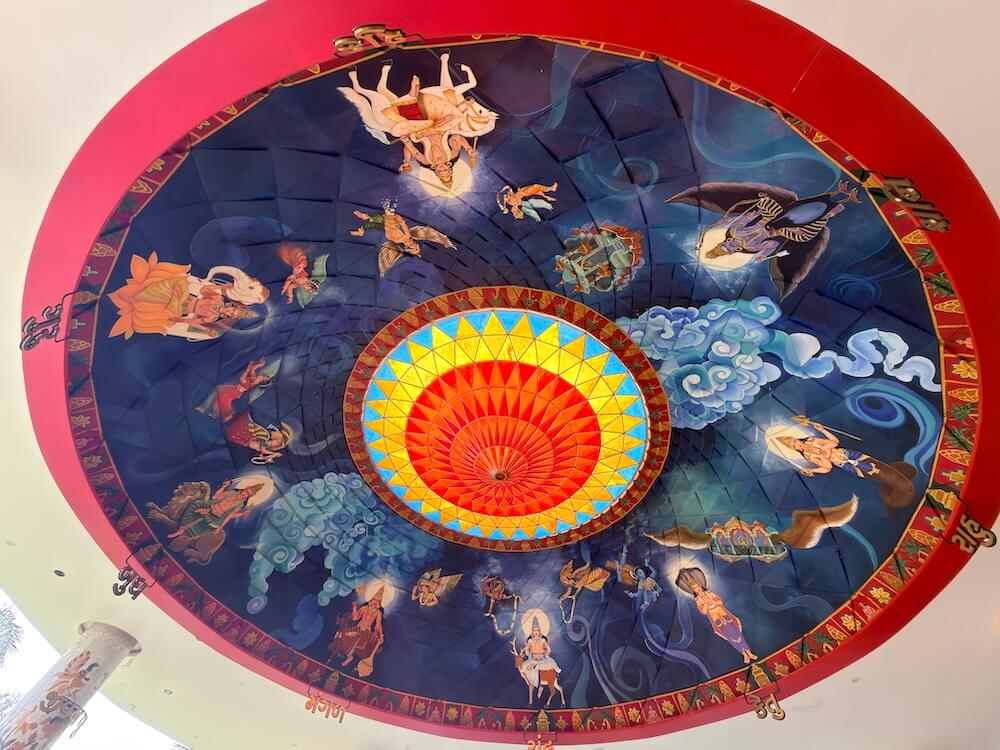
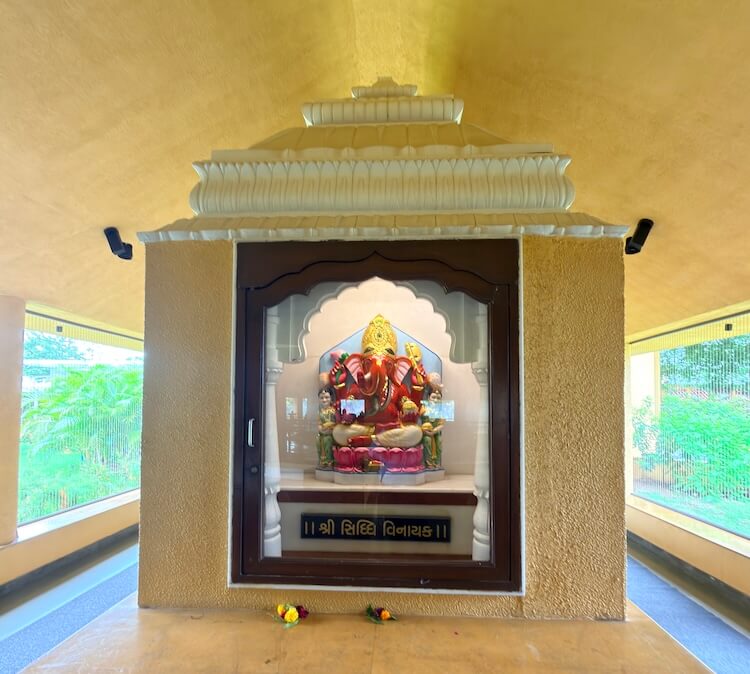
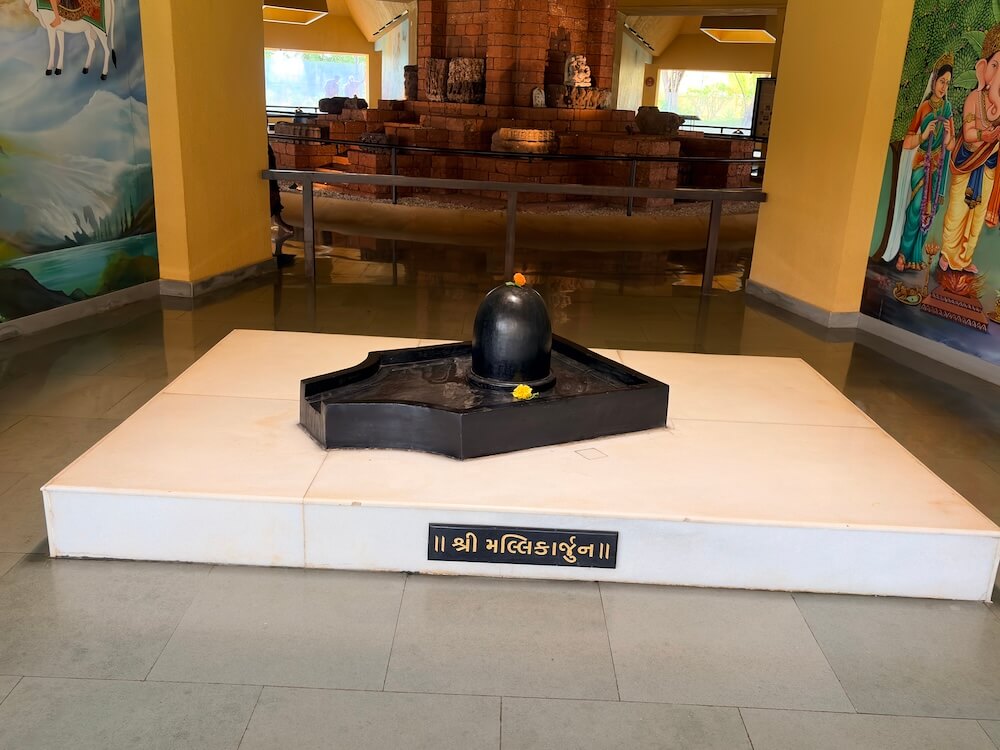
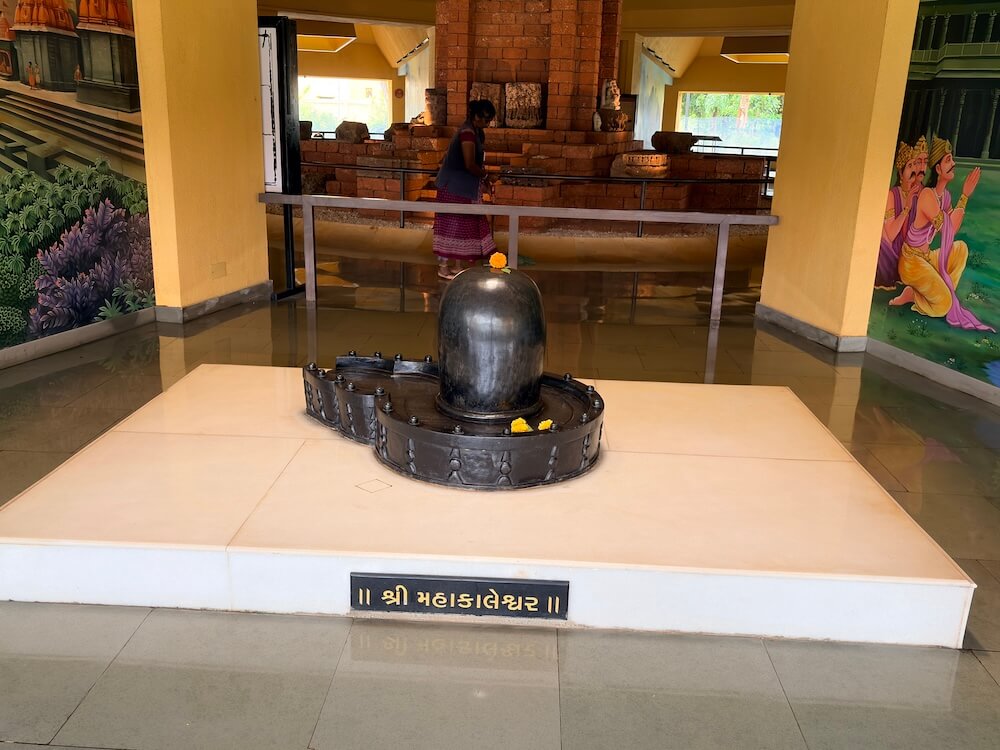
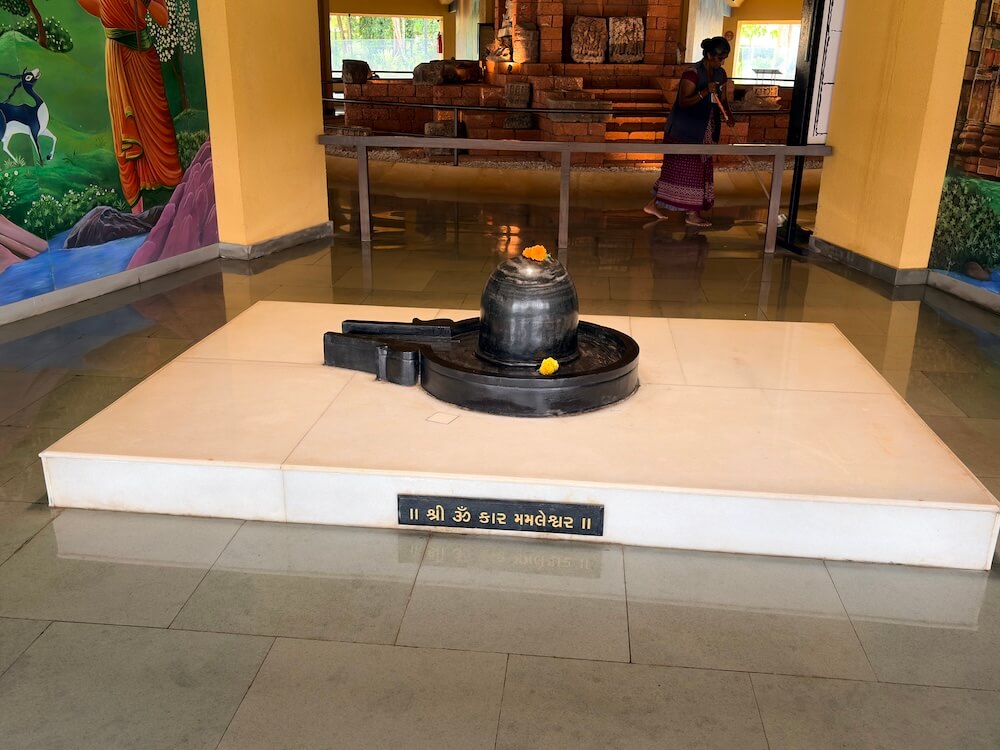
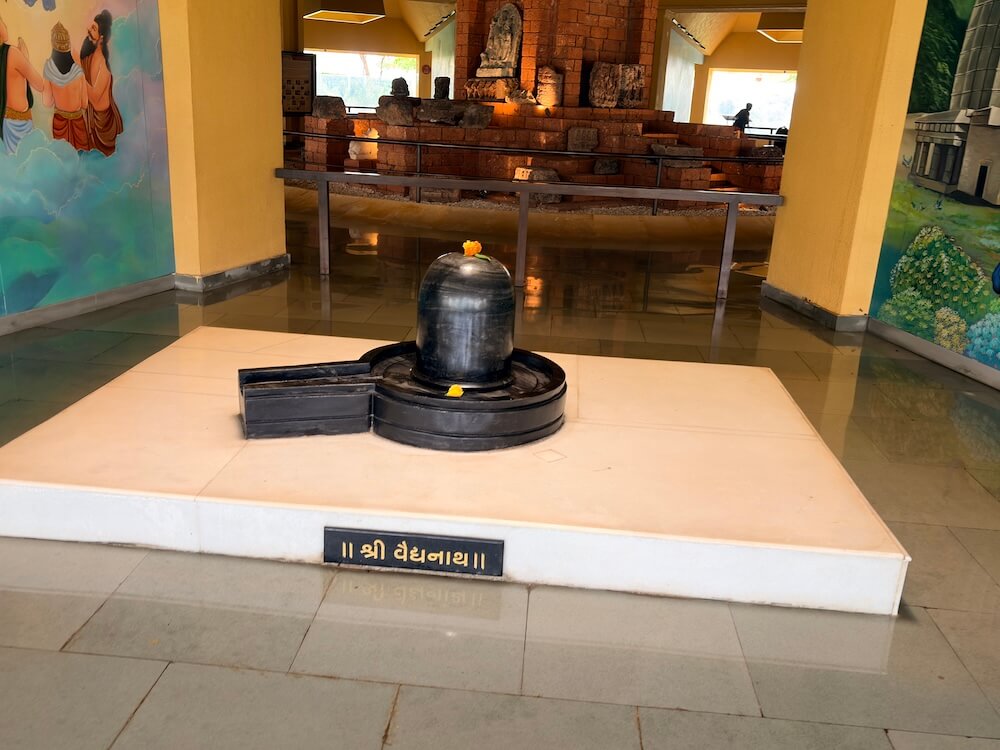
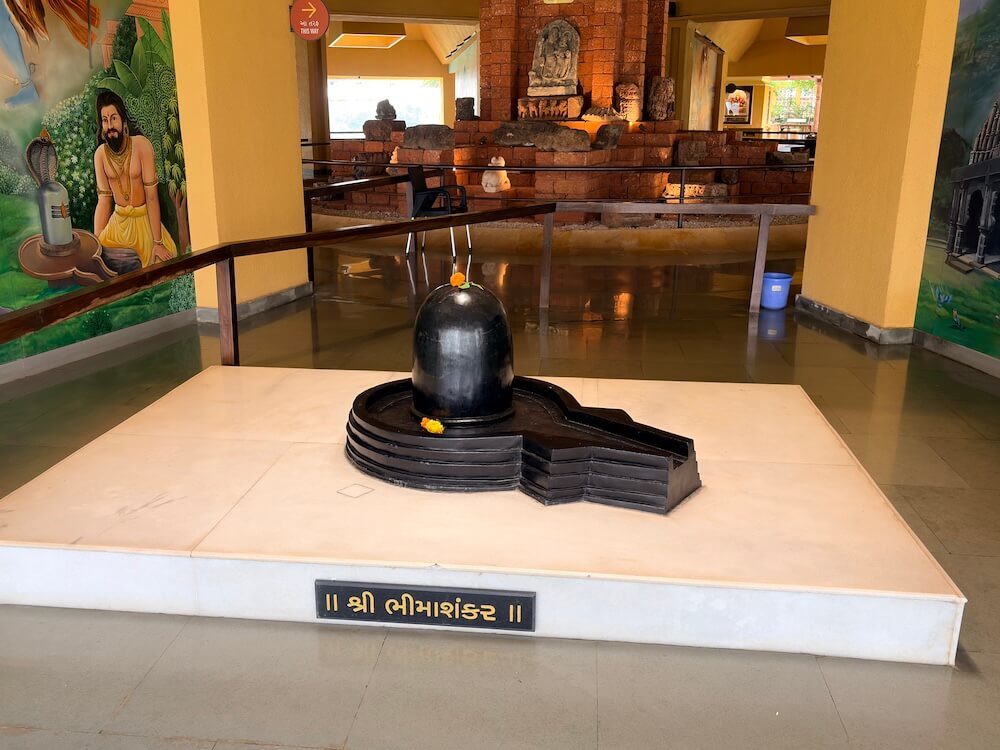
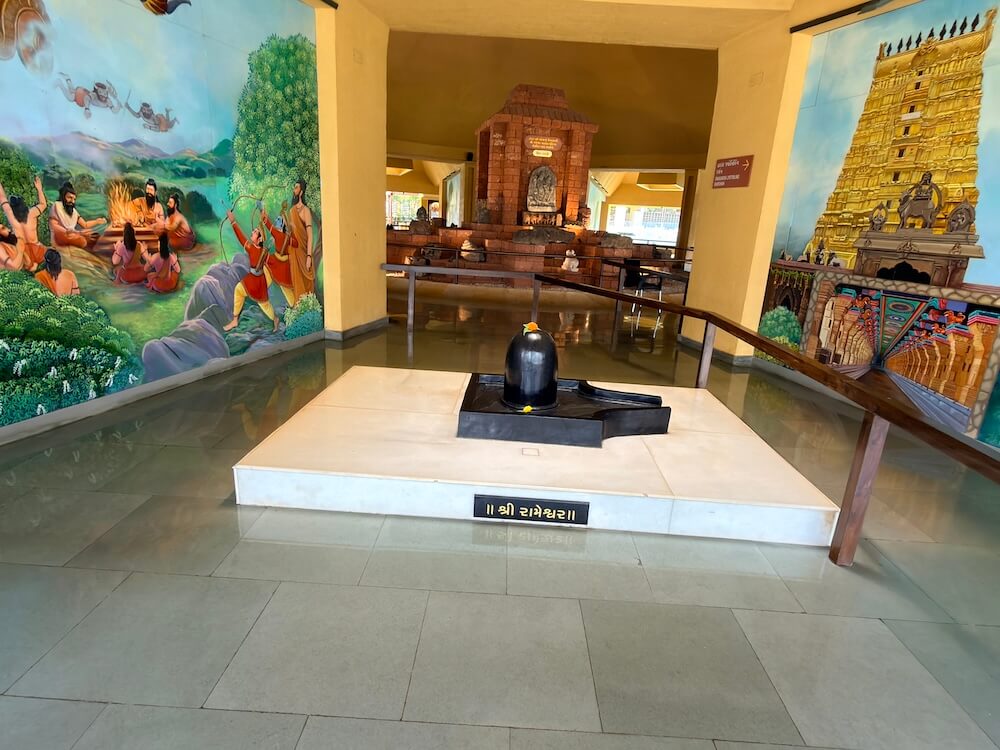
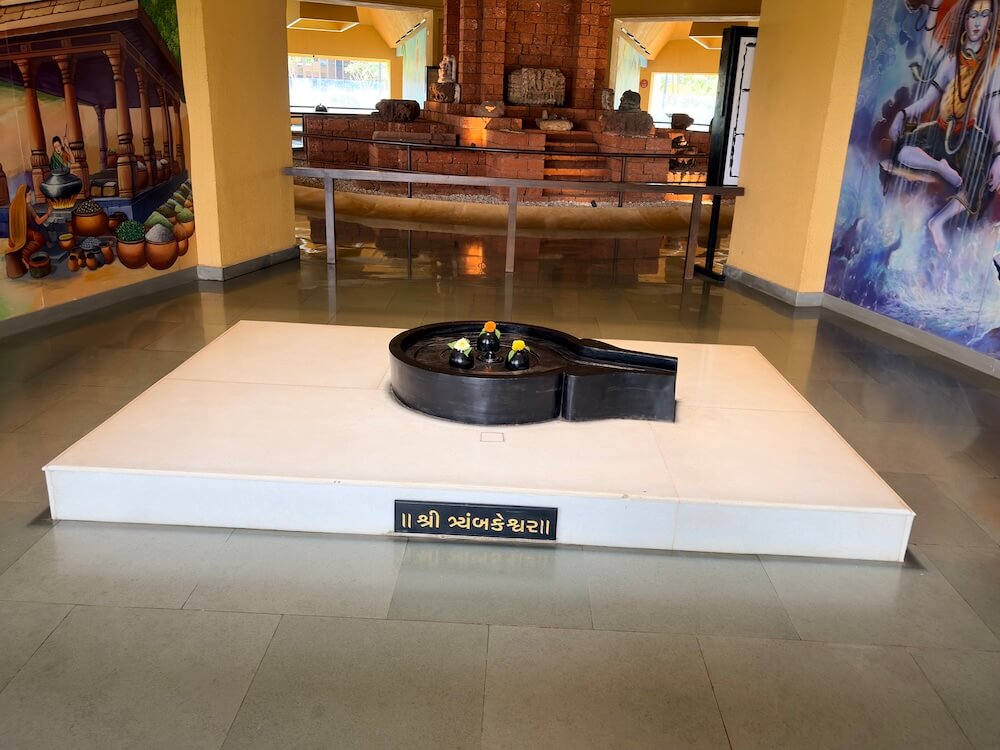
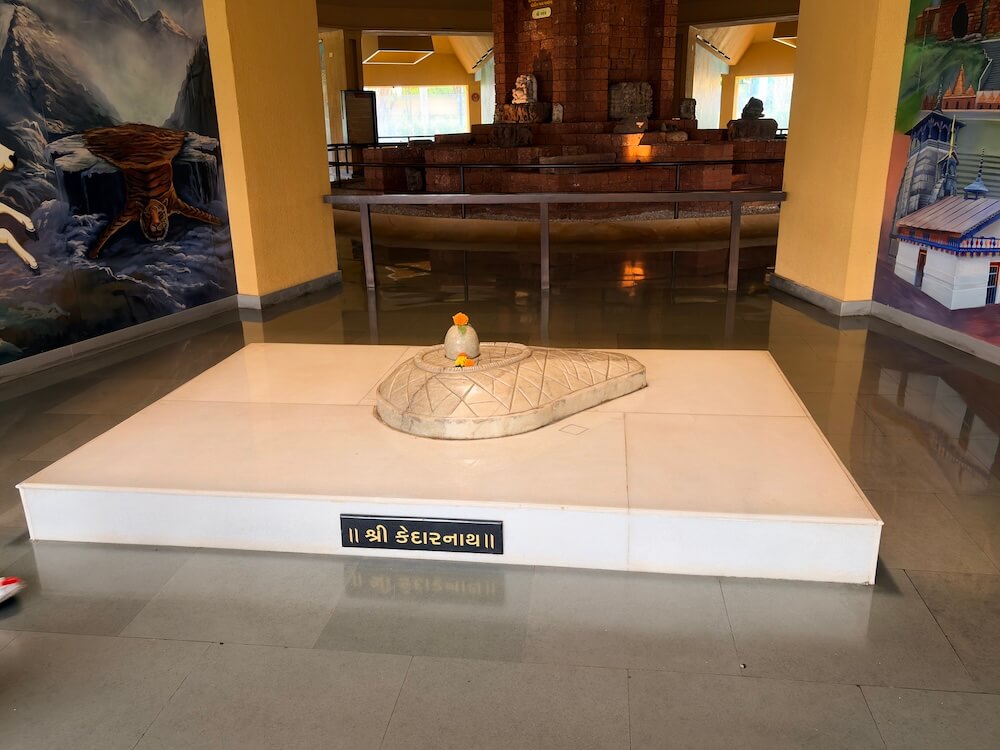
Several other shrines stand within the temple complex. These include temples dedicated to Lord Shani, Lord Hanuman and Sai Baba. The complex also contains a special ‘Dwadash Jyotirlinga’ section. Along the approach are the combined shrines of Nandi and Gomukh, together with idols of Siddhivinayak, the Shiva family, Shrinathji and Tirupati Balaji. Beyond these are separate pavilions representing all twelve Jyotirlingas of India. Each pavilion is accompanied by an information panel describing the history of the respective Jyotirlinga and includes a QR (quick-response) code for visitors seeking additional information.
The sanctum of Andheshwar Mahadev remains closed between 12.00 noon and 3.00 p.m. to allow the deity’s ceremonial rest and the offering of Rajbhog.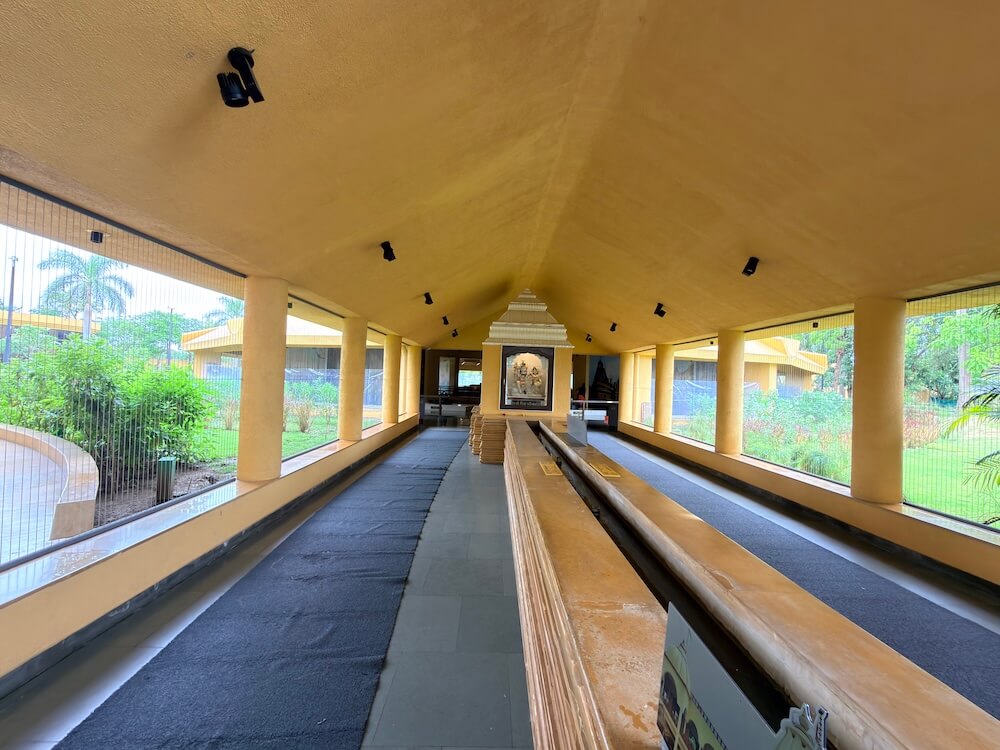 Devotees may therefore have darshan from 6.00 a.m. to 12.00 noon and from 3.00 p.m. to 9.00 p.m. The Mangala Aarti is performed daily at 6.00 a.m., while the evening Aarti takes place at about 7.00 p.m.
The holy month of Shravan is the temple’s most important annual celebration. Throughout the month, the entire complex is immersed in an atmosphere of devotion. Every Monday during Shravan, a large religious fair is held. Thousands of Shiva devotees (Kanwariyas) from different parts of South Gujarat walk barefoot, carrying sacred water from the Narmada or other holy rivers to perform Jalabhishek of Andheshwar Mahadev. On these Mondays, the Shivlinga is beautifully adorned with fruits, flowers and bael leaves. From the early hours of the morning, Laghu Rudra and Maha Rudra Abhishek rituals are performed.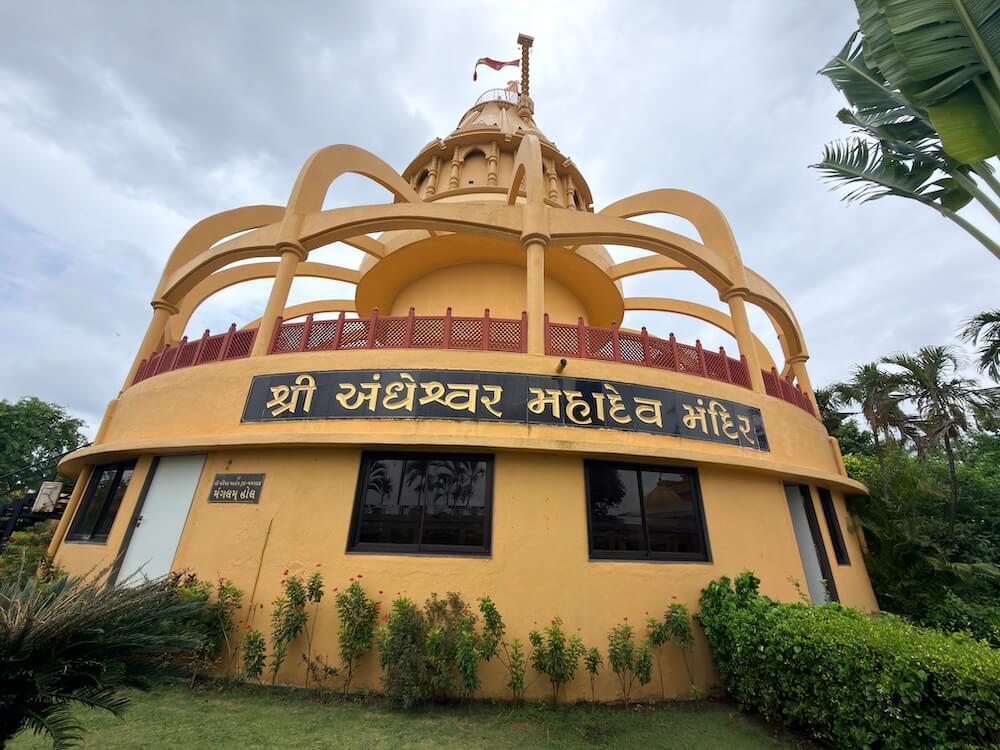
On Maha Shivaratra, long queues of devotees begin forming before dawn. The entire temple is decorated with flowers and illuminated with decorative lighting. During the four watches of the night, special worship of Lord Shiva and Maha Aarti are performed according to traditional scriptures. The temple administration arranges refreshments and Mahaprasad for the thousands of devotees who come for darshan.
On Kartik Shukla Purnima, celebrated as Dev Diwali, the temple hosts a special festival of lights. Thousands of earthen lamps illuminate the entire complex. On both Dev Diwali and the Gujarati New Year, a grand Annakut, comprising a wide variety of cooked dishes and food offerings, is ceremonially arranged before Lord Mahadev.
Useful Information :
- Located at 10 km from Gandevi and 20 km from Navsari city.
- State Transport (ST) bus services are available from Gandevi and Navsari.
- Private vehicles can reach the temple directly.
- Accommodation and breakfast facilities are available nearby.
- Contact: Temple Office. Telephone: +91 2634 272469.
अंधेश्वर महादेव मंदिर
अमलसाद, तालुका गणदेवी, जिला नवसारी
मंदिरे
Temples
मंदिर
મંદિરો
கோவில்கள்
దేవాలయాలు
ക്ഷേത്രങ്ങൾ
ದೇವಾಲಯಗಳು
মন্দিরসমূহ
ਮੰਦਿਰ
-
आशापुरी माता मंदिर विजलपूर मेन रोड, नवसारी, ता./जि. नवसारी
अधिक माहितीAshapuri Mata Temple Vijalpore Main Road, Navsari, Tal./Dist. Navsari
View Detailsआशापुरी माता मंदिर विजलपोर मेन रोड, नवसारी, ताल./जिला. नवसारी
विवरण देखेंAshapuri Mata Temple Vijalpore Main Road, Navsari, Tal./Dist. Navsari
વિગત જુઓAshapuri Mata Temple Vijalpore Main Road, Navsari, Tal./Dist. Navsari
விவரங்களைக் காண்கAshapuri Mata Temple Vijalpore Main Road, Navsari, Tal./Dist. Navsari
వివరాలను చూడండిAshapuri Mata Temple Vijalpore Main Road, Navsari, Tal./Dist. Navsari
വിശദാംശങ്ങൾ കാണുകAshapuri Mata Temple Vijalpore Main Road, Navsari, Tal./Dist. Navsari
ವಿವರಗಳನ್ನು ವೀಕ್ಷಿಸಿAshapuri Mata Temple Vijalpore Main Road, Navsari, Tal./Dist. Navsari
বিস্তারিত দেখুনAshapuri Mata Temple Vijalpore Main Road, Navsari, Tal./Dist. Navsari
ਵੇਰਵੇ ਦੇਖੋ -
चौसठ जोगणी माता मंदिर माळवाडा, ता. चिखली, जि. नवसारी
अधिक माहितीChausath Jogani Mata Temple Malwada, Tal. Chikhli, Dist. Navsari
View Detailsचौसठ जोगणी माता मंदिर मालवाड़ा, ताल. चिखली, जिला. नवसारी
विवरण देखेंChausath Jogani Mata Temple Malwada, Tal. Chikhli, Dist. Navsari
વિગત જુઓChausath Jogani Mata Temple Malwada, Tal. Chikhli, Dist. Navsari
விவரங்களைக் காண்கChausath Jogani Mata Temple Malwada, Tal. Chikhli, Dist. Navsari
వివరాలను చూడండిChausath Jogani Mata Temple Malwada, Tal. Chikhli, Dist. Navsari
വിശദാംശങ്ങൾ കാണുകChausath Jogani Mata Temple Malwada, Tal. Chikhli, Dist. Navsari
ವಿವರಗಳನ್ನು ವೀಕ್ಷಿಸಿChausath Jogani Mata Temple Malwada, Tal. Chikhli, Dist. Navsari
বিস্তারিত দেখুনChausath Jogani Mata Temple Malwada, Tal. Chikhli, Dist. Navsari
ਵੇਰਵੇ ਦੇਖੋ -
गुप्तेश्वर महादेव मंदिर नंदाई-भैरवी, ता. खेरगाम, जि. नवसारी
अधिक माहितीGupteshwar Mahadev Temple Nandhai–Bhairavi, Tal. Khergam, Dist. Navsari
View Detailsगुप्तेश्वर महादेव मंदिर नन्दई-भैरवी, ताल. खेरगाम, जिला. नवसारी
विवरण देखेंGupteshwar Mahadev Temple Nandhai–Bhairavi, Tal. Khergam, Dist. Navsari
વિગત જુઓGupteshwar Mahadev Temple Nandhai–Bhairavi, Tal. Khergam, Dist. Navsari
விவரங்களைக் காண்கGupteshwar Mahadev Temple Nandhai–Bhairavi, Tal. Khergam, Dist. Navsari
వివరాలను చూడండిGupteshwar Mahadev Temple Nandhai–Bhairavi, Tal. Khergam, Dist. Navsari
വിശദാംശങ്ങൾ കാണുകGupteshwar Mahadev Temple Nandhai–Bhairavi, Tal. Khergam, Dist. Navsari
ವಿವರಗಳನ್ನು ವೀಕ್ಷಿಸಿGupteshwar Mahadev Temple Nandhai–Bhairavi, Tal. Khergam, Dist. Navsari
বিস্তারিত দেখুনGupteshwar Mahadev Temple Nandhai–Bhairavi, Tal. Khergam, Dist. Navsari
ਵੇਰਵੇ ਦੇਖੋ