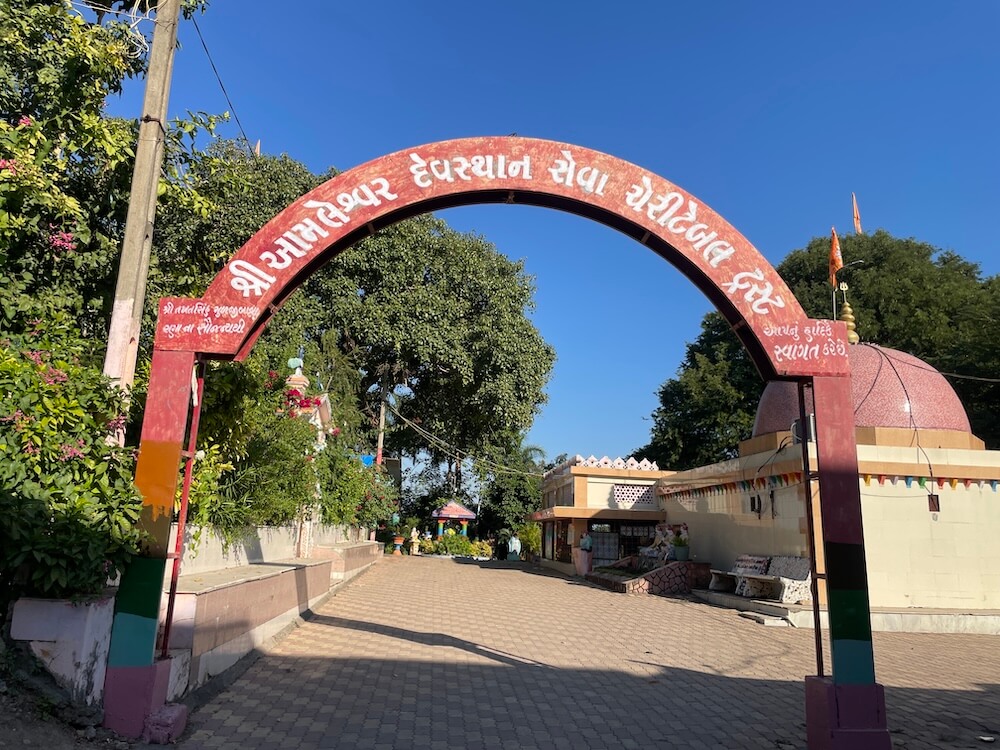
 In the village of Amaleshwar, in Bharuch taluka, stands the sacred abode of Mahadev, manifested in the form of a swayambhu Shivalinga (self-manifested sacred symbol of Shiva) beneath a tamarind tree. In Gujarati, the tamarind fruit is called ‘aamli’ and thus the Lord who revealed Himself here came to be revered as Amaleshwar Mahadev. In time, the village too came to be known by the same sanctified name. This tirtha (holy pilgrimage site) finds mention in the ‘Narmada Puran’. It is nestled in a delightful setting on the banks of an expansive lake. As Lord Shri Rama was a profound devotee of Shiva, various tableaux depicting episodes from the Ramayana have been erected near this temple. On the occasion of Mahashivaratri, a sacred tradition is observed here of fashioning a Shivalinga out of pure clarified butter (ghee).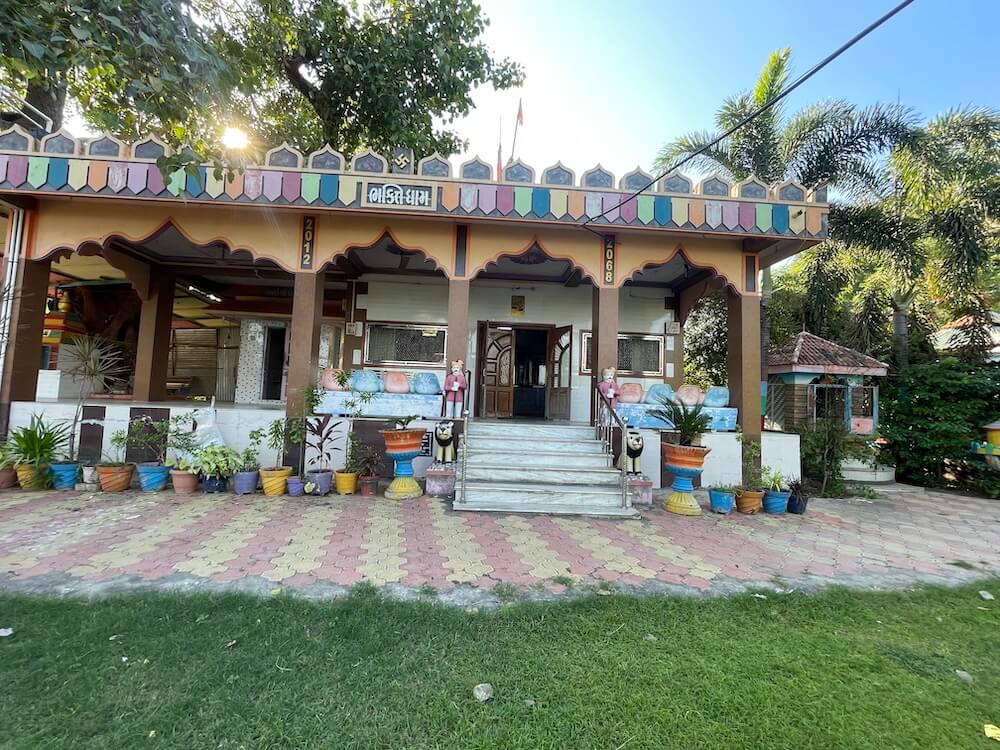
The glory of this tirtha is extolled in the 213th chapter of the ‘Narmada Puran’, in a legend associated with the childhood form of Shankar. According to the mythological story, Brahmadev once undertook intense penance for the boon of progeny. Pleased with his austerity, Shankar appeared before him in the form of a child, weeping inconsolably. When Brahmadev gently asked the reason for his tears, the child replied, “I weep because I have no name.” Brahmadev then bestowed upon him the name Rudra. Yet the child did not cease crying. Brahmadev gave him another name, but still he continued to weep. In this manner, Brahma endowed Shankara with eight names : Rudra, Sharva, Bhava, Ugra, Bhima, Pashupati, Ishan and Mahadeva. It was only upon hearing this final name that the child grew serene. The Narmada Purana narrates that this very child-form of Shankar once manifested at Amaleshwar.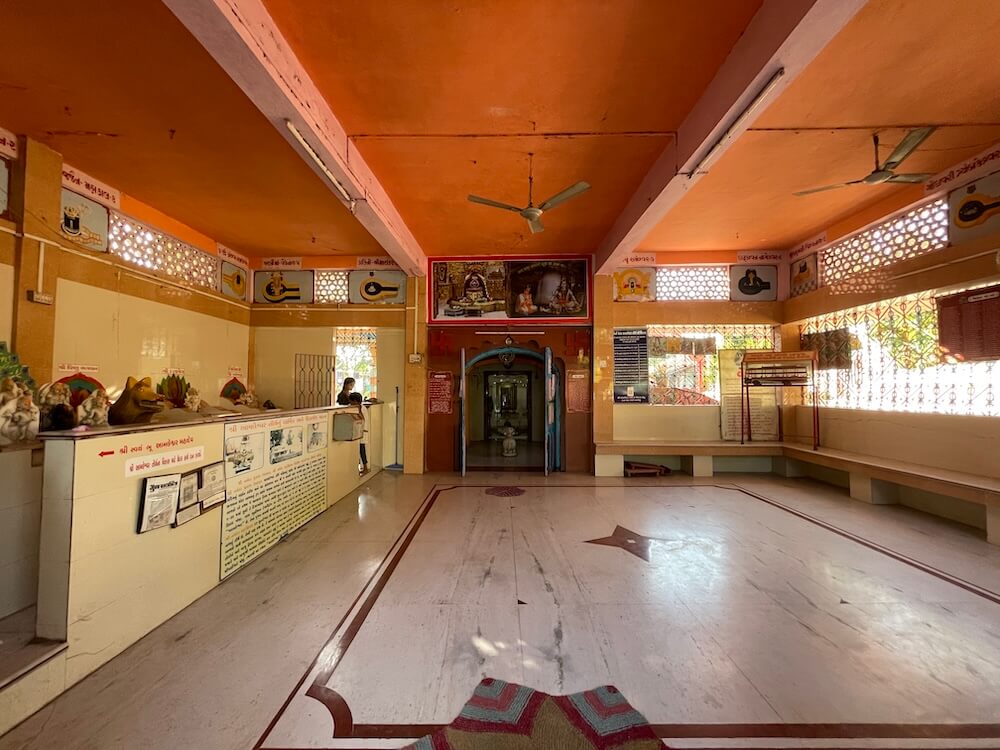
The legend tells that Shankar, assuming the guise of a small boy, was playing with the village children. While at play, he climbed the tamarind tree here and began plucking tamarinds, tossing them playfully in all directions. The children scampered about gathering them. When they had collected all the tamarinds and gathered beneath the tree, they looked around but could no longer see the mysterious child. In His stead, they discovered a swayambhu shivlinga at the foot of the tree. As this divine manifestation appeared beneath a tamarind tree, it came to be revered as Amaleshwar Mahadev.
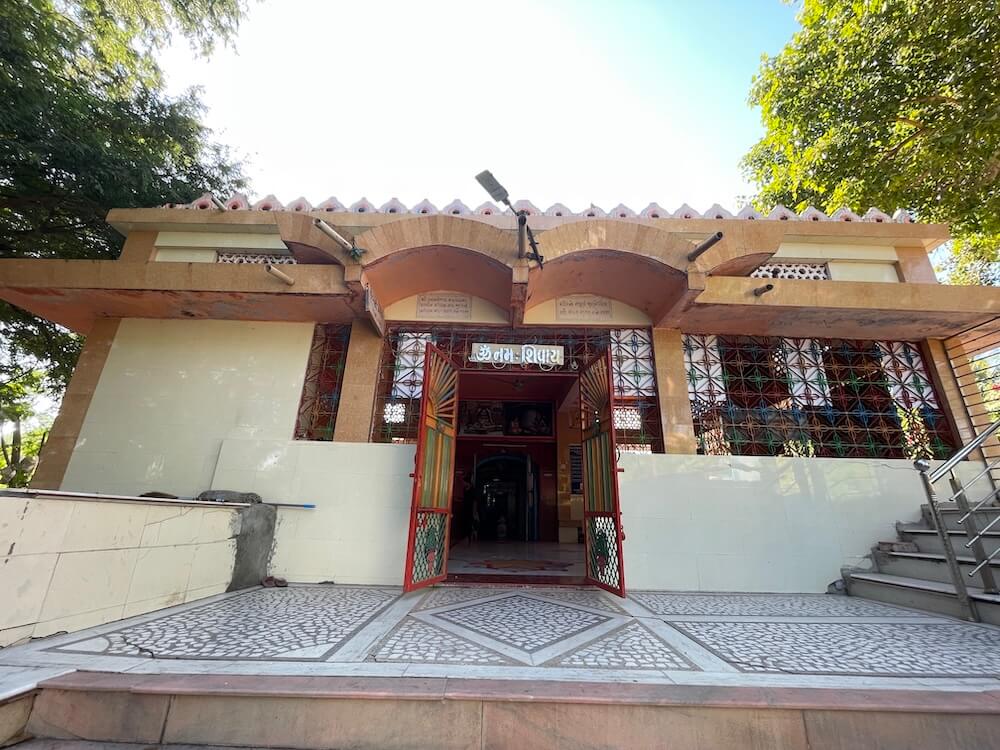
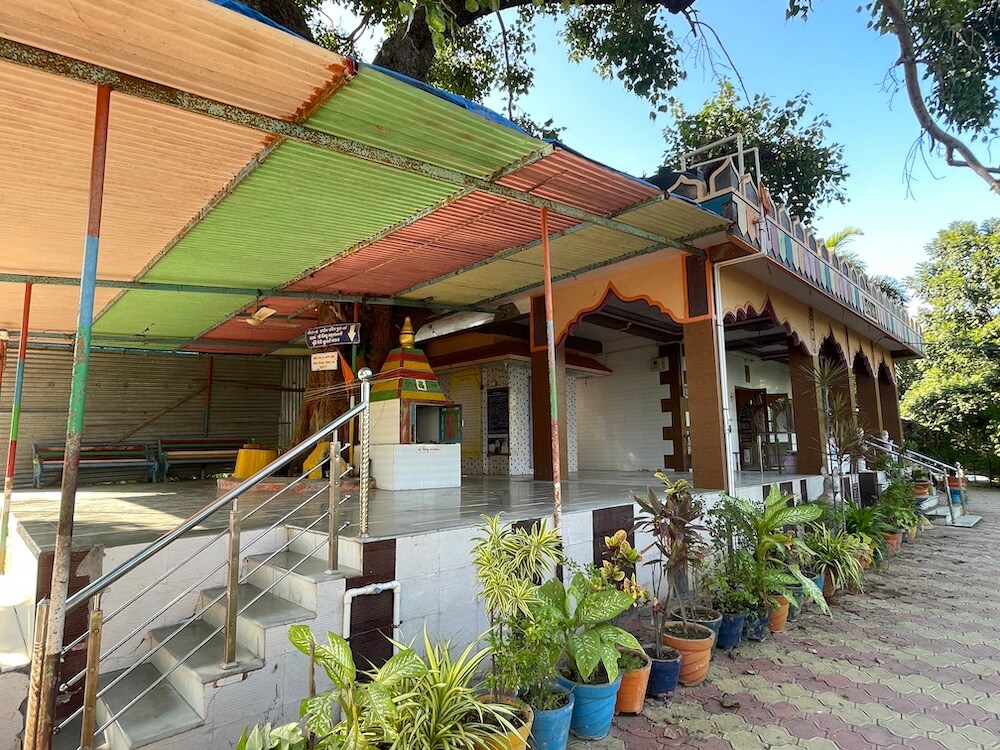
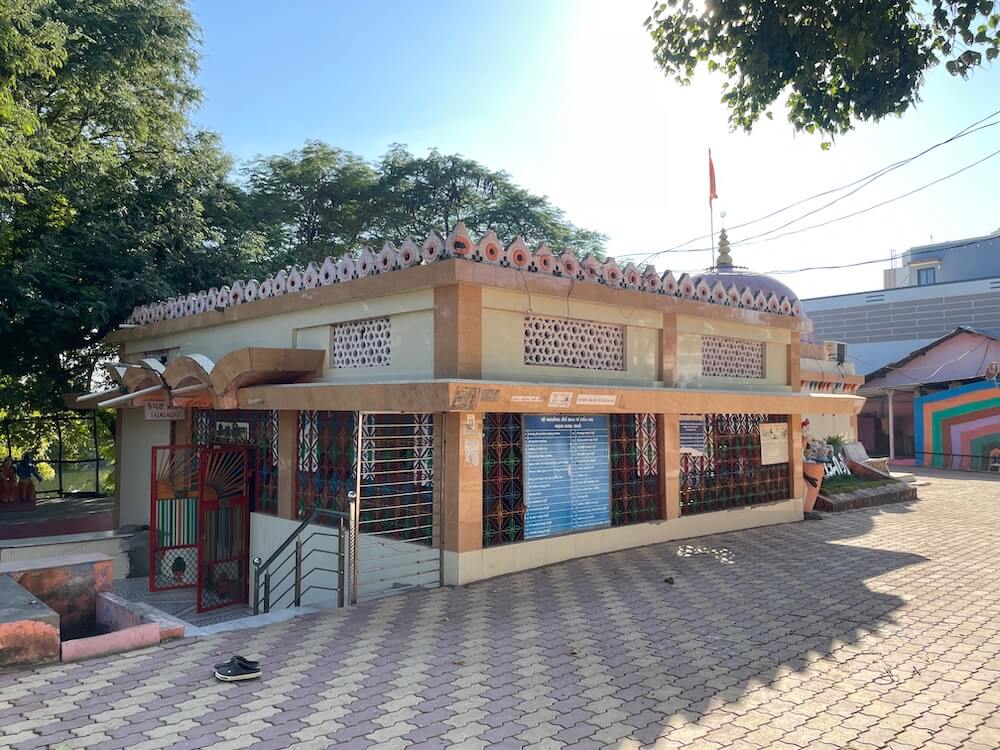
 The temple, situated at this ancient sacred spot beside the lake, has been lovingly beautified by the villagers with landscaped gardens and greenery. The spacious courtyard of the temple is entirely paved with blocks and is accessed through a grand ceremonial gateway. To the right of the courtyard lies the Amaleshwar Garden. Near the temple wall opposite this garden stand statues of three musicians. The Amaleshwar Temple is a modern structure, comprising a Sabhamandap (assembly hall), Upasabhamandap (ante-hall), Antaral (vestibule) and Garbhagriha (sanctum). The ceiling of the Sabhamandap is flat. Above the sanctum rises a domed shikhar (spire), crowned with a five-tiered kalash (auspicious finial). The main entrance to the temple faces the lake.
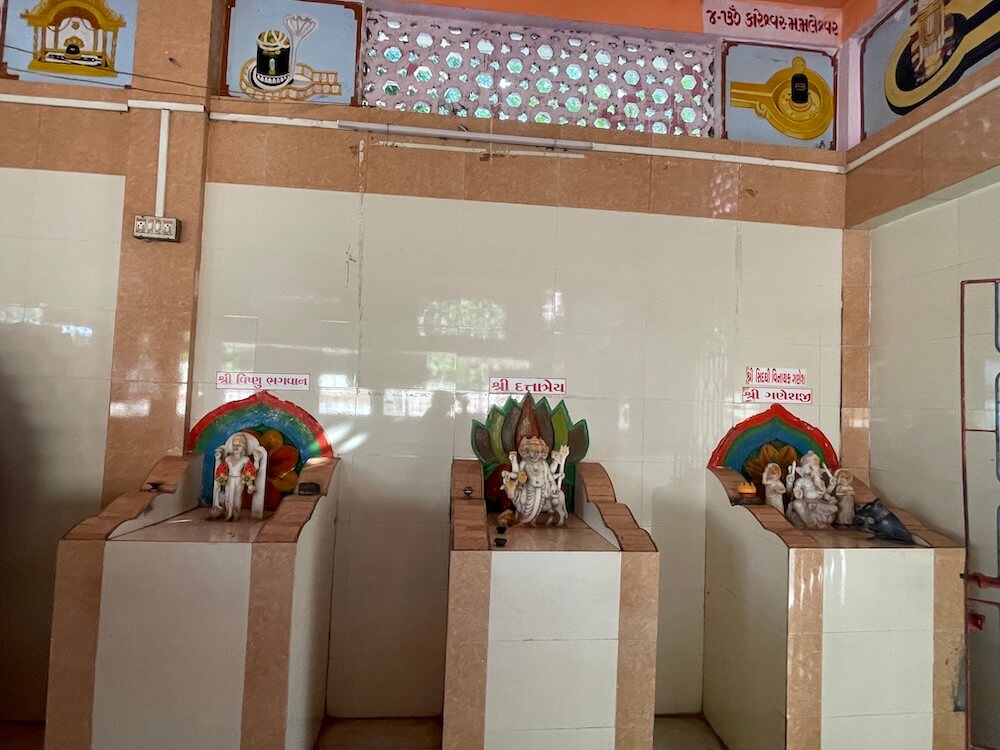
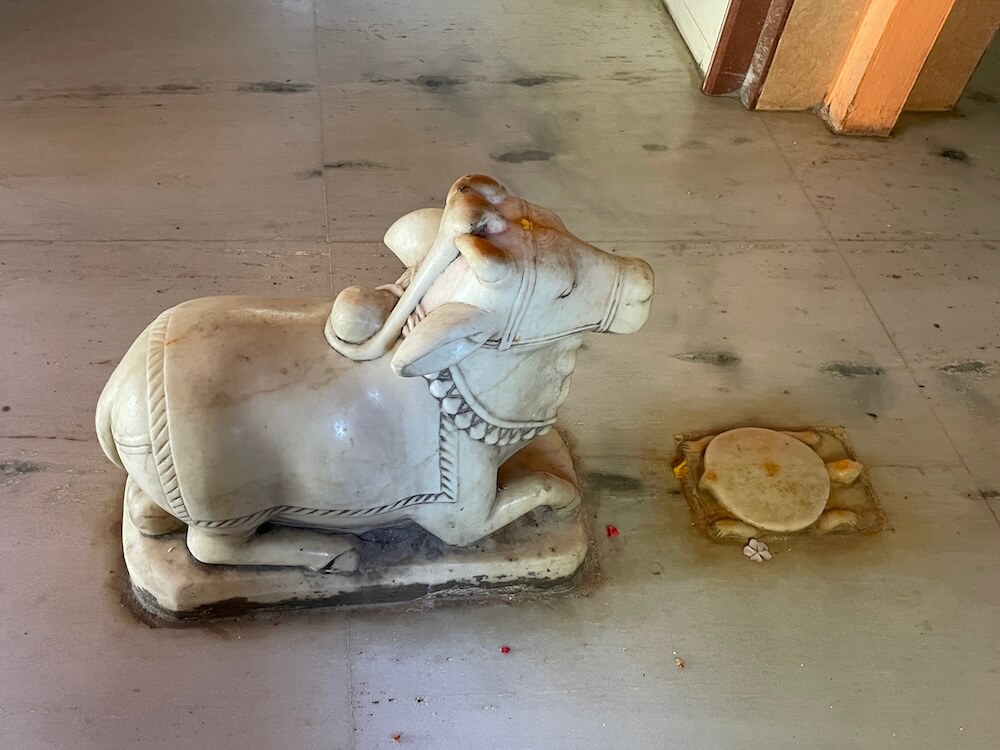
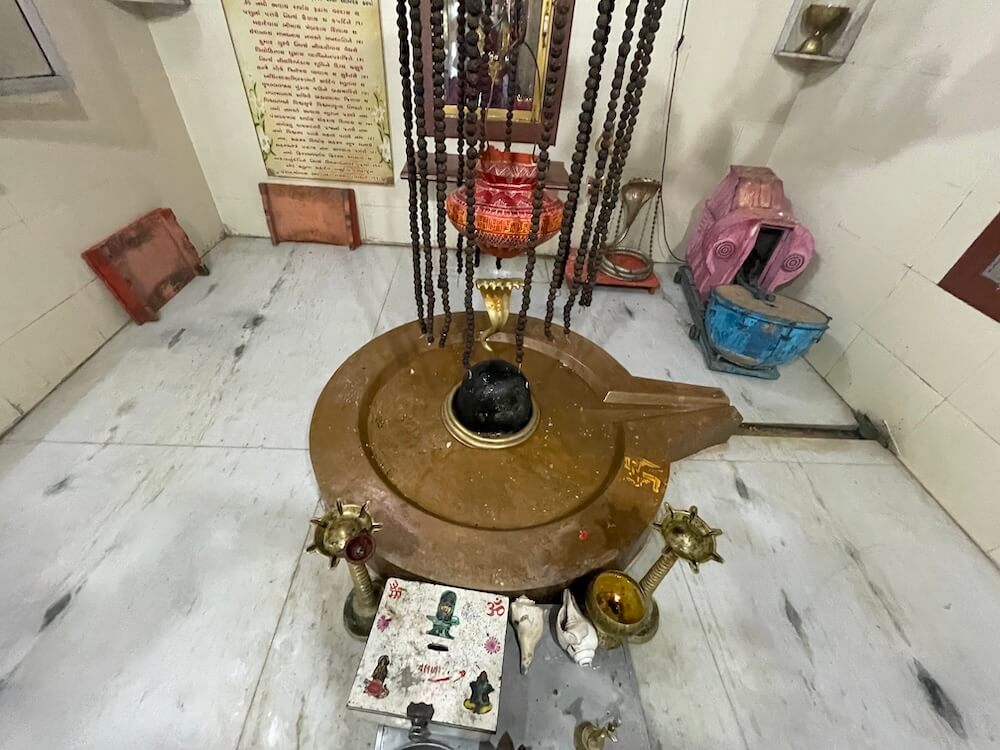
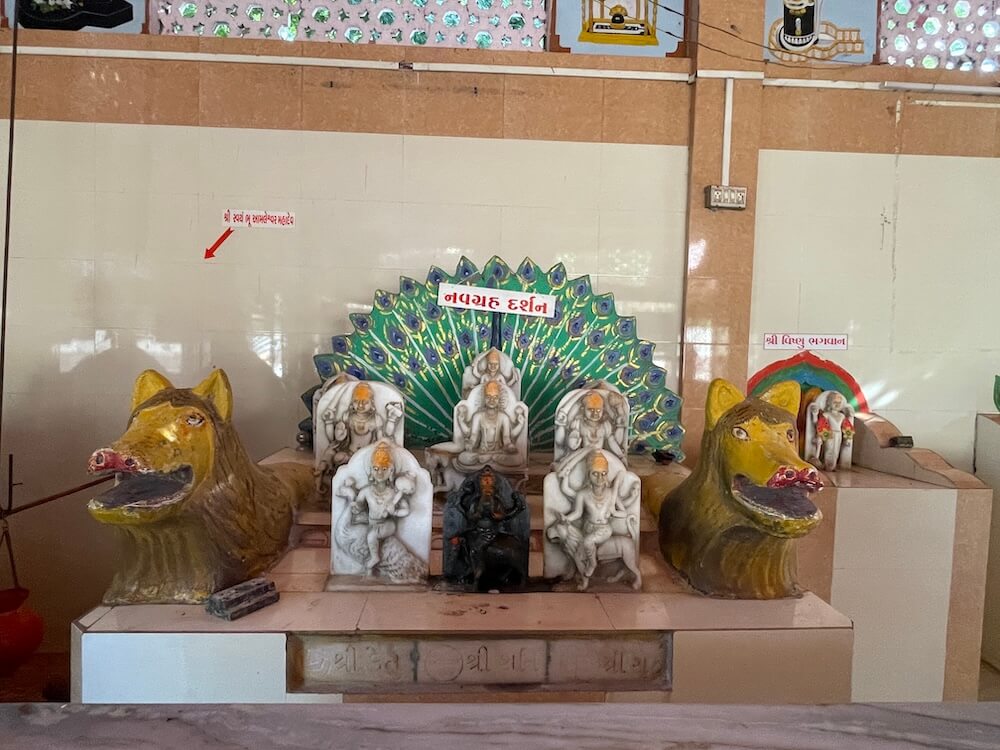
Within the sabhamandapa, to the left, are five shivlingas dedicated to Amareshwar, Valkeshwar, Dandeshwar, 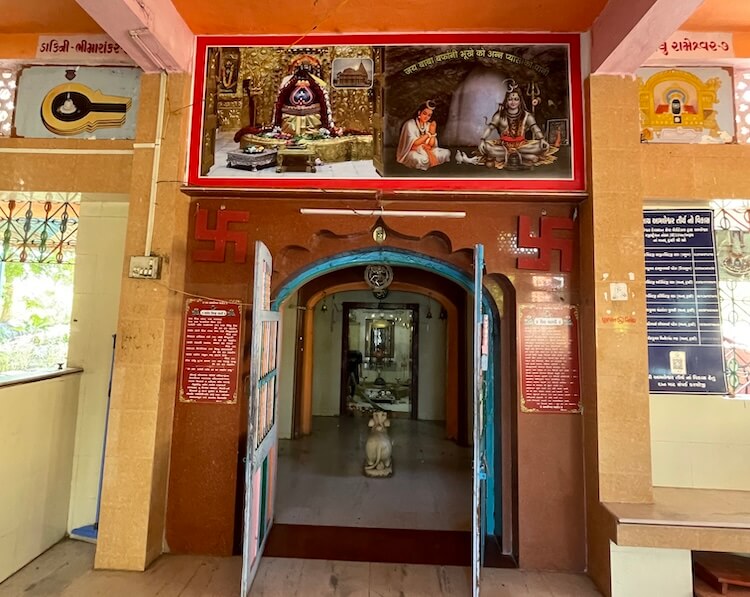 Kantheshwar and Shringeshwar Mahadeva. Each of these five icons possesses a distinct shape. Among them, the Amareshwar Mahadeva shivlinga is said to be swayambhu. The pindi (sacred stone) of Shringeshwar Mahadeva is the smallest in size. Nearby, upon an elevated platform, reside the murtis of the Navagrahas (nine planets). Adjacent to them are small marble icons of Vishnu, Dattatreya and Siddhivinayak Ganesha. On the right side of the assembly hall, tiered seating is provided for devotees, while the upper sections are adorned with images of the Jyotirlingas. In the upasabhamandapa, a marble Nandi sits upon the floor, facing a tortoise icon. The antarala houses Harjai Mata on the left and Hanuman on the right. Inside the garbhagriha, a cylindrical shivlinga is enshrined within a large panchadhatu (five-metal alloy) shalunka, sheltered by a serpent’s hood.
  Above it hangs an abhishekpatra (vessel for ritual pouring) topped with a brass canopy. Niches in the rear and right walls of the sanctum house marble murtis of Mother Parvati and Ganesha, respectively.
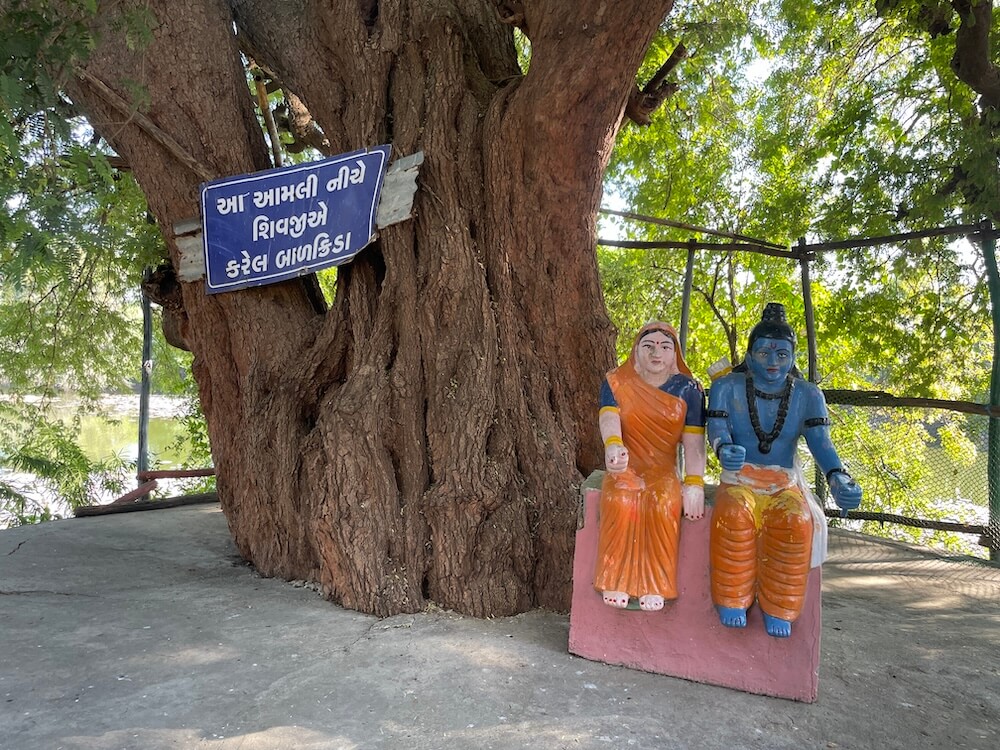
Directly before the temple entrance lies the lake. Upon the steps leading down to it is sculpted the episode of Kevat Prasanga. When Lord Shri Ramachandra, Sita Lakshmana departed Ayodhya for their forest exile, they encountered Nishadraj Kevat on the banks of the Ganga. When asked to bring a boat to cross the river, Nishadraj Kevat prayed to Shri Rama, saying, “The dust of Your feet is a medicine that transforms a stone into a human. Grant me permission to wash Your feet only then shall I ferry You across.” A sculpture depicting this poignant moment has been erected by the lake.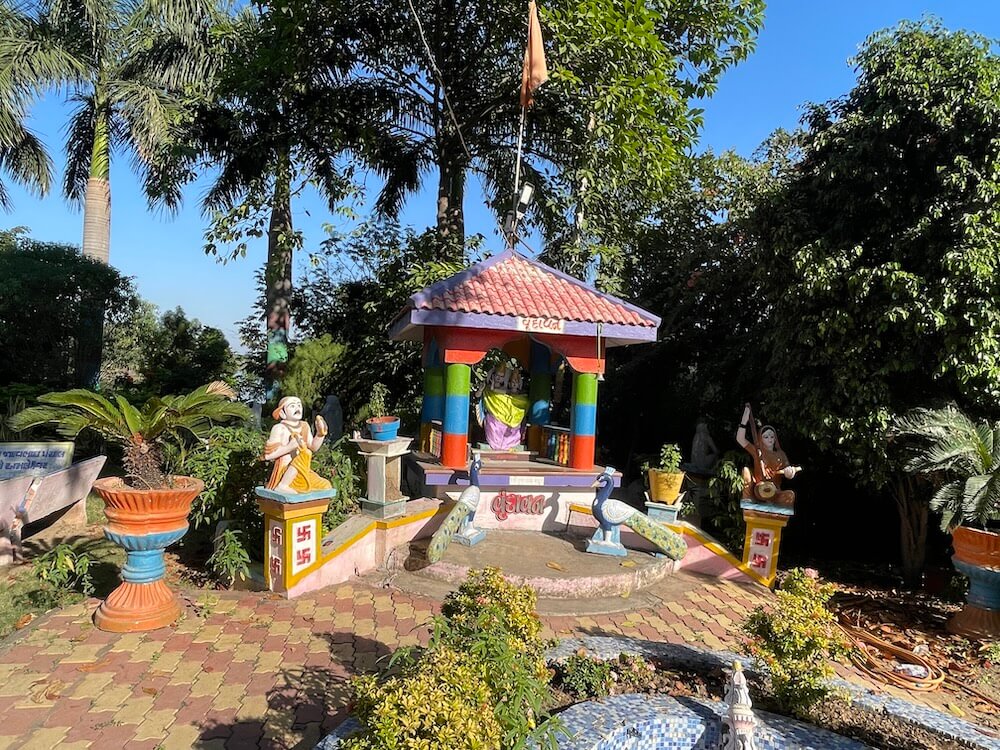 To the left of the temple stands a massive tamarind tree, where the faithful believe the child-form Shankara once played. At this spot are installed the idols of Shankar and Parvati.
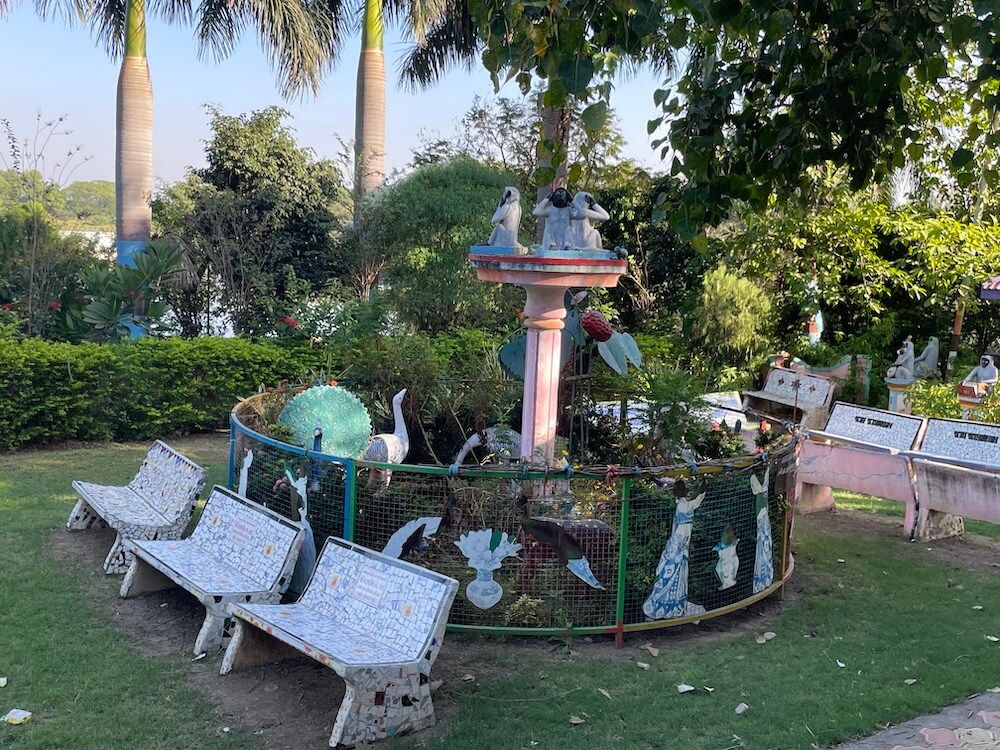
To the right of the temple stands an ancient Peepal tree, with a murti of Lord Vishnu enshrined in a niche upon its platform. Opposite this, a depiction of Vrindavan has been created, featuring murtis of Radha, Krishna and Saint Mirabai. The gardens are further adorned with fountains and sculptures of monkeys and peacocks. Facing this is the ‘Bhaktidham’ structure.
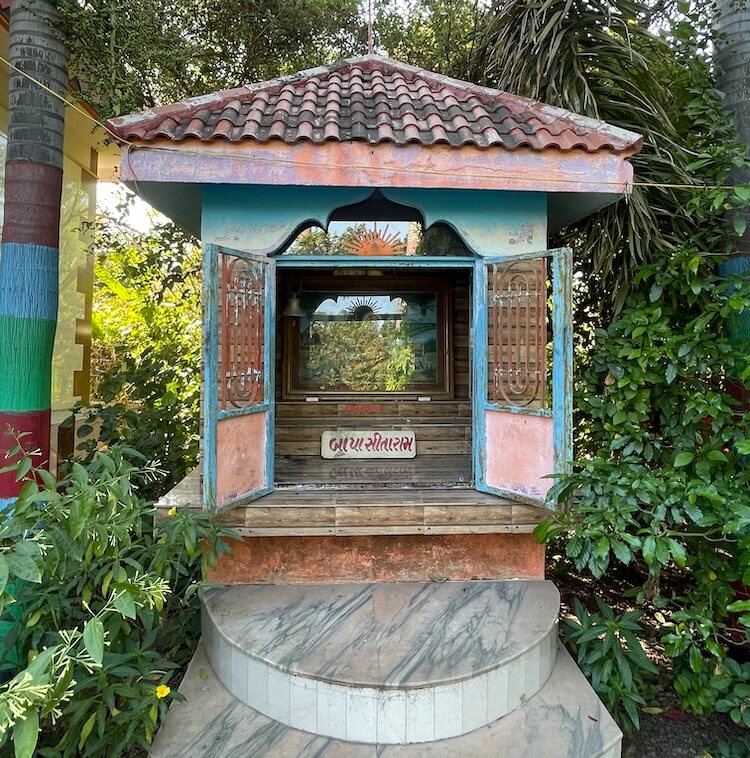
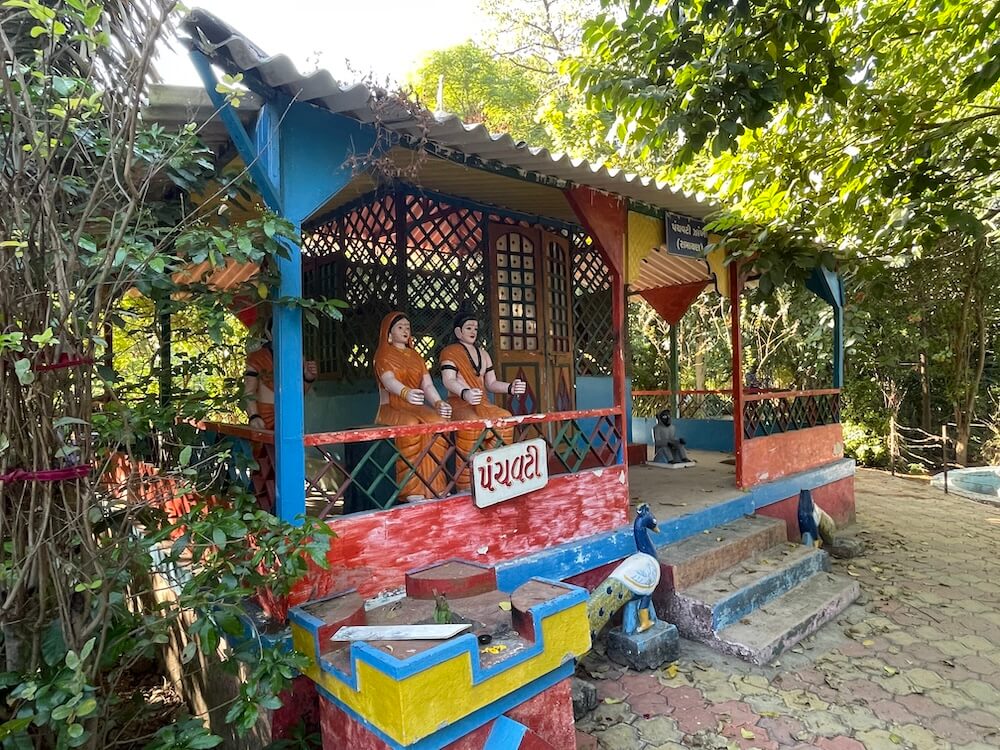
Erected in 2012, this temple stands upon a high pedestal. Entrance to the temple porch is gained by ascending six steps, flanked by lion murtis and sculptures of dwarpals (gatekeepers). The niches within the assembly hall house murtis of Sai Baba, Mother Narmada, Mahalakshmi, Umiya Mata, Ambaji Mata, 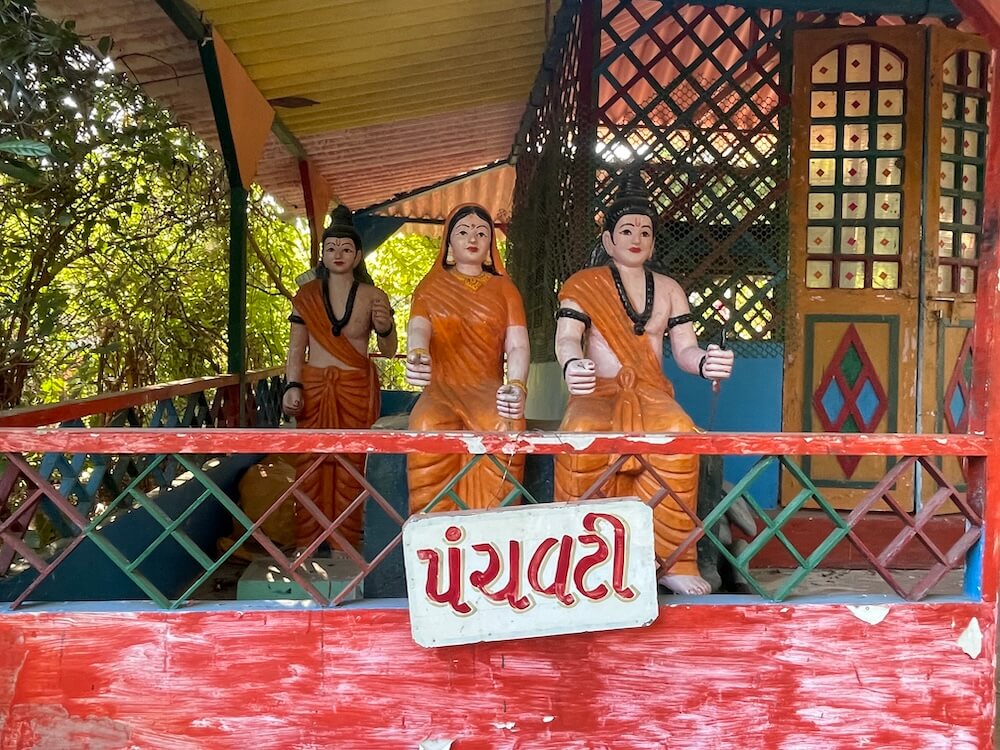 Kshemkalyani Mata, Harsiddhi Mata, Gayatri Mata and Jalaram Bapa. A shrine for Khodiyar Mata is also present. Adjacent to ‘Bhaktidham’, upon a raised plinth, sits the murti of the holy man Sitaram Maharaj. Beside it, the ‘Panchavati’ hut of Shri Rama and Sita has been recreated, featuring seated murtis of the divine couple upon a pedestal, with Lakshman standing behind them. Throughout the temple complex, various sculptures evoke such mythological scenes. In one area lies Shabridham, while the Ashoka Vatika section features a sculpture depicting the meeting of Sita and Hanuman. In the Rama temple near the Ashoka Vatika; murtis of Shri Rama, Lakshman, Sita are enshrined.
Managed by the Amleshwar Devasthan Charitable Trust, the temple observes daily puja and aarti in the morning and evening. Festivals are celebrated with fervour throughout the year, with special religious programmes organised on Mahashivratri. Every Monday of the month of Shravan, a multitude of devotees arrives for darshan.