
आदित्यपुरम सूर्यदेव मंदिर
आदित्यपुरम, कडूथुरुथी, जि. कोट्टायम.
Adithyapuram Sooryadeva Temple
Adithyapuram, Kaduthuruthy, Dist. Kottayam.
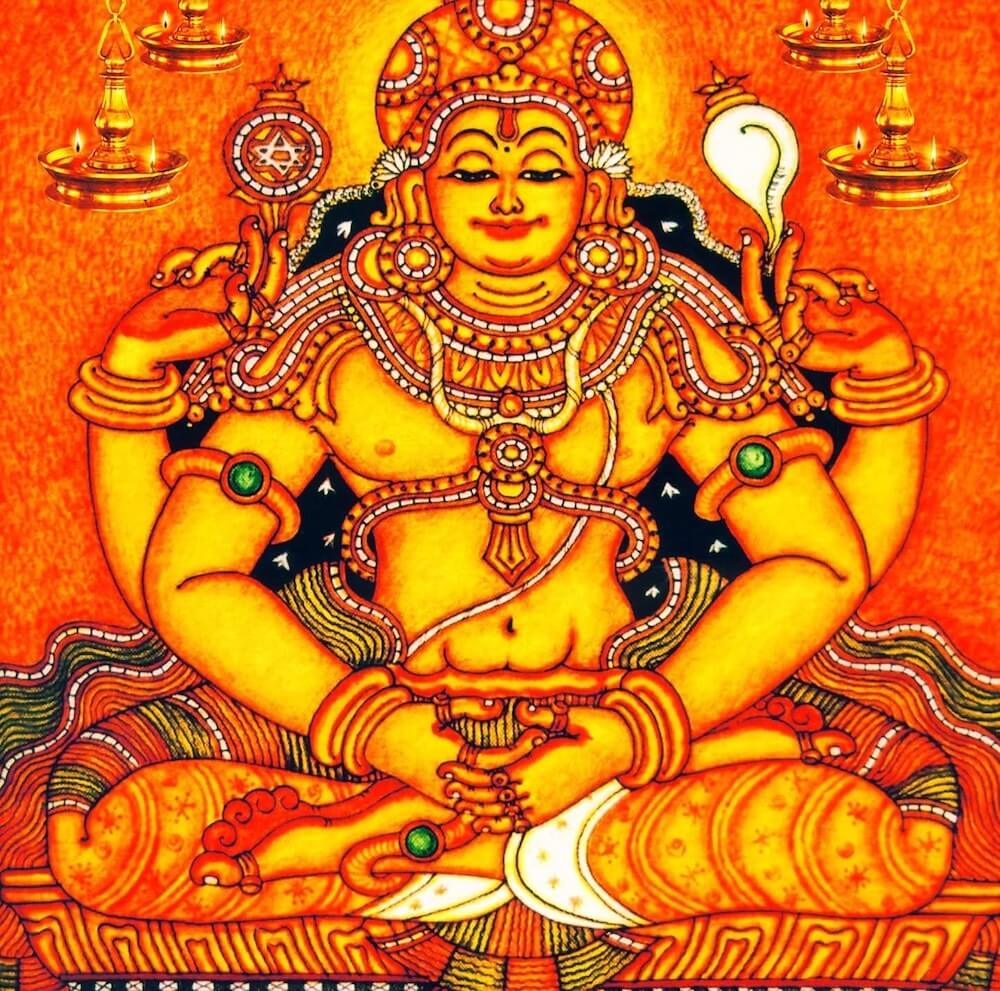 Adithyapuram Sooryadeva Temple is a prominent and rare Sun Temple located at Eravimangalam, near Kaduthuruthy, in the Kottayam district of Kerala. It is one of the very few temples in Kerala where Surya Narayana Bhagavan (the Sun God) is worshipped as the principal deity. The temple is renowned for its unique traditions, rare form of worship and deep-rooted beliefs. The most distinctive feature of the temple is that Surya Narayana Bhagavan, the principal deity, is depicted in a meditative posture (Tapo Roopa). While Surya Narayana Bhagavan is worshipped in many temples alongside other deities, temples where he is enshrined as the principal deity are exceptionally rare. Another notable feature is the absence of Navagraha installations, which are commonly found in most Sun temples.
The temple also has shrines dedicated to Durga Bhagavathy, Dharma Sastha and Yakshiyamma. It is owned and managed by the Marangattu Mana family.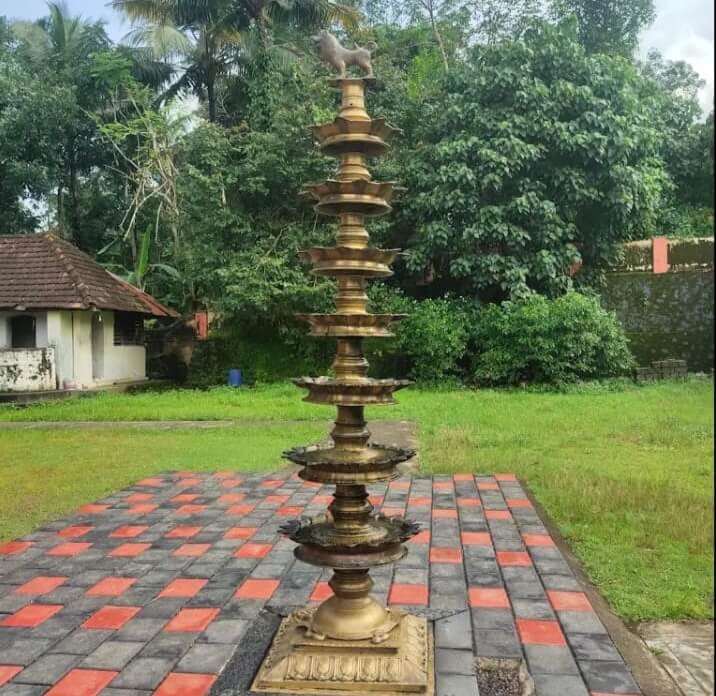 Devotees visit the temple seeking relief from eye ailments and skin diseases, believing that prayers and offerings made here bring healing and blessings. Owing to its unique form of worship and long-standing religious tradition, Adithyapuram Soorya Temple remains an important place of pilgrimage.
Although no written records clearly establish the exact period of the temple’s construction, historians believe that it is several centuries old. The temple is closely associated with the renowned Kapikkadu Marangattu Mana, a Namboothiri family from the Kaduthuruthy region. According to local tradition, a member of this family established the temple. The architectural style and traditional wooden craftsmanship of the sanctum sanctorum reflect the influence of medieval Kerala temple architecture. The structure bears close resemblance to the temple-building traditions of the northern and central Travancore regions, which has led historians to conclude that the temple dates back several centuries.
Several legends are associated with the origin of Adithyapuram Soorya Temple.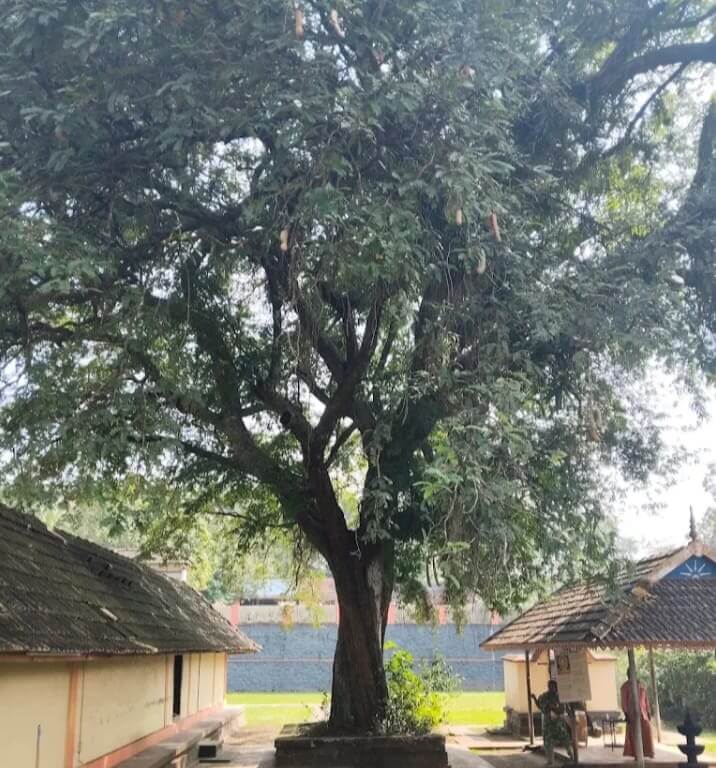 According to the most widely accepted legend, a Namboothiri from the renowned Kapikkadu Marangattu Mana was a devoted worshipper of Surya Bhagavan. Desiring a direct vision of the deity, he undertook prolonged meditation and penance. Pleased with his unwavering devotion, Surya Bhagavan appeared before him in a meditative form and bestowed upon him an idol for worship and the welfare of the world. The Namboothiri subsequently installed the idol at the present site in Eravimangalam and established the temple’s ritual traditions. It is also believed that he ordained that only members of his lineage should perform the temple rituals.
Another legend states that, at the beginning of creation, Surya Bhagavan was the only visible deity. Wishing to attain the powers possessed by the other deities, he performed severe penance to Adi Parashakti (Mahamaya), the Supreme Goddess. Pleased with his devotion, the Goddess appeared before him and blessed him, declaring that from sunrise until six and a quarter Nazhikas thereafter, the powers of all the deities would reside in Adithya. This legend is reflected in the temple’s principal idol,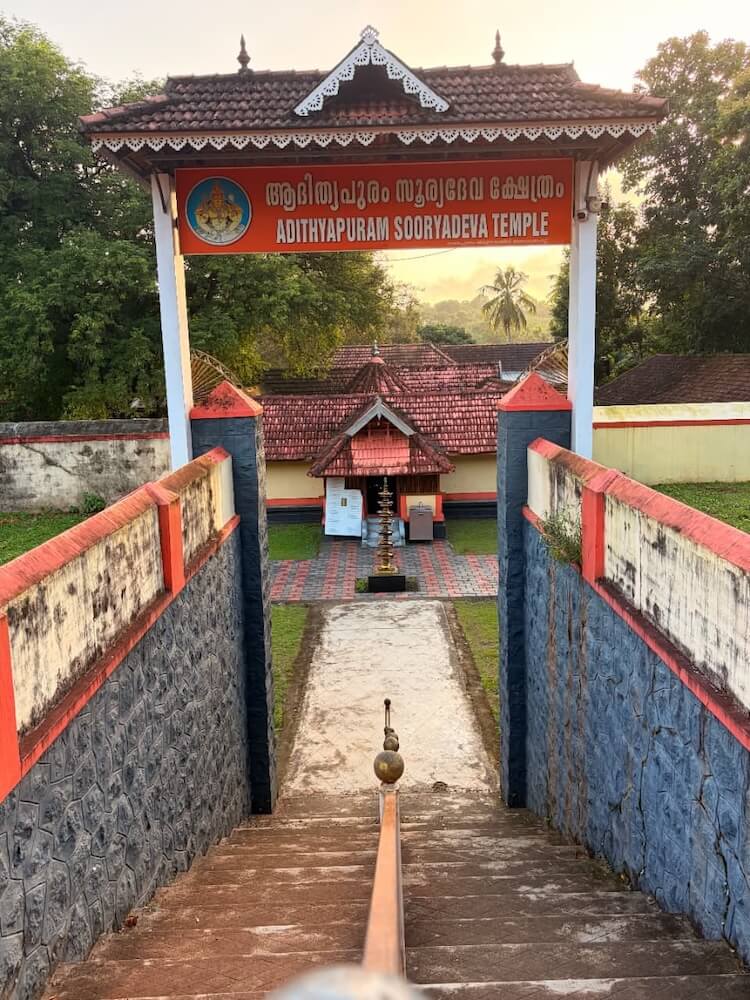 which depicts Surya Bhagavan seated in Padmasana in a meditative posture. It is also believed that Durga Bhagavathy, identified with Mahamaya who bestowed the strength for Surya’s penance, was later installed immediately behind the main sanctum, facing east.
Another local legend relates to the orientation of the temple. According to this belief, the temple originally faced east. However, when the rays and divine energies of the rising Sun met directly with those of Surya Narayana in the sanctum sanctorum, intense heat was generated, causing the surrounding land and vegetation to wither. To overcome this, the principal deity was later reoriented to face west. These traditional beliefs form an important part of the temple’s cultural and religious heritage.
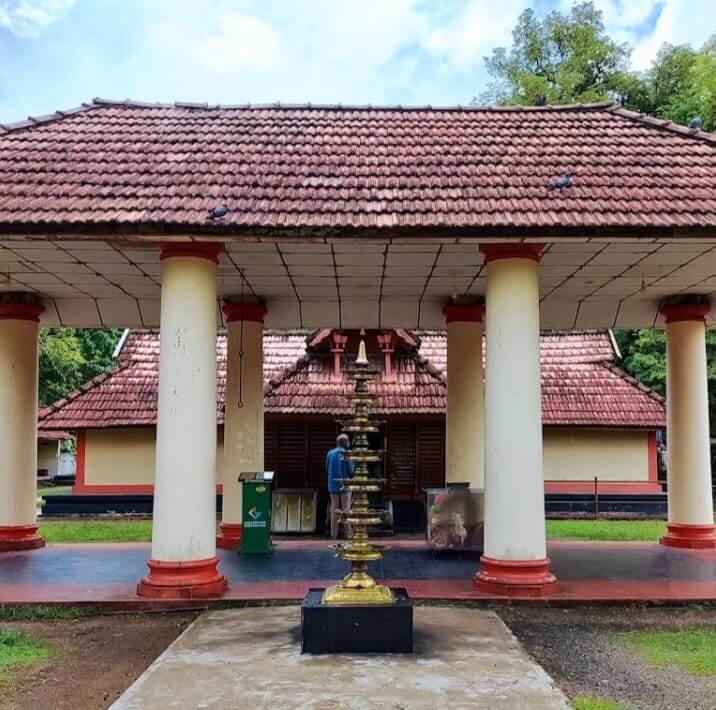
Adithyapuram Sooryadeva Temple is situated in a natural setting at Eravimangalam, near Kaduthuruthy. Built in the traditional Kerala architectural style, the temple reflects the characteristic features of Kerala temple architecture. The temple is situated slightly below road level. Devotees enter the temple by descending a steep flight of steps from the road on the eastern side. The temple complex is enclosed by a traditional compound wall and instead of a towering gopuram, features a simple Kerala-style entrance gateway. Upon entering through the main gateway, visitors first come across a large Aanappanthal (elephant shelter) and the Balikkalpura, which houses the Bali stone.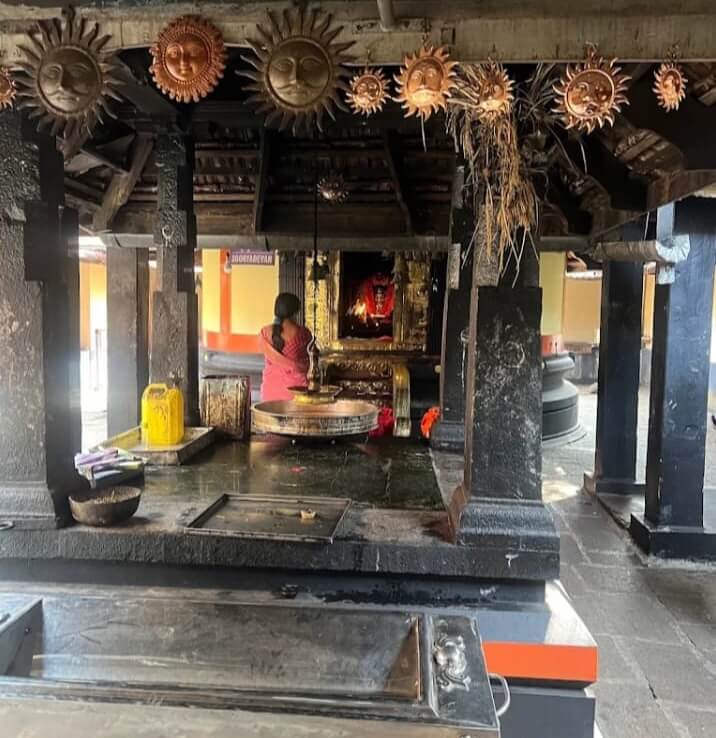 Beyond these structures lies the main temple complex.
One of the most remarkable features of the temple is its circular sanctum sanctorum (Vatta Sreekovil). Unlike most Kerala temples, where the sanctum faces east, the sanctum here faces west. The sanctum is surrounded by the Nalambalam and traditional lamp structures. The principal deity, Surya Narayana Bhagavan, is enshrined in a meditative posture. Directly behind the sanctum, on the eastern side, is the shrine of Durga Bhagavathy. This unique arrangement enables devotees to worship Surya Narayana Bhagavan from the west and Durga Bhagavathy from the east. Among the other deities, Dharma Sastha has a shrine in the south-eastern part of the temple complex, while Yakshiyamma is worshipped beneath an ancient tamarind tree on the southern side.
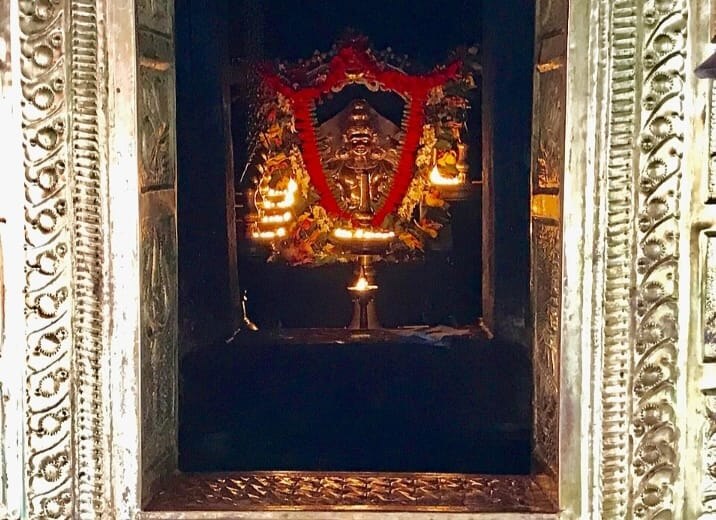 The roof of the sanctum sanctorum is constructed using traditional timber and copper roofing and is crowned with a finial. The rafters and the inner roof structure feature simple wood carvings in the Kerala–Dravidian style. The pillars and Mukhamandapam are adorned with traditional geometric motifs and carvings inspired by scenes from Hindu mythology. Although the temple does not contain extensive mural paintings, the walls of the sanctum feature modest decorative artwork in the local style.
Another remarkable feature of the temple is its principal idol. It is carved from a rare type of stone believed to possess the unique ability to absorb oil. During the daily Oil Abhishekam, the oil poured over the idol is believed to be completely absorbed by the stone after the subsequent water ablution, leaving no trace of oil on its surface. The principal deity is depicted seated in Padmasana in a meditative posture. 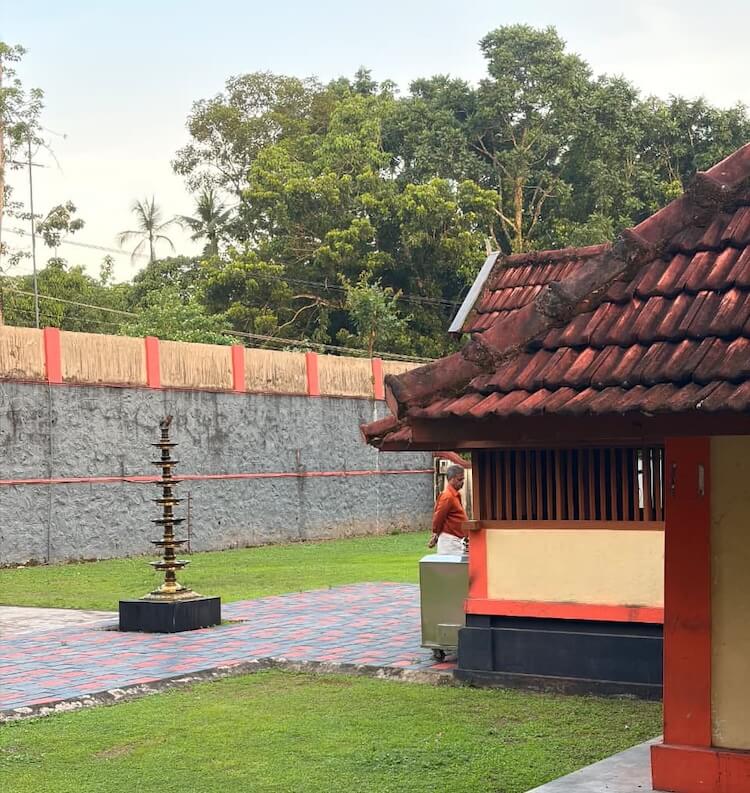 The four-armed form of Surya Narayana Bhagavan holds the conch and discus in the upper hands, while the lower hands rest in Dhyana Mudra. This representation is considered exceptionally rare among the Sun temples of Kerala.
The most important festival of the temple is the Kavadi Festival, celebrated on the last Sundays of the Malayalam months of Medam and Vrischikam. Among these, the last Sunday of Medam is observed with greater significance, as it is believed to be the period when the Sun attains its greatest strength. One of the principal rituals of the festival is the Raktha Chandana Kavadi Abhishekam, during which devotees offer kavadis containing red sandalwood paste to the deity. This offering is traditionally made by devotees seeking relief from eye ailments and skin diseases, as well as blessings for progeny. A distinctive custom of the festival is that a member of the Marangattu Mana family must offer the first kavadi before any other devotee.
Since Sunday is regarded as the sacred day of Surya Bhagavan, 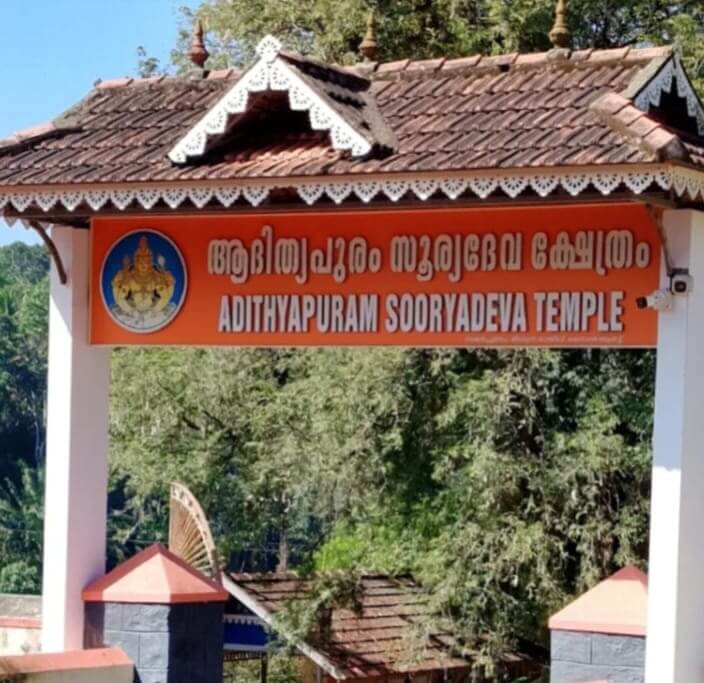 every Sunday is observed as a special day of worship at the temple. The first and last Sundays of each Malayalam month are of particular significance and attract large numbers of devotees who come to perform Adithya Pooja. Pathamudayam, observed on the tenth day of the Malayalam month of Medam, is another important occasion marked by special rituals and ceremonies. Karkidaka Vavu is also observed with great devotion, drawing pilgrims from different parts of Kerala and beyond. Among the temple offerings, the most prominent is the Raktha Chandana Kavadi. Devotees offer kavadis containing red sandalwood paste to Surya Bhagavan as an act of devotion. The offering is commonly made by those seeking relief from skin diseases and eye ailments, as well as the fulfilment of their wishes.
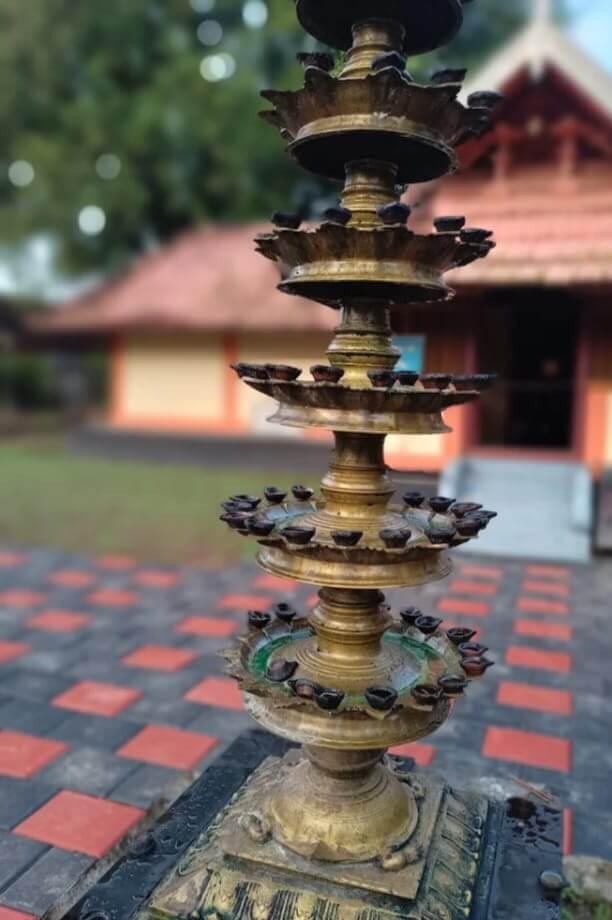
Adithya Pooja is another important offering performed to seek the blessings of Surya Bhagavan. Devotees perform this ritual to overcome astrological afflictions associated with the Sun (Surya Dosha) and to pray for success and advancement in their professional lives. 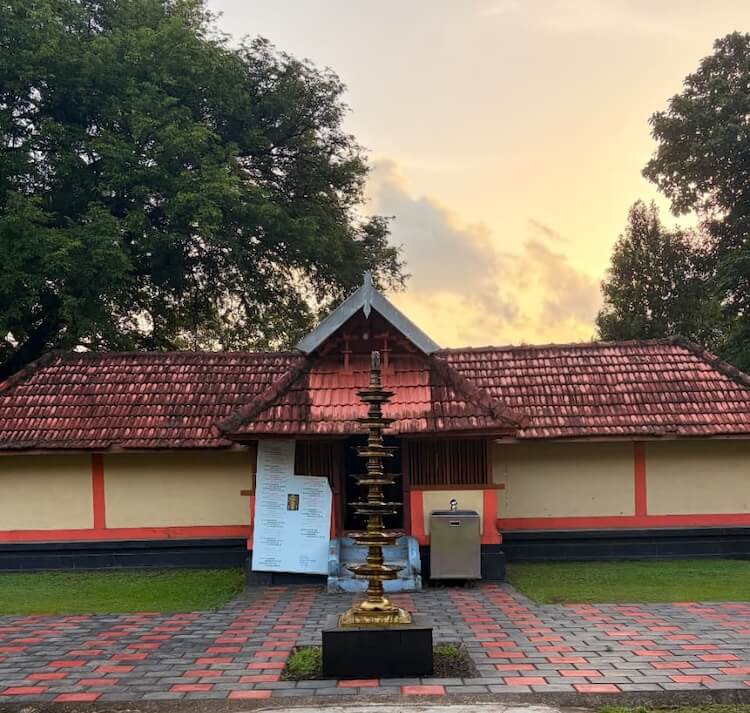 One of the most remarkable offerings at the temple is the Oil Abhishekam. During this ritual, specially prepared oil is poured over the principal idol. It is believed that the unique stone from which the idol is carved completely absorbs the oil after the subsequent water ablution. The oil and water used in the ritual are later distributed to devotees as sacred medicinal prasadam. Offering a ghee lamp is another important ritual observed by devotees seeking improved eyesight and relief from eye-related ailments. A special medicinal prasadam, prepared from the soot of the lamp mixed with ghee, is traditionally distributed for the well-being of the eyes. Another distinctive offering is the abhishekam performed using sugarcane and tender coconut, which devotees undertake for healing, prosperity and the well-being of their families.
On regular days, the temple opens at 5:00 AM. Nirmalya Darshanam is held at 5:30 AM, followed by the morning rituals and worship. The main pooja and offering (Nivedyam) are conducted at 9:00 AM. The temple closes at 12:00 PM and reopens at 5:30 PM. Deeparadhana is performed in the evening, after which the temple closes for the day at 7:30 PM. Temple timings may vary during festivals and other special occasions. On Sundays, special arrangements are made to accommodate the large number of devotees. The temple opens at 4:00 AM and remains open until 1:00 PM. It reopens at 5:30 PM for the evening rituals and closes at 7:30 PM after Deeparadhana and the day’s worship.
Key highlight :-
- Located 3 km from Kaduthuruthy, 16 km from Vaikom and 17 km from Ettumanoor.
- The nearest railway station is Vaikom Road Railway Station, located about 5 km from the temple.
- Kottayam Railway Station is about 25 km away.
- KSRTC and local bus services are available to Kaduthuruthy from major towns and transport hubs.
- Private vehicles can be parked in the temple’s parking area.
- Men are not permitted to wear upper garments inside the temple. However, they may drape a traditional towel or shawl (Angavastram) across the upper body.
- Accommodation and food facilities are available in the nearby towns.
- Contact number 08547135712
आदित्यपुरम सूर्यदेव मंदिर
आदित्यपुरम, कडुथुरूथी, जिला। कोट्टायम.
मंदिरे
Temples
मंदिर
-
एत्तुमनूर महादेवाचे मंदिर एत्तुमनूर, जि. कोट्टायम
अधिक माहितीEttumanoor Mahadeva Temple Ettumanoor, Dist. Kottayam
View Detailsएट्टुमानूर महादेव मंदिर एट्टुमानूर, जिला। कोट्टायम
विवरण देखें -
थाळीतील महादेवाचे मंदिर थाळथांगडी, जि. कोट्टायम
अधिक माहितीThaliyil Mahadeva Temple Thazhathangady, Dist. Kottayam
View Detailsथालियिल महादेव मंदिर थज़थंगाडी, जिला। कोट्टायम
विवरण देखें -
वेण्णीमाला श्री राम लक्ष्मण स्वामी मंदिर पामपाडी, जि. कोट्टायम
अधिक माहितीVennimala Sri Rama Lakshmana Swamy Temple Pampady, Dist. Kottayam
View Detailsवेन्नीमाला श्री राम लक्ष्मण स्वामी मंदिर पंपडी, जिला. कोट्टायम
विवरण देखें