
गायत्री शक्तीपीठ
क्रांतीकुंज सीटीएम, अमराईवाडी, अहमदाबाद
Gayatri Shaktipeeth
Krantikunj CTM, Amraiwadi, Ahmedabad
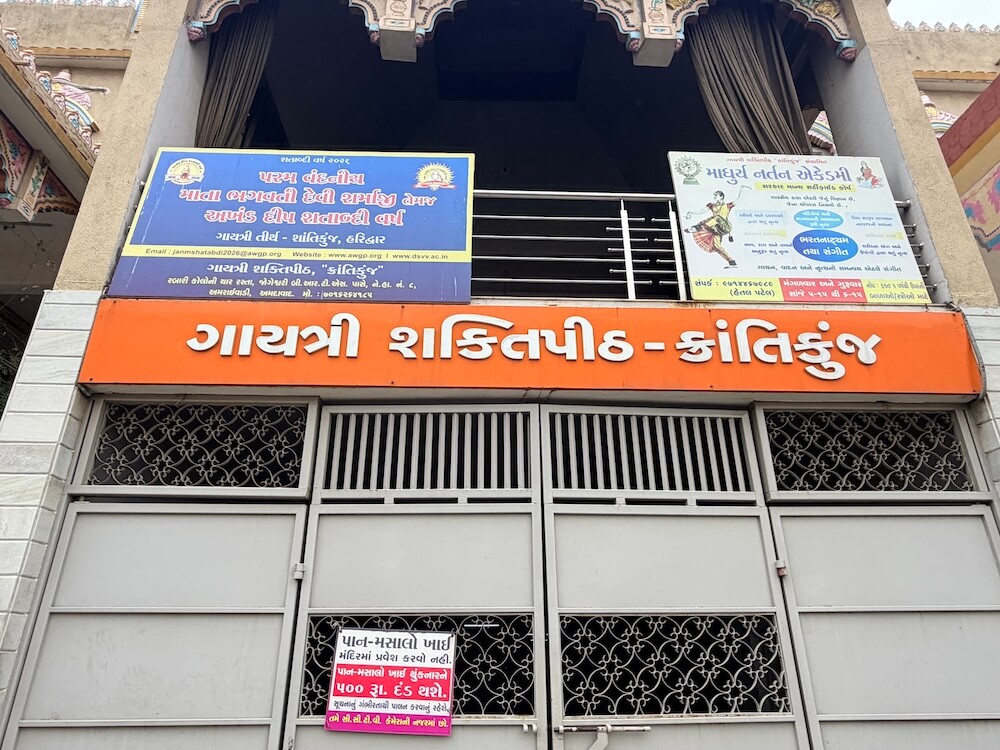
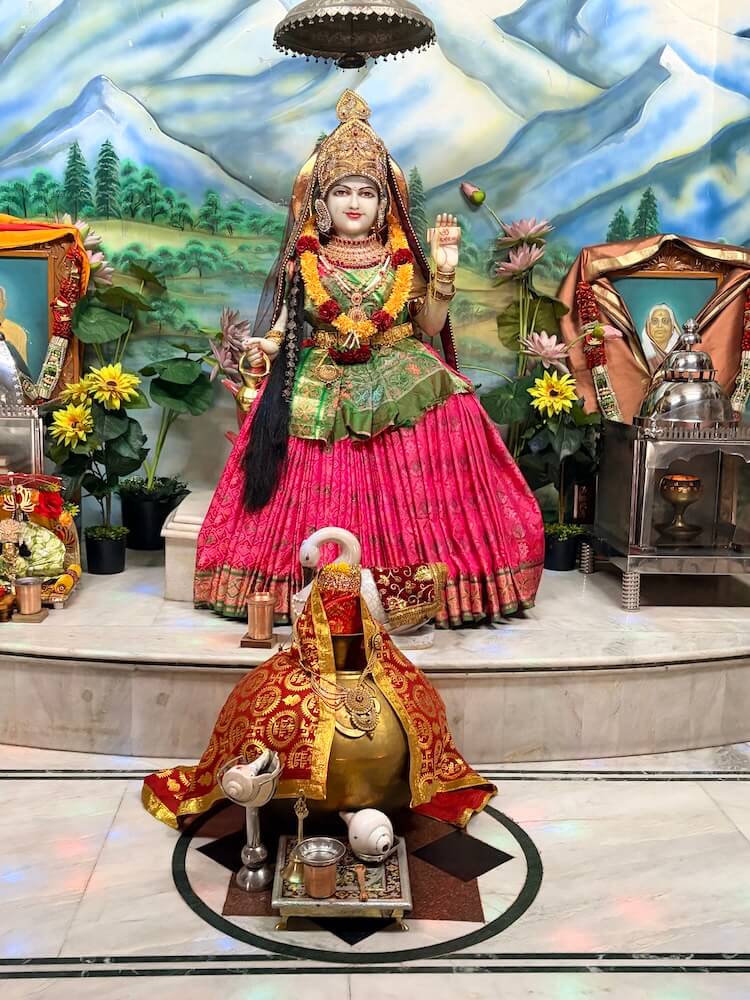 Shri Gayatri Mata Mandir stands beside a busy national highway at CTM in the Amraiwadi area of eastern Ahmedabad. The shrine is dedicated to Goddess Gayatri and serves as a principal centre of faith for the area’s workers, traders and devotees. In Hindu religious tradition and the Puranas, the Goddess is worshipped as Vedmata, Devmata and Vishwamata, signifying the Mother of the Vedas, the Mother of the Gods and the Mother of the Universe.
The ‘Gayatri Sahasranama’ in the ‘Skanda Purana’ and the twelfth Skandha of the ‘Devi Bhagavata Purana’ describe Goddess Gayatri as the Adi Shakti (Primordial Goddess) of the Trimurti, comprising Brahma, Vishnu and Mahesh. She embodies the essence of the four Vedas, which religious tradition holds emerged from Brahma’s mouth at the time of creation. At this Shaktipeeth (sacred seat of the Goddess), the deity has been ceremonially consecrated in keeping with Vedic tradition. Devotees worship Gayatri Mata here as the presiding deity of knowledge, wisdom and noble conduct. The annual celebration of Gayatri Jayanti is the locality’s principal religious and cultural festival.
Historical references in the ‘Ahmedabad District Gazetteer’ and old revenue records note that the entire Amraiwadi area was once known for its amrais (mango groves), from which the locality derived its name. 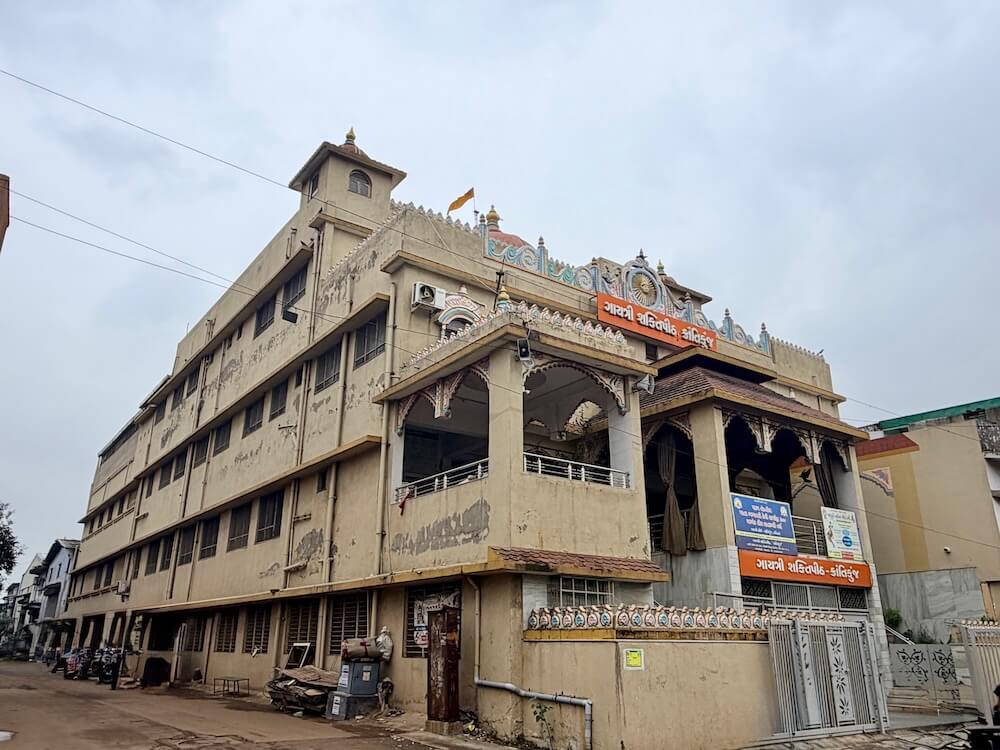 In the mid-20th century, particularly after the 1960s, Ahmedabad witnessed the rapid expansion of textile mills and industrial factories. Large units such as Commercial Textile Mills (CTM) drew workers and labourers from across Gujarat and other Indian states. As urbanisation gathered pace, the area gradually developed into an industrial settlement. This growth created the need for a common place of prayer that could offer peace of mind and spiritual support to the expanding population.
The ancient ‘Shatapatha Brahmana’ associates the name Gayatri with the protection of gaya (vital life force). For the area’s working people, remembering the Goddess brings spiritual solace and mental strength amid the demands of everyday life. In the latter half of the 20th century, mill workers, traders and residents came together to lay the temple’s original foundation through public contributions.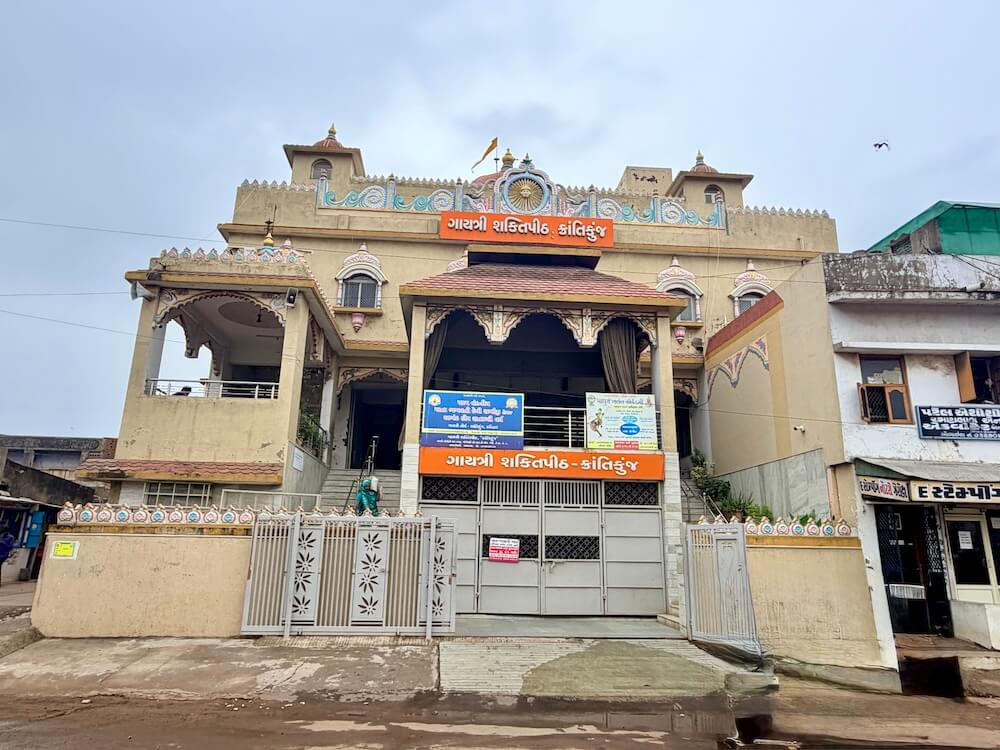 The Goddess was initially consecrated in a small structure. As the number of devotees grew, the temple was subsequently renovated under the guidance of local public representatives and saints.
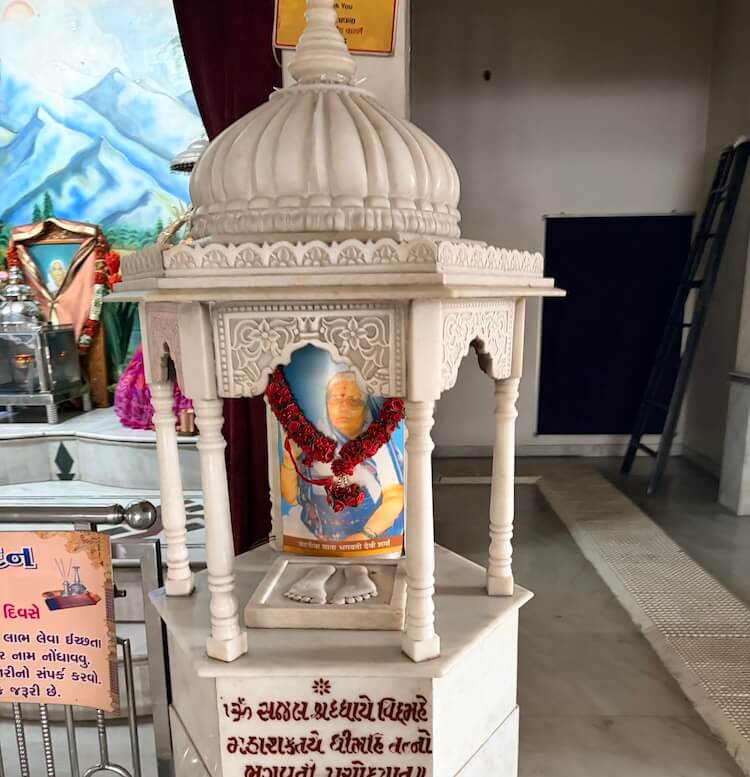
The temple’s worship system and spiritual outlook clearly reflect the influence of the Gyan Yagya movement led by Pandit Shriram Sharma Acharya. He carried this movement across the country through the All World Gayatri Pariwar and the Vichar Kranti Abhiyan. The Shaktipeeth was formally established under the guidance of Shantikunj Ashram in Haridwar, with the blessings of the Acharya and his wife Bhagwati Devi Sharma. 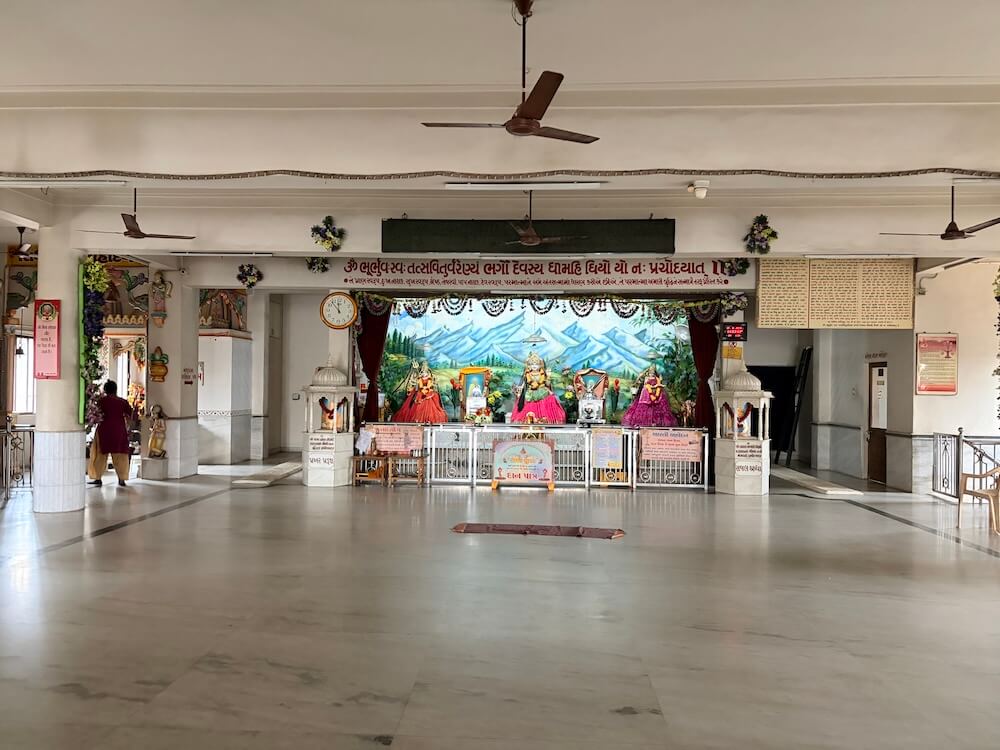 The shrine teaches the awakening of one’s inner divinity through meditation, self-discipline and the practice of the Gayatri Mantra.
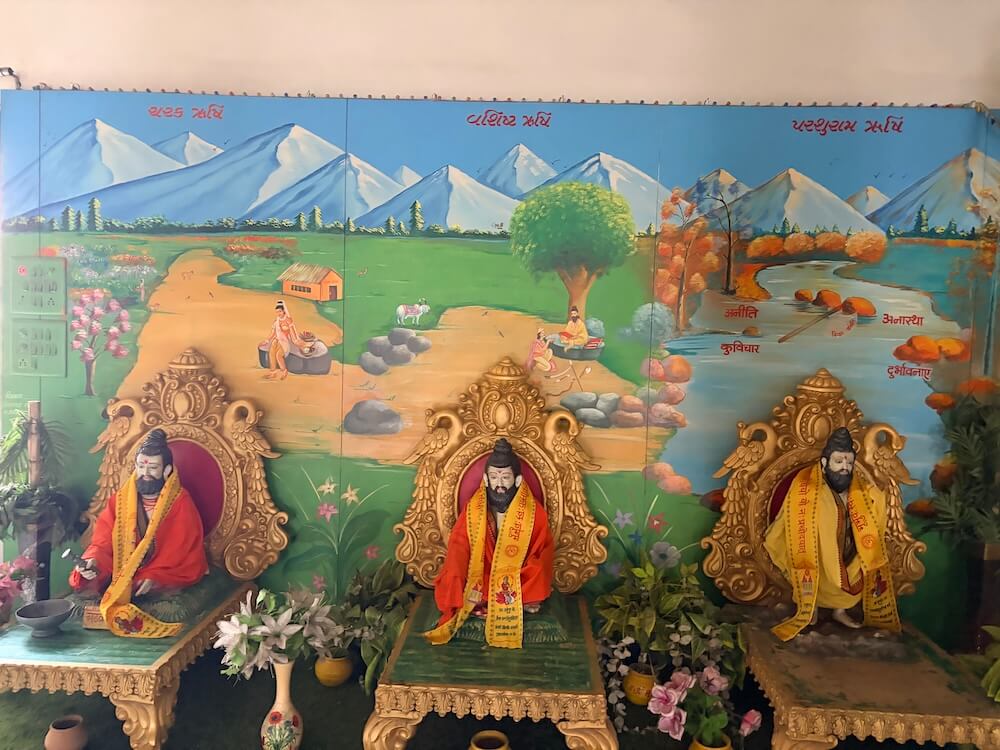
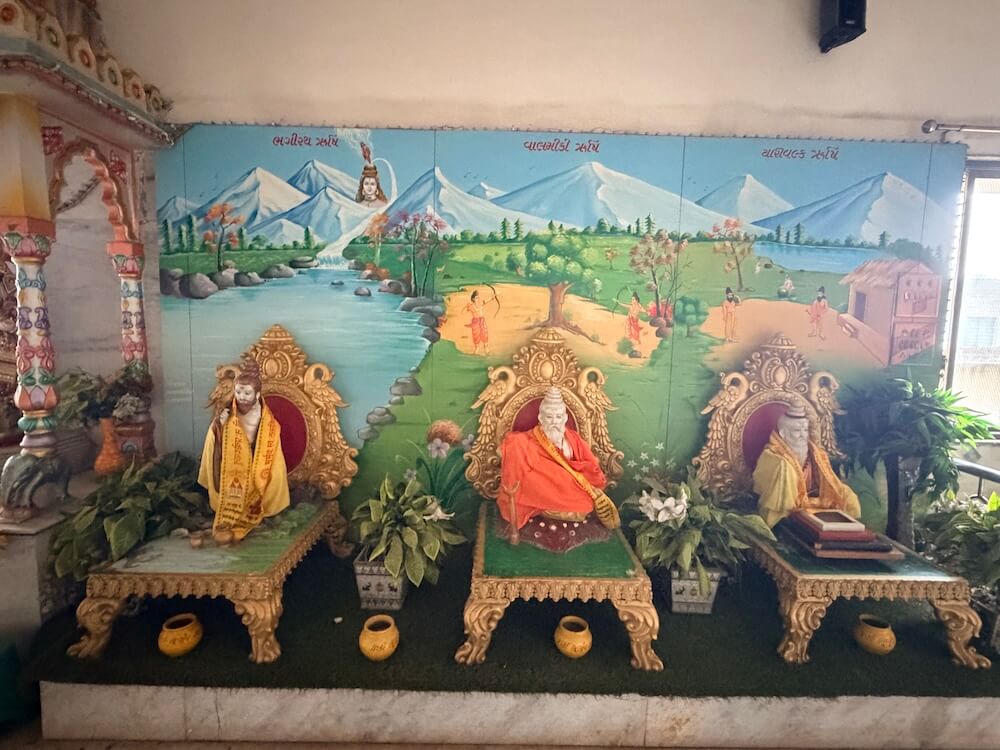
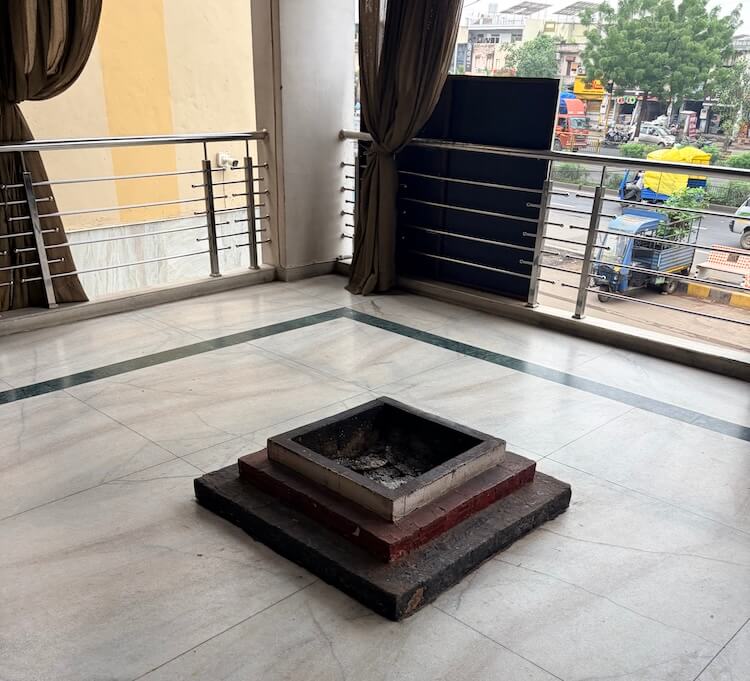
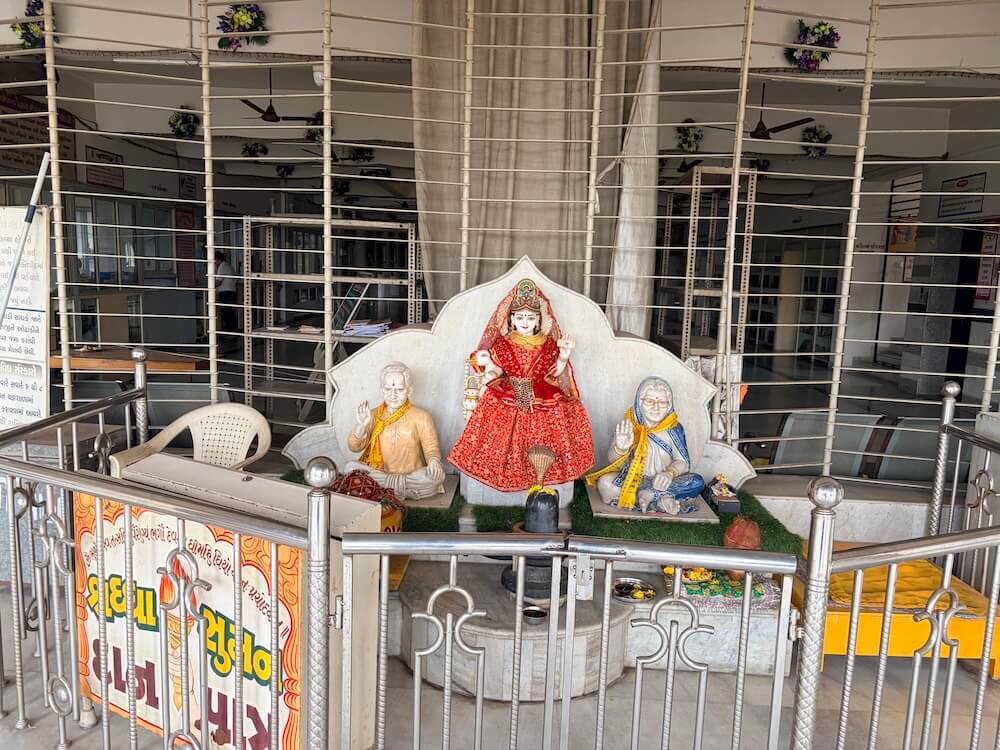
A boundary wall encloses the temple complex and its entrance opens into a compact courtyard. Stairways on both the right and left ascend from the courtyard to the temple on the first floor. Between these two stairways stands the mukhamandap (entrance porch), where a homa kund has been constructed. Inside the mukhamandap, a black stone shivalinga rests on a high pedestal facing the sabhamandap, with a white marble idol of Goddess Gayatri positioned behind it. Portraits of Pandit Shriram Sharma Acharya and Bhagwati Devi Sharma are placed on either side of the idol. The sabhamandap features statues of Maharshi Bhagirath, 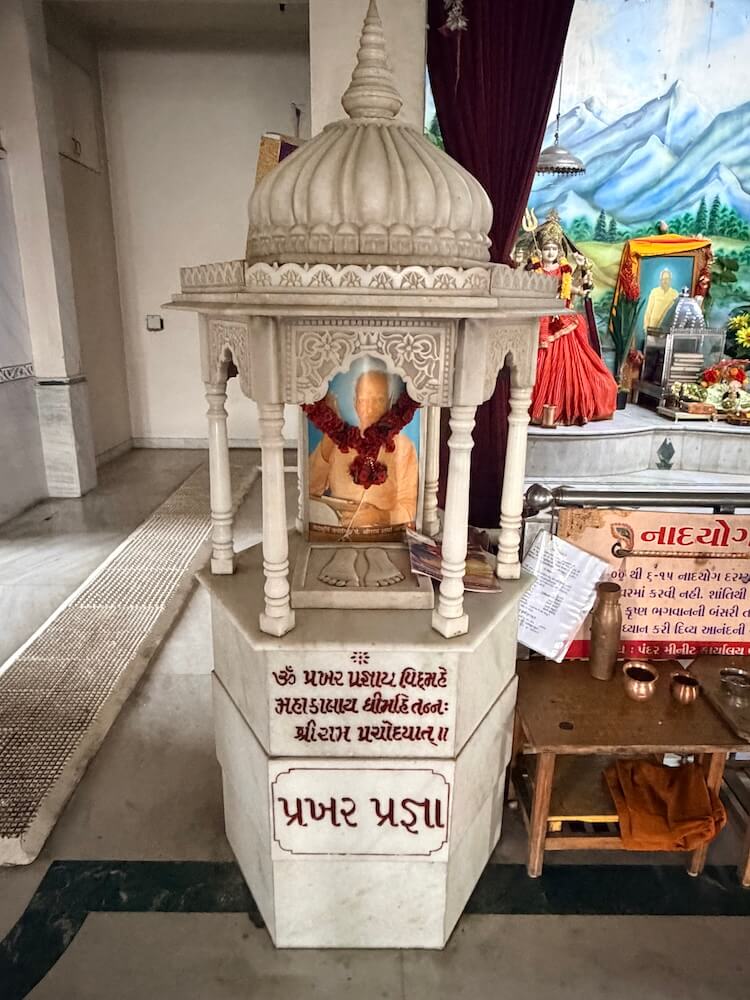 Maharshi Valmiki, Maharshi Yajnavalkya, Maharshi Charaka, Maharshi Vashishtha and Maharshi Parashuram along both sides.
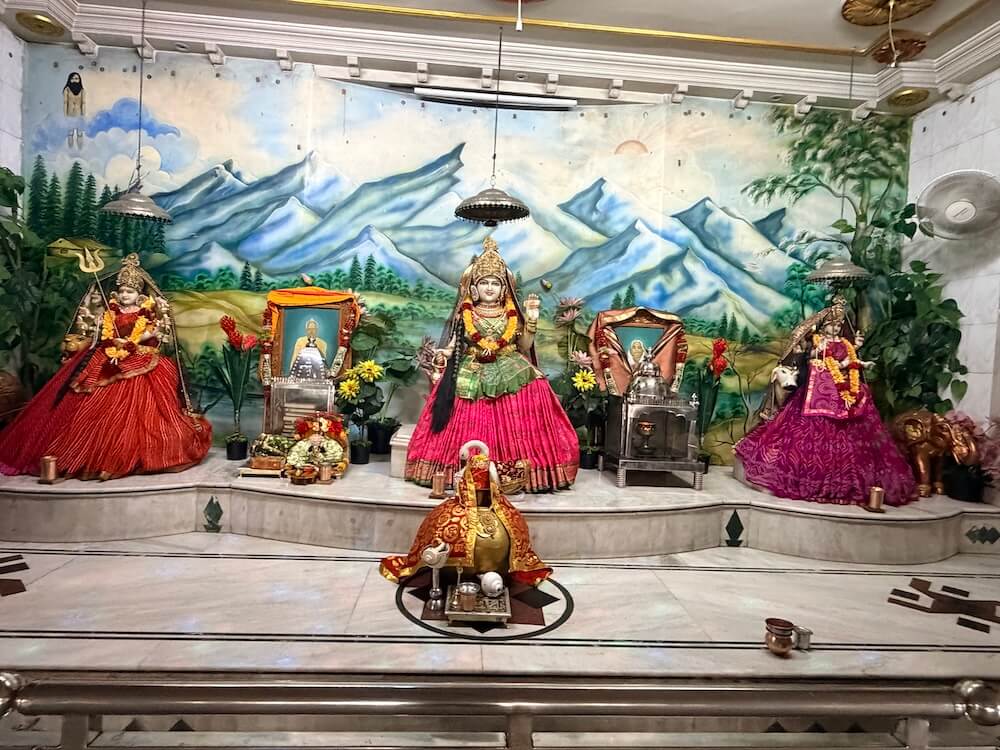
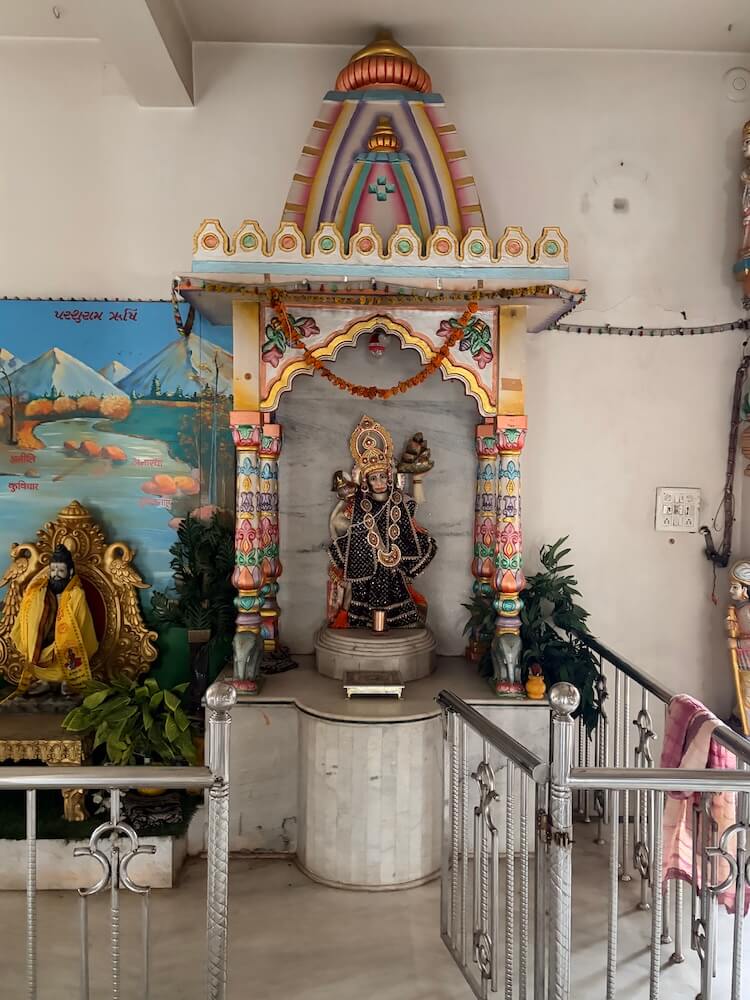
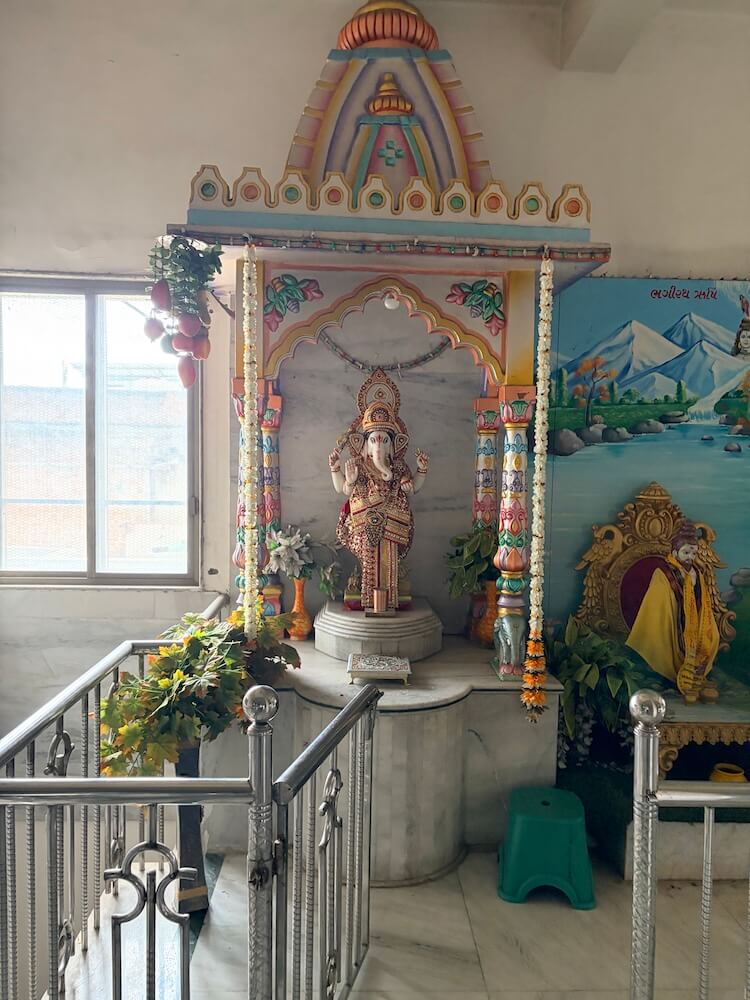
Near the antaral (vestibule), just before the sabhamandap, two devkoshtaks (wall niches) contain idols of Ganapati and Hanuman. At the centre of the high pedestal in the principal garbhagriha sits a single-faced white marble idol of Goddess Gayatri in lalitasan (royal ease posture). The two-armed deity holds a kamandalu (ascetic’s water pot) in one hand and the Vedic scriptures in the other. The Goddess wears garments, ornaments and a golden crown, with a decorative halo behind her head. Smaller makhars (decorative frames) stand on either side of the idol, one holding an akhand deep (eternal lamp) and the other housing a shakti kalash (sacred energy pot). To the left of Gayatri Mata stands an idol of trident-bearing Durga, while to her right is an idol of Savitri accompanied by Kamadhenu.
The temple remains open for darshan from 6 am to 12 pm and from 4 pm to 8.30 pm. Daily rituals begin at dawn with the ceremonial bathing of the deity, followed by the Kakad Aarti. Collective recitation and chanting of the Gayatri Mantra take place in the morning and evening. Naivedya is offered in the afternoon, followed by the evening maha aarti. Observed on Jyeshtha Shukla Ekadashi, Gayatri Jayanti is celebrated on a grand scale with a Shatachandi yajna (Vedic Chandi fire ritual), special homas and the distribution of mahaprasad. Special religious observances are also held during Chaitra and Ashwin Navratri, Vasant Panchami, Guru Purnima, Ram Navami and the month of Shravan.
Useful Information :
- Located 8 km from Kalupur Railway Station
- Located 7 km from Geeta Mandir Central ST Bus Station
- ST bus, rail and air services to Ahmedabad are available from many cities across the state
- BRTS bus services are available from different parts of the city
- Private vehicles can reach the temple
- Several accommodation and breakfast options are available in the surrounding area
- Contact : Temple Office, Telephone : 079-22970847, Mobile : 9016264195
गायत्री शक्तिपीठ
क्रांतिकुंज सीटीएम, अमराईवाड़ी, अहमदाबाद
मंदिरे
Temples
मंदिर
મંદિરો
கோவில்கள்
దేవాలయాలు
ക്ഷേത്രങ്ങൾ
ದೇವಾಲಯಗಳು
মন্দিরসমূহ
ਮੰਦਿਰ
-
कोटेश्वर महादेव मंदिर कोटेश्वर (मोटेरा), ता./जि. अहमदाबाद
अधिक माहितीKoteshwar Mahadev Temple Koteshwar (Motera), Tal./Dist. Ahmedabad
View Detailsकोटेश्वर महादेव मंदिर कोटेश्वर (मोटेरा), ताल./जिला. अहमदाबाद
विवरण देखेंKoteshwar Mahadev Temple Koteshwar (Motera), Tal./Dist. Ahmedabad
વિગત જુઓKoteshwar Mahadev Temple Koteshwar (Motera), Tal./Dist. Ahmedabad
விவரங்களைக் காண்கKoteshwar Mahadev Temple Koteshwar (Motera), Tal./Dist. Ahmedabad
వివరాలను చూడండిKoteshwar Mahadev Temple Koteshwar (Motera), Tal./Dist. Ahmedabad
വിശദാംശങ്ങൾ കാണുകKoteshwar Mahadev Temple Koteshwar (Motera), Tal./Dist. Ahmedabad
ವಿವರಗಳನ್ನು ವೀಕ್ಷಿಸಿKoteshwar Mahadev Temple Koteshwar (Motera), Tal./Dist. Ahmedabad
বিস্তারিত দেখুনKoteshwar Mahadev Temple Koteshwar (Motera), Tal./Dist. Ahmedabad
ਵੇਰਵੇ ਦੇਖੋ -
चाकुडीया महादेव मंदिर राखियाल, अहमदाबाद, जि. अहमदाबाद
अधिक माहितीChakudiya Mahadev Temple Rakhial, Ahmedabad, Dist. Ahmedabad
View Detailsचकुड़िया महादेव मंदिर रखियाल, अहमदाबाद, जिला। अहमदाबाद
विवरण देखेंChakudiya Mahadev Temple Rakhial, Ahmedabad, Dist. Ahmedabad
વિગત જુઓChakudiya Mahadev Temple Rakhial, Ahmedabad, Dist. Ahmedabad
விவரங்களைக் காண்கChakudiya Mahadev Temple Rakhial, Ahmedabad, Dist. Ahmedabad
వివరాలను చూడండిChakudiya Mahadev Temple Rakhial, Ahmedabad, Dist. Ahmedabad
വിശദാംശങ്ങൾ കാണുകChakudiya Mahadev Temple Rakhial, Ahmedabad, Dist. Ahmedabad
ವಿವರಗಳನ್ನು ವೀಕ್ಷಿಸಿChakudiya Mahadev Temple Rakhial, Ahmedabad, Dist. Ahmedabad
বিস্তারিত দেখুনChakudiya Mahadev Temple Rakhial, Ahmedabad, Dist. Ahmedabad
ਵੇਰਵੇ ਦੇਖੋ -
काळाराम मंदिर हाजा पटेल नि पोळ, कालुपूर, अहमदाबाद
अधिक माहितीKalaram Temple Haja Patel ni Pol, Kalupur, Ahmedabad
View Detailsकालाराम मंदिर हाजा पटेल नी पोल, कालूपुर, अहमदाबाद
विवरण देखेंKalaram Temple Haja Patel ni Pol, Kalupur, Ahmedabad
વિગત જુઓKalaram Temple Haja Patel ni Pol, Kalupur, Ahmedabad
விவரங்களைக் காண்கKalaram Temple Haja Patel ni Pol, Kalupur, Ahmedabad
వివరాలను చూడండిKalaram Temple Haja Patel ni Pol, Kalupur, Ahmedabad
വിശദാംശങ്ങൾ കാണുകKalaram Temple Haja Patel ni Pol, Kalupur, Ahmedabad
ವಿವರಗಳನ್ನು ವೀಕ್ಷಿಸಿKalaram Temple Haja Patel ni Pol, Kalupur, Ahmedabad
বিস্তারিত দেখুনKalaram Temple Haja Patel ni Pol, Kalupur, Ahmedabad
ਵੇਰਵੇ ਦੇਖੋ