
काळाराम मंदिर
हाजा पटेल नि पोळ, कालुपूर, अहमदाबाद
Kalaram Temple
Haja Patel ni Pol, Kalupur, Ahmedabad
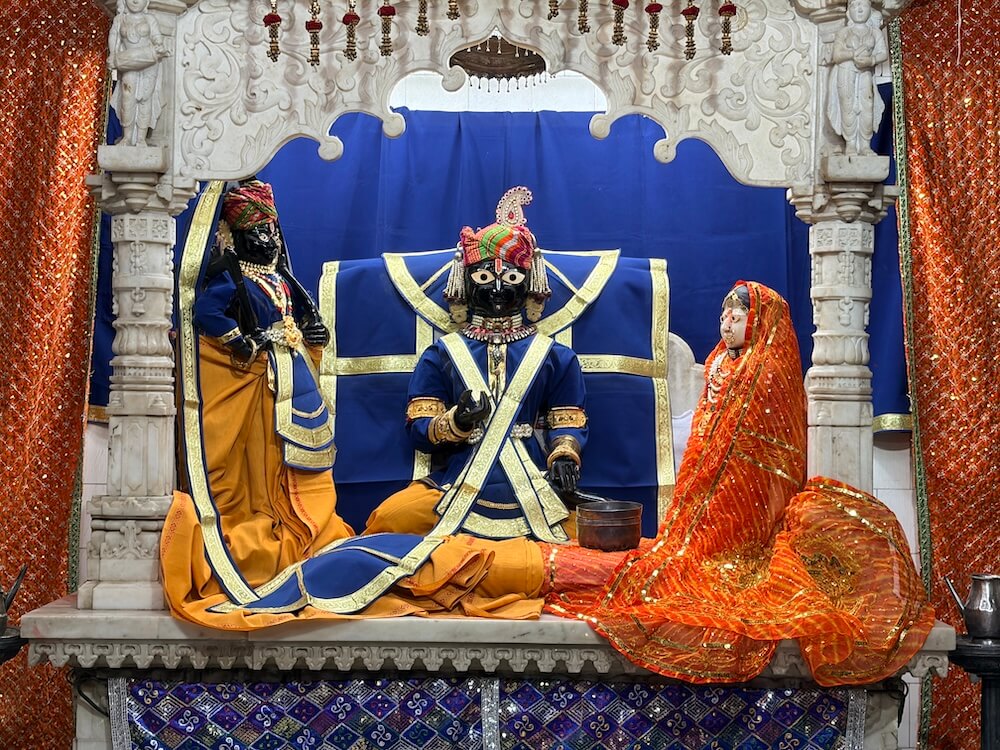 Kalaram Temple stands in the historic settlement of Haja Patel ni Pol in Ahmedabad’s Kalupur area. Like the celebrated Kalaram Temple at Panchavati in Nashik, Maharashtra, this shrine houses a black stone idol of Shri Ram. Yet its design differs markedly from that of an ordinary temple, as the place of worship is set within an ancient haveli. Here, devotees see Lord Ramchandra in his forest-dwelling form. Without the traditional bow and arrows, the deity sits peacefully in padmasan (lotus posture). Also known as Chitrakoot Dham, the shrine is included in the Ahmedabad Municipal Corporation’s official Heritage Walk. Its unusual architecture and distinctive murti draw devotees from across the country as well as scholars and visitors from abroad.
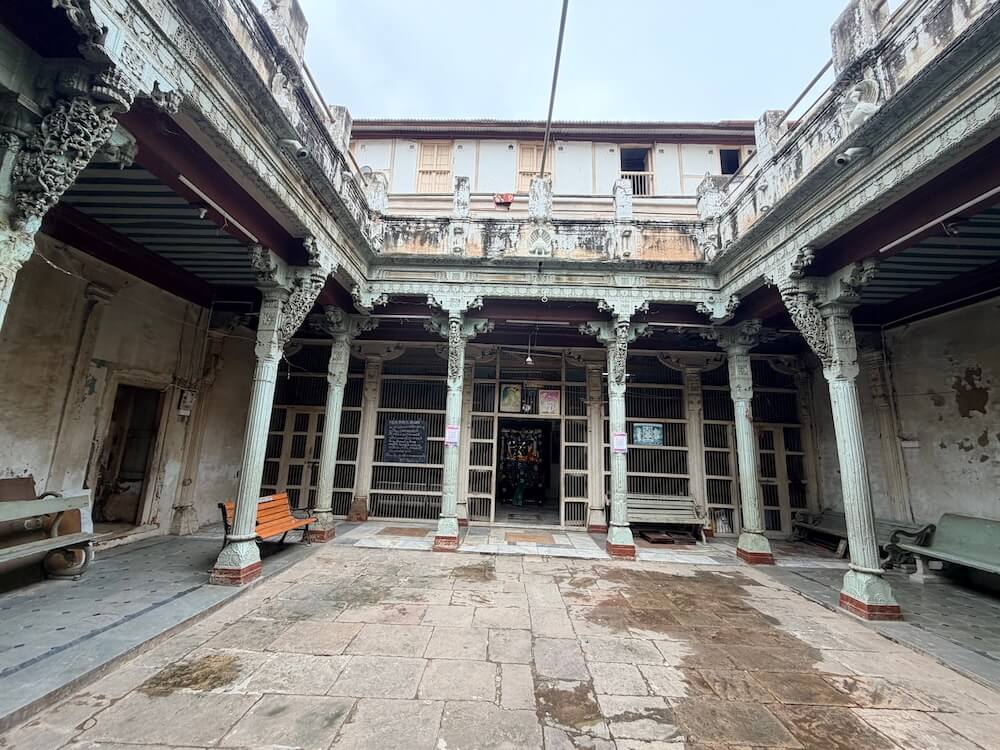 The history of this locality and of Kalupur itself stretches back many centuries. In 1411, Sultan Ahmad Shah I of the Gujarat Sultanate founded Ahmedabad on the banks of the Sabarmati River. In the 18th century, Ali Muhammad Khan wrote the Persian chronicle ‘Mirat-i-Ahmadi’, which records that several nobles established new settlements bearing their names as the city expanded during the 15th century. One such quarter, founded by a noble named Malik Kalu, later came to be known as Kalupur. Within it, the settlement of Haja Patel ni Pol takes its name from Haja Patel, a prominent local resident.
The word pol derives from the Sanskrit term pratoli, meaning a gateway or principal street through a town. During the medieval period, 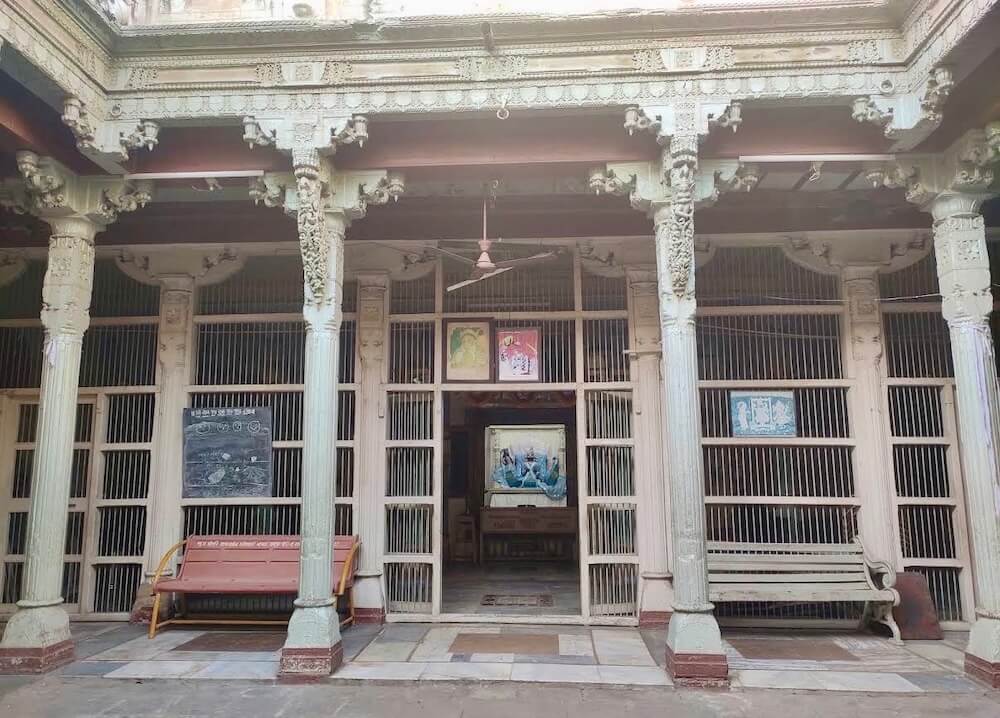 families of the same caste or occupation established such enclosed settlements and lived together for protection against foreign invasions and civil disturbances. That traditional urban character remains clearly visible here today. Narrow lanes, a large wooden gate closed at night, secret passages for emergencies, shared wells and finely crafted raised chabutras (bird-feeding structures) reflect a close-knit form of community living.
According to Indian mythological traditions and various religious texts, Lord Ramchandra was shyamavarna (dark-complexioned). The 16th-century epic ‘Shri Ramcharitmanas’, composed by Sant Tulsidas, portrays Lord Shri Ram as dark and gentle, akin to a blue lotus. In traditional iconography, the deity is generally depicted holding an unfailing arrow and the Kodanda bow. 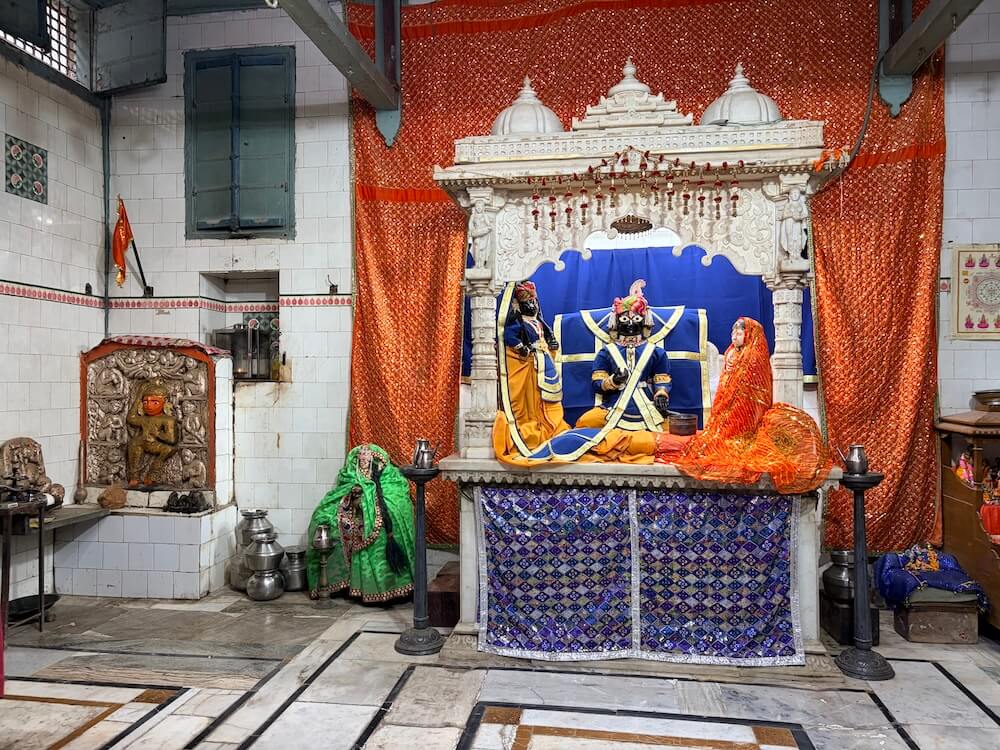 The idol in this Ahmedabad temple, however, presents a different vision.
During their 14 years of exile, Lord Ramchandra, Sita Mata and Lakshman are believed to have lived at Chitrakoot. There, they regularly performed trikala sandhya, the thrice-daily observance of meditation and worship. The stone idol in this shrine depicts Lord Ramchandra in a contemplative, ascetic posture. Because he is shown absorbed in meditation, he does not hold a bow. The murti is regarded as a symbol of Shri Ram’s calm and reflective form during his years of forest exile.
No written inscription survives to establish the exact date of the temple’s foundation, though local oral tradition and historians’ views place its age at approximately 350 to 400 years. According to popular belief, 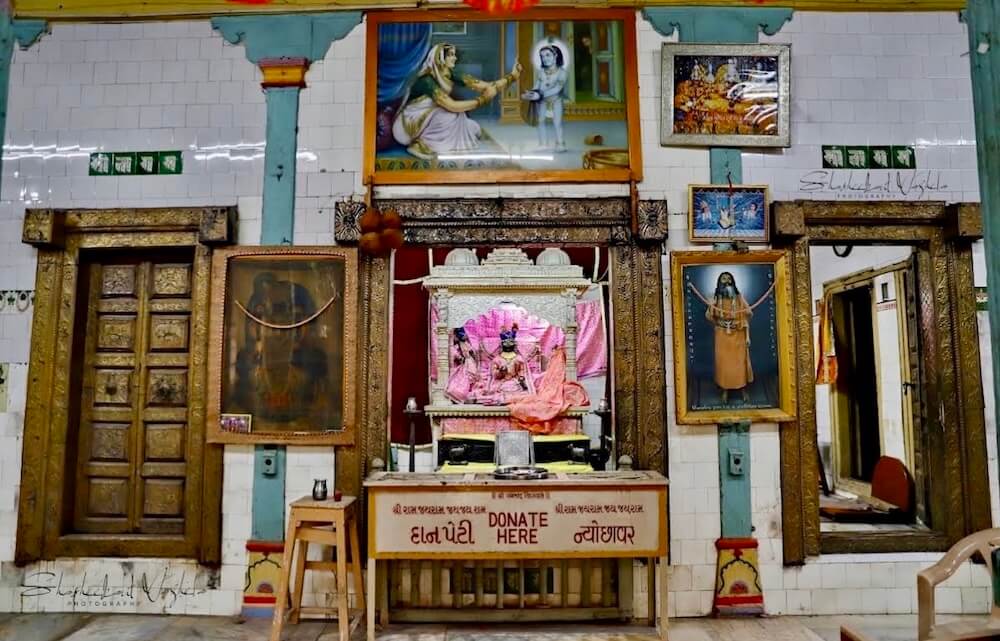 when Hindu temples faced destruction during medieval invasions, the priests of the time buried the sacred idols underground to protect them. For many years afterwards, their whereabouts remained unknown. Local legend states that during the Peshwa period, a devout man named Hariprasad received a divine vision revealing where the deities lay buried, recovered them and rebuilt the shrine here. Old documents and records from the period of Maratha rule are also said to contain references to the temple.
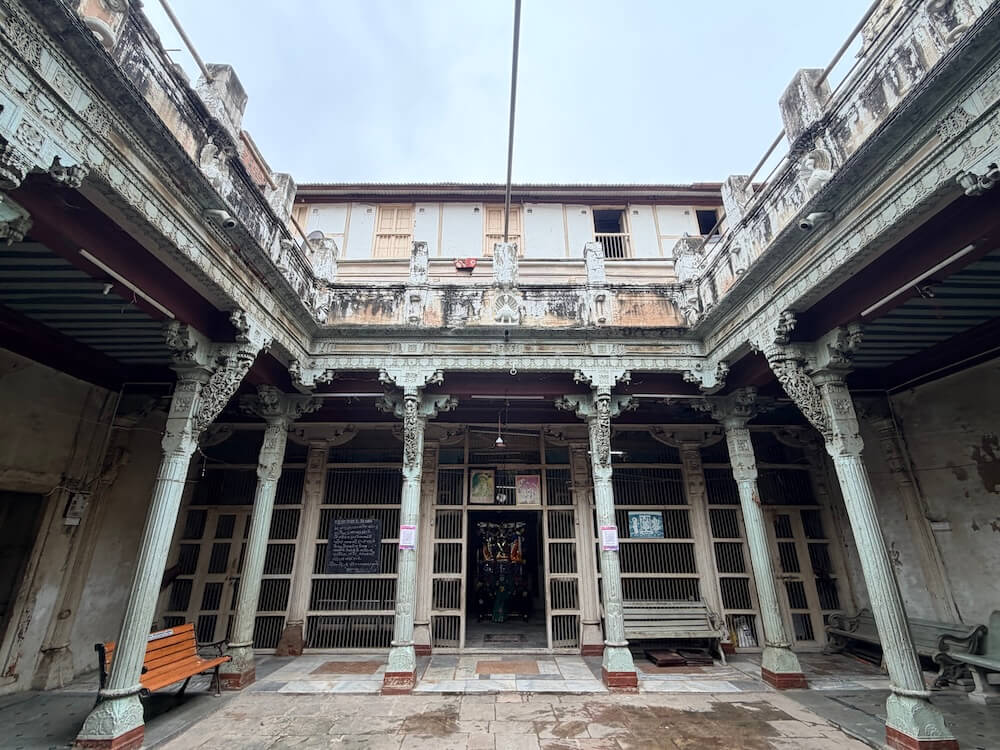
The structure follows a carefully planned layout. A narrow lane off Relief Road in Kalupur leads into Haja Patel ni Pol and reaches the entrance of a haveli that looks like an ordinary house from the outside. According to local belief, the shrine was built this way so that it would not attract the attention of hostile invaders. Inside, a central courtyard forms the heart of the building, an integral feature of Ahmedabad’s traditional haveli architecture. Rich carvings cover the wooden doors, walls and ceilings, while the upper sections of the timber pillars bear sculptures of musicians and dancers and wall panels display carvings of peacocks and other animals. Above the temple rises a small domed shikhar.
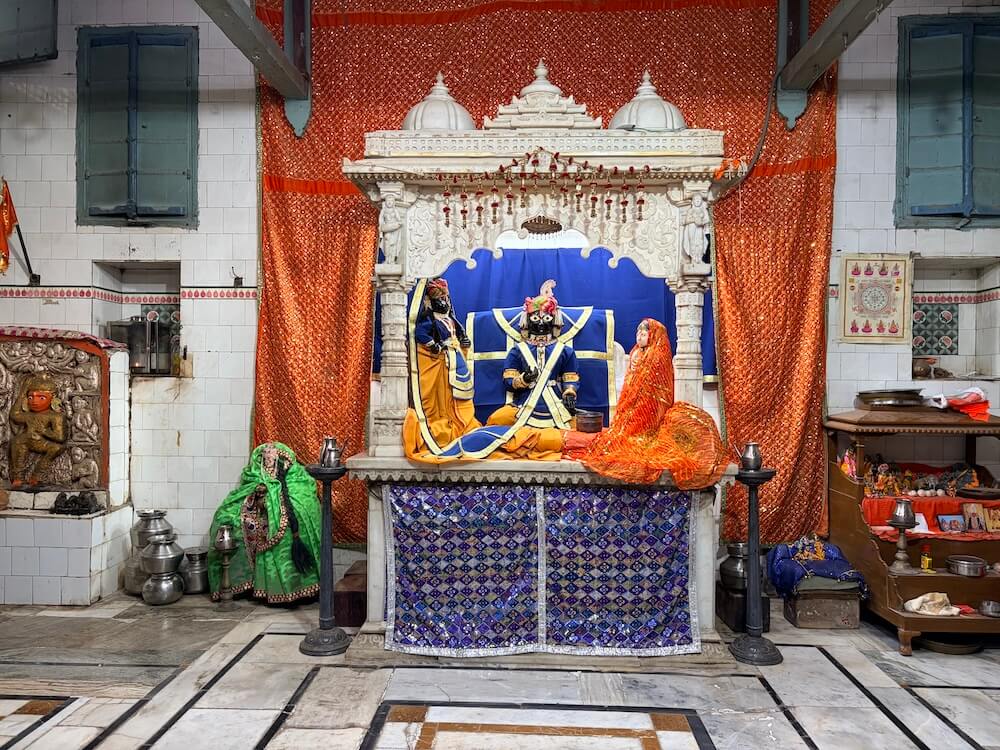
Silver cladding covers the principal entrance to the garbhagriha and its wooden doorframe. Within an ornamental white marble makhar (decorative frame) rests a dark stone idol of Lord Ramchandra seated in padmasan. The murti is carved from a precious black stone known as kasoti, which goldsmiths used in earlier times to test the purity of gold. Sita Mata stands to the Lord’s left and his younger brother Lakshman to his right, with all three idols fashioned from the same kasoti stone.
To ensure that no disturbance interrupts the trikala sandhya, Lakshman stands guard on the right, holding his bow and arrows. A small cradle is placed beneath the makhar. In most temples dedicated to Lord Ram, an idol of Hanuman stands directly before the principal deity. Here, however, Hanuman is not positioned in front of Ram and Lakshman; instead, his murti is installed separately at some distance within the sanctum itself.
Daily worship follows the Ramanandi tradition of the Vaishnava sect and the temple remains open for darshan every day from 7 am to 11.30 am and from 5 pm to 7.30 pm. Five daily aartis are performed for Lord Ramchandra in the haveli tradition. Morning rituals begin with Mangala Aarti to awaken the Lord, followed by Shringar Aarti after the deities are ceremonially bathed and adorned with garments and ornaments. At midday, Rajbhog Aarti accompanies an offering of five delicacies, while Sandhya Aarti takes place at sunset and the final Shayan Aarti prepares the deities for rest before the doors close at night. Alongside these rituals, a traditional board game called chausar is placed before the murtis for the Lord’s recreation. During the intense heat of summer, the idols are coated with sandalwood paste for cooling.
Various festivals and religious celebrations are organised at the temple throughout the year, with Ram Navami being the largest and most important festival here. From early morning, the shrine fills with a large gathering of devotees. At exactly noon, the birth anniversary of Lord Shri Ram is celebrated, followed by a maha aarti and, in keeping with an ancient tradition, the reading of the Lord’s janmapatrika (birth horoscope). The temple also hosts recitations of the ‘Sundarkand’ and continuous programmes of bhajan and kirtan during the festivities. During the month of Shravan, the deities are placed on a swing for Jhula Utsav. On Margashirsha Shukla Panchami, celebrated as Vivah Panchami, the ceremonial wedding of Ram and Sita is observed, while special religious rites and worship take place during Navratri.
Useful Information:
- Located 1 km from Ahmedabad Railway Station.
- AMTS buses and autorickshaws are available from different parts of the city.
- Private vehicles can reach Relief Road, a short distance from the temple.
- Several accommodation and breakfast options are available in the surrounding area.
कालाराम मंदिर
हाजा पटेल नी पोल, कालूपुर, अहमदाबाद
मंदिरे
Temples
मंदिर
મંદિરો
கோவில்கள்
దేవాలయాలు
ക്ഷേത്രങ്ങൾ
ದೇವಾಲಯಗಳು
মন্দিরসমূহ
ਮੰਦਿਰ
-
कोटेश्वर महादेव मंदिर कोटेश्वर (मोटेरा), ता./जि. अहमदाबाद
अधिक माहितीKoteshwar Mahadev Temple Koteshwar (Motera), Tal./Dist. Ahmedabad
View Detailsकोटेश्वर महादेव मंदिर कोटेश्वर (मोटेरा), ताल./जिला. अहमदाबाद
विवरण देखेंKoteshwar Mahadev Temple Koteshwar (Motera), Tal./Dist. Ahmedabad
વિગત જુઓKoteshwar Mahadev Temple Koteshwar (Motera), Tal./Dist. Ahmedabad
விவரங்களைக் காண்கKoteshwar Mahadev Temple Koteshwar (Motera), Tal./Dist. Ahmedabad
వివరాలను చూడండిKoteshwar Mahadev Temple Koteshwar (Motera), Tal./Dist. Ahmedabad
വിശദാംശങ്ങൾ കാണുകKoteshwar Mahadev Temple Koteshwar (Motera), Tal./Dist. Ahmedabad
ವಿವರಗಳನ್ನು ವೀಕ್ಷಿಸಿKoteshwar Mahadev Temple Koteshwar (Motera), Tal./Dist. Ahmedabad
বিস্তারিত দেখুনKoteshwar Mahadev Temple Koteshwar (Motera), Tal./Dist. Ahmedabad
ਵੇਰਵੇ ਦੇਖੋ -
गायत्री शक्तीपीठ क्रांतीकुंज सीटीएम, अमराईवाडी, अहमदाबाद
अधिक माहितीGayatri Shaktipeeth Krantikunj CTM, Amraiwadi, Ahmedabad
View Detailsगायत्री शक्तिपीठ क्रांतिकुंज सीटीएम, अमराईवाड़ी, अहमदाबाद
विवरण देखेंGayatri Shaktipeeth Krantikunj CTM, Amraiwadi, Ahmedabad
વિગત જુઓGayatri Shaktipeeth Krantikunj CTM, Amraiwadi, Ahmedabad
விவரங்களைக் காண்கGayatri Shaktipeeth Krantikunj CTM, Amraiwadi, Ahmedabad
వివరాలను చూడండిGayatri Shaktipeeth Krantikunj CTM, Amraiwadi, Ahmedabad
വിശദാംശങ്ങൾ കാണുകGayatri Shaktipeeth Krantikunj CTM, Amraiwadi, Ahmedabad
ವಿವರಗಳನ್ನು ವೀಕ್ಷಿಸಿGayatri Shaktipeeth Krantikunj CTM, Amraiwadi, Ahmedabad
বিস্তারিত দেখুনGayatri Shaktipeeth Krantikunj CTM, Amraiwadi, Ahmedabad
ਵੇਰਵੇ ਦੇਖੋ -
चाकुडीया महादेव मंदिर राखियाल, अहमदाबाद, जि. अहमदाबाद
अधिक माहितीChakudiya Mahadev Temple Rakhial, Ahmedabad, Dist. Ahmedabad
View Detailsचकुड़िया महादेव मंदिर रखियाल, अहमदाबाद, जिला। अहमदाबाद
विवरण देखेंChakudiya Mahadev Temple Rakhial, Ahmedabad, Dist. Ahmedabad
વિગત જુઓChakudiya Mahadev Temple Rakhial, Ahmedabad, Dist. Ahmedabad
விவரங்களைக் காண்கChakudiya Mahadev Temple Rakhial, Ahmedabad, Dist. Ahmedabad
వివరాలను చూడండిChakudiya Mahadev Temple Rakhial, Ahmedabad, Dist. Ahmedabad
വിശദാംശങ്ങൾ കാണുകChakudiya Mahadev Temple Rakhial, Ahmedabad, Dist. Ahmedabad
ವಿವರಗಳನ್ನು ವೀಕ್ಷಿಸಿChakudiya Mahadev Temple Rakhial, Ahmedabad, Dist. Ahmedabad
বিস্তারিত দেখুনChakudiya Mahadev Temple Rakhial, Ahmedabad, Dist. Ahmedabad
ਵੇਰਵੇ ਦੇਖੋ