
ओरामाना पेरुमथ्रिकोविल
ओरमणा, जि. एर्नाकुलम
Ooramana Perumthrikkovil
Ooramana, Dist. Ernakulam
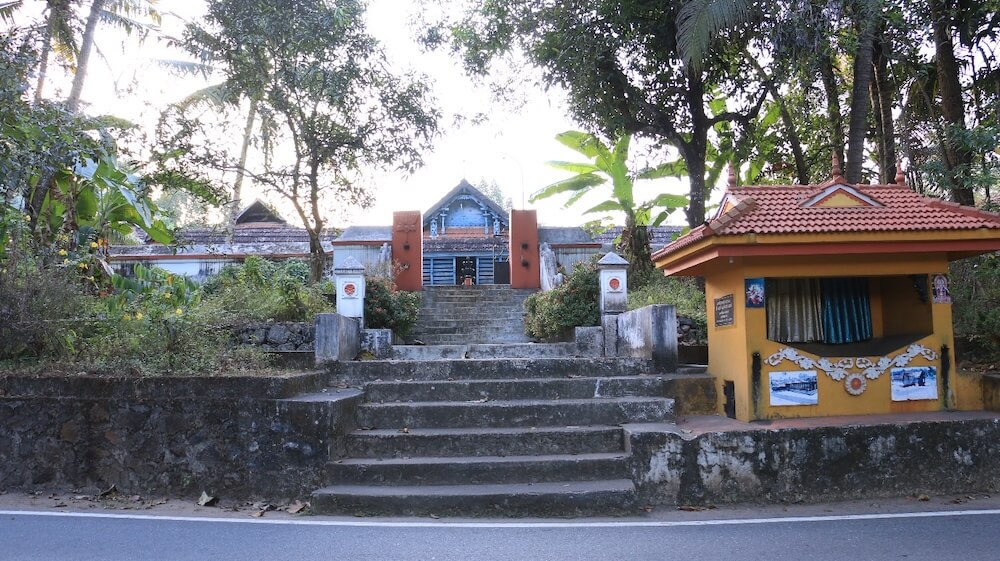
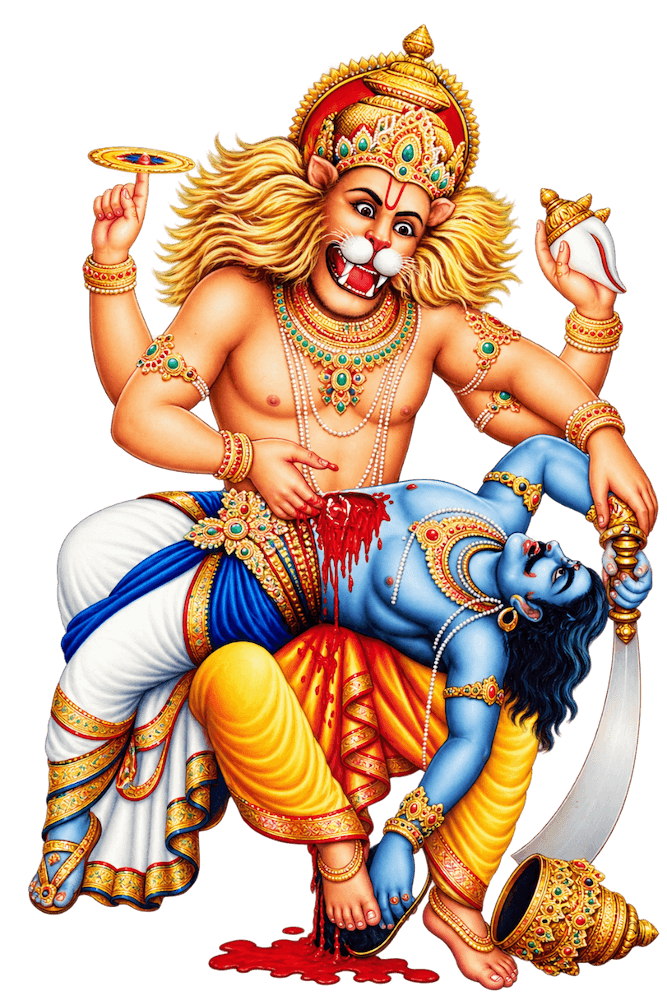 Located about 13 kilometres from Muvattupuzha town, the Sri Narasimha Swamy Temple and Sri Dharma Sastha Temple stand on the banks of the Muvattupuzha River in the picturesque village of Ooramana, within Ramamangalam Grama Panchayat. Both temples face east. The two temples share an inseparable historical and ritual relationship, with their traditions and worship closely intertwined.
According to local tradition and temple lore, the Ooramana Sri Narasimha Swamy Temple is believed to have a history extending back nearly 2,000 years and is traditionally associated with Sage Parasurama, who is believed to have consecrated the shrine. The present architectural remains, however, belong to a much later period, with the temple’s stone foundations and timber structures traditionally attributed to the medieval period, reflecting the distinctive Kerala style of temple architecture. The temple also has a long association with learning and tradition and is said to have served as a centre of Vedic and Sanskrit studies. The Sri Dharma Sastha Temple, situated within the same sacred landscape, is traditionally believed to be around 800 years old, with its deity regarded as a Swayambhu manifestation of Sastha associated with Chamravattam. The Sreekovil of the Narasimha temple is further distinguished by its traditional Kerala mural paintings, believed to be several centuries old, depicting episodes such as Gajendra Moksham, Sivathandavam, Sree Rama Pattabhishekam and the Rama–Ravana Yuddham, along with other divine and mythological themes.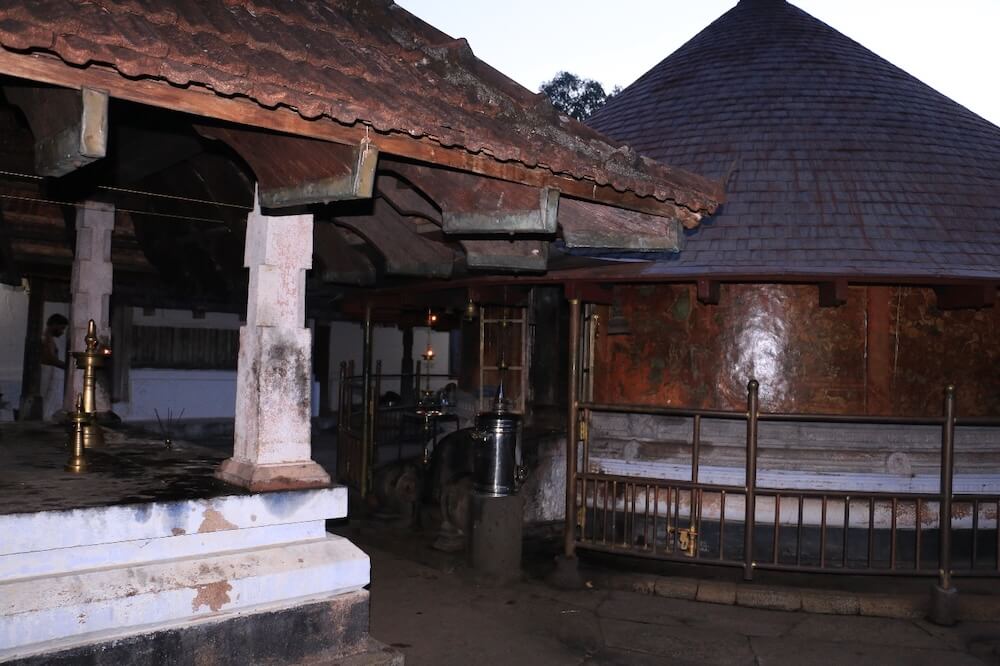
Together, the traditional accounts, the surviving medieval architectural fabric and the mural heritage reflect the long and layered history of the Ooramana temple complex. For generations, the administration of these temples has been entrusted to three Illams or traditional Namboothiri households. In earlier times, the temple owned extensive agricultural lands and received an annual income of more than 3,000 para of paddy and around Rs. 2,000 in lease revenue. However, following the implementation of the land reforms in 1957, the temple lost most of its sources of income. It gradually fell into disrepair, reaching a stage where there was barely enough income even to meet its daily ritual expenses. 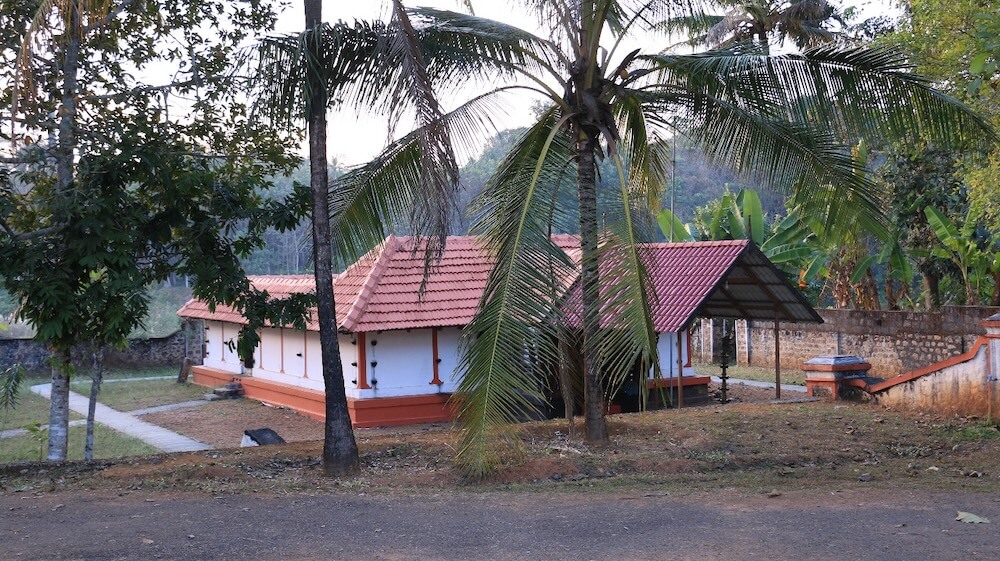 Few decades ago, local residents formed the Ooramana Temple Protection Committee with the aim of restoring and preserving the temple. Since then, its daily rituals and annual observances, including the temple festival, have been conducted with renewed care and devotion.
According to tradition, while travelling along the seashore, Sage Parasurama once came upon a full-sized image of Lord Vishnu. Seeking a suitable place for its consecration, he travelled in search of a location worthy of the sacred image. Eventually, he reached this serene and beautiful place, then known as Orumanam. 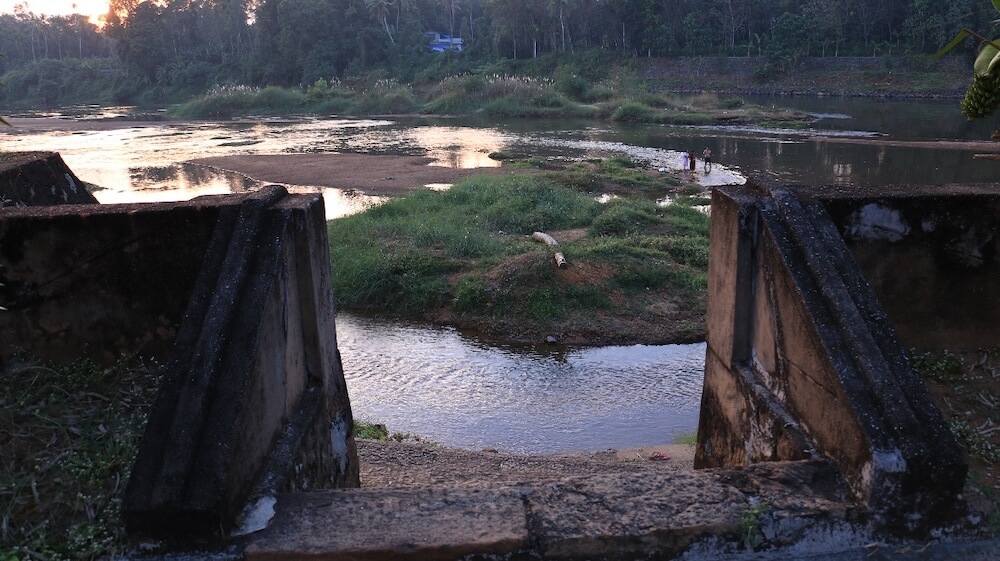 Here, he is said to have witnessed a remarkable sight: creatures regarded as natural enemies — the mongoose and the snake, the lion and the deer and the snake and the frog — were living together peacefully. Seeing this harmony, Parasurama decided that the place was worthy of the consecration of the sacred image and installed it at the site where the temple now stands. The name Orumanam is believed to have gradually evolved over time into the present name, Ooramana.
Local tradition also holds that, in ancient times, as many as 72 Manas or traditional Brahmin households, flourished here with great prosperity and prestige. 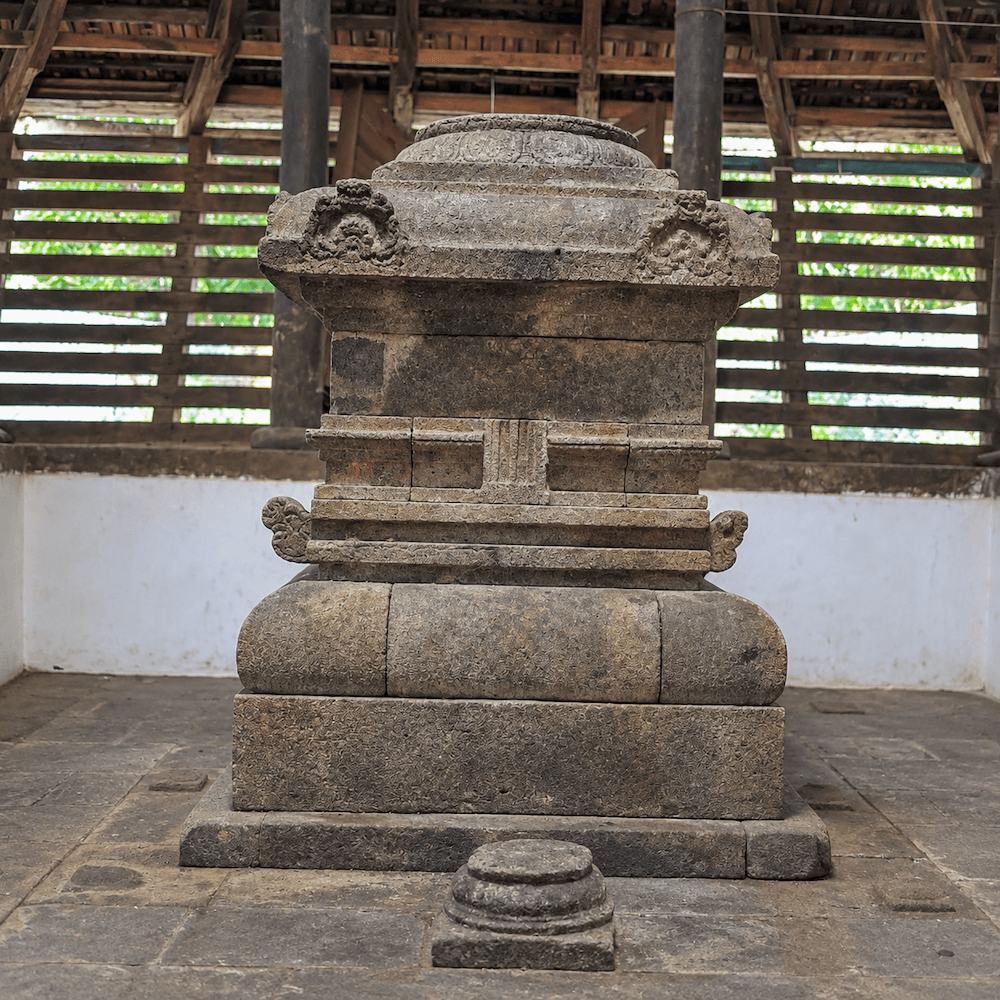 Their destruction is attributed to a curse pronounced by Lord Narasimha. Another cherished legend associated with the temple explains why Lord Narasimha is revered here as Annadana Prabhu — the Lord who provides food and dispels hunger. Once, a Brahmin traveller from a distant land arrived at Ooramana on foot from the east at dusk. Overcome with hunger, he went from one Mana to another, seeking food, but none of the households offered him anything. Finally, at the last Mana, he was told that he could obtain food if he went directly to the temple. By the time he reached the temple, however, the evening worship had been completed and the doors had been closed. The priest and the Kazhakam attendant had also finished their meal and retired for the night. When the Brahmin woke them and pleaded for food, they told him that nothing was available that night and that something might be given to him after the noon worship the following day.
Disheartened, the Brahmin went down to the river, completed his evening ablutions and prayers and returned to the temple’s lamp tower. 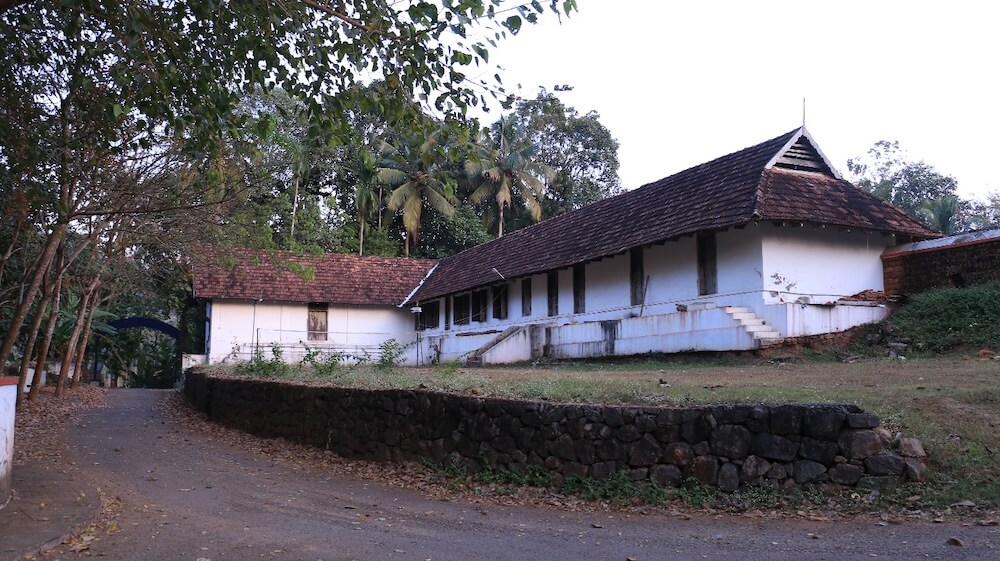 Exhausted by hunger and fatigue, he soon fell asleep. Suddenly, a tall and imposing man appeared, woke him and asked about his troubles. He then reassured him, saying, “Do not worry. I shall make arrangements.” The man took him to the Thidappilli, the temple kitchen, showed him some cooked rice (padachoru) and asked him to take it outside and eat. When the Brahmin said that it was too dark outside, the man instructed him to face east while eating and gave him a kindi, a traditional metal vessel, filled with water. The Brahmin then looked for the mysterious man, but he had disappeared. Carrying the food outside, the Brahmin saw a great light rising in the eastern direction and gradually spreading all around him.
 Sitting in its radiance, he ate his meal with great relief. At dawn the following morning, the priest and the Kazhakam attendant found the Brahmin asleep in the lamp tower. To their astonishment, the kindi, which had been washed and turned upside down inside the Sreekovil, was lying beside him. Yet the temple and the Sreekovil had remained securely locked. When questioned, the Brahmin narrated everything that had happened the previous evening. Further enquiries revealed that all the Manas where he had gone begging for food had been destroyed by fire. It was then understood that the light by which he had eaten his meal had been the glow of those burning houses.
 The people realised that the mysterious man who had appeared before the starving Brahmin and provided him with food was none other than Lord Narasimha Himself.
Overwhelmed by this revelation, they praised and worshipped the Lord. The remains of some of these ancient Manas can still be seen in Ooramana. This enduring legend is also why Lord Narasimha is revered here as Annadana Prabhu, the Lord who provides food and dispels hunger. The Sri Dharma Sastha Temple is traditionally believed to be around 800 years old.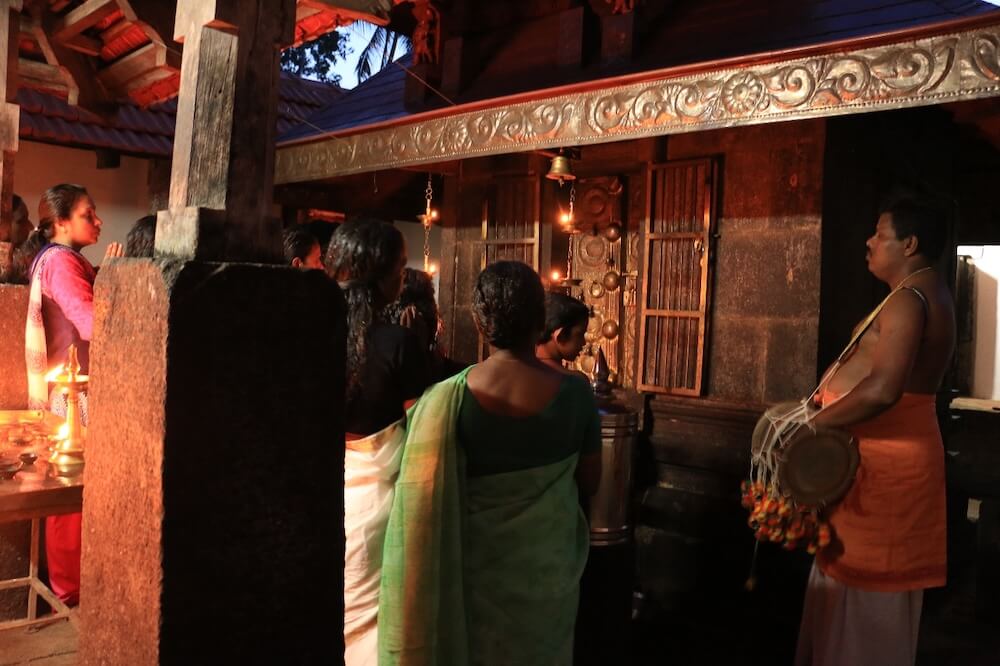 In earlier times, the Namboothiris belonging to the Thirunavaya Yogam pursued their Vedic studies at the Thirunavaya Matham and the Brahmins of the Ooramana region were also associated with this tradition. A Namboothiri of Elezhiam Mana, also known as Southern Elezhiam and now called Thekkinetam, situated to the south of the Ooramana temple, travelled to Thirunavaya for Vedic studies and later became a devoted worshipper of Sastha at Chamravattam, eventually settling there.
During this period the Karthas, who ruled the Ooramana region, killed the Brahmins living in the area, bringing the Brahmin lineage of Ooramana to an end. The Karthas later became divided into two factions and began fighting among themselves and in one such conflict, 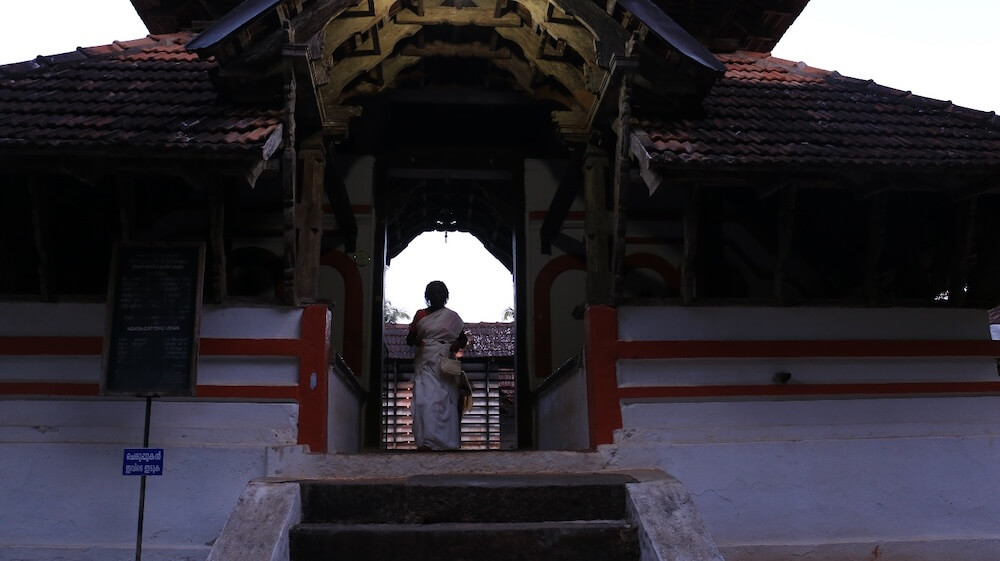 the Karthas of Vattam Kandathil and Pottanikatt joined forces and defeated the opposing faction. With no Brahmin families remaining in Ooramana, the Karthas decided to bring Narayanan Namboothiri of Elezhiam Mana, who was then residing at Chamravattam, back to the region. Narayanan Namboothiri, however, was reluctant to leave Chamravattam, where he had become a devoted worshipper of Sastha. One night, Sastha is said to have appeared to him in a dream and instructed him, “Take a stone from here and go to Ooramana. I shall come with you.” Accordingly, he took a stone from Chamravattam, placed it beneath his traditional palm-leaf umbrella and set out for Ooramana.
 On reaching the riverside, he placed the stone and umbrella down before going to bath. After his bath, when he tried to lift the stone, he found that it had become firmly rooted to the ground. Realising that Sastha of Chamravattam had manifested here as a Swayambhu, he offered his prayers facing east and according to tradition, this is why the deity at Ooramana faces east. At that time, the lands of Ooramana were believed to belong to Lord Narasimha.
 Sastha therefore instructed His Bhoothaganas to create land for Him and they began constructing a bund across the river in an attempt to divert its course between the two temples. Seeing this, Lord Narasimha sent Devendra as His messenger. Devendra assumed the form of a rooster and crowed and mistaking the sound for the arrival of dawn, the Bhoothaganas abandoned their work and fled. The elevated portion that remains in the middle of the river is known locally as Bhoothathankettu.
Later, through the mediation of Devendra, Sri Dharma Sastha and Sri Narasimha Moorthy are said to have reached an agreement that half of all offerings received by Lord Narasimha would be given to Sastha.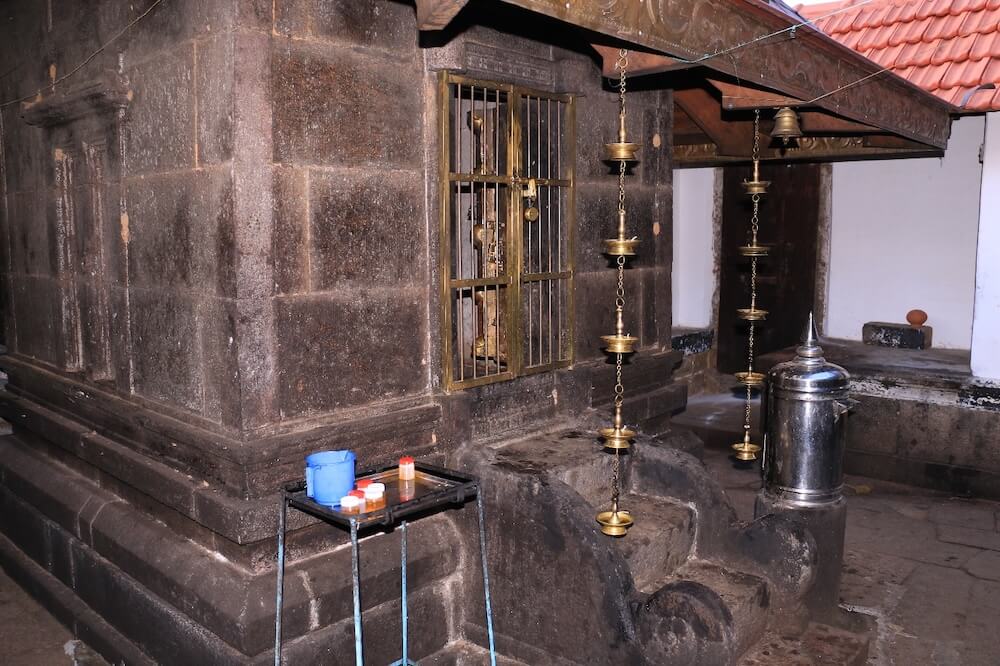 According to temple tradition, this arrangement continues to this day, with offerings made at the Ooramana temple being equally divided between the two deities. Among the traditional ritual brass vessels preserved at the temple, one holds a particularly special place. Known as the Vidhi Varppu or Kittiya Varppu, it is believed to be around 600 years old. According to tradition, an elderly woman who worked at the temple, carrying out duties such as cleaning the premises and washing the vessels, once accidentally dropped a large vessel into the river. Overcome with sorrow, she prayed to Lord Sastha and wept. Suddenly, from the very spot where the uruli had disappeared, a medium-sized, golden-coloured varppu emerged from the river. The delighted woman retrieved it, handed it over to the temple authorities and recounted what had happened. The vessel has a special association with the temple’s principal offering, Chathushatham. Tradition holds that when Chathushatham is prepared, exactly one portion fills this particular varppu and even today, Chathushatham payasam offered to Lord Sastha is prepared and offered in this vessel. The varppu is also believed to possess an unusual characteristic: despite having no visible support or levelling, it does not tilt towards either side. A traditional varppu normally has a slight natural inclination and as this vessel is believed to lack that characteristic, it came to be known as the “Vidhi Varppu”, referring to a varppu that defies the usual rule.
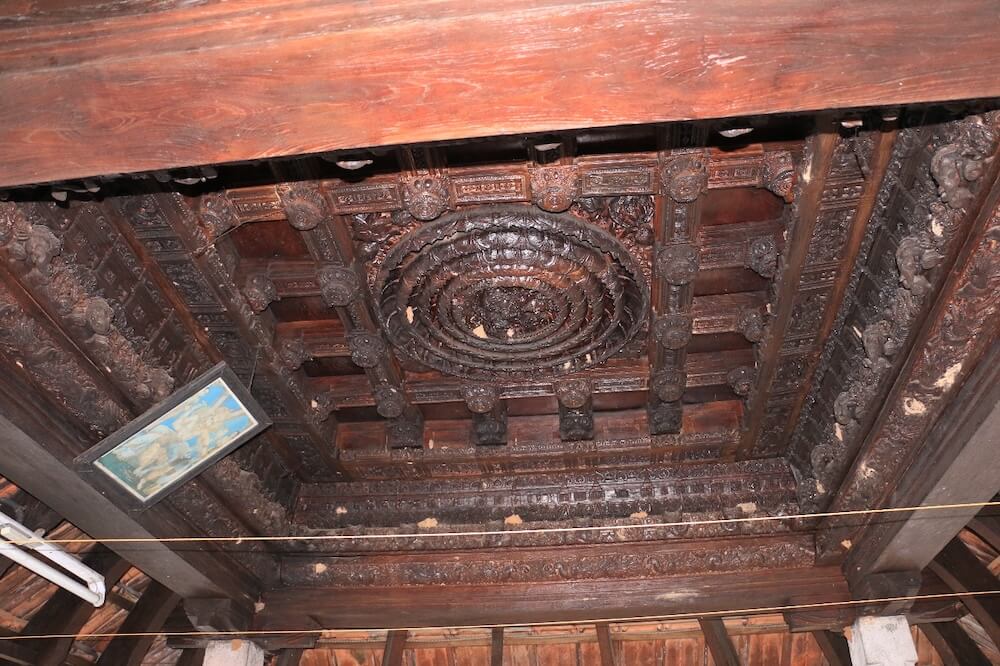
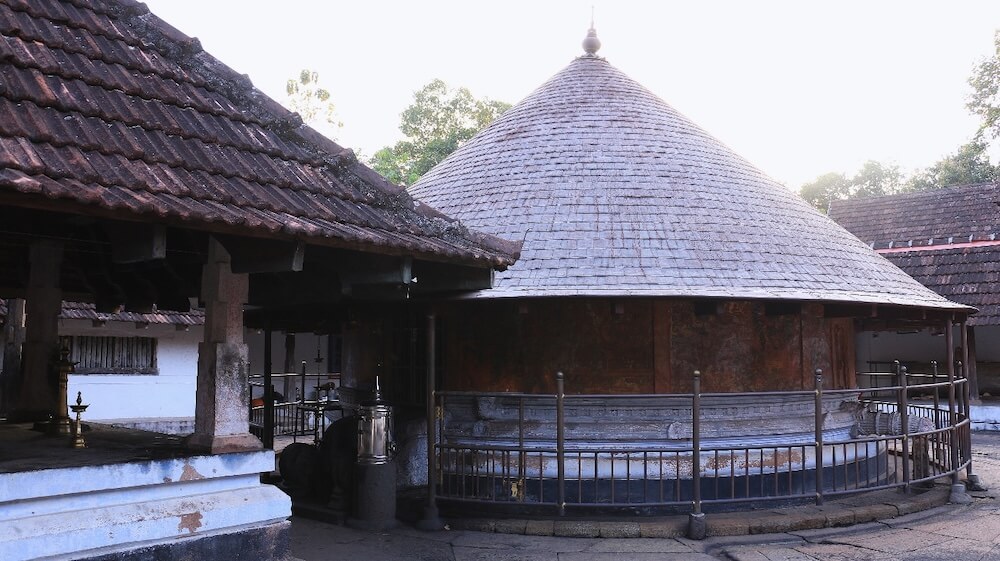
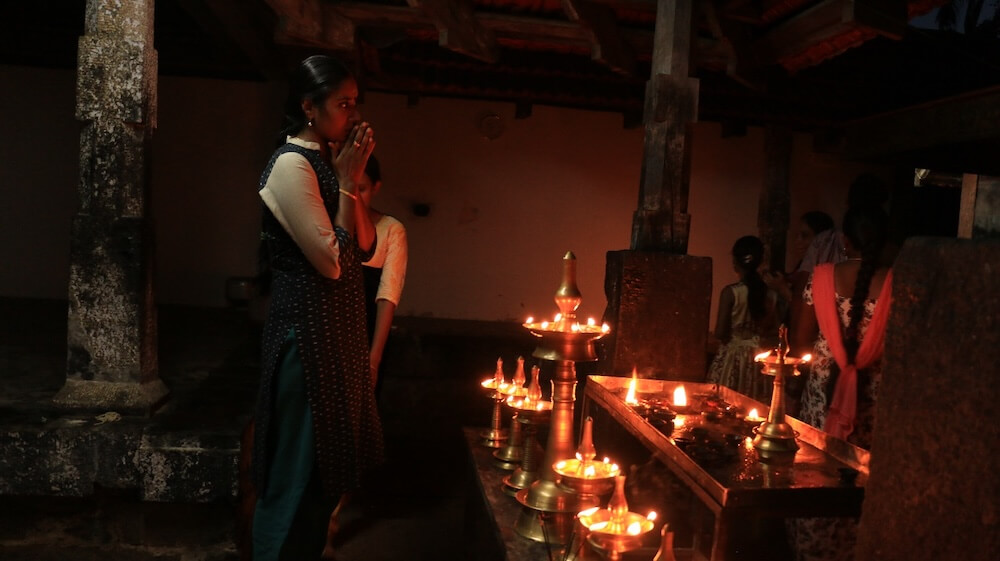
Spread across nearly an acre of temple land, the Ooramana Sri Narasimha Swamy Temple preserves the distinctive architectural character of a traditional Kerala temple complex. The two-storeyed gopuram on the western side forms the principal entrance, while the northern side houses the Sadyalayam or Oottupura and the southern side a two-storeyed Kottaram or Malika. An Atithi Mandiram, with two rooms, stands on the western side. Further within the temple are the traditional Vilakkumadam, Chuttambalam, Balikkalpura and Mandapam, leading towards the principal shrine. The Vilakkumadam, with its aged timber, tiled roof and rows of lamps, lends a serene character to the inner precinct, while the Chuttambalam encloses the sacred space around the shrine. The Mandapam, with its richly carved wooden ceiling featuring intricate floral and geometric patterns, reflects the craftsmanship of traditional Kerala woodcarvers. At the heart of the complex stands the distinctive circular Sreekovil of Lord Narasimha, crowned by a broad, gracefully sloping copper-clad roof. Ornamental stone mouldings, the carved pranala and finely crafted wooden elements further enrich the shrine. The principal deity, Lord Narasimha, is graciously enshrined in the Sreekovil.
The idol, carved from Anjanashila, a sacred black stone, is adorned with a Panchaloha covering. The Sreekovil is also surrounded by beautiful traditional Kerala mural paintings, depicting sacred and mythological themes such as the Rama–Ravana war, Kiratarjuna, Gajendra Moksha, Dakshinamurti, Narasimha Avatara, Rasaleela and Lord Ganesha. Particularly rare is the depiction of Vamana in his Trivikrama form, a subject seldom seen in Kerala temple murals. Though some of the paintings have suffered deterioration over time, many continue to retain their artistic beauty. Recognising their historical and artistic significance, the Department of Archaeology, Government of Kerala, took the temple under its protection in 1997, undertaking the preservation and conservation of its valuable heritage.
The absence of traditional sub-deities or Upadevathakal, within the main Temple complex is a distinctive feature of the temple’s sacred arrangement. As the principal deity is worshipped as Ugra Narasimha Moorthy, the temple follows the traditional belief that no separate sub-shrines are established within the immediate precincts of the main shrine. Instead, the sacred landscape is defined by the unique coexistence of two independent and fully established shrines — the Sri Narasimha Swamy Temple on the higher ground and the Sri Dharma Sastha Temple situated lower down by the riverbank. This distinctive arrangement, in which the presence of Lord Sastha forms an integral part of the temple’s sacred tradition rather than that of a conventional Upadevatha, sets the Uramana temple complex apart from the usual pattern of Kerala temples.
The temple’s principal annual festival, the Thiruvutsavam, is celebrated during the month of Meenam, culminating on the Thiruvonam nakshatra. Other important annual observances include Niraputhari, Vishukkani, Vidyarambham and Mandala Chirappu, preserving the rich ritual traditions of the temple throughout the year.
A wide range of traditional vazhipadus and ritual offerings are performed, each carrying its own devotional significance. These include Pushpanjali, Vishesha Pushpanjali, Deepaaradhana, Deepaaradhana Chuttuvilakku, Ney Vilakku, Neeranjanam, Elluthiri Enna, Ellu Nivedyam, Pal Abhishekam, Karikka Abhishekam, Choroonu and Kettunira. 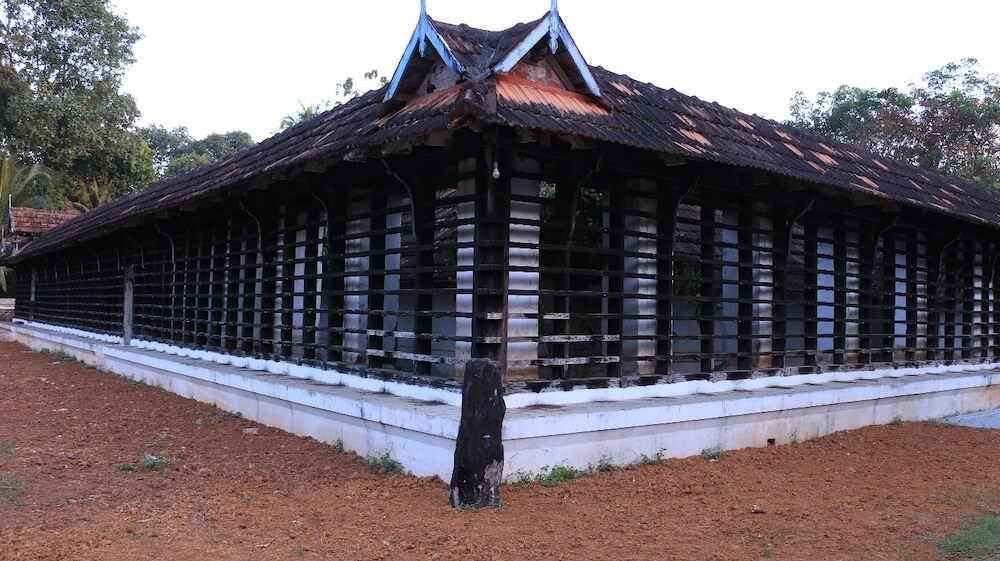 Traditional offerings such as Palpayasam, Kadum Payasam, Koottupayasam, Mey Payasam, Pizhinju Payasam and Vella Nivedyam are also prepared. Other special observances include Bhagavathi Seva, Rakshasa Nivedyam, Sarppa Nivedyam, Thidappilli Namaskaram and Thulabharam. Together, these offerings provide devotees with different ways of expressing their faith, gratitude and devotion. The Dharma Sastha Temple does not conduct daily pooja. Instead, nivedyam is offered as part of the ritual observances, while the formal pooja is performed only by the Tantri, in accordance with temple tradition.
The temple is open to devotees from 5:00 am to 11:30 am and from 5:00 pm to 8:30 pm, with Deepaaradhana at sunset. In earlier times, when the temple possessed extensive properties and resources, five daily poojas were conducted — Usha Pooja, Ethrithu Pooja, Panthiradi Pooja, Ucha Pooja and Athazha Pooja. Today, the principal daily poojas are Ethrithu Pooja, Ucha Pooja and Athazha Pooja, along with the evening Deepaaradhana.
Key Highlights
- Located 32 km from Ernakulam town.
- About 32 km from Ernakulam Railway Station.
- Local bus services are available.
- Dedicated parking is available for private vehicles.
- Accommodation and dining facilities are available nearby.
- Phone: +91 95442 11388
ऊरामना पेरुमथ्रिककोविल
ऊरामना, जिला. एर्नाकुलम
मंदिरे
Temples
मंदिर
મંદિરો
கோவில்கள்
దేవాలయాలు
ക്ഷേത്രങ്ങൾ
ದೇವಾಲಯಗಳು
মন্দিরসমূহ
ਮੰਦਿਰ
-
थोनिक्का श्री महादेवाचे मंदिर कोळेंचेरी, जि. एर्नाकुलम
अधिक माहितीThonnikka Sree Mahadeva Temple Kolenchery, Dist. Ernakulam
View Detailsथोन्निक्का श्री महादेव मंदिर कोलेनचेरी, जिला. एर्नाकुलम
विवरण देखेंThonnikka Sree Mahadeva Temple Kolenchery, Dist. Ernakulam
વિગત જુઓThonnikka Sree Mahadeva Temple Kolenchery, Dist. Ernakulam
விவரங்களைக் காண்கThonnikka Sree Mahadeva Temple Kolenchery, Dist. Ernakulam
వివరాలను చూడండిThonnikka Sree Mahadeva Temple Kolenchery, Dist. Ernakulam
വിശദാംശങ്ങൾ കാണുകThonnikka Sree Mahadeva Temple Kolenchery, Dist. Ernakulam
ವಿವರಗಳನ್ನು ವೀಕ್ಷಿಸಿThonnikka Sree Mahadeva Temple Kolenchery, Dist. Ernakulam
বিস্তারিত দেখুনThonnikka Sree Mahadeva Temple Kolenchery, Dist. Ernakulam
ਵੇਰਵੇ ਦੇਖੋ -
थोट्टुवा श्री धन्वंतरी मूर्ती मंदिर थोट्टुवा, पेरुंबवूर, जि. एर्नाकुलम
अधिक माहितीThottuva Sree Dhanwanthari Moorthy Temple Thottuva, Perumbavoor, Dist. Ernakulam
View Detailsथोट्टुवा श्री धन्वंतरी मूर्ति मंदिर थोट्टुवा, पेरुंबवूर, जिला। एर्नाकुलम
विवरण देखेंThottuva Sree Dhanwanthari Moorthy Temple Thottuva, Perumbavoor, Dist. Ernakulam
વિગત જુઓThottuva Sree Dhanwanthari Moorthy Temple Thottuva, Perumbavoor, Dist. Ernakulam
விவரங்களைக் காண்கThottuva Sree Dhanwanthari Moorthy Temple Thottuva, Perumbavoor, Dist. Ernakulam
వివరాలను చూడండిThottuva Sree Dhanwanthari Moorthy Temple Thottuva, Perumbavoor, Dist. Ernakulam
വിശദാംശങ്ങൾ കാണുകThottuva Sree Dhanwanthari Moorthy Temple Thottuva, Perumbavoor, Dist. Ernakulam
ವಿವರಗಳನ್ನು ವೀಕ್ಷಿಸಿThottuva Sree Dhanwanthari Moorthy Temple Thottuva, Perumbavoor, Dist. Ernakulam
বিস্তারিত দেখুনThottuva Sree Dhanwanthari Moorthy Temple Thottuva, Perumbavoor, Dist. Ernakulam
ਵੇਰਵੇ ਦੇਖੋ -
करपिल्लक्कावू श्री महादेवाचे मंदिर मांजपरा, जि. एर्नाकुलम
अधिक माहितीKarpillikkavu Sree Mahadeva Temple Manjapra, Dist. Ernakulam
View Detailsकरपिल्लक्कावू श्री महादेवाचे मंदिर मंजपरा, जि. अर्नाकुलम
विवरण देखेंKarpillikkavu Sree Mahadeva Temple Manjapra, Dist. Ernakulam
વિગત જુઓKarpillikkavu Sree Mahadeva Temple Manjapra, Dist. Ernakulam
விவரங்களைக் காண்கKarpillikkavu Sree Mahadeva Temple Manjapra, Dist. Ernakulam
వివరాలను చూడండిKarpillikkavu Sree Mahadeva Temple Manjapra, Dist. Ernakulam
വിശദാംശങ്ങൾ കാണുകKarpillikkavu Sree Mahadeva Temple Manjapra, Dist. Ernakulam
ವಿವರಗಳನ್ನು ವೀಕ್ಷಿಸಿKarpillikkavu Sree Mahadeva Temple Manjapra, Dist. Ernakulam
বিস্তারিত দেখুনKarpillikkavu Sree Mahadeva Temple Manjapra, Dist. Ernakulam
ਵੇਰਵੇ ਦੇਖੋ