
श्री थानुमलयन स्वामी मंदिर
सुचिंद्रम, जि. कन्याकुमारी.
Shree Thanumalayan Swamy Temple
Suchindram, Dist. Kanyakumari.
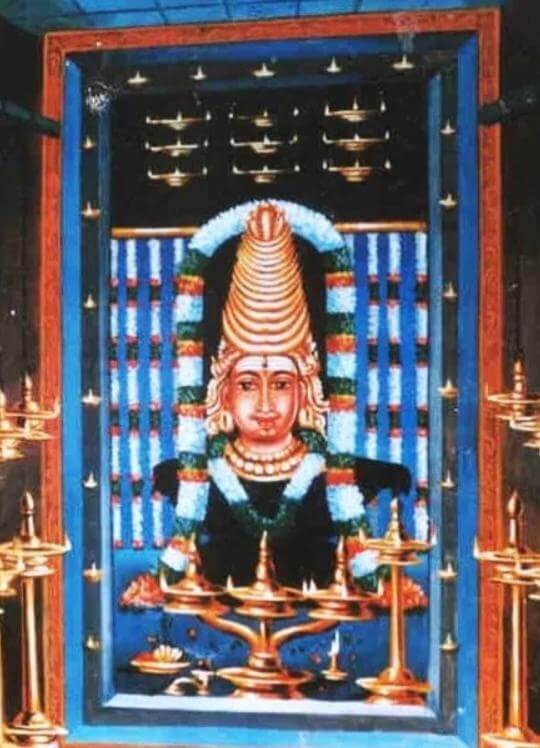 Suchindram Sthanumalayan Temple is one of the famous temples in South India. The main deity represents the Trimurti—Brahma, Vishnu and Shiva—with Shiva given greater importance. The name ‘Sthanumalayan’ comes from ‘Sthanu’ (Shiva), ‘Mal’ (Vishnu) and ‘Ayan’ (Brahma). As one of the oldest temples in Kanyakumari district, it is located on the Nagercoil–Kanyakumari road (National Highway 66). Believed to be thousands of years old, the temple is also considered one of the 108 Shiva temples believed to have been consecrated by Parashurama. Before Kanyakumari became part of Tamil Nadu, the temple was under the rule of Travancore and was one of its important temples. Even today, many devotees from Kerala visit the temple for darshan.
The oldest inscriptions found at the temple date back to the 9th century. The main stone structure seen today is believed to have been built during the rule of the Chola kings. As this area was an important cultural centre of Nanjil Nadu, Tamil and Sanskrit inscriptions show that the temple was also important during the rule of the Pandya and Chera dynasties. Later, under the rule of Venad and Travancore, the temple underwent major development and changes in its rituals. It was one of the important places of worship of the Travancore royal family, which ruled from Padmanabhapuram. The temple was also developed further during the 17th century under Thirumalai Nayak, who ruled Madurai and the large halls and fine sculptures are associated with this period. 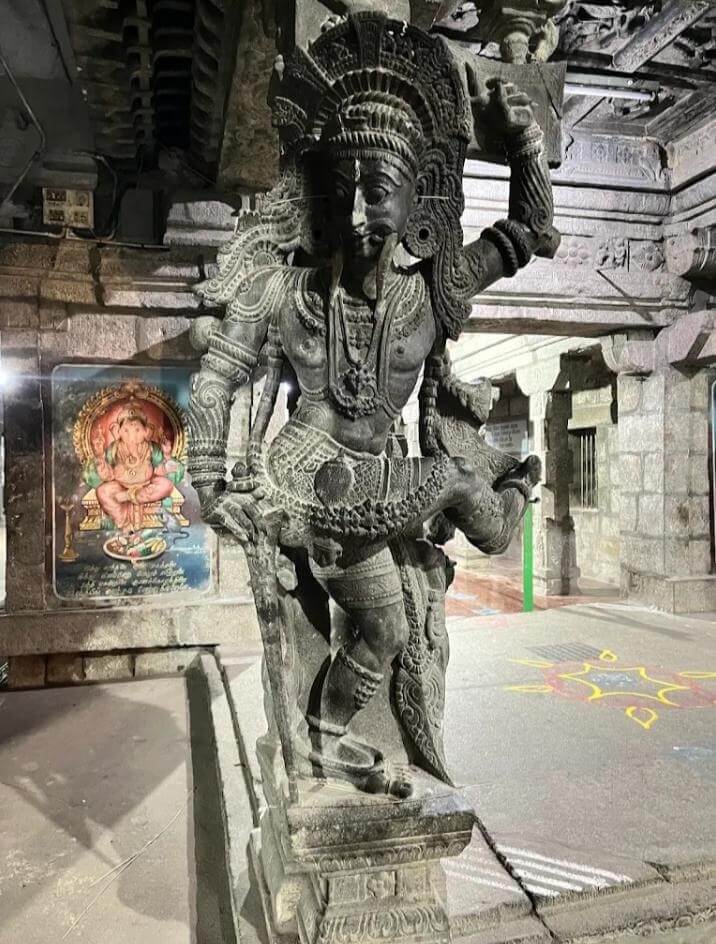 Even after India gained independence, the temple remained part of the Travancore-Cochin State. Following the reorganisation of states on a linguistic basis in 1956, Kanyakumari district became part of Tamil Nadu and the temple came under Tamil Nadu. The temple is an important historical site that developed over centuries through the contributions of the Chola, Pandya, Chera, Travancore and Nayak rulers.
Anasuya, the wife of Sage Atri, was known for her devotion to her husband and her virtue. To test her spiritual power, Brahma, Vishnu and Shiva came to her as sages and asked her to give them alms without wearing clothes. Considering it wrong to send guests away empty-handed, Anasuya used her spiritual power to turn the Trimurti into three small babies. She then cared for them and fed them like a mother. Saraswati, the wife of Brahma, Lakshmi, the wife of Vishnu and Parvati, the wife of Shiva, later approached Anasuya and requested her to return their husbands to their original forms. Anasuya then restored the Trimurti. It is believed that the three deities later appeared together at this place in the form of a self-manifested Shiva Lingam. This is the legend associated with the Sthanumalayan deity worshipped today.
According to legend, Indra was cursed by Sage Gautama after he deceived Ahalya, the sage’s wife. Distressed by the marks that appeared all over his body, 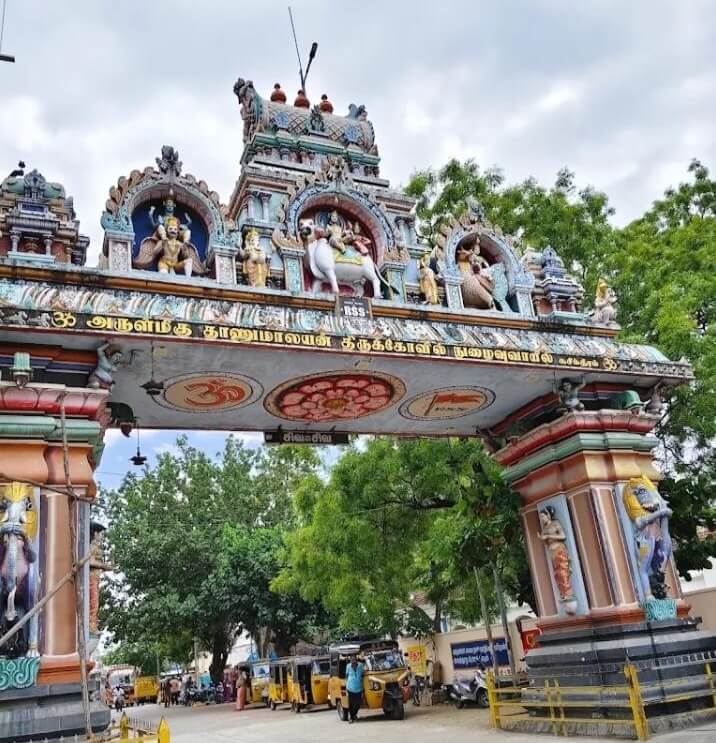 Indra came to this place and performed severe penance to Shiva to be freed from the curse. Pleased with his penance, Lord Shiva freed Indra from the curse. It is believed that the place came to be known as ‘Suchindram’ because Indra attained purification here. Devotees also believe that Indra still comes here every night in an invisible form to offer worship. Therefore, the Ardhayama Pooja, the final night worship, has special importance at the temple.
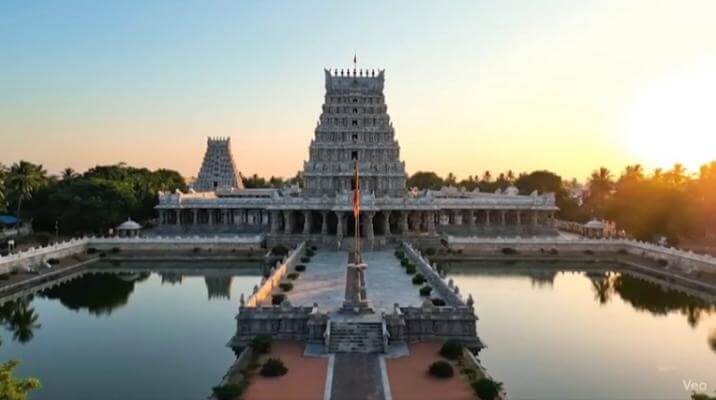
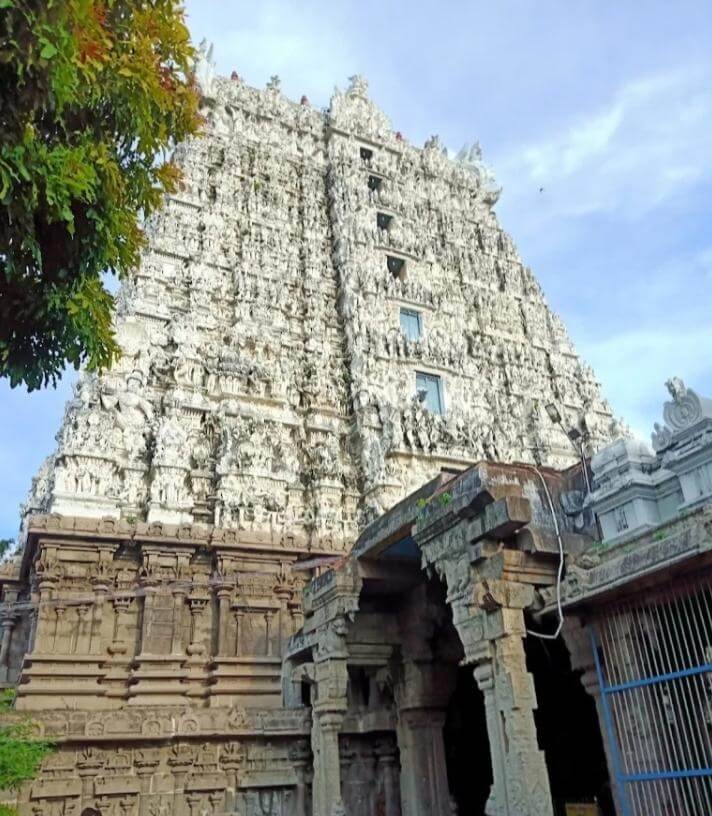
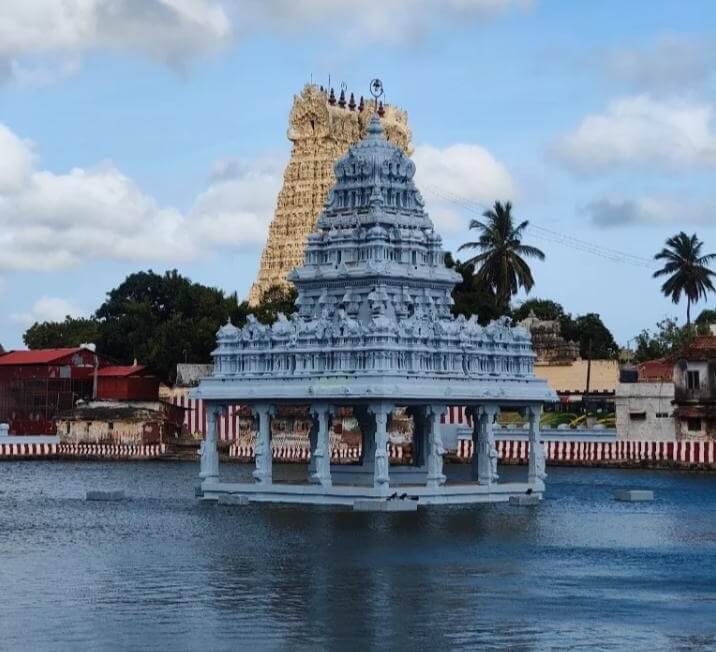
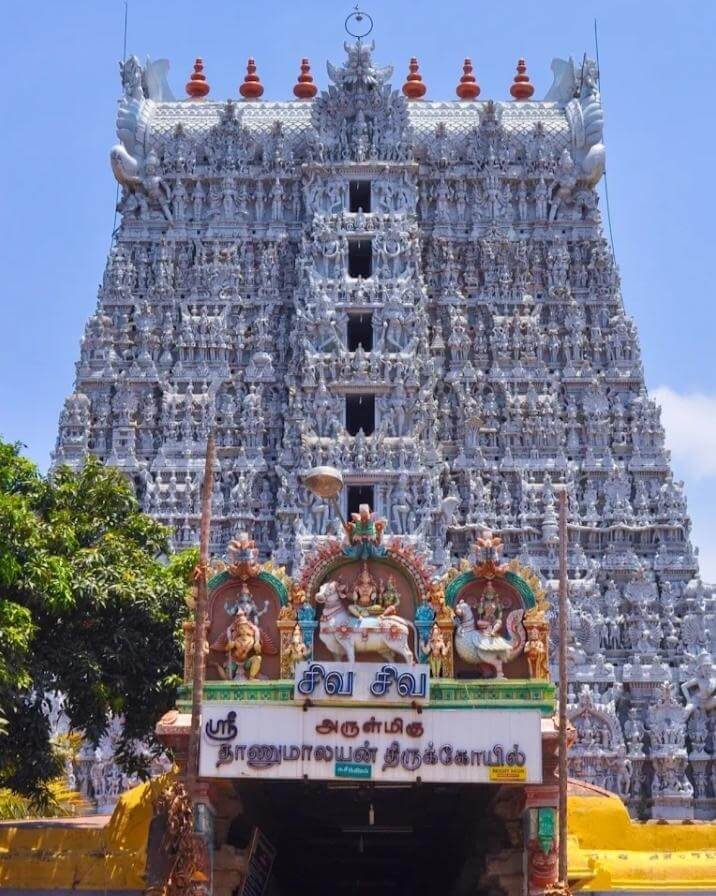
As you approach the temple by road, the first major sight is the huge white Rajagopuram, which is 134 feet high and has seven levels. Decorated with hundreds of sculptures of gods and goddesses, it is a notable feature of Tamil temple architecture. A large temple tank is located beside the road, with a small and beautiful Vasantha Mandapam in the centre. The Agraharam streets around the temple have old Tamil-style houses and small flower shops. Inside the temple, the influence of Kerala-style architecture can be seen. The long corridors, lined with hundreds of stone pillars and decorated with paintings and carvings, are particularly notable. 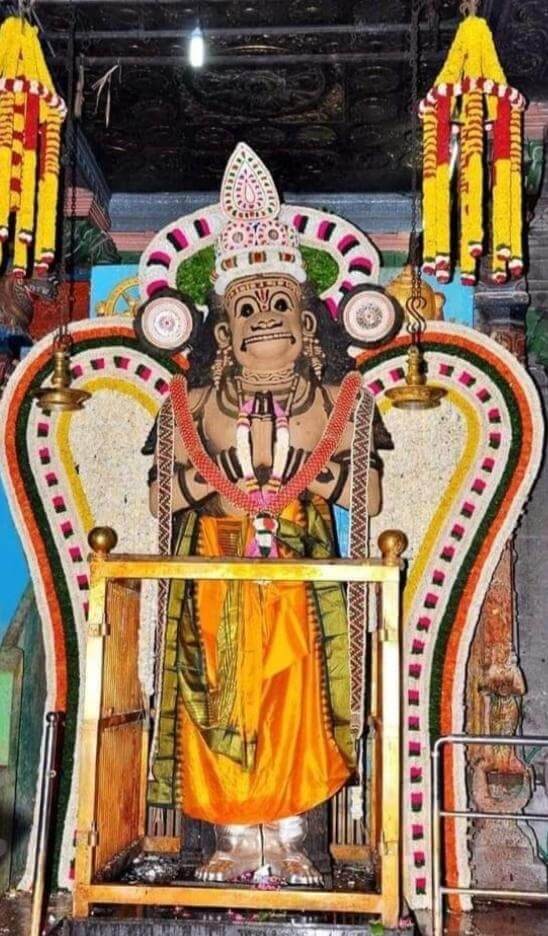 The musical pillars in the Alankara Mandapam, carved from a single stone, are one of the main attractions. Nearby is a magnificent 22-foot-high sculpture of Lord Hanuman in his Vishwaroopa form.
Unlike many temples in Tamil Nadu, the Sreekovil here is built in the style of traditional Kerala temples, with a circular or square structure. Its roof is fully covered with copper sheets and topped with a golden finial. The thick granite walls have small ledges for placing oil lamps. In front of the Sreekovil is a small Mukha Mandapam with granite pillars, from where devotees can have a direct view of the deity. The main deity is believed to be a self-manifested black stone Lingam that arose naturally from the earth. The Lingam is covered with a large golden covering known as the Thanga Anki, which features the face and crown of the deity; this golden form is what devotees see during darshan. The single Lingam represents the Trimurti in three parts—the lower part represents Brahma (Ayan), the middle part Vishnu (Mal), and the upper part Shiva (Sthanu). A natural spring is said to remain beneath the deity, and devotees believe that Indra, who performed penance here, uses its water to worship the deity. The Sreekovil combines the stone craftsmanship of the Tamil kings with the Kerala-style architectural influence seen in wood and copper work during the Travancore period.
Apart from the main deity, Sthanumalayan, the temple has several important shrines dedicated to other deities. The shrine of Thiruvenkatavinnaperumal, featuring a four-armed black stone image of Lord Vishnu, is located to the north-west of the main Sreekovil. One of the main attractions is the 22-foot-high Vishwaroopa sculpture of Lord Anjaneya, carved from a single stone. 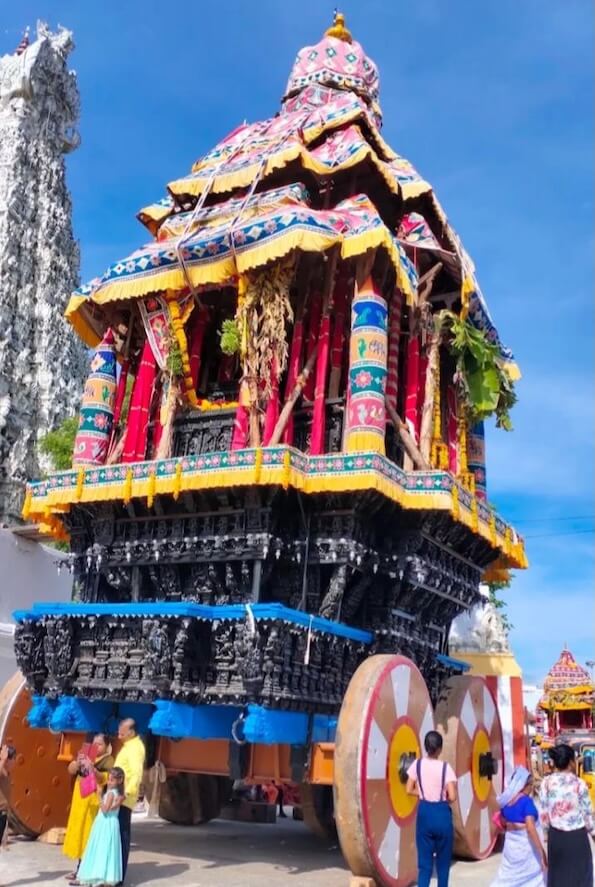 A huge Nandi sculpture, about 13 feet high and 21 feet long, stands in the mandapam directly in front of the main Sreekovil. The shrine of Chembakaraman Vinayakar is located near the Chembakaraman Mandapam, built in memory of Travancore King Chera Udaya Marthanda Varma. Another large Ganesha shrine, known as Nilakanta Vinayakar, is located near the Alankara Mandapam, where the musical pillars are found. Udaya Marthanda Bhairavar, the guardian deity, is located in the south-western part of the temple. The inner prakaram also has a shrine dedicated to Lord Subrahmanya with his consorts Valli and Devasena, along with another form of Subrahmanya known as Jayanthi Saravana Perumal. The temple also has shrines dedicated to the Navagrahas, the nine planetary deities. The inner layout is arranged so that devotees can worship the main Trimurti deity and see the other deities while going around the temple.
The most famous festival at the temple is the ten-day Margazhi Ratholsavam, held in the Tamil month of Margazhi (December–January). The festival begins with the flag-hoisting ceremony led by the temple priests in the Kerala style. The main attraction is the chariot procession on the ninth day, when the deities are taken in three huge wooden chariots and devotees pull them through the streets using ropes. The festival ends on the tenth day with the Aarattu, the ceremonial bath, held in the temple tank. The ten-day Chithirai Festival, held in April–May, is another major festival, with special poojas and processions. Suchindram Hanuman Jayanthi, 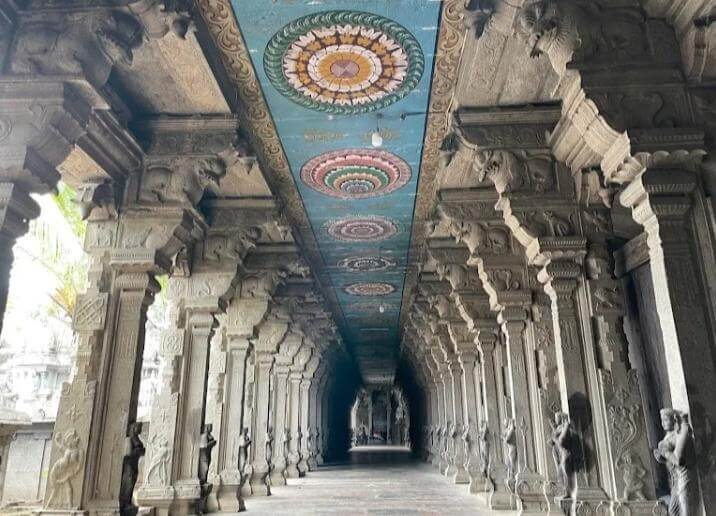 celebrated on the Moola star in the month of Margazhi, is also important, when garlands made of laddus and vadas are offered to the 22-foot-high Hanuman idol. Maha Shivaratri, held in February–March, is also observed with special abhishekams and Laksharchana, with the temple remaining open throughout the night. In addition, the Avani Festival is held in August–September, while Masi Magam is celebrated on the last Tuesday of March.
The main offerings at the temple include Vennakkappu, Vadamala and Sindooram offered to Lord Hanuman. In Vennakkappu, the large Hanuman idol is covered with butter and devotees perform this offering seeking relief from illness and the fulfilment of their wishes. Vadamala is an offering in which specially prepared vadas are made into a garland and offered to Hanuman. 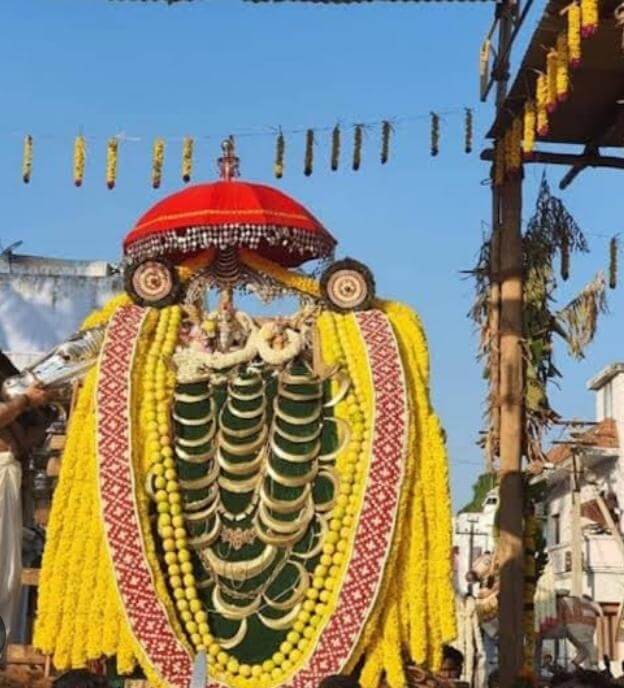 Applying sindooram to Hanuman’s forehead is another important offering. On special days, the Sthanumalayan deity is adorned with the Thanga Anki, a golden covering and special abhishekams such as Rudrabhishekam and Panchamritha Abhishekam are performed. Abhishekams using curd and rice powder are also offered to the large Nandi idol. Devotees also perform Ayush Sooktha Pushpanjali for good health and long life, and Santhana Gopala Pooja for the blessing of children.
One of the temple’s special offerings is the offering of salt and pepper. Devotees make this offering seeking relief from skin diseases and moles. One of the rare features of the temple is the female form of Lord Ganesha, known as Vigneshwari or Vinayaki. This sculpture of Ganesha in female form is carved on a pillar in the Sukumara Mandapam. Such a form of Ganesha can be found in only a few temples in India.
The general darshan timings at the temple are from 4:30 AM to 11:30 AM and from 5:00 PM to 8:30 PM. The temple opens at 4:30 AM, followed by Nirmalya Darshan and Usha Pooja. Kalashanthi Pooja is performed at 6:00 AM, followed by Ucha Pooja from 10:30 AM to 11:00 AM. 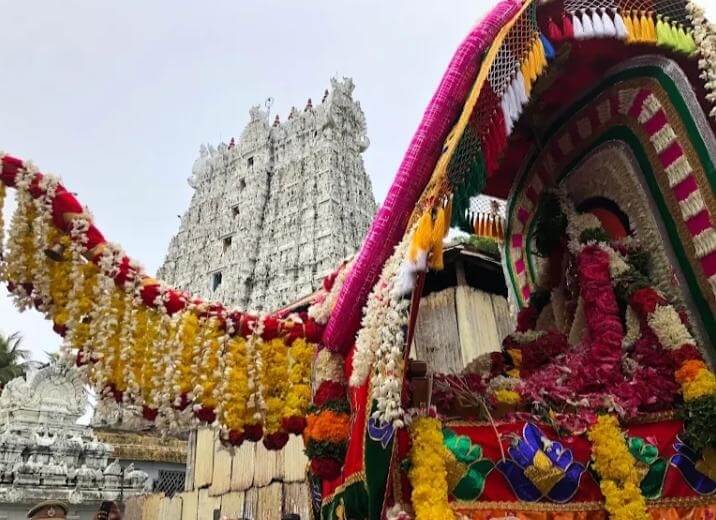 The temple closes at around 11:30 AM after the morning poojas. It reopens at 5:00 PM, followed by the evening pooja and Deeparadhana from 6:00 PM to 6:30 PM. The final pooja of the day, Ardhayama Pooja, is performed at 8:00 PM. This pooja has special importance, as devotees believe that Indra comes to the temple in an invisible form at night to perform the worship. The temple closes at around 8:30 PM after the Ardhayama Pooja. Pooja timings may change on festival and special days.
The temple follows a traditional dress code. Men should wear a dhoti and enter without a shirt or vest. Trousers, jeans, lungis and shorts are not allowed. Women may wear a saree, churidar or a skirt with a blouse, while jeans, leggings and other Western-style clothing are not allowed. Children should wear decent clothing; girls may wear frocks or churidars, while boys are advised to wear a dhoti. Mobile phones and cameras are not allowed inside the temple. Storage counters are available outside the temple for keeping these items. Therefore, photography of the sculptures and other features inside the temple is not permitted.
Key highlight :-
- Located 5 km from Nagercoil and 11 km from Kanyakumari.
- The nearest railway station is Nagercoil, located 5 km away.
- TNSTC, KSRTC and local bus services are available to the temple.
- Paid parking facilities are available near the temple.
- Accommodation and food facilities are available near the temple.
- Contact number +91 4652241421
श्री थानुमालयन स्वामी मंदिर
सुचिन्द्रम, जिला. कन्याकुमारी.
मंदिरे
Temples
मंदिर
મંદિરો
கோவில்கள்
దేవాలయాలు
ക്ഷേത്രങ്ങൾ
ದೇವಾಲಯಗಳು
মন্দিরসমূহ
ਮੰਦਿਰ
-
अरुल्मिगु श्री नागराज मंदिर नागरकोइल, जि. कन्याकुमारी.
अधिक माहितीArulmigu Sri Nagaraja Temple Nagercoil, Dist. Kanyakumari.
View Detailsअरुल्मिगु श्री नागराजा मंदिर नागरकोइल, जिला. कन्याकुमारी.
विवरण देखेंArulmigu Sri Nagaraja Temple Nagercoil, Dist. Kanyakumari.
વિગત જુઓArulmigu Sri Nagaraja Temple Nagercoil, Dist. Kanyakumari.
விவரங்களைக் காண்கArulmigu Sri Nagaraja Temple Nagercoil, Dist. Kanyakumari.
వివరాలను చూడండిArulmigu Sri Nagaraja Temple Nagercoil, Dist. Kanyakumari.
വിശദാംശങ്ങൾ കാണുകArulmigu Sri Nagaraja Temple Nagercoil, Dist. Kanyakumari.
ವಿವರಗಳನ್ನು ವೀಕ್ಷಿಸಿArulmigu Sri Nagaraja Temple Nagercoil, Dist. Kanyakumari.
বিস্তারিত দেখুনArulmigu Sri Nagaraja Temple Nagercoil, Dist. Kanyakumari.
ਵੇਰਵੇ ਦੇਖੋ -
श्री व्यंकटेश्वर स्वामी मंदिर चिन्नमुत्तम मेन रोड, विवेकानंतपुरम, जि. कन्याकुमारी.
अधिक माहितीSri Venkateswara Swamy Temple Chinnamuttom main road, Vivekananthapuram, Dist. Kanyakumari.
View Detailsश्री वेंकटेश्वर स्वामी मंदिर चिन्नामुट्टम मुख्य सड़क, विवेकानंतपुरम, जिला। कन्याकुमारी.
विवरण देखेंSri Venkateswara Swamy Temple Chinnamuttom main road, Vivekananthapuram, Dist. Kanyakumari.
વિગત જુઓSri Venkateswara Swamy Temple Chinnamuttom main road, Vivekananthapuram, Dist. Kanyakumari.
விவரங்களைக் காண்கSri Venkateswara Swamy Temple Chinnamuttom main road, Vivekananthapuram, Dist. Kanyakumari.
వివరాలను చూడండిSri Venkateswara Swamy Temple Chinnamuttom main road, Vivekananthapuram, Dist. Kanyakumari.
വിശദാംശങ്ങൾ കാണുകSri Venkateswara Swamy Temple Chinnamuttom main road, Vivekananthapuram, Dist. Kanyakumari.
ವಿವರಗಳನ್ನು ವೀಕ್ಷಿಸಿSri Venkateswara Swamy Temple Chinnamuttom main road, Vivekananthapuram, Dist. Kanyakumari.
বিস্তারিত দেখুনSri Venkateswara Swamy Temple Chinnamuttom main road, Vivekananthapuram, Dist. Kanyakumari.
ਵੇਰਵੇ ਦੇਖੋ -
श्री आदि केशव पेरुमल मंदिर तिरुवत्तर, जि. कन्याकुमारी.
अधिक माहितीSree Adhi Kesava Perumal Temple Thiruvattar, Dist. Kanyakumari.
View Detailsश्री आदि केशव पेरुमल मंदिर तिरुवत्तार, जिला. कन्याकुमारी.
विवरण देखेंSree Adhi Kesava Perumal Temple Thiruvattar, Dist. Kanyakumari.
વિગત જુઓSree Adhi Kesava Perumal Temple Thiruvattar, Dist. Kanyakumari.
விவரங்களைக் காண்கSree Adhi Kesava Perumal Temple Thiruvattar, Dist. Kanyakumari.
వివరాలను చూడండిSree Adhi Kesava Perumal Temple Thiruvattar, Dist. Kanyakumari.
വിശദാംശങ്ങൾ കാണുകSree Adhi Kesava Perumal Temple Thiruvattar, Dist. Kanyakumari.
ವಿವರಗಳನ್ನು ವೀಕ್ಷಿಸಿSree Adhi Kesava Perumal Temple Thiruvattar, Dist. Kanyakumari.
বিস্তারিত দেখুনSree Adhi Kesava Perumal Temple Thiruvattar, Dist. Kanyakumari.
ਵੇਰਵੇ ਦੇਖੋ