
श्री आदि केशव पेरुमल मंदिर
तिरुवत्तर, जि. कन्याकुमारी.
Sree Adhi Kesava Perumal Temple
Thiruvattar, Dist. Kanyakumari.
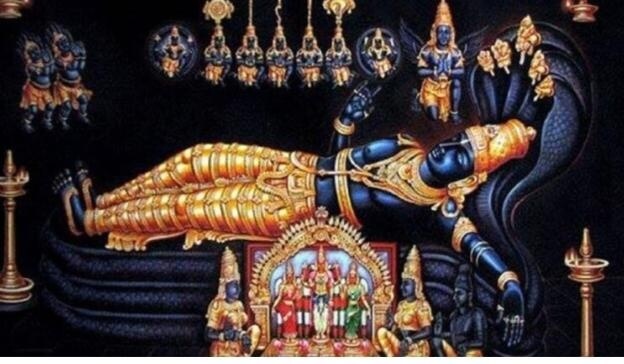 Sree Adhi Kesava Perumal Temple, located at Thiruvattar in Kanniyakumari district, Tamil Nadu, is one of the 108 Divya Desams dedicated to Lord Vishnu. Known as the ‘Southern Vaikuntha’, the temple stands on the banks of Padma Theertham, near the meeting point of the Kothayar and Paraliyar rivers. It has strong similarities and a historical connection with the Sree Padmanabhaswamy Temple in Thiruvananthapuram, Kerala.
According to historical records and inscriptions, the temple has a recorded political and social history of more than 2,000 years.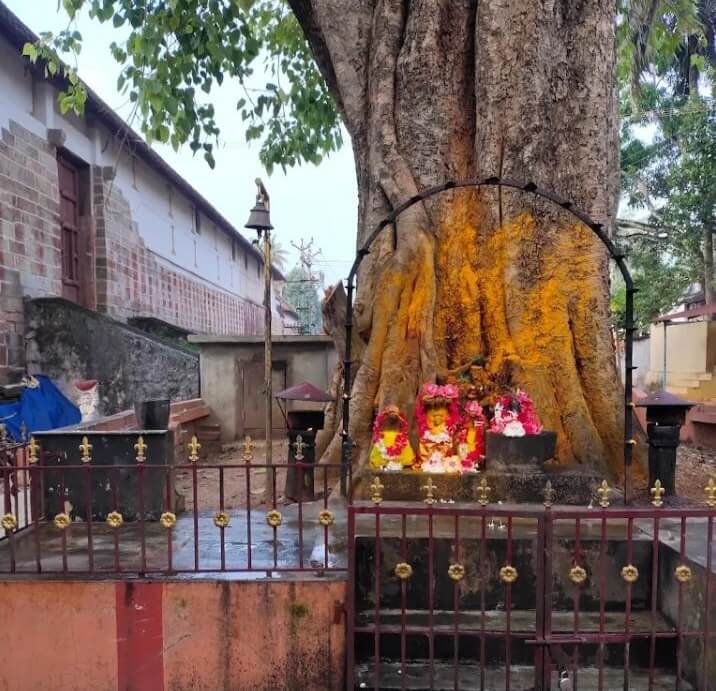 Its history is connected with various periods, from the Sangam period to the rule of the Travancore royal family. The famous ancient Tamil collection of poems, Purananuru, mentions this region and refers to a local ruler of the Velir dynasty named ‘Vattatru Ezhini Athan’, who ruled the area then known as ‘Vattaru’. The Vaishnavite Alvars Nammalvar and Thirumangai Alvar are believed to have visited the temple in the 8th century and composed pasurams (devotional hymns) praising the deity. Through these hymns, the temple gained special importance in the Vaishnavite tradition as one of the 108 Divya Desams.
From the 9th century onwards, the region was under the rule of the Venad kings, whose kingdom later became Travancore. However, during the 10th and 11th centuries, Chola rulers such as Rajaraja Chola and Rajendra Chola, as well as the Pandya kings, invaded and took control of the region at different times. Vattezhuthu inscriptions from these periods can be seen on the granite walls of the temple. One of the important events in the temple’s history is associated with Anizham Thirunal Marthanda Varma Maharaja. 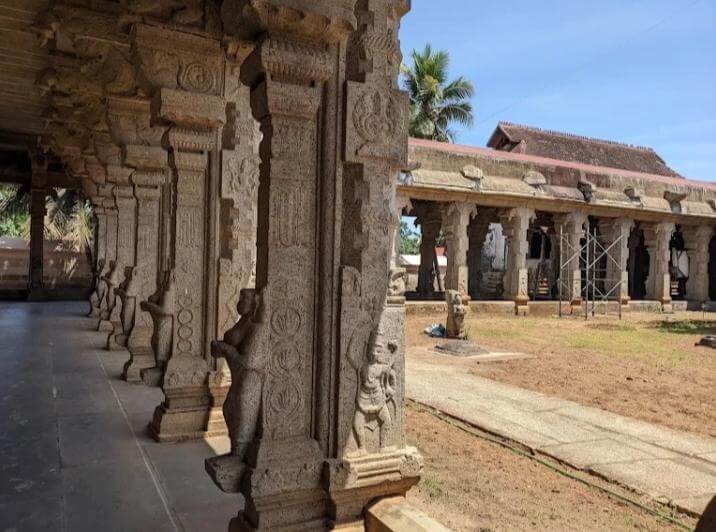 In 1741, before leaving for the Battle of Colachel against the Dutch, he is believed to have visited the temple, offered his sword and silk cloth and sought the blessings of the deity. After his victory, he carried out major renovation works at the temple. Like the Sree Padmanabhaswamy Temple in Thiruvananthapuram, this temple was also a family temple of the Travancore royal family. Thiruvattar Ammaveedu (Palace-linked Matrilineal Homestead), the ancestral home of the queens of the Travancore royal family, is located near the temple. In 1895, Sree Moolam Thirunal Maharaja installed the copper flagstaff at the temple. Following the reorganisation of states in 1956,
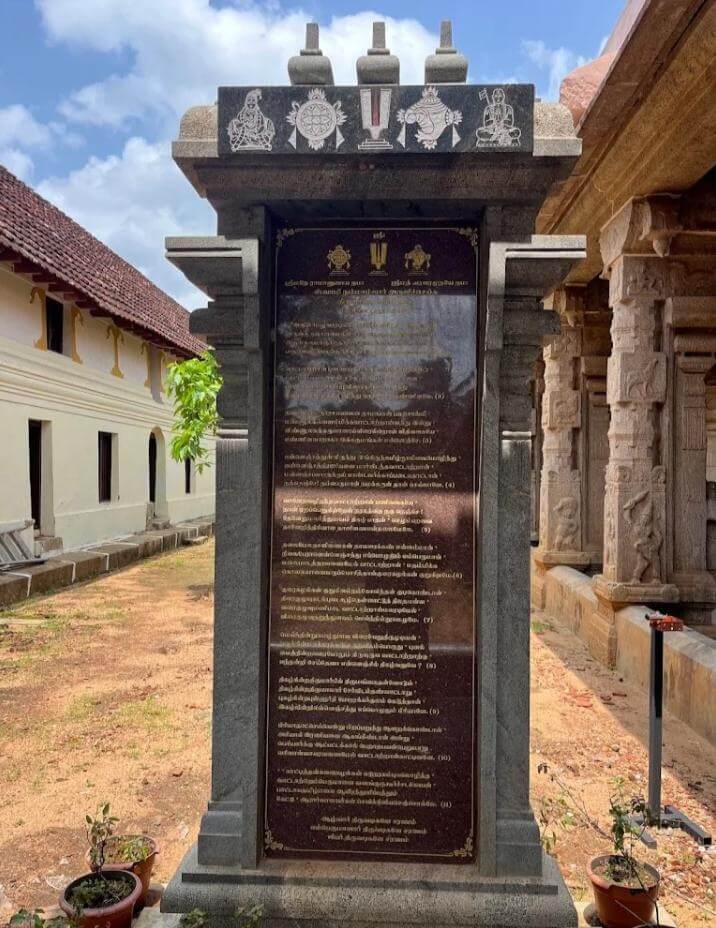 Kanniyakumari district became part of Tamil Nadu and the administration of the temple was transferred from the Travancore Devaswom Board to the Hindu Religious and Charitable Endowments (HR&CE) Department of the Tamil Nadu Government.
According to legend, Brahma once performed a great yajna (ritual sacrifice) on earth. Due to some mistakes in the chanting of the mantras during the yajna, two fierce Asuras named Kesan and Kesi emerged from the sacrificial fire and began causing great destruction on earth and in heaven. At the request of the gods, Lord Vishnu came to earth and fought the Asuras. After defeating Kesan, the Lord lay on top of him and the Asura died as he could not bear the Lord’s weight. It is believed that the Lord remains here in this reclining form, known as Anantha Sayanam, in memory of this event. Seeing Vishnu lying on her husband Kesan, Kesi became angry and asked her companions, the Ganga and Thamirabharani rivers, to create a great flood and carry the Lord away with the floodwaters. Although the rivers came with a strong flow, the earth beneath the place where the Lord was lying rose up, preventing the water from reaching him. Finally, accepting defeat, the rivers began to flow around the Lord. The Kothayar and Paraliyar rivers, which flow on either side of the temple and are branches of the Thamirabharani River, are associated with this legend.
 According to legend, Kesan, the Asura lying beneath the Lord, had not died and was trying to escape using his twelve arms. To keep him from moving, the Lord is believed to have placed twelve Shiva Lingas on his twelve hands and pinned him to the earth. This legend is associated with the famous ‘Shivalaya Ottam’ in Kanniyakumari district. On the day of Shivaratri, devotees begin the run at Thiruvattar and visit the twelve Shiva temples along the route. A Shiva Linga can still be seen inside the sanctum, near the feet of the Lord.
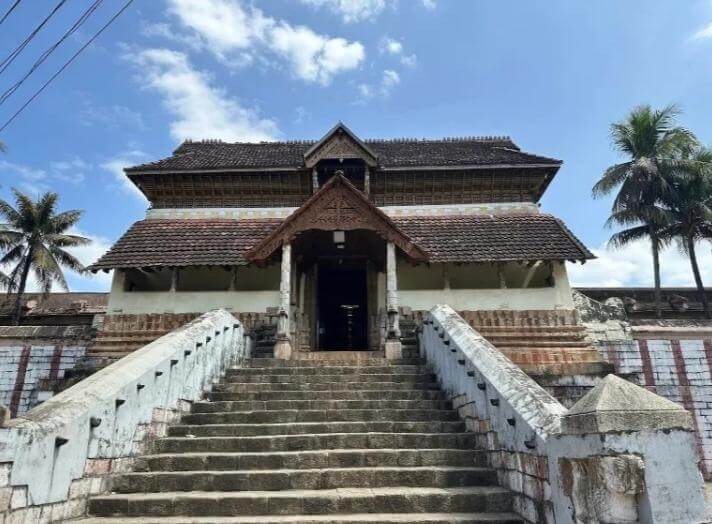
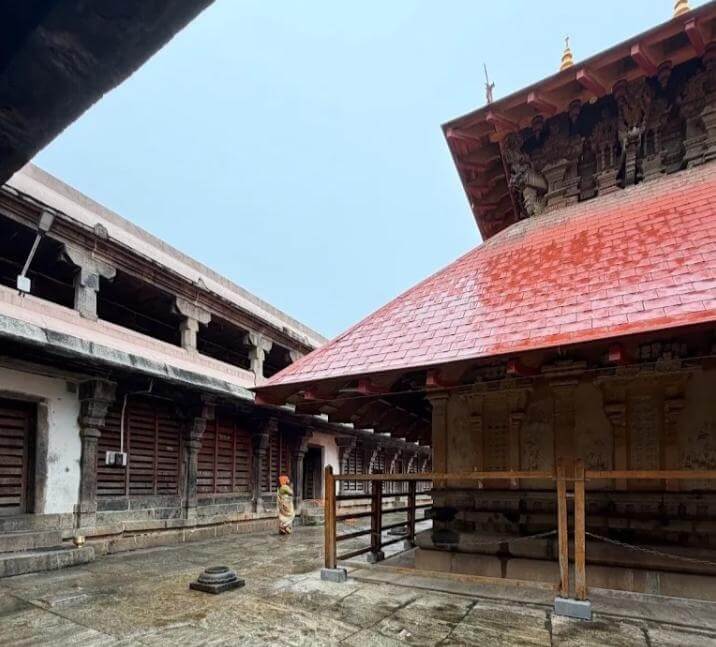
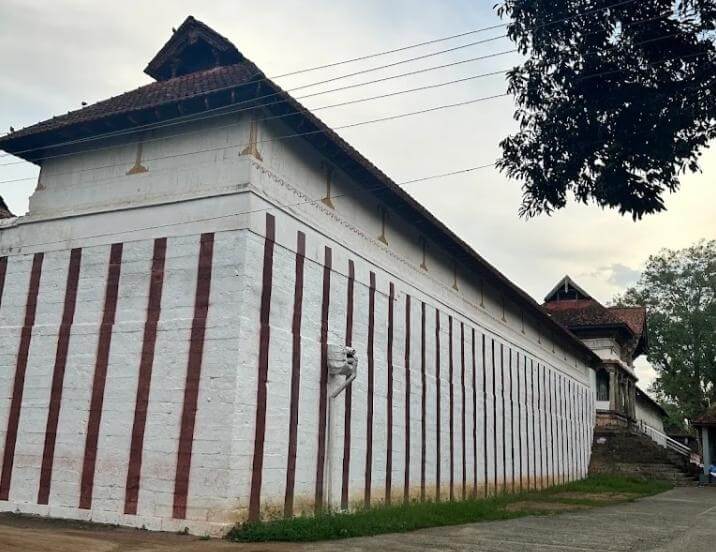
Sree Adhi Kesava Perumal Temple is a fine blend of Kerala and Dravidian architectural styles. From the road, instead of the tall gopurams usually seen in Tamil Nadu-style temples, visitors can see large granite walls that resemble a fort. 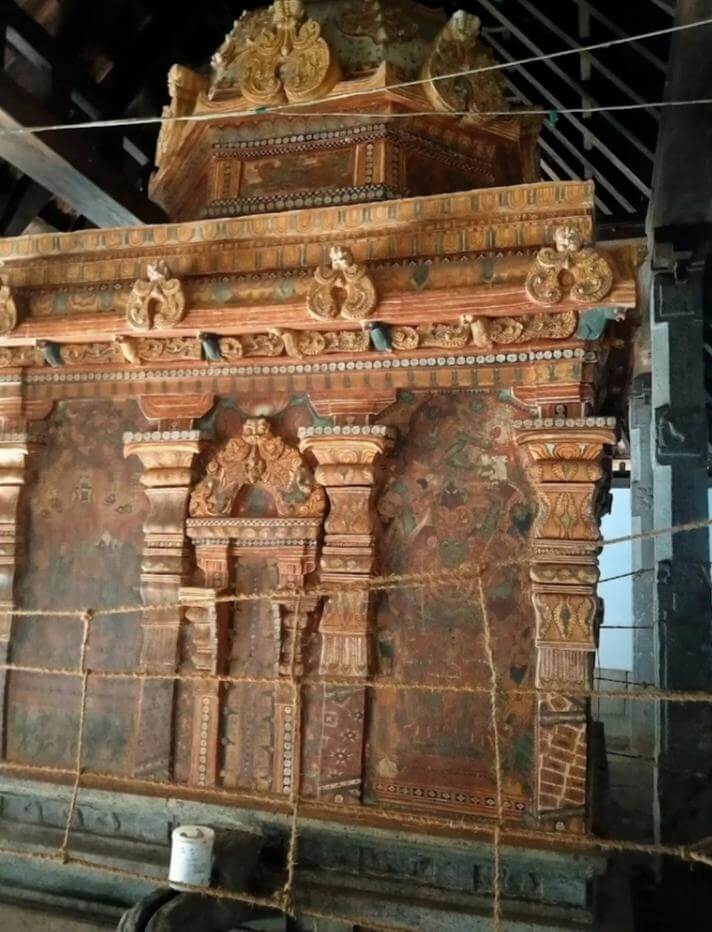 The main entrance, known as the eastern entrance, is built in a style similar to the traditional gateways of old Kerala palaces. Tall granite steps lead from the road to the entrance, as the temple stands on slightly elevated ground like a small hill. On entering the temple, the first things that come into view are a large wooden lamp tower and a copper-covered flagstaff. The stone-paved corridor around the temple, known as the Sreeveli Puram, clearly shows features of Dravidian architecture. The corridor is supported by 224 granite pillars, each decorated with finely carved figures of Deepalakshmis and various characters from Hindu mythology. The granite pillars below, along with the Kerala-style traditional woodwork and wooden carvings on the roof above, give the temple its distinctive architectural character.
In front of the sanctum is a large mandapam made from a single piece of granite, about 3 feet thick and 18 feet wide. Devotees stand on this mandapam to have the darshan of the Lord. As the 22-foot-long idol cannot be seen fully through a single doorway, darshan is arranged through three doorways. Through the first doorway, devotees can see the Lord’s face and right hand, along with a Shiva Linga placed below the hand. The second doorway offers a view of the Lord’s navel, the lotus rising from it and Brahma seated on the lotus in prayer. The third doorway provides a view of the Lord’s sacred feet. 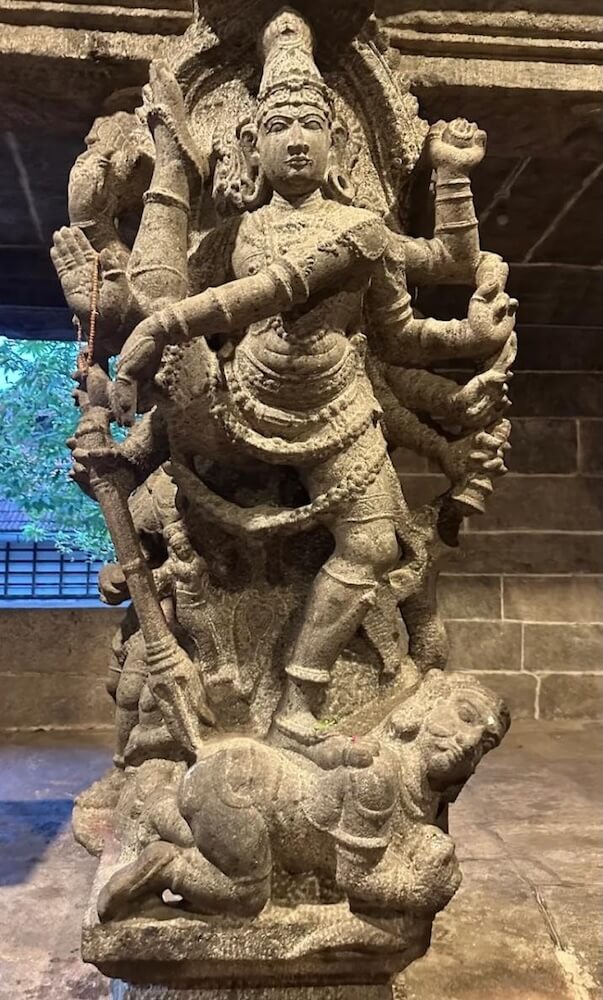 The idol here is not made of ordinary stone; it is believed to have been made using 16,008 Salagramas and special herbal ingredients through a traditional method known as ‘Kadusharkara Yogam’. Therefore, milk or water abhishekam is not performed directly on the idol. Although the temple may appear from outside like a large and simple traditional Kerala building, its interior reveals remarkable architectural work in granite and wood.
Along with the reclining form of Adhi Kesava Perumal, Sree Devi and Bhoodevi are installed inside the sanctum on either side of the Lord, in a posture of attending to him. In the inner circumambulatory passage, near the Natakasala on the north-west side, there is a separate shrine for Hari Lakshmi, also known as Maragathavalli Thayar. In the Tamil tradition, Goddess Lakshmi is referred to here as ‘Thayar’. Outside the main sanctum, in the north-west corner of the temple, is the shrine of Thiruvambadi Krishna. Like the Thiruvambadi Krishna at the Sree Padmanabhaswamy Temple, Kerala, this shrine also has special importance, with a small idol of Krishna in a butter-eating form. Inside the main sanctum, a Shiva Linga can also be seen below the Lord’s right hand, near his feet. It is visible through the first doorway along with the Lord’s face. Facing the large mandapam in front of the main sanctum is the shrine of Garuda Alvar, shown standing with folded hands in devotion to the Lord. An image of Hanuman Swami is also carved on one of the large granite pillars in the temple.
The main festival of the temple is the ten-day Brahmotsavam held in the Tamil month of Panguni (March–April). 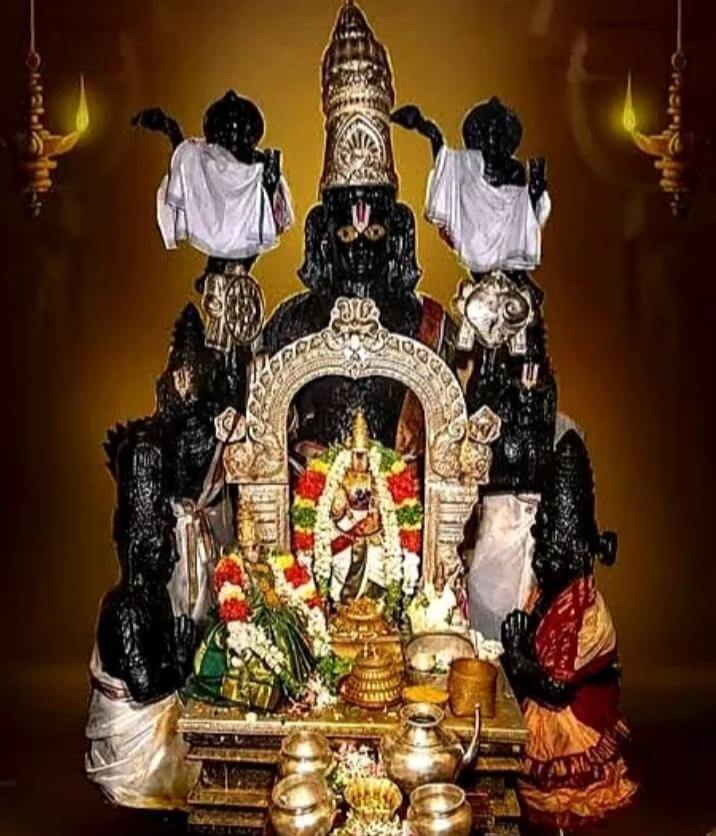 On the tenth day, Panguni Uthiram, the en in a procession on a golden Garuda vahana to the Kothayar River for the ceremonial bath, known as Aarattu. Another ten-day Brahmotsavam is held in the Tamil month of Aippasi (October–November) and also concludes with Aarattu. All Saturdays in the month of Purattasi (September–October) are considered special for the worship of Perumal, with special Pushpanjali and lighting of lamps held on these days. Vaikuntha Ekadashi, observed in the month of Margazhi (December–January), is another major special day, when many devotees arrive early in the morning to take part in the opening of the ‘Paramapada Vathil’ (Heavenly Gate). A special 12-day Kalapa Pooja and Laksharchana begin on the first day of the Tamil month of Thai (January–February). On Chithirai 1 (April–May), special Kani Darshan and early morning poojas are held to mark the Tamil New Year. The famous Shivalaya Ottam held on Shivaratri in the month of Masi (February–March) ends at Thiruvattar, where devotees taking part in the run complete their pilgrimage with darshan. On certain days during the months of Purattasi and Panguni, sunlight also passes through all three doorways of the sanctum and falls directly on the idol of the Lord, creating a rare sight.
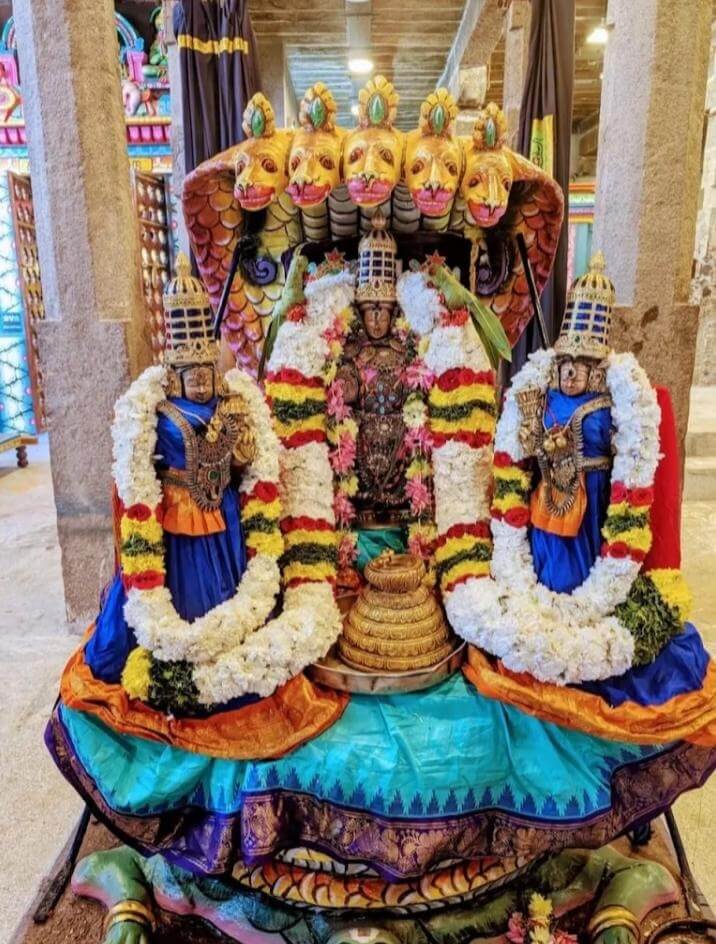
 One of the main offerings at the temple is Thirumanjanam. As the main idol is made of a Kadusharkara mixture, abhishekam is not performed directly on it. Instead, Thirumanjanam is performed on the golden processional idol using milk, rose water, sandalwood and sugarcane juice. Devotees offer this for relief from difficulties and for peace of mind. Paal Payasam, prepared with milk, rice and jaggery, is another important offering to the Lord. Aval and Appam are offered as nivedyam for the well-being of children and the prosperity of the family. Offering a silk saree to Maragathavalli Thayar is performed to overcome marriage-related difficulties and for marital well-being and prosperity. Butter is offered to Thiruvambadi Krishna for blessings for children and their good health and the same offering is also made to the image of Hanuman Swami carved on a pillar. Offering Tulsi garlands and lotus flowers as archana is also an important offering, seeking the blessings of the Lord and Goddess Lakshmi.
The temple opens every day at 05:00 AM with Viswaroopa Darshan. Abhishekam and Usha Pooja are performed at 05:30 AM, followed by the special tantric ritual of Kavali Pooja at 06:30 AM. Ucha Pooja, with the main nivedyam offerings to the Lord, is performed at 10:00 AM. The temple closes at 12:00 PM. It reopens at 05:00 PM, followed by Sayarakshai Pooja and Deeparadhana at 06:30 PM. Arthajama Pooja and the final nivedyam are performed at 07:30 PM and the temple closes at 08:00 PM with Palliyarai.
Men must wear a mundu (dhoti) to enter the temple. Shirts and vests are not allowed inside the temple. Women may wear a saree, set mundu, or churidar with a dupatta. Jeans, leggings and similar clothing are generally not allowed.
Key highlight :-
- Located 11 km from Marthandam, 30 km from Nagercoil and 50 km from Thiruvananthapuram.
- The nearest railway station is Kulitturai (Marthandam), 7 km away, while Nagercoil Railway Station is 26 km away.
- The nearest airport is Thiruvananthapuram International Airport, 54 km away.
- TNSTC, KSRTC and local bus services are available to the temple.
- Private vehicles can be parked in the temple’s parking area.
- Accommodation and food facilities are available near the temple.
- Contact number +91 9442577047.
श्री आदि केशव पेरुमल मंदिर
तिरुवत्तार, जिला. कन्याकुमारी.
मंदिरे
Temples
मंदिर
મંદિરો
கோவில்கள்
దేవాలయాలు
ക്ഷേത്രങ്ങൾ
ದೇವಾಲಯಗಳು
মন্দিরসমূহ
ਮੰਦਿਰ
-
अरुल्मिगु श्री नागराज मंदिर नागरकोइल, जि. कन्याकुमारी.
अधिक माहितीArulmigu Sri Nagaraja Temple Nagercoil, Dist. Kanyakumari.
View Detailsअरुल्मिगु श्री नागराजा मंदिर नागरकोइल, जिला. कन्याकुमारी.
विवरण देखेंArulmigu Sri Nagaraja Temple Nagercoil, Dist. Kanyakumari.
વિગત જુઓArulmigu Sri Nagaraja Temple Nagercoil, Dist. Kanyakumari.
விவரங்களைக் காண்கArulmigu Sri Nagaraja Temple Nagercoil, Dist. Kanyakumari.
వివరాలను చూడండిArulmigu Sri Nagaraja Temple Nagercoil, Dist. Kanyakumari.
വിശദാംശങ്ങൾ കാണുകArulmigu Sri Nagaraja Temple Nagercoil, Dist. Kanyakumari.
ವಿವರಗಳನ್ನು ವೀಕ್ಷಿಸಿArulmigu Sri Nagaraja Temple Nagercoil, Dist. Kanyakumari.
বিস্তারিত দেখুনArulmigu Sri Nagaraja Temple Nagercoil, Dist. Kanyakumari.
ਵੇਰਵੇ ਦੇਖੋ -
श्री थानुमलयन स्वामी मंदिर सुचिंद्रम, जि. कन्याकुमारी.
अधिक माहितीShree Thanumalayan Swamy Temple Suchindram, Dist. Kanyakumari.
View Detailsश्री थानुमालयन स्वामी मंदिर सुचिन्द्रम, जिला. कन्याकुमारी.
विवरण देखेंShree Thanumalayan Swamy Temple Suchindram, Dist. Kanyakumari.
વિગત જુઓShree Thanumalayan Swamy Temple Suchindram, Dist. Kanyakumari.
விவரங்களைக் காண்கShree Thanumalayan Swamy Temple Suchindram, Dist. Kanyakumari.
వివరాలను చూడండిShree Thanumalayan Swamy Temple Suchindram, Dist. Kanyakumari.
വിശദാംശങ്ങൾ കാണുകShree Thanumalayan Swamy Temple Suchindram, Dist. Kanyakumari.
ವಿವರಗಳನ್ನು ವೀಕ್ಷಿಸಿShree Thanumalayan Swamy Temple Suchindram, Dist. Kanyakumari.
বিস্তারিত দেখুনShree Thanumalayan Swamy Temple Suchindram, Dist. Kanyakumari.
ਵੇਰਵੇ ਦੇਖੋ -
श्री व्यंकटेश्वर स्वामी मंदिर चिन्नमुत्तम मेन रोड, विवेकानंतपुरम, जि. कन्याकुमारी.
अधिक माहितीSri Venkateswara Swamy Temple Chinnamuttom main road, Vivekananthapuram, Dist. Kanyakumari.
View Detailsश्री वेंकटेश्वर स्वामी मंदिर चिन्नामुट्टम मुख्य सड़क, विवेकानंतपुरम, जिला। कन्याकुमारी.
विवरण देखेंSri Venkateswara Swamy Temple Chinnamuttom main road, Vivekananthapuram, Dist. Kanyakumari.
વિગત જુઓSri Venkateswara Swamy Temple Chinnamuttom main road, Vivekananthapuram, Dist. Kanyakumari.
விவரங்களைக் காண்கSri Venkateswara Swamy Temple Chinnamuttom main road, Vivekananthapuram, Dist. Kanyakumari.
వివరాలను చూడండిSri Venkateswara Swamy Temple Chinnamuttom main road, Vivekananthapuram, Dist. Kanyakumari.
വിശദാംശങ്ങൾ കാണുകSri Venkateswara Swamy Temple Chinnamuttom main road, Vivekananthapuram, Dist. Kanyakumari.
ವಿವರಗಳನ್ನು ವೀಕ್ಷಿಸಿSri Venkateswara Swamy Temple Chinnamuttom main road, Vivekananthapuram, Dist. Kanyakumari.
বিস্তারিত দেখুনSri Venkateswara Swamy Temple Chinnamuttom main road, Vivekananthapuram, Dist. Kanyakumari.
ਵੇਰਵੇ ਦੇਖੋ