
श्री राजराजेश्वरी मंदिर
मुल्लक्कल, जि. अलप्पुझा
Sree Rajarajeswari Temple
Mullakkal, Dist. Alappuzha
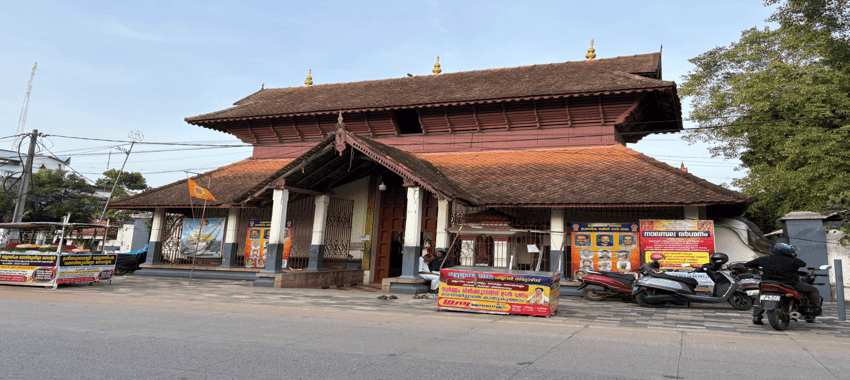
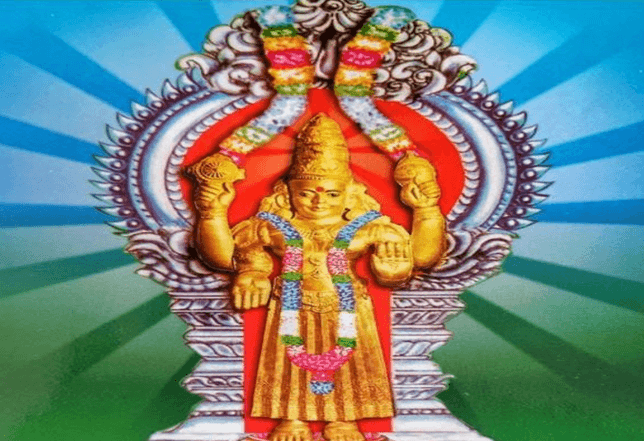 Mullakkal Temple, also known as Mullakkal Rajarajeswari Temple or Mullakkal Bhagavathi Temple, is situated in the middle of Alappuzha town, Kerala. The primary deity of the temple is Rajarajeswari Devi, a manifestation of the Divine Mother. This temple is one of the finest examples of Kerala temple architecture, with a distinctive open-roofed sanctum. One of the major attractions of this temple was Mullakkal Balakrishnan, who was a renowned temple elephant of Mullakkal Rajarajeswari. Balakrishnan carried the thidambu (ceremonial representation) of Mullakkal Amma during major temple rituals and festivals. Since it is located in the heart of the town, you can see a large tourist crowd visiting the temple irrespective of religion.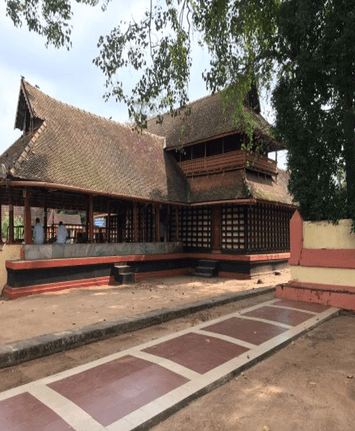
The temple was built in the 16th century by King Devanarayana of Chembakassery. It is said that the king constructed the temple at the site of the jasmine grove, thereby giving the shrine a more permanent form. The idol of the Devi was brought to the area by soldiers associated with the Thekkumkur kingdom (an independent kingdom in central Kerala lasting from 1103–1750 CE). According to the temple tradition, the old idol was damaged in 1961, after which a new idol representing Rajarajeswari Devi was consecrated in 1962. After the reign of the Chembakassery kingdom, the temple was handed over to the Travancore Devaswom Board in 1950. Over the years, the temple developed into an important religious centre in the heart of Alappuzha.
According to Hindu tradition, the king once visited the famous Kodungallur Bhagavathi Temple and was deeply devoted to the Bhagavathi. He wished that the Bhagavathi would accompany him to become the presiding deity of the land. That night, the Devi is said to have appeared in King Devanarayana’s dream and told him that she would accompany him to his kingdom. On his journey back to Alappuzha, he stopped to rest in a jasmine garden, where he placed his royal umbrella on the ground and rested nearby. 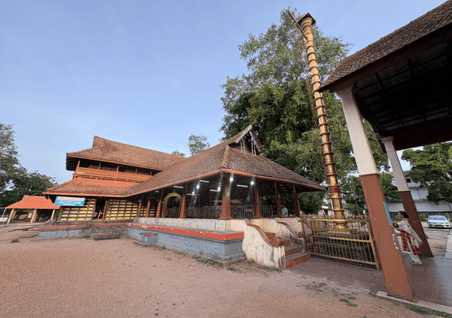 After waking up, the king tried to leave, but the umbrella could not be lifted or moved. The king interpreted this event as a divine sign from the Bhagavathi that she had chosen that particular place as her new home. According to the legend, astrologers were consulted through Deva Prashnam, which confirmed that the goddess wished to remain there. The king then established a shrine at the spot, which gradually developed into the Mullakkal Rajarajeswari Temple that we see today. The name Mullakkal is derived from the jasmine garden (Mulla) mentioned in the legend, making the temple an important landmark in the heart of Alappuzha district.
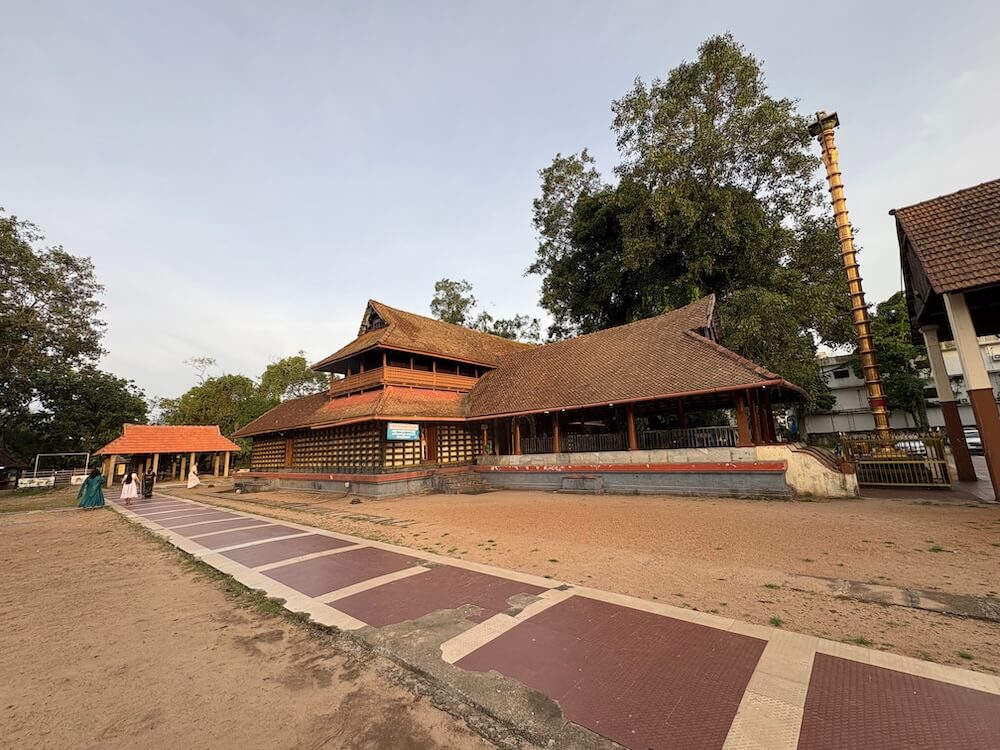
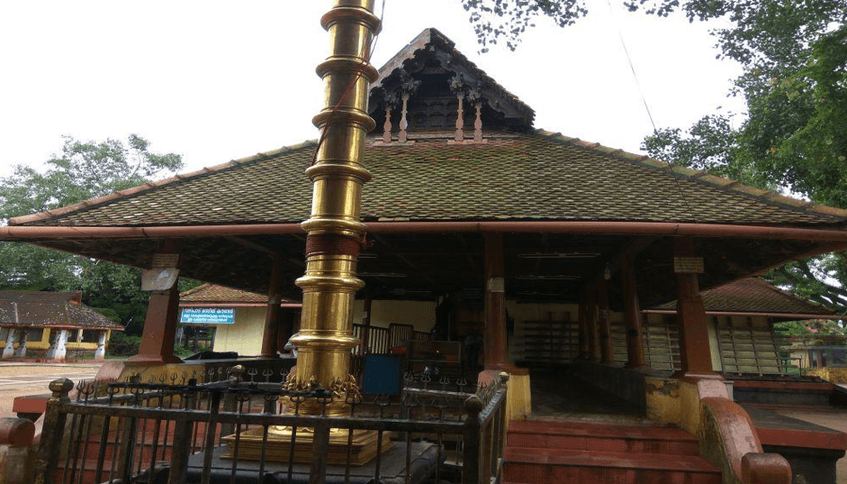 Entry into the temple precincts is marked by two dignified structures — the Annakottil, the elephant stable and the Dhwaja Sthambham, the sacred flagpole — which stand as befitting guardians at the threshold. Beyond them lies the Nalambalam, a rectangular courtyard of serene and traditional design, within which are housed the Balikkallu, a sanctified stone set aside for ritual offerings to the deities and the Deepa Sthambham, a graceful tower of lamps rising in quiet splendour. Within this sacred enclosure stands the Chathurasra Sreekovil, the western-facing square sanctum sanctorum that enshrines the presiding deity, Rajarajeswari Devi.
 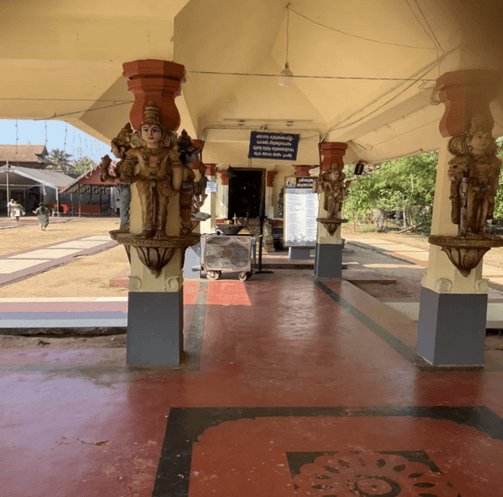 Of particular architectural significance, this inner sanctum lies open to the sky, its unroofed form a symbolic tribute to the presence of Vana Durga.
Here, the goddess is manifest in her four-armed splendour, rising to a height of some four feet, facing west and bearing in her hands the Shankha, emblem of the sacred conch and the Chakra, symbol of the divine discus. Fronting the Sreekovil is the Namaskara Mandapam, a rectangular hall of worship raised upon an elevated platform and supported by four or more elegantly carved pillars — a hall that stands in graceful testament to the enduring architectural heritage of Kerala’s temples.
Just beyond the Nalambalam, in the quiet spaces surrounding the main sanctum, stand the shrines of the temple’s beloved sub-deities. Lord Hanuman, Lord Subramaniyan and Lord Ayyappan each rest in their own sanctum, facing the east, while Lord Krishna, a little apart, gazes westward from his own gentle abode. 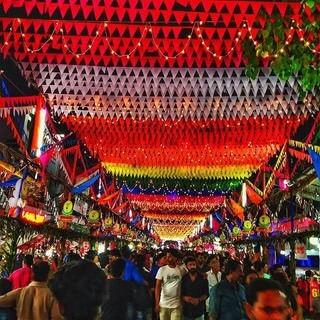 Close by, the Navagraha Prathishta pays homage to the nine celestial deities of Hindu astrology, each one watching over its own corner of the sky. Further still, tucked within a Sarpakavu — a sacred grove left wild and untouched, believed to cradle the presence of Nagaraja and the Naga devatas — one finds a place where nature itself becomes a temple. And in his own quiet corner, facing east, Lord Ganesha keeps his gentle watch over all who pass. Every day, once the rituals for the principal deity draw to a close, these lesser shrines too receive their share of light and devotion, as Deeparadhana is offered to each in turn, a quiet ripple of worship spreading outward through the temple grounds.
The 10-day annual festival, Mullakkal Chirappu Mahotsavam, is celebrated during the Malayalam month of Vrischikam (December–January). This auspicious period includes elephant processions, special poojas and rituals, music and Kerala cultural programmes, fireworks and Annadanam for devotees. During this period, the streets around the temple are decorated with lights and stalls, attracting large gatherings of devotees. The other major festival is Navaratri, which is celebrated in the Malayalam month of Kanni (September–October) and is the nine-day worship of Saraswathi Devi. Ashtami Rohini and Vinayaka Chathurthi are celebrated in the month of Chingam, usually during August–September.
Bhagavathy Seva is a form of worship offered to Mullakkal Devi. This is performed with lamps, flowers and devotional chants. It is performed to seek divine blessings for protection, peace and the removal of obstacles from their lives. The other common offerings are Lalitha Sahasranama Archana (recitation of the thousand names of Devi) and Navagraha Pooja (seeking protection from planetary influences and overall well-being). Offering a Vettala Mala (betel-leaf garland) to Hanuman Swami of this temple helps devotees fulfill their wish to settle abroad. Devotees seeking a happy and harmonious family life also offer a Tulasi garland to Lord Krishna here.
The temple’s day begins gently at 5:00 am in the morning, when the doors are opened for Nada Thurakkal, the first ritual of the day. Morning worship continues quietly until 11:00 am, when the doors close after Ucha Pooja is completed. In the evening, as the light begins to soften, the temple opens again at 5:00 pm to welcome devotees back. Deeparadhana, the offering of lamps, takes place at 6:40 pm, followed by the evening procession of Athazha Shiveli. By 8:00 pm, the day’s rituals draw to a close and the temple settles into rest until dawn returns.
Key highlights
- Located 1 km from Alappuzha Bus stand.
- Located 2.5 km from Alappuzha Railway station.
- State transport and local buses are available.
- Private vehicles can be parked at the designated parking area.
- Accommodation and food facilities are available nearby areas.
- Contact information: 0477 223 0015
श्री राजराजेश्वरी मंदिर
मुल्लाक्कल, जिला. अलाप्पुझा
मंदिरे
Temples
मंदिर
મંદિરો
கோவில்கள்
దేవాలయాలు
ക്ഷേത്രങ്ങൾ
ದೇವಾಲಯಗಳು
মন্দিরসমূহ
ਮੰਦਿਰ
-
पाझवेदु श्रीभागवती मंदिर पाळावेडू, जि. अलप्पुझा
अधिक माहितीPazhaveedu Sree Bhagavathy Temple Pazhaveedu, Dist. Alappuzha
View Detailsपझावीडु श्री भगवती मंदिर पझावीडु, जिला. अलाप्पुझा
विवरण देखेंPazhaveedu Sree Bhagavathy Temple Pazhaveedu, Dist. Alappuzha
વિગત જુઓPazhaveedu Sree Bhagavathy Temple Pazhaveedu, Dist. Alappuzha
விவரங்களைக் காண்கPazhaveedu Sree Bhagavathy Temple Pazhaveedu, Dist. Alappuzha
వివరాలను చూడండిPazhaveedu Sree Bhagavathy Temple Pazhaveedu, Dist. Alappuzha
വിശദാംശങ്ങൾ കാണുകPazhaveedu Sree Bhagavathy Temple Pazhaveedu, Dist. Alappuzha
ವಿವರಗಳನ್ನು ವೀಕ್ಷಿಸಿPazhaveedu Sree Bhagavathy Temple Pazhaveedu, Dist. Alappuzha
বিস্তারিত দেখুনPazhaveedu Sree Bhagavathy Temple Pazhaveedu, Dist. Alappuzha
ਵੇਰਵੇ ਦੇਖੋ -
पथ्यामकुलंगारा देवी मंदिर कालारकोड, जि. अलप्पुझा
अधिक माहितीPathiyamkulangara Devi Temple Kalarcode, Dist. Alappuzha
View Detailsपथियामकुलंगरा देवी मंदिर कलारकोड, जिला. अलाप्पुझा
विवरण देखेंPathiyamkulangara Devi Temple Kalarcode, Dist. Alappuzha
વિગત જુઓPathiyamkulangara Devi Temple Kalarcode, Dist. Alappuzha
விவரங்களைக் காண்கPathiyamkulangara Devi Temple Kalarcode, Dist. Alappuzha
వివరాలను చూడండిPathiyamkulangara Devi Temple Kalarcode, Dist. Alappuzha
വിശദാംശങ്ങൾ കാണുകPathiyamkulangara Devi Temple Kalarcode, Dist. Alappuzha
ವಿವರಗಳನ್ನು ವೀಕ್ಷಿಸಿPathiyamkulangara Devi Temple Kalarcode, Dist. Alappuzha
বিস্তারিত দেখুনPathiyamkulangara Devi Temple Kalarcode, Dist. Alappuzha
ਵੇਰਵੇ ਦੇਖੋ -
मारुथर्वट्टम श्री धन्वंतरी मंदिर मारुथोरवट्टोम, जि. अलप्पुझा
अधिक माहितीMaruthorvattom Sree Dhanwanthari Temple Maruthorvattom, Dist. Alappuzha
View Detailsमरुथोरवट्टम श्री धन्वंतरि मंदिर मारुथोरवाट्टम, जिला. अलाप्पुझा
विवरण देखेंMaruthorvattom Sree Dhanwanthari Temple Maruthorvattom, Dist. Alappuzha
વિગત જુઓMaruthorvattom Sree Dhanwanthari Temple Maruthorvattom, Dist. Alappuzha
விவரங்களைக் காண்கMaruthorvattom Sree Dhanwanthari Temple Maruthorvattom, Dist. Alappuzha
వివరాలను చూడండిMaruthorvattom Sree Dhanwanthari Temple Maruthorvattom, Dist. Alappuzha
വിശദാംശങ്ങൾ കാണുകMaruthorvattom Sree Dhanwanthari Temple Maruthorvattom, Dist. Alappuzha
ವಿವರಗಳನ್ನು ವೀಕ್ಷಿಸಿMaruthorvattom Sree Dhanwanthari Temple Maruthorvattom, Dist. Alappuzha
বিস্তারিত দেখুনMaruthorvattom Sree Dhanwanthari Temple Maruthorvattom, Dist. Alappuzha
ਵੇਰਵੇ ਦੇਖੋ