
मारुथर्वट्टम श्री धन्वंतरी मंदिर
मारुथोरवट्टोम, जि. अलप्पुझा
Maruthorvattom Sree Dhanwanthari Temple
Maruthorvattom, Dist. Alappuzha
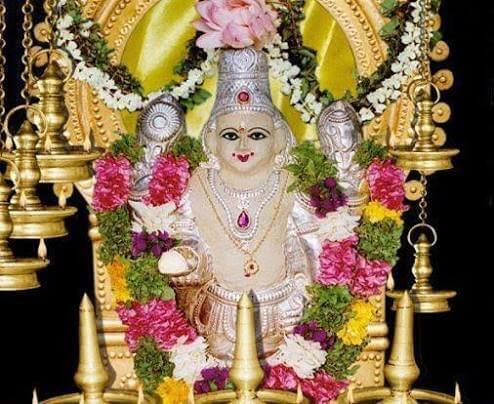 Maruthorvattom Sree Dhanwanthari Temple is a revered temple dedicated to Sri Dhanwanthari Moorthy, regarded in Hindu tradition as the divine embodiment of Ayurveda and an aspect of Lord Maha Vishnu. Lord Dhanwanthari is also known as the Divine Physician. The temple is situated at Maruthorvattom, near Cherthala in Alappuzha district and is closely associated with Kerala’s traditional Ayurveda heritage. Hindu Devotees of any age group can enter the temple to seek blessings from Dhanwanthari Moorthy. The temple is especially known among devotees seeking blessings for health, longevity and well-being. The sacred atmosphere of the temple reflects the harmonious connection between devotion and divinity make it an important religious centre in the nearby communities.
 The traditional history of Maruthorvattom is closely associated with Vellodu Namboothiri, who was renowned as an accomplished Ayurvedic physician and is traditionally associated with the Ashta Vaidya (eight Ayurvedic medicines) tradition in Ayurvedic culture.
The name Maruthorvattom is originated from the Malayalam expression “Marunnu Oru Vattam”, meaning “medicine in a single dose”, referring to the healing reputation of Vellodu Namboothiri. Historical accounts place his presence here around 600 years ago, approximately in the 15th –16th century. According to the temple history, the present idol of Sri Dhanwanthari was received by Vellodu Namboothiri and was initially worshipped in his household pooja room. Later, Cheerattaman Moos, another respected Ayurvedic physician, saw the radiant Dhanwanthari image in Vellodu Namboothiri’s house. He felt that such a sacred image should have a proper temple rather than remain in a private prayer room. He therefore undertook the construction of a temple in the 18th century. The traditional account consequently associates the establishment of the temple with Vellodu Namboothiri and Cheerattaman Moos, who jointly constructed the temple and played a significant role in the consecration of the Deity.
According to the temple’s traditional legend, Thampan of Puthiyaikal , 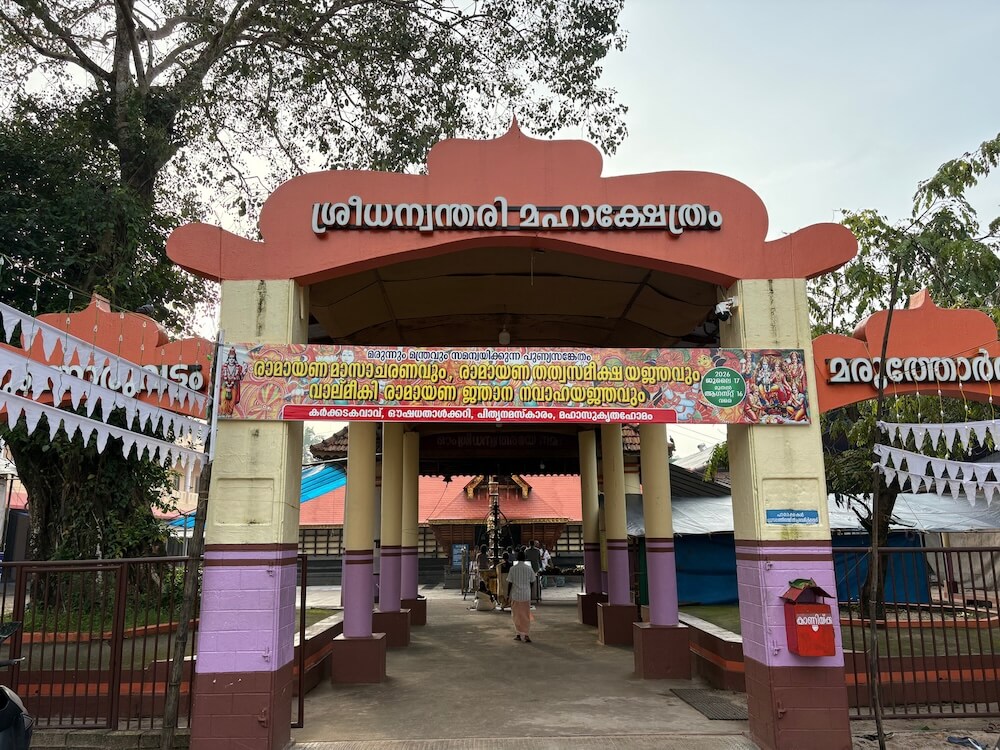 a ruler from Vayalar, suffered from a severe stomach ailment and sought divine guidance after prolonged treatment. During his worship at Vaikom, he saw a dream directing him to recover three idols from Kelankulam at Cherthala. He was instructed to leave the first idol in the pond and the second idol he recovered was that of Sri Dhanwanthari, which he was instructed to give to a worthy Brahmin. He subsequently presented the idol to Vellodu Namboothiri, who began worshipping it in his household. Later, Cheerattaman Moos recognised the spiritual significance of the idol and initiated the construction of the temple.
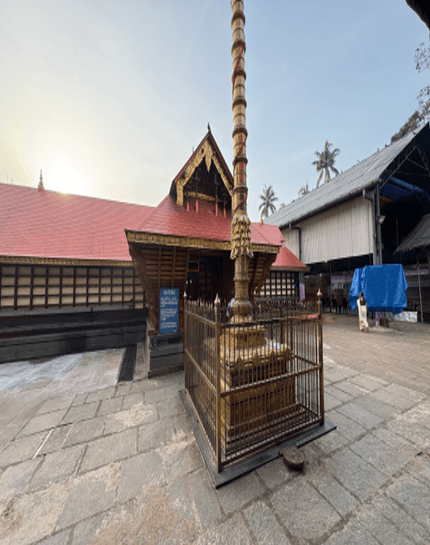
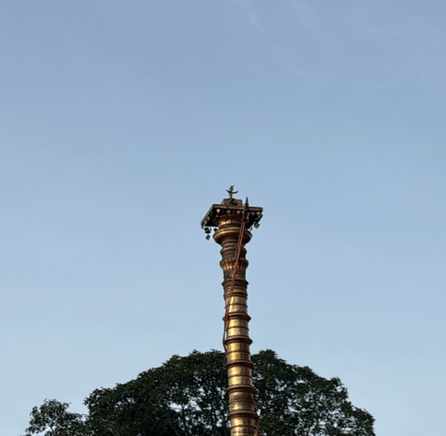
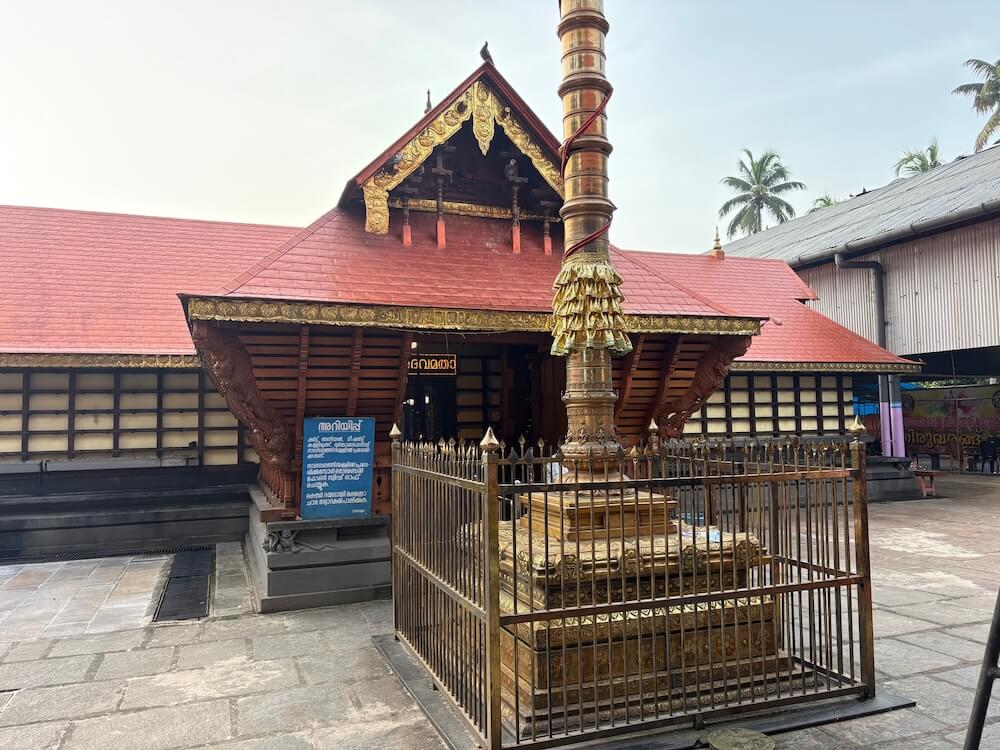
Stepping onto the sacred grounds, the grand Annakottil and the soaring Dhwaja Sthambham stand as timeless guardians, welcoming weary souls into a sanctuary of stillness.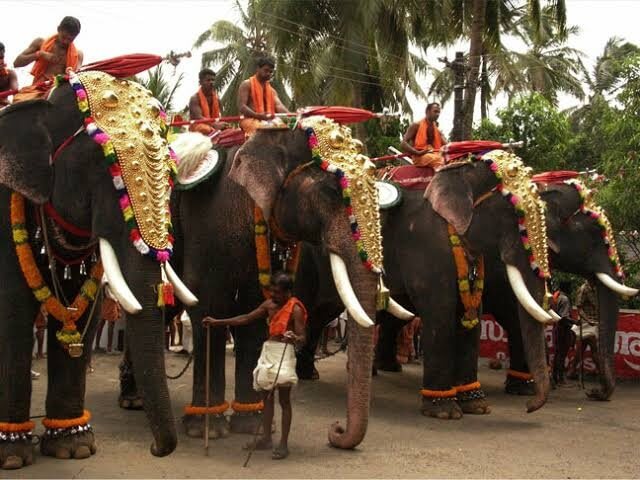 Beyond this outer threshold lies the serene Nalambalam, where the sacred Balikkallu rests and the tiered Deepa Sthambham glows softly, casting golden reflections across the ancient stone courtyard. At the heart of the inner sanctum, gazing gently toward the West, rests the divine four-armed granite Shila Bimbam of Sri Dhanwanthari. Holding the sacred Sankha, Chakra and the nectar of life—the Amrita Kumbham—his raised hand offers an everlasting promise of health, healingand peace. Above, a gleaming copper Thazhikakkudam crowns the roof of the Sreekovil, reaching toward the heavens. Before the sanctum stands the Namaskara Mandapam, its carved wooden pillars resting on a raised platform, where the image of Lord Garuda resides—eyes forever locked in quiet, eternal devotion upon his divine Lord.
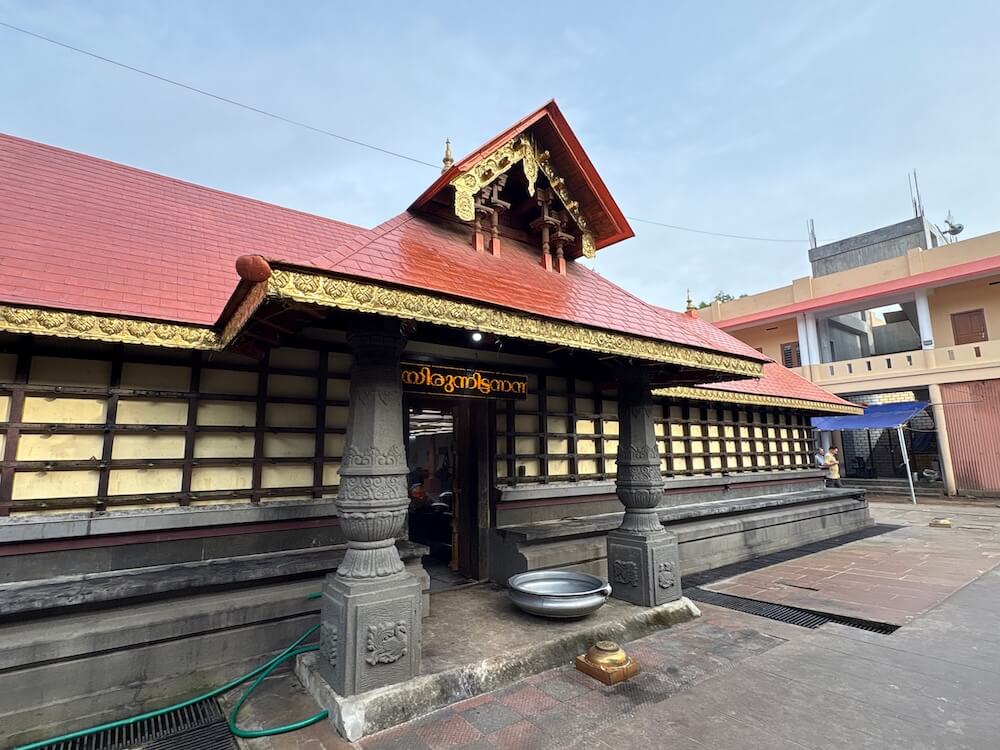 Within the sanctum of the Sreekovil, bathed in the soft glow of sacred lamps, Bhagavathy Devi rests alongside Lord Ganapathy, Lord Shiva and Lord Ayyappa—all turned toward the rising sun in the East. Beyond the quiet perimeter of the Nalambalam, Sree Bhadrakali Amma keeps her vigilant watch from a separate shrine facing North. Nearby, sheltered by ancient trees, the Sarpa Kavu cradles Lord Nagaraja in its verdant sanctuary, where he gazes West amidst the whispering leaves. Every day, the temple unfolds in timeless devotion—a gentle rhythm marked by the sacred waters of Abhishekam, serene Poojas and the majestic, slow march of the Sreebali procession. Etched upon the very walls of the Sreekovil, vibrant traditional murals silently tell stories of the divine, wrapping the sanctum in an enduring tapestry of art and faith.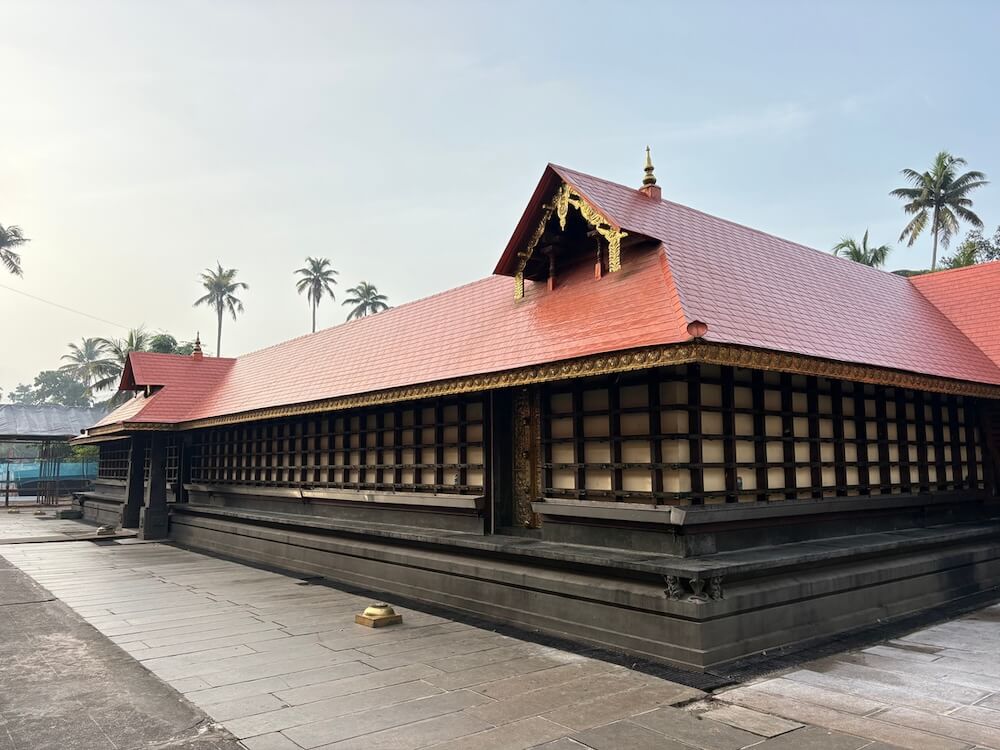
The principal festival of the temple is the eight-day Thiru Utsavam, celebrated annually in the Malayalam month of Medam (April–May) to offer special worship and obeisance to Sri Dhanwanthari Moorthy, the divine physician and embodiment of Ayurveda. Devotees participate in the special rituals seeking blessings for good health, longevity and well-being. The festival concludes with the ceremonial Arattu, associated with the Thiruvonam Nakshatra, marking the auspicious completion of the celebrations. Sri Dhanwanthari Jayanti, observed in the Malayalam month of Thulam (October–November), is an important occasion dedicated to Sri Dhanwanthari, seeking blessings for health and well-being. Other significant observances include Ashtami Rohini in the month of Chingam (August–September), 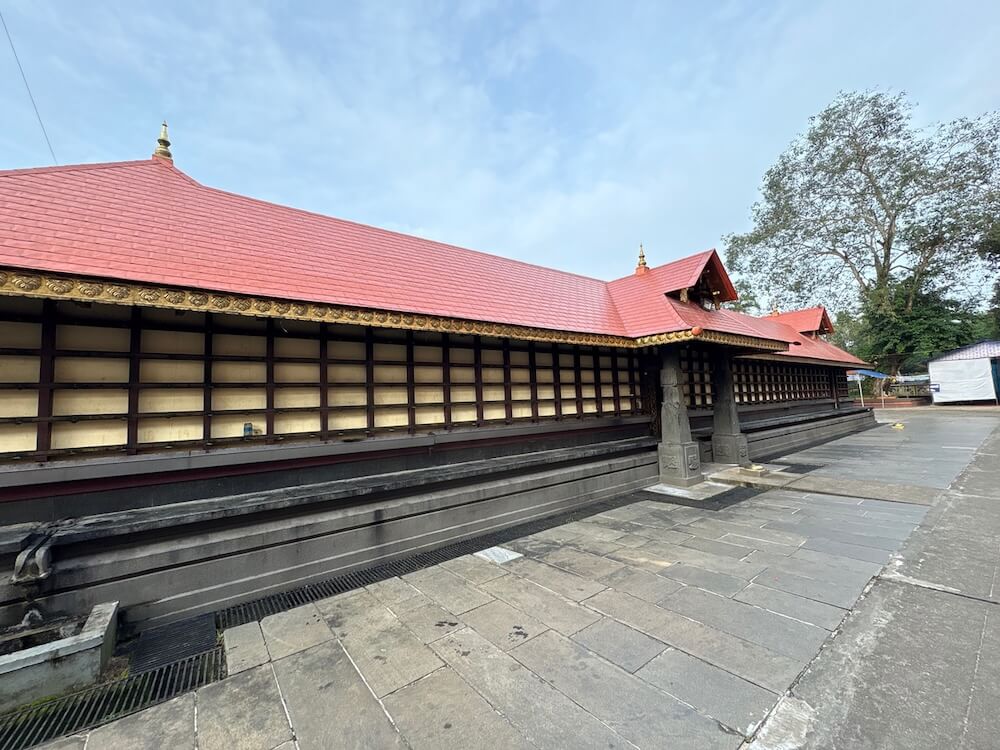 Navarathri in the month of Kanni (September-October), Mandala Pooja in the month of Vrischikam–Dhanu (November–January), Karkidaka Vavu in the month of Karkidakam (July–August) and Thiruvonam Pooja in the month of Chingam ( August–September) each marked by special worship and rituals at the temple.
The most important special offerings (vazhipadu) at the temple include Dhanwanthari Mantra Archana (chanting of the Dhanwanthari Mantra to the deity) performed with prayers for relief from illness and health-related difficulties; Dhanwanthari Homam (a special Vedic fire ritual performed to please the deity) is traditionally offered for relief from ailments and longevity. Along with that Muzhukappu, in which a sandalwood paste is applied to the deity for peace of mind and relief from mental distress along with seeking fulfilment of wishes and relief from physical illness. Maha Nivedyam, the temple’s principal offering of traditional Paal Payasam (a sweet pudding made from milk and rice to remove hindrances) is also considered especially dear to Sri Dhanwanthari.
As the first light of dawn gently breaks, the sacred sanctuary awakens at 5:00 AM with Nada Thurakkal, opening its doors to receive the faithful. Morning prayers unfold in quiet reverence, with Usha Pooja at 6:30 AM and Pantheeradi Pooja at 8:00 AM. At 11:30 AM, the Ucha Pooja is devoutly offered, bringing the morning rituals to a serene close as the doors rest at 12:00 Noon.
In the twilight, the temple reawakens at 5:30 PM. As darkness softly settles, the warm, holy glow of Deeparadhana illuminates the shrine at 6:45 PM, followed by the night’s final offering, Athazha Pooja, at 7:45 PM. At 8:00 PM, the doors gently close, surrounding the divine realm in tranquil silence until morning.
Key Highlights
- Located 4.5 km from Cherthala Railway Station and
3 km from Cherthala town. - KSRTC and local bus services are available to the temple from Cherthala and nearby areas.
- Parking facilities are available in the surrounding
temple area. - Accommodation and dining facilities are available in
and around Cherthala. - Contact: +91 92491 13355
मरुथोरवट्टम श्री धन्वंतरि मंदिर
मारुथोरवाट्टम, जिला. अलाप्पुझा
मंदिरे
Temples
मंदिर
મંદિરો
கோவில்கள்
దేవాలయాలు
ക്ഷേത്രങ്ങൾ
ದೇವಾಲಯಗಳು
মন্দিরসমূহ
ਮੰਦਿਰ
-
पाझवेदु श्रीभागवती मंदिर पाळावेडू, जि. अलप्पुझा
अधिक माहितीPazhaveedu Sree Bhagavathy Temple Pazhaveedu, Dist. Alappuzha
View Detailsपझावीडु श्री भगवती मंदिर पझावीडु, जिला. अलाप्पुझा
विवरण देखेंPazhaveedu Sree Bhagavathy Temple Pazhaveedu, Dist. Alappuzha
વિગત જુઓPazhaveedu Sree Bhagavathy Temple Pazhaveedu, Dist. Alappuzha
விவரங்களைக் காண்கPazhaveedu Sree Bhagavathy Temple Pazhaveedu, Dist. Alappuzha
వివరాలను చూడండిPazhaveedu Sree Bhagavathy Temple Pazhaveedu, Dist. Alappuzha
വിശദാംശങ്ങൾ കാണുകPazhaveedu Sree Bhagavathy Temple Pazhaveedu, Dist. Alappuzha
ವಿವರಗಳನ್ನು ವೀಕ್ಷಿಸಿPazhaveedu Sree Bhagavathy Temple Pazhaveedu, Dist. Alappuzha
বিস্তারিত দেখুনPazhaveedu Sree Bhagavathy Temple Pazhaveedu, Dist. Alappuzha
ਵੇਰਵੇ ਦੇਖੋ -
पथ्यामकुलंगारा देवी मंदिर कालारकोड, जि. अलप्पुझा
अधिक माहितीPathiyamkulangara Devi Temple Kalarcode, Dist. Alappuzha
View Detailsपथियामकुलंगरा देवी मंदिर कलारकोड, जिला. अलाप्पुझा
विवरण देखेंPathiyamkulangara Devi Temple Kalarcode, Dist. Alappuzha
વિગત જુઓPathiyamkulangara Devi Temple Kalarcode, Dist. Alappuzha
விவரங்களைக் காண்கPathiyamkulangara Devi Temple Kalarcode, Dist. Alappuzha
వివరాలను చూడండిPathiyamkulangara Devi Temple Kalarcode, Dist. Alappuzha
വിശദാംശങ്ങൾ കാണുകPathiyamkulangara Devi Temple Kalarcode, Dist. Alappuzha
ವಿವರಗಳನ್ನು ವೀಕ್ಷಿಸಿPathiyamkulangara Devi Temple Kalarcode, Dist. Alappuzha
বিস্তারিত দেখুনPathiyamkulangara Devi Temple Kalarcode, Dist. Alappuzha
ਵੇਰਵੇ ਦੇਖੋ -
श्री राजराजेश्वरी मंदिर मुल्लक्कल, जि. अलप्पुझा
अधिक माहितीSree Rajarajeswari Temple Mullakkal, Dist. Alappuzha
View Detailsश्री राजराजेश्वरी मंदिर मुल्लाक्कल, जिला. अलाप्पुझा
विवरण देखेंSree Rajarajeswari Temple Mullakkal, Dist. Alappuzha
વિગત જુઓSree Rajarajeswari Temple Mullakkal, Dist. Alappuzha
விவரங்களைக் காண்கSree Rajarajeswari Temple Mullakkal, Dist. Alappuzha
వివరాలను చూడండిSree Rajarajeswari Temple Mullakkal, Dist. Alappuzha
വിശദാംശങ്ങൾ കാണുകSree Rajarajeswari Temple Mullakkal, Dist. Alappuzha
ವಿವರಗಳನ್ನು ವೀಕ್ಷಿಸಿSree Rajarajeswari Temple Mullakkal, Dist. Alappuzha
বিস্তারিত দেখুনSree Rajarajeswari Temple Mullakkal, Dist. Alappuzha
ਵੇਰਵੇ ਦੇਖੋ