
कंठेश्वर महादेव मंदिर
काचीगाव, ता. दमण, जि. दमण
Kantheswar Mahadev Temple
Kachigam, Tal. Daman, Dist. Daman
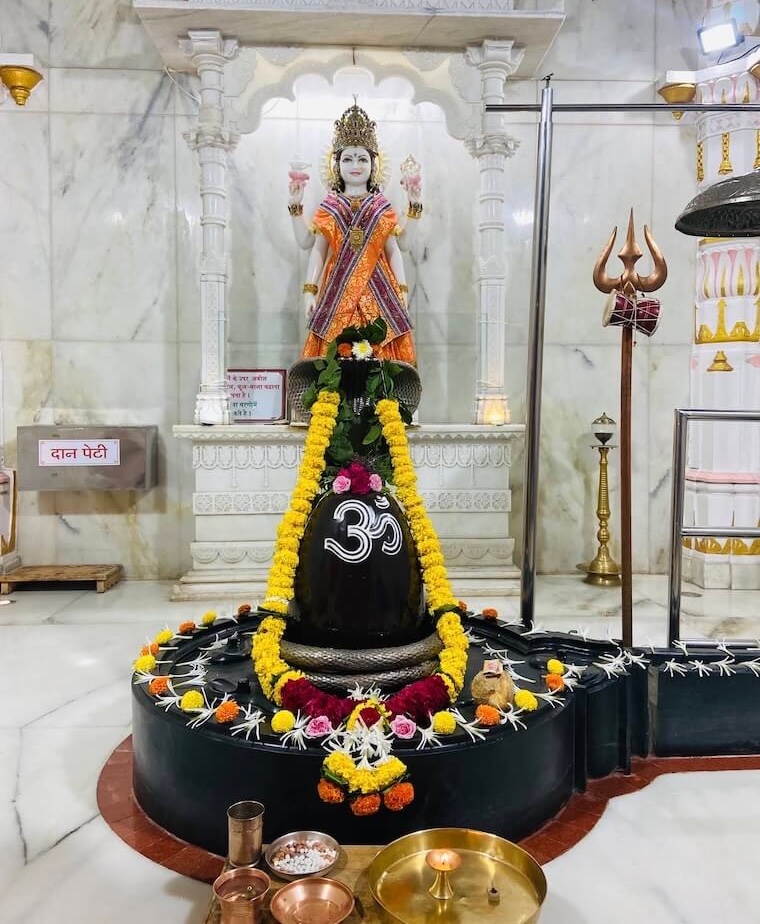 Nestled within the Kachigam locality of the Union Territory of Daman, the Kantheswar Mahadev Temple stands as a paramount sanctuary of faith for thousands of devotees. This temple is situated adjacent to the region’s industrial enclave. Within this shrine, alongside the sacred Shiva Lingam of Kantheswar Mahadev, reside the divine idols of Amba Mata and Radha-Krishna. During Shravan, the temple is filled with a huge congregation of devotees travelling from far and wide. They bring holy Ganges water in traditional ‘kawads’.
The city of Daman is widely renowned for its picturesque coastline. The entire territory boasts a rich historical legacy spanning approximately 2,000 years and was regarded in antiquity as an integral part of the ‘Lata’ country. Following the illustrious reigns of the Maurya, Satavahana and Chalukya dynasties, the Solanki kings governed this realm for numerous years. In 1559 B.C., the Portuguese commander, Dom Constantino de Braganza, conquered this region from the Sultan of Gujarat following a military conflict. The majestic Fort of Moti Daman and the St. Jerome Fort of Nani Daman were constructed during the Portuguese regime. 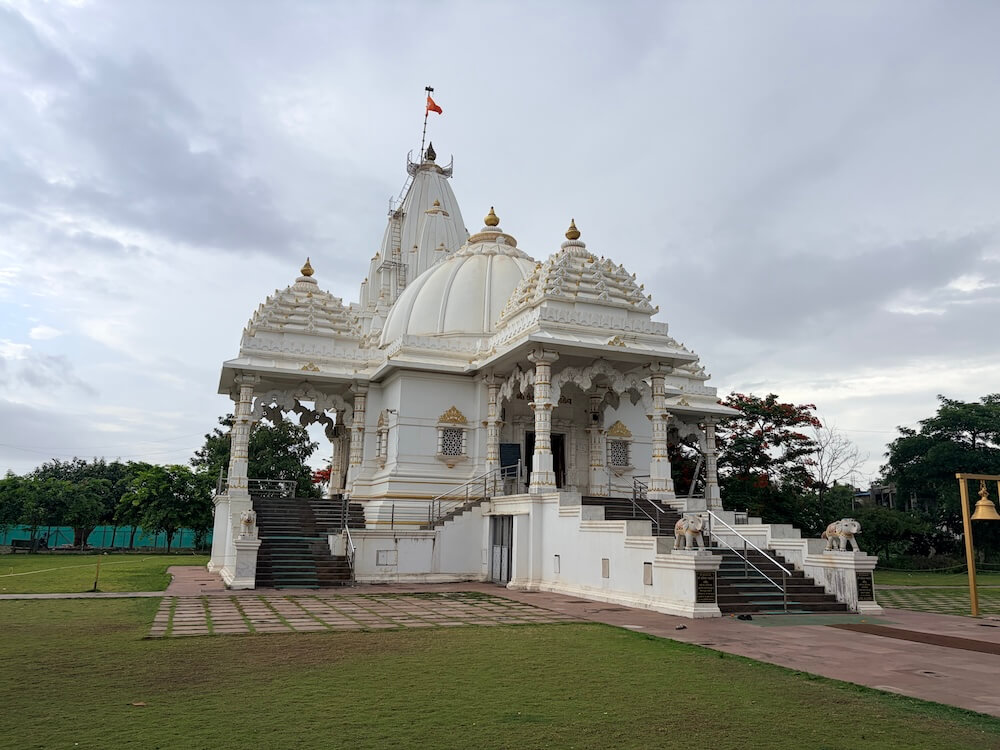 Even after India attained independence in 1947, the territories of Daman, Diu and Goa remained under Portuguese occupation. Ultimately, on 19 December 1961, the Government of India launched the military operation named ‘Operation Vijay’, successfully ousting the Portuguese from Indian soil. Amidst all these historical transitions, the city of Daman has preserved its religious devotion uninterrupted, a faith firmly anchored in the region’s sacred shrines. The Kantheswar Mahadev Temple at Kachigam stands as one of the most ancient shrines amongst them.
Regarding the divine epithets of Mahadev, such as ‘Neelkanth’ or ‘Kantheswar’, the Puranic scriptures narrate that when the gods and demons collectively undertook the churning of the ocean, a lethal venom named ‘Halahal’ emerged from the depths.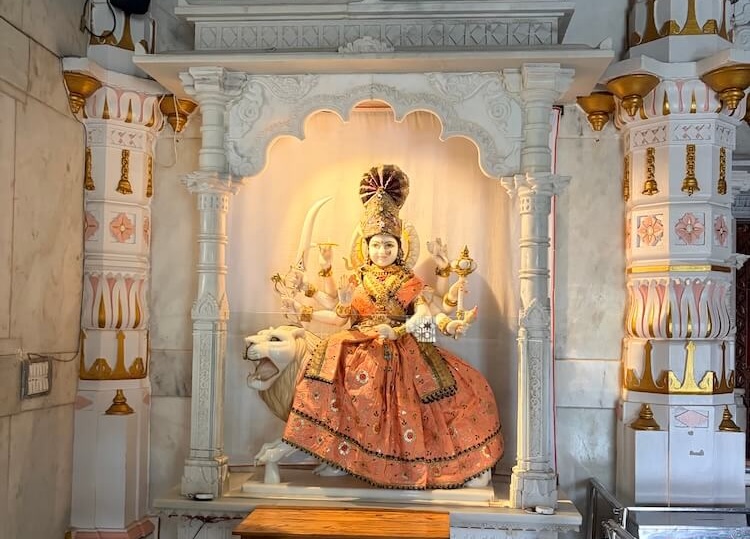 The potency of this venom created a dire crisis, threatening the total annihilation of the entire universe. Thereupon, all the deities implored Lord Mahadev to devise a remedy to deliver them from this catastrophe. If this venom were to be neutralised, there existed no alternative course of action other than for the Lord to consume it himself. Recognising the gravity of this, Mahadev drank the venom. To prevent the poison from diffusing through the rest of his divine body, he contained it within his throat. Owing to the consumption of the venom, Mahadev’s throat assumed a distinct blue hue, thereby earning him the epithet ‘Neelkanth’. In later traditions, the Lord also came to be addressed as ‘Kantheswar’. The enshrinement of the Shiva Lingam in this temple at Kachigam stands as a living testimony to this sacred narrative.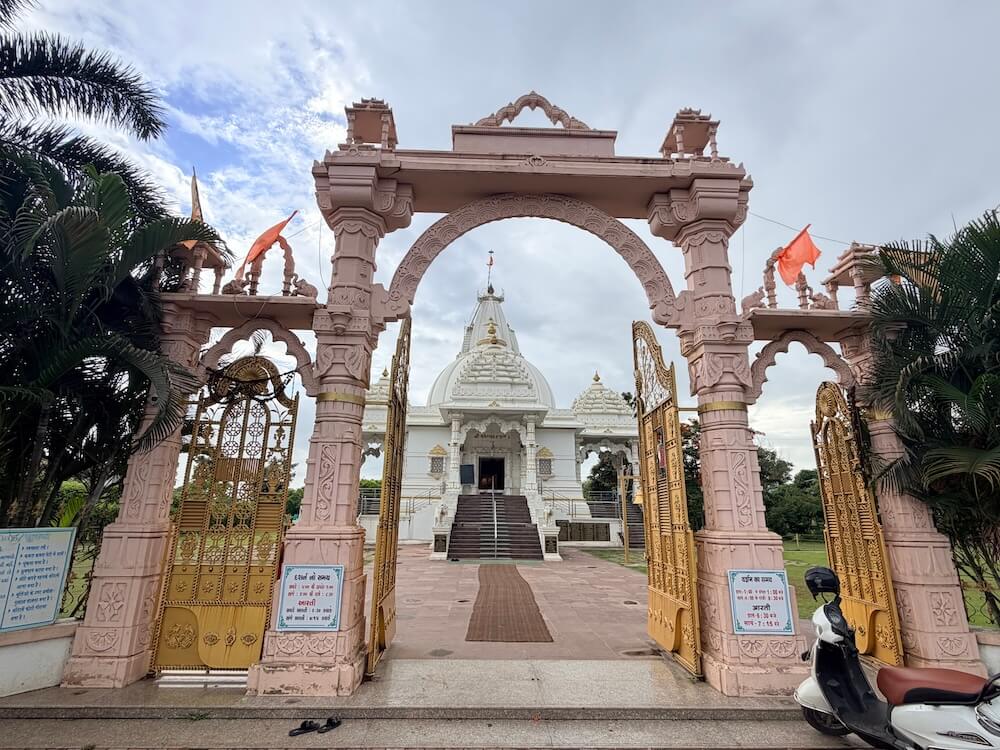
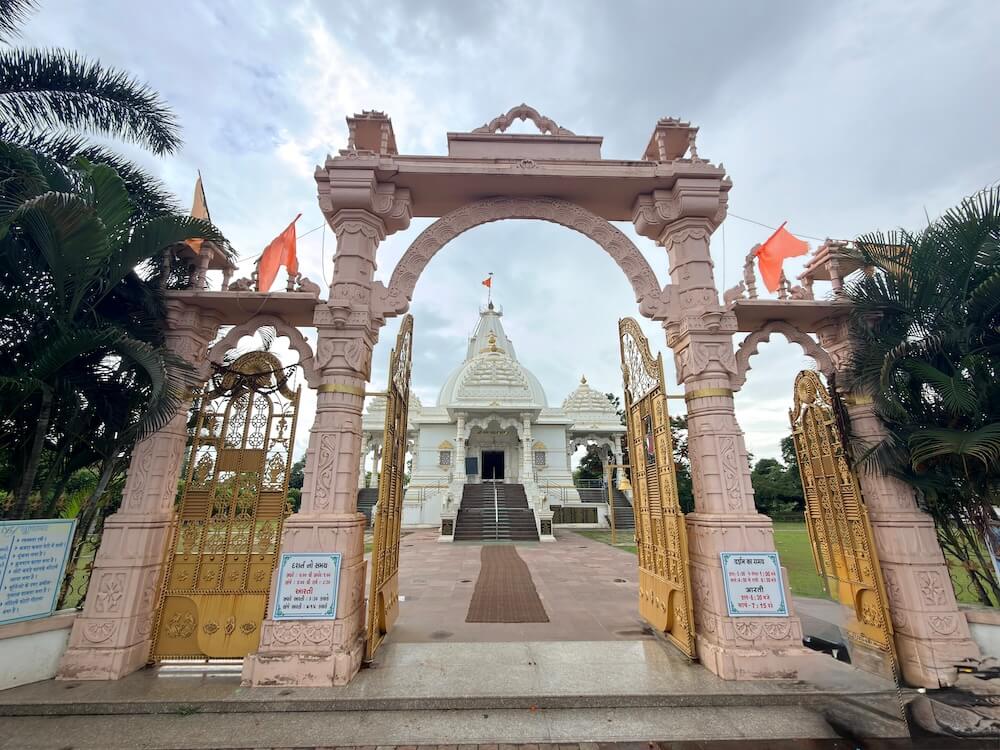
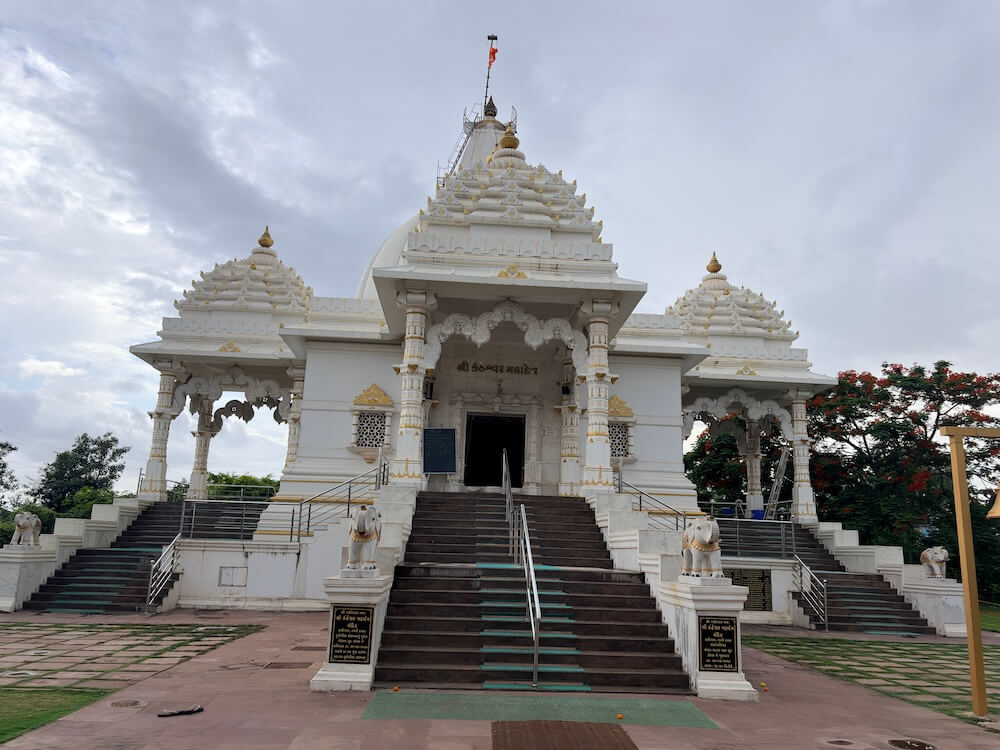
The temple is situated adjacent to the principal thoroughfare passing near the village of Kachigam. A spacious parking lot is laid out directly in front of the temple. The precinct is enclosed on all four sides by a fortified rampart. Set within these ramparts is the principal entrance gateway, featuring six pillars and three elegant arches. Flanking it on the left and right are smaller subsidiary doorways. A crescent-shaped decorative archway (‘toran’) is beautifully carved across the ornate pillars of the main gateway, whilst the twin subsidiary doorways are adorned with cusped archways. The transverse beams above all three gateways feature central pediments with decorative cusped forms. It is flanked on either side by canopy structures (‘meghadamberis’), each supported by four miniature pillars. 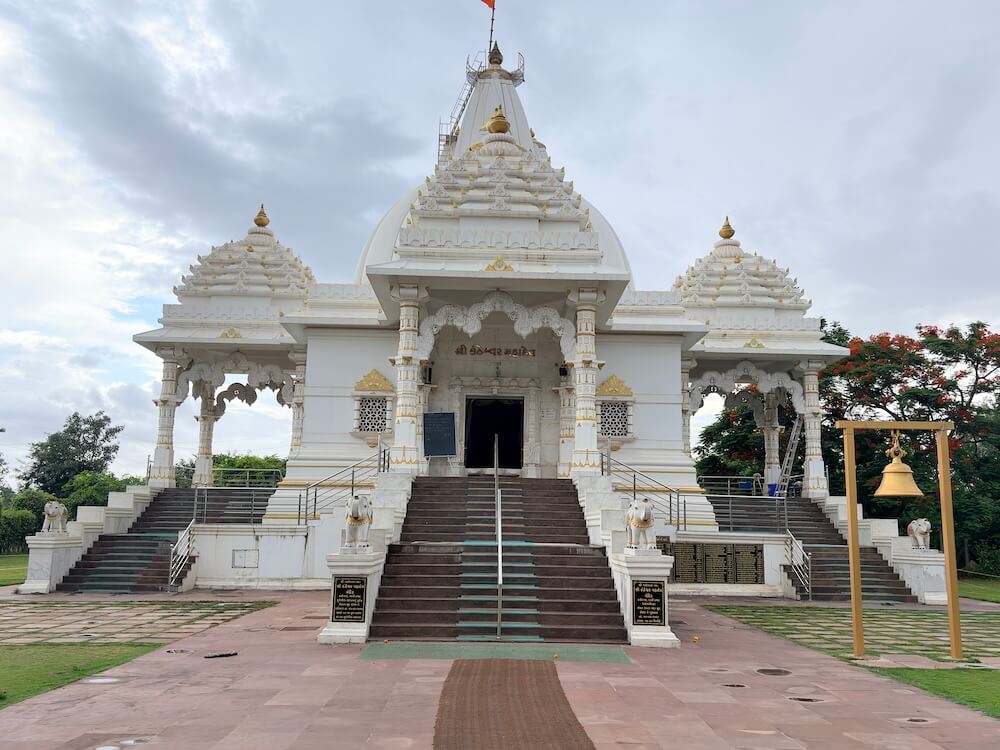 The interior precinct features a beautifully paved courtyard finished with marble and dressed stone, thoughtfully fitted with seating arrangements for the comfort of visiting devotees. The architectural layout of the temple comprises three front porches (‘Mukhamandapas’) facing three directions, a central congregational hall (‘Sabhamandapa’) and the sanctum sanctorum (‘Garbhagriha’). The entire temple edifice is elevated upon a high plinth above the ground. A flight of eighteen steps leads towards the primary front porch facing the facade, while convenient stairways are likewise provided to access the left and right front porches. Within each of these three front porches stand four intricately carved pillars, interconnected by elegant cusped arches.
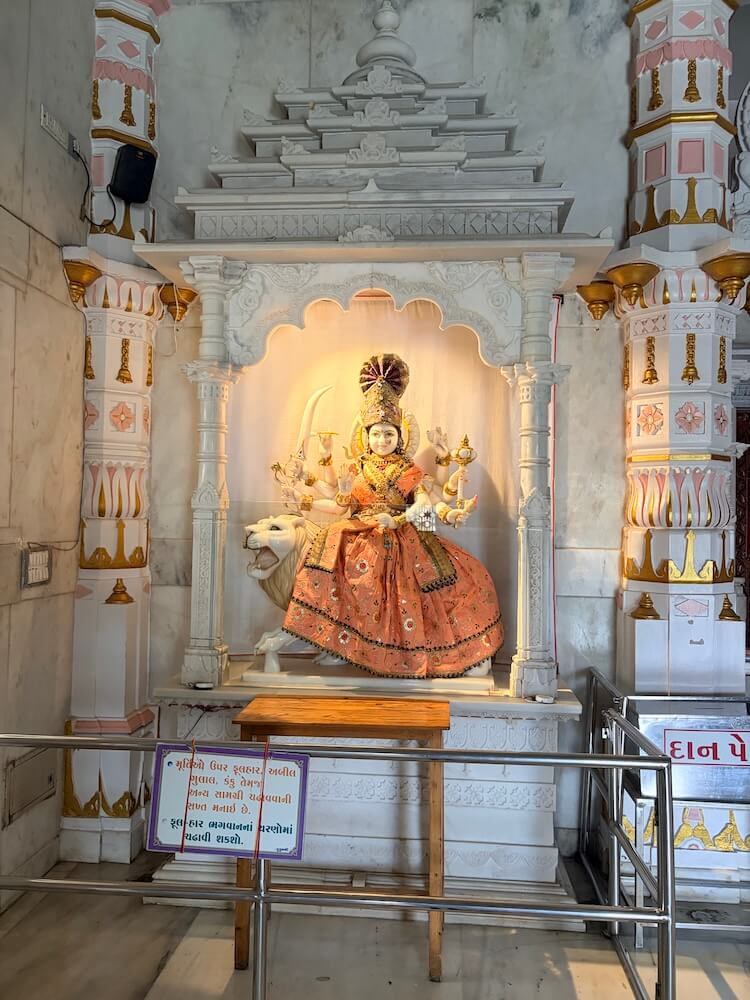
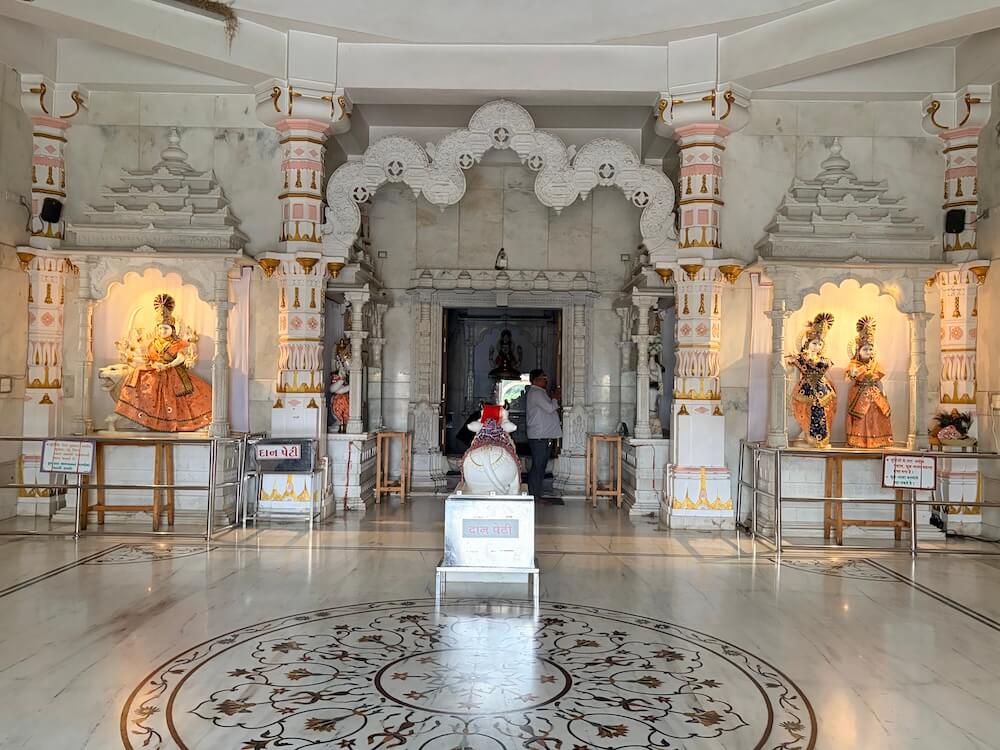
 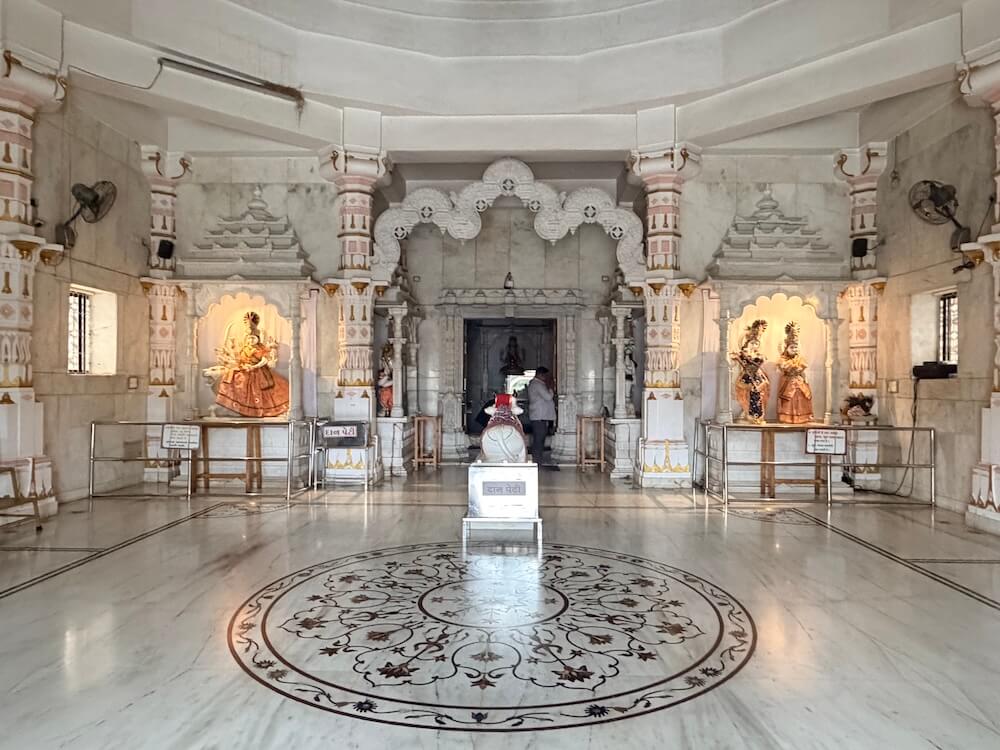 Proceeding beyond the three front porches lie the entrances to the congregational hall, all of which feature beautifully sculpted figures of celestial guardians (‘Dwarapalas’). The door frames of these entrances are adorned with detailed carvings depicting foliate scrolls and floral creepers. The lintels (‘lalatabimba’) above the entrances feature prominent sculptures of Lord Ganesha, whilst the thresholds (‘mandaraka’) at the base of the doorways are embellished with semi-circular moon-stones (‘ardhachandra shilas’). The congregational hall of the temple is designed as an enclosed structure, fitted with windows to allow natural light and ventilation. Adhering to the interior walls of the hall are ornately carved stone pillars. The entrance to the vestibule (‘antarala’) is flanked by two prominent niches. The niche on the left enshrines a magnificent eight-armed idol of Amba Mata, whilst the one to the right houses the idols of Radha-Krishna.
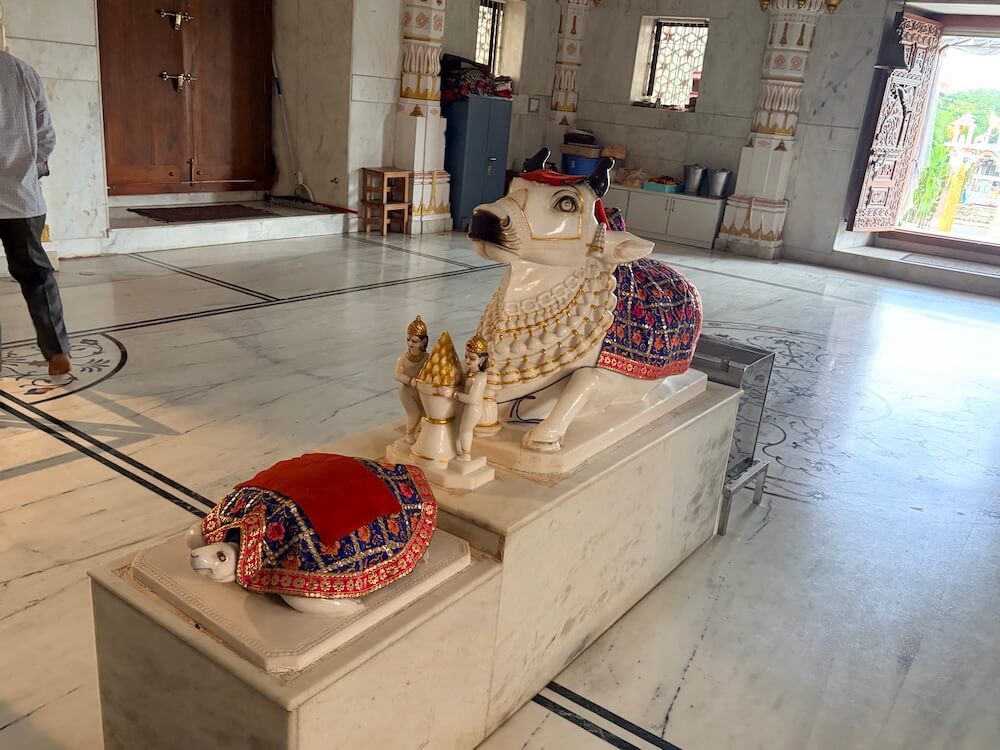
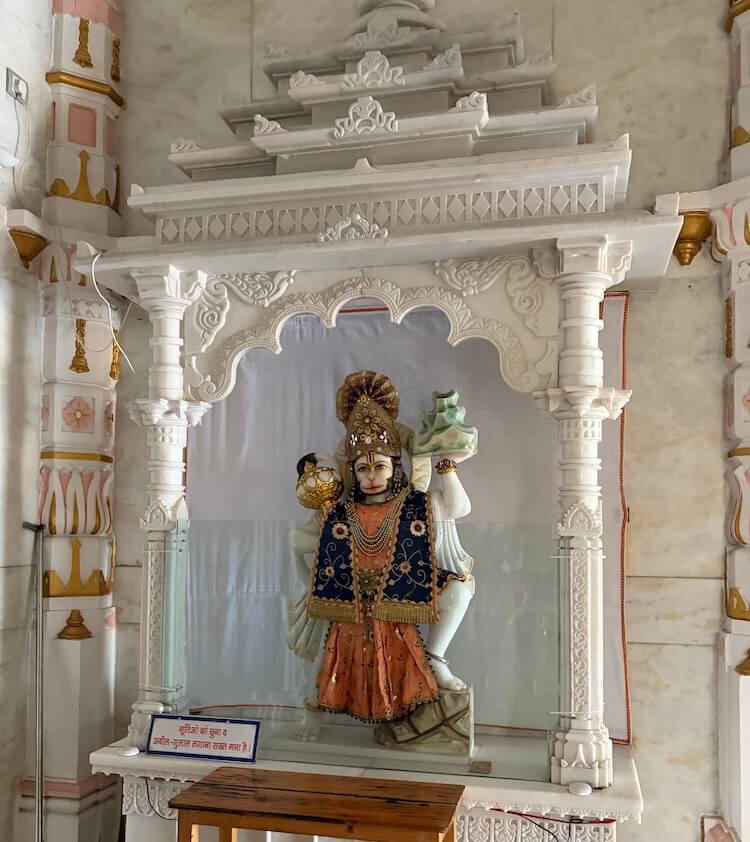
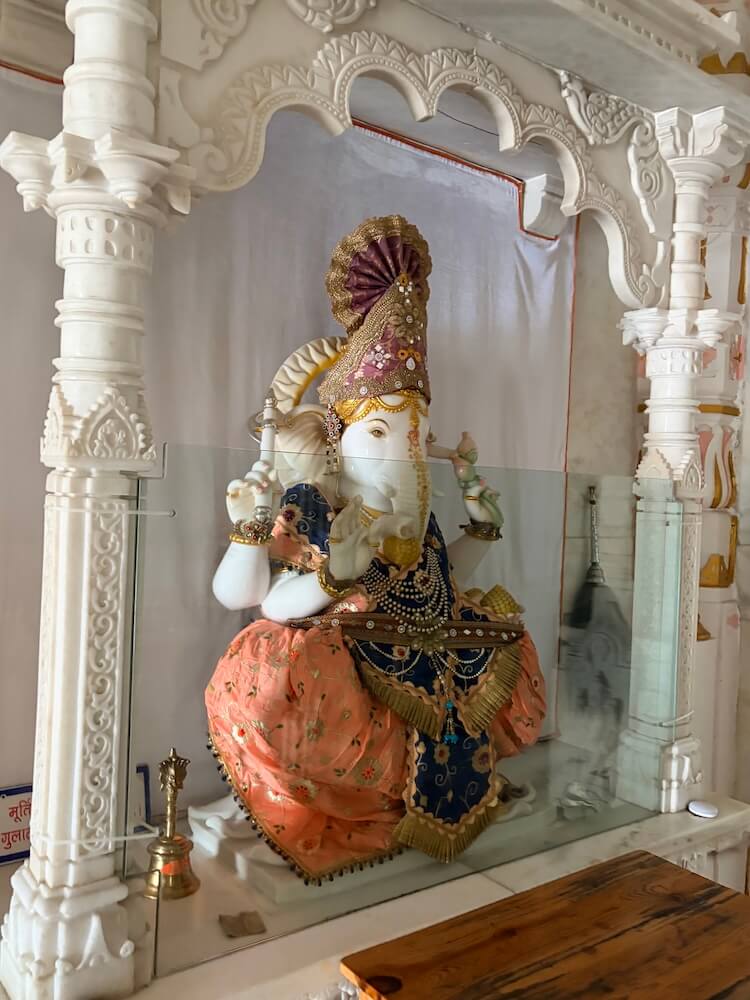
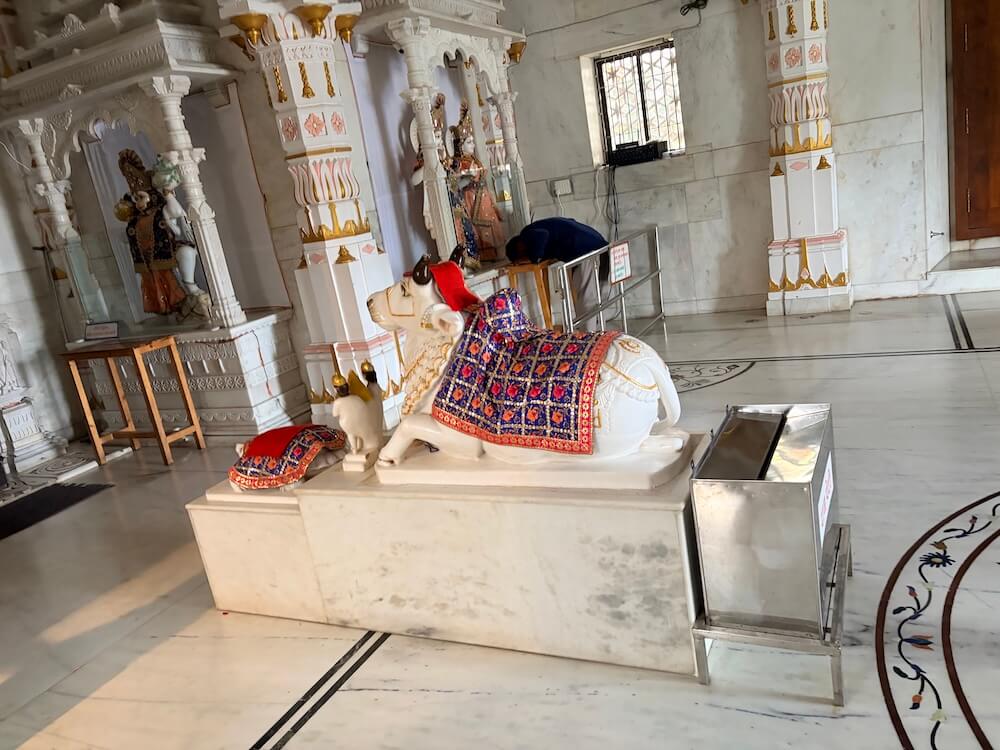 Within the congregational hall, directly facing the vestibule entrance, a majestic sculpture of Nandi rests upon a pedestal. The vestibule entrance features carved pillars on either side, connected by a beautiful cusped arch. Within the vestibule’s interior recesses, two distinct niches are positioned along the right and left walls, enshrining the idols of Lord Ganesha and Lord Hanuman, respectively.
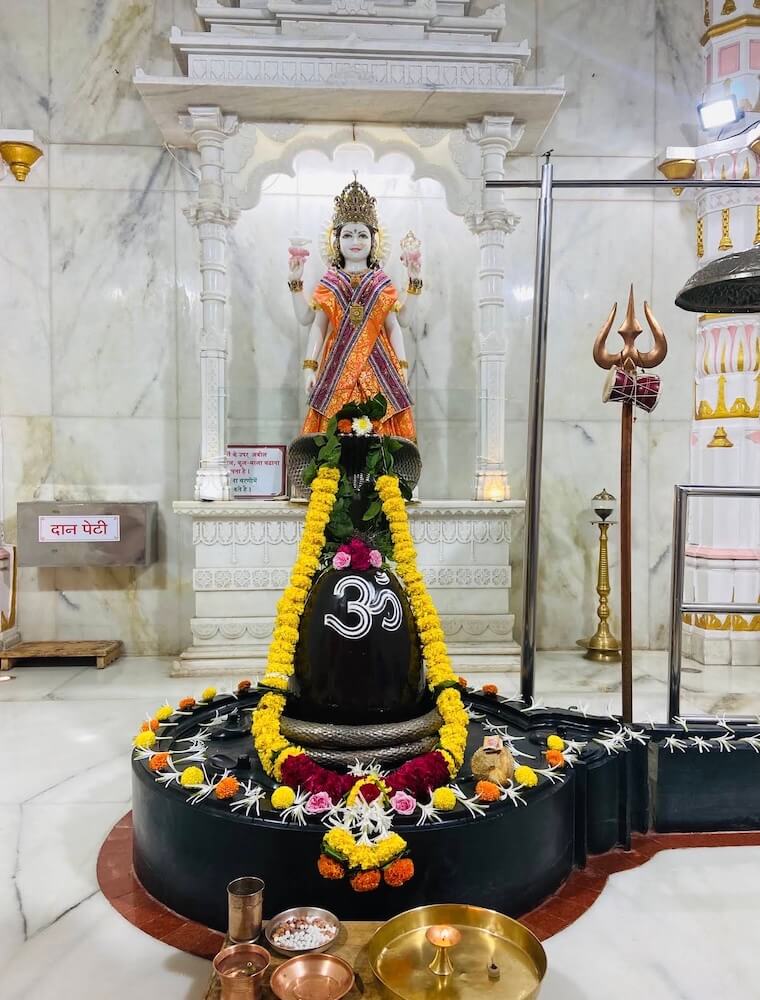
The entrance to the sanctum sanctorum features beautifully detailed door frames, with a fine sculpture of Lord Ganesha carved upon its lintel. Installed upon the floor at the absolute centre of the sanctum sanctorum is the sacred Shiva Lingam, encircled by a brass serpent deity. A pristine silver canopy is suspended directly above the Lingam,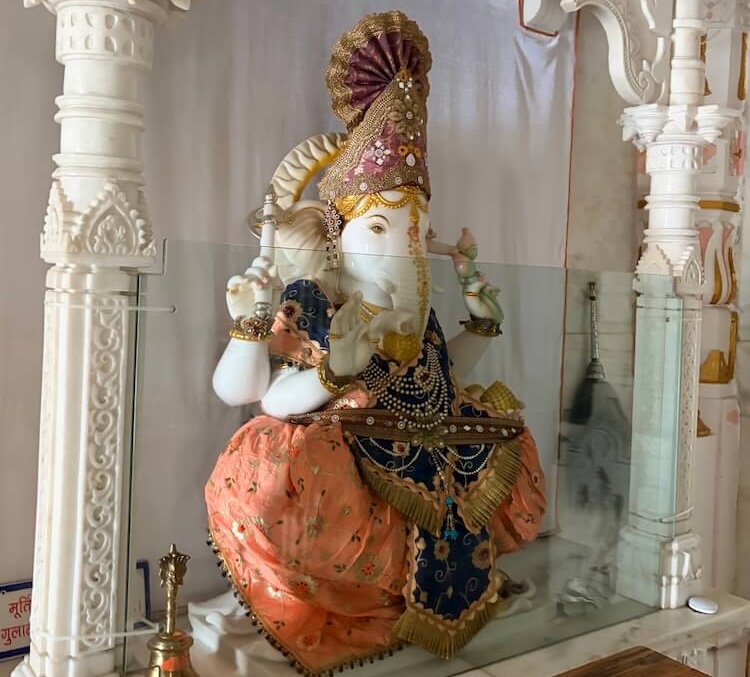 flanked by a traditional brass trident (‘trishul’) and a hand-drum (‘damru’). Adhered to the rear wall of the sanctum sanctorum is an ornate wooden pavilion, within which is enshrined a white marble four-armed idol of Mother Parvati. A unique feature of this idol of Mother Parvati is that her rear hands are depicted holding a miniature Shiva Lingam in one and a sculpture of infant Ganesha in the other. This particular form is regarded as exceedingly rare in architectural terms. An exit spout (‘Gomukh’) is systematically designed in the exterior portion of the sanctum sanctorum to drain the sacred water. Directly facing this spout is an exquisitely carved figure of a sage. This presents a unique architectural arrangement in which the sacred offerings and holy water flowing from the spout fall directly into the bowl held by the sage.
The spires surmounting the upper portions of this temple are structured in a highly distinctive manner. 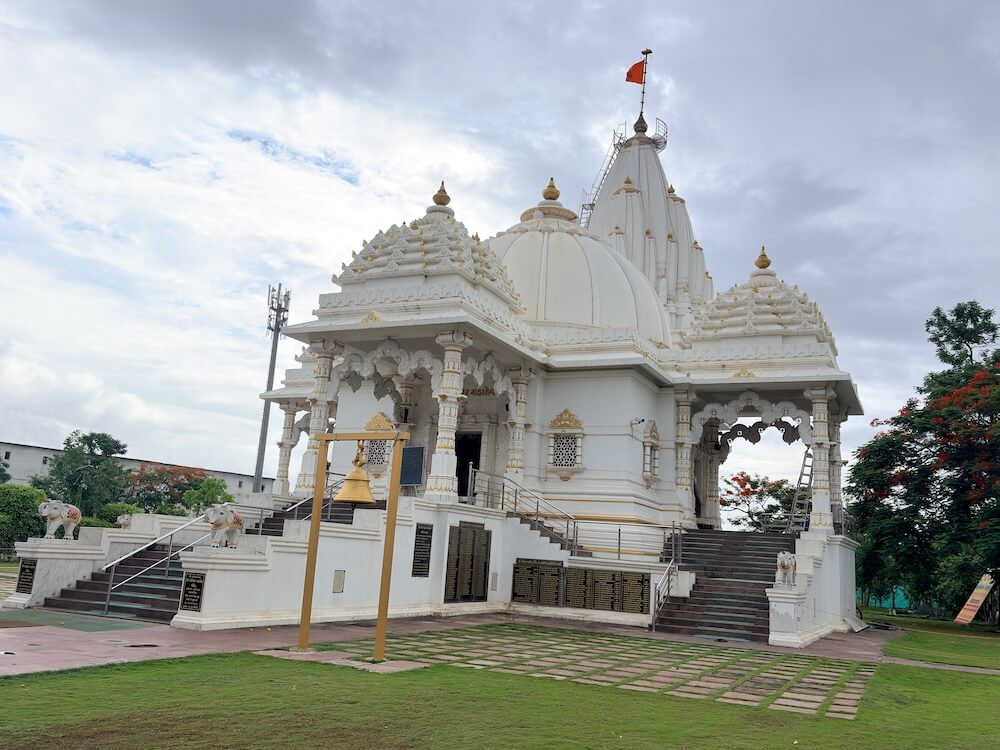 The roofs above the three front porches feature pyramid-shaped spires composed of descending tiers, with each tier embellished with miniature pediments and small finials. The roof over the central congregational hall is surmounted by a magnificent dome-shaped spire. Rising above the principal sanctum sanctorum is the main spire, which stands approximately twenty feet in height. This primary spire is further embellished on all four sides with clustered subsidiary spires (‘angashikharas’). The absolute apex of the principal spire is crowned with a finial structure (‘stupika’) and a gleaming golden pot-finial (‘kalash’).
Mahashivratri constitutes the primary annual festival celebrated at the temple.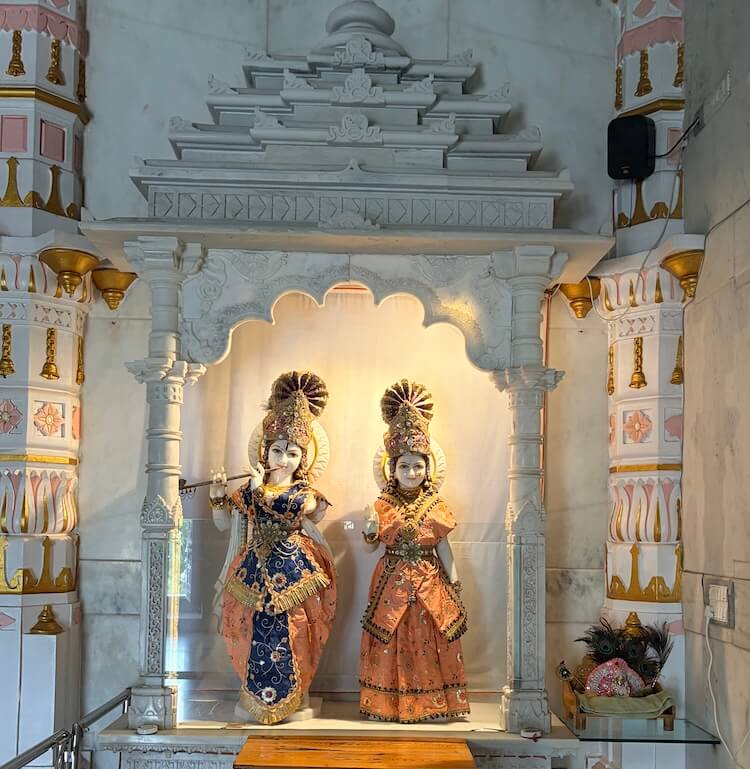 Much like Mahashivratri, on every Monday of the holy month of Shravan, thousands of ‘kawadias’ travel long distances to reverently perform ritual anointings (‘abhishek’) of the Shiva Lingam with holy Ganges water. During these periods, the temple premises are thronged by vast multitudes of devotees. On the day of the festival, the rituals commence at dawn with the Laghurudra Abhishek. Throughout the remainder of the day, the temple precinct becomes a vibrant centre for diverse spiritual programmes, including the chanting of Vedic mantras, the recitation of sacred scriptures and the singing of devotional choruses (‘bhajans’ and ‘kirtans’). In addition to these major celebrations, all principal Hindu festivals, including Nag Panchami, Krishna Janmashtami, Dussehra, Diwali, Hanuman Jayanti, Ganesh Chaturthi and Ram Navami, are solemnised in accordance with traditional rites. Numerous devotees arrive to pay obeisance to Kantheswar Mahadev every Monday, as well as on the auspicious lunar dates of Ekadashi, Pradosh, Purnima and Amavasya. The daily arati is performed at 5:30 am and 7:15 pm, attended by a large gathering of the faithful. The temple remains open for devotees to seek the audience of Kantheswar Mahadev daily from 5:00 am to 1:00 pm and from 4:00 pm to 8:30 pm.
Useful Information :
- Situated at a distance of 8 km from Daman city.
- State Transport (ST) bus facilities are available to Daman from several major cities across Gujarat.
- The temple can be easily reached from Daman by ST buses and private vehicles.
- Accommodation and breakfast facilities are available in the surrounding vicinity.
- Contact: Temple Office, Mo. 7016042969
कंठेश्वर महादेव मंदिर
कचीगाम, ताल. दमन, जिला. दमन
मंदिरे
Temples
मंदिर
-
सत्यनारायण मंदिर कथिरिया, तीन बत्ती, दमण
अधिक माहितीSatyanarayan Temple Kathiria, Teen Batti, Daman
View Detailsसत्यनारायण मंदिर कथिरिया, तीन बत्ती, दमन
विवरण देखें -
बाबा वासुकीनाथ महादेव मंदिर एअरपोर्ट रोड, भीमपूर, दमण
अधिक माहितीBaba Vasukinath Mahadev Temple Airport Road, Bhimpore, Daman
View Detailsविवरण देखें -
सोमनाथ महादेव मंदिर दाभेळ, ता. दमण, जि. दमण
अधिक माहितीSomnath Mahadev Temple Dabhel, Tal. Daman, Dist. Daman
View Detailsसोमनाथ महादेव मंदिर दाभेल, ताल. दमन, जिला. दमन
विवरण देखें