
Siddheshwari Mata (Sadhi Maa) Temple
Kada, Tal. Visnagar, Dist. Mehsana
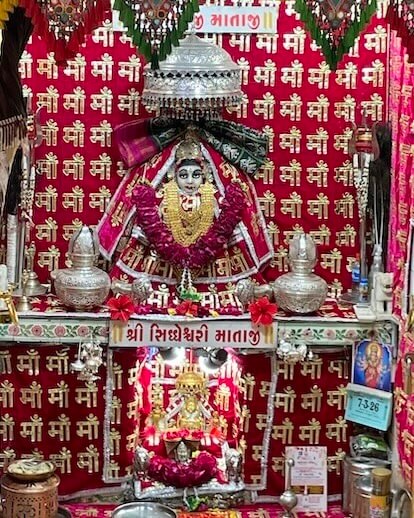 The temple of Siddheshwari Mata is nestled in the village of Kada, in Visnagar Taluka. Widely revered as a spiritually vibrant ‘Shaktipeeth’ of the Goddess, it is affectionately called ‘Sadhi Maa’ by local devotees. According to mythological legend, the Goddess’s original abode was in Sindh, now in Pakistan. It is said that she journeyed to Kada via Patan in Gujarat about eight hundred years ago. Today, the temple stands beneath a magnificent ‘Rayan’ tree and enjoys a reputation as an awakened deity who quickly answers her followers. As a result, thousands of devotees gather at the shrine each Sunday and on every full moon day.
The temple is steeped in a rich tapestry of mythological and historical heritage. According to a local mythological legend, during the reign of King Siddharaj Jaysinh of Patan, Siddheshwari Mata was renowned as Sikotar Mata in the Sindh province. At that time, the region was ruled by a sovereign named Hamir Sumra, who, along with his consort Kakuba, was an ardent devotee of the Goddess. Pleased by their unwavering devotion, the Goddess was known to converse with them directly and even tended to the King’s vast herds of buffalo. Due to this divine grace, the King became known in the region as the ‘Bhuva’ (divine devotee) of Sikotar.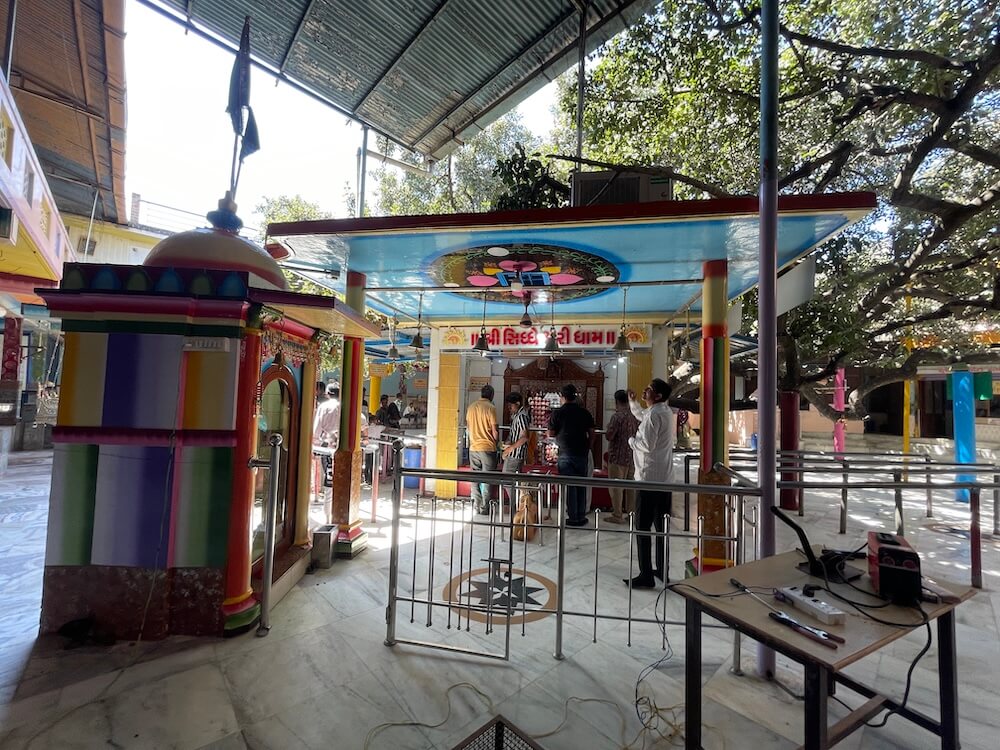
Legend further recounts that, during King Hamir’s absence, King Jaysinh dispatched thieves to Sindh to steal the royal buffaloes. Following this loss, Queen Kakuba offered a solemn prayer to the Goddess. Moved by the petition of her devotee, the Goddess manifested herself within the palace of Jaysinh to liberate the herd. Upon beholding the divine form of the Goddess, King Jaysinh bowed in humble submission and implored her to take up residence in Patan. The Goddess, having escorted the buffaloes back to Sindh to restore them to Kakuba, returned to Patan and settled near the ‘Rani ki Vav’. She subsequently appeared in a vision to King Jaysinh, informing him of her arrival. The King personally visited the site and served the Goddess with deep devotion for thirty-two days, marking the beginning of her presence there.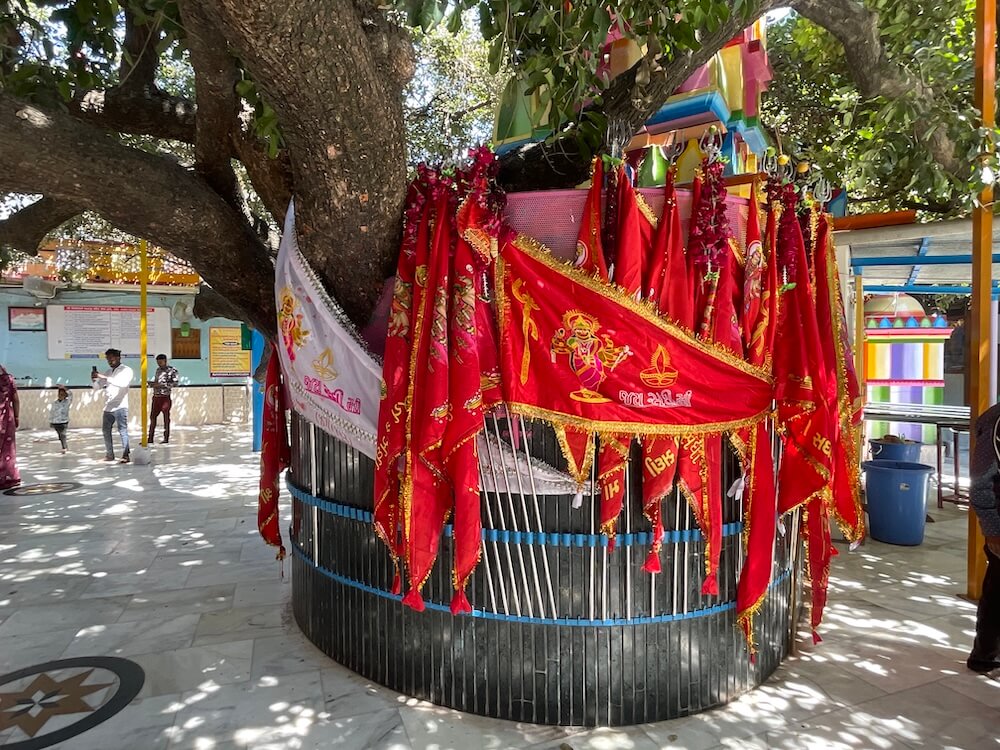
Two centuries ago, a supreme devotee named Veerbhan Rawal lived in the village of Soja. Each day, he travelled to ‘Rani ki Vav’ to seek blessings from the Goddess. Pleased with his piety, the Goddess granted him a boon. Veerbhan asked her to come to his village. She agreed on one condition, that he must not stop to rest during the journey. If he sat down, she would stay at that very place. Veerbhan accepted, but when he reached the outskirts of Kada, he grew tired and sat under a withered ‘Rayan’ tree. At that moment, a celestial voice declared that the Goddess would go no further and would settle there. Veerbhan consecrated the Goddess beneath the tree. Though he returned to his village, he continued his daily rituals there.
 While the villagers held the Goddess in great esteem, the local ‘Mukhi’ (village headman) harboured doubts regarding her divine prowess. Being childless, he publicly declared that he would only acknowledge the Goddess’s power, if he was blessed with a son. That very night, the Goddess appeared in his dream, foretelling that the following day, three buds would bloom upon the withered ‘Rayan’ tree near her idol. When morning came, the dry tree indeed bore three buds and in due course, through the grace of the Goddess, a son was born to the Mukhi. This miraculous event profoundly strengthened the faith of the devotees.
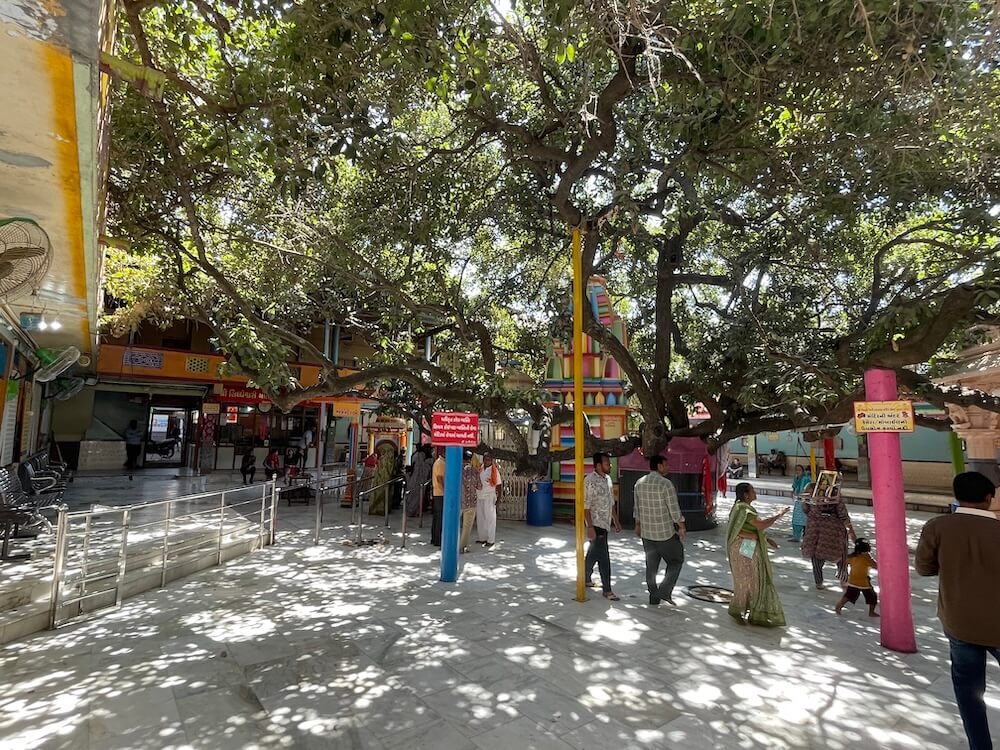
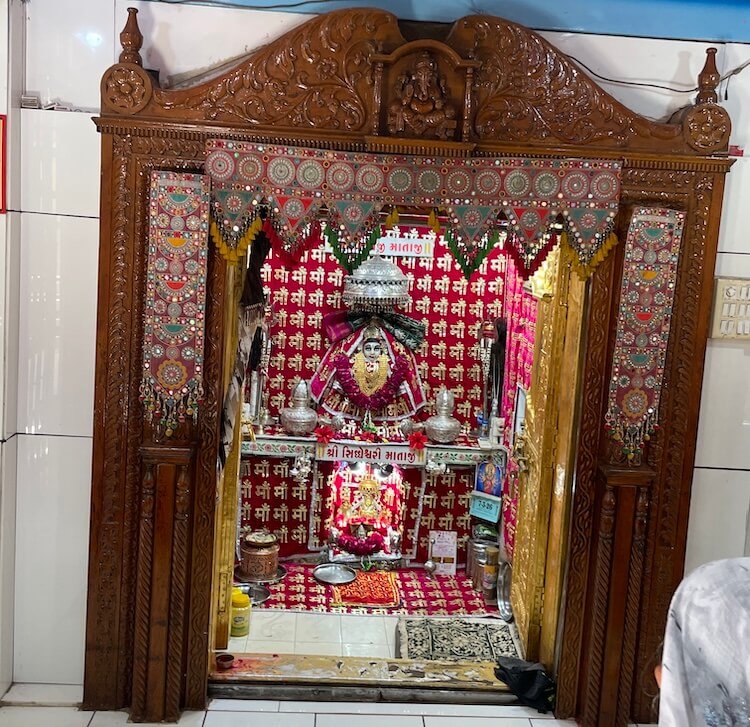
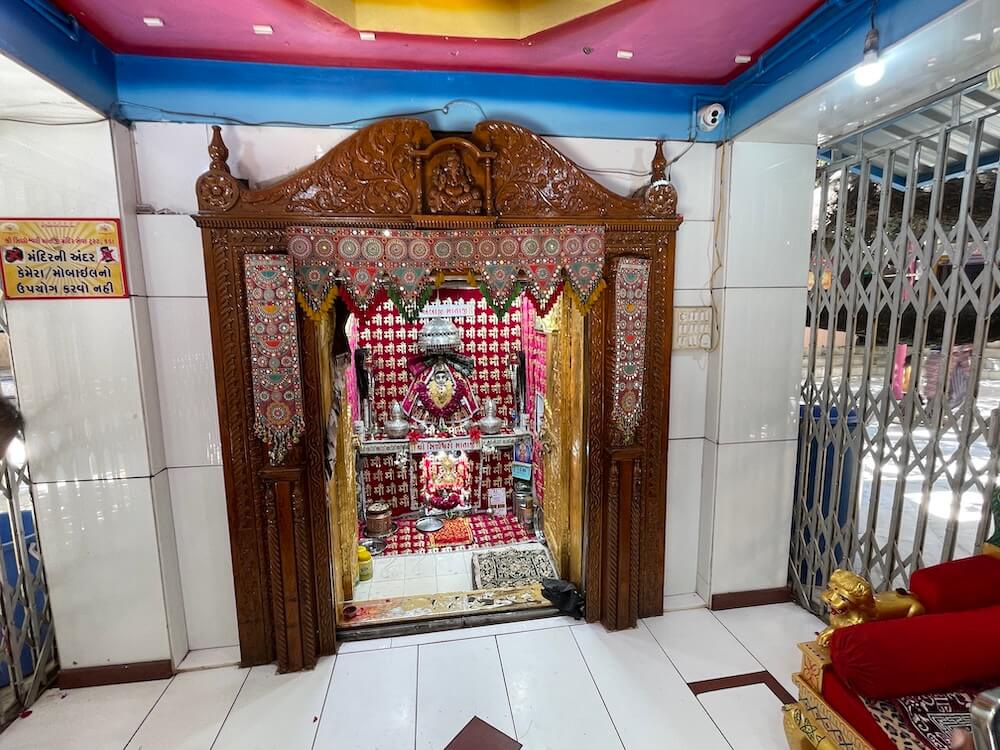
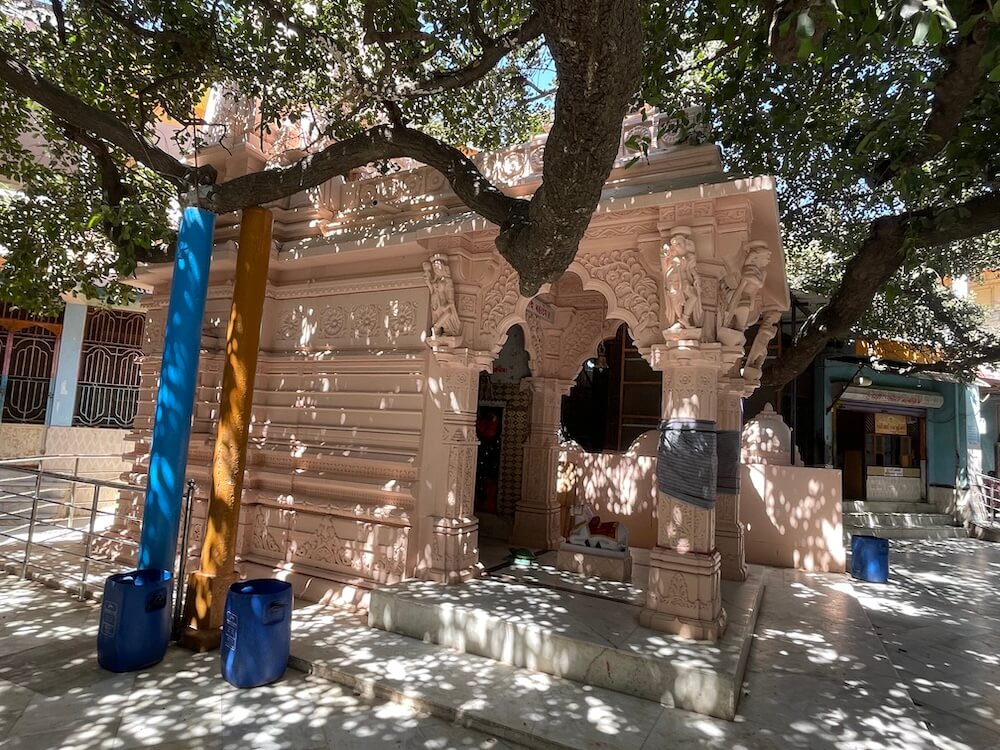
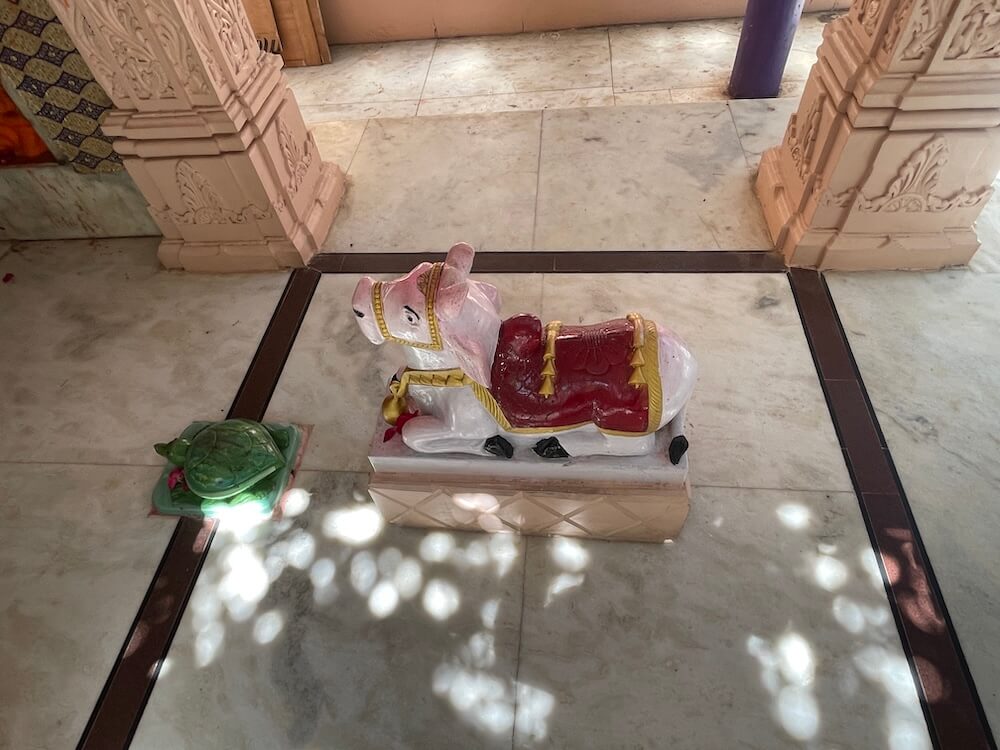
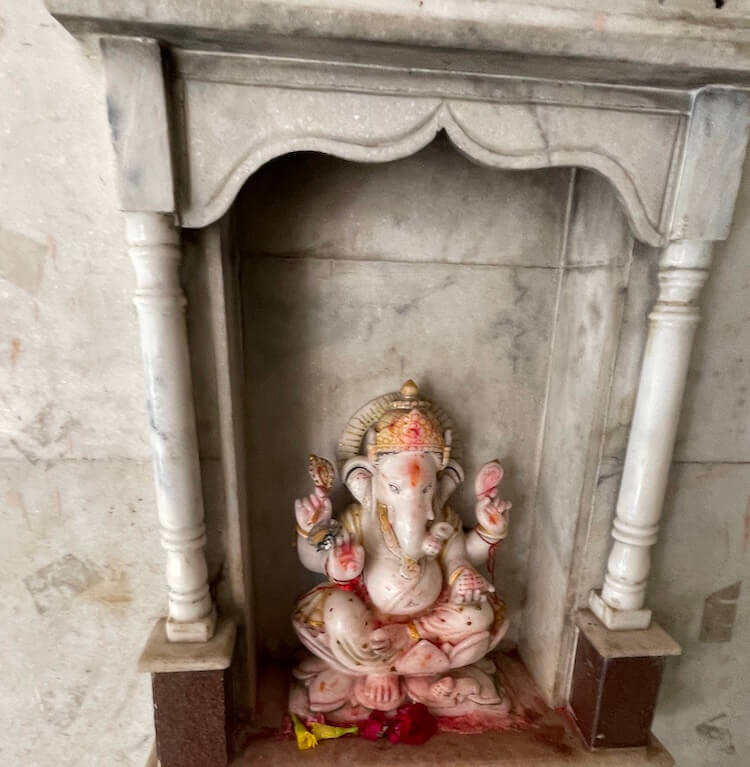
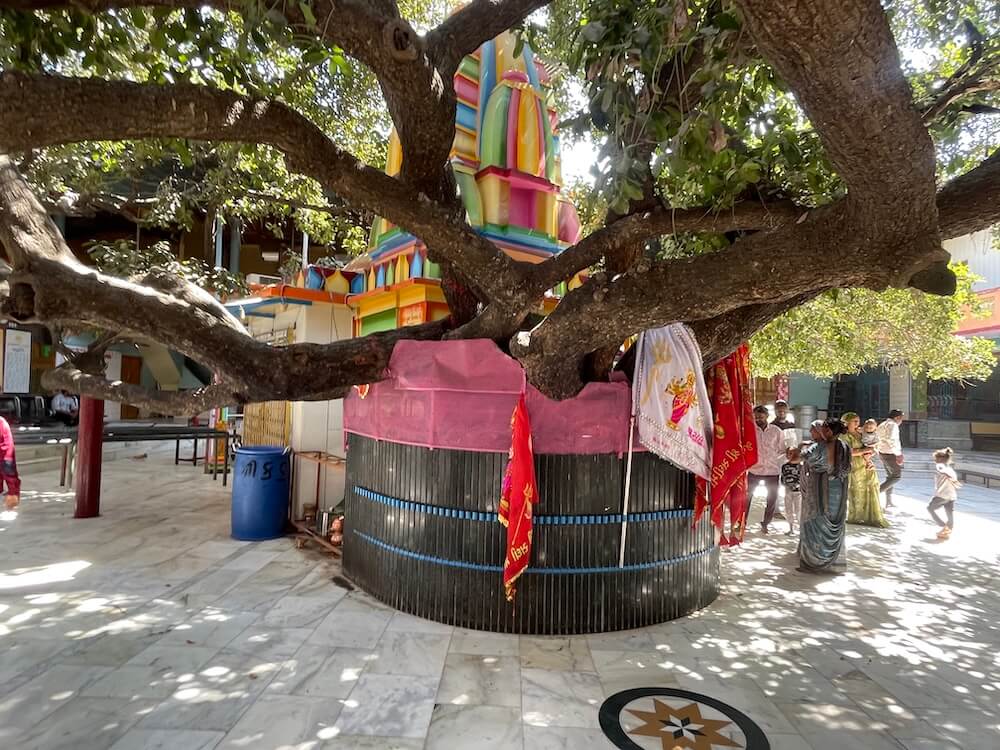
The temple is alongside the main village road. At the entrance, a sturdy metal shed and stainless steel railings ensure orderly queue management. 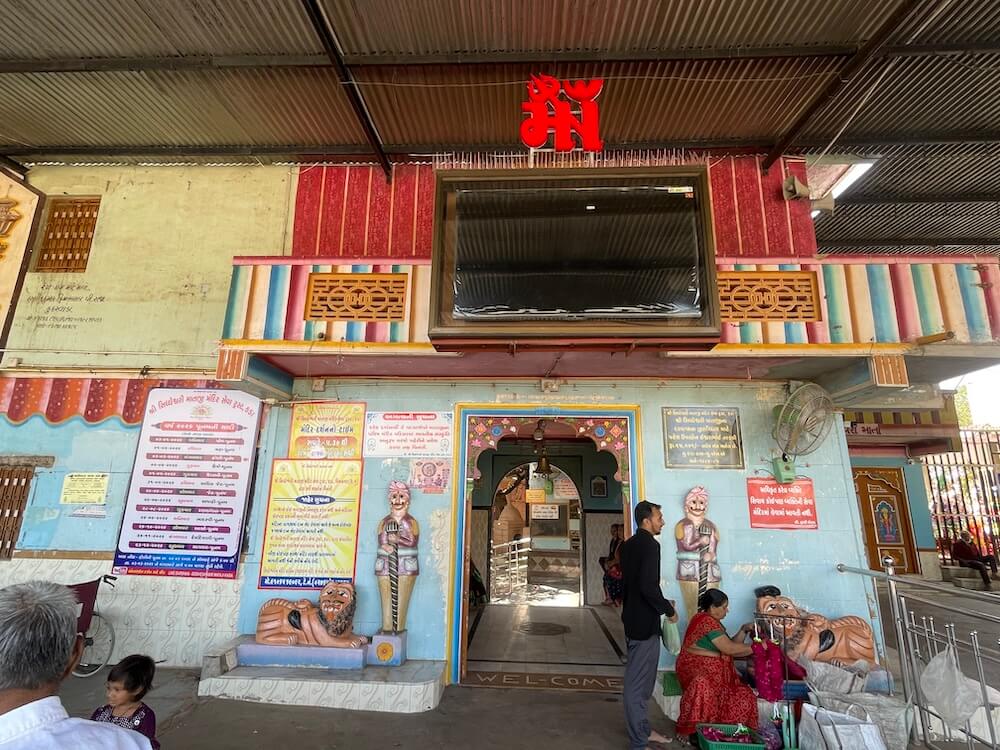 The gateway is adorned with intricate sculptures of doorkeepers and lions, the latter being the traditional mount of the Goddess. A pavilion stands beyond the entrance. Passing through its arched gateway, one enters a paved courtyard. In the heart of this courtyard, beneath the sprawling branches of the ancient ‘Rayan’ tree, stands the modest yet elegant shrine. An open-sided assembly hall (Sabhamandap) comes before the inner sanctum. The central lintel (Lalatabimba) of the sanctum entrance has a delicate carving of Lord Ganesha. Within the sanctum, the serene idol of the Goddess, resplendent in fine vestments and ornaments, is enthroned. A silver canopy hangs above the deity and sacred footprints (Padukas) are placed before her.
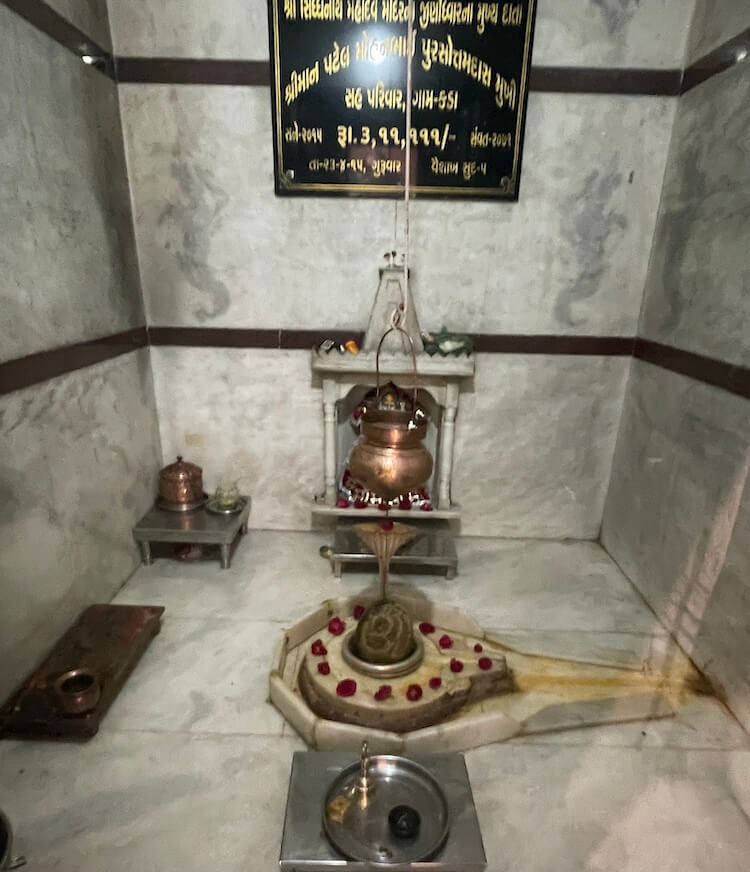
 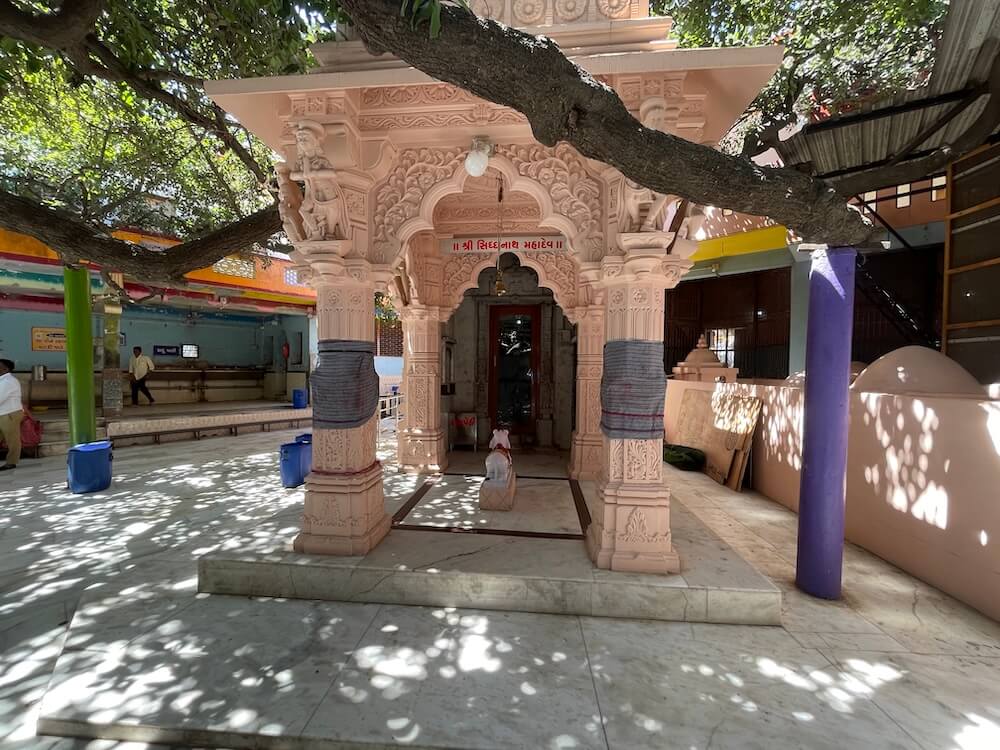 The temple provides separate queues for men and women to facilitate ‘Darshan’. To the rear of the main shrine is the Siddhanath Mahadev Temple. The courtyard has seating along the walls for pilgrims’ comfort. The temple trust office and a counter selling ‘Sukhdi’ (a traditional sweet offered as Prasad) are within the precincts.
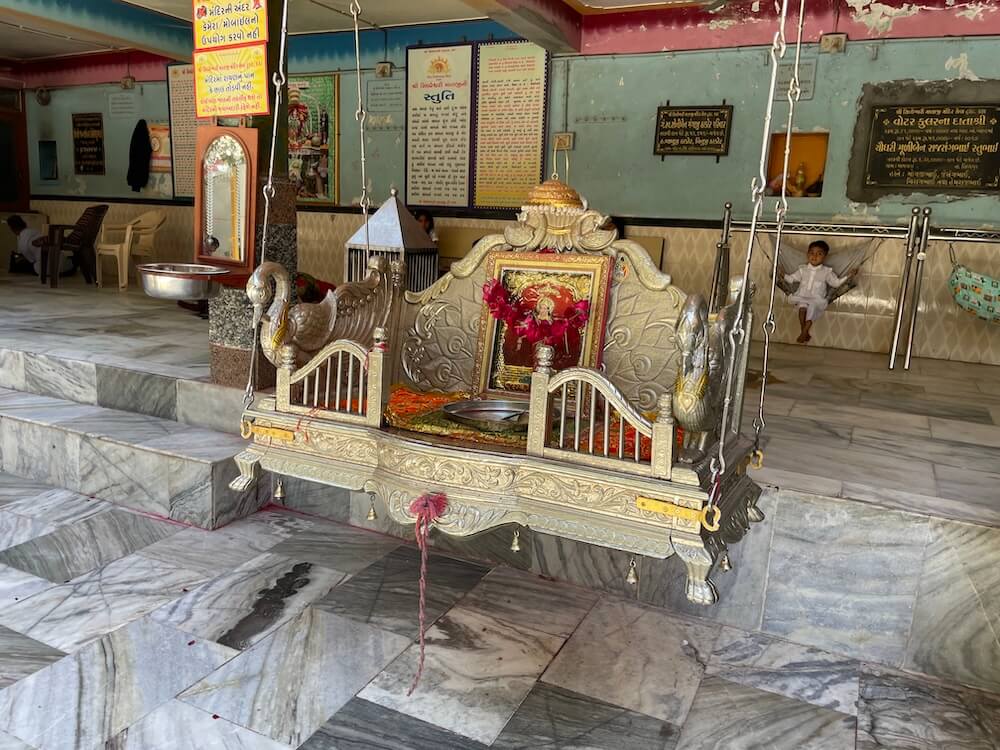
Nearby, a cradle suspended from a chain holds an image of the Goddess. Distribution of ‘Prasad’ takes place here.
The temple is open daily from 5:30 am to 9 pm. The ‘Mangala Aarti’ takes place at dawn. Later, the ‘Sandhya Aarti’ is performed in the evening. Many pilgrims walk barefoot to seek blessings. Devotees usually offer ‘Sukhdi’.
On ‘Bhadva Sud Ashtami’ and ‘Bhadva Poonam’, grand celebrations occur, such as a ‘Palli’ or ‘Yagna’. On these days, the area becomes a festival ground.
Useful Information
- Located at 11 km from Visnagar and 35 km from Mehsana.
- GSRTC bus services are available from both Visnagar and Mehsana.
- Private vehicles can be driven directly to the temple’s parking facility.
- Accommodation and breakfast facilities are available in the surrounding area.
- Contact – Temple Office, Tel. – 02765-286665, Mobile: 08347549829.
सिद्धेश्वरी माता (साधी माँ) मंदिर
कड़ा, ताल. विसनगर, जिला. मेहसाणा
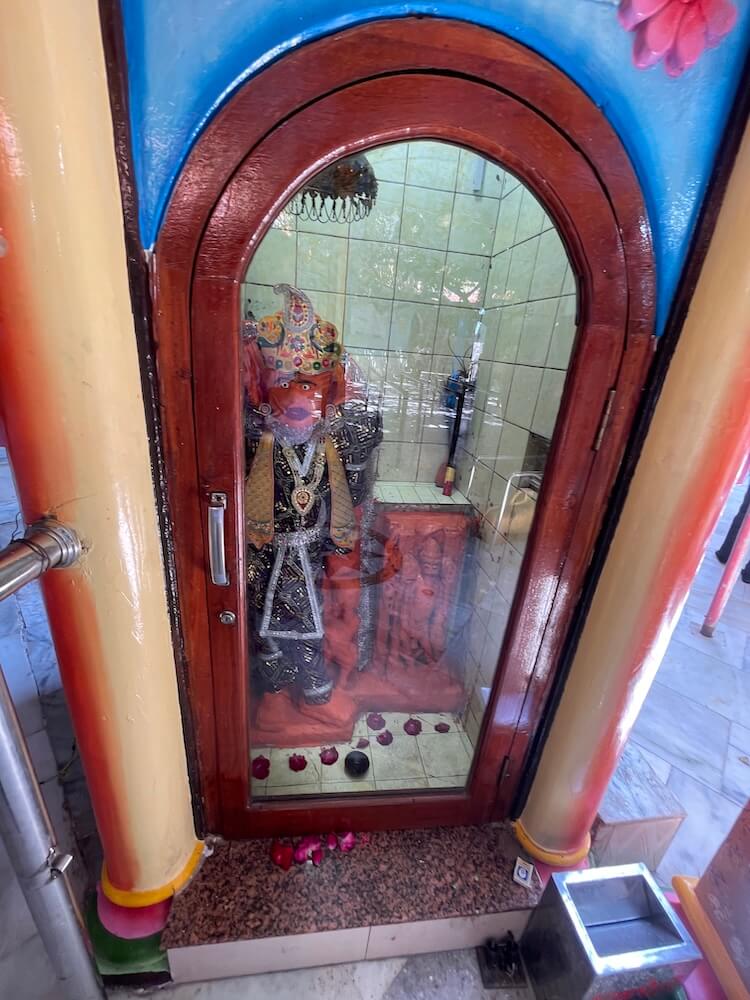
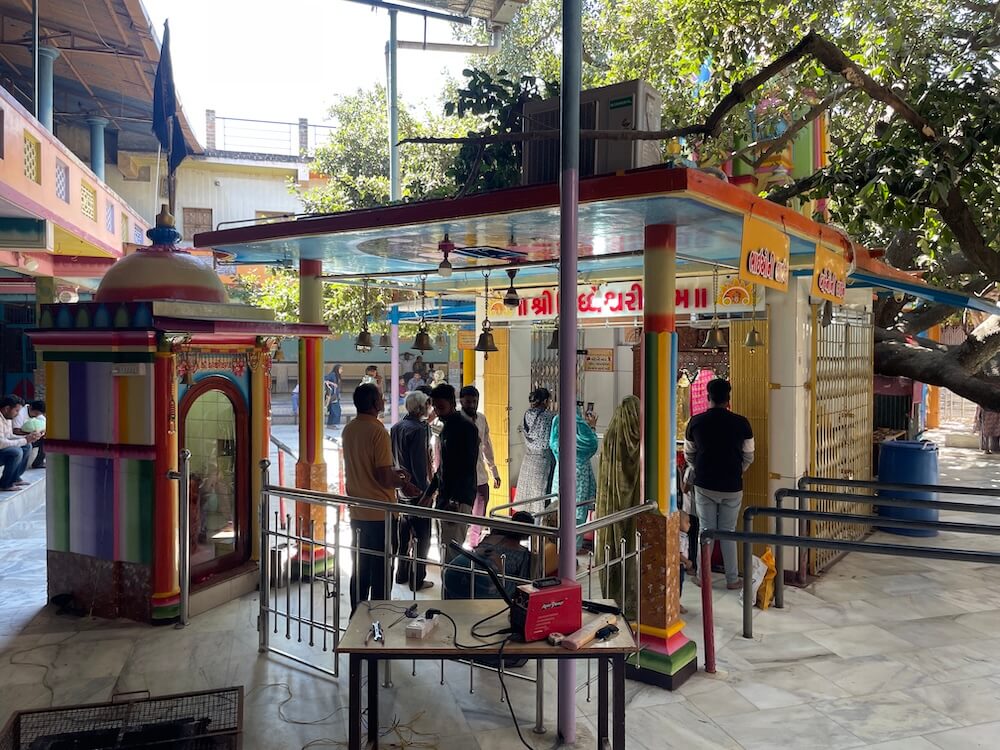
मंदिरे
Temples
मंदिर
-
वैजनाथ महादेव मंदिर महादेवपुरा (गावडा), ता. विजापूर, जि. मेहसाणा
अधिक माहितीVaijnath Mahadev Temple Mahadevpura (Gavada), Tal. Vijapur, Dist. Mehsana
View Detailsवैजनाथ महादेव मंदिर महादेवपुरा (गावड़ा), ताल. विजापुर, जिला. मेहसाणा
विवरण देखें -
वैजनाथ महादेव मंदिर सोखडा, तालुका विजापूर, जिल्हा मेहसाणा
अधिक माहितीVaijanath Mahadev Temple Sokhada, Taluka Vijapur, District Mehsana
View Detailsवैजनाथ महादेव मंदिर सोखाडा, तालुका विजापुर, जिला मेहसाणा
विवरण देखें -
काशी विश्वनाथ महादेव मंदिर मेहसाणा, जि. मेहसाणा
अधिक माहितीKashi Vishwanath Mahadev Temple Mehsana, Dist. Mehsana
View Detailsकाशी विश्वनाथ महादेव मंदिर मेहसाणा, जिला. मेहसाणा
विवरण देखें