
कपालेश्वर मंदिर
आशा, ता. झगडिया, जि. भरुच
Kapaleshwar Temple
Asha, Tal. Jhagadia, Dist. Bharuch
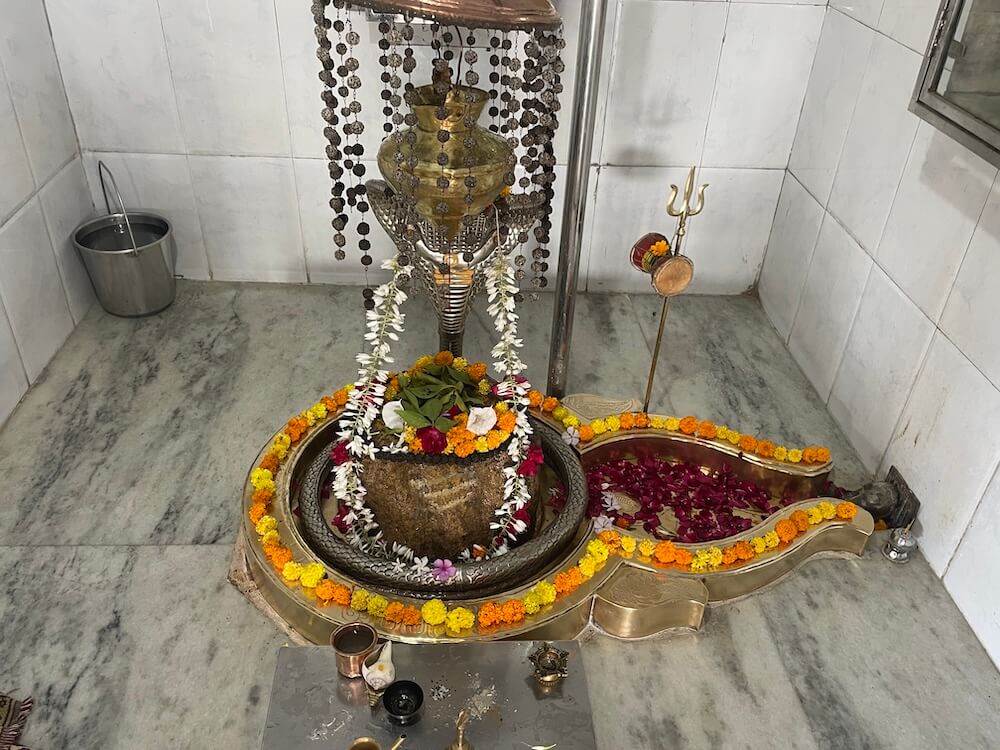 The ancient Kapaleshwar Mandir, located in the village of Asha, stands as a testament to the divine intervention of Mahadev, who manifested here following the entreaties of the Saptarshis (the seven celestial sages) to rid them of demons obstructing their penance. Puranic lore mentions that the sage Kapil Muni performed rigorous Tapashcharya (penance) at this site on the banks of the Narmada River for a staggering 5800 years. It is a firm belief among devotees that devoted service to the Jagrut (spiritually active) Shivling enshrined here fulfils all heartfelt desires. Notably, many childless couples seeking the blessing of progeny visit this shrine to offer silver and Ghee (clarified butter) to the Shivling.
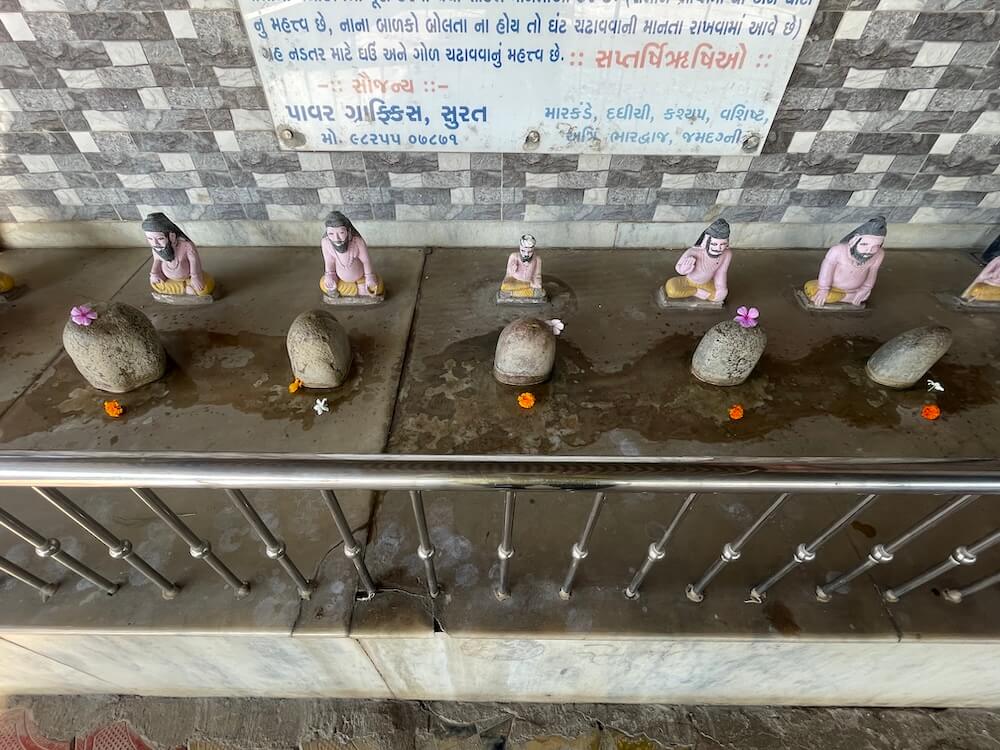 According to the Hindu spiritual tradition, sages are classified into seven categories — Brahmarshi, Devarshi, Maharshi, Paramarshi, Kandarshi, Shrutarshi and Rajarshi. Within this sacred lineage exists the revered order of the Saptarishis. Each Manvantara is guided by different Saptarishis. In the mythic concept of time, ‘Manu’ denotes an ancient divine ruler. When the ruler changes, it marks the beginning of a new ‘Manvantara’. Scriptures speak of fourteen such Manvantaras and in each, the primary sacred responsibility of the Saptarishis is the propagation and preservation of life. According to a local legend regarding the Kapaleshwar Mahadev Mandir at Asha, the Saptarshis of a particular Manvantara were performing Yagyas (sacrificial fire rituals) at this location. When Asuras (demons) began to obstruct these sacred rites, the Saptarshis prayed to Mahadev for protection. In response, Mahadev appeared at this site and the Saptarshis consecrated His Linga here.
 Another significant legend narrates that this place was the site of Kapil Muni’s rigorous penance. The name Kapil signifies ‘one with a radiant reddish hue like fire’. He is the foundational proponent of the Sankhya school of Hindu philosophy. As ‘Sankhya’ philosophy is materialistic in its causal outlook, it is sometimes regarded as being in opposition to the Vedas. The earliest mention of Kapil Muni is found in the ‘Shvetashvatara Upanishad’ (5.2), where it is said that the Lord nurtures Kapil through the wealth of knowledge. The ‘Bhagavata Puran’ describes Kapil Muni as one of the twenty-four incarnations of Vishnu and in the tenth chapter of the Bhagavad Gita, Lord Krishna declares that among ‘Siddhas’, he is Kapil Himself. Because Kapil Muni performed his penance at this venerable shrine, the Mahadev here first came to be known as Kapileshwar.
  Over time, through local linguistic variation, the name gradually evolved into Kapaleshwar Mahadev. The ancient temple has undergone multiple restorations over the centuries and through recent renovation has attained its present form.
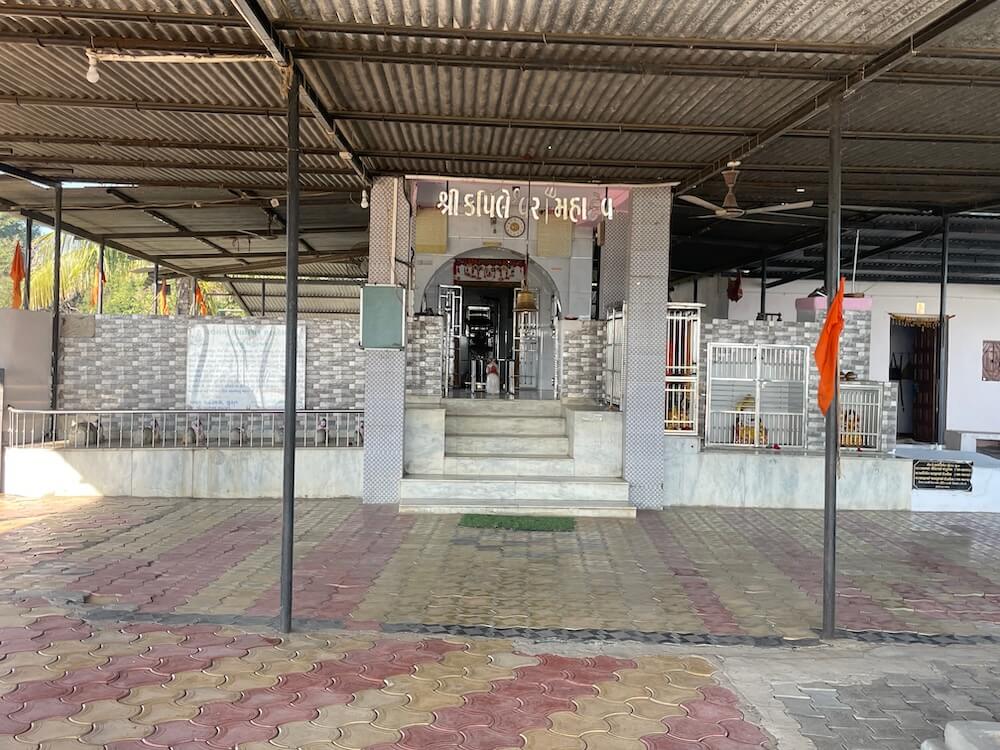
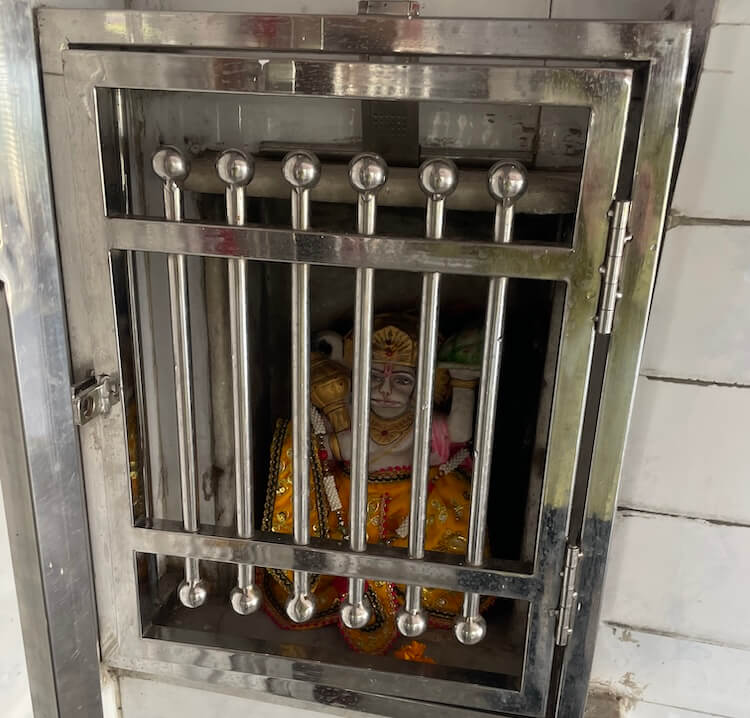
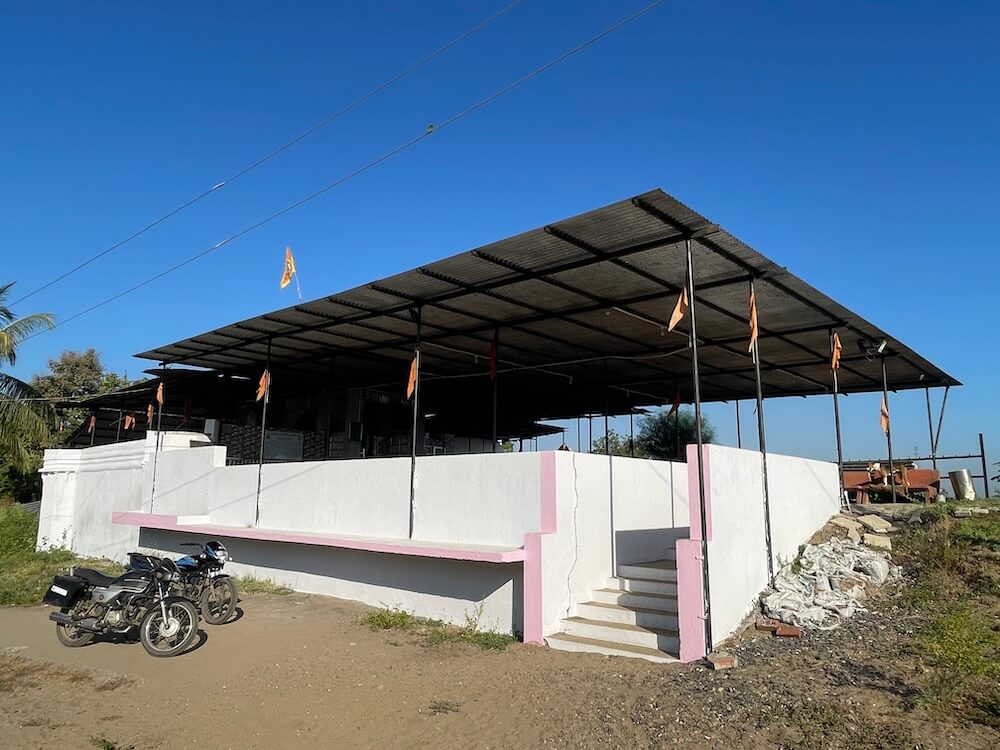
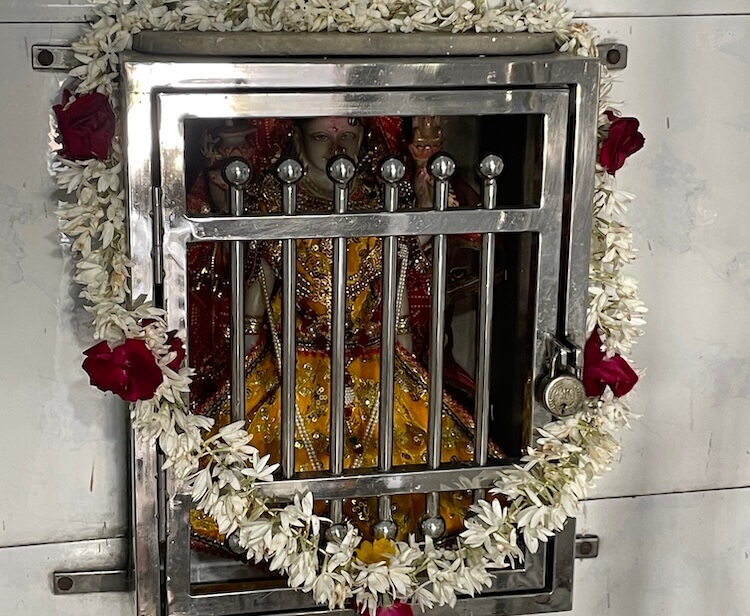
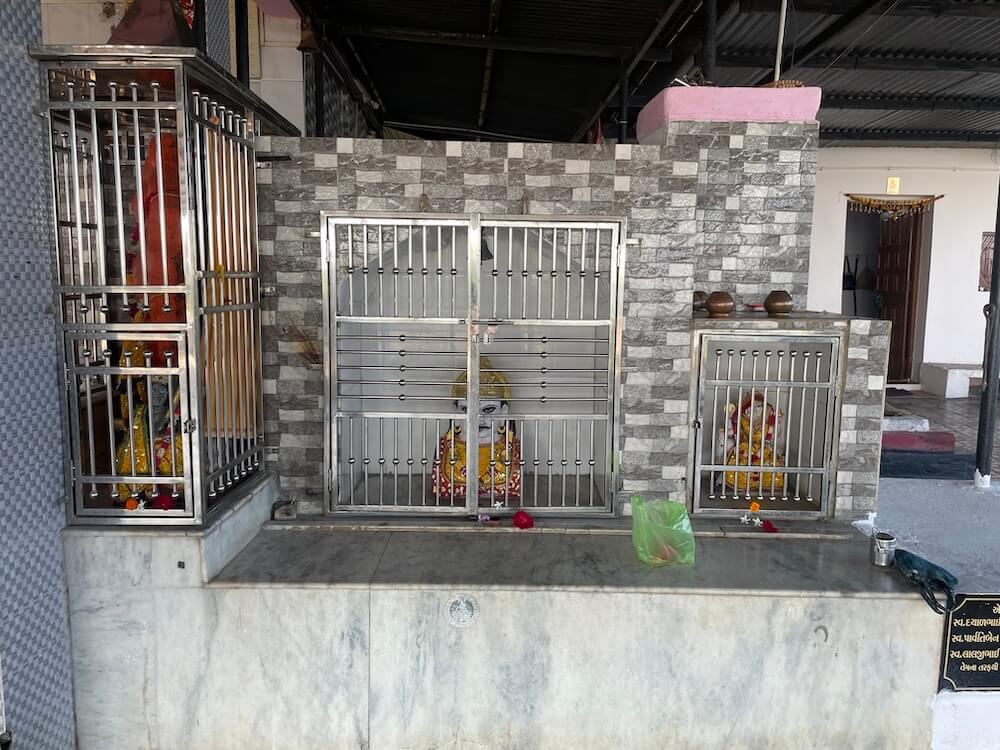
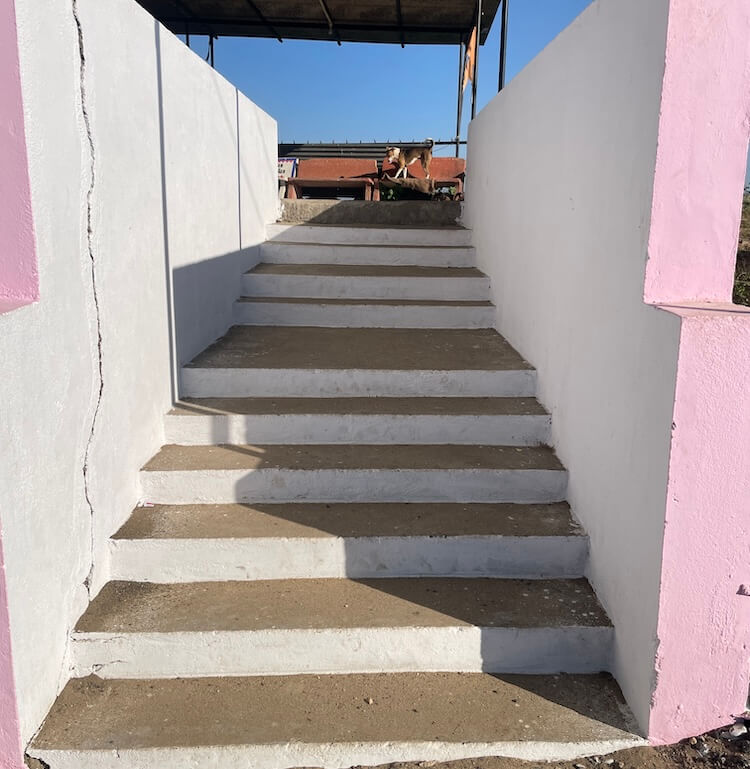
About 20 kilometres from Jhagadia and a short distance from the small village of Asha, this temple lies beside the vast expanse of the Narmada River. One ascends eleven steps from the roadway to reach the elevated courtyard of the temple complex, where a large covered shed has been erected. From here, five further steps lead into the Sabha mandap (assembly hall). To the left of these steps are placed the idols of the seven Rishis and before each stands a Shivling. To the right are the idols of Hanuman, Balia Dev and Sheetla Mata.
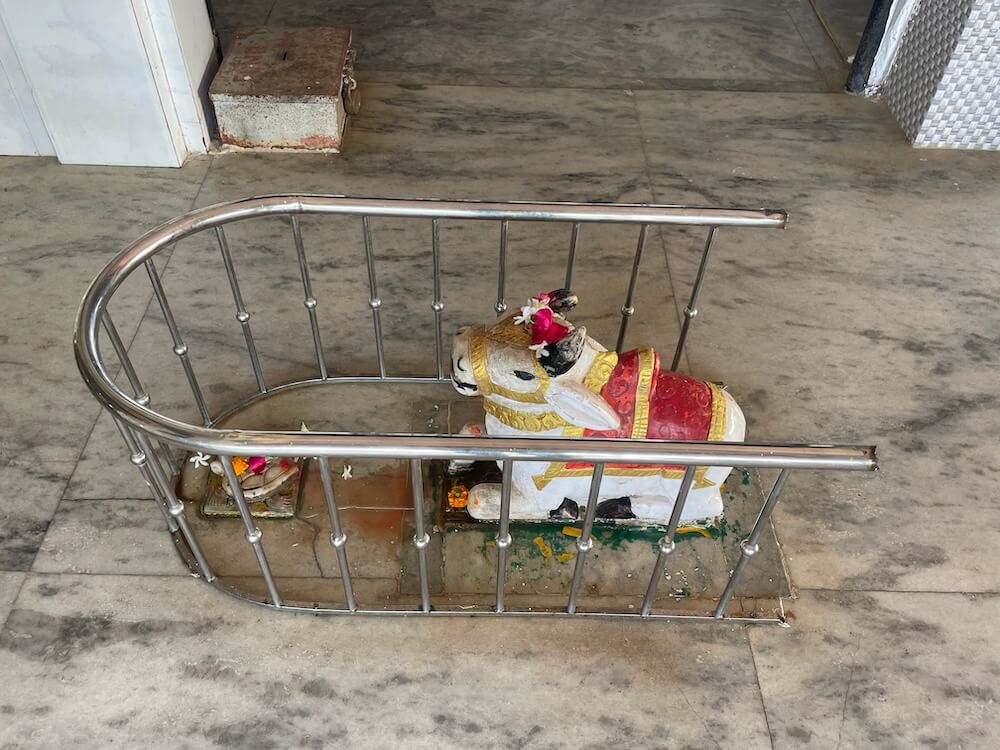
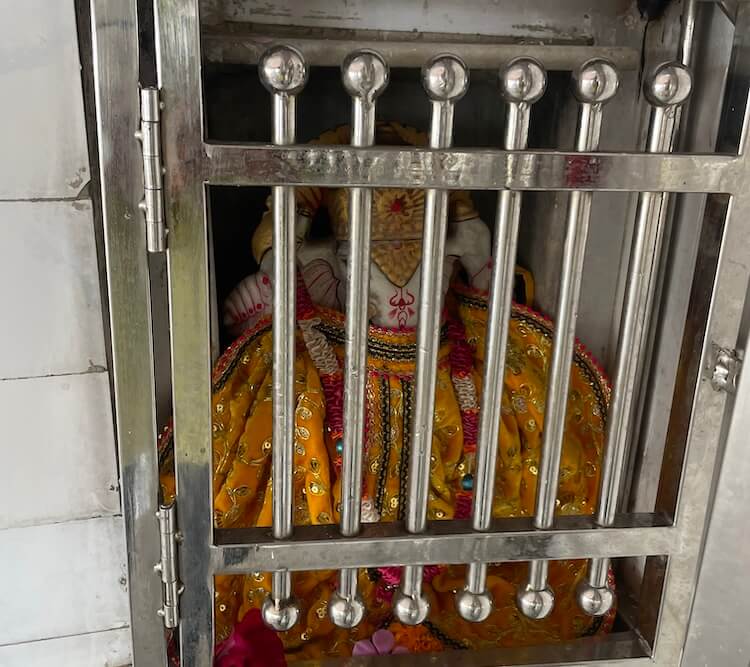
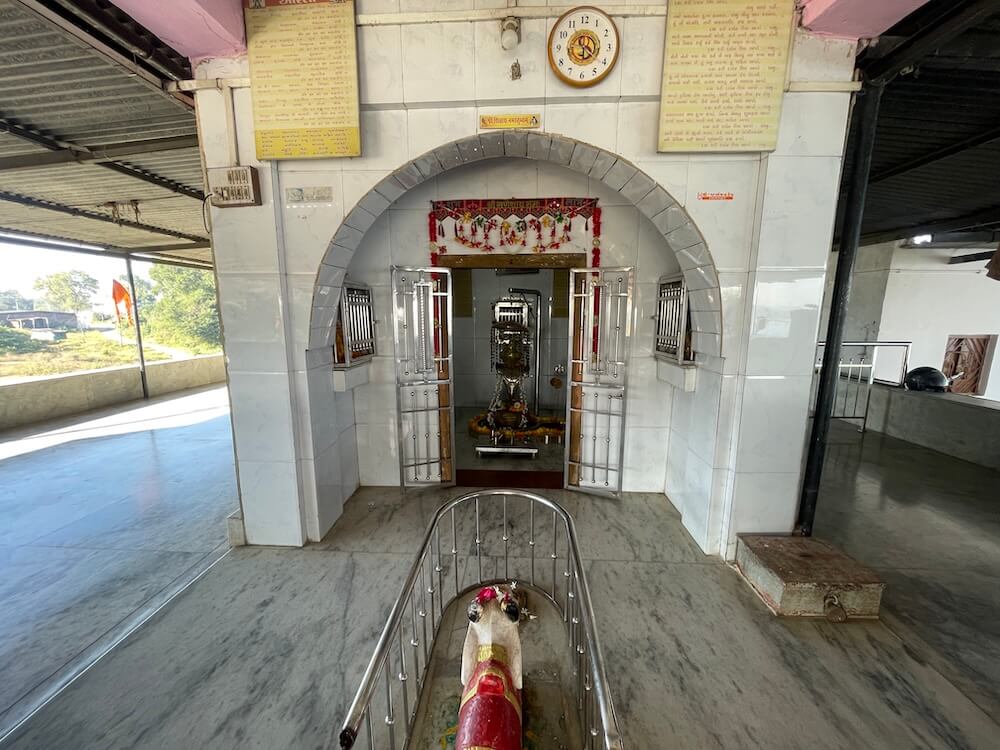 The sabha mandap is of open design. On the ground level stands the idol of Nandi and before it is a sculpted tortoise. Within the niches of the Antarala (vestibule) reside the idols of Hanuman and Ganapati. In the centre of the Garbhagriha (sanctum sanctorum), a large stone Shivling of Kapaleshwar Mahadev is enshrined within a Panchadhatu (five-metal alloy) Shalunka (base). A hooded serpent canopy (Naga) provides a protective shade over the Pindi.
Daily worship and rituals are performed with devotion in this ancient temple and devotees from the surrounding villages visit regularly for darshan. Maha Shivaratri and various other Hindu festivals are celebrated here with deep fervour. Many devotees pray to Kapaleshwar Mahadev for the blessing of children, offering silver articles and ghee upon fulfilment of their vow. Similarly, children who experience speech delays are brought here for Darshan and a vow is made for their speech. This is later fulfilled by offering a bell to the temple.
Main Features :
- Located 31 km from Jhagadia, 53 km from Bharuch.
- State Transport bus facility available from Jhagadia.
- Private vehicles can reach the temple premises.
- Accommodation and breakfast facilities are not available in the vicinity.
कपालेश्वर मंदिर
आशा, ताल. झगड़िया, जिला. भरूच
मंदिरे
Temples
मंदिर
-
कोटेश्वर महादेव मंदिर कदोद, ता. भरुच, जि. भरुच
अधिक माहितीKoteshwar Mahadev Temple Kadod, Tal. Bharuch, Dist. Bharuch
View Detailsकोटेश्वर महादेव मंदिर कडोद, ताल. भरूच, जिला. भरूच
विवरण देखें -
धर्मेश्वर महादेव मंदिर धर्मशाळा-झानोर, ता. भरुच, जि. भरुच
अधिक माहितीDharmeshwar Mahadev Temple Dharmashala-Jhanor, Tal. Bharuch, Dist. Bharuch
View Detailsधर्मेश्वर महादेव मंदिर धर्मशाला-झानोर, ताल. भरूच, जिला. भरूच
विवरण देखें -
साईबाबा मंदिर रामवाटिका सोसायटी, झाडेश्वर, ता./जि. भरुच
अधिक माहितीSai Baba Temple Ramvatika Society, Zadeshwar, Tal./Dist. Bharuch
View Detailsसाईं बाबा मंदिर रामवाटिका सोसायटी, जादेश्वर, ताल./जिला. भरूच
विवरण देखें