
रामनाथ महादेव मंदिर
भालोद, तालुका झगडिया, जिल्हा भरूच
Ramanath Mahadev Temple
Bhalod, Taluka Jhagadia, District Bharuch
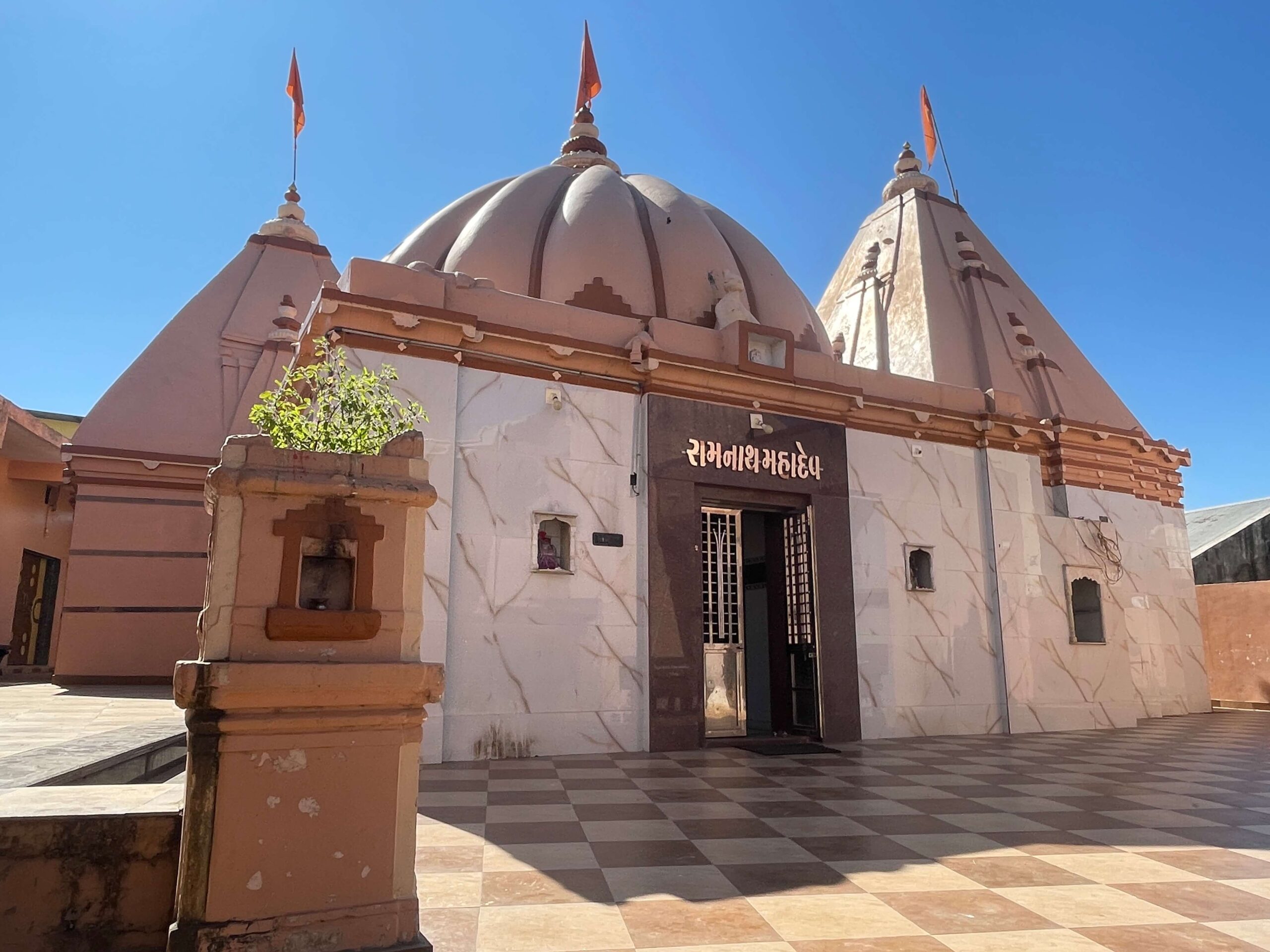
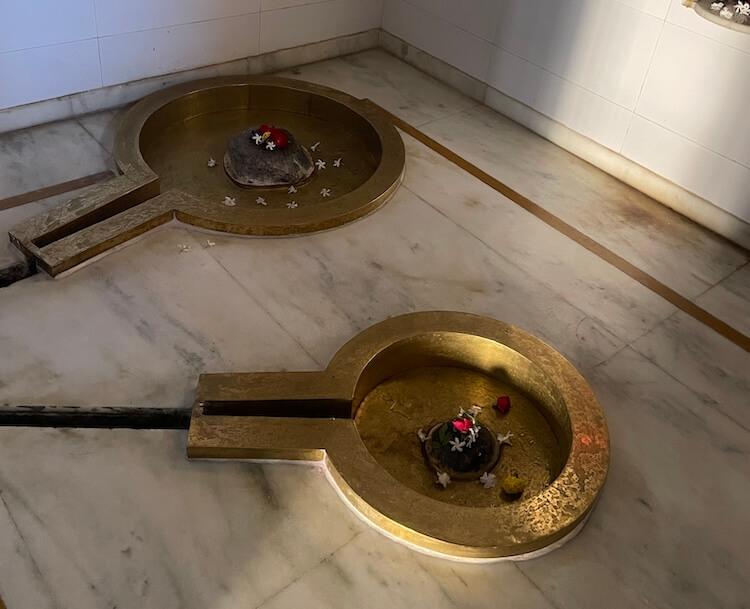
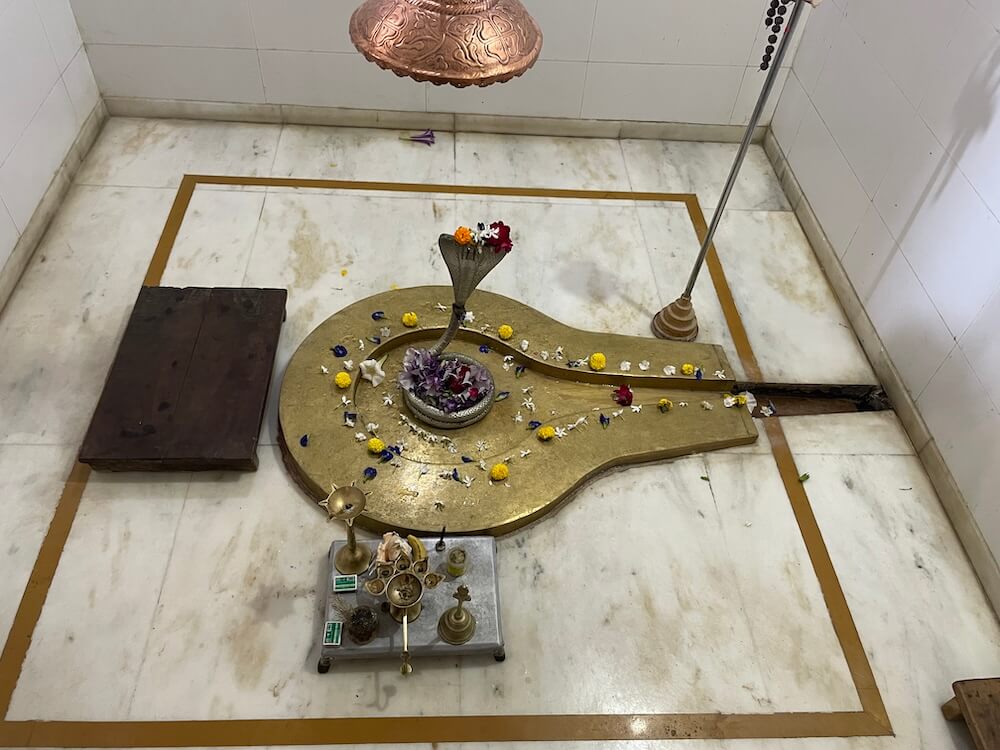 In the village of Bhalod, known in antiquity as ‘Vishnupur’, resides the hallowed Ramnath Mahadev Temple. Local legend asserts that the primary shivalinga (an iconic symbol of Lord Shiva) was established by Lord Shri Rama himself. Within this ancient sanctuary, devotees are also graced with the sight of two additional shivalingas, which popular tradition credits to the consecration by Lava and Kusha, the twin sons of Lord Ramachandra. Furthermore, the precinct is steeped in the mystical lore that Ashwatthama—the immortal warrior of the Mahabharata—frequents the temple grounds. Believed by the faithful to be a jagrut (spiritually active) shrine, it is a significant stop on the Narmada parikrama (circumambulation) route, where many pilgrims arrive to perform abhishek (ritual bathing of the deity).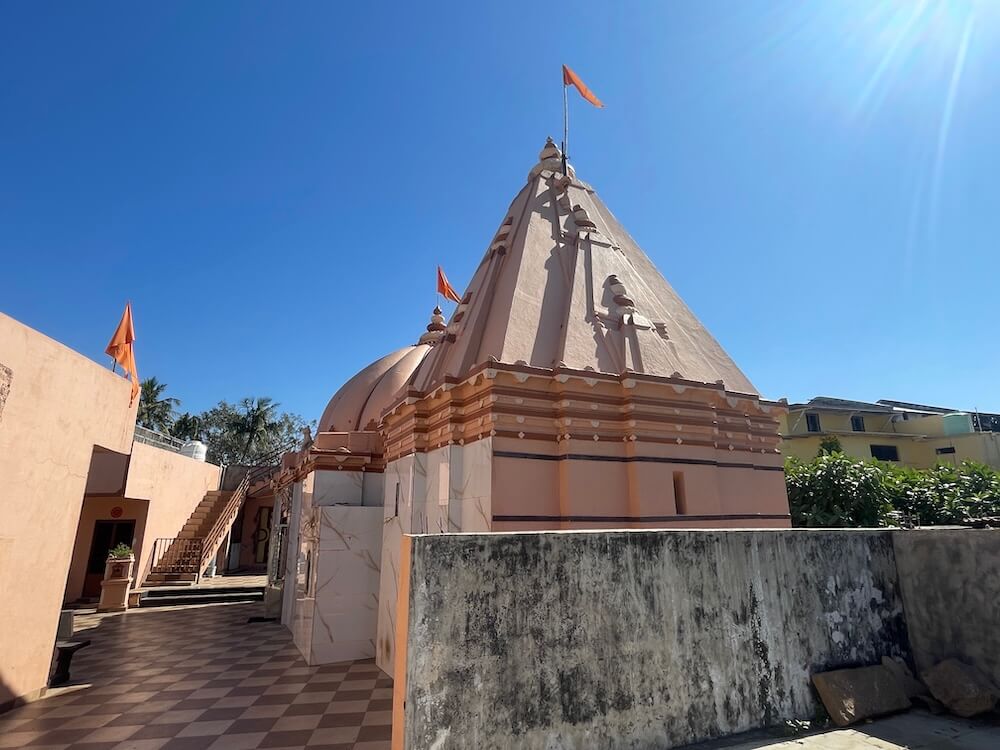
Located 55 kilometres from Garudeshwar and 75 kilometres from Nareshwar, Bhalod possesses a profound Puranic past. The land is regarded as sanctified by the blessed presence of Sage Markandeya and by the holy footsteps of Shri Ram. It is believed that the sacred knowledge of the glory of the River Narmada and the sanctity of the tirthas along its banks was narrated by Sage Markandeya to Yudhishthir, the eldest of the Pandavas. This account is recorded in the ‘Revakhanda’ of the ‘Skanda Puran’ and the incident is said to have taken place at Bhalod. Here too stands the temple of Mokshanath Mahadev, believed to have been consecrated by Sage Markandeya.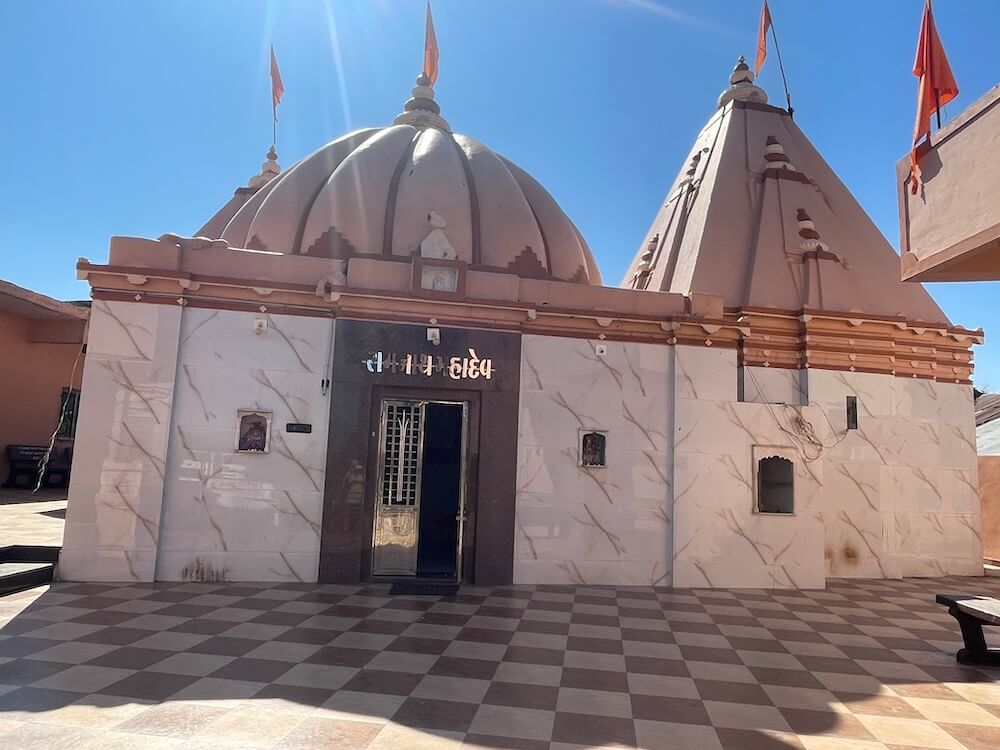 Concerning the Ramanath Temple, sacred tradition narrates that following the victory over Lanka, Prabhu Shri Ram, accompanied by Mata Sita, undertook a pilgrimage to the Godavari to seek spiritual purification. Subsequently, they arrived at the auspicious banks of the River Narmada and resided for a period in the ancient city of Vishnupur, which is known today as Bhalod.
Shri Ram was a steadfast devotee of Shivashankar. It is believed that he would begin his daily activities only after worshipping the Shivalinga. As there was no Shiva temple in the vicinity at that time, he consecrated a linga here. This linga came to be revered as Ramanath (Rameshwar) Mahadev. It is said that during the Mughal period, this temple suffered desecration and destruction. Over time, several restorations were undertaken and through recent renovation, the temple has attained its present form.
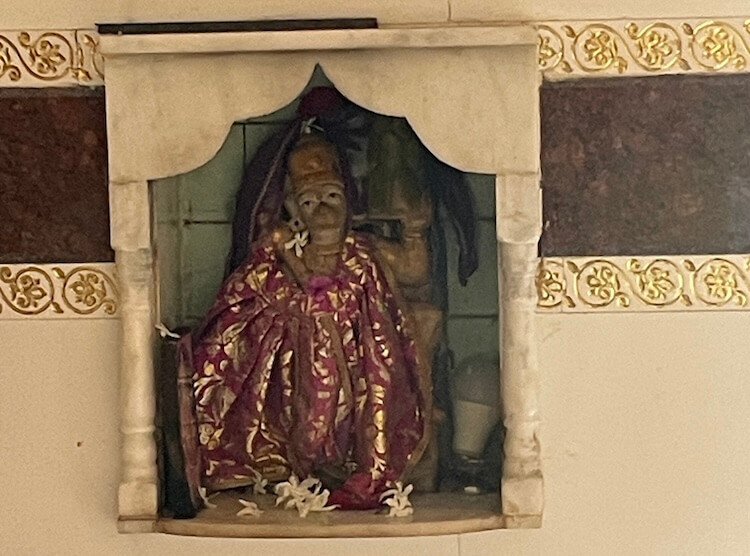
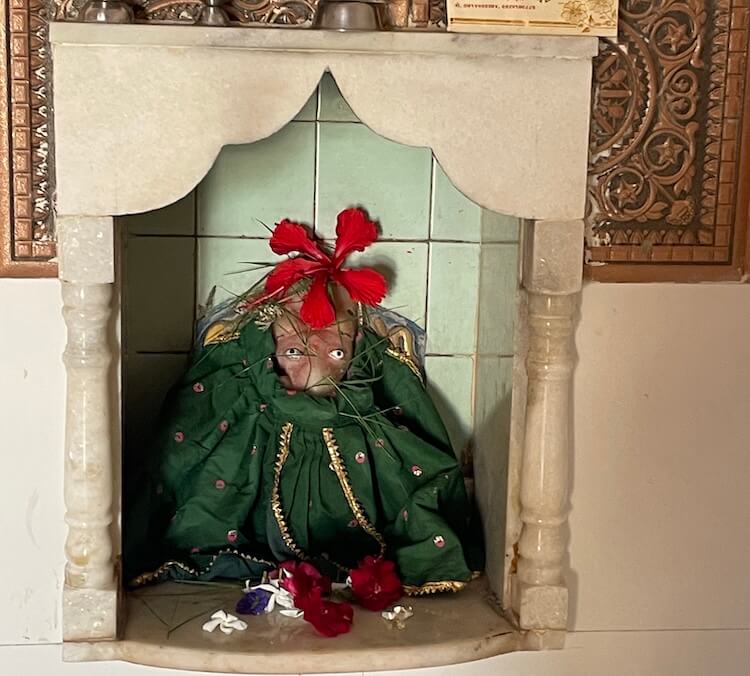
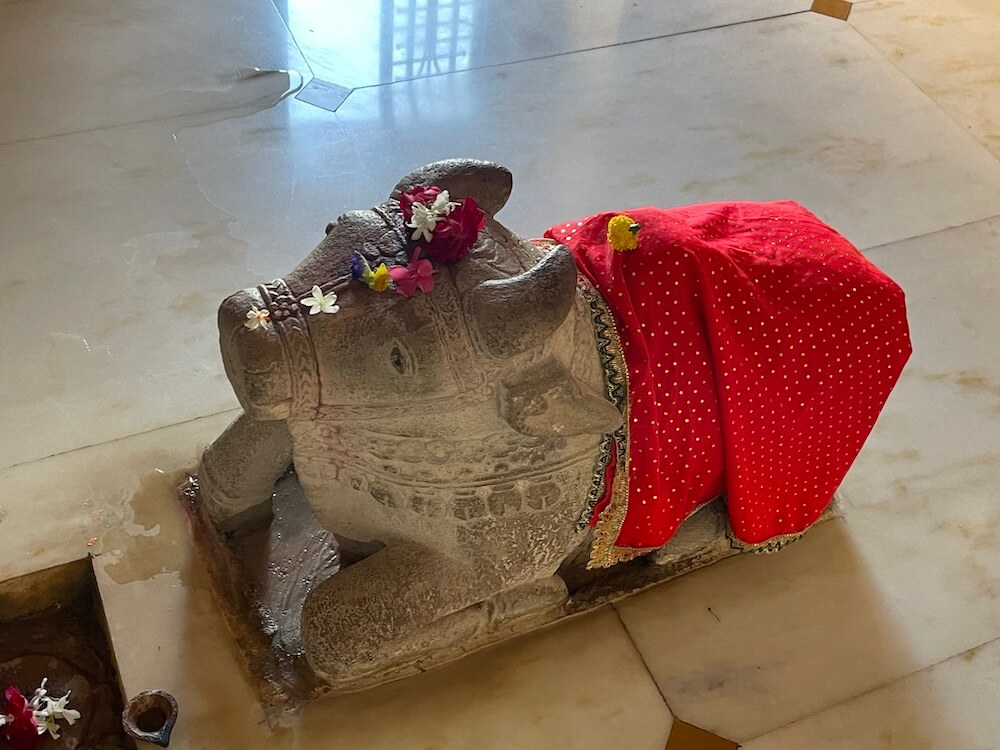
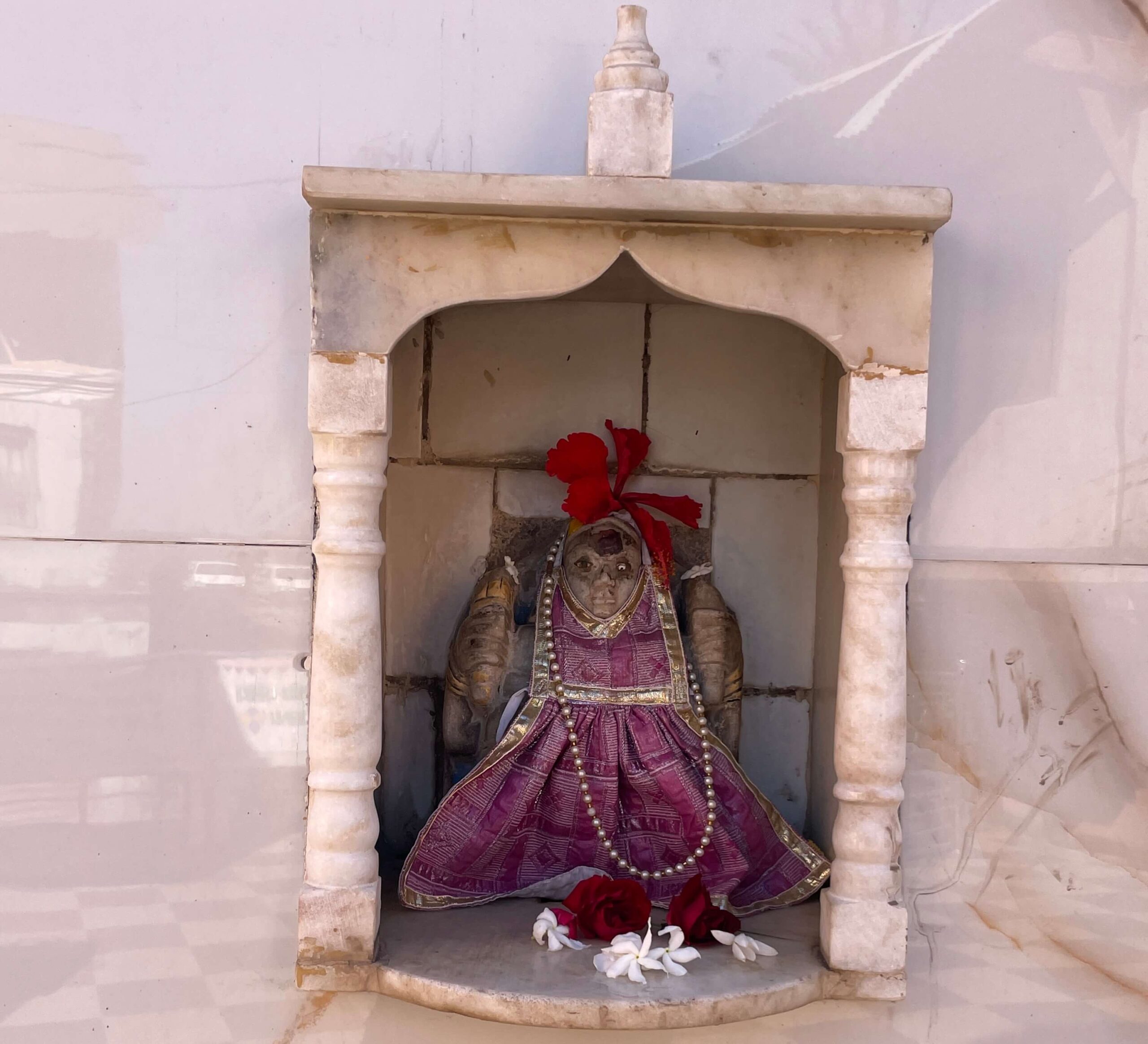
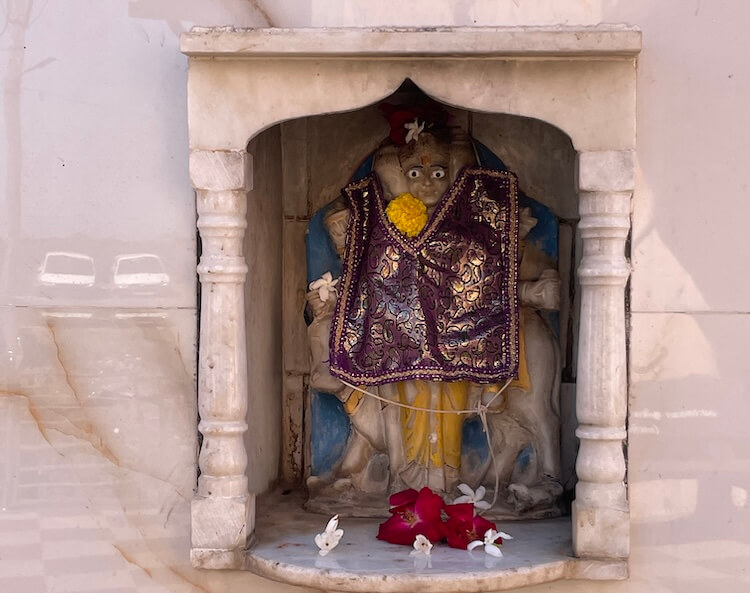
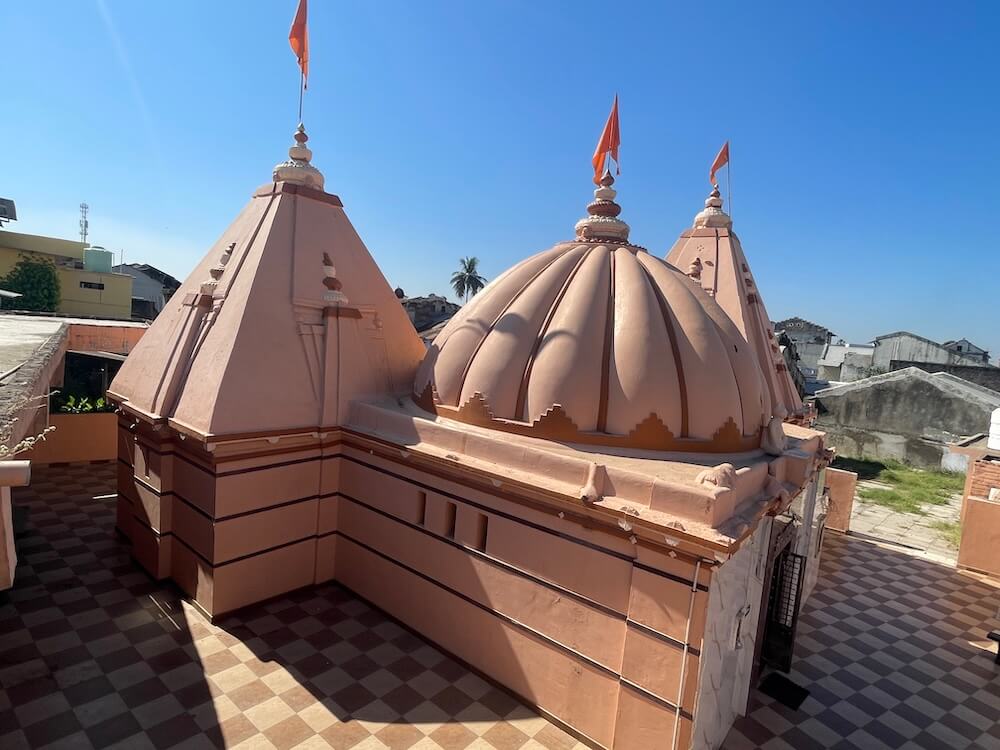
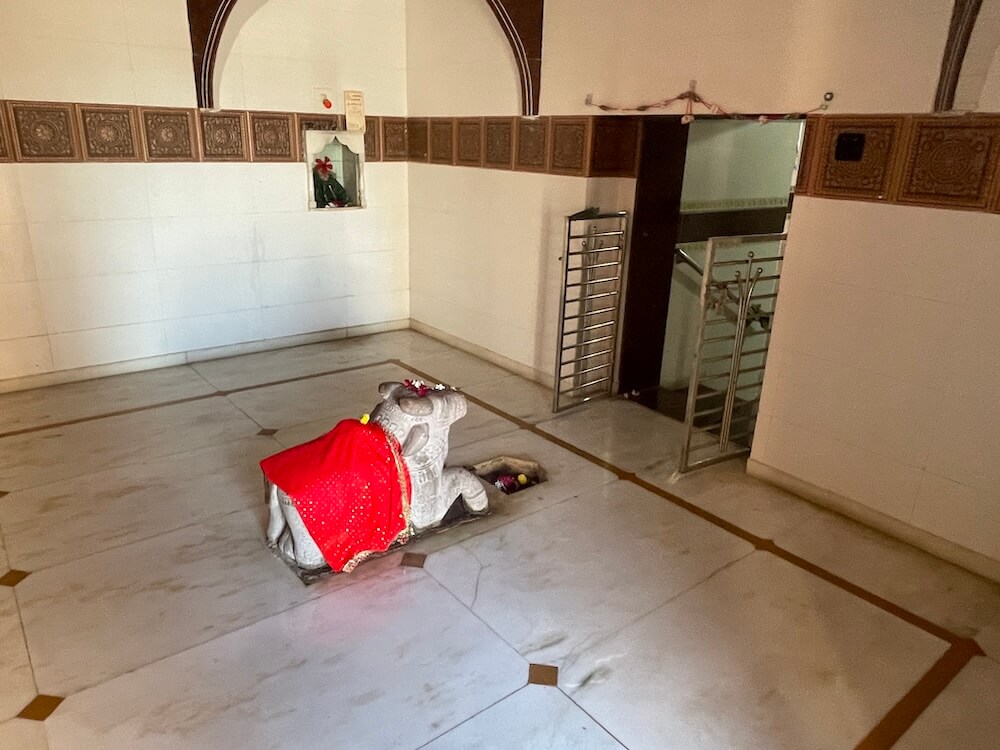 Located within the residential quarters of the village, the temple is perched upon an elevated site. One enters the courtyard after ascending approximately eleven steps, where the temple structure immediately commands attention. Architecturally, the temple comprises a Sabha mandap (assembly hall) and two Garbhagrihas (sanctum sanctorums). A domed shikhara rises above the sabha mandap. Around the roof runs a parapet and at its centre is a sculpted figure of Ganesh. In the shrine-niches upon the outer facade are images of Ganesh and Dattatreya. Within the sabha mandap, before the main sanctum, stands the stone image of Nandi, with the sacred tortoise placed before him. As the sanctum lies at a lower level, four steps must be descended to behold the Shivalinga. Within the sanctum, housed in a large panchdhatu shalunka (pedestal of five sacred metals), is the Shivalinga of Ramanath Mahadev,
  sheltered beneath the hood of a serpent canopy. Upon the rear wall of the sanctum is enshrined the image of Parvati Mata. To the right of the assembly hall lies the second sanctum housing the two shivalingas attributed to Lava and Kusha. Both sanctums are topped by tall spires featuring two-tiered amalakas (ribbed stone disks) and kalashas (sacred finials).
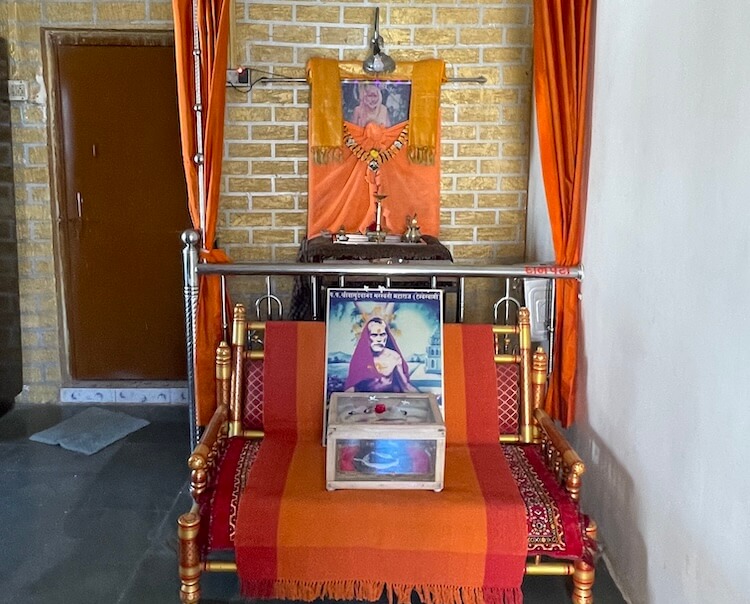
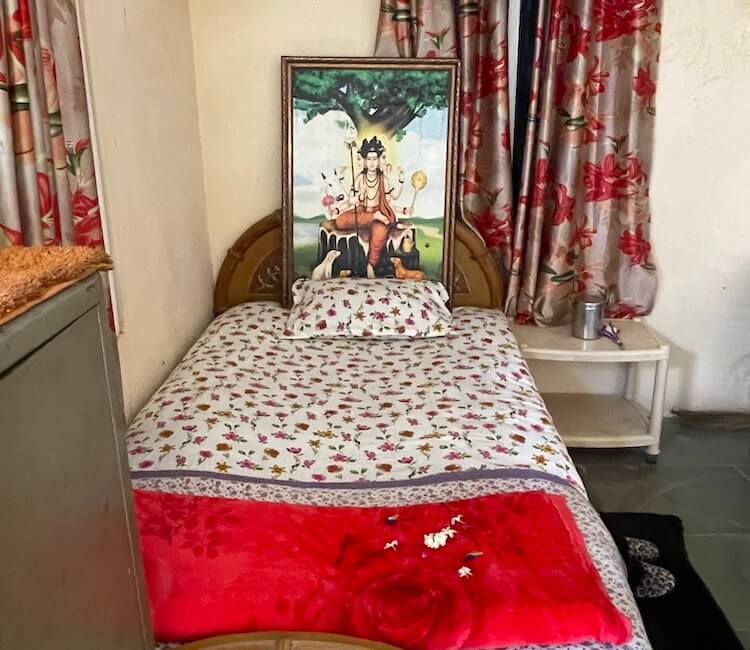
Directly facing the main shrine is a small temple dedicated to Ganesha. In a nearby room, the personal effects of Dandi Swami Madhusudan Maharaj—a disciple of Rangavadhuta Swami, who resided here years ago—are carefully preserved. This room also displays portraits of Dandi Swami Madhusudan Maharaj, Tembe Swami and Rangavadhuta Maharaj. To the right of the temple stands the Vasudevanand Saraswati Hall. Madhusudan Maharaj, originally from Pune, was a figure of historical intrigue, who had worked alongside revolutionaries like Bhagat Singh and Chandrashekhar Azad during the independence struggle. After completing the Narmada parikrama four times, he settled here. In his writings, he documented several legends associated with this temple, including accounts of the mysterious sound of bells tolling at four in the morning and tales of Ashwatthama’s ethereal presence within the precinct.
Main Features :
- Located 18 km from Jhagadia, 41 km from Bharuch.
- State Transport facility available from Jhagadia.
- Private vehicles can reach up to the temple.
- No accommodation or breakfast facility in the premises.
रमानाथ महादेव मंदिर
भालोद, तालुका झगड़िया, जिला भरूच
मंदिरे
Temples
मंदिर
-
कोटेश्वर महादेव मंदिर कदोद, ता. भरुच, जि. भरुच
अधिक माहितीKoteshwar Mahadev Temple Kadod, Tal. Bharuch, Dist. Bharuch
View Detailsकोटेश्वर महादेव मंदिर कडोद, ताल. भरूच, जिला. भरूच
विवरण देखें -
धर्मेश्वर महादेव मंदिर धर्मशाळा-झानोर, ता. भरुच, जि. भरुच
अधिक माहितीDharmeshwar Mahadev Temple Dharmashala-Jhanor, Tal. Bharuch, Dist. Bharuch
View Detailsधर्मेश्वर महादेव मंदिर धर्मशाला-झानोर, ताल. भरूच, जिला. भरूच
विवरण देखें -
साईबाबा मंदिर रामवाटिका सोसायटी, झाडेश्वर, ता./जि. भरुच
अधिक माहितीSai Baba Temple Ramvatika Society, Zadeshwar, Tal./Dist. Bharuch
View Detailsसाईं बाबा मंदिर रामवाटिका सोसायटी, जादेश्वर, ताल./जिला. भरूच
विवरण देखें