
रामकुंड तीर्थधाम
अंकलेश्वर, ता. अंकलेश्वर, जि. भरुच
Ramkund Teerthdham
Ankleshwar, Tal. Ankleshwar, Dist. Bharuch
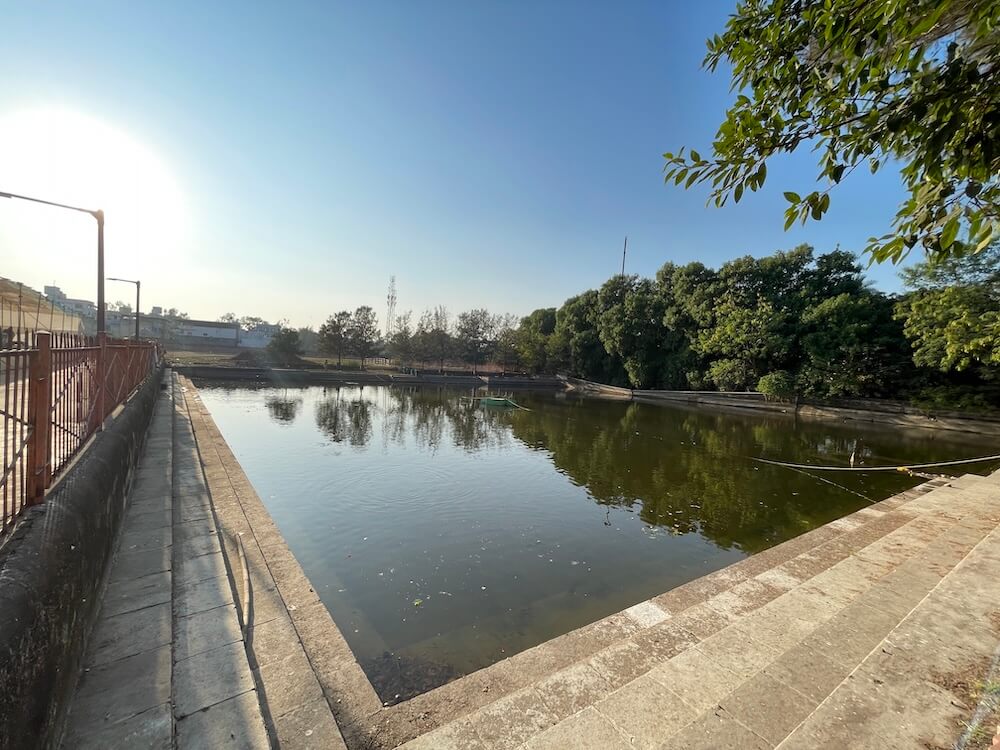 Siddhatekdi Ramkund Teerthdham, situated in Ankleshwar, serves as a sanctified landmark of immense consequence along the Narmada Parikrama (the ritual circumambulation of the holy Narmada River). The spiritual sanctity of this site finds mention in venerable scriptures such as the Mahabharata, the Narmada Purana, and the Vayu Purana. According to sacred lore, Lord Ramachandra, during his period of exile, created a Kund (sacred water tank) here by piercing the earth with a single arrow to quench the thirst of Sita Mata; this body of water is revered today as Ramkund. Adjacent to this reservoir lies the Tapasyasthan (place of penance) of Maharishi Mandavya. Affiliated with the Ramananda Sampradaya, this holy precinct houses temples dedicated to Shri Ram and Hanuman, alongside a shrine consecrated to Jagadguru Ramanandaswami.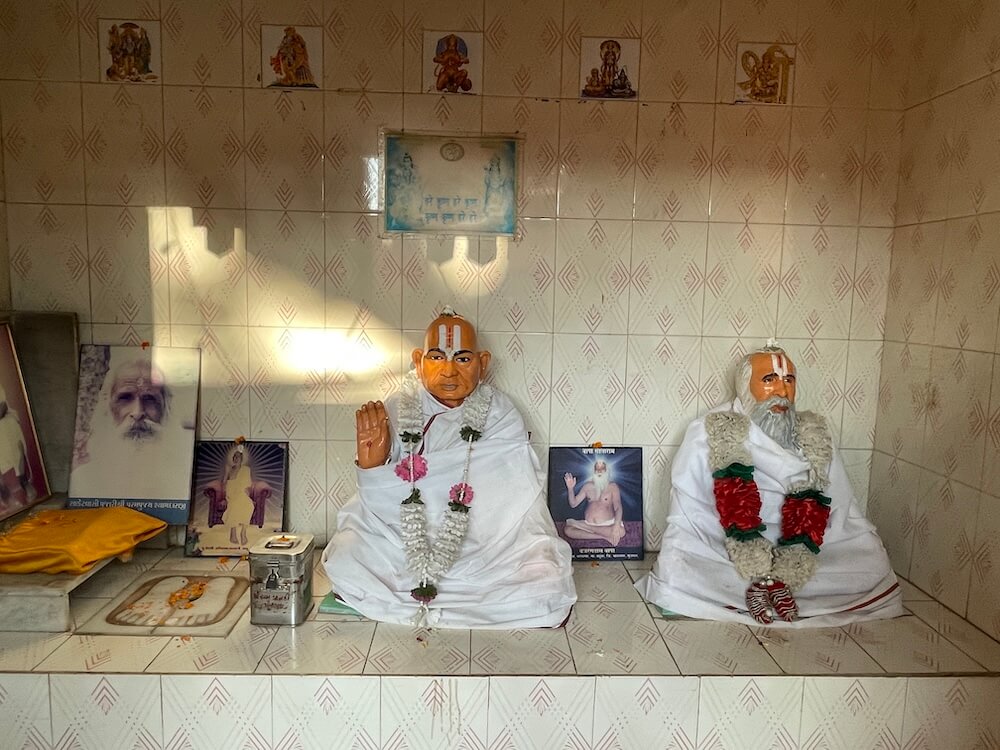
The historical and mythological tapestry of this site is richly woven. According to ancient lore, during their exile, Prabhu Shri Ramchandra, Sita and Lakshman passed through this region. At one point Sita felt thirsty, yet no source of water was to be found nearby. Then Shri Ram released an arrow from His quiver and created a divine waterpool here. That pool is the present Ramkund. Furthermore, the site is inextricably linked to the harrowing yet divine trial of Mandavya Rishi. In the Adiparva of Mahabharata, Chapter 106, the story of Maharshi Mandavya is narrated. It is said that long ago lived a great ascetic named Mandavya. He would stand silently in penance beneath a tree near the entrance of his ashram, with both hands raised, observing a vow of silence.
 Once some thieves, trying to escape from royal guards, fled into his ashram and hid there. Soon the king’s soldiers arrived and found Maharshi Mandavya deep in meditation. They asked him if he had seen which way the thieves had escaped. Since the sage was observing silence, he did not speak. The guards searched the ashram and found the thieves along with the stolen goods. Suspecting the sage of supporting them, they arrested him along with the thieves and presented them before the king. Without adequate enquiry, the king ordered death punishment for all, including the sage. Mandavya Rishi was thus impaled upon a stake. As narrated in Mahabharata, he remained seated on that stake for a long time. Later, through his mental powers, he informed many sages of his plight. Taking the form of birds, several sages came there during the night.
 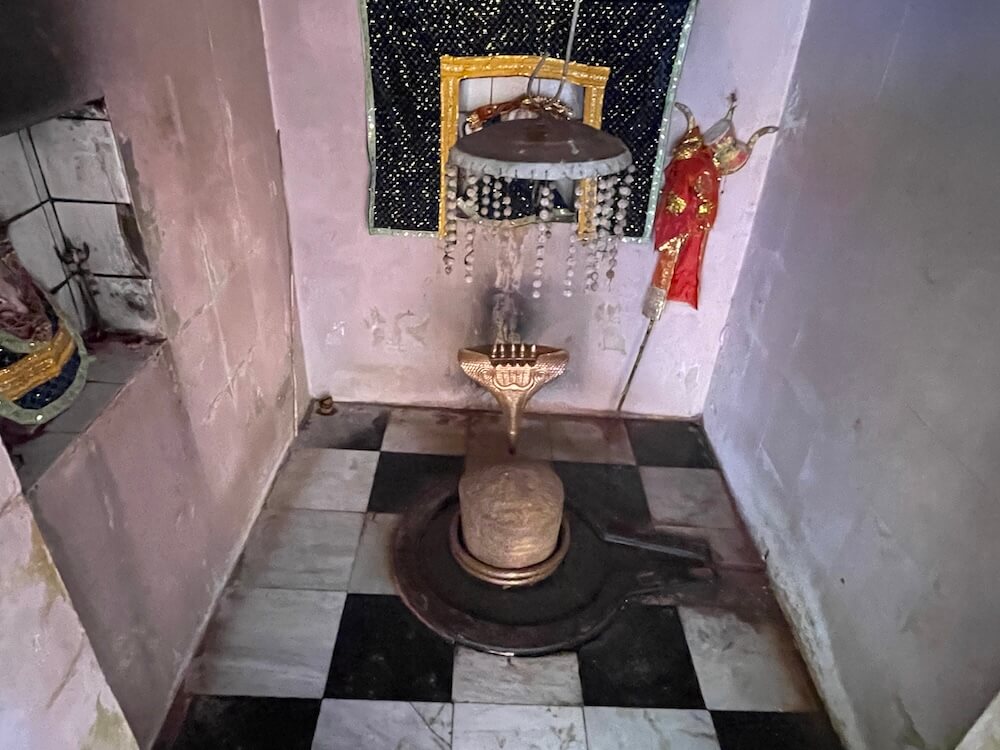 Seeing Mandavya upon the stake, they were enraged. Meanwhile, the king’s soldiers were astonished that he remained alive even after many days and reported this to the king. After discussion with his ministers and realising the greatness of the sage, the king came to him and said, “I have committed this sin out of ignorance and delusion. Please do not be angry with me. I plead forgiveness.” As per the king’s orders, Mandavya Rishi was removed from the stake, yet the tips that had pierced his body could not be extracted. The stake was then cut from the outer side, leaving the points still within his body. Hence he came to be known as ‘Ani Mandavya’. Some Puranic storytellers further add that in anger Mandavya Rishi cursed the king and because of the curse the sun stopped rising. Chaos spread across all worlds. Realising his mistake,
 the king apologised to the sage and established the shrine of Siddhanath or Mandavyeshwar Mahadev here. This Mandavyeshwar temple stands near the Kshipra Ganesh and Siddhanath temples at this holy site.
Another legend narrates that long ago there lived a righteous king named Devaraj. He had a beautiful daughter named Kumudini. One day a demon abducted her through the sky. Like Sita, who dropped her ornaments when Ravana abducted her, this princess too dropped her jewelled ornaments. They fell upon the sacred land of Mandavya Rishi’s penance. The ornaments were later found by the king’s soldiers, who, suspecting the sage, arrested him. Without thorough enquiry, the king ordered him to be impaled. On hearing this, many sages gathered there. 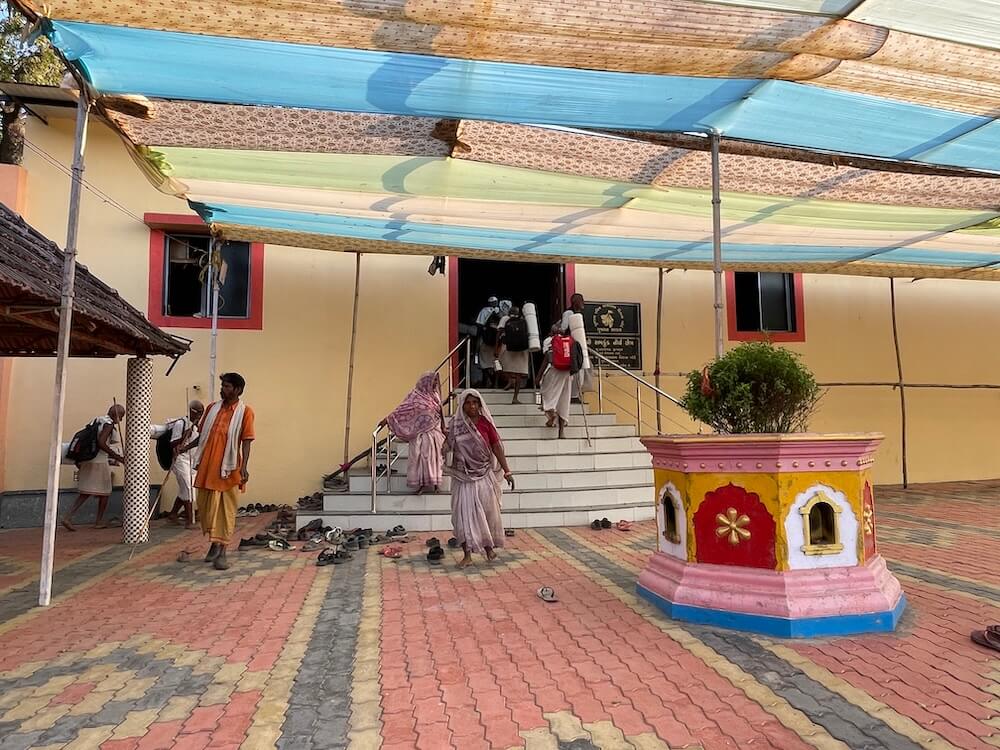 Yet Mandavya told them, “This is my destiny; allow me to bear it.” That same night, a devoted woman named Shandili, taking her husband to the banks of Narmada to cure his disease, accidentally struck Mandavya in the dark and he cried out in pain. Hearing the sound, the Saptarishis, unaware of the situation, cursed in the darkness that whoever had touched Mandavya Rishi would die at sunrise. But due to the power of the chaste woman’s virtue, the sun did not rise for six months. Eventually, the Devas and sages sought her forgiveness and then only sunrise took place. This legend is believed to have occurred near the present Ramkund Tirth at Ankleshwar.
Historically, this region was part of the ancient territories of Lata and Anarta. The central part of present Gujarat was called Lata. I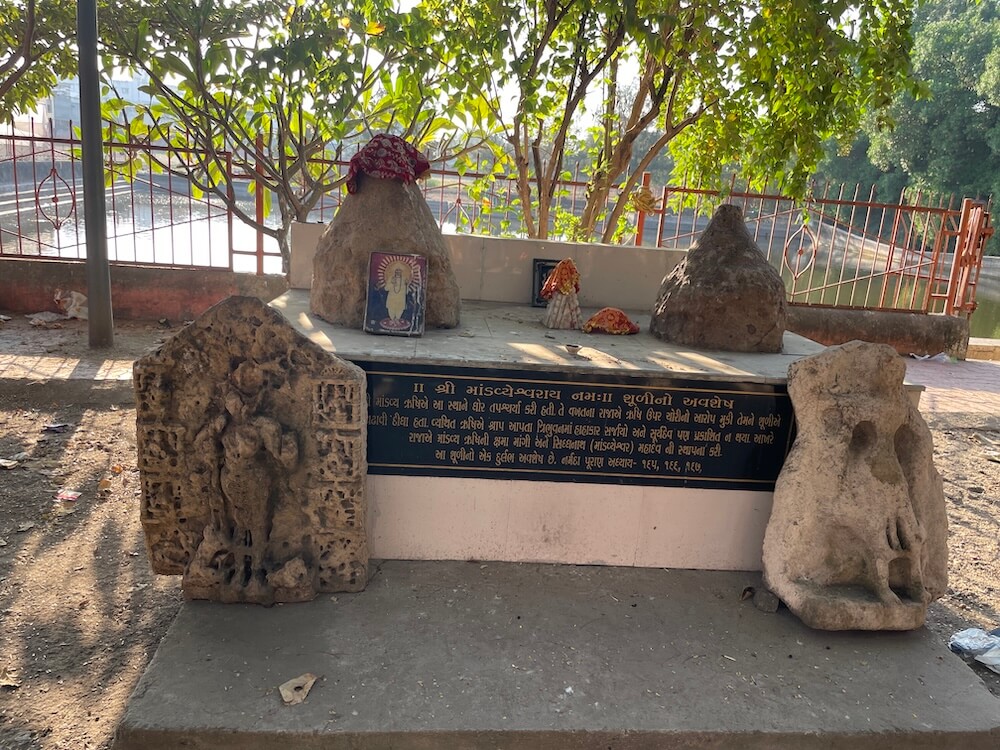 n the copper plates of King Dadda II of the Gurjara dynasty, who ruled between the sixth and eighth centuries CE, Ankleshwar is referred to as Akrureshwar. During the Gurjara rule, this town held the status of a district centre and around the mid-ninth century became the capital of the Rashtrakutas of Gujarat. Today Ankleshwar is a major industrial city of Gujarat, especially known for chemical industries. Just three kilometres from the railway station lies the peaceful complex of Siddhatekdi Ramkund Tirthdham.
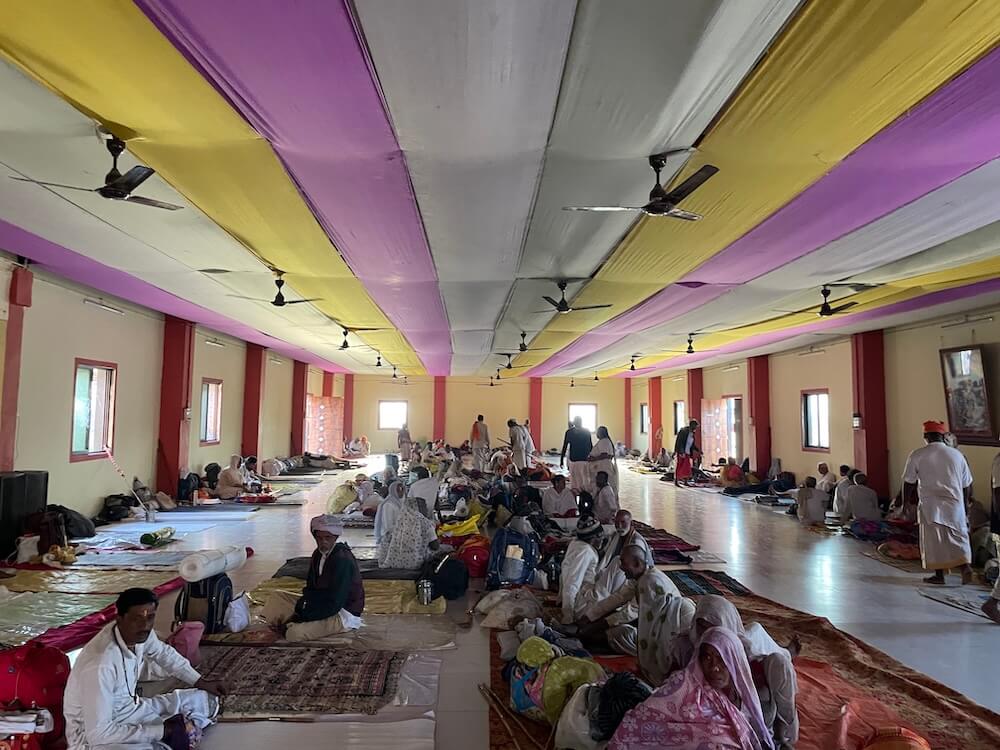
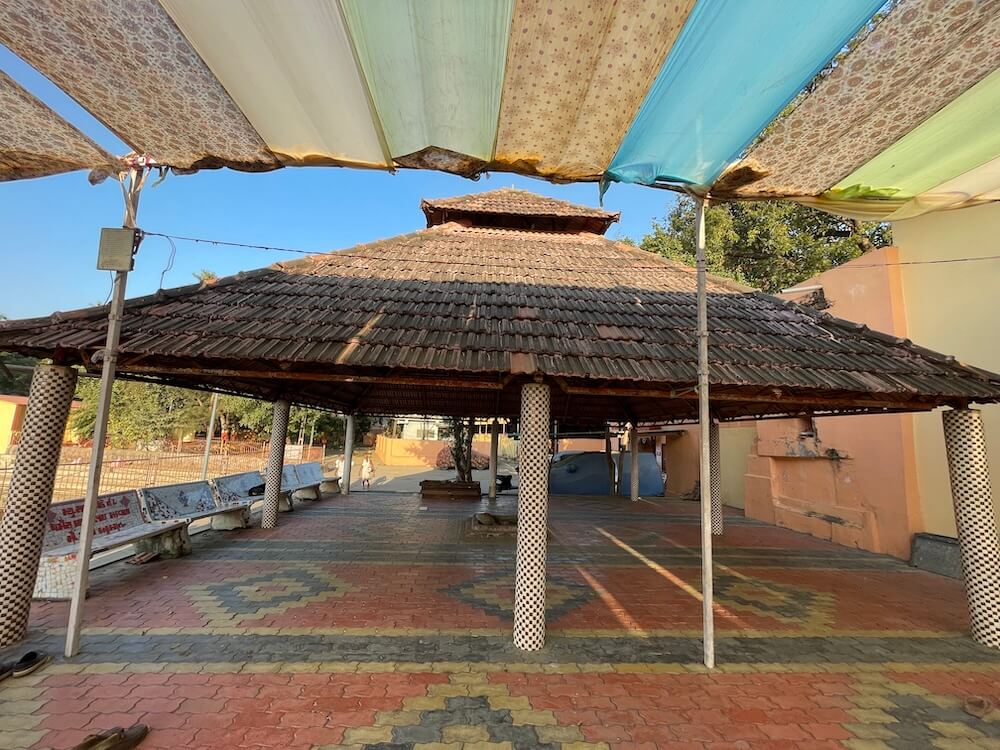
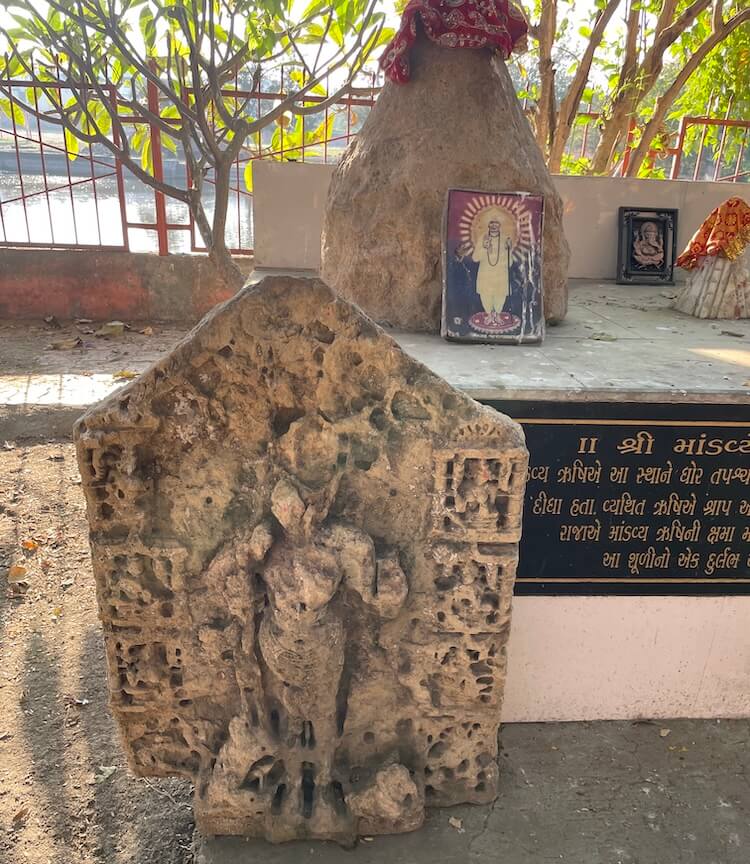
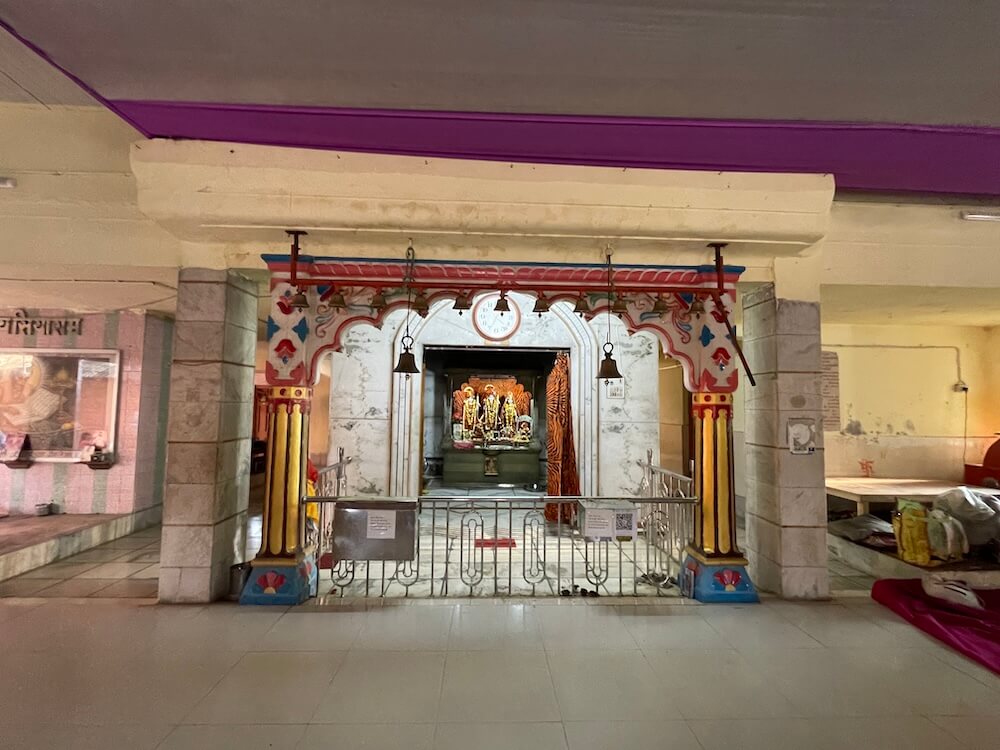
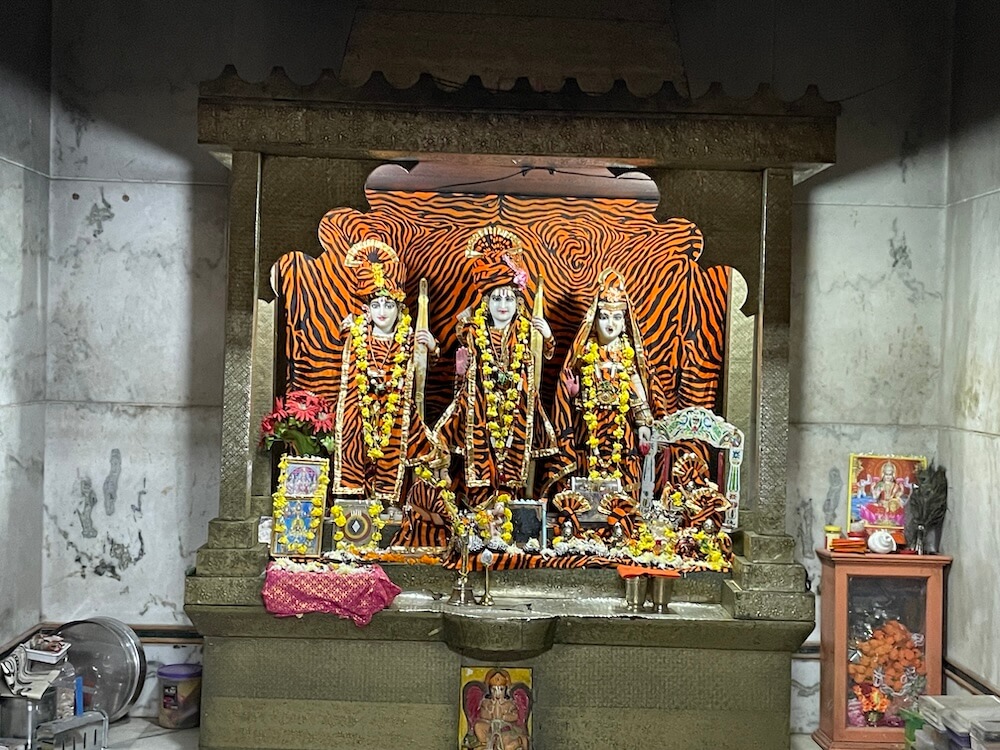
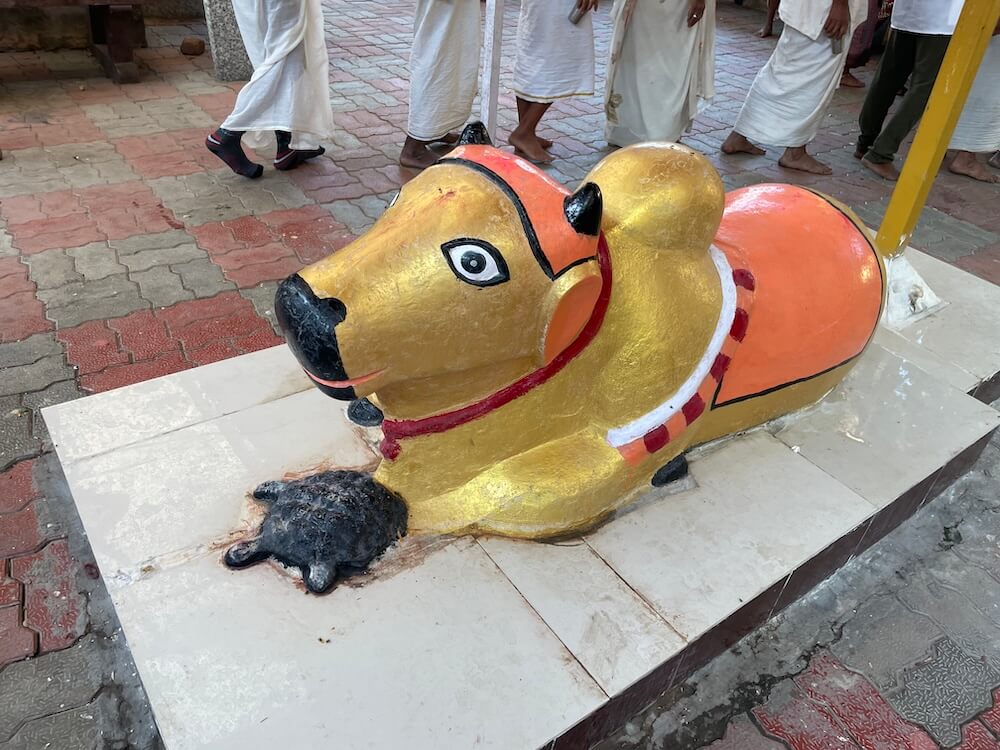
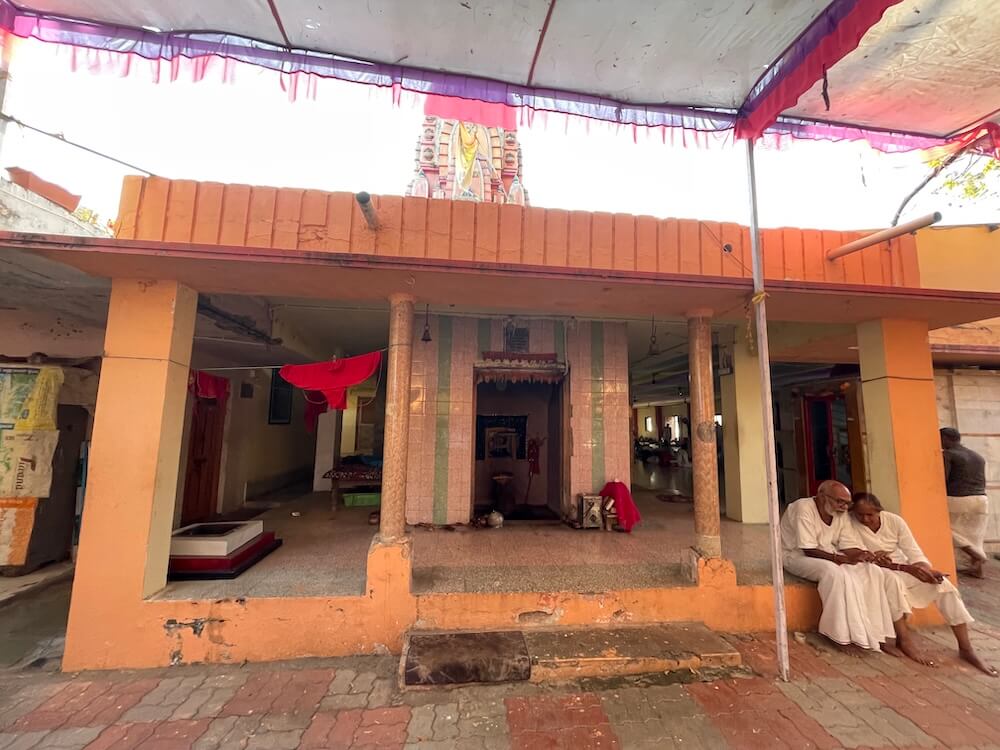
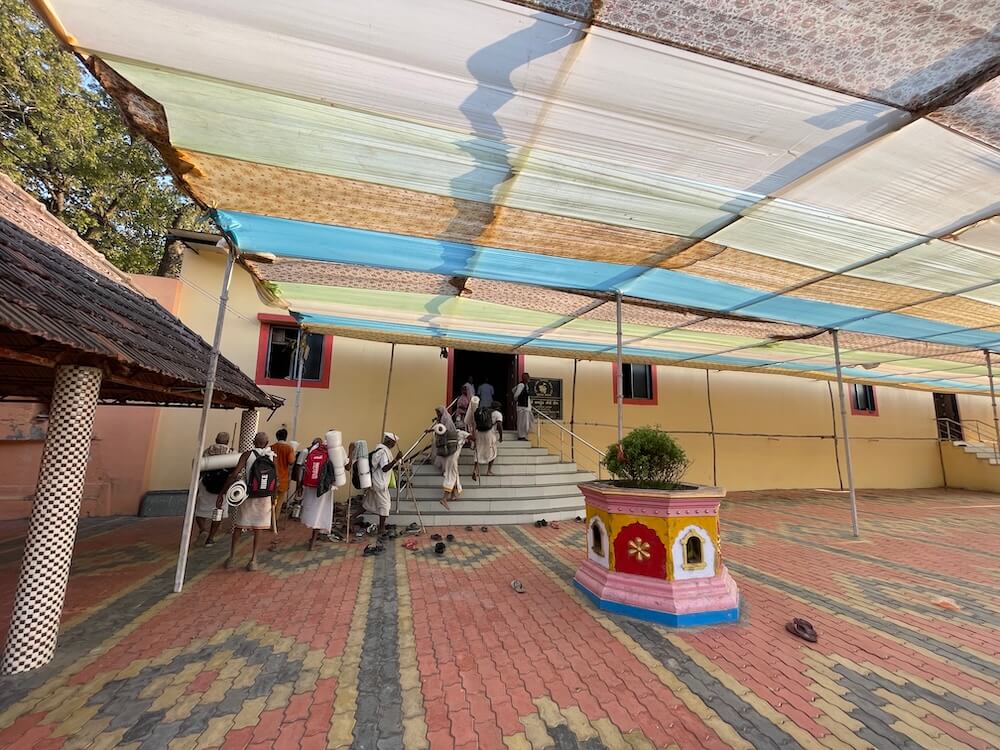
Entering the area, one first encounters the sacred spot where Maharshi Mandavya is believed to have performed intense penance. Upon a large platform rest two sacred stones with pointed upper surfaces. They are worshipped with the faith that these represent the remnants of the very stake upon which the sage was once impaled. 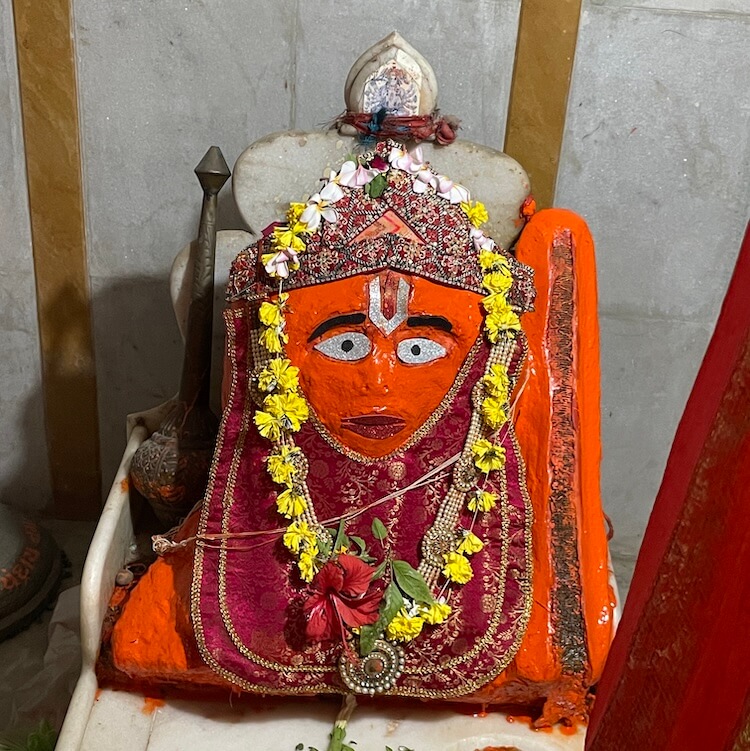 Beside the platform stand two ancient sculptural pieces, heavily weathered by time. Nearby is the holy Ramkund Tirth. To the left lies a gaushala, while to the right stretches a large constructed pond known as Ramkund Tirth. According to sacred tradition, Prabhu Ramchandra Himself bathed here. Facing the pond stands the temple of Shri Ram. A few steps lead into the temple courtyard. In the courtyard stands a large octagonal Tulsi Vrindavan. From here more steps rise to the Sabha Mandap, which is very spacious and also serves as a resting place for devotees undertaking the Narmada Parikrama. To the left inside the mandap is a shrine of Hanuman, housing a stone idol beautifully adorned with vermilion, garments, ornaments, flower garlands and crown, flanked by a great mace. Because of the serene smiling expression, he is affectionately known as Hasmukha Hanuman. Ahead in the mandap is an arched passage leading to the Garbhagriha, where upon a raised pedestal in a decorated shrine are the marble idols of Shri Ram, Sita and Lakshman, resplendent with garments and ornaments. Before them stands an idol of Hanuman and upon the pedestal is a carved figure of Garuda.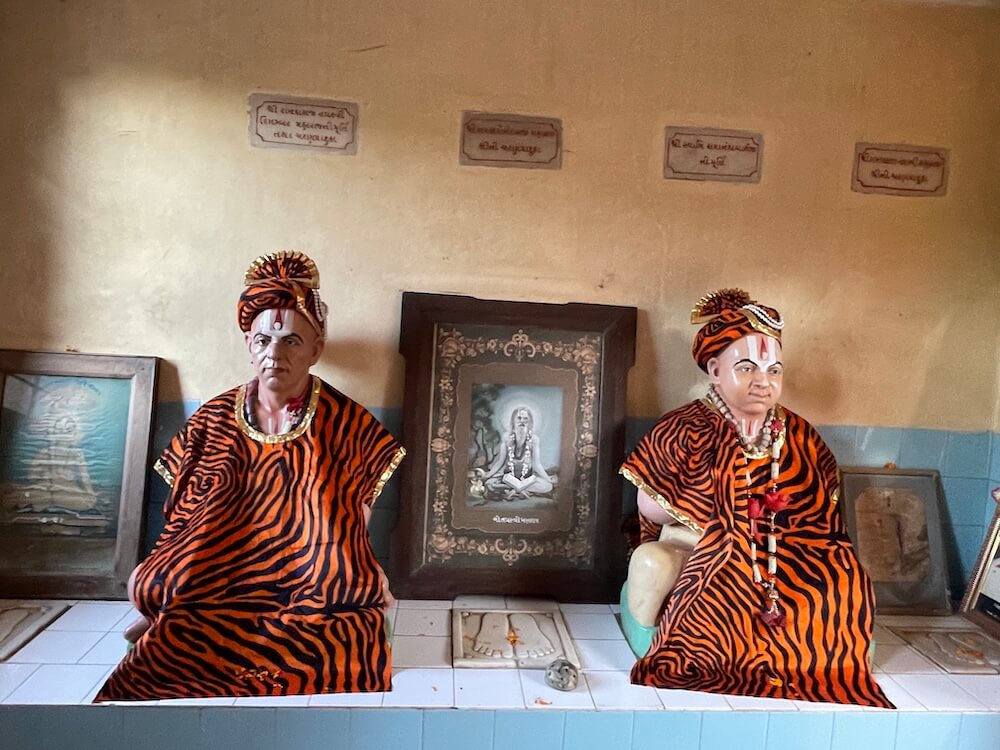
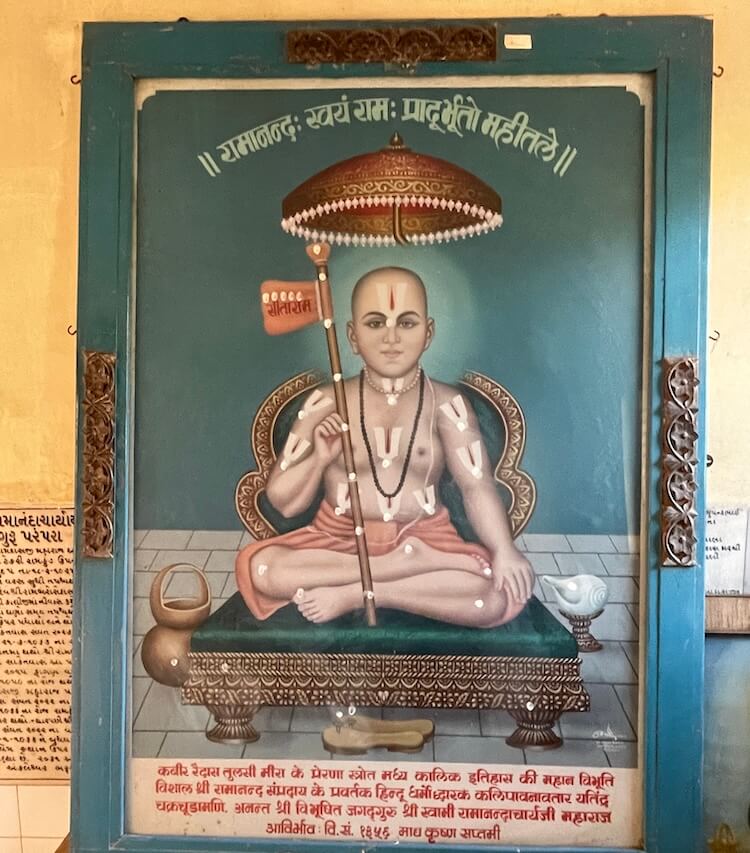
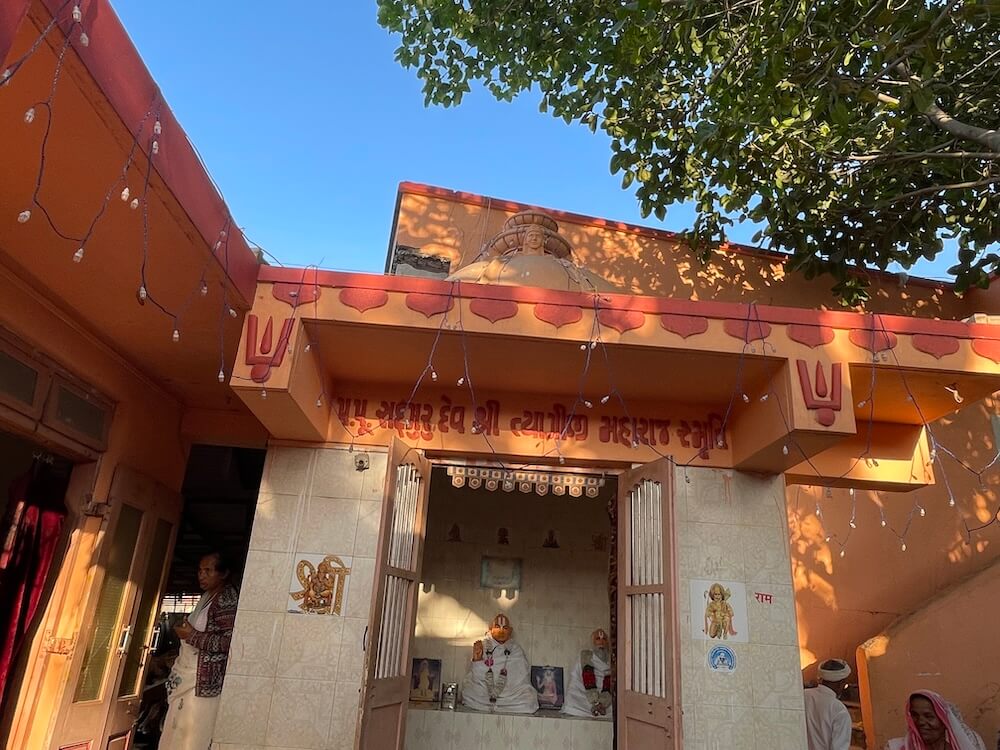
Close to these shrines, on the left side, stands a small temple dedicated to Swami Ramanandacharya. Jagadguru Ramanandacharya was a great saint of the fourteenth-century Bhakti movement and founder of the Ramanandi Sampradaya, also called the Vairagi Sampradaya. In this modern-style temple, his grand idol is installed on a raised pedestal. To his left stands the idol of Ramdasji Tapasvi Digambar Maharaj. Portraits and padukas of Rambharosedasji Maharaj and Ramdasji Tapasvi Maharaj are also installed here, along with a large portrait of Ramanandacharya.
At Ram Tirth, Ram Navami, Hanuman Jayanti, Guru Purnima, Janmashtami and many other festivals are celebrated with devotion. Various religious programmes are organised throughout the year. On Narmada Jayanti, Navchandi Yag and several sacred rituals are performed. On Kali Chaudas (Narak Chaturdashi), a rice Shivpind is prepared here. Apart from this temple, such a ritual is performed only at Kashi Vishweshwar Temple in Ujjain. Under the guidance of Mahant Gangadas Bapu, the ashram continues its noble tradition of providing Annadan (food offerings), lodging, and even free medical care to the hundreds of pilgrims who traverse the banks of the Narmada in their quest for the divine.
Main Features :
- Located 5 km from Ankleshwar Bus Station, 13 km from Bharuch.
- Regular ST bus service to Ankleshwar from several towns in Bharuch district.
- Private vehicles can reach the temple parking area.
- Accommodation and refreshment facilities available nearby.
रामकुंड तीर्थधाम
अंकलेश्वर, ताल. अंकलेश्वर, जिला. भरूच
मंदिरे
Temples
मंदिर
-
कोटेश्वर महादेव मंदिर कदोद, ता. भरुच, जि. भरुच
अधिक माहितीKoteshwar Mahadev Temple Kadod, Tal. Bharuch, Dist. Bharuch
View Detailsकोटेश्वर महादेव मंदिर कडोद, ताल. भरूच, जिला. भरूच
विवरण देखें -
धर्मेश्वर महादेव मंदिर धर्मशाळा-झानोर, ता. भरुच, जि. भरुच
अधिक माहितीDharmeshwar Mahadev Temple Dharmashala-Jhanor, Tal. Bharuch, Dist. Bharuch
View Detailsधर्मेश्वर महादेव मंदिर धर्मशाला-झानोर, ताल. भरूच, जिला. भरूच
विवरण देखें -
साईबाबा मंदिर रामवाटिका सोसायटी, झाडेश्वर, ता./जि. भरुच
अधिक माहितीSai Baba Temple Ramvatika Society, Zadeshwar, Tal./Dist. Bharuch
View Detailsसाईं बाबा मंदिर रामवाटिका सोसायटी, जादेश्वर, ताल./जिला. भरूच
विवरण देखें