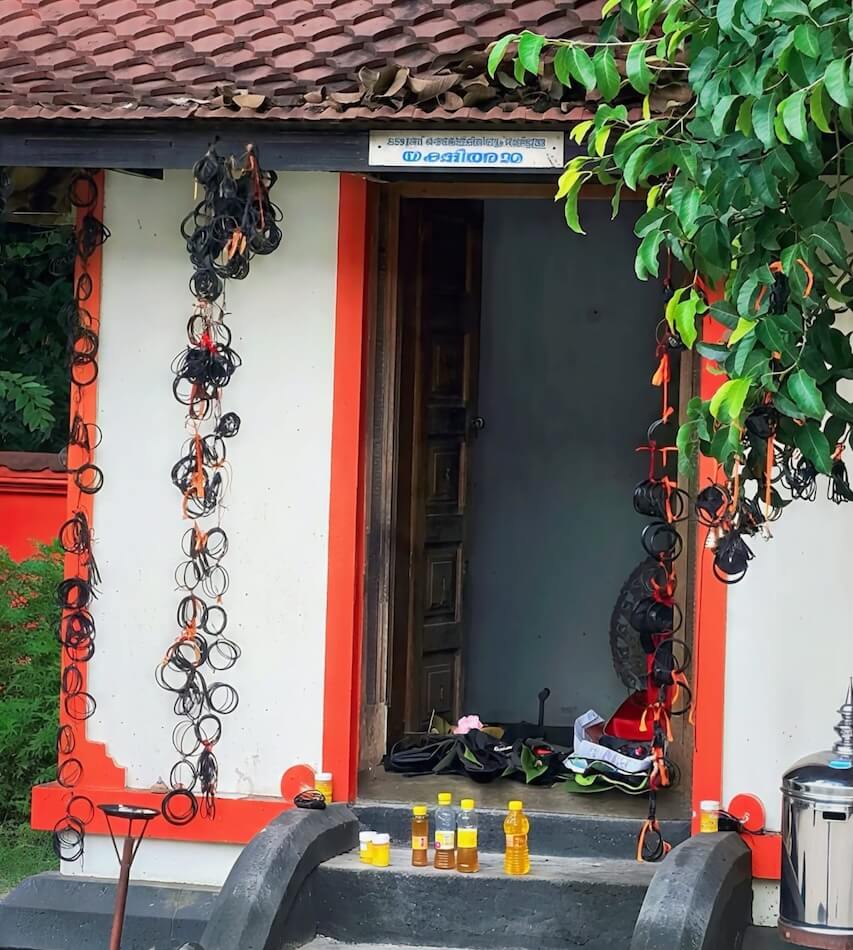
वालिया पणयान्नर्कवू भगवती मंदिर
पारुमाला, जि. पठाणमथिट्टा.
Valiya Panayannarkavu Bhagavathy Temple
Parumala, Dist. Pathanamthitta.
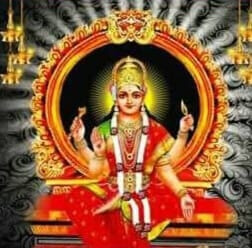 The Valiya Panayannarkavu Bhagavathi Temple, situated on the banks of the Pamba River at Parumala in Pathanamthitta district, is one of the oldest and most revered centres of Shakta worship in Kerala. Revered as the “Kodungallur of Travancore”, this sacred temple is dedicated to Goddess Bhadrakali, the Supreme Divine Mother and Lord Shiva, both of whom are worshipped with equal importance. The temple is well known for its mention in Kottarathil Sankunni’s Aithihyamala, the famous legend of Kalliyankattu Neeli and its centuries-old Kerala mural paintings. Rich in history, legend and artistic heritage, the temple continues to attract devotees and history enthusiasts alike.
According to historians, the Valiya Panayannarkavu Bhagavathi Temple is at least 700 to 800 years old. The temple is clearly mentioned in Unnunili Sandesam, a famous Malayalam literary work written in the 14th century AD, confirming that it existed even before the 14th century. 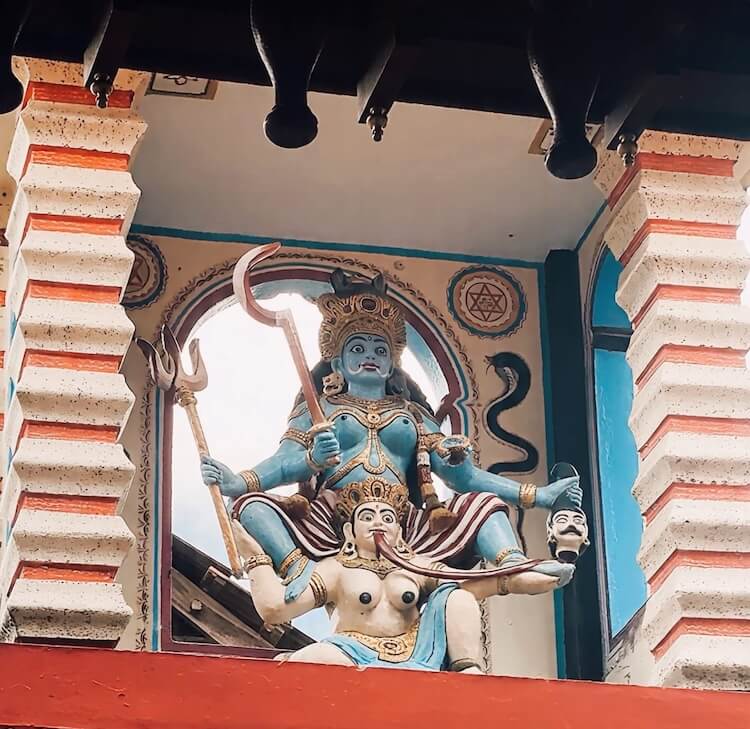 Following the decline of the Chera Empire during the 9th and 10th centuries, the temple was expanded into its present form under the rule of the Odanad Kingdom, which emerged around the 11th century AD. It was one of the principal places of worship of the Odanad kings, who ruled from Kayamkulam. In the 18th century, when this region became part of the Kingdom of Travancore, the administration of the temple came under the Travancore rulers. Today, the temple complex remains under the hereditary custodianship of the Adisseri family, who serve as its traditional guardians.
The temple’s famous Kerala mural paintings were created in two phases during the 17th century. The murals around the main sanctum were painted during the first phase, while those in the square sanctum were completed during the second phase. Historical records indicate that the work was completed during the reign of the last king of Odanad.
The most famous legend associated with the temple is that of Kalliyankattu Neeli. According to local tradition, Neeli, a Yakshi who was feared throughout southern Kerala, 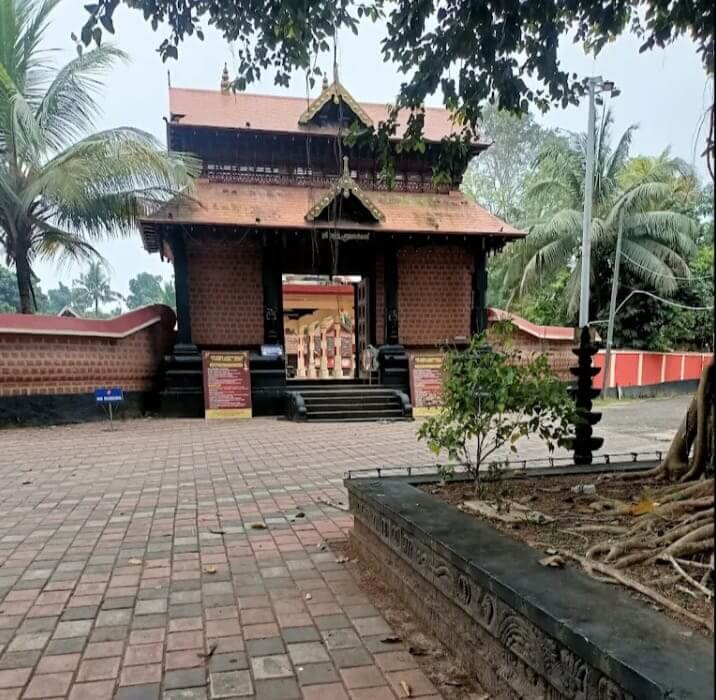 was summoned by the renowned sorcerer Kadamattathu Kathanar using his mystical powers. He then brought her to the Panayannarkavu Temple and made her a servant of the Goddess, placing her in the sacred grove on the southern side of the temple.
According to legend, the Shiva idol at this temple was consecrated by Parashurama, who is believed to have created Kerala and the temple is regarded as one of the 108 Shiva temples established by him. It is also believed that the presence of Mahakali was established here later, after which the temple became one of the leading centres of Shakta worship dedicated to the Goddess.
The Goddess Bhadrakali is worshipped here in the fierce form of Rudhira Mahakali after the slaying of Darika. According to local belief, the eastern entrance was permanently closed because the Goddess’s fierce gaze falling towards the east would bring misfortune to that region. Even today, devotees have darshan of the Goddess through the northern entrance.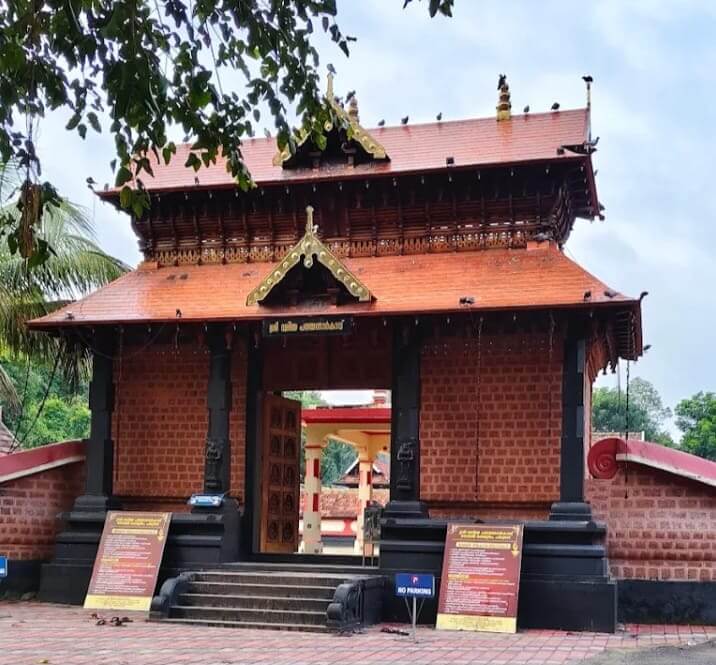
The temple is set within a large sacred grove covering about four acres on the banks of the Pamba River. Towering palmyra trees are one of its most striking features. On the southern side of the temple is a separate sacred grove dedicated to Kalliyankattu Neeli, who is worshipped here in the form of a sacred mirror. Unlike most temples, the main entrance to this temple is on the northern side. Although there is a large eastern gopuram (gateway), it remains permanently closed. Passing through the gateway into the Nalambalam (inner courtyard), visitors can have darshan of the two main sanctums dedicated to Goddess Bhadrakali and Lord Shiva.
Inside the Nalambalam are two separate main sanctums dedicated to Lord Shiva and Goddess Bhadrakali. The Shiva sanctum faces west, while the Bhadrakali sanctum faces east, with the two sanctums standing opposite each other.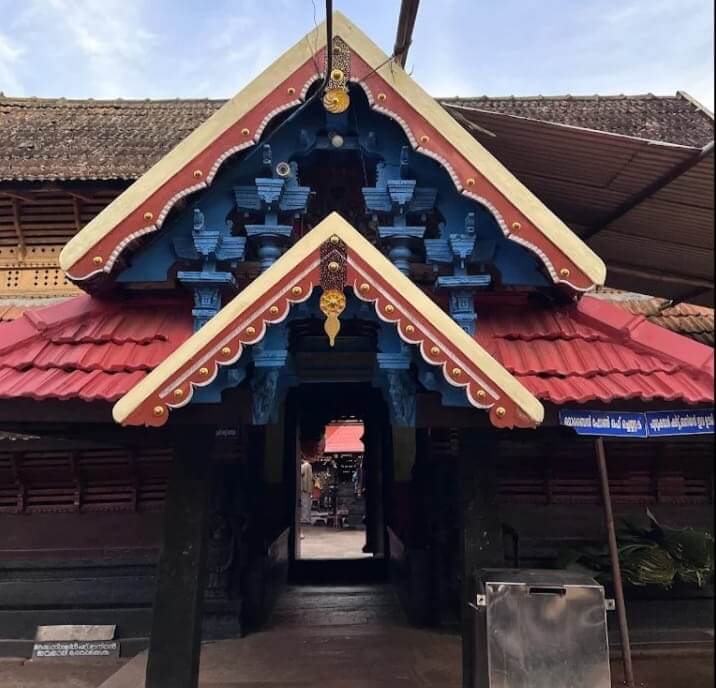 The eastern entrance of the Goddess’s square-shaped sanctum remains permanently closed and devotees have darshan through the northern entrance. The outer walls of the sanctum are adorned with magnificent ancient Kerala mural paintings depicting scenes from the Devi Mahatmyam, the slaying of Darika, the Ramayana and the Krishna Leela. Inside the sanctum, the highly revered Maha Meru Chakra is installed alongside the idol of the Goddess, making it one of the temple’s most significant features.
Opposite the Bhadrakali sanctum is the west-facing sanctum of Lord Shiva, overlooking the Pamba River. Built in the traditional Kerala architectural style, the sanctum houses a Shiva Linga. The Shiva idol is the oldest and original principal consecration within the temple complex.
Several other deities can be seen both inside and outside the Nalambalam. Along the southern side of the Nalambalam is a long pedestal where the Sapta Matrikas—Brahmi, 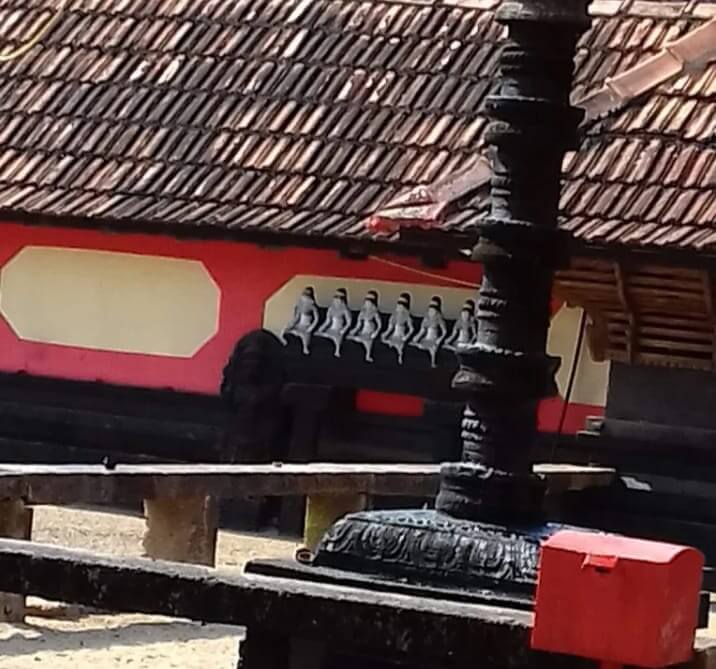 Maheshwari, Kaumari, Vaishnavi, Varahi, Indrani and Chamundi—are enshrined. Lord Ganesha and Veerabhadra are consecrated on either side of them. In front of the main Bhadrakali sanctum are the shrines of Chantattukali, Kodumkali, Karimkali and Sri Soolini. Outside the Nalambalam, a separate sanctum at the south-western corner is dedicated to Dharma Sastha, while Yakshiamma (Kalliyankattu Neeli) is worshipped in the southern sacred grove in the form of a bronze sacred mirror. Shrines dedicated to the Naga deities and Kshetrapalakan can also be seen at different locations within the temple grounds.
The temple’s main annual festival is celebrated during the Malayalam month of Medam (April–May). The principal festival rituals take place on the Pooram star day of Medam and the celebrations conclude with the ceremonial Arattu in the Pamba River.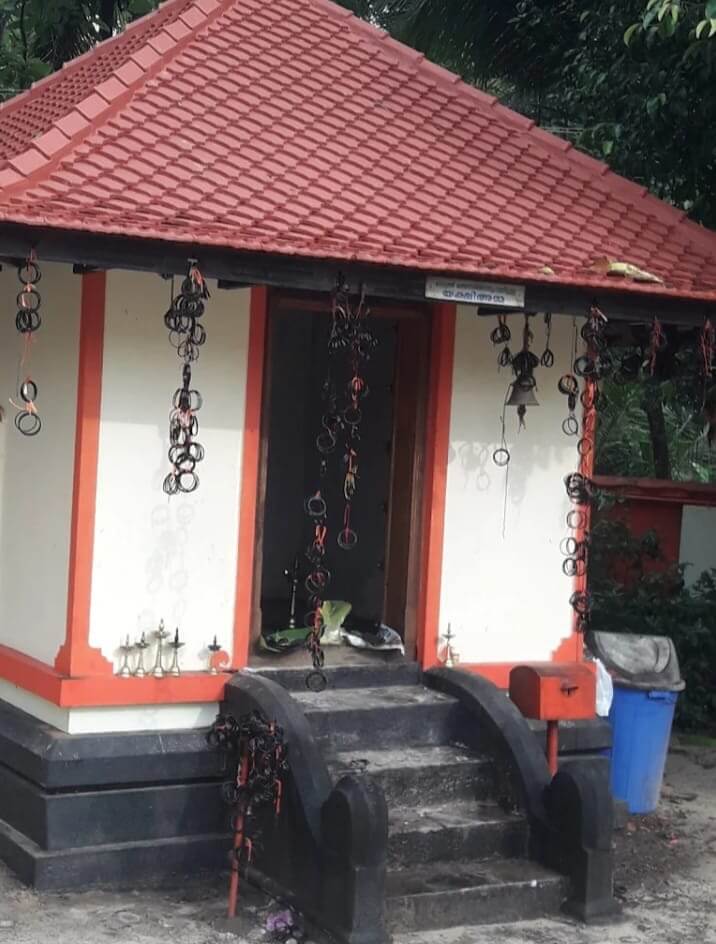 Other important occasions observed at the temple include Vishu, the 41-day Mandala season from the 1st of Vrischikam to the 11th of Dhanu, Maha Shivaratri and Navaratri. Special rituals, including the Valiya Guruthi, are performed during the Mandala season. The first day of every Malayalam month is also observed with special poojas. As the temple is situated on the banks of the Pamba River, many devotees visit Karkidaka Vavu to perform ancestral rites (Pitru Tharpanam).
The most important offering at the temple is Chantattam, a special abhishekam performed on the Goddess using a fragrant oil prepared from teak heartwood and other herbal ingredients. It is offered to cool the Goddess and calm her fierce nature and must be booked in advance. Another major offering is the Valiya Guruthi, a powerful Tantric ritual performed at night after the temple closes during the Mandala season and on other important occasions. Devotees perform this ritual to seek protection from enemies and freedom from fear. Maha Chantattam and Ashtabhishekam are also among the principal offerings to the Goddess. Mrityunjaya Homam, performed before the Shiva Linga believed to have been consecrated by Parashurama, is offered for good health, healing and long life. Devotees also offer roasted rice powder, tender coconut, cloth and turmeric powder at the sacred grove of Kalliyankattu Neeli as part of the temple’s important offerings.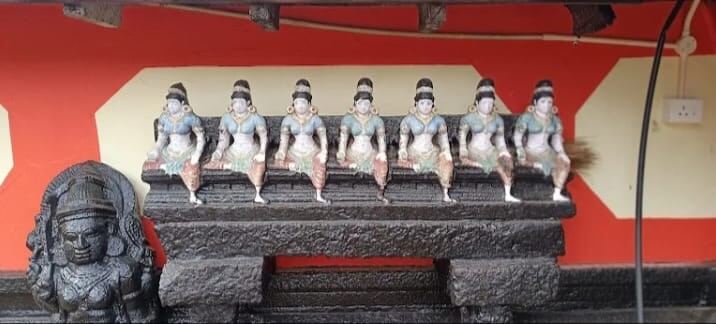
The temple is open to devotees from 5:00 AM to 11:30 AM and 5:00 PM to 6:30 PM. The sanctum opens at 5:00 AM with the blowing of the conch, followed by Nirmalya Darshan, Abhishekam, Malar Nivedyam, Usha Pooja, Ethirthu Pooja and Pantheeradi Pooja. Archana and other offering rituals are then performed. After the Ucha Pooja and Nivedyam at around 11:00 AM, the temple closes at 11:30 AM. The temple reopens at 5:00 PM for Deeparadhana and Athazha Pooja, and closes at 6:30 PM. During the Mandala season, women are not permitted to enter the temple premises during and immediately after the Valiya Guruthi ritual held at night. The pooja schedule may change on festival days and during special Tantric rituals.
Key highlight :-
- Located 2 km from Mannar, 13 km from Thiruvalla and 15 km from Haripad.
- The nearest railway station is Thiruvalla Railway Station, located about 13 km from the temple.
- KSRTC and local bus services are available to the temple.
- Private vehicles can be parked in the temple’s parking area.
- Accommodation and food facilities are available near the temple.
- Contact number + 91 9847560765, + 91 4792311263