
त्रिकुलशेखरपुरम श्रीकृष्ण स्वामी मंदिर
केथोली, कोडुंगल्लूर, जि. त्रिशूर.
Thrikulashekarapuram Sree Krishna Swamy Temple
Keetholi, Kodungallur, Dist. Thrissur.
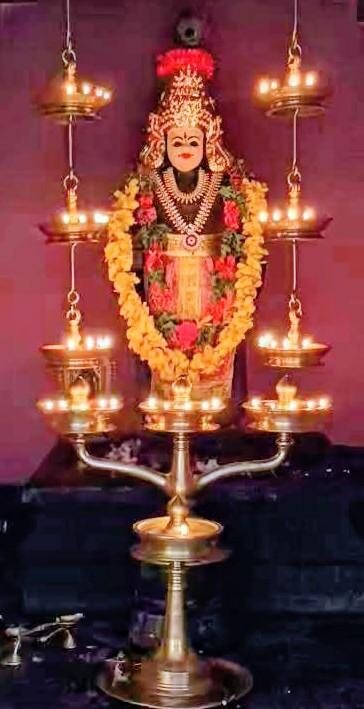
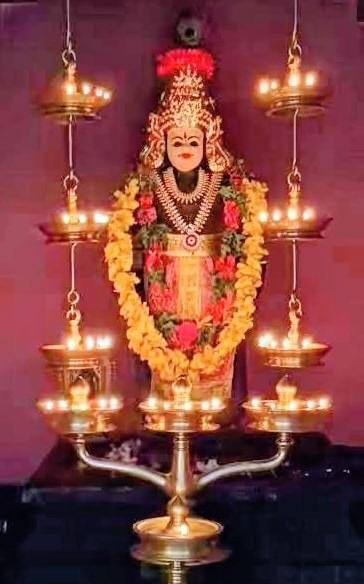 Thrikkulasekharapuram Sree Krishnaswamy Temple is a historic Vishnu temple located at Thrikkulasekharapuram near Kodungallur in Thrissur district. It is considered one of the oldest Vishnu temples in Kerala and an early Vaishnava temple. The main deity is Lord Krishna in a youthful form, accompanied by his wife Rukmini.
According to historians, the early construction of Thrikkulasekharapuram Sree Krishnaswamy Temple dates to the late 8th or early 9th century, around 800–825 CE. It is considered one of the important surviving examples of early Chera architecture. Thrikkulasekharapuram was an important part of Mahodayapuram, the ancient capital of the Chera kingdom, now known as Kodungallur. Various structures within the temple complex were further developed between the 9th and 11th centuries, according to historical records. The temple was also known as Melthali, one of the four important ‘Thali’ temples of the old Kodungallur capital.
The temple is traditionally attributed to Kulasekhara Alvar (Kulasekhara Perumal), one of the 12 Alvars and an important figure in the Vaishnava Bhakti movement of South India. It is also considered one of the early organised Vaishnava temples established as part of the Bhakti movement in Kerala, where Shaivism had a strong presence. The famous Sanskrit devotional work Mukundamala, composed by Kulasekhara Alvar, is associated with this temple and its Krishna deity. Historical records also indicate that the ‘Ariyittuvazcha’, the coronation ceremony of the kings who ruled Kodungallur, was held here, showing the temple’s political connection with the royal administration.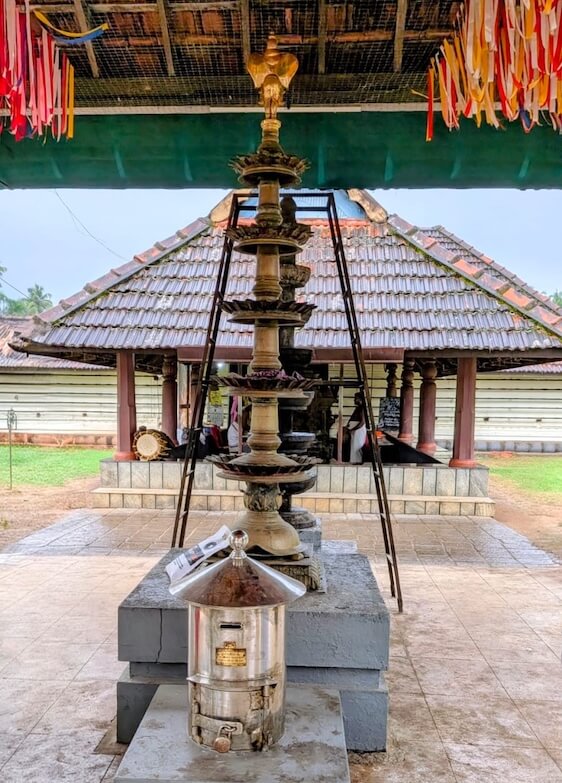
After Kulasekhara Alvar, the Chera rulers who followed gave greater importance to Shaivism and royal patronage and support for Thrikkulasekharapuram Temple gradually declined. As the temple was located near the strategically important port of Kodungallur, it suffered damage during various attacks in later periods and later gained its present form through restoration. The temple had an administrative connection with Melthali, one of the four important ‘Thalis’ of Mahodayapuram. Each Thali was headed by a group known as the Thaliyathiris, who served as important advisers to the Chera Perumals and also supervised the administration of the temple.
The day-to-day affairs of the temple were managed by a council of Urar, made up of leading representatives of local Namboothiri families. Officials were also appointed to check the temple’s income and expenditure, as well as its assets such as gold and paddy. The Muzhikulam Kacham, a set of administrative rules intended to prevent corruption and favouritism, also applied to the temple. The temple owned extensive agricultural lands and gardens, from which rent was an important source of income. Royal officials were not permitted to collect taxes or interfere with these lands without the temple’s permission. After the decline of the Chera kingdom in the 11th century, the authority of the Thali councils and the Urar gradually weakened. 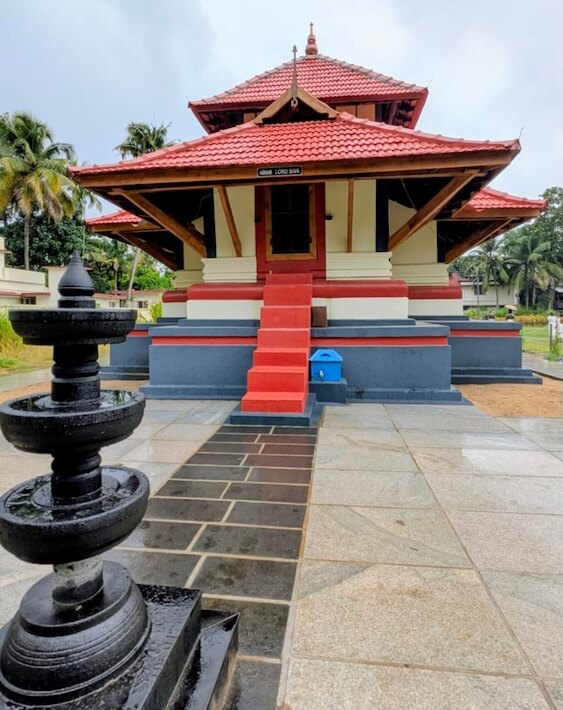 The administration of the temple later came under the control of the Padinjattedathu Swarupam, the royal family of Kodungallur and in modern times it came under the Cochin Devaswom Board.
According to legend, a beautiful idol prepared for installation during the construction of the temple was taken to the nearby Periyar River for the Jaladhivasa ritual before the installation. Unexpected heavy rain and strong currents swept the idol away. As the time for the installation approached and the idol could not be found, the chief Tantri, Thamarassery Namboothiri, meditated and entered the river. It is said that, guided by divine intuition, he searched at a particular spot and recovered the idol. While Krishna is worshipped in the form of Bala Krishna or as a single deity in many temples in Kerala, the main deity here is Krishna accompanied by his wife Rukmini. The idol is associated with the form of Krishna after his marriage to Rukmini and devotees believe that prayers here can help remove obstacles to marriage and bring a suitable marriage and marital happiness.
It is believed that this is the place where the Chera king Kulasekhara Alvar, a devotee of Lord Vishnu, received a direct vision of the deity.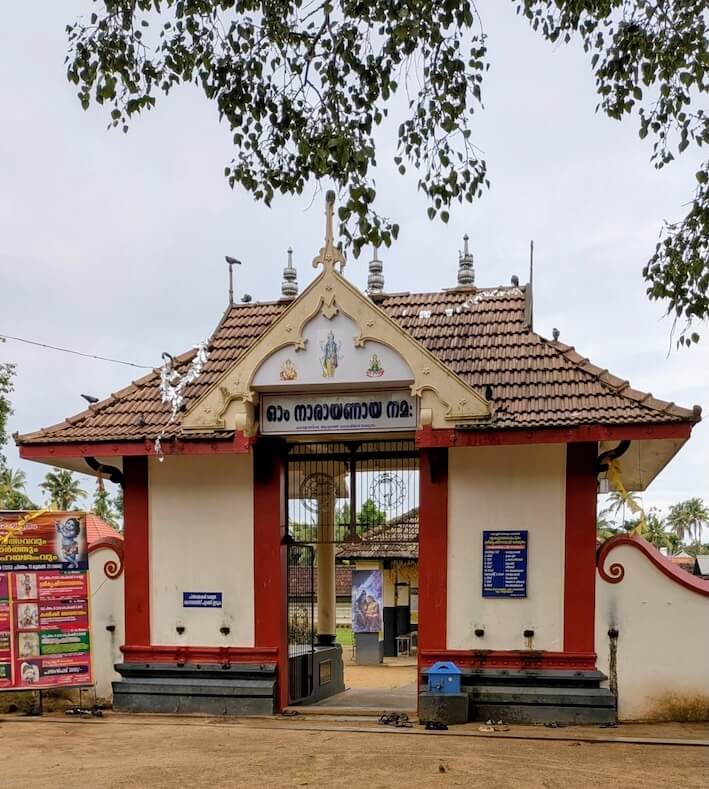 Inspired by this experience, he is said to have composed the famous devotional work Mukundamala here and built the temple in memory of the divine vision. Separate sub-temples are dedicated to Vasudeva, the birth father of Krishna and Nandagopa, his foster father. Another belief is that both fathers remain present here in an unseen form to witness Krishna living in royal splendour.
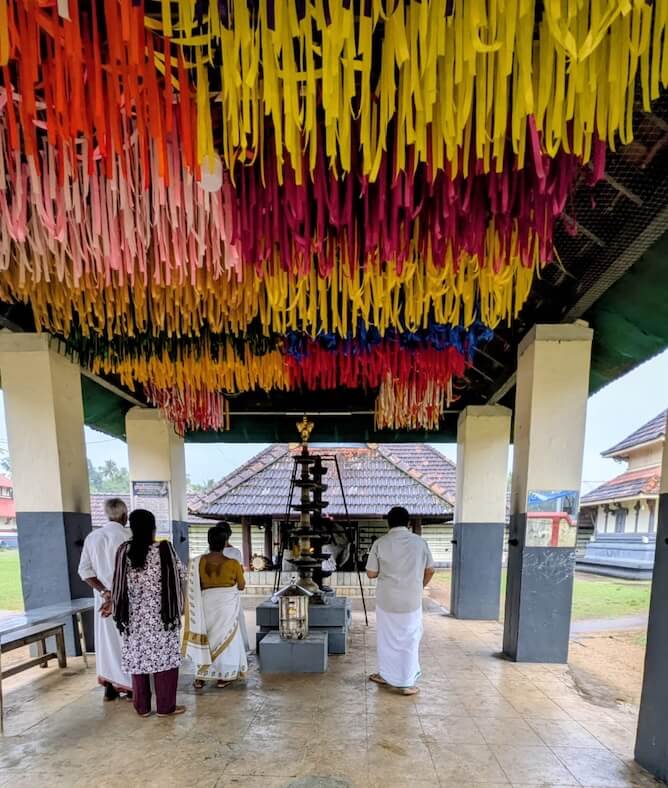
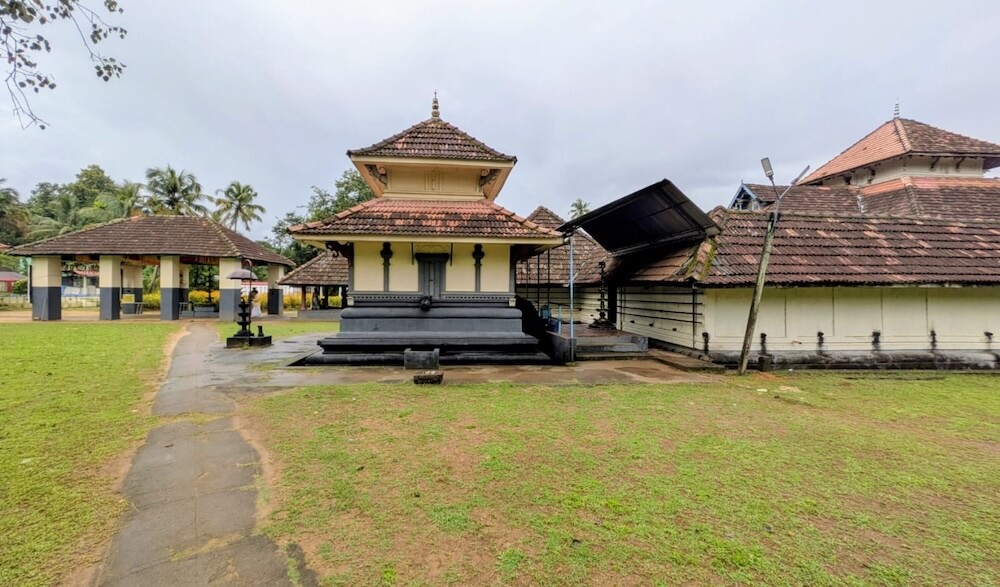
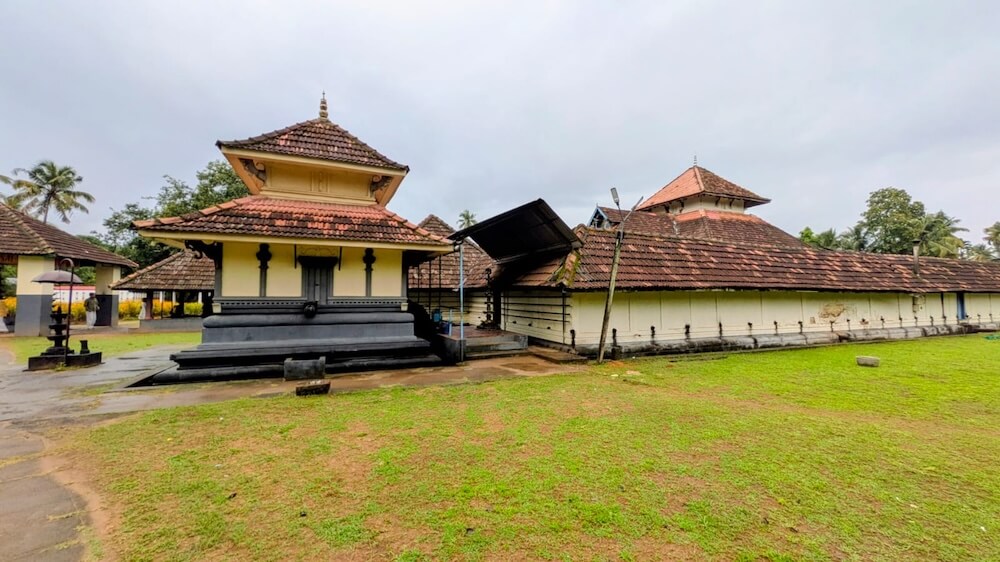
The temple is located at the centre of Thrikkulasekharapuram desam and stands within a compound covering about four acres. It faces east. As visitors approach the temple, the old banyan trees along the roadside are among the first features to be noticed. Beyond them, the main entrance has a large elephant shelter and a traditional Kerala-style padippura. A tall laterite compound wall surrounds the temple complex. The simple but imposing gateway tower can be seen from the road. Inside the entrance are a deepasthambam and a large balikkallu. The remains of a traditional Koothambalam, once used for temple arts, can also be seen here. Inside the Nalambalam, wooden lamp stands are arranged along the outer walls of the main temple structure. A square Namaskara Mandapam stands directly in front of the Sreekovil, with traditional woodwork and carvings on its pillars and roof.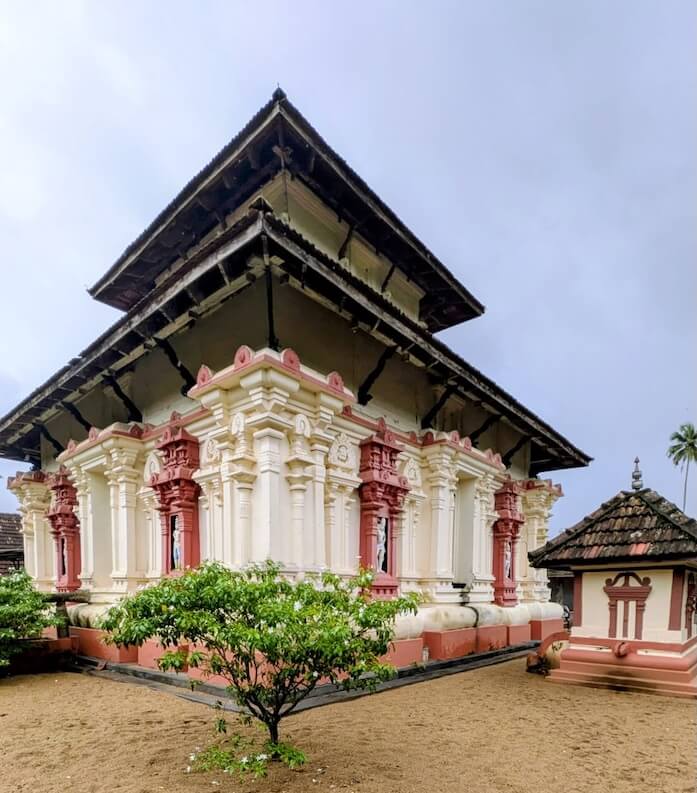
The main Sreekovil is a two-storeyed square structure. Its base and walls are made of granite and dressed stone. The roofs of both levels are covered with copper sheets, with a golden finial at the top. A Namaskara Mandapam stands in front of the Sreekovil, along with a Mukha Mandapam made of wood and granite. The walls of the Sreekovil have old carvings that reflect features of 8th-century Chera architecture. Another notable feature is the way the presence and concepts associated with Vasudeva and Nandagopa, the fathers of Krishna, are incorporated into the architecture around the Sreekovil and Antarala. The main deity is a four-armed standing form of Mahavishnu holding the conch, discus, mace and lotus. Although the idol is in the form of Mahavishnu, devotees worship the deity Gopala Krishna, Unni Krishna and Parthasarathi.
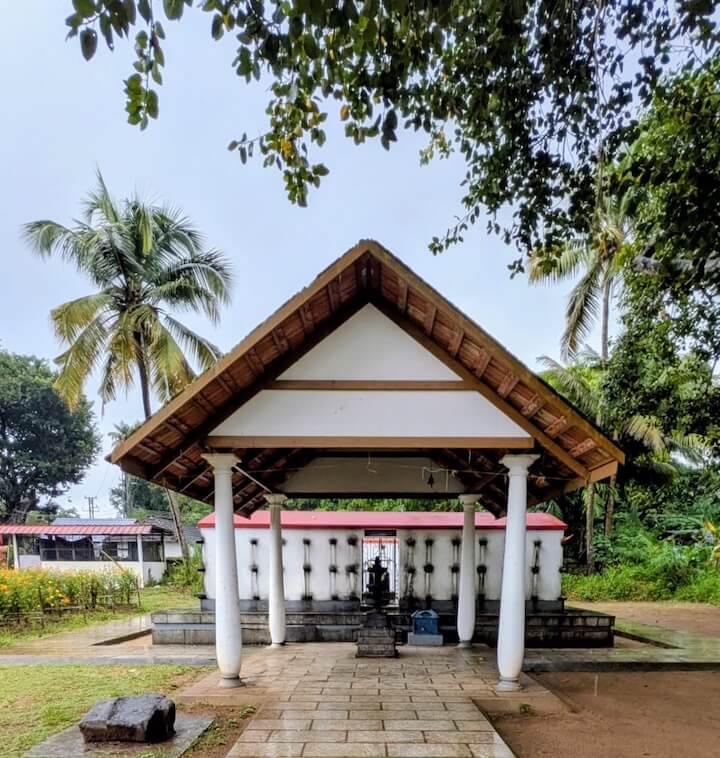
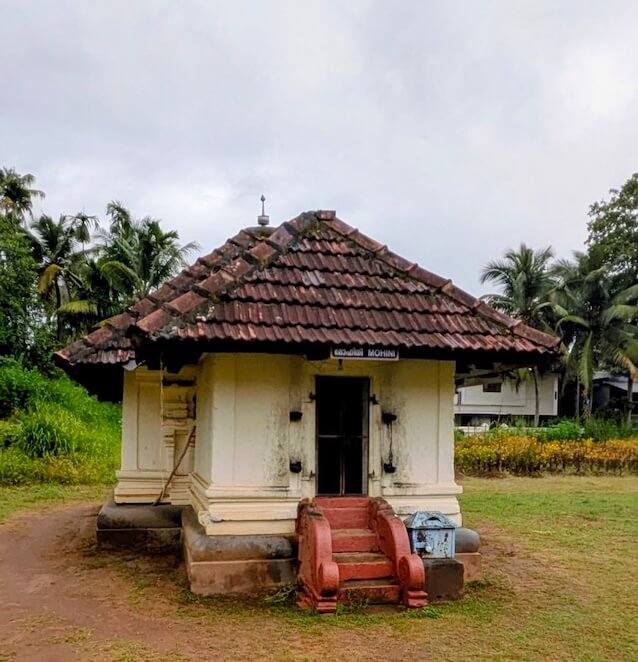
Vasudeva and Nandagopa, the fathers of Krishna, have special places within the temple. Vasudeva is worshipped in a separate Sreekovil to the north of the main Sreekovil, while Nandagopa is installed in a sub-Sreekovil to the south. 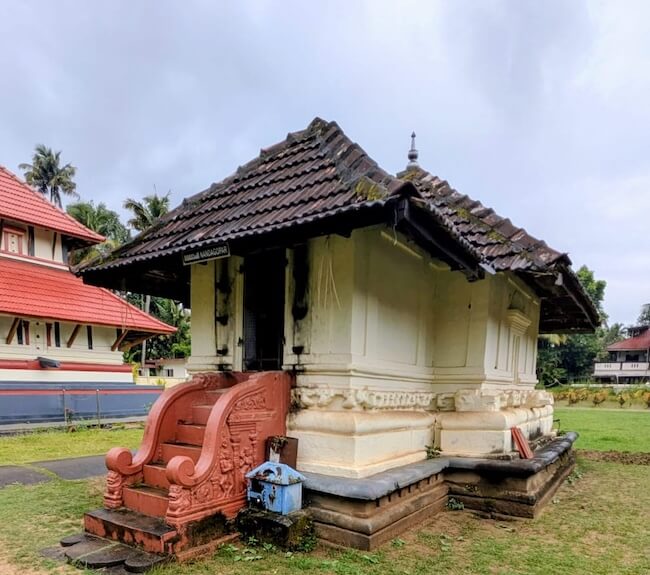 Inside the Nalambalam, Ganapathy faces east in the south-west corner, while Shiva in the form of Dakshinamurthy faces south near the southern entrance and Mahalakshmi is worshipped in the north-west section. On the northern side of the temple compound are shrines for Krishna as Parthasarathi and Krishna holding Govardhana Hill. A separate Sreekovil for Ayyappa is located in the south-west section, while Hanuman is worshipped at the western entrance and Mohini is worshipped near the northern entrance. Outside the Nalambalam, the Nagathara at the south-west corner has images of Naga Raja and Naga Yakshi.
The main festival of the temple is the eight-day annual festival that begins with the flag-hoisting on Vishu day in the month of Medam (April–May). During the festival, special poojas, Sree Bhoothabali, Utsavabali, traditional music performances, Deeparadhana and various cultural programmes are held, with the festival ending with the Aarattu on the final day. 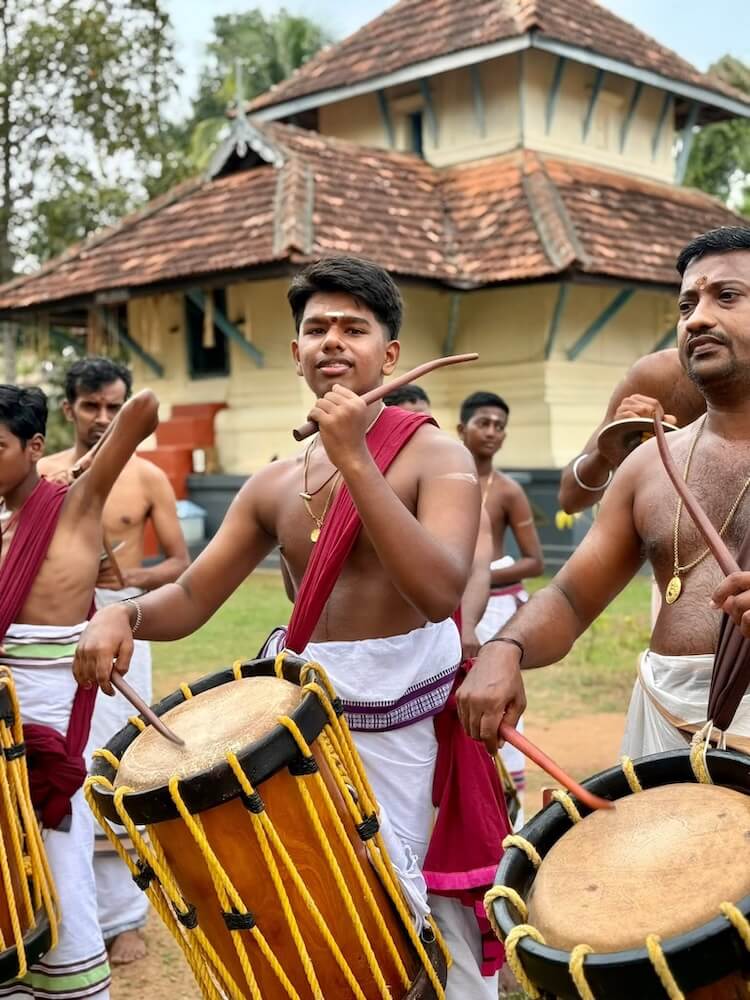 Ashtami Rohini or Sri Krishna Jayanti, in the month of Chingam (August–September) is another important celebration, marked by special Niramala, lighting of lamps and Mahaprasada Oottu. Vaikuntha Ekadashi in the month of Dhanu (December–January) is also an important observance. Vishukkani is arranged in the early morning of Medam 1, followed by Vishu Vilakku and the annual festival flag is also hoisted on the same day. During the Mandalam period, beginning on Vrischikam 1, special poojas, bhajans and Chuttuvilakku are held. Devotees visiting Kodungallur Bhagavathy Temple and Thiruvanchikulam Mahadeva Temple also commonly visit this temple.
The main offerings at the temple include Kalabhishekam, Chandanam Chaarthu, Muzhukkappu, Paalpayasam and butter offering. Kalabhishekam is performed for health, mental peace and fulfilment of wishes, while Chandanam Chaarthu is offered for prosperity and family well-being. Muzhukkappu is performed for protection of health and relief from doshas. Paalpayasam is offered for the well-being of children and family, while butter is offered for the health and growth of children. Archana to Vasudeva and Nandagopa is performed for family unity and the well-being of children. Ganapathy Homam and Appanivedyam are offered to Ganapathy for the removal of obstacles,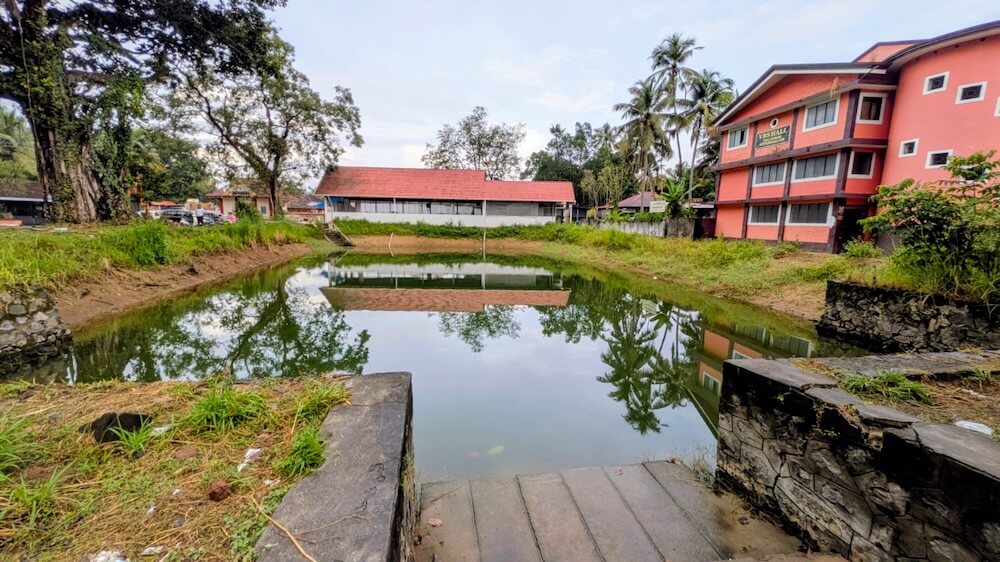 while a betel-leaf garland and butter offering are made to Hanuman for protection and courage. Noorum Palum and Sarpasukta Pushpanjali are offered to the Naga deities for relief from Sarpa Dosha and for family well-being.
The daily pooja begins at 05:00 AM with the opening of the temple and Nirmalya Darshan. At 05:30 AM, the deity is given an Abhishekam using oil, vakka powder and water, followed by Malar Nivedyam and Ushapooja at 06:00 AM. Ethrithapooja is performed at 07:00 AM, followed by Sreebali at 08:30 AM. The Uchapooja is held at 09:30 AM, after which the morning pooja is completed and the temple closes at 10:00 AM. In the evening, the temple reopens at 05:30 PM, followed by Deeparadhana at 06:30 PM. Athazhapooja is performed at 07:00 PM, followed by the night Sreebali at 07:15 PM and the temple closes at 07:30 PM. On festival days and special occasions such as Ashtami Rohini, Vaikuntha Ekadashi and Vishu, the pooja timings may change and the temple may remain open later in the morning.
Key highlight :-
- Located 12 km from North Paravur, 16 km from Irinjalakkuda and 40 km from Guruvayur.
- 22 km from Irinjalakkuda railway station.
- KSRTC and local bus facilities are available to the temple.
- Private vehicles can be parked in the temple’s parking area.
- Accommodation and food facilities are available near the temple.
- Contact number +91 9846744826, +91 8893999000.
त्रिकुलशेखरपुरम श्री कृष्ण स्वामी मंदिर
कीथोली, कोडुंगल्लूर, जिला। त्रिशूर.
मंदिरे
Temples
मंदिर
મંદિરો
கோவில்கள்
దేవాలయాలు
ക്ഷേത്രങ്ങൾ
ದೇವಾಲಯಗಳು
মন্দিরসমূহ
ਮੰਦਿਰ
-
श्री कन्नमपुझा भगवती मंदिर चालकुडी, जि. त्रिशूर.
अधिक माहितीSree Kannampuzha Bhagavathy Temple Chalakudy, Dist. Thrissur.
View Detailsश्री कन्नमपुझा भगवती मंदिर चलाकुडी, जिला. त्रिशूर.
विवरण देखेंSree Kannampuzha Bhagavathy Temple Chalakudy, Dist. Thrissur.
વિગત જુઓSree Kannampuzha Bhagavathy Temple Chalakudy, Dist. Thrissur.
விவரங்களைக் காண்கSree Kannampuzha Bhagavathy Temple Chalakudy, Dist. Thrissur.
వివరాలను చూడండిSree Kannampuzha Bhagavathy Temple Chalakudy, Dist. Thrissur.
വിശദാംശങ്ങൾ കാണുകSree Kannampuzha Bhagavathy Temple Chalakudy, Dist. Thrissur.
ವಿವರಗಳನ್ನು ವೀಕ್ಷಿಸಿSree Kannampuzha Bhagavathy Temple Chalakudy, Dist. Thrissur.
বিস্তারিত দেখুনSree Kannampuzha Bhagavathy Temple Chalakudy, Dist. Thrissur.
ਵੇਰਵੇ ਦੇਖੋ -
उदयमंगलम शिव मंदिर केथोली, कोडुंगल्लूर, त्रिशूर जिल्हा.
अधिक माहितीUdayamangalam Shiva Temple Keetholi, Kodungallur, Dist. Thrissur.
View Detailsउदयमंगलम शिव मंदिर कीथोली, कोडुंगल्लूर, त्रिशूर जिला।
विवरण देखेंUdayamangalam Shiva Temple Keetholi, Kodungallur, Dist. Thrissur.
વિગત જુઓUdayamangalam Shiva Temple Keetholi, Kodungallur, Dist. Thrissur.
விவரங்களைக் காண்கUdayamangalam Shiva Temple Keetholi, Kodungallur, Dist. Thrissur.
వివరాలను చూడండిUdayamangalam Shiva Temple Keetholi, Kodungallur, Dist. Thrissur.
വിശദാംശങ്ങൾ കാണുകUdayamangalam Shiva Temple Keetholi, Kodungallur, Dist. Thrissur.
ವಿವರಗಳನ್ನು ವೀಕ್ಷಿಸಿUdayamangalam Shiva Temple Keetholi, Kodungallur, Dist. Thrissur.
বিস্তারিত দেখুনUdayamangalam Shiva Temple Keetholi, Kodungallur, Dist. Thrissur.
ਵੇਰਵੇ ਦੇਖੋ -
श्री श्रीनिवास पेरुमल कुलशेघरा अलवर मंदिर त्रिकुलशेकरापुरम, कोडुंगल्लूर, जि. त्रिशूर.
अधिक माहितीSri Srinivasa Perumal Kulasheghara Alwar Temple Thrikulashekarapuram, Kodungallur, Dist. Thrissur.
View Detailsश्री श्रीनिवास पेरुमल कुलशेघरा अलवर मंदिर त्रिकुलशेखरपुरम, कोडुंगल्लूर, जिला। त्रिशूर.
विवरण देखेंSri Srinivasa Perumal Kulasheghara Alwar Temple Thrikulashekarapuram, Kodungallur, Dist. Thrissur.
વિગત જુઓSri Srinivasa Perumal Kulasheghara Alwar Temple Thrikulashekarapuram, Kodungallur, Dist. Thrissur.
விவரங்களைக் காண்கSri Srinivasa Perumal Kulasheghara Alwar Temple Thrikulashekarapuram, Kodungallur, Dist. Thrissur.
వివరాలను చూడండిSri Srinivasa Perumal Kulasheghara Alwar Temple Thrikulashekarapuram, Kodungallur, Dist. Thrissur.
വിശദാംശങ്ങൾ കാണുകSri Srinivasa Perumal Kulasheghara Alwar Temple Thrikulashekarapuram, Kodungallur, Dist. Thrissur.
ವಿವರಗಳನ್ನು ವೀಕ್ಷಿಸಿSri Srinivasa Perumal Kulasheghara Alwar Temple Thrikulashekarapuram, Kodungallur, Dist. Thrissur.
বিস্তারিত দেখুনSri Srinivasa Perumal Kulasheghara Alwar Temple Thrikulashekarapuram, Kodungallur, Dist. Thrissur.
ਵੇਰਵੇ ਦੇਖੋ