त्रिक्काकर वामनमूर्ती मंदिर
त्रिक्काकारा, जि. एर्नाकुलम.
Thrikkakara Vamanamoorthy Temple
Thrikkakara, Dist. Ernakulam.
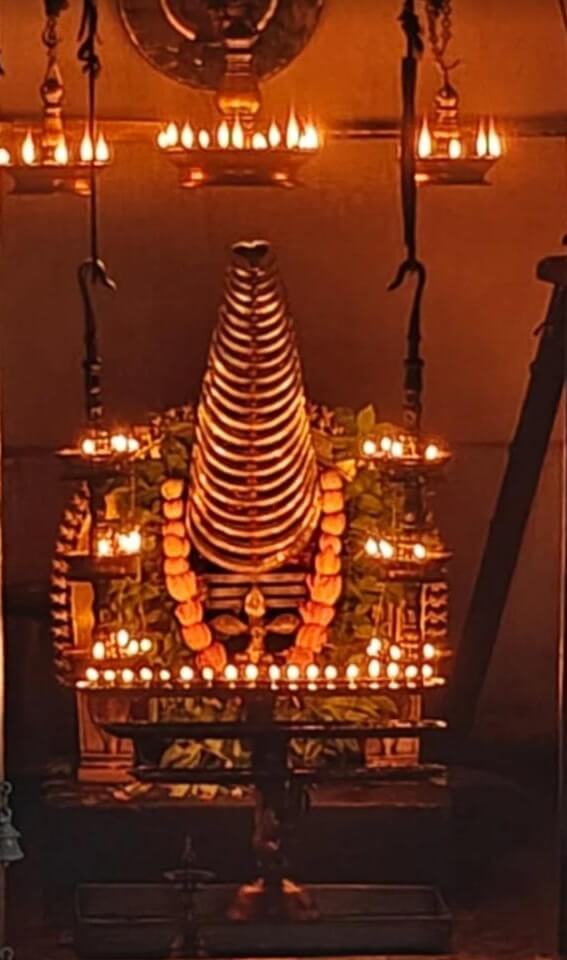 Thrikkakara Vamana Moorthy Temple, located at Thrikkakara in Kochi, Ernakulam district, is one of the very few temples in India where Lord Vamana, the fifth incarnation of Lord Mahavishnu, is the main consecration concept. The temple is managed by the Travancore Devaswom Board. Although the main idol is the four-armed form of Lord Mahavishnu, the temple is renowned for its Vamana concept. Lord Shiva is also worshipped here with equal importance in a separate shrine. The temple is traditionally believed to be the birthplace of Onam, Kerala’s national festival and is also recognised as one of the 108 Divya Desams, the sacred temples revered by Vaishnavites.
The Temple has a deep historical connection with Onam, the national festival of Kerala. According to tradition, during the reign of Cheraman Perumal, who ruled from Mahodayapuram, the Chingam festival celebrated at the Temple was ordered to be observed in all Hindu households, leading to the widespread celebration of Onam across Kerala. The Temple’s stone inscriptions and historical records highlight the antiquity of Onam and its cultural and social importance. In earlier times, the Temple festival lasted for 28 days, from Thiruvonam in the Malayalam month of Karkidakam to Thiruvonam in Chingam. Over time, it was reduced to the present ten-day Onam celebration, beginning on Atham and ending on Thiruvonam. The Temple’s antiquity is further reflected in the hymns of the 8th-century Vaishnavite saint-poet Nammalvar, who praised both the Temple and its presiding deity in the Divya Prabandham.
After the 12th century, the Temple gradually declined due to political instability and administrative changes. 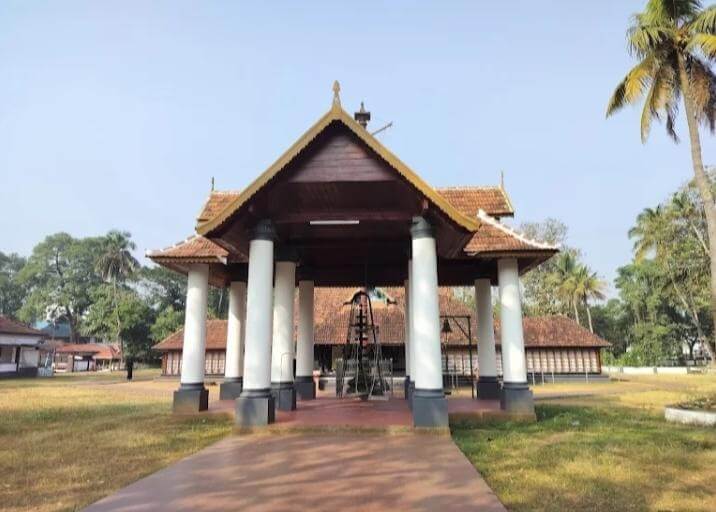 In 1921, it was renovated and reconsecrated under the leadership of Sree Moolam Thirunal Rama Varma, the Maharaja of Travancore. The Temple later came under royal administration and has been managed by the Travancore Devaswom Board since 1949. Around eighteen stone inscriptions, dating from the 10th to the 12th centuries and written in the ancient Vattezhuthu script, have been discovered at the Temple. These inscriptions provide valuable information about the administration of the period, the management of the Temple, and the taxes granted by the rulers for the celebration of Onam. When Onam was officially recognised as the state festival of Kerala in 1961, the Temple once again became a major centre of pilgrimage. Even today, it remains one of the principal venues for Onam celebrations and stands as a living symbol of Kerala’s cultural heritage and Onam tradition.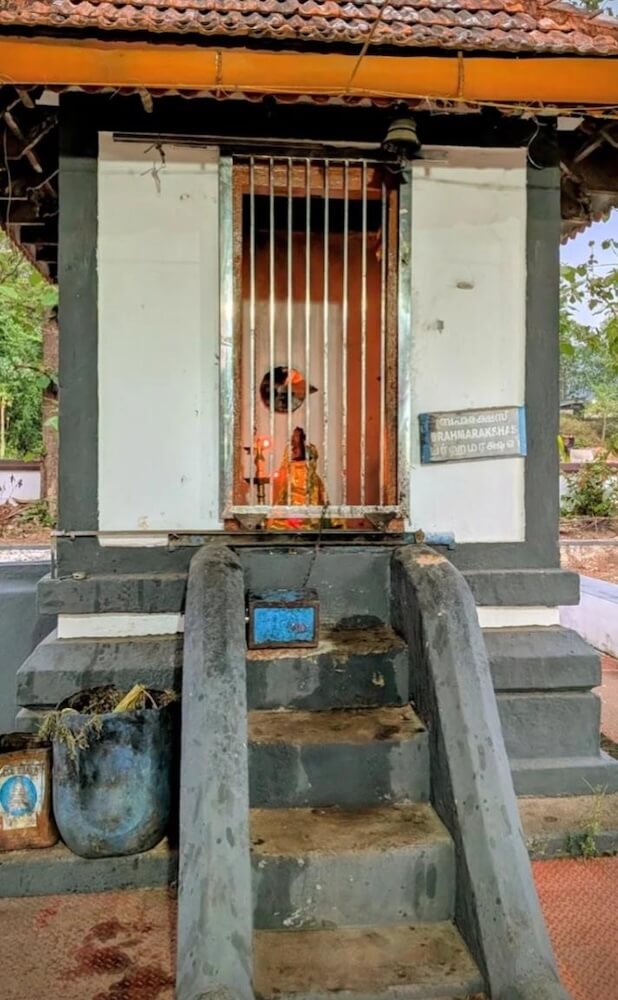
According to legend, the origin of the Temple is closely associated with the Vamana incarnation of Lord Mahavishnu. It is believed that Lord Vamana appeared at the sacrificial hall of Mahabali, the grandson of the devotee Prahlada and asked for three paces of land. After assuming his cosmic form, the place where the Lord’s sacred foot touched the earth came to be known as “Thirukkalkara”, from which the present name “Thrikkakara” is believed to have been derived. After blessing Mahabali as the ruler of Sutala, the Lord granted him permission to visit his subjects every year on Thiruvonam during the Malayalam month of Chingam. Legend also says that Sage Kapila later performed intense penance at this sacred place and Lord Mahavishnu, pleased with his devotion, chose to remain here permanently. The Temple is also associated with legends connected to Sage Parasurama.
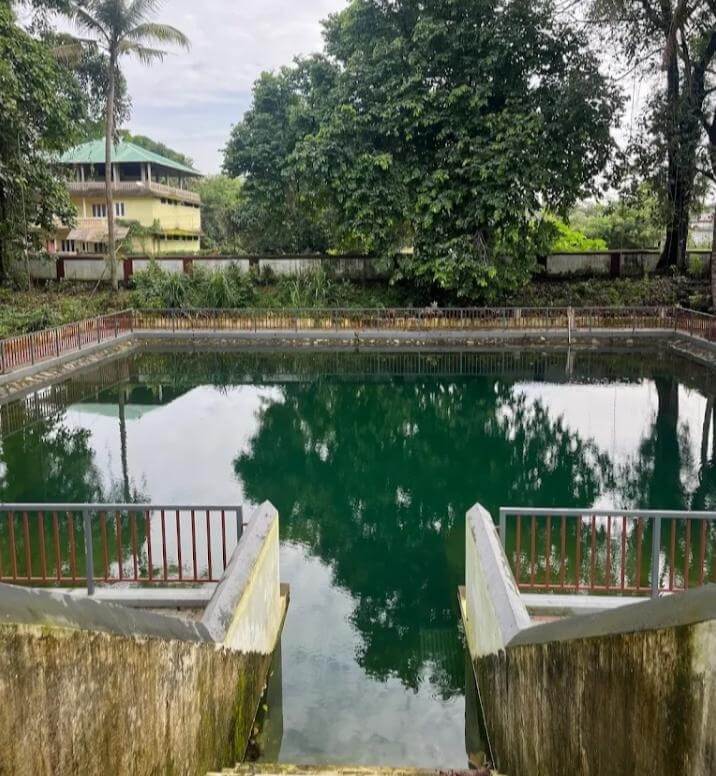
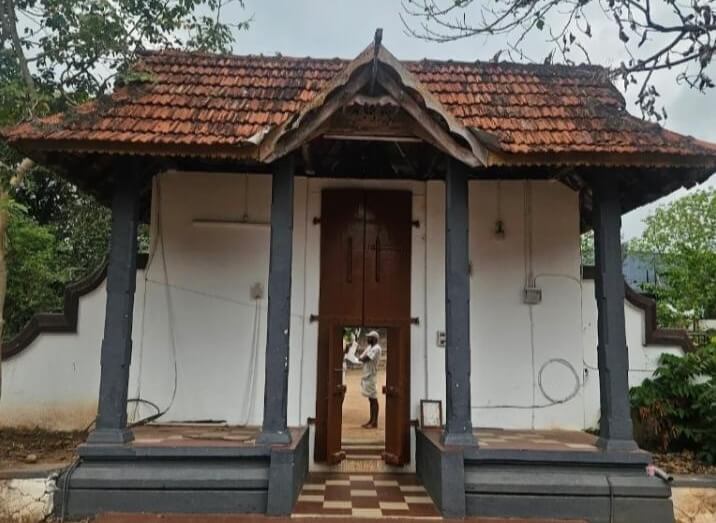
Spread across more than eight acres, the Temple is a fine example of traditional Kerala temple architecture. The eastern entrance features an elegant two-storeyed gateway with wooden panels and a sloping tiled roof. Beyond the entrance are a spacious elephant shelter and a tall metal lamp pillar. The temple complex is enclosed by strong laterite and granite walls and two large temple ponds are situated on the northern side. Of these, Kapila Theertham, located beside the main sanctum, is reserved for the temple priests. Surrounding the main sanctum is the Nalambalam, whose walls are lined with rows of traditional oil lamps. When these lamps are lit during festivals, they create a beautiful and serene atmosphere throughout the Temple.
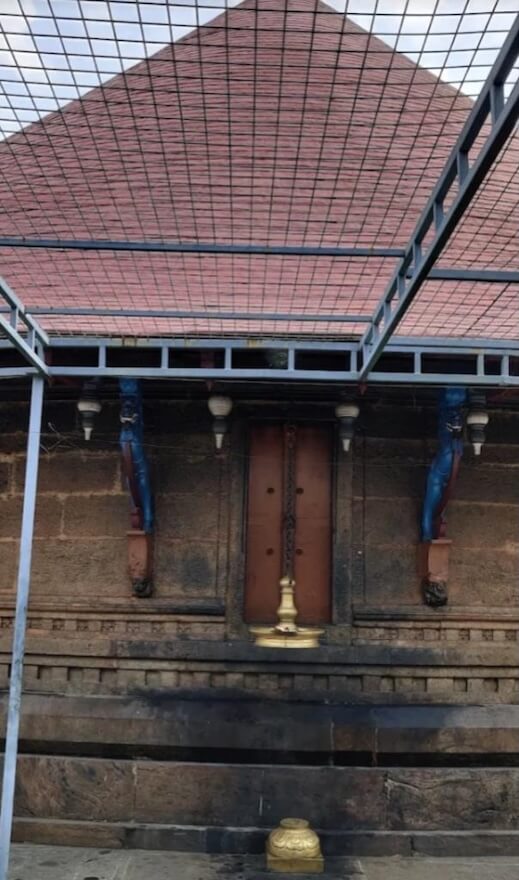
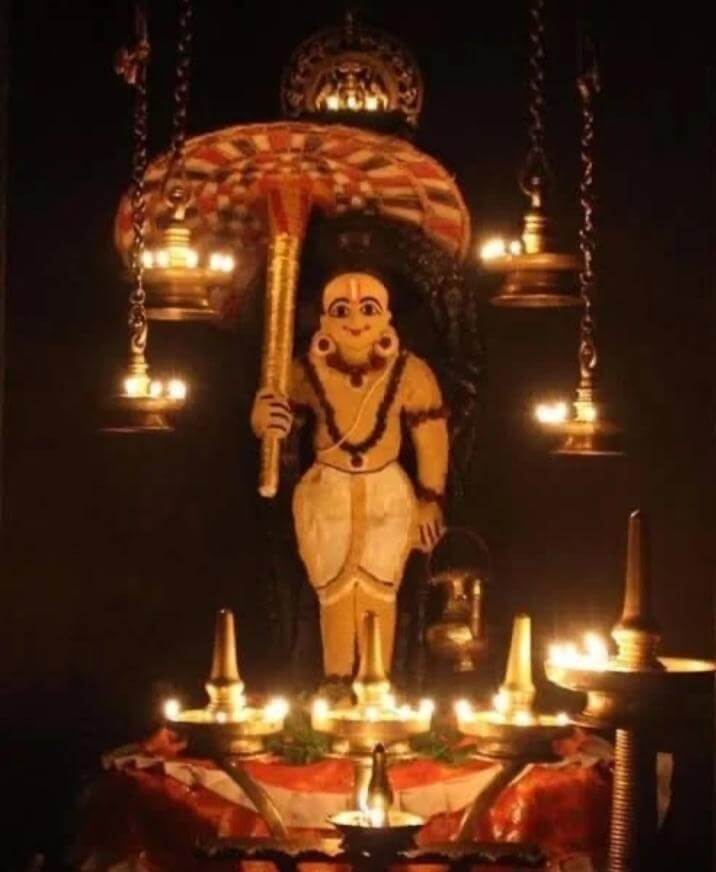
T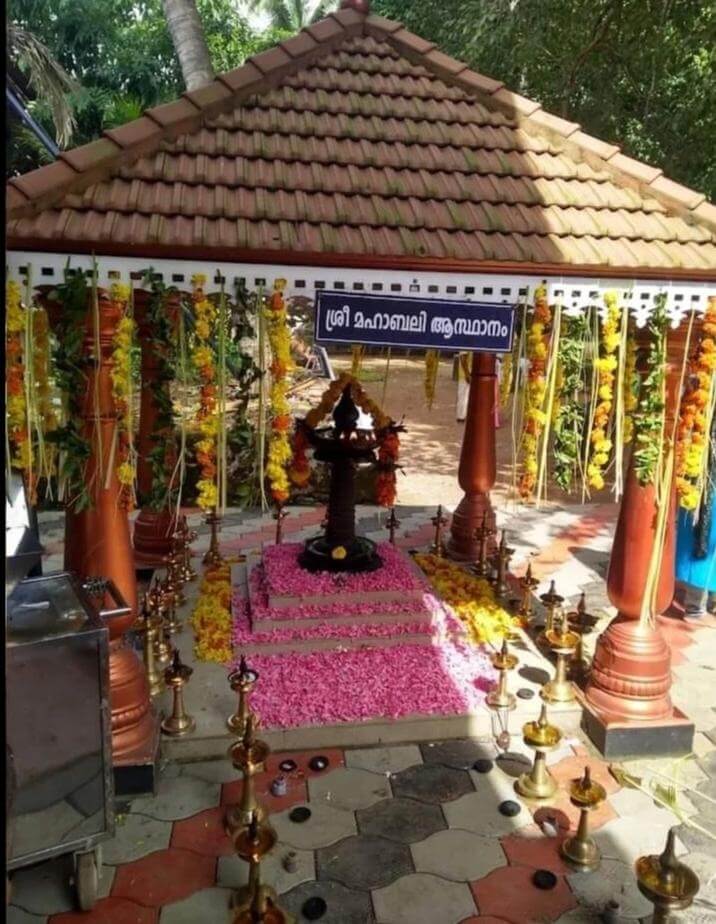 he most distinctive architectural feature of the Temple is its circular main sanctum (Sreekovil). Built of granite and laterite stone, the sanctum is topped with a conical roof covered with copper sheets. In front of the sanctum stands a beautiful Namaskara Mandapam, an open hall supported by wooden pillars. Although the main idol is the four-armed form of Lord Mahavishnu, the deity is worshipped in the rare form of Lord Vamana, with one foot raised to place the third step on Mahabali’s head. To the south of the main sanctum is a separate shrine dedicated to Lord Shiva, who is traditionally believed to have been worshipped by Mahabali. Within the Nalambalam are shrines dedicated to Goddess Bhagavathi and Lord Dharma Sastha, while a shrine of Lord Gopalakrishna is situated near the northern entrance. The Temple also has dedicated shrines for the Naga deities, Rakshas and Yakshi.
The most important festival of the Temple is the Thrikkakara Thiruvonam Mahotsavam, which is regarded as the focal point of Onam celebrations in Kerala. Celebrated during the Malayalam month of Chingam (August–September), the ten-day festival begins with the ceremonial flag hoisting on Atham and concludes with the Aarattu ceremony on Thiruvonam, attracting thousands of devotees. 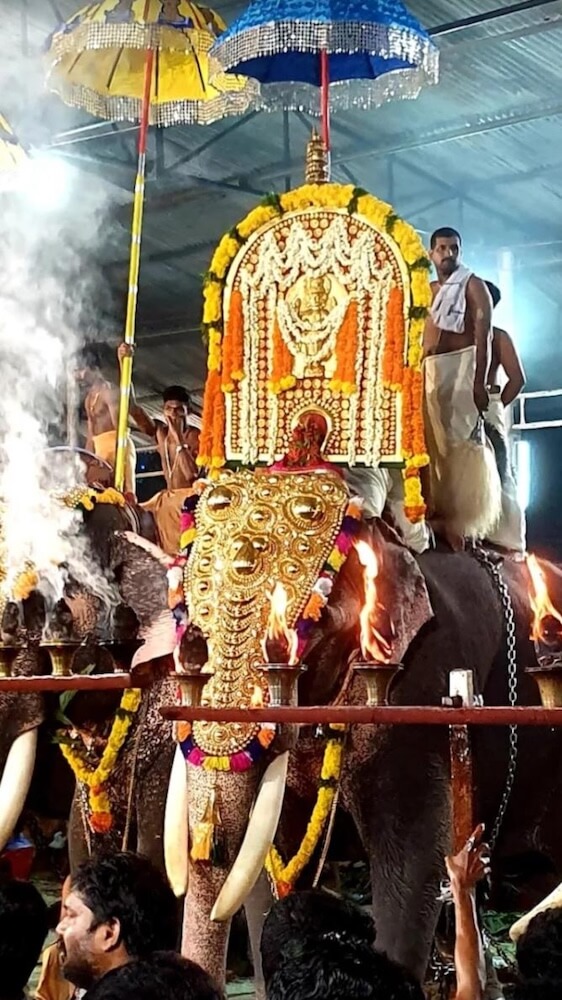 One of the main rituals is the Dashavatara Charthu, during which the main deity is decorated with sandalwood paste in the forms of the ten incarnations of Lord Mahavishnu, with a different form each day. Other major attractions include the Pakal Pooram, grand elephant procession, Panchavadyam performances, cultural programmes and the traditional Onam feast served to thousands of devotees on Thiruvonam, irrespective of caste or religion. The Temple also celebrates other important occasions such as Vishu, Navaratri, Saraswathi Pooja, Maha Shivaratri, Makara Sankranti, Deepavali and Ayilyam, when special rituals are conducted for the Naga deities.
Among the main offerings, Poovada Nivedyam is the most popular. It is prepared using rice flour, jaggery, coconut and ripe bananas and is offered to the Lord by devotees seeking prosperity and family well-being. Dashavatara Charthu, performed during the Onam festival, is a special offering made for long life and prosperity. Other important offerings include Chathussatham, Palpayasam and Neypayasam, which are offered to seek the blessings of the Lord and peace of mind. Thulabharam is another popular offering performed in fulfilment of vows and for the fulfilment of wishes. At the shrine of Thekkumkara Thevar (Lord Shiva), Dhara and Shankhabhishekam are performed for good health and relief from hardships, while Koovalam Mala and Pinvilakku are offered to seek the grace of Lord Shiva. Devotees also offer Lalitha Sahasranama Archana and Kadumpayasam to Goddess Bhagavathi, Neyyabhishekam and Ellu Vilakku to Lord Dharma Sastha and Nagaroottu and the offering of turmeric and milk to the Naga deities for blessings, relief from difficulties and the removal of Sarpa Dosha.
The Temple opens daily at 05:00 AM with Nirmalya Darshan. This is followed by Usha Pooja at 06:00 AM, Ethirettu Pooja and Seeveli at 07:00 AM, Pantheeradi Pooja at 08:00 AM, Ucha Pooja at 11:00 AM and Ucha Seeveli at 11:15 AM. The Temple closes at 11:30 AM. It reopens at 05:00 PM, followed by Deeparadhana at 06:30 PM, Athazha Pooja at 07:30 PM and Night Seeveli at 08:00 PM. After Thrippuka, the Temple closes at 08:30 PM. During the ten-day Onam festival in the Malayalam month of Chingam, the timings for darshan and rituals may vary depending on the number of devotees. Traditional Kerala attire is compulsory inside the Temple. Men must wear a mundu and remove their shirts before entering the Nalambalam, while women are expected to wear modest Indian attire such as a saree, churidar, or half-saree.
Key highlight :-
- Located about 4 km from Kakkanad, 11 km from Aluva and 12 km from Ernakulam town.
- The nearest railway stations are Aluva Railway Station, about 11 km away and Ernakulam Town
- Railway Station, about 12 km away.
- The nearest metro station is Cochin University Metro Station, about 3 km away.
- Local bus services are available to the Temple from Ernakulam and Aluva.
- Private vehicles can be parked in the Temple’s parking area.
- Accommodation and food facilities are available near the Temple.
- Contact number + 91 484 2367334, + 91 9995216368.