
तिरुवलाथूर रांडू मूर्ती भगवती मंदिर
तिरुवलाथूर, कोडुंबू, जि. पलक्कड.
Thiruvalathur Randu Moorthy Bhagavathy Temple
Thiruvalathur, Kodumbu, Dist. Palakkad.
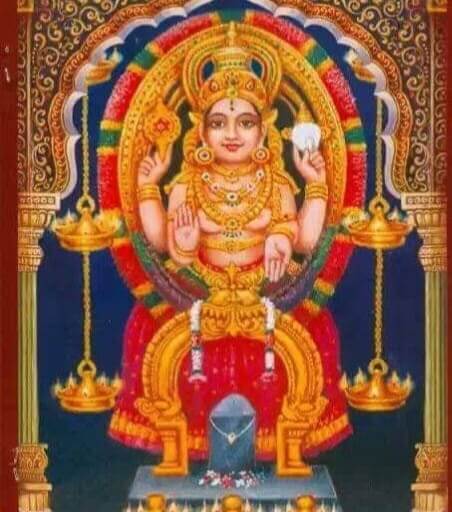 Thiruvalathur Sree Randumoorthi Bhagavathy Temple is situated on the banks of the Kannadipuzha (Shokanashini) River at Thiruvalathur village in Kodumbu Panchayat, near Palakkad town. It is regarded as one of the important temples among the 108 Durga temples of Kerala. The temple is noted for its traditional Kerala-style architecture and wooden carvings. The main deities of the temple are Goddess Mahishasuramardini and Goddess Annapoorneshwari. Navaratri is the principal annual festival celebrated at the temple.
Historians believe that the temple existed even before the time of Adi Shankaracharya and has a history of more than 1,200 years. Temple records mention that, following a fire, the temple was renovated by Sureshwaracharya Bharathi, a disciple of Adi Shankaracharya. One of the notable events in the temple’s modern history was the visit of Mahatma Gandhi on 10 January 1934 during his tour of Kerala to raise funds for the Harijan Fund. During his visit, he met members of the Harijan community near the temple and spoke about their welfare and social progress as part of his campaign against untouchability and caste discrimination. 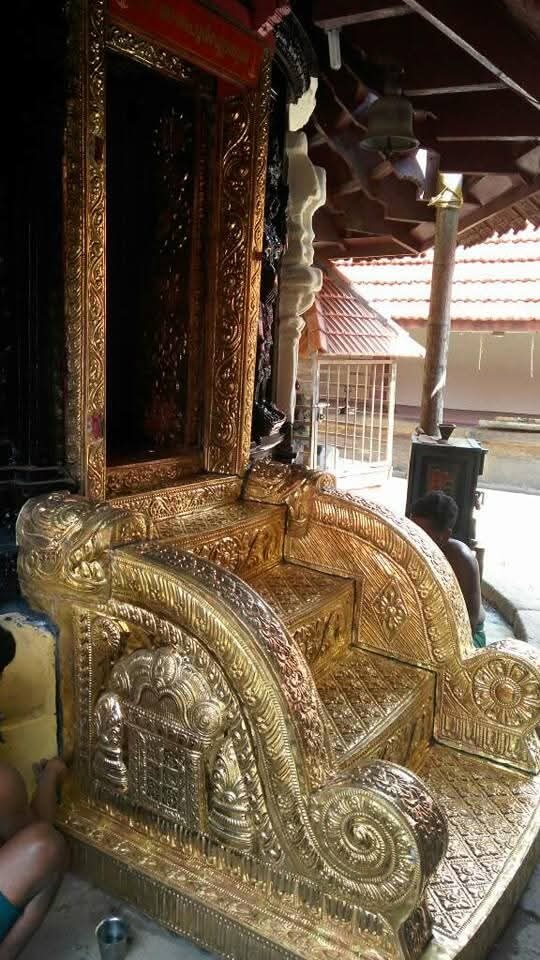 On the same day, he also addressed a public meeting at a nearby school. In earlier times, the temple was administered by the Naduvil Madham. Today, the temple is directly administered by the Malabar Devaswom Board. The day-to-day administration of the temple is managed by trustees and an Executive Officer appointed by the Board.
One of the main legends associated with Thiruvalathur Sree Randumoorthi Bhagavathy Temple is about the massive granite outer wall, known as the Aanappalla Mathil and the eastern gopuram. According to local belief, the gods and the Bhoothaganas began building the outer wall and the gopuram in a single night without being seen by humans. While the work was in progress, a rooster crowed before dawn. Believing that daybreak had arrived and fearing that humans would see them, the Bhoothaganas left the work unfinished and disappeared. It is believed that the unfinished base of the eastern gopuram, which still remains today, stands as evidence of this legend. Another local belief says that several kings and craftsmen later attempted to complete the structure, but none of them succeeded.
There are also several traditional beliefs associated with the temple’s deities. According to local belief, the idol of Goddess Annapoorneshwari at Keezhekkavu is Swayambhu (self-manifested) and was not carved by human hands. The idol of Goddess Mahishasuramardini at Melekkavu, enshrined in the northern sanctum, is a wooden idol about seven feet tall with eight arms. It is believed to have been carved from the wood of the Varukappilavu tree, a special variety of jackfruit tree. According to legend, the fierce form of the Goddess was so powerful at the time of the consecration that even the waters of the Shokanashini River flowing in front of the temple began to boil. It is also believed that Goddess Annapoorneshwari, 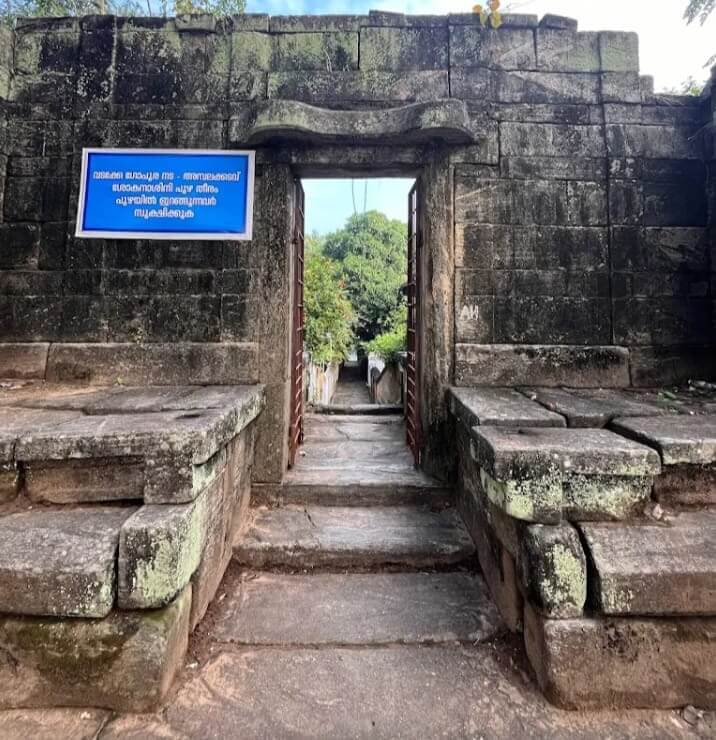 who represents the calm and peaceful form of the Divine Mother, was consecrated nearby to pacify the fierce form of Mahishasuramardini.
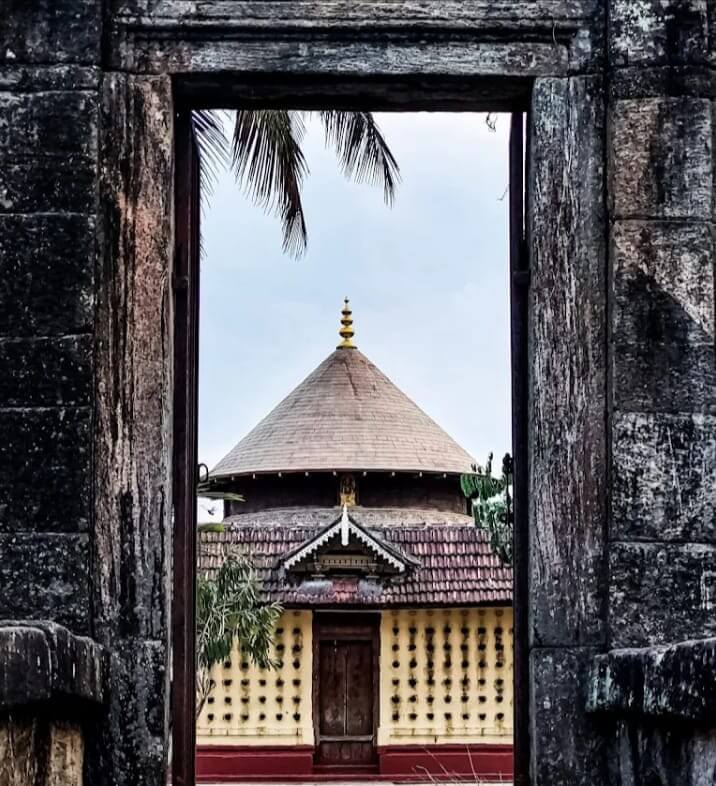
The temple complex extends over an area of more than two hectares. On the south-western side of the temple are vast paddy fields, while the Kannadipuzha (Shokanashini) River flows peacefully beside the temple. Near the western entrance is a large temple pond. Beside the pond is an open platform with a Shiva Linga-like idol of Anthimahakalan. Between the pond and the main outer wall stand ten large traditional granaries that were once used to store paddy. Further ahead is the massive Aanappalla Mathil (outer wall), built without the use of cement or concrete by carefully placing huge granite blocks weighing about two to five tonnes in the shape of an elephant’s belly. At the eastern entrance, the unfinished base of a large gopuram can still be seen. As you enter the temple courtyard, two large flagpoles of equal height stand prominently. Inside the temple complex are two large Nalambalams, each built for one of the two main deities,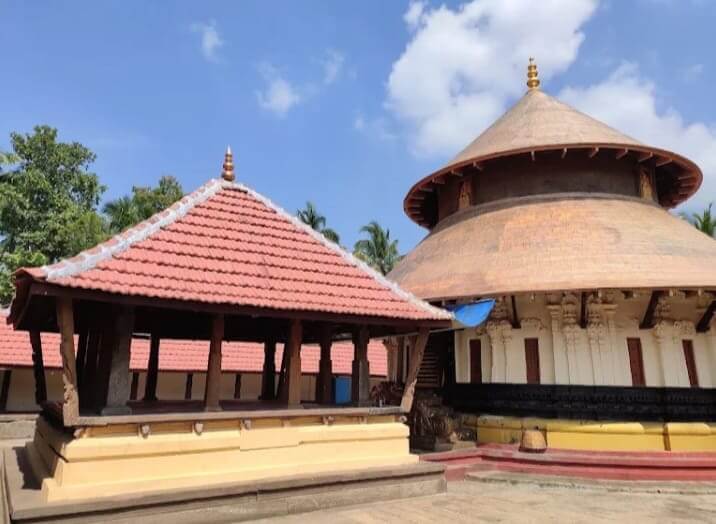 along with their associated temple structures.
One of the unique features of the temple is that it has two main sanctums of equal importance within the same temple complex. The northern sanctum is circular in shape, while the southern sanctum is square. Both sanctums are built in the traditional Kerala style using granite and wood. The deity in the northern sanctum faces west, while the deity in the southern sanctum faces east. The northern sanctum houses a wooden idol of Goddess Mahishasuramardini, carved from the wood of the Varukappilavu tree. The idol is about seven feet tall and has eight arms. The southern sanctum houses the Swayambhu (self-manifested) idol of Goddess Annapoorneshwari. In front of the northern sanctum is a tall Balikkal (sacrificial stone), built to match the height of the deity. 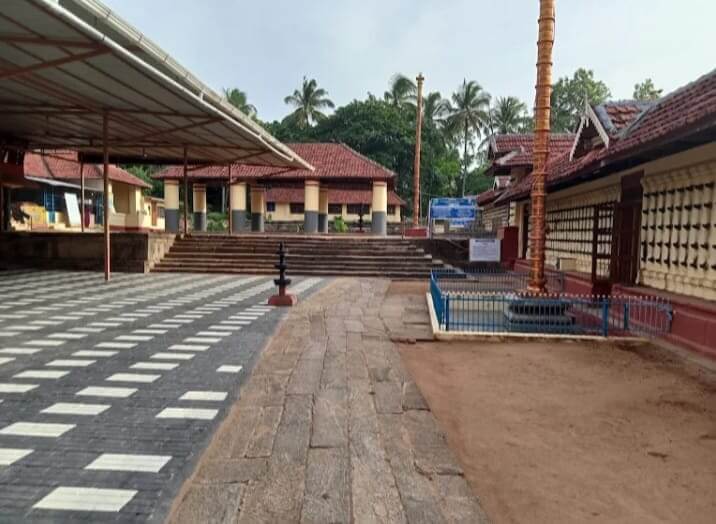 The sanctums have copper-sheeted roofs, while the granite walls and wooden structures are decorated with fine carvings and traditional craftsmanship.
In addition to the main sanctums, the temple complex also has shrines for other deities. Inside the northern Nalambalam, at the south-west corner of the main sanctum, is the east-facing shrine of Lord Ganesha. The shrine of Lord Dharma Sastha is situated at the south-west corner inside the southern Nalambalam. Outside the Nalambalam, on the south-west side, is the shrine of Lord Shiva in his Neelagriva form. Outside the temple wall, near the western entrance and the temple pond, is an open platform with the idol of Anthimahakalan. 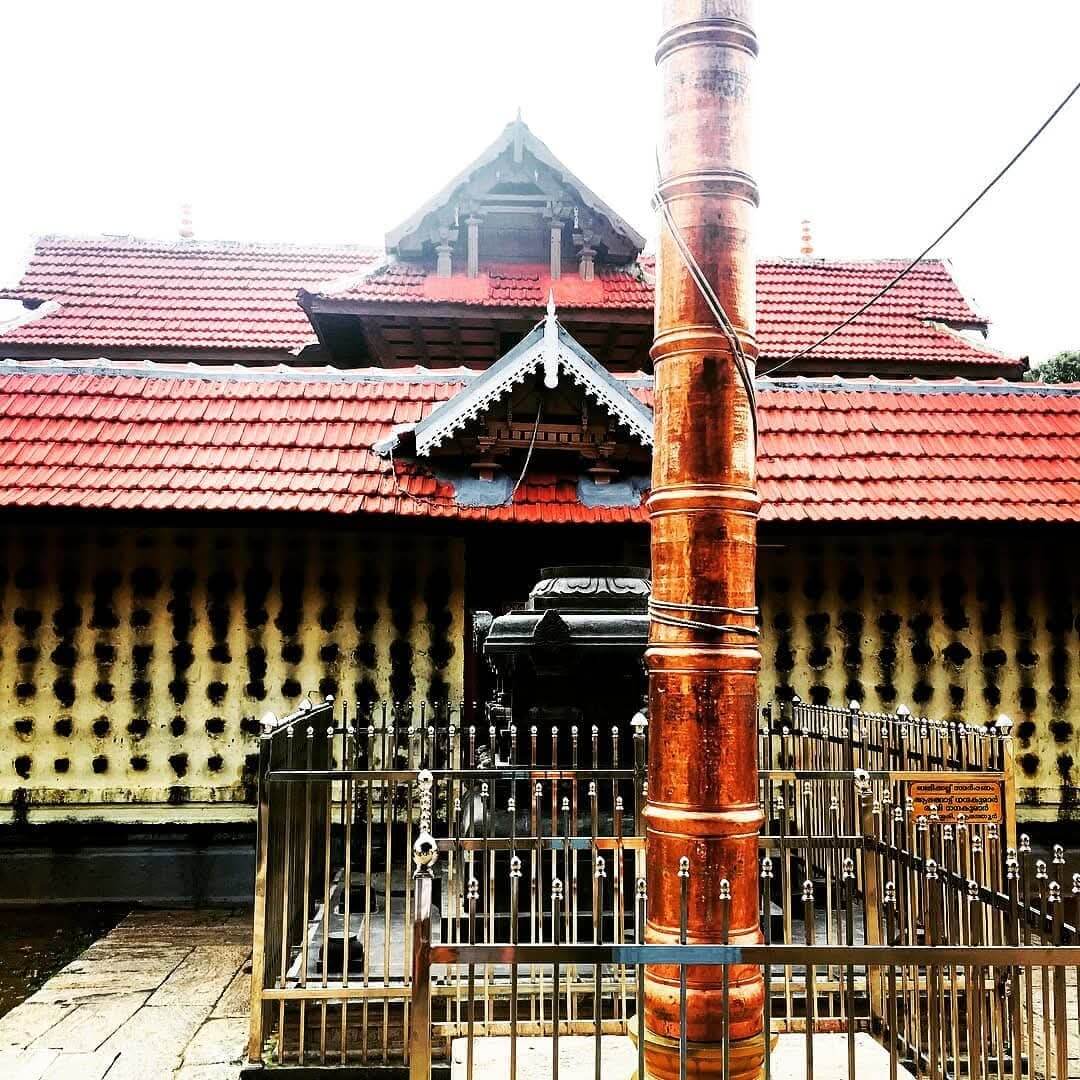 The sacred grove at the north-west corner of the temple complex houses the shrines of Nagaraja and Nagayakshi. The shrine of Kshetrapalakan is located at the north-east corner of the temple complex.
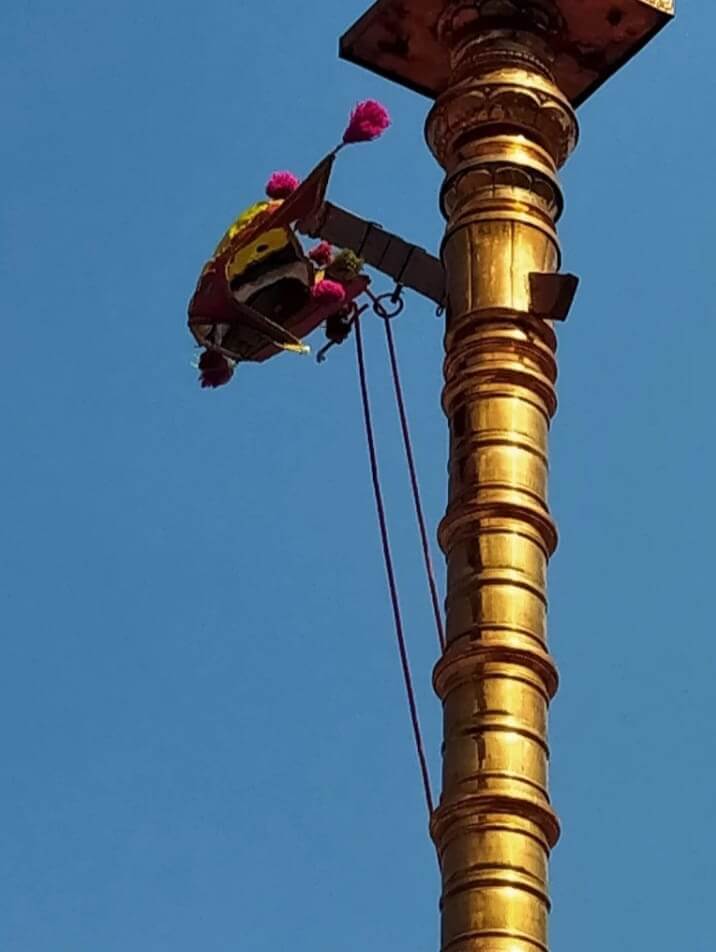
The main annual festival of the temple is the ten-day Thrikarthika Vilakku Mahotsavam, celebrated during the Malayalam month of Vrischikam (November–December) and concluding on the Karthika star. One of the main highlights of the festival is the Chuttuvilakku, during which thousands of stone lamps on the temple’s outer wall and tens of thousands of earthen lamps are lit. Special poojas, the ceremonial procession of the Goddess and traditional art forms such as Chakyar Koothu and Koodiyattam are also held during the festival. The Prathishta Dinam is observed on the Atham star in the Malayalam month of Edavam (May–June), while the Illamnira (Vallamnira) ceremony is held on the first Sunday of Karkidakam (July–August). Puthari Payasam, prepared using rice from the newly harvested paddy, is one of the temple’s important offerings. 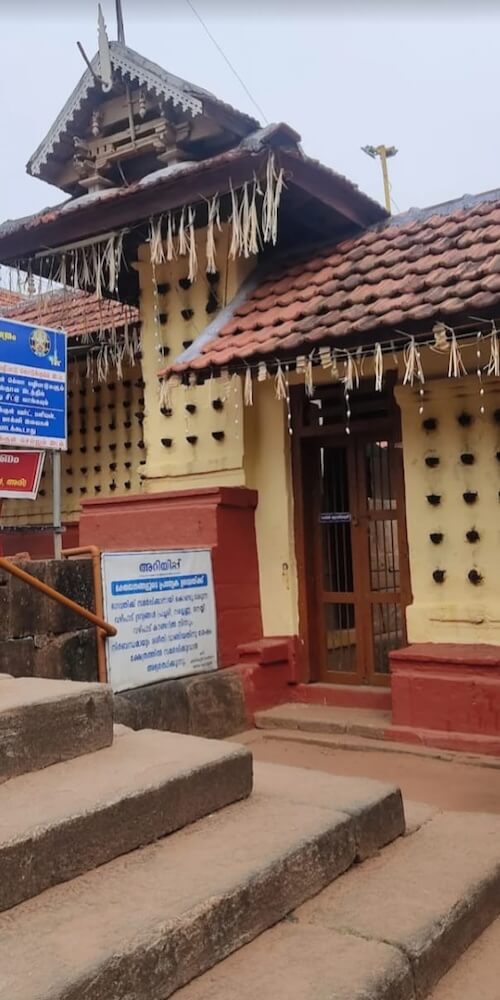 Other important observances include the Ayyappan Vilakku festival for Lord Dharma Sastha during the Mandala season, Chandika Homam and special poojas during Vishu, Navaratri, Thrippoothiri, Ashtami Rohini and Deepavali.
Among the temple’s offerings, Aympara is the most distinctive. In this offering, devotees fill a traditional measuring basket with five items—paddy, puffed rice, rice, flattened rice and flowers—and offer it to the Goddess for the prosperity and well-being of their family. Vella Nivedyam is offered to Goddess Annapoorneshwari at Keezhekkavu for abundance of food and relief from poverty. Chandanakkappu, ghee abhishekam and Kadumpayasam are offered to Goddess Mahishasuramardini at Melekkavu to seek the Goddess’s blessings and the fulfilment of wishes. Kumkumarchana and Lalitha Sahasranamarchana are performed for a happy married life and to seek a suitable marriage alliance. Among the other deities, Ottayappam is offered to Lord Ganesha for the removal of obstacles and success in new ventures, Neerajanam is offered to Lord Dharma Sastha for success and relief from the effects of Saturn, while Dhara and Mrityunjaya Pushpanjali are offered to Lord Shiva for good health and long life. Turmeric powder abhishekam, milk and Paal Payasam are offered to the Naga deities for relief from Sarpa Dosha. In addition, devotees also perform the Chuttuvilakku offering by lighting thousands of lamps on the temple’s massive granite outer wall on their birth star days and other special occasions.
The temple opens daily at 5:00 a.m. Usha Pooja is performed between 6:30 a.m. and 7:30 a.m., followed by Ucha Pooja between 8:30 a.m. and 9:30 a.m. The temple closes at 10:30 a.m. It reopens at 5:00 p.m., with Deeparadhana taking place between 6:15 p.m. and 6:45 p.m., followed by Athazha Pooja between 7:30 p.m. and 8:00 p.m. The temple closes for the day at 8:00 p.m. after Thrippuka. On Sundays, however, the temple closes at 7:00 p.m. in the evening. The timings of poojas and darshan may vary on festival days and the annual Prathishta Dinam.
Key highlight :-
- Located 7 km from Palakkad.
- Palakkad Town Railway Station is about 6 km from the temple, while Palakkad Junction Railway Station is about 11 km away.
- KSRTC and local bus services are available from Palakkad to the temple.
- Parking facilities are available within the temple premises.
- Accommodation and dining facilities are available in the nearby town.
तिरुवलाथुर रांडू मूर्ति भगवती मंदिर
तिरुवलाथुर, कोडुम्बु, जिला। पलक्कड़.
मंदिरे
Temples
मंदिर
મંદિરો
கோவில்கள்
దేవాలయాలు
ക്ഷേത്രങ്ങൾ
ದೇವಾಲಯಗಳು
মন্দিরসমূহ
ਮੰਦਿਰ
-
श्री त्रिपालूर महा शिव मंदिर कट्टुसेरी, पुलोड, जि. पलक्कड.
अधिक माहितीSree Thrippalur Maha Shiva Temple Kattusseri, Pullode, Dist. Palakkad.
View Detailsश्री त्रिप्पलुर महा शिव मंदिर कट्टूसेरी, पुलोडे, जिला। पलक्कड़.
विवरण देखेंSree Thrippalur Maha Shiva Temple Kattusseri, Pullode, Dist. Palakkad.
વિગત જુઓSree Thrippalur Maha Shiva Temple Kattusseri, Pullode, Dist. Palakkad.
விவரங்களைக் காண்கSree Thrippalur Maha Shiva Temple Kattusseri, Pullode, Dist. Palakkad.
వివరాలను చూడండిSree Thrippalur Maha Shiva Temple Kattusseri, Pullode, Dist. Palakkad.
വിശദാംശങ്ങൾ കാണുകSree Thrippalur Maha Shiva Temple Kattusseri, Pullode, Dist. Palakkad.
ವಿವರಗಳನ್ನು ವೀಕ್ಷಿಸಿSree Thrippalur Maha Shiva Temple Kattusseri, Pullode, Dist. Palakkad.
বিস্তারিত দেখুনSree Thrippalur Maha Shiva Temple Kattusseri, Pullode, Dist. Palakkad.
ਵੇਰਵੇ ਦੇਖੋ -
श्री पनामकुरुसी भगवती मंदिर चेथल्लूर, मन्नारक्कड, जि. पलक्कड.
अधिक माहितीSree Panamkurussi Bhagavathy Temple Chethalloor, Mannarkkad, Dist. Palakkad.
View Detailsश्री पनमकुरुस्सी भगवती मंदिर चेथल्लूर, मन्नारक्कड़, जिला। पलक्कड़.
विवरण देखेंSree Panamkurussi Bhagavathy Temple Chethalloor, Mannarkkad, Dist. Palakkad.
વિગત જુઓSree Panamkurussi Bhagavathy Temple Chethalloor, Mannarkkad, Dist. Palakkad.
விவரங்களைக் காண்கSree Panamkurussi Bhagavathy Temple Chethalloor, Mannarkkad, Dist. Palakkad.
వివరాలను చూడండిSree Panamkurussi Bhagavathy Temple Chethalloor, Mannarkkad, Dist. Palakkad.
വിശദാംശങ്ങൾ കാണുകSree Panamkurussi Bhagavathy Temple Chethalloor, Mannarkkad, Dist. Palakkad.
ವಿವರಗಳನ್ನು ವೀಕ್ಷಿಸಿSree Panamkurussi Bhagavathy Temple Chethalloor, Mannarkkad, Dist. Palakkad.
বিস্তারিত দেখুনSree Panamkurussi Bhagavathy Temple Chethalloor, Mannarkkad, Dist. Palakkad.
ਵੇਰਵੇ ਦੇਖੋ -
तिरुवाझियाड श्री नरसिंहमूर्ती मंदिर तिरुवाझियाड, नेनमारा, जि. पलक्कड.
अधिक माहितीThiruvazhiyad Sree Narasimhamoorthy Temple Thiruvazhiyad, Nenmara, Dist. Palakkad.
View Detailsतिरुवझियाड श्री नरसिम्हामूर्ति मंदिर तिरुवझियाड, नेनमारा, जिला। पलक्कड़.
विवरण देखेंThiruvazhiyad Sree Narasimhamoorthy Temple Thiruvazhiyad, Nenmara, Dist. Palakkad.
વિગત જુઓThiruvazhiyad Sree Narasimhamoorthy Temple Thiruvazhiyad, Nenmara, Dist. Palakkad.
விவரங்களைக் காண்கThiruvazhiyad Sree Narasimhamoorthy Temple Thiruvazhiyad, Nenmara, Dist. Palakkad.
వివరాలను చూడండిThiruvazhiyad Sree Narasimhamoorthy Temple Thiruvazhiyad, Nenmara, Dist. Palakkad.
വിശദാംശങ്ങൾ കാണുകThiruvazhiyad Sree Narasimhamoorthy Temple Thiruvazhiyad, Nenmara, Dist. Palakkad.
ವಿವರಗಳನ್ನು ವೀಕ್ಷಿಸಿThiruvazhiyad Sree Narasimhamoorthy Temple Thiruvazhiyad, Nenmara, Dist. Palakkad.
বিস্তারিত দেখুনThiruvazhiyad Sree Narasimhamoorthy Temple Thiruvazhiyad, Nenmara, Dist. Palakkad.
ਵੇਰਵੇ ਦੇਖੋ