
टाळी महा शिव क्षेत्रम
चालप्पुरम, पालयम, जि. कोझिकोडे.
Tali Maha Shiva Kshethram
Chalappuram, Palayam, Dist. Kozhikode.
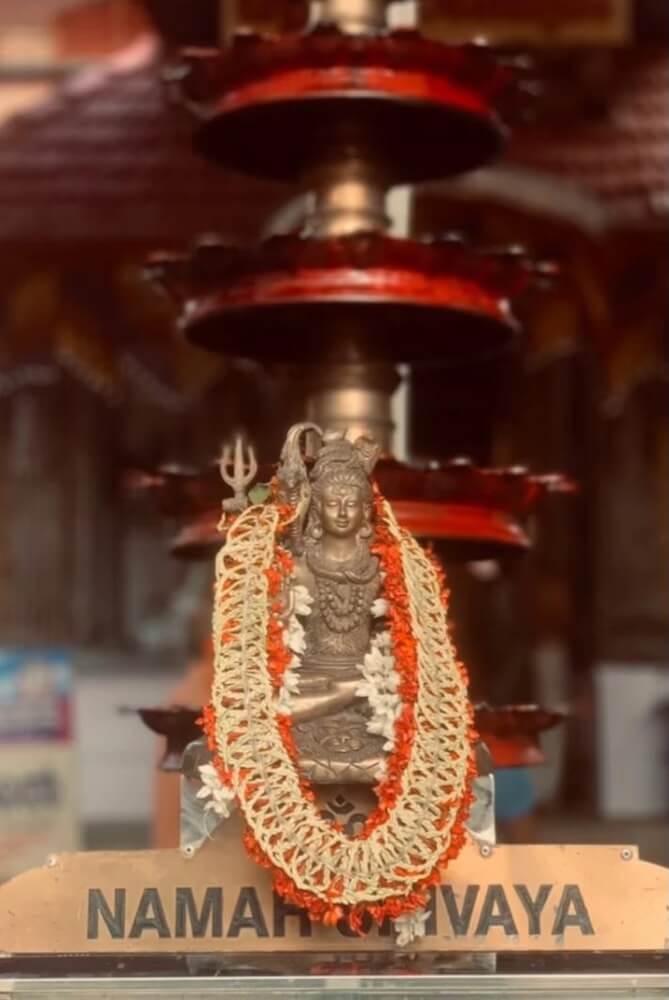 Tali Shiva Temple, also known as Tali Maha Shiva kshetram, is a historic and ancient Hindu temple dedicated to Lord Shiva. It is located in the heart of Kozhikode, near Palayam Market. The main deity is an Umamaheswara form of the Shiva Lingam, which is believed to have been installed by Parasurama at the end of the Dvapara Yuga. Later, in the 14th century, the Zamorin rulers of Kozhikode rebuilt the temple and made it their main family temple. During the rule of the Zamorins, the temple held an important place in the religious and cultural history of Kozhikode.
Before Kozhikode developed into a city, this area was a small Brahmin village known as ‘Thali’. In the early period, the temple was owned by a group of 50 Namboothiri families, known as Moossathus, who served as the temple’s Ooralars (trustees). When the Nediyiruppu Swarupam, later known as the Zamorins, who ruled from Eranad, captured Kozhikode to expand their control over sea trade, the village of Tali also came under their rule. Historical records indicate that around 50 Namboothiri families who opposed the Zamorin’s attempt to take control of the temple were killed or expelled. Later, in the 14th century, the Zamorin ruler Swami Thirumulpad rebuilt the temple next to his palace and made it his family temple. The fort containing the temple and palace later became known as ‘Kovilkkotta’, which is said to have eventually been associated with the name ‘Kozhikode’. 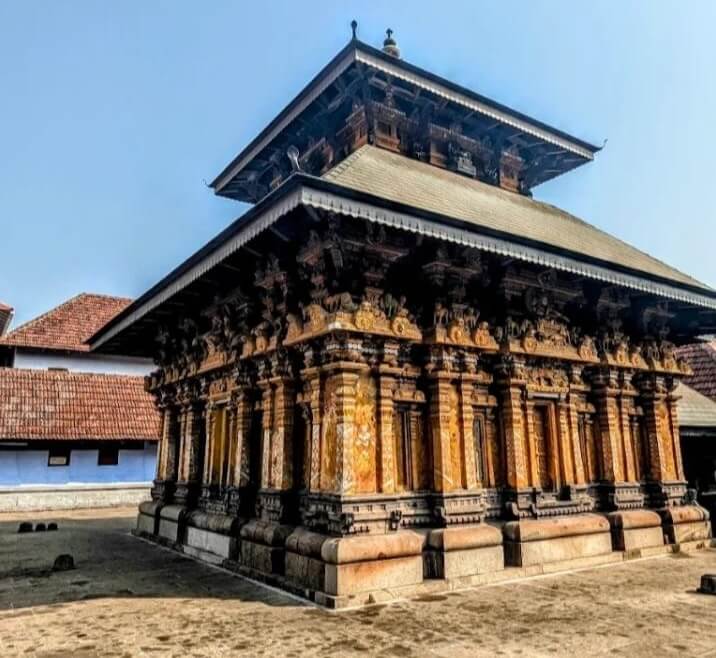 The Zamorins are said to have started Revathi Pattathanam as an act of atonement for the Brahmahatya sin associated with the killing of the Namboothiris and to rebuild relations with the Brahmin community. It became more famous during the reign of Zamorin Manavikraman. The gathering was attended by scholars from different parts of India and was not only a religious event but also one of the major scholarly assemblies in South India.
During Tipu Sultan’s campaign in Malabar in the late 18th century, Tali Temple suffered extensive damage and several parts of the temple were destroyed. This period also contributed to the decline of the Zamorin dynasty. The temple remained damaged for several years after Tipu Sultan’s attack. In 1964, it was renovated and restored to its present form under the leadership of the Malabar Temple Protection Committee and the Zamorin Kovilakam, with the support of the local people. The temple is currently under the Malabar Devaswom Board, while the Zamorin royal family continues to serve as its managing trustee.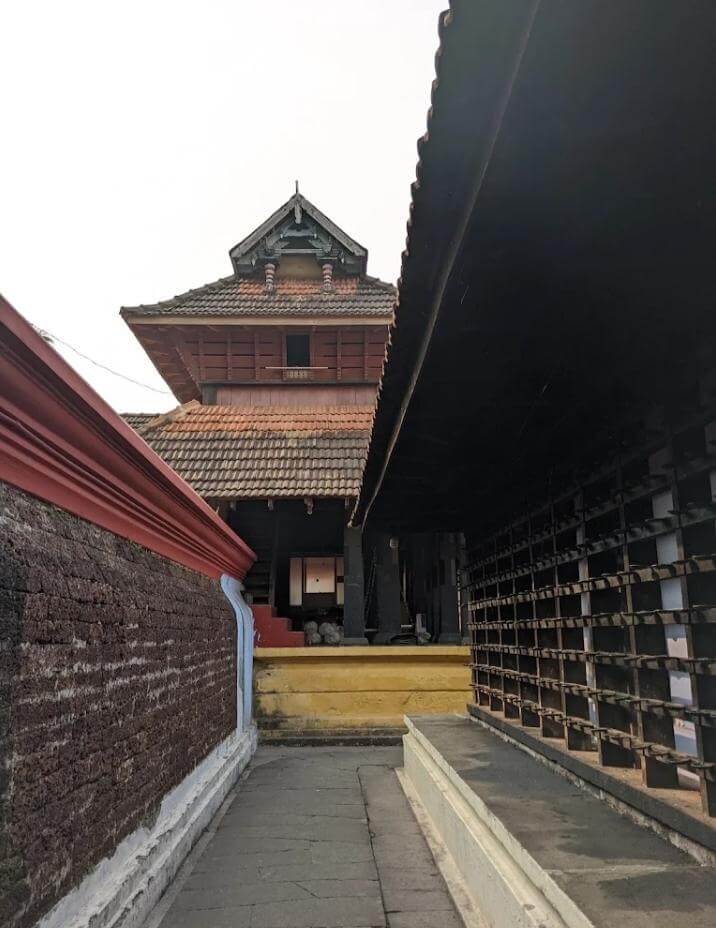
Tali Temple is considered one of the 108 important temples in Kerala. It is believed that Parasurama installed the Shiva Lingam here at the end of the Dvapara Yuga. This legend gives the temple an ancient tradition, similar to other Tali temples in Kerala, such as Kaduthuruthy Tali and Thrissur Tali. The legend of Brahmahatya sin and the curse is associated with the killing of the Namboothiris who were the Ooralars of the temple when the Zamorin ruler took control of it. It is believed that the spirits of the Namboothiris became Brahmarakshassus and cursed the Zamorin dynasty. According to the legend, the male members of the Zamorin family were unable to have children because of this curse and had to adopt children to continue the dynasty. The expression ‘Thalithavala’ is also associated with this legend. A folk story widely told in Malabar says that a frog was placed in the well or pond of the Tali Temple and that the Zamorin family would not be free from the curse as long as the frog remained alive. The legend says that the Zamorin later started the scholarly assembly known as Revathi Pattathanam, along with related atonement rituals, to remove the Brahmahatya sin and the curse.
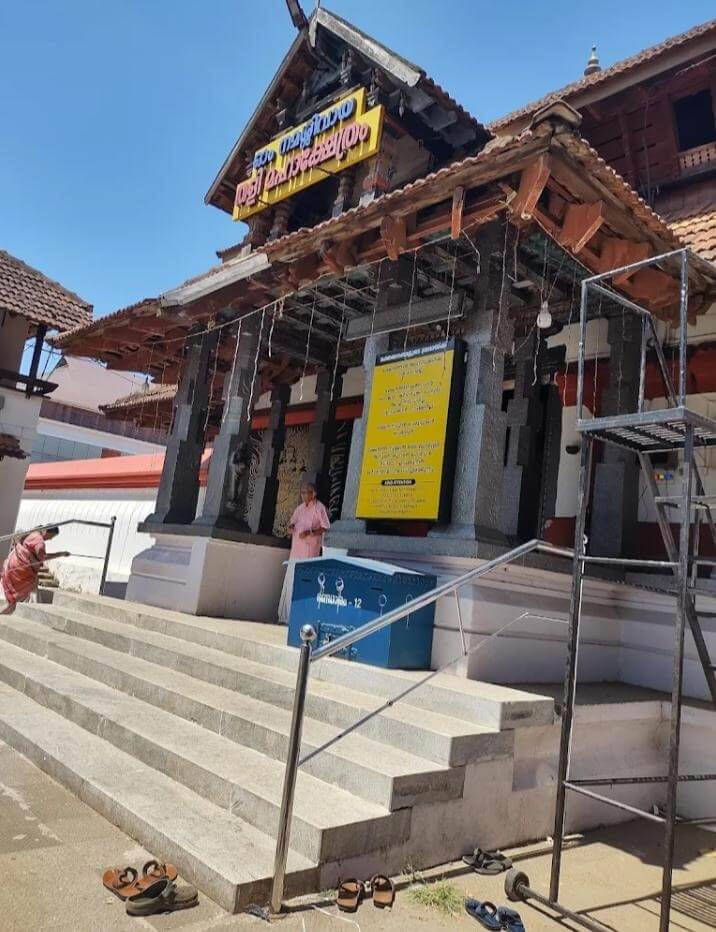
The first feature that attracts attention is the massive laterite stone wall surrounding the temple. It is wider at the base and becomes narrower towards the top. 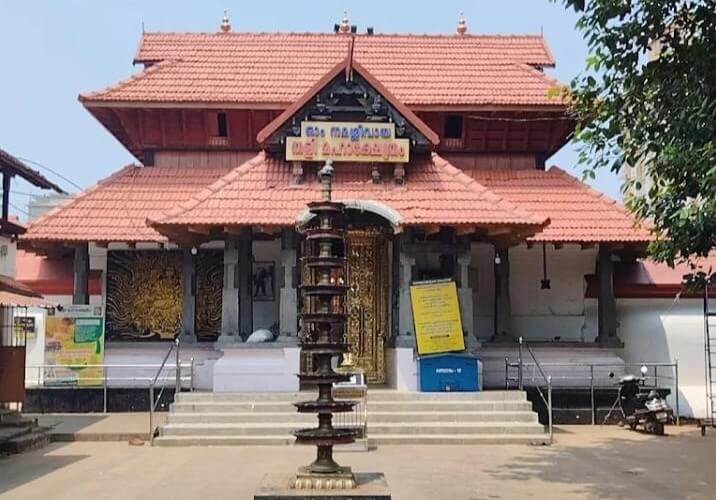 As the wall is shaped like the belly of an elephant, it is known as ‘Aanappalli Mathil’. At the main entrance, there is a large two-storey Padippura in the traditional Kerala style. The tiled roof and wooden carvings of the Padippura are notable features. A large temple pond is located near the Padippura, where devotees can wash their hands and feet. Directly opposite the main entrance is a large Aanakkottil used for festivals and other ceremonies, with a tall stone Deepasthambam in front of it. A separate Sree Krishna Temple is also located on the right side of the main Siva temple complex and its deity has an important place in the temple.
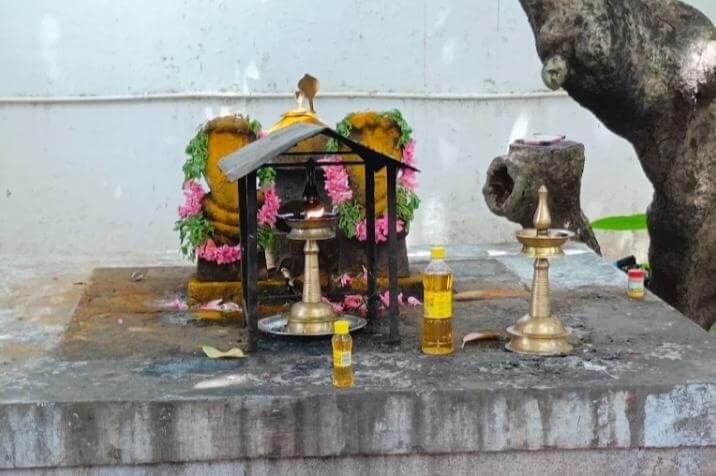
On entering the inner courtyard through the large wooden door of the main Shiva temple, the main architectural features of Tali Temple can be seen. 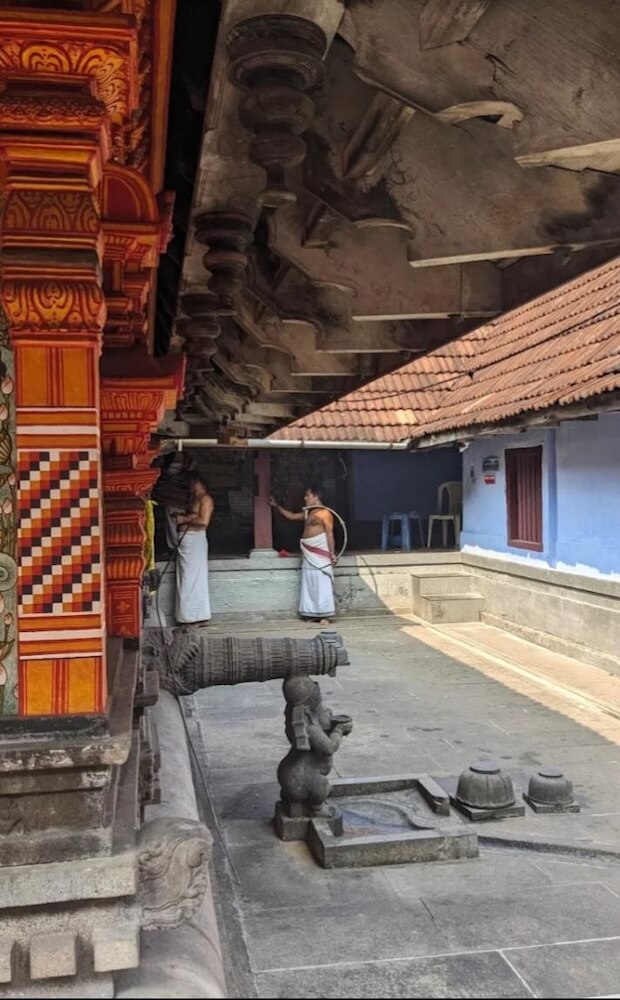 The most notable feature is the main Sreekovil, which is a two-storey structure built in the shape of a chariot. Its walls feature traditional Kerala mural paintings depicting stories from Hindu mythology, along with wooden carvings of deities. The roof is covered with copper sheets. In front of the Sreekovil is a square-shaped Namaskara Mandapam, whose inner ceiling has wooden carvings of the Navagrahas. Inside the sanctum, devotees can see the calm Umamaheswara form of Lord Siva, represented as a Jyotirlinga. Ganapathi is installed in the south-western corner of the main Sreekovil, facing east, while Dakshinamurthy, the Guru aspect of Lord Shiva, is installed along the southern wall, facing south. A separate Sreekovil for Lord Ayyappa is located in the south-western part of the temple complex, while a separate shrine for Narasimhamurthy, the fierce form of Lord Vishnu, is located on the western side. The shrine of Puthiyakavu Bhagavathi is situated in the north-western corner and the shrine of Brahmarakshassu is located on the northern side. A Nagathara with shrines for Nagaraja and Nagayakshi is also situated in the north-western corner.
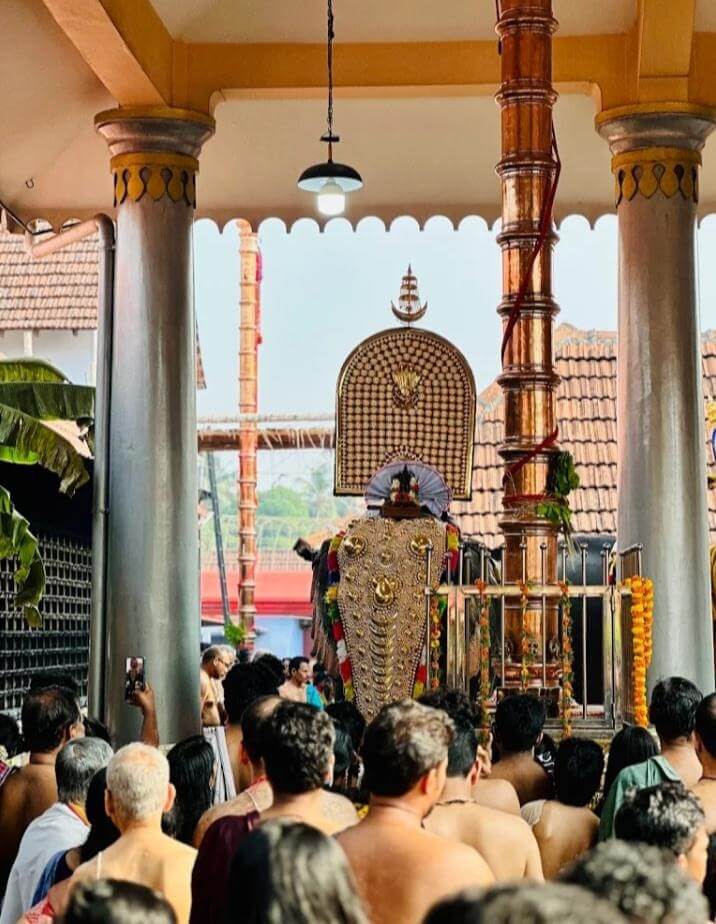
One of the main events at the temple is Revathi Pattathanam, a seven-day scholarly assembly that begins on the Revathi Nakshatra in the month of Thulam (October–November). It is attended by renowned Vedic scholars and experts in Sanskrit grammar from different parts of India. On the final day, scholars are honoured with the title ‘Bhatta’ and presented with a traditional cash gift known as Panakizhi. The annual festival of the Tali Shiva Temple and the nearby Sree Krishna Temple is held in the month of Medam (April–May).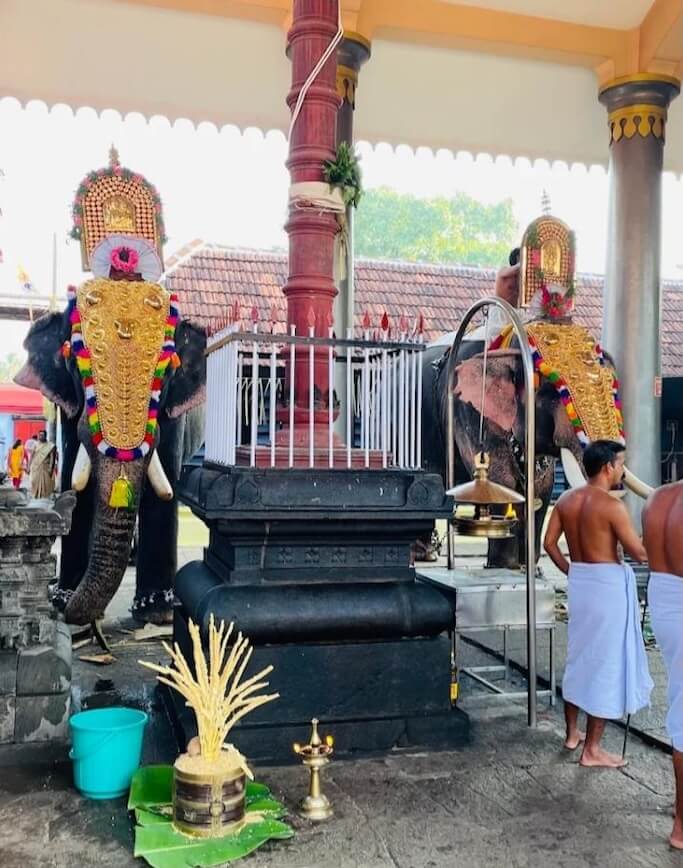 The festival begins with the Kodiyettam around Vishu and continues for seven days, concluding with Pallivetta and Aarattu. Special Thayambaka, Melam, elephant processions and cultural programmes are held during the festival.
Mahasivaratri in the month of Kumbham (February–March) is another major festival. On this day, the temple remains open throughout the night, with Yama Pooja, Akhanda Nama Japam and Bali Tharpanam being performed. During the 41-day Mandala–Makaravilakku period, from Vrischikam 1 to Dhanu 11 (November–December), special poojas and lamps are offered to Lord Ayyappa, the other deity of the temple. Devotees visiting Sabarimala also come here to wear the sacred mala and perform Kettunirakkal. Ashtami Rohini is celebrated at the nearby Sree Krishna Temple in the month of Chingam (August–September), with a special Palpayasam offering. During the month of Karkidakam (July–August), Ramayana recitations and special poojas for Bhagavathi are held at the temple. Special Abhishekam and poojas for Lord Shiva are also performed on Pradosham days every month.
The main offerings at the temple include Umamaheswara Pooja, Dhara, Pinvilakku, Koovalamala Samarpanam and Sankhabhishekam. Umamaheswara Pooja is performed for family prosperity, marital happiness and to seek a suitable life partner. Dhara, in which water or milk is poured over the Shiva Lingam, is offered for mental well-being and relief from illness.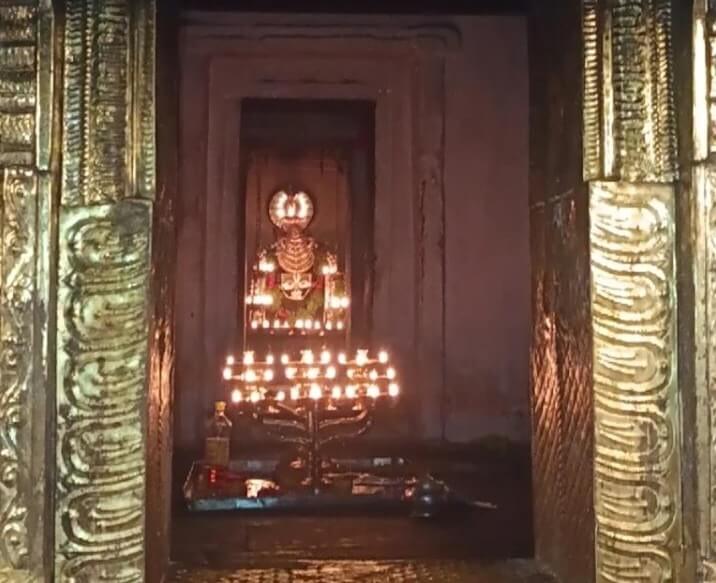 Pinvilakku, which involves lighting a lamp behind the Sreekovil, is believed to be beneficial for long life and marital well-being. Offering a garland made of Koovalam leaves, which are considered sacred to Lord Shiva, is another important offering. Sankhabhishekam is performed using water from a specially worshipped conch. The main offerings to Lord Sree Krishna include Palpayasam and Thrikkai Venna. Palpayasam is offered for having children and their well-being, while Thrikkai Venna is offered for the health and intellectual development of children. Ganapathi Homam and Appam Moodal are important offerings to Lord Ganapathi. Neyvilakku is offered to Lord Ayyappa and Narasimhamurthy. Panakam is an important offering to Narasimhamurthy.
 Palpayasam is also offered to Brahmarakshassu, a deity associated with the history of the temple.
The temple opens every day at 04:30 AM with Nirmalya Darshan. At 05:00 AM, Jalabhishekam and oil Abhishekam are performed on the Siva Lingam. At 05:30 AM, Malar and fruit are offered, followed by Usha Pooja at 06:30 AM. Ethritha Pooja is performed at 07:15 AM, followed by Dhara and special poojas for Lord Shiva at 08:30 AM. After Ucha Pooja at 10:30 AM, the temple closes at 11:00 AM. The temple reopens at 05:00 PM for evening darshan. Deepaaradhana is held at 06:30 PM, followed by Athazha Pooja at 07:30 PM. At 08:00 PM, Thrippuka is performed, after which the temple closes for the day. The timings may change on special occasions such as Mahasivaratri, Revathi Pattathanam and the annual festival.
Key highlight :-
- Located 11 km from Feroke and 25 km from Koyilandy.
- The nearest railway station is Kozhikode Main, about 1 km away.
- KSRTC and local bus facilities are available to the temple.
- Private vehicles can be parked near the temple.
- Accommodation and food facilities are available near the temple.
- Contact number +91 8139081175.
तालि महा शिव क्षेत्रम्
चलप्पुरम, पलायम, जिला। कोझिकोड.
मंदिरे
Temples
मंदिर
મંદિરો
கோவில்கள்
దేవాలయాలు
ക്ഷേത്രങ്ങൾ
ದೇವಾಲಯಗಳು
মন্দিরসমূহ
ਮੰਦਿਰ
-
वरक्कल श्री दुर्गा देवी मंदिर वरक्कल, वेस्ट हिल, जि. कोझिकोडे.
अधिक माहितीVarakkal Sree Durga Devi Temple Varakkal, West Hill, Dist. Kozhikode.
View Detailsवरक्कल श्री दुर्गा देवी मंदिर वरक्कल, वेस्ट हिल, जिला। कोझिकोड.
विवरण देखेंVarakkal Sree Durga Devi Temple Varakkal, West Hill, Dist. Kozhikode.
વિગત જુઓVarakkal Sree Durga Devi Temple Varakkal, West Hill, Dist. Kozhikode.
விவரங்களைக் காண்கVarakkal Sree Durga Devi Temple Varakkal, West Hill, Dist. Kozhikode.
వివరాలను చూడండిVarakkal Sree Durga Devi Temple Varakkal, West Hill, Dist. Kozhikode.
വിശദാംശങ്ങൾ കാണുകVarakkal Sree Durga Devi Temple Varakkal, West Hill, Dist. Kozhikode.
ವಿವರಗಳನ್ನು ವೀಕ್ಷಿಸಿVarakkal Sree Durga Devi Temple Varakkal, West Hill, Dist. Kozhikode.
বিস্তারিত দেখুনVarakkal Sree Durga Devi Temple Varakkal, West Hill, Dist. Kozhikode.
ਵੇਰਵੇ ਦੇਖੋ -
श्रीकांतेश्वर मंदिर तळेक्कड, जि. कोझिकोडे.
अधिक माहितीSreekanteswara Temple Tazhekkad, Dist. Kozhikode.
View Detailsश्रीकांतेश्वर मंदिर ताज़ेक्कड़, जिला. कोझिकोड.
विवरण देखेंSreekanteswara Temple Tazhekkad, Dist. Kozhikode.
વિગત જુઓSreekanteswara Temple Tazhekkad, Dist. Kozhikode.
விவரங்களைக் காண்கSreekanteswara Temple Tazhekkad, Dist. Kozhikode.
వివరాలను చూడండిSreekanteswara Temple Tazhekkad, Dist. Kozhikode.
വിശദാംശങ്ങൾ കാണുകSreekanteswara Temple Tazhekkad, Dist. Kozhikode.
ವಿವರಗಳನ್ನು ವೀಕ್ಷಿಸಿSreekanteswara Temple Tazhekkad, Dist. Kozhikode.
বিস্তারিত দেখুনSreekanteswara Temple Tazhekkad, Dist. Kozhikode.
ਵੇਰਵੇ ਦੇਖੋ