
ताडकेश्वर महादेव मंदिर
अब्रामा, ता./जि. वलसाड
Tadkeshwar Temple
Abrama, Tal./Dist. Valsad
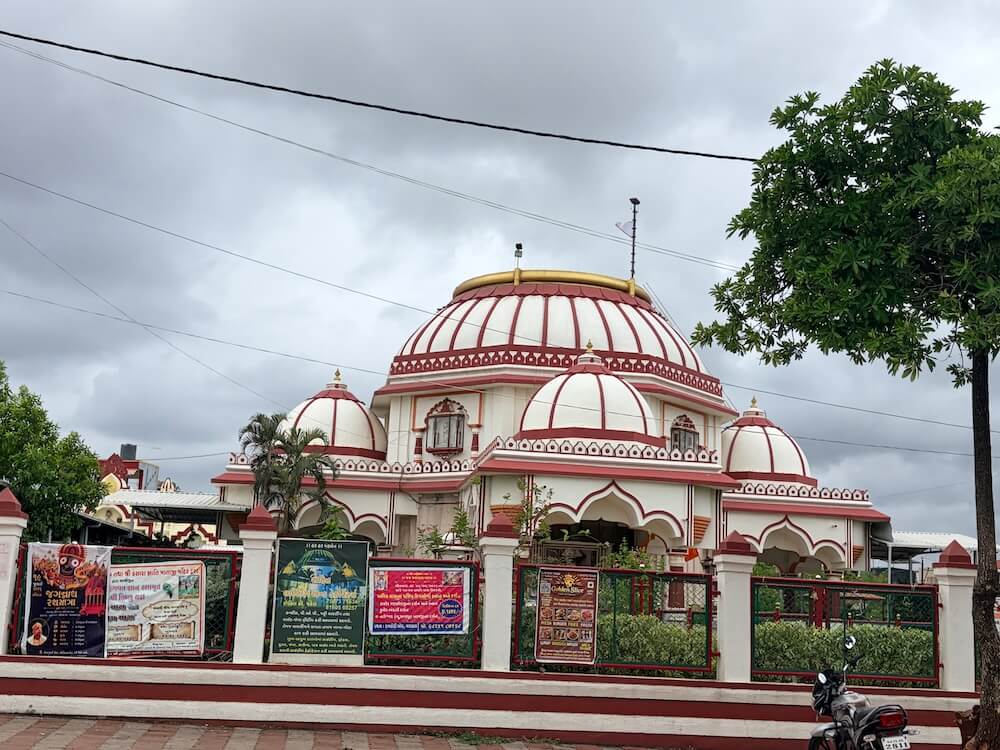
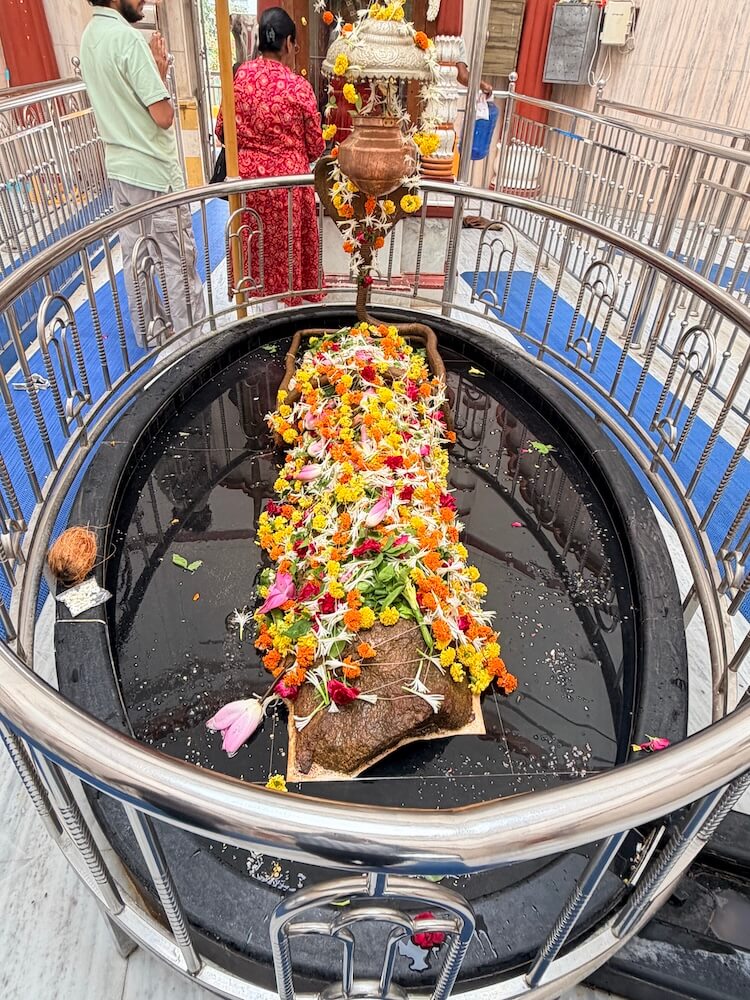 The Tadkeshwar Mahadev Temple, one of the ancient shrines of Valsad district, stands in the Abrama locality of Valsad city. According to local tradition, the temple dates back to the thirteenth century. With a history spanning nearly 800 years, its most remarkable feature is the absence of a roof above the sanctum. The temple was designed so that the rays of the sun fall directly upon the Shivalinga. In Gujarati, ‘Tadko’ means the blazing sun or intense sunlight. It is from this word that the deity came to be known as Tadkeshwar Mahadev.
According to some scholars, Valsad was known in ancient times as ‘Nyagrodhapura’. The Gazetteer of the Bombay Presidency (Vol. I, Part I) records that the town was known as ‘Balsar’ during the eighth century CE. A copper-plate inscription of the Chalukya ruler Mangalraja, dated 731 CE, refers to the place by the name Balsar. The Portuguese chronicler Duarte Barbosa recorded the town as ‘Baxay’ and described it as one of the twelve important ports of Gujarat. Like the Mauryas, Traikutakas and Rashtrakutas before them, the Chalukyas also ruled this region. After 1299 CE, Valsad came under the administrative influence of the Delhi Sultanate. According to local belief, the Shivalinga of Tadkeshwar at Abrama was consecrated during this period.
According to the temple legend, the northern bank of the Wanki River was once covered with dense forest.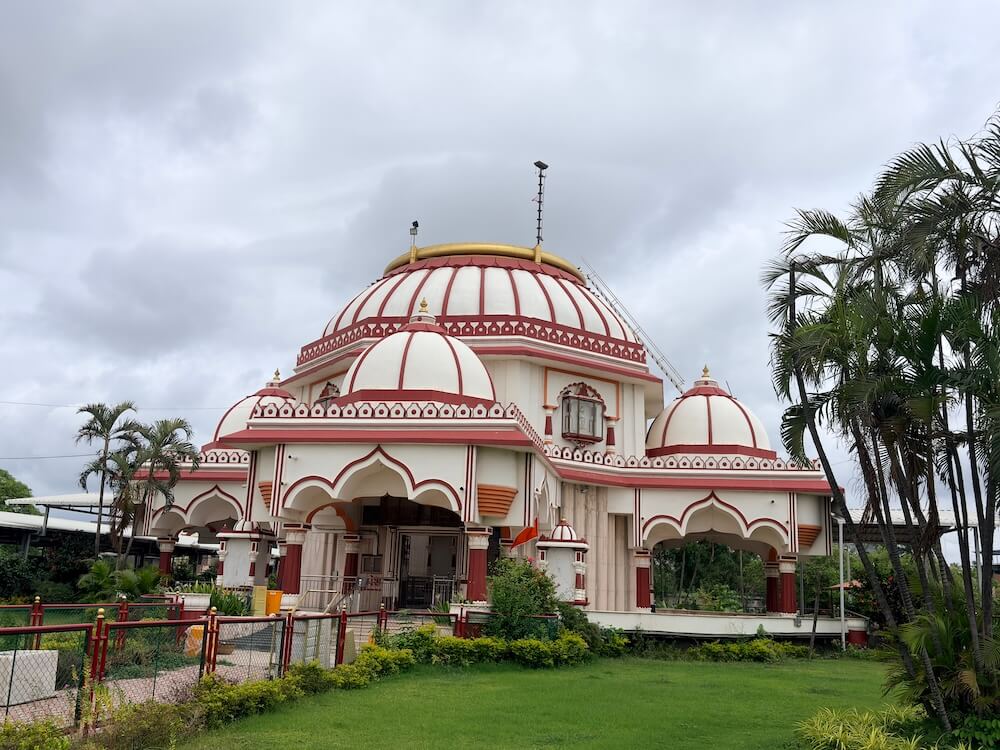 There lay a large semi-cylindrical stone, resembling a Shivlinga, measuring approximately six to ten feet in length. It is said that some people belonging to another faith attempted to remove the stone. During the attempt, a portion of it broke away. At that very moment, a great swarm of bees emerged from within the stone and attacked them. Around thirty people are said to have died on the spot from the stings, while another sixty lost their lives about half a kilometre north of the present temple. A dargah was later built at that location, now known as the Santh (i.e. 60) Pir Dargah. According to an article published in the local magazine ‘Samarpan’ on 26 August 1973, this incident occurred in May 1215.
 Following this event, a devotee of Lord Shiva from Abrama is believed to have received a divine vision in a dream. Lord Mahadev instructed him : ‘Lift Me from the bank of the Wanki River and consecrate Me at a suitable place. Two devoted followers of Shiva will be able to carry Me with ease. Install Me at the spot where My weight becomes too great to move.’ Acting upon this divine command, the Shivlinga was installed at its present location. It is also said that two attempts were made to construct a roof and spire above the Shivlinga. During the first attempt, the structure was destroyed by fire. During the second, it collapsed in a violent storm. Thereafter, Lord Mahadev appeared in the dream of a devotee and declared, ‘I am Tadkeshwar Mahadev. I require the rays of the sun.’ Following this revelation, all attempts to build a permanent roof above the sanctum were abandoned.
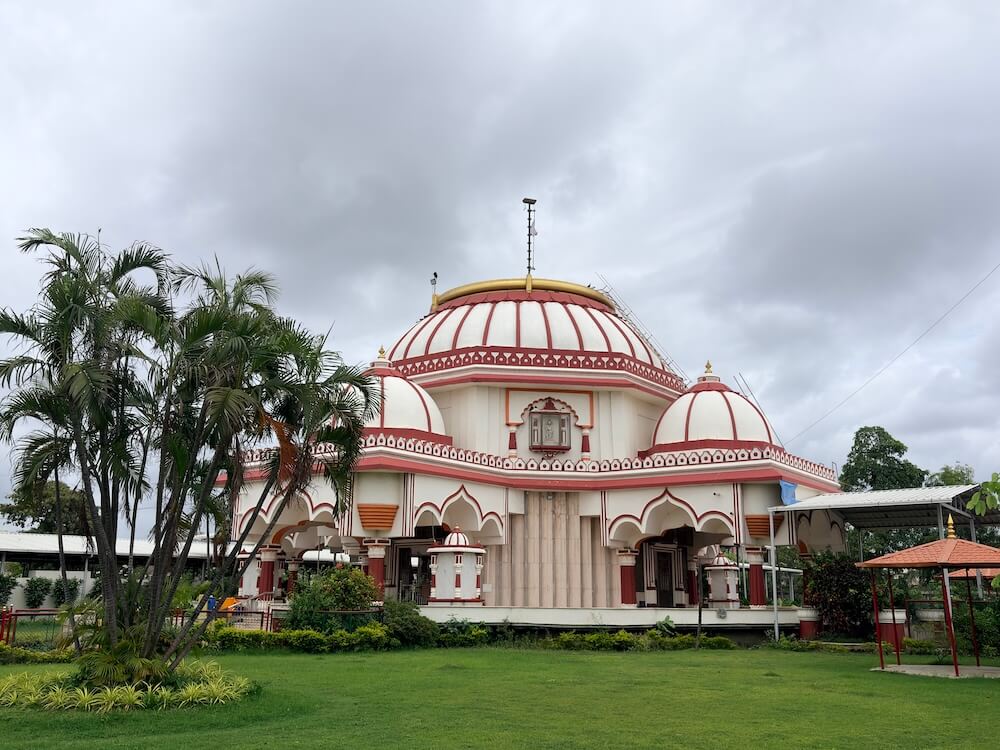
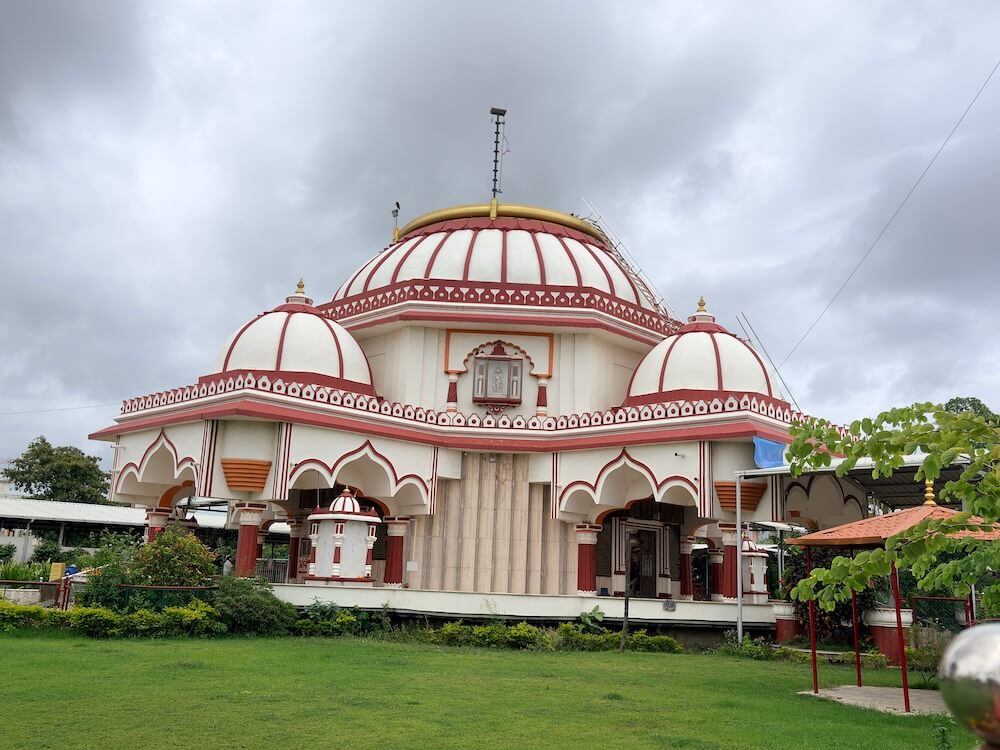
Even today, the centre of the temple’s domed superstructure contains an open circular aperture measuring approximately 22 feet in diameter.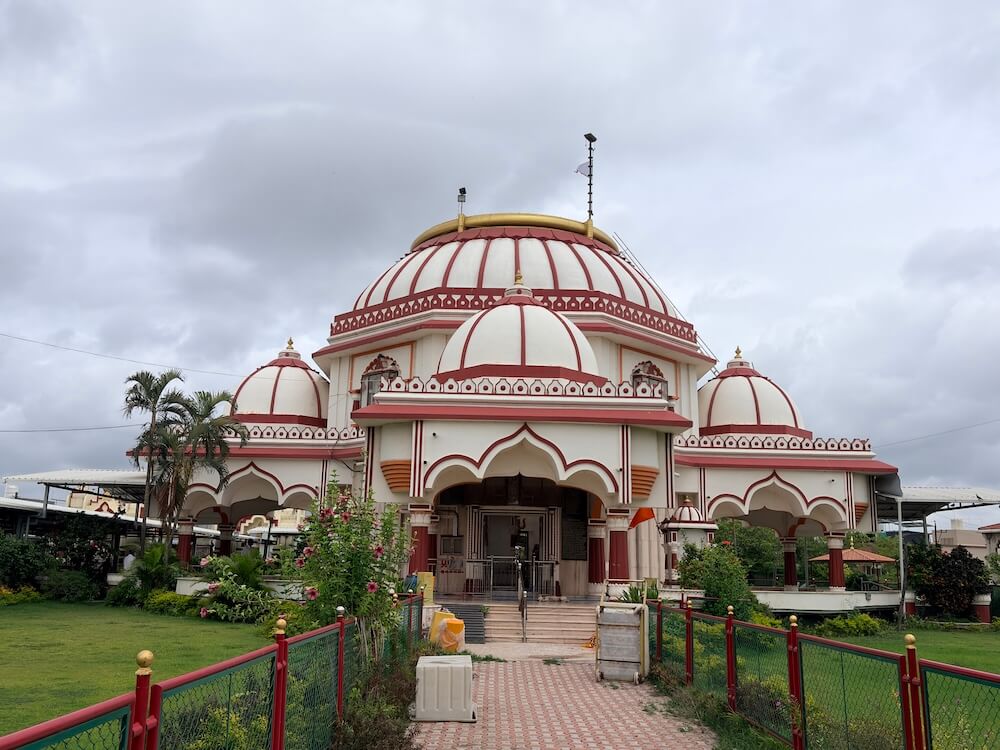 As a result, the midday rays of the sun fall directly into the sanctum upon the Shivlinga. About two decades ago, the temple underwent extensive restoration. The renovation ceremony was held over three days—8, 9 and 10 February 2008. During this period, ritual purification (Archashuddhi) of the Shivlinga was performed and newly sculpted images of the Shiva Parivar were ceremonially consecrated.
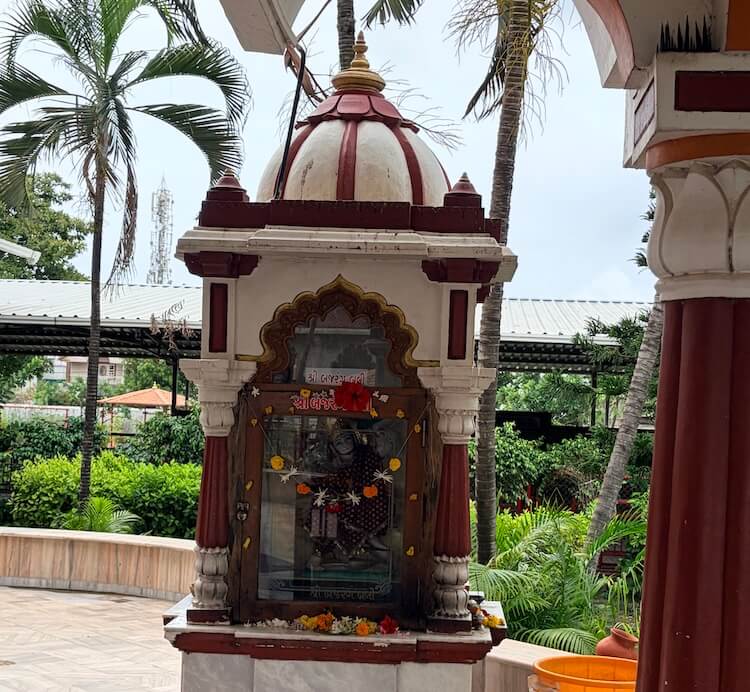
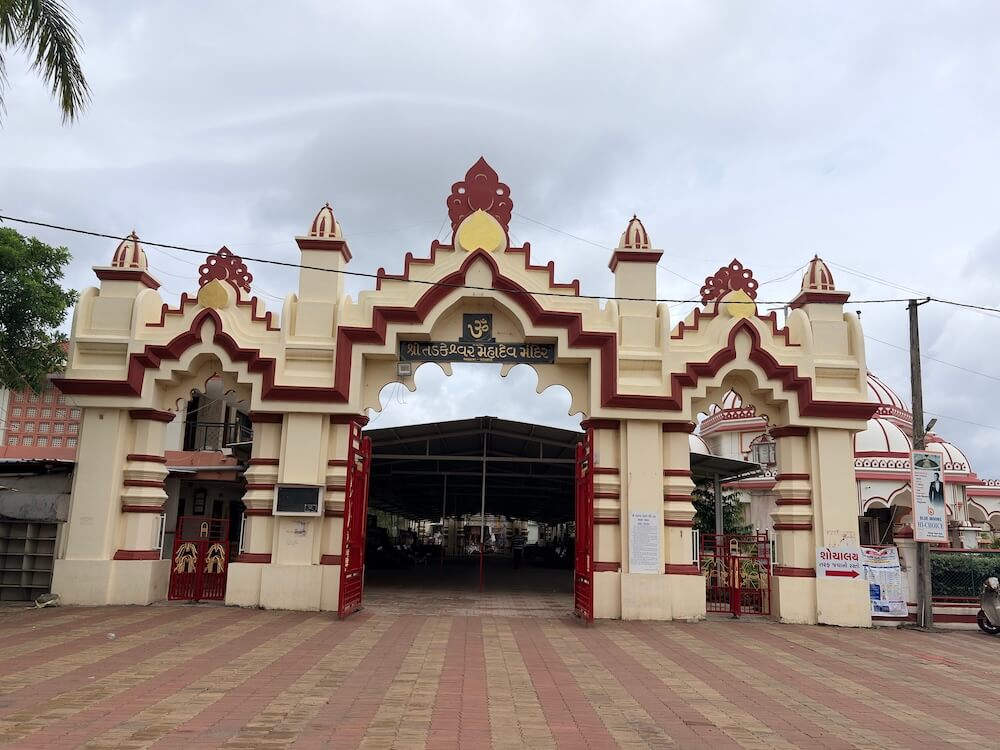
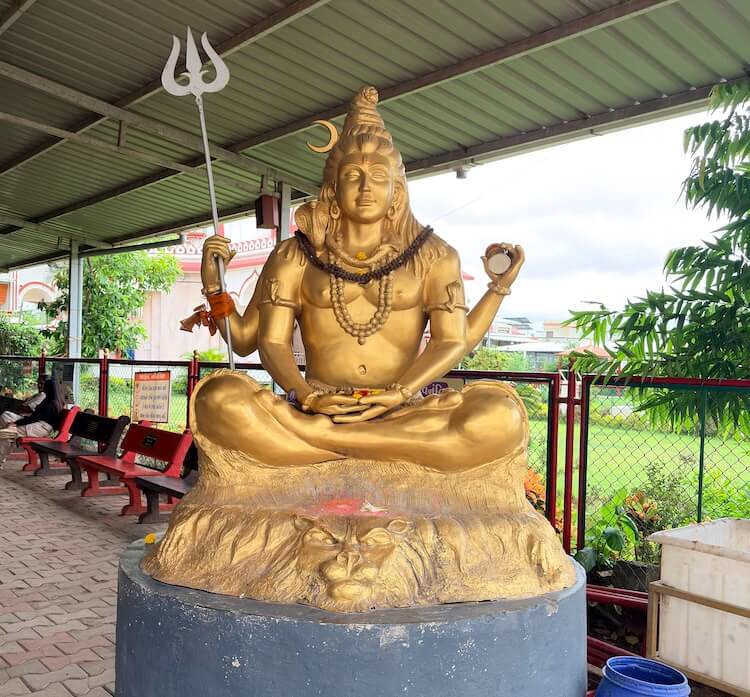
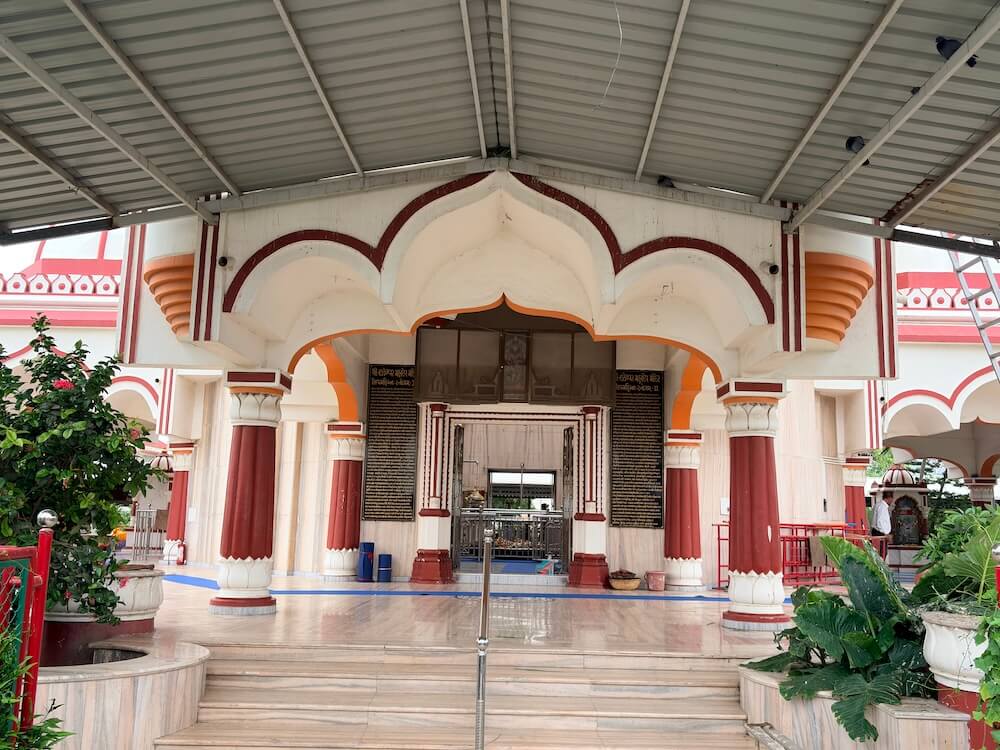
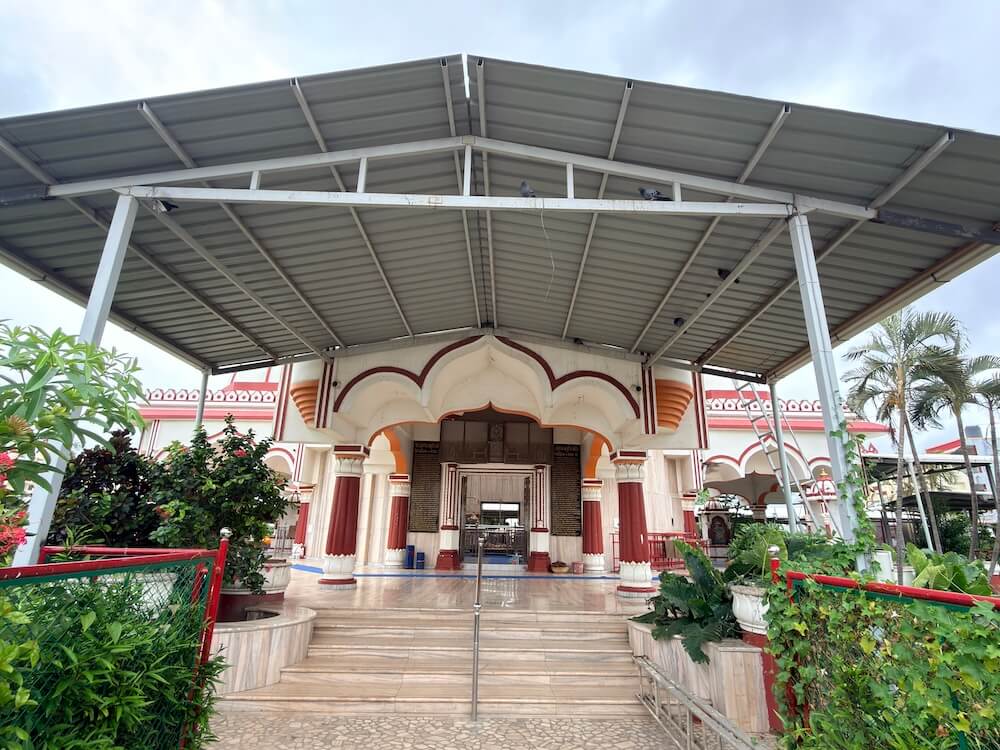
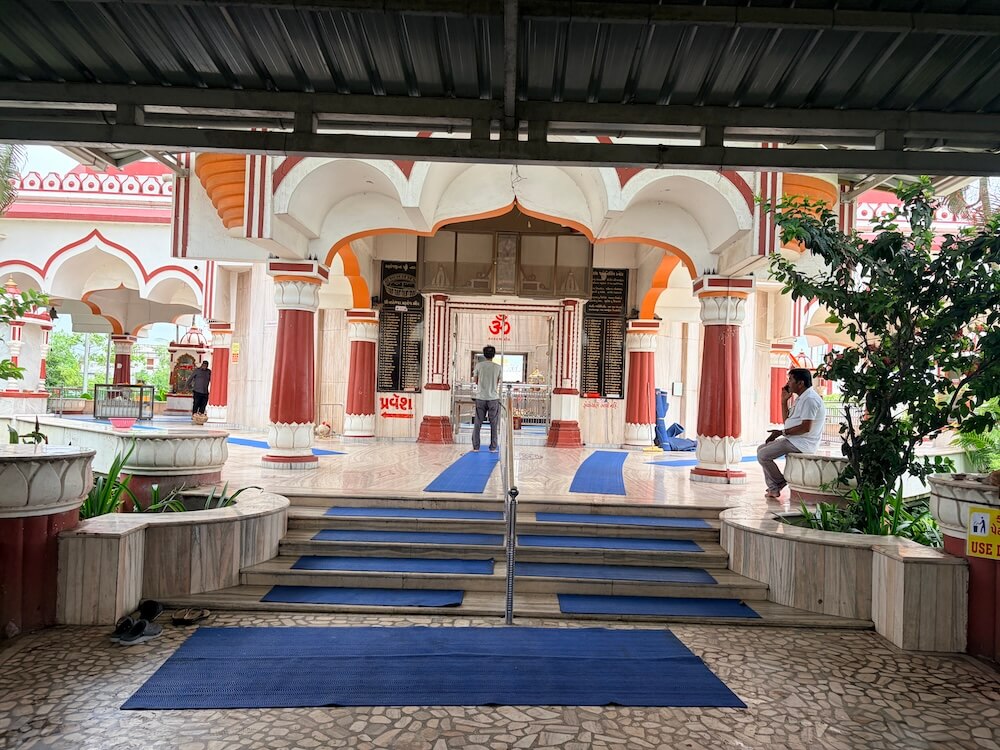
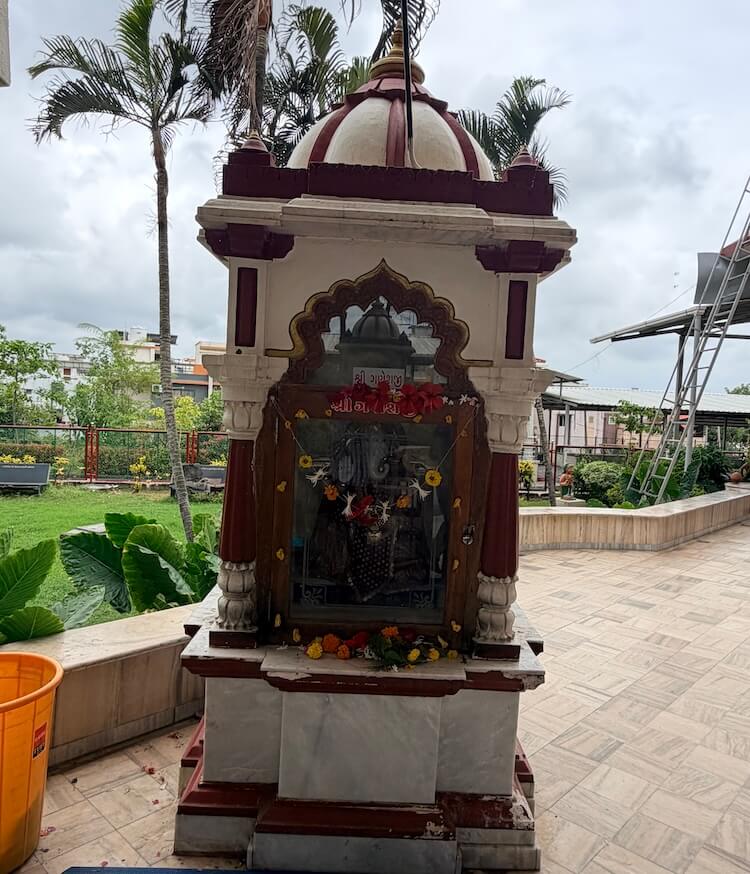
The temple is entered through an imposing triple-arched gateway, which opens into a spacious courtyard. A large covered pavilion with a metal roof has been erected here for the convenience of devotees and seating arrangements are provided throughout. Near the entrance to the pavilion stands a large golden-coloured image of Lord Mahadev.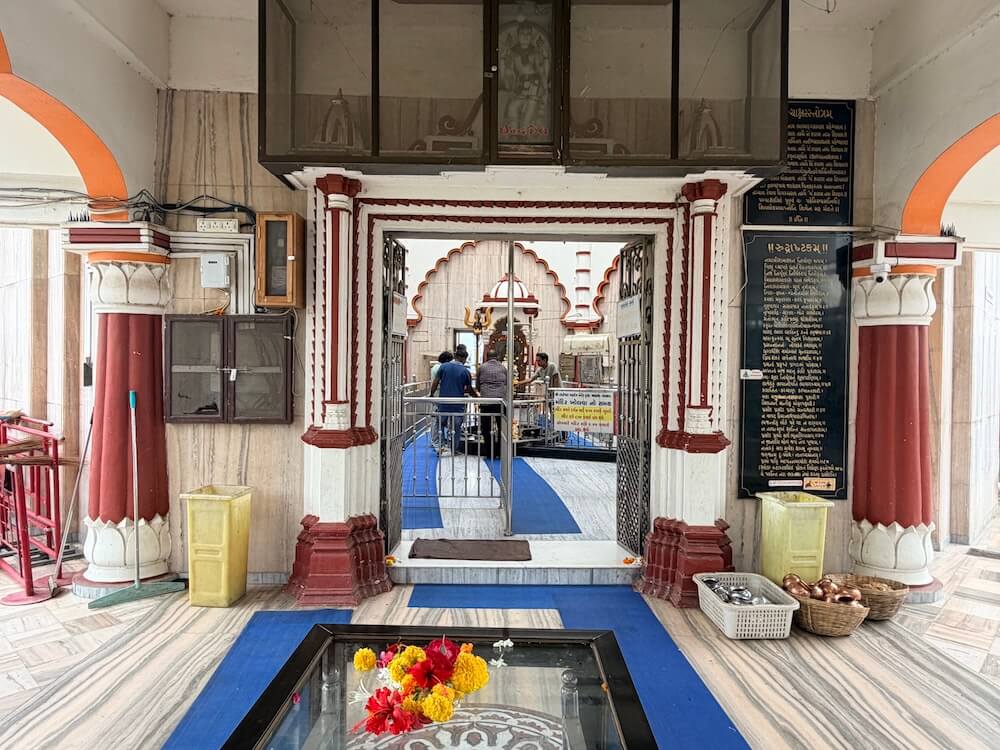 From the courtyard, five steps lead to the temple, which stands upon a raised plinth. The temple comprises an entrance hall, an assembly hall and the sanctum. At the centre of the main entrance hall, upon a raised platform, are the sculpted figures of Nandi and the sacred tortoise. Small shrines on either side of the hall contain the images of Lord Ganesha and Lord Hanuman.
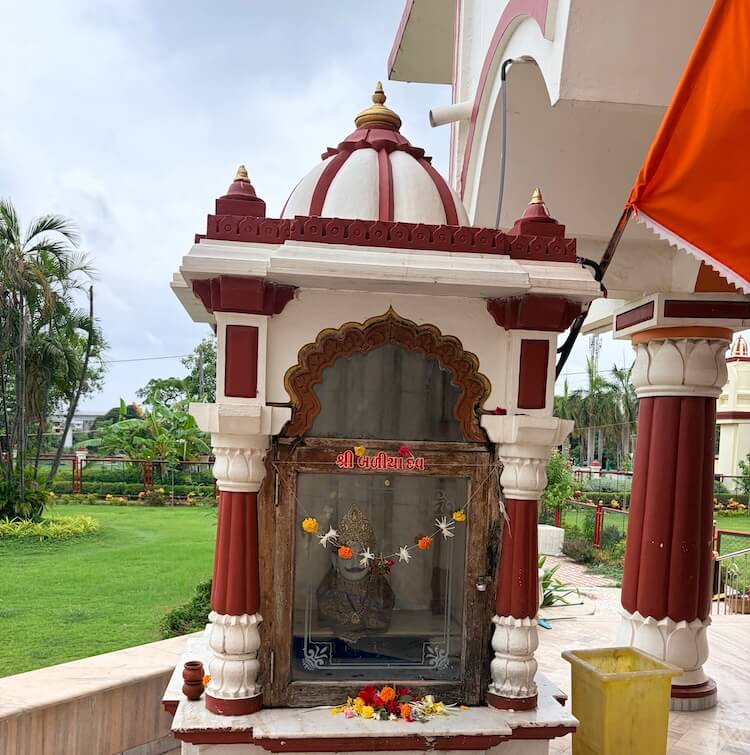
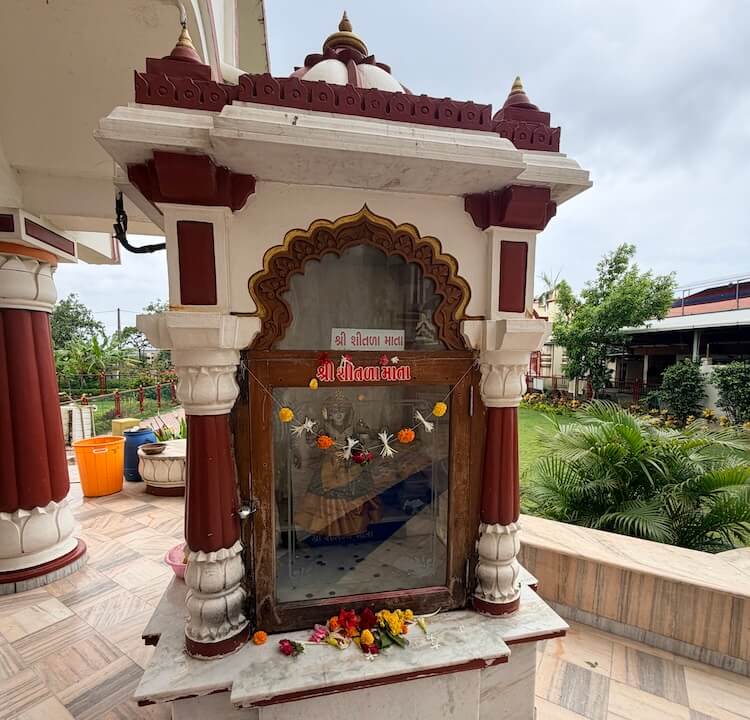
Beyond this lies the spacious sanctum. At the centre of Tadkeshwar Mahadev stands the seven-foot-long Shivlinga. Around it coils the serpent deity. In a niche behind the Linga is an image of Goddess Parvati. A distinctive feature of the sanctum is that it has doorways on all four sides. Its domed roof has been specially designed so that sunlight enters the sanctum directly from above.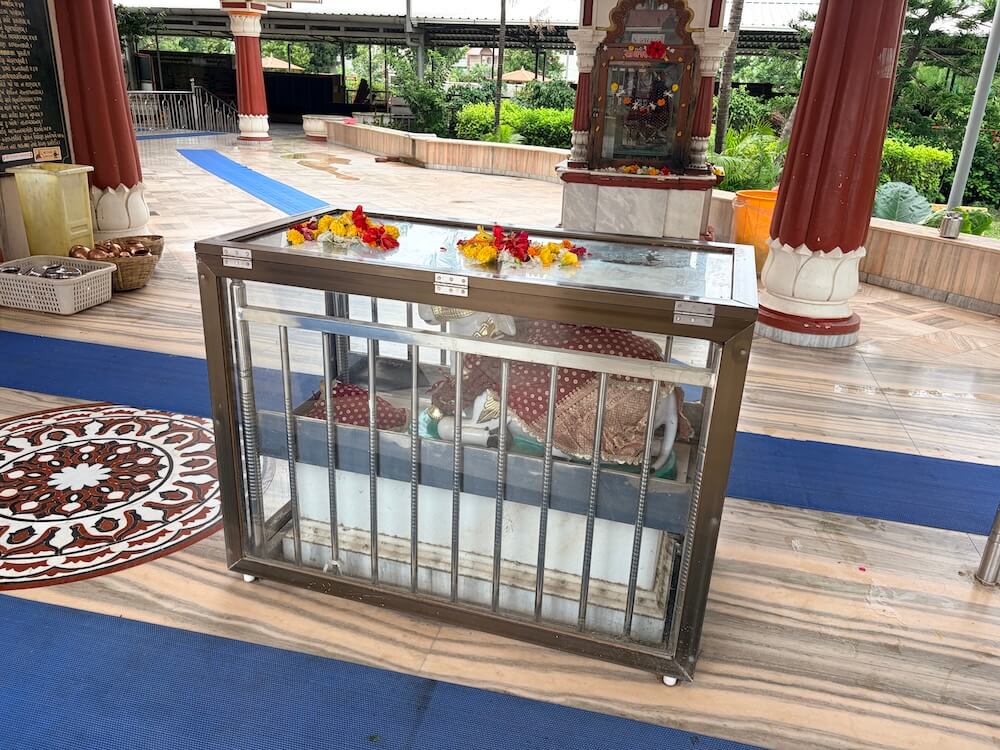 Along the circumambulatory path are small shrines dedicated to Goddess Sheetala and Baliya Dev.
Devotees may have darshan at the Tadkeshwar Mahadev Temple daily from 5.00 a.m. to 1.00 p.m. and from 4.00 p.m. to 9.00 p.m. The Maha Aarti is performed every day at 6.00 a.m. and again at 7.00 p.m. Mahashivratri is the temple’s principal annual festival. From the early hours of the morning, long queues of devotees form for darshan. On this occasion, special Laghu Rudra Abhishek, worship and the ceremonial offering of milk are performed upon the Shivlinga. The entire temple complex is adorned with floral decorations and illuminated with attractive decorative lighting.
Every Monday during the holy month of Shravan, thousands of devotees visit the temple for darshan and Jalabhishek. A special Mahapuja of Lord Mahadev is performed on each of these Mondays. Many devotees carry sacred water in Kanwars and offer it to the deity. In addition, special religious rituals and the evening Maha Aarti are conducted on both Pradosh observances every month and on Ekadashi. Festivals such as Nag Panchami, Ganesh Chaturthi, Dussehra, Diwali and Dev Diwali in the month of Kartik are celebrated in accordance with traditional Hindu customs. During festival periods, the temple hosts devotional singing, Kirtans and the recitation of sacred scriptures.
Useful Information :
- Located approximately 3 km from Valsad Bus Station.
- State Transport (ST) bus services connect Valsad with numerous towns and cities across Gujarat.
- ST buses and private vehicles are available from Valsad to the temple.
- Private vehicles can reach the temple parking area.
- Accommodation and breakfast facilities are available in the surrounding area.
ताड़केश्वर महादेव मंदिर
अब्रामा, ताल./जिला. वलसाड
मंदिरे
Temples
मंदिर
-
साईबाबा मंदिर तिथळ, ता./जि. वलसाड
अधिक माहितीSai Baba Temple Tithal, Tal./Dist. Valsad
View Detailsसाईं बाबा मंदिर तीथल, ताल./जिला. वलसाड
विवरण देखें -
भाव-भावेश्वर महादेव मंदिर बारुमाळ, ता. धरमपूर, जि. वलसाड
अधिक माहितीBhav-Bhaveshwar Mahadev Temple Barumal, Tal. Dharampur, Dist. Valsad
View Detailsभाव-भावेश्वर महादेव मंदिर बारुमल, ताल. धरमपुर, जिला. वलसाड
विवरण देखें -
दत्त मंदिर पाथरी, ता./जि. वलसाड
अधिक माहितीDatt Temple Pathri, Tal./Dist. Valsad
View Detailsदत्त मंदिर पाथरी, ताल./जिला. वलसाड
विवरण देखें