
श्री नेदुंगनाद मुथसीयरक्कावू
कोदुमुंडा, पट्टांबी, जि. पलक्कड.
Sree Nedunganad Muthassiyarkkavu
Kodumunda, Pattambi, Dist. Palakkad.
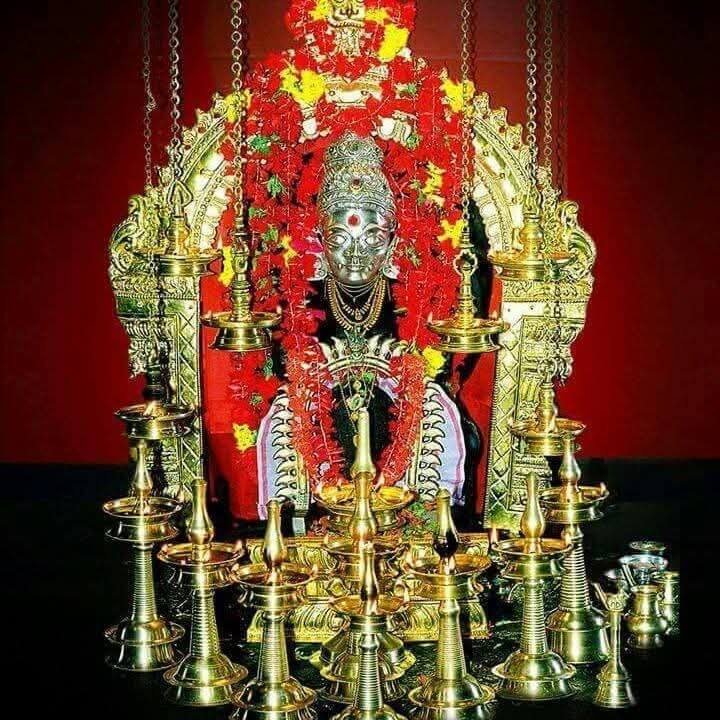 Sacred groves and Devi temples hold a special place in Kerala’s traditional Hindu worship practices and history. Sri Nedunganad Muthassiyarkavu Temple is a historic ancient shrine located at Kodumunda village near Pattambi in Palakkad district, close to the banks of the Bharathapuzha River. It is a place where the historical legacy of the old Nedunganad kingdom blends with local legends and traditions. The presiding deity is worshipped as Goddess Durga in the form of a revered grandmother, known as “Muthassi”. Situated on a scenic hilltop amidst natural surroundings, this sacred grove also symbolises the close bond between nature and human life.
During medieval times, Nedunganad (Nedunganad Swaroopam) was an important principality situated between the Bharathapuzha and Thoothapuzha rivers. It was the seat of the Nedungathiri rulers, a feudal Kshatriya dynasty. The region later came under the rule of the Valluvanad King and was subsequently brought under the control of the Zamorin of Kozhikode in the fourteenth century. 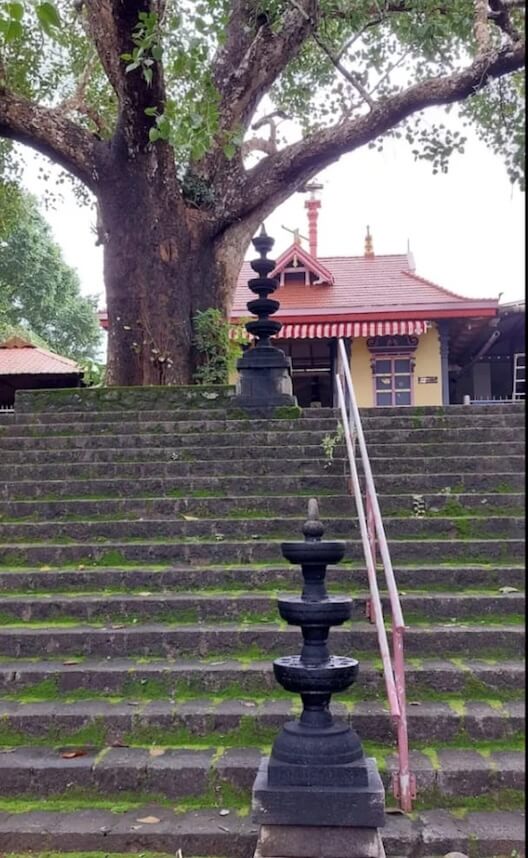 Sri Nedunganad Muthassiyarkavu is one of the prominent places of worship in this historically significant region. In earlier times, the sacred grove was protected and maintained by influential Nair landlord families of the area. At present, the temple is administered under the supervision of the Malabar Devaswom Board, with its day-to-day affairs managed by a Temple Advisory Committee comprising devotees from Kodumunda village and the surrounding areas.
According to the main legend associated with Muthassiyarkavu, two influential Nair landlord families of the region were once engaged in a bitter rivalry for power and authority. Their conflict eventually led to a fierce battle that threatened many lives. At that time, Goddess Durga is believed to have appeared on the battlefield in the form of an elderly grandmother and urged both sides to end the fighting. Realising the divine nature of her words, the rival families abandoned their hostility and reconciled with one another. They came to understand that the elderly woman who had saved them from destruction was none other than the Goddess herself. In honour of the Goddess, both families began worshipping her in the form of Muthassi (Grandmother) in their respective areas. It is believed that the Southern Muthassiyarkavu and Northern Muthassiyarkavu of Kodumunda originated from this legend. The name “Muthassiyar” is also said to have originated from this belief. Even today, devotees from Kodumunda and the surrounding areas worship the Goddess with the love and devotion reserved for a grandmother in the family, seeking comfort and blessings by sharing their sorrows and difficulties before her.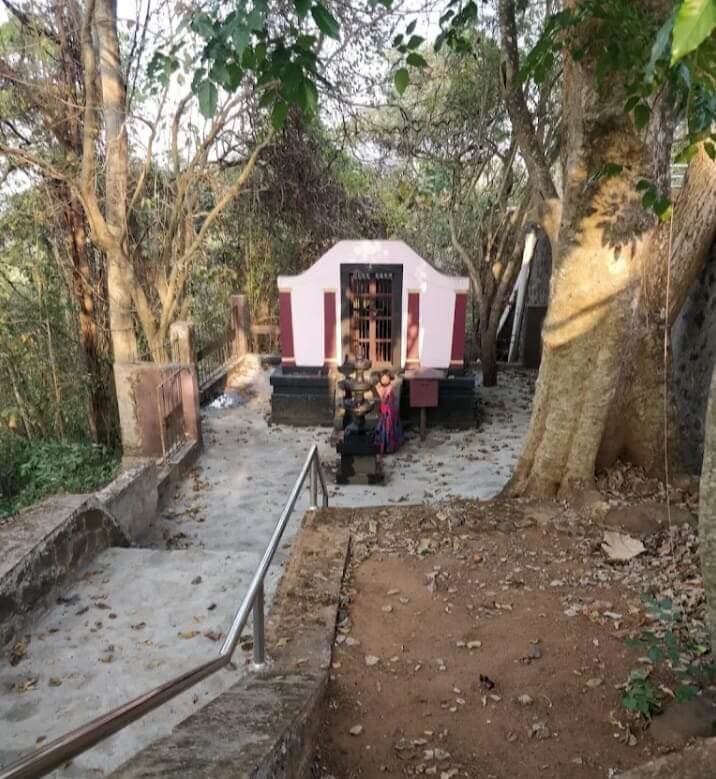
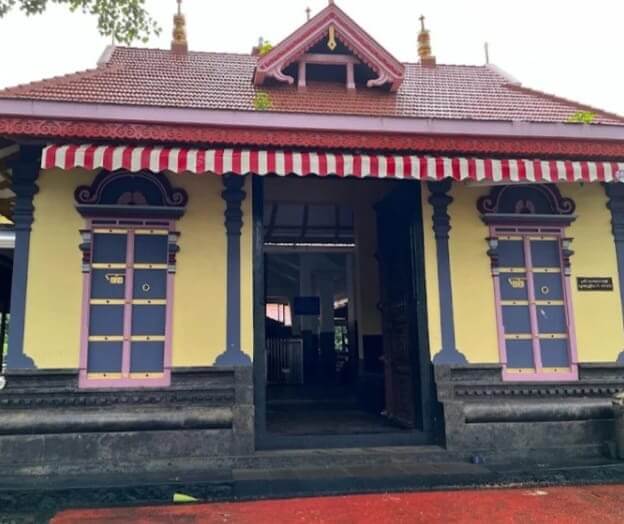
Sri Nedunganad Muthassiyarkavu is a hill-top temple. The Goddess resides on one of the highest hillocks in the Kodumunda region. Devotees have to climb 71 stone steps to reach the temple from the base of the hill. At the top, visitors are welcomed by the spacious temple courtyard. Just before entering the Nalambalam (inner courtyard), a large sacrificial stone (Balikkal) can be seen beside the entrance passage. This ancient stone is one of the notable features of the temple and reflects its age-old traditions and ritual heritage.
On entering the Nalambalam through the main entrance, the main sanctum of the Goddess can be seen at the centre. The presiding deity, Goddess Durga, is worshipped here in the form of “Muthassi” (Grandmother), symbolising her benevolent and protective nature. Built in the traditional Kerala temple architectural style, the sanctum is square in shape and has a tiled roof. In front of the sanctum stands a beautifully crafted stone Sopanam (sacred steps), while sculptures of Dwarapalakas, the divine guardians of the Goddess, can be seen on either side of the entrance.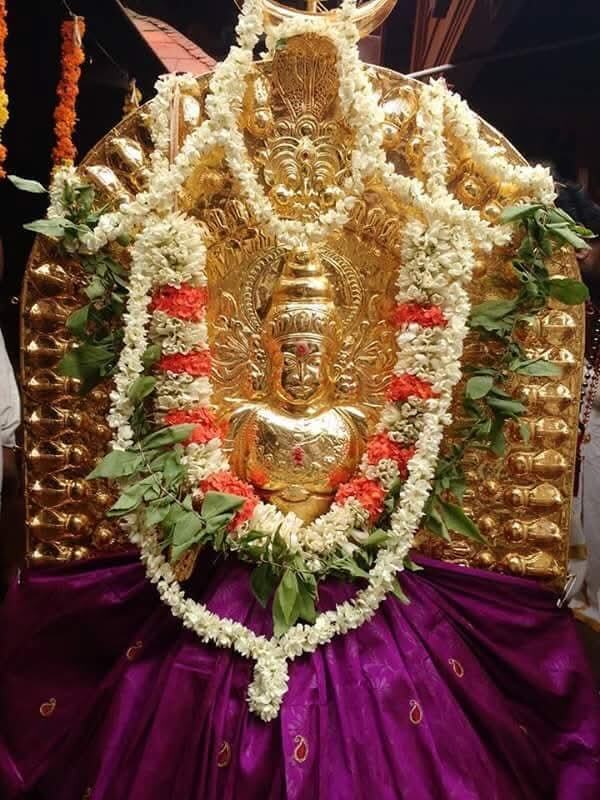
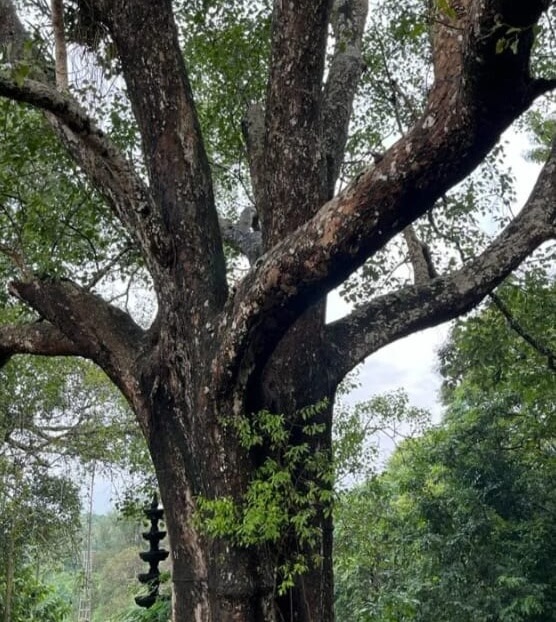
Looking into the sanctum, the main idol can be seen illuminated by the soft glow of ever-burning ghee lamps. Carved from black granite, the four-armed idol holds a conch and discus in the upper hands, while the lower hands display the Abhaya Mudra (gesture of protection) and Varada Mudra (gesture of blessing). Around the temple courtyard, devotees can also see the other shrines of Lord Ganesha and Lord Dharma Sastha (Ayyappa), as well as a sacred Naga grove (Nagathara) arranged beneath the trees, preserving the traditional character of the sacred grove.
The main annual festival of Muthassiyarkavu is the Koothu Thalappoli Mahotsavam, celebrated during the Malayalam month of Medam (April–May). One of the most important festivals of Kodumunda and the surrounding regions, it is known for its Deshapoorams, caparisoned elephant processions, traditional Valluvanadan percussion ensembles, folk art performances, fireworks and the deeply devotional Thalappoli ceremony. As part of the festival, Tholpavakoothu, the traditional shadow puppet performance based on the Ramayana, is also presented.
The temple also observes the Mandala season from the first day of Vrischikam to the eleventh day of Dhanu, as well as the Navaratri festival in the Malayalam month of Kanni. 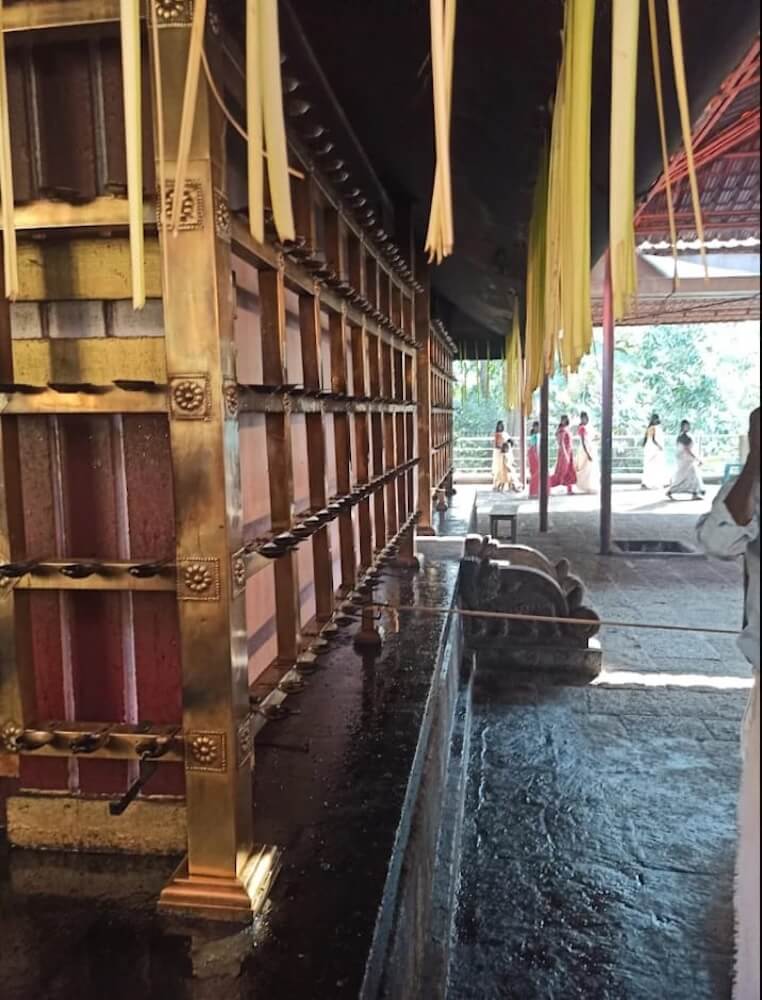 During the Mandala period, special poojas and lamp offerings are conducted, while Navaratri is marked by special worship and Chandanacharthu (sandalwood offering) to the Goddess. The Vidyarambham ceremony, marking the initiation of children into learning, is also held at the temple on Vijayadashami day.
The main offerings at the temple include Kadum Payasam (Kadunthudi Payasam), Chandanacharthu (sandalwood offering), Pattucharthal (offering of silk cloth), Niramala and Vilakku. Considered one of the most beloved offerings of the Goddess, Kadum Payasam is offered by devotees seeking blessings and fulfilment of their wishes. Chandanacharthu, where sandalwood paste is applied to the idol of the Goddess and Pattucharthal, where silk cloth is offered to the deity, are among the popular offerings. Niramala and Vilakku, where the temple premises are decorated with flowers and lamps, also hold special significance. In addition, Koottu Ganapathi Homam is performed for the blessings of Lord Ganesha and Noorum Paal is offered at the Nagathara (Naga shrine) for the blessings of the Naga deities.
The daily pooja rituals at the temple begin at 07:30 AM with the opening of the sanctum and Nirmalya Darshan. This is followed by Ushapooja at 08:00 AM and Uchapooja at 10:15 AM. After the Uchapooja, the temple closes at 10:30 AM. In the evening, the sanctum opens again at 05:30 PM for the evening rituals. Deeparadhana is performed at 06:15 PM, followed by Athazha Pooja at 06:30 PM, marking the end of the day’s rituals. On special occasions, additional poojas and ceremonies are conducted, and the darshan timings may vary accordingly.
Key highlight :-
- Located 6 km from Pattambi town and 20 km from Shoranur town.
- Located 6 km from Pattambi railway station and 18 km from Shoranur railway station.
- KSRTC buses are available to Pattambi, and local transport can be used to reach the temple.
- Private buses are available to reach the temple.
- Private vehicles can be parked at the temple’s parking area.
- Accommodation and dining facilities are available in nearby towns.
- Contact number 9961495300
श्री नेदुंगनाड मुथस्सियारक्कवु
कोडुमुंडा, पट्टांबी, जिला। पलक्कड़.
मंदिरे
Temples
मंदिर
મંદિરો
கோவில்கள்
దేవాలయాలు
ക്ഷേത്രങ്ങൾ
ದೇವಾಲಯಗಳು
মন্দিরসমূহ
ਮੰਦਿਰ
-
श्री त्रिपालूर महा शिव मंदिर कट्टुसेरी, पुलोड, जि. पलक्कड.
अधिक माहितीSree Thrippalur Maha Shiva Temple Kattusseri, Pullode, Dist. Palakkad.
View Detailsश्री त्रिप्पलुर महा शिव मंदिर कट्टूसेरी, पुलोडे, जिला। पलक्कड़.
विवरण देखेंSree Thrippalur Maha Shiva Temple Kattusseri, Pullode, Dist. Palakkad.
વિગત જુઓSree Thrippalur Maha Shiva Temple Kattusseri, Pullode, Dist. Palakkad.
விவரங்களைக் காண்கSree Thrippalur Maha Shiva Temple Kattusseri, Pullode, Dist. Palakkad.
వివరాలను చూడండిSree Thrippalur Maha Shiva Temple Kattusseri, Pullode, Dist. Palakkad.
വിശദാംശങ്ങൾ കാണുകSree Thrippalur Maha Shiva Temple Kattusseri, Pullode, Dist. Palakkad.
ವಿವರಗಳನ್ನು ವೀಕ್ಷಿಸಿSree Thrippalur Maha Shiva Temple Kattusseri, Pullode, Dist. Palakkad.
বিস্তারিত দেখুনSree Thrippalur Maha Shiva Temple Kattusseri, Pullode, Dist. Palakkad.
ਵੇਰਵੇ ਦੇਖੋ -
श्री पनामकुरुसी भगवती मंदिर चेथल्लूर, मन्नारक्कड, जि. पलक्कड.
अधिक माहितीSree Panamkurussi Bhagavathy Temple Chethalloor, Mannarkkad, Dist. Palakkad.
View Detailsश्री पनमकुरुस्सी भगवती मंदिर चेथल्लूर, मन्नारक्कड़, जिला। पलक्कड़.
विवरण देखेंSree Panamkurussi Bhagavathy Temple Chethalloor, Mannarkkad, Dist. Palakkad.
વિગત જુઓSree Panamkurussi Bhagavathy Temple Chethalloor, Mannarkkad, Dist. Palakkad.
விவரங்களைக் காண்கSree Panamkurussi Bhagavathy Temple Chethalloor, Mannarkkad, Dist. Palakkad.
వివరాలను చూడండిSree Panamkurussi Bhagavathy Temple Chethalloor, Mannarkkad, Dist. Palakkad.
വിശദാംശങ്ങൾ കാണുകSree Panamkurussi Bhagavathy Temple Chethalloor, Mannarkkad, Dist. Palakkad.
ವಿವರಗಳನ್ನು ವೀಕ್ಷಿಸಿSree Panamkurussi Bhagavathy Temple Chethalloor, Mannarkkad, Dist. Palakkad.
বিস্তারিত দেখুনSree Panamkurussi Bhagavathy Temple Chethalloor, Mannarkkad, Dist. Palakkad.
ਵੇਰਵੇ ਦੇਖੋ -
तिरुवाझियाड श्री नरसिंहमूर्ती मंदिर तिरुवाझियाड, नेनमारा, जि. पलक्कड.
अधिक माहितीThiruvazhiyad Sree Narasimhamoorthy Temple Thiruvazhiyad, Nenmara, Dist. Palakkad.
View Detailsतिरुवझियाड श्री नरसिम्हामूर्ति मंदिर तिरुवझियाड, नेनमारा, जिला। पलक्कड़.
विवरण देखेंThiruvazhiyad Sree Narasimhamoorthy Temple Thiruvazhiyad, Nenmara, Dist. Palakkad.
વિગત જુઓThiruvazhiyad Sree Narasimhamoorthy Temple Thiruvazhiyad, Nenmara, Dist. Palakkad.
விவரங்களைக் காண்கThiruvazhiyad Sree Narasimhamoorthy Temple Thiruvazhiyad, Nenmara, Dist. Palakkad.
వివరాలను చూడండిThiruvazhiyad Sree Narasimhamoorthy Temple Thiruvazhiyad, Nenmara, Dist. Palakkad.
വിശദാംശങ്ങൾ കാണുകThiruvazhiyad Sree Narasimhamoorthy Temple Thiruvazhiyad, Nenmara, Dist. Palakkad.
ವಿವರಗಳನ್ನು ವೀಕ್ಷಿಸಿThiruvazhiyad Sree Narasimhamoorthy Temple Thiruvazhiyad, Nenmara, Dist. Palakkad.
বিস্তারিত দেখুনThiruvazhiyad Sree Narasimhamoorthy Temple Thiruvazhiyad, Nenmara, Dist. Palakkad.
ਵੇਰਵੇ ਦੇਖੋ