श्री लक्ष्मीनारायण मंदिर
उमरशाडी माछीवाड, ता. पारडी, जि. वलसाड
Shri Laxminarayan Temple
Umarshadi Machhiwad, Tal. Pardi, Dist. Valsad
 The tradition of worshipping Laxminarayan in India dates back to antiquity. Here, the unified form of Vishnu and Lakshmi is revered as the sustainer of the universe and the primary symbol of prosperity. In Gujarat, which has historically been a major hub for commerce and financial activities, this worship holds extraordinary significance owing to historical and social factors. In this region, achieving success in trade and business requires not merely wealth or affluence, but also intellect and righteousness to ensure that such wealth is utilised in a rightful manner. Narayan is considered the symbol of righteousness, while Lakshmi represents wealth. With the intent that commerce should thrive alongside moral values, temples dedicated to Laxminarayan were erected on a grand scale across Gujarat. As an integral part of this rich tradition, the Shri Laxminarayan Temple at Umarshadi in Pardi Taluka of Valsad has today become a sanctuary of faith for thousands of devotees.
In mythological literature, the divine form of Laxminarayan finds detailed description within the ‘Vishnu Purana’, ‘Bhagavata Purana’ and ‘Padma Purana’.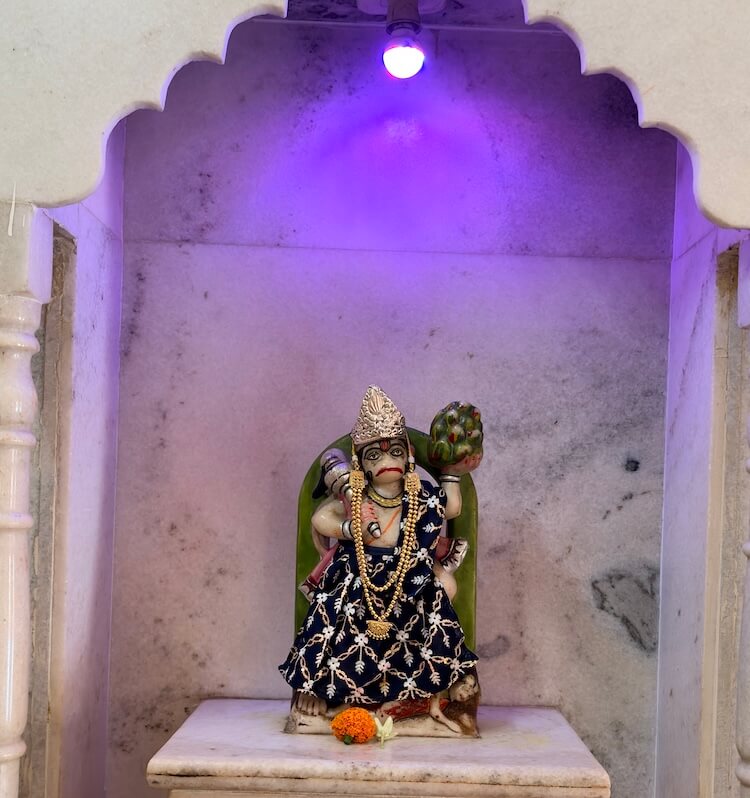 When Goddess Lakshmi emerged from the churning of the ocean, she chose Lord Vishnu as her consort. This reference appears in the eighth canto of the ‘Bhagavata Purana’. In the first section of the ‘Vishnu Purana’, it is stated that Narayan is the primordial principle of the universe and Lakshmi is his inseparable energy. If Narayan is the word, Lakshmi is its meaning. If Narayan is the law, Lakshmi is the bliss derived from that law. To maintain the equilibrium of the world, Narayan’s righteous conduct must be complemented by Lakshmi’s prosperity. It is precisely because of this religious and philosophical ethos, aimed at maintaining social stability, that temples dedicated to this deity are constructed.
 Gujarat is home to two prominent Laxminarayan temples, located at Prabhas Patan in Somnath and at Dwarka. Both sites are notable for their architectural distinction, deep sacred heritage, and historical prominence.
The Laxminarayan Temple at Somnath is situated in the Prabhas Patan precinct, close to the sacred Triveni Sangam—the confluence of the Hiran, Kapila, and Saraswati rivers—and within the vicinity of the Somnath Jyotirlinga Temple. The structure follows the traditional North Indian Nagara style of temple architecture, characterized by its sculpted stone detailing and towering curvilinear shikhara, rather than South Indian architectural modes. Within its primary sanctum sanctorum, the sacred idols of Lord Narayan and Goddess Lakshmi are enshrined. A significant feature of this complex is the intricate carving of verses and teachings from the Bhagavad Gita across the marble pillars and interior walls.
The Laxminarayan Temple at Dwarka holds comparable religious significance, standing along the sacred pilgrimage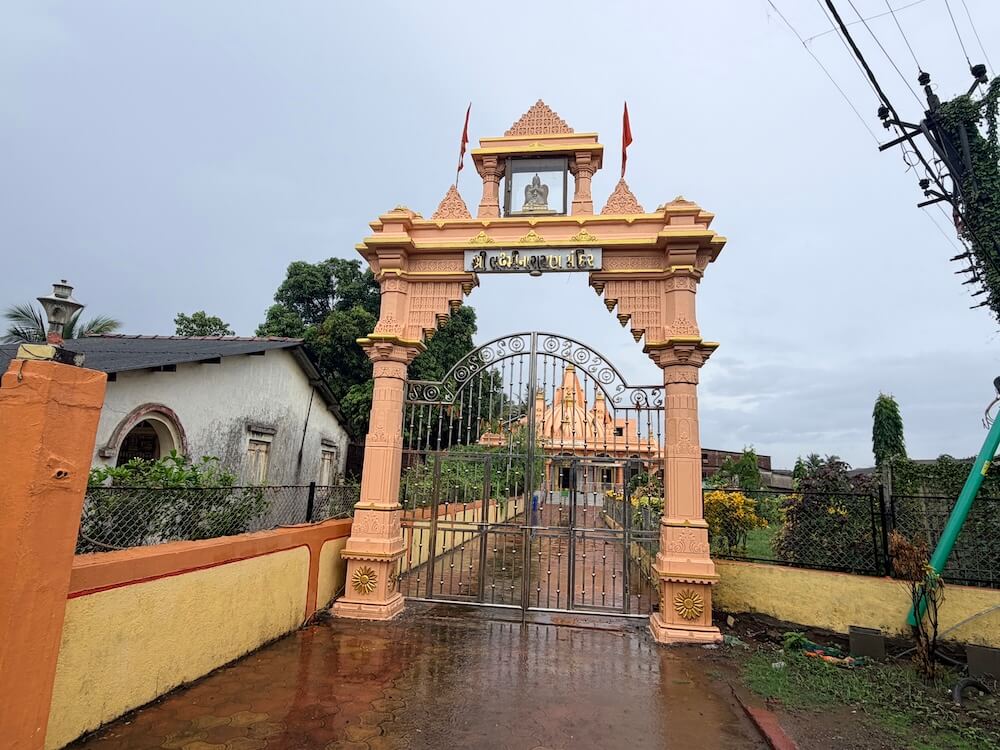 route near the Gomti River and the historic Dwarkadhish complex, representing the region’s enduring Vaishnava traditions.
The second temple is situated at Dwarka. This temple is popularly known as ‘Shri Laxminarayan Panchnad Tirtha’. It is located opposite the main Dwarkadhish Temple on the other bank of the Gomti River, after crossing the Sudama Setu. In the precincts of this temple lie five sacred water reservoirs. They are referred to as ‘Panchnad’. According to mythological beliefs, the currents of five holy rivers converge at this spot. In one of the reservoirs of this temple, a large stone that floats on water, akin to the stones at Rameswaram, known as the ‘Ramshila’, has been kept for public viewing. From a historical perspective and for its unique natural setting, this temple is considered highly important by worshippers of Vishnu.
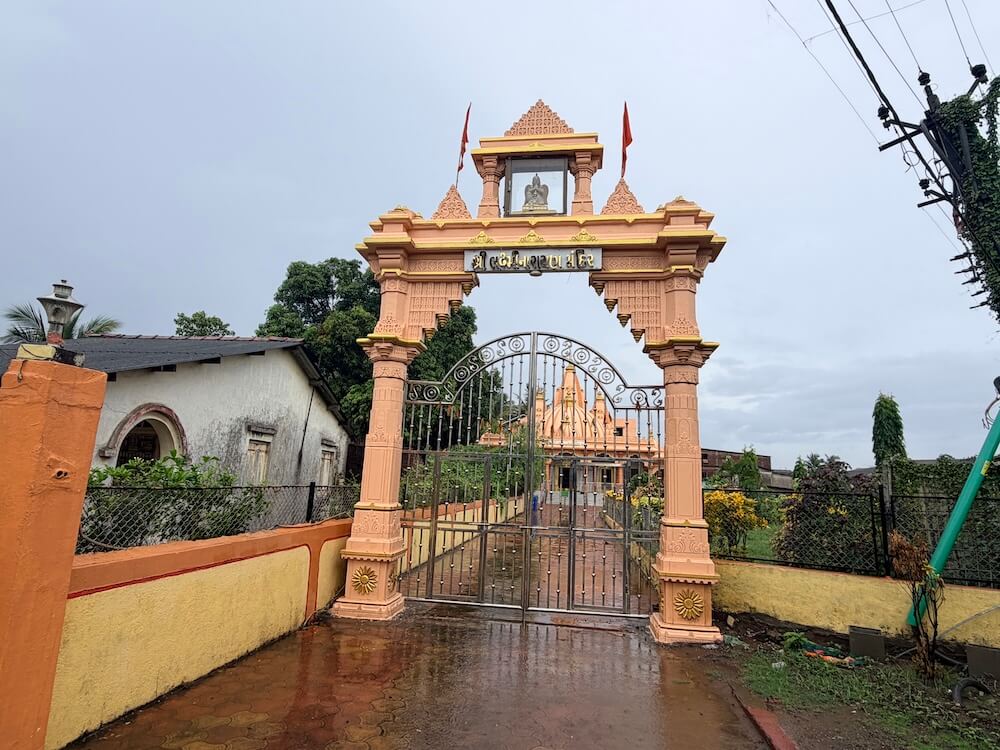
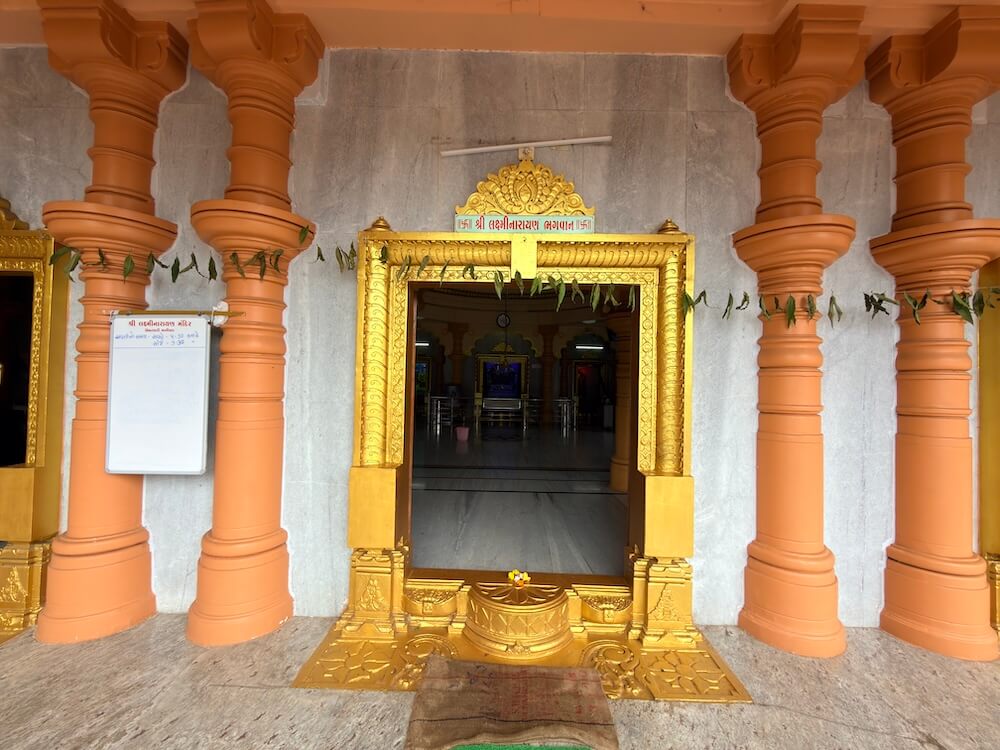
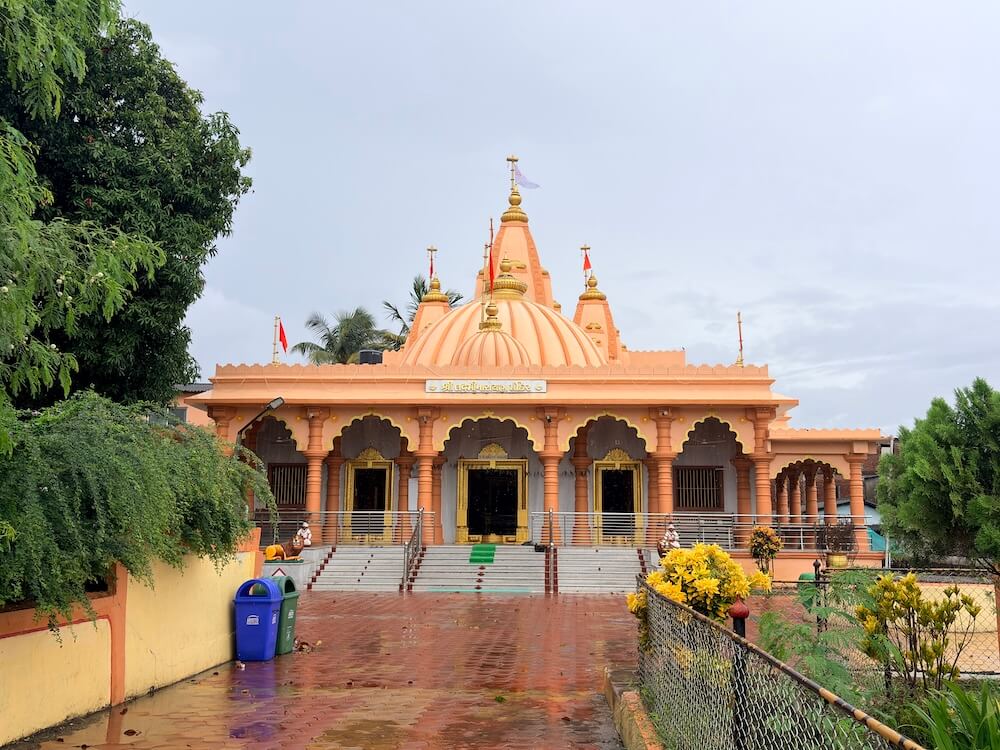
 The temple at Umarshadi is nestled in a serene area enveloped by lush mango trees. Within the ramparts surrounding the temple precinct, there are two entrance gates leading to the courtyard. Flanking the entrance gates are pillars whose bases feature intricate floral carvings. The upper section of these pillars forms a decorative arch or ‘toran’. In a pavilion situated above the entrance gate, a white marble idol of Garuda is housed inside a glass case. This entrance opens into a beautifully paved courtyard. Gardens have been meticulously developed within this courtyard, adorned with ornamental plants and vibrant flowering shrubs. In the courtyard, directly facing the temple are a water well, a ‘Tulsi Vrindavan’ and comfortable seating arrangements for devotees.
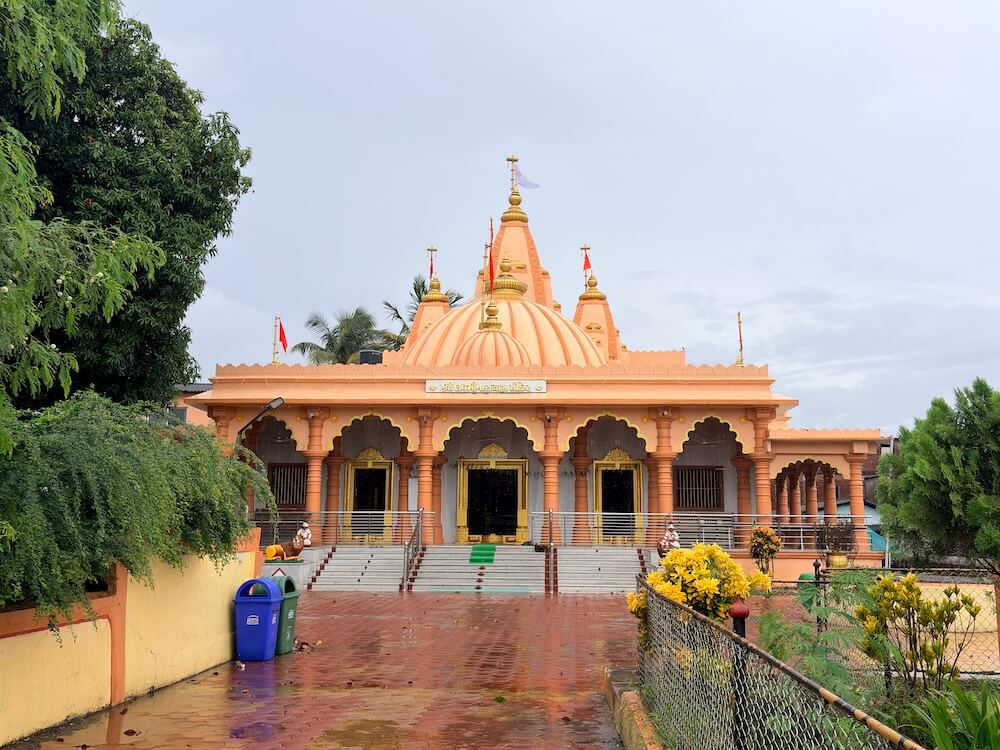
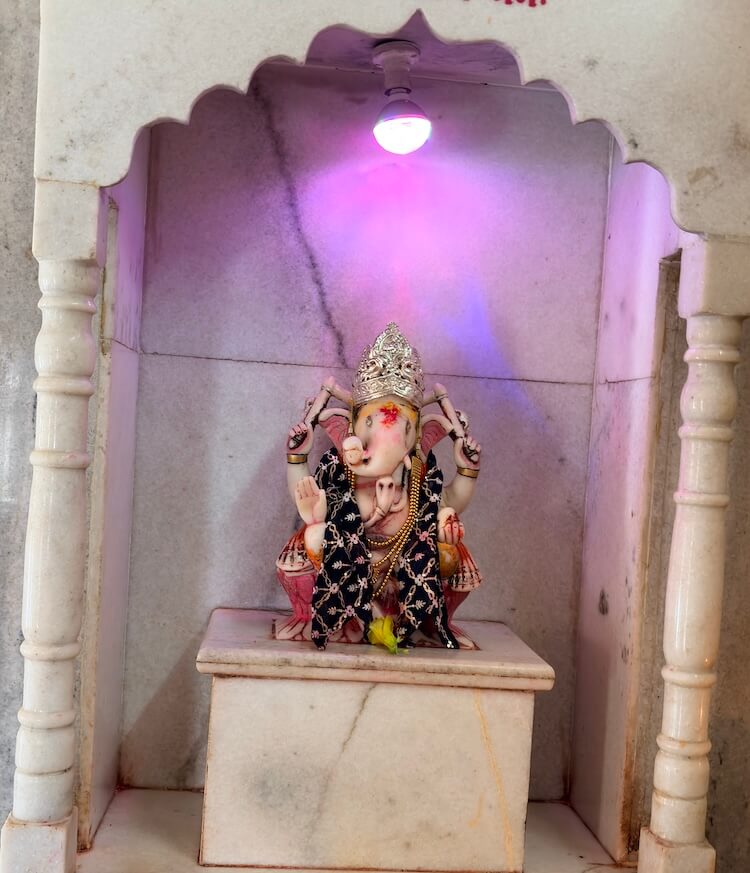
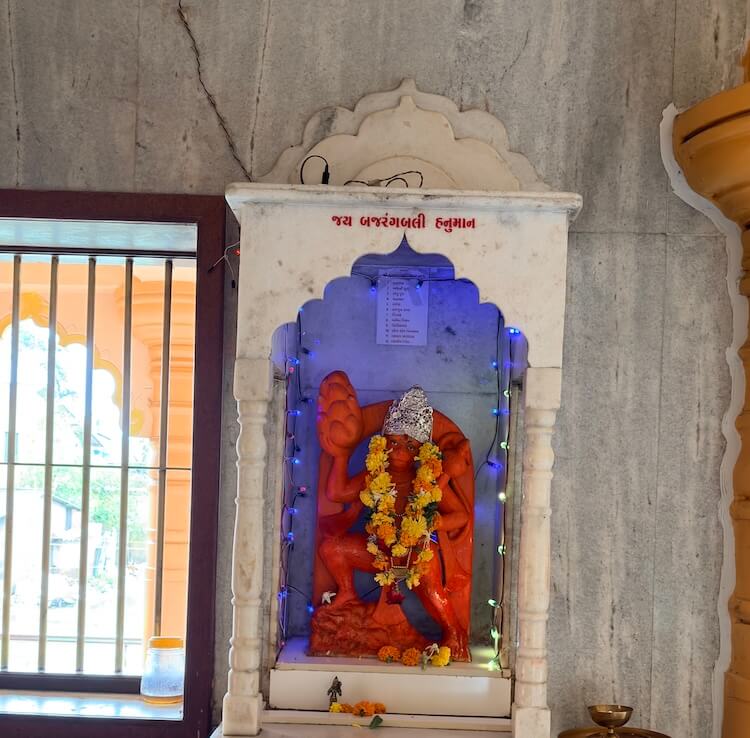
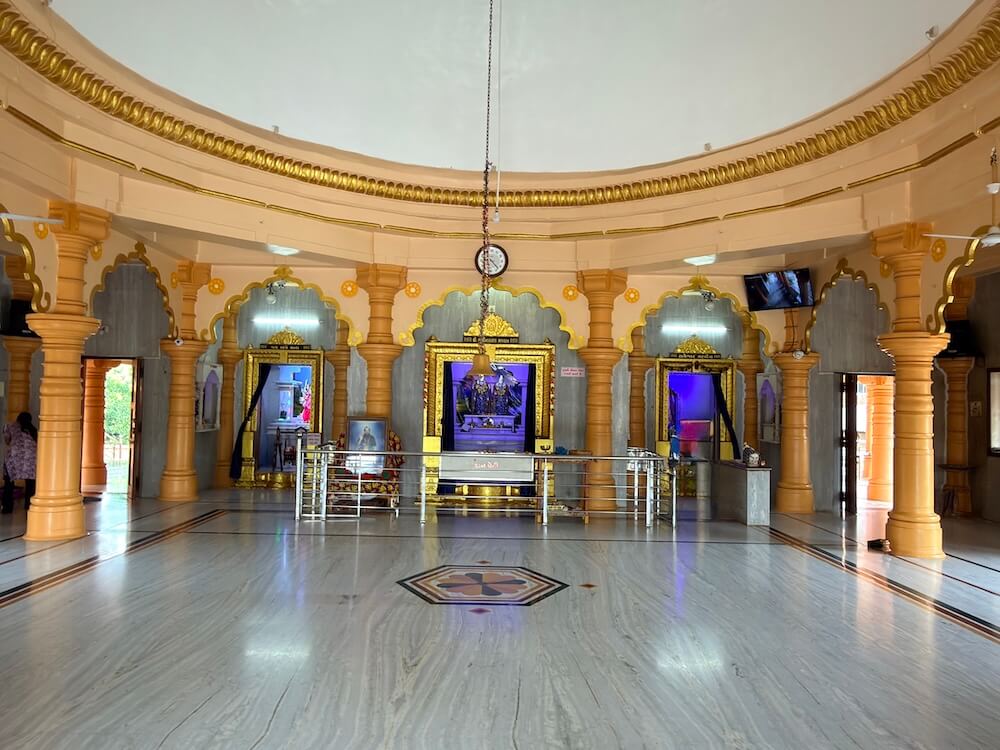
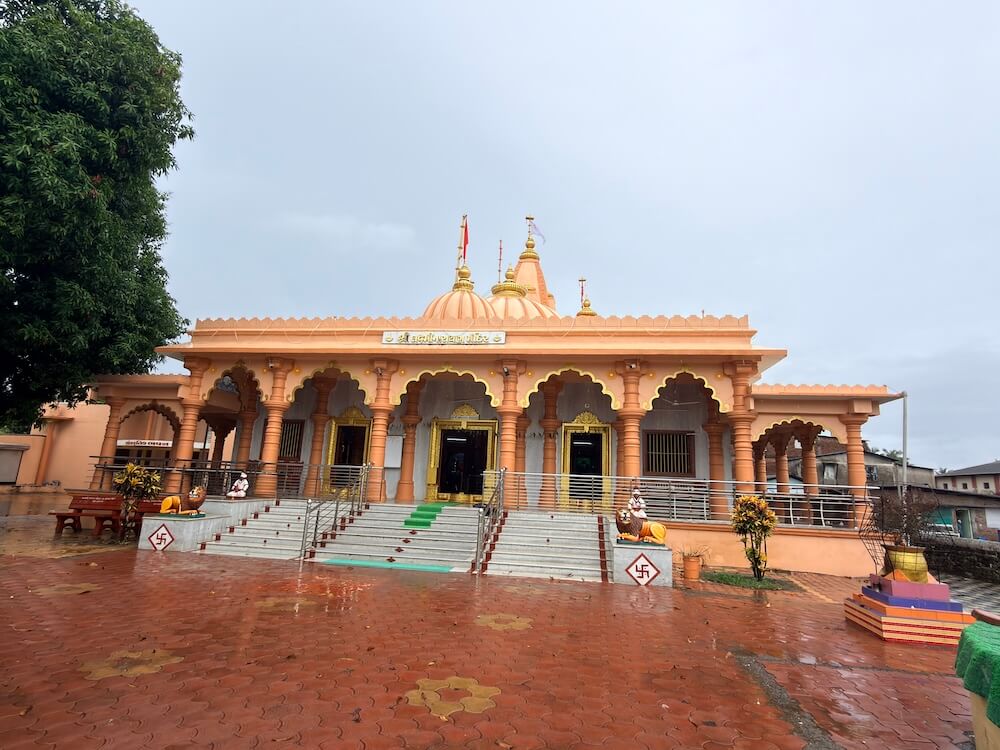
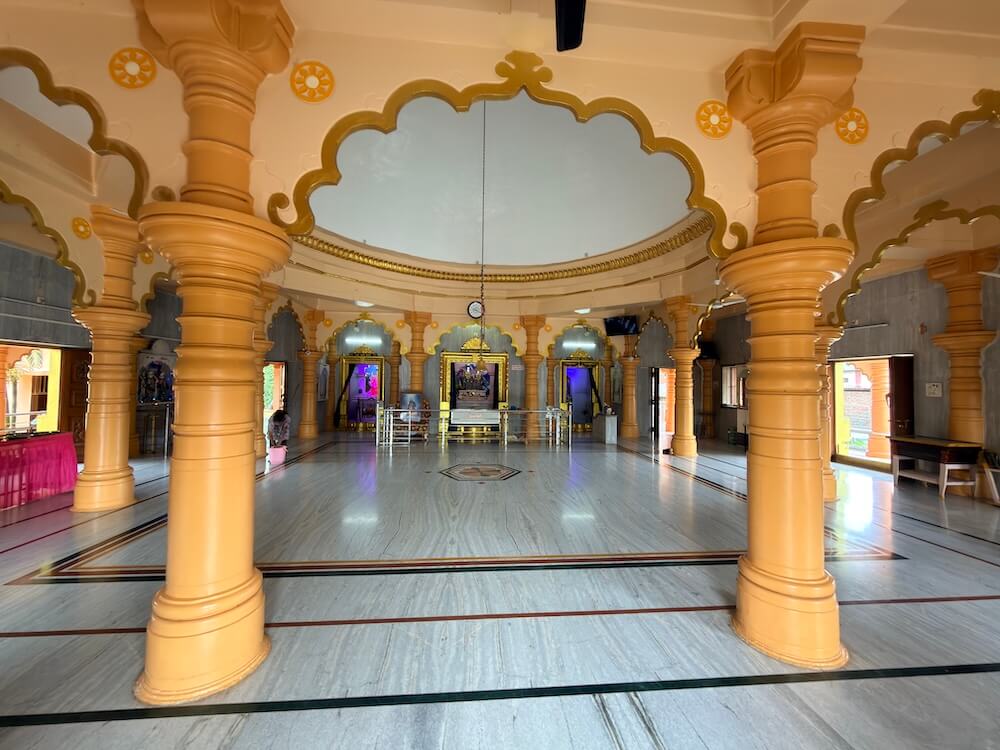 Ascending seven steps from the courtyard leads into the front porch (Mukhamandapa) of the temple, which rests upon an elevated plinth. Sculptures of majestic lions and figures of sages flank both sides of the stairway. In the facade of this temple, six ornately carved pillars are interconnected by elegant cusped arches. The layout of the temple upon the plinth comprises a congregational hall (Sabhamandapa), a vestibule (Antarala) and three sanctum sanctorums (Garbhagriha) and a spacious circumambulatory path. The congregational hall features beautifully carved pillars and polished marble flooring. Within the niches on either side of the vestibule stand the idols of Lord Ganesha and Lord Hanuman.
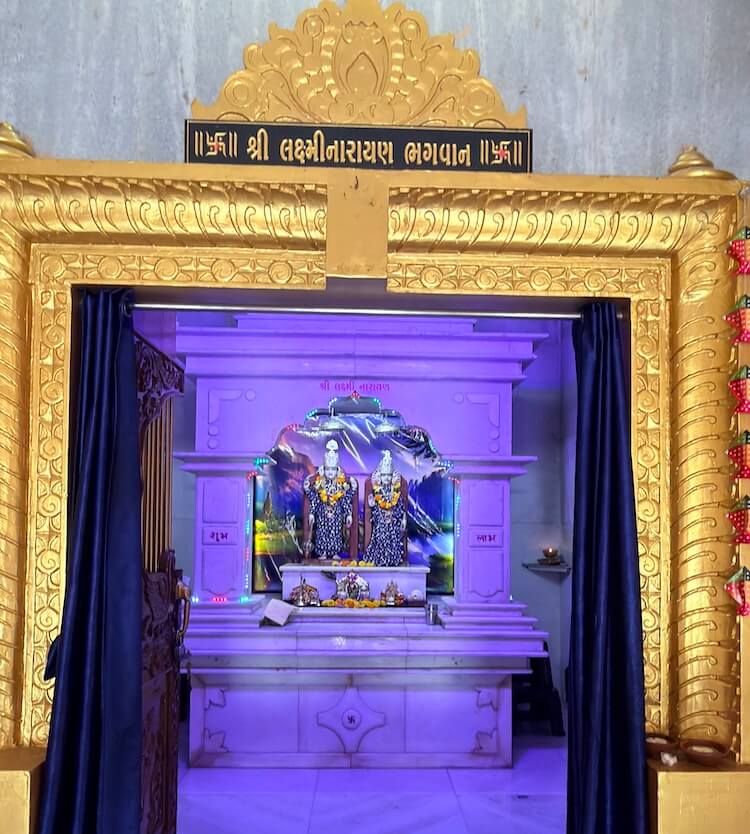
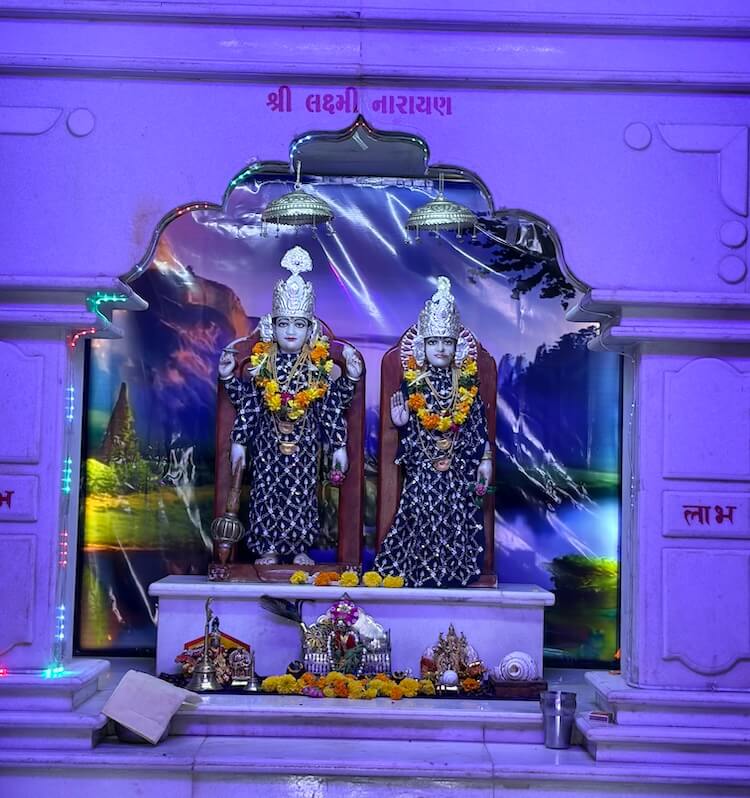
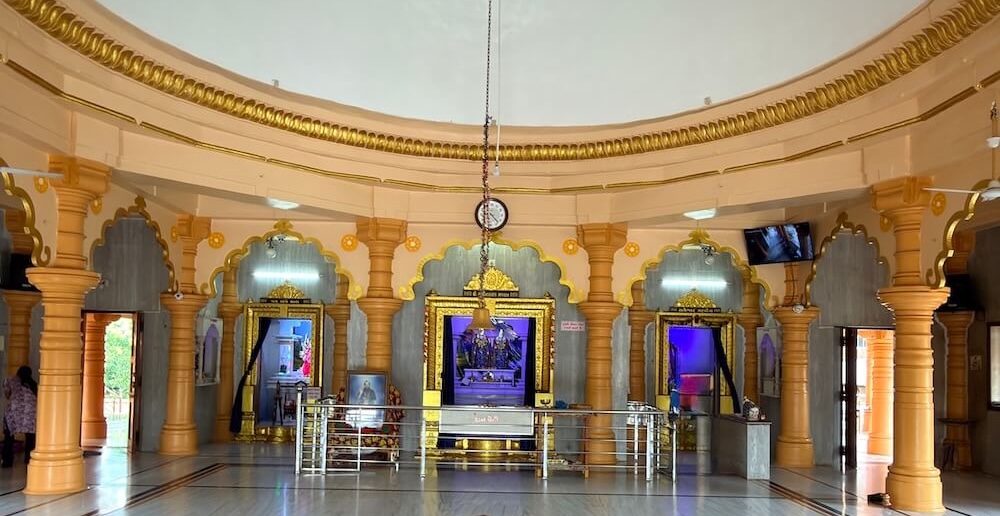 In the central main sanctum sanctorum, upon a stone pedestal, reside the white marble idols of Lakshmi and Narayan (Vishnu). The idol of Vishnu is four-armed and depicted in a standing posture. Vishnu holds a conch shell in his upper right hand, a mace in his lower right hand, a discus in his upper left hand and a lotus in his lower left hand. This manifestation is recognised as Narayan according to the traditional arrangement of ‘Shankha-Gada-Chakra-Padma’. The idol of Mother Lakshmi is two-armed and is in a standing posture.
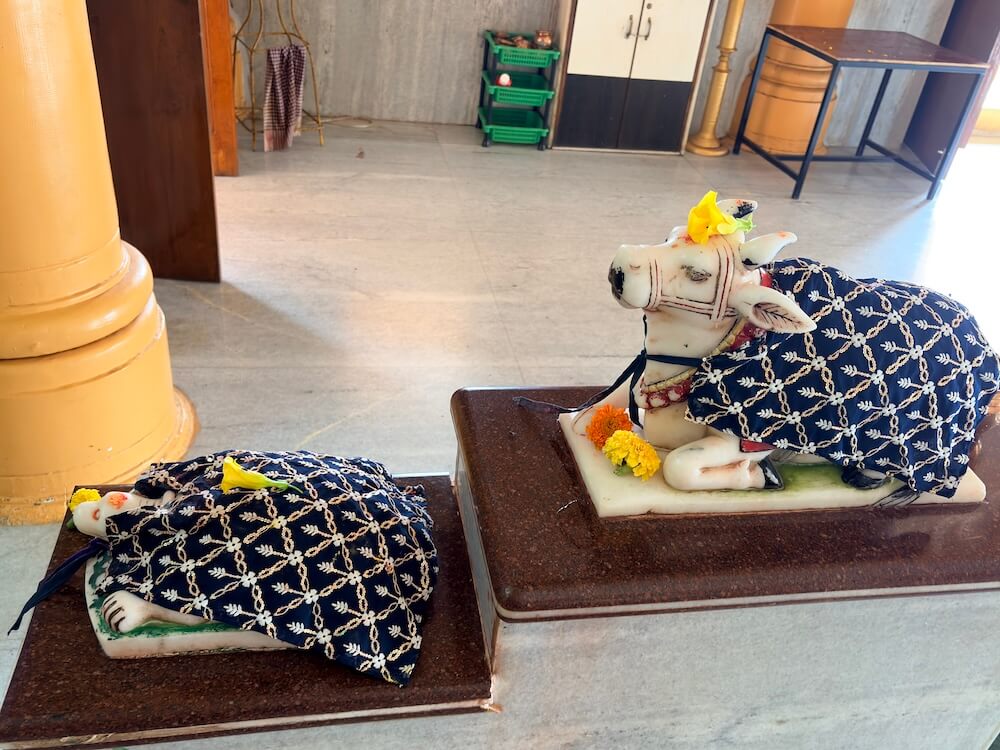
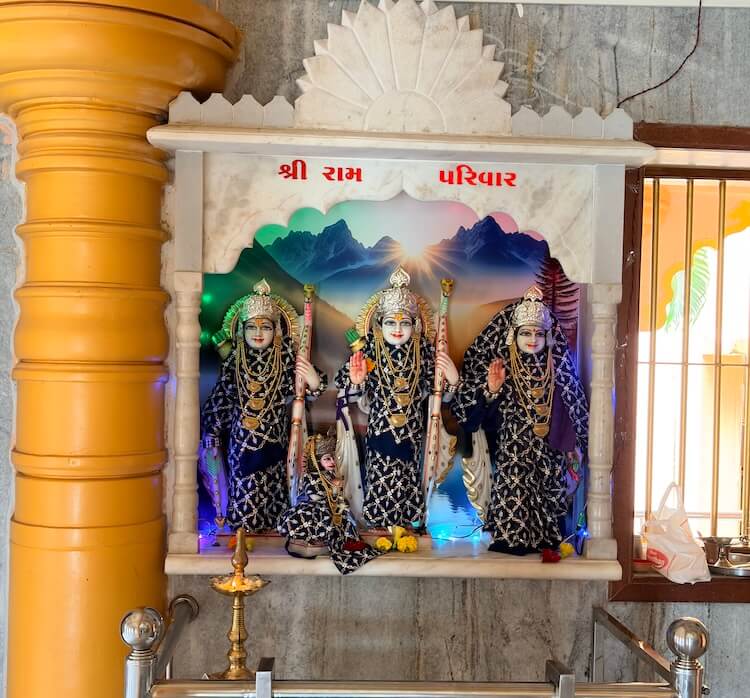
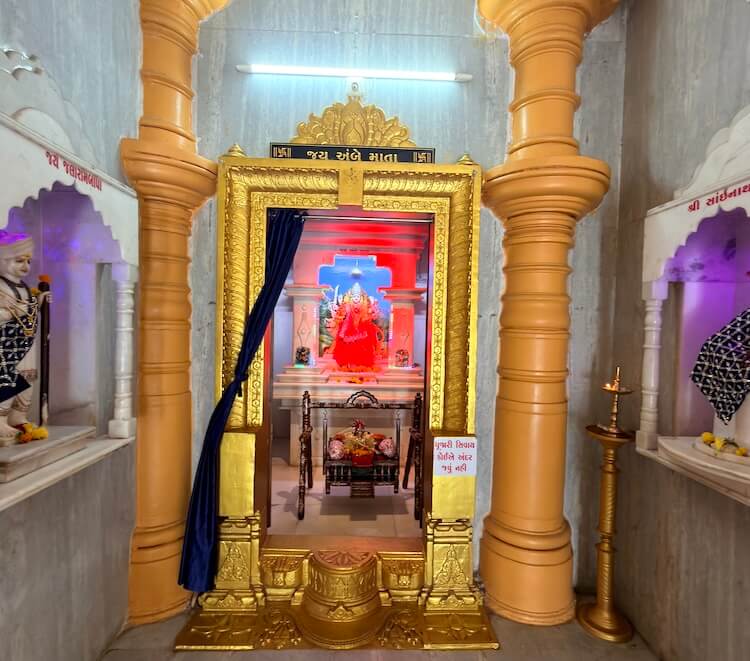
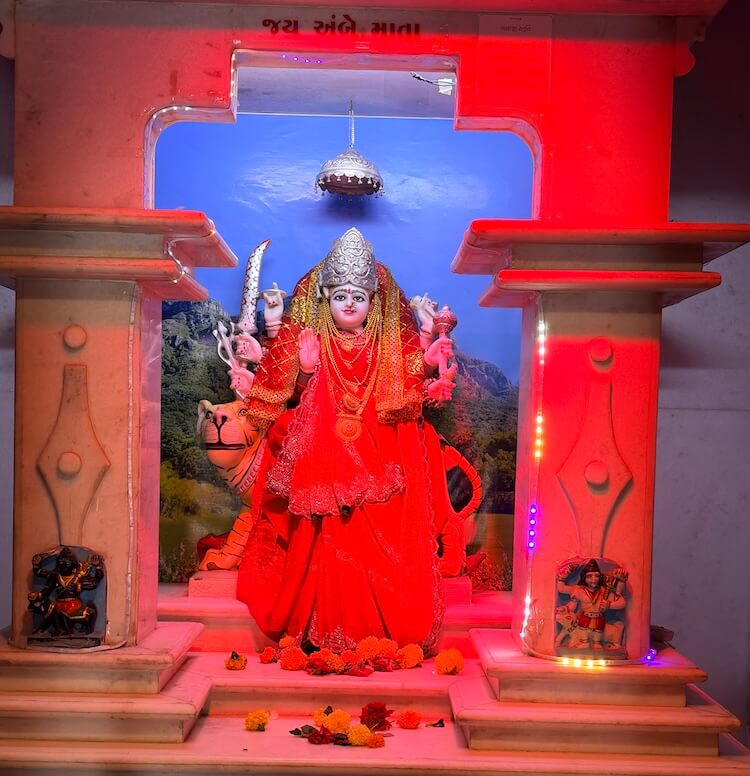
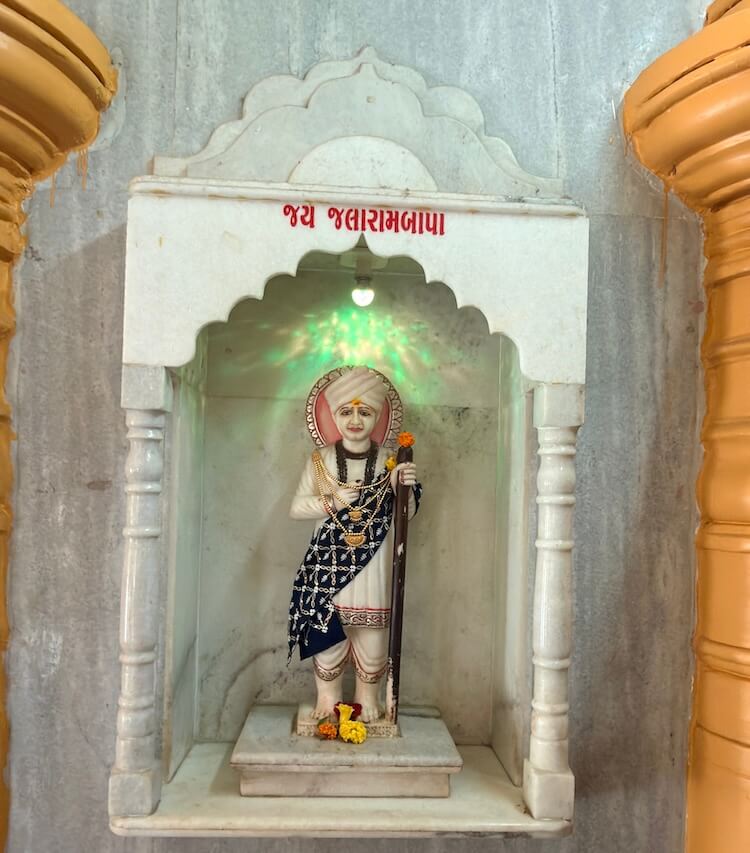
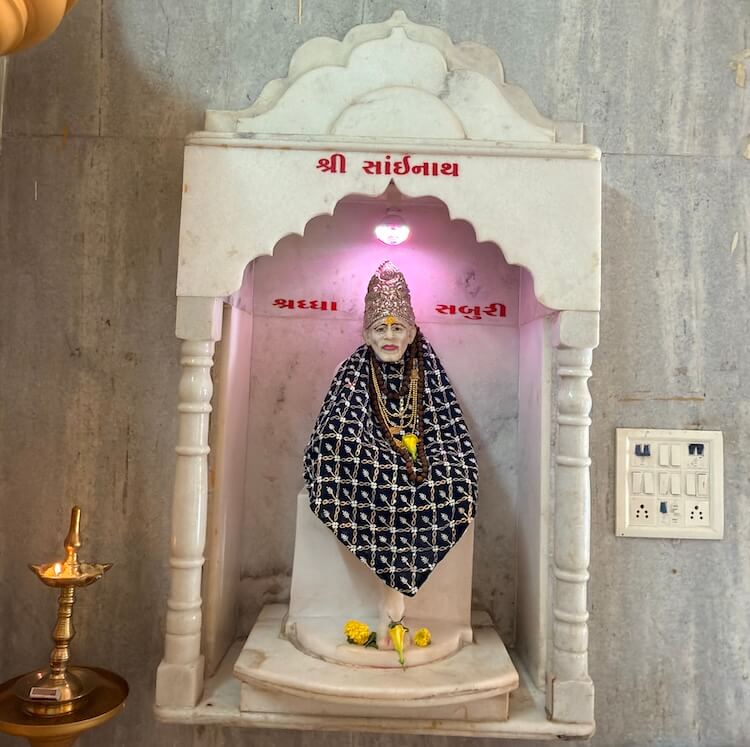
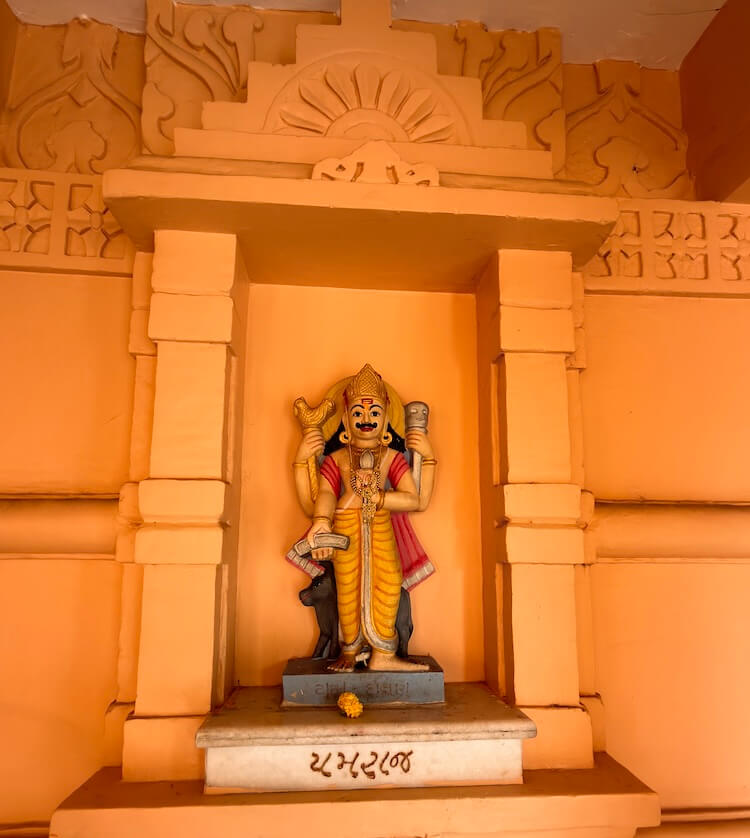
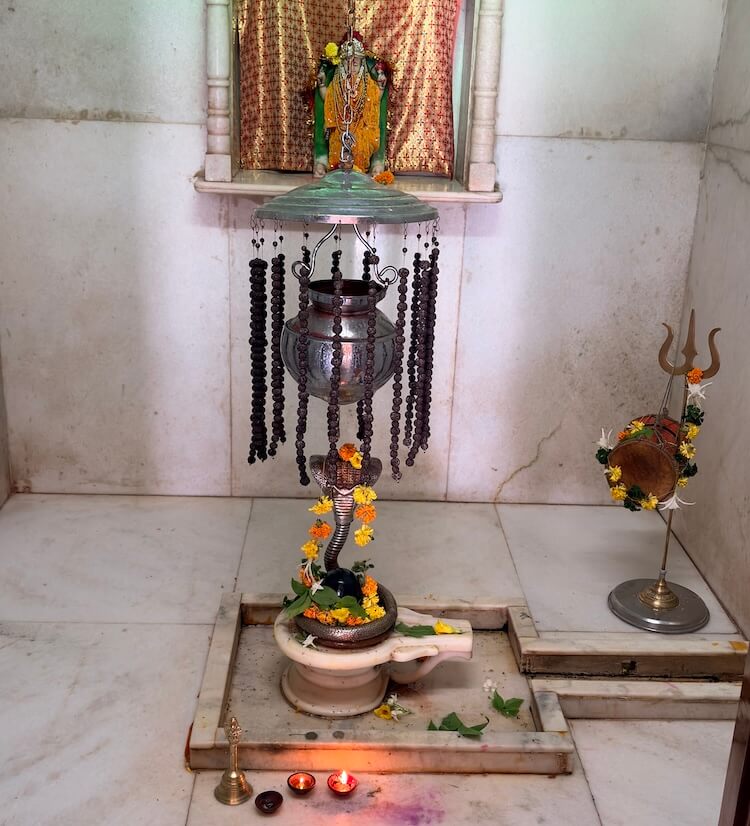
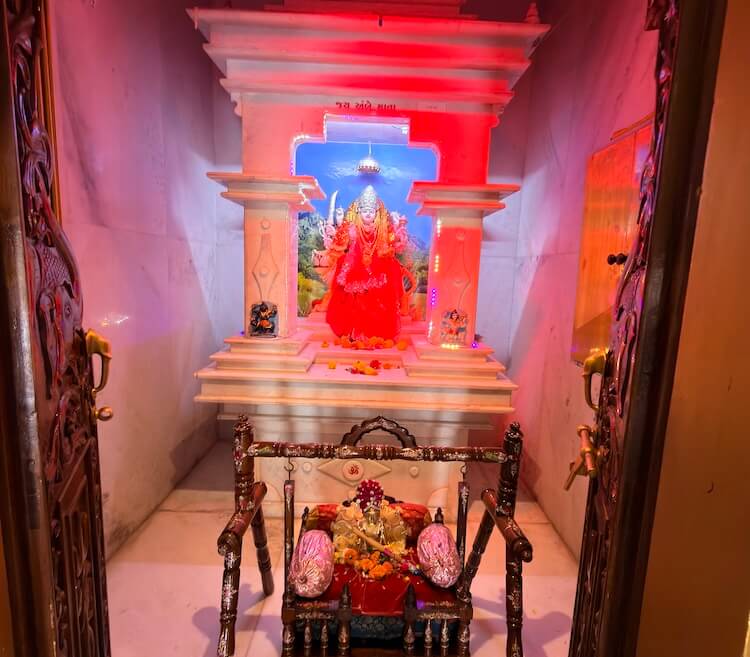 One hand of the Goddess is extended in the ‘Varada Mudra’ (boon-bestowing gesture) while her other hand holds a sacred flower. Adorned in diverse traditional vestments and fine ornaments, crowns rest upon the heads of these idols. In the subsidiary sanctum located to the right of the main sanctum sanctorum, an idol of Mother Amba rests upon a stone pedestal. In the sanctum sanctorum to the left, a Shiva Lingam is installed, with statues of Nandi and a tortoise. Furthermore, the niches within the temple enshrine the idols of Ram, Lakshmana, Sita, Maruti, Jalaram Bapa and Sai Baba. Even within the niches on the temple’s exterior walls, the idols of Yama, Varun and Kuber are beautifully installed. Spires surmount the viewing porches, the congregational hall and all three sanctum sanctorums of the temple. Among these, the viewing porches and the congregational hall feature dome-shaped spires, whereas the spires over the sanctum sanctorum are square and taper elegantly towards the apex.
 The festival of Janmashtami, celebrating the birth of Lord Krishna is grandly observed at this temple. On this auspicious day, special prayers are offered in the temple, culminating in the midnight celebration of Lord Krishna’s birth. The following day witnesses the lively festivities of ‘Dahi Handi’. On the occasions of Dhantrayodashi and Lakshmi Pujan, Lakshmi and Narayan are worshipped with deep devotion. During these rituals, local citizens and the merchant community pray for enduring prosperity and happiness in their households. On the day of the Gujarati New Year, known as ‘Bestu Varas’, which falls on the day after Diwali, the temple is thronged by devotees from the early hours of dawn. Marking the commencement of the New Year, the ‘Annakut’ festival is celebrated with great devotion in the temple. During this festival, a grand offering comprising a diverse array of delicacies, akin to the traditional ‘Chhappan Bhog’, is presented to the deities. Furthermore, festivals such as Tulsi Vivah and Dev Diwali in the holy month of Kartik are also solemnised in this temple according to traditional Vedic rites. The daily arati is performed at half-past five in the morning and half-past seven in the evening. Devotees can seek the audience of Laxminarayan at this temple every day from 5 o’clock in the morning until 8 o’clock at night.
Useful Information :
- Located at a distance of 7 km from Pardi and 12 km from Valsad city.
- State Transport (ST) bus facility is available from Pardi and Valsad.
- Private vehicles can reach the temple.
- Accommodation and breakfast facilities are available in the vicinity.
- Contact: Krishnabhai Tandel, President, Mo. 7874186797, Pravinbhai Tandel, Vice President, Mo. 9586746993