
श्री स्वामीनारायण मंदिर
कालुपूर, अहमदाबाद, ता./जि. अहमदाबाद
Shree Swaminarayan Mandir
Kalupur, Ahmedabad, Tal./ Dist. Ahmedabad
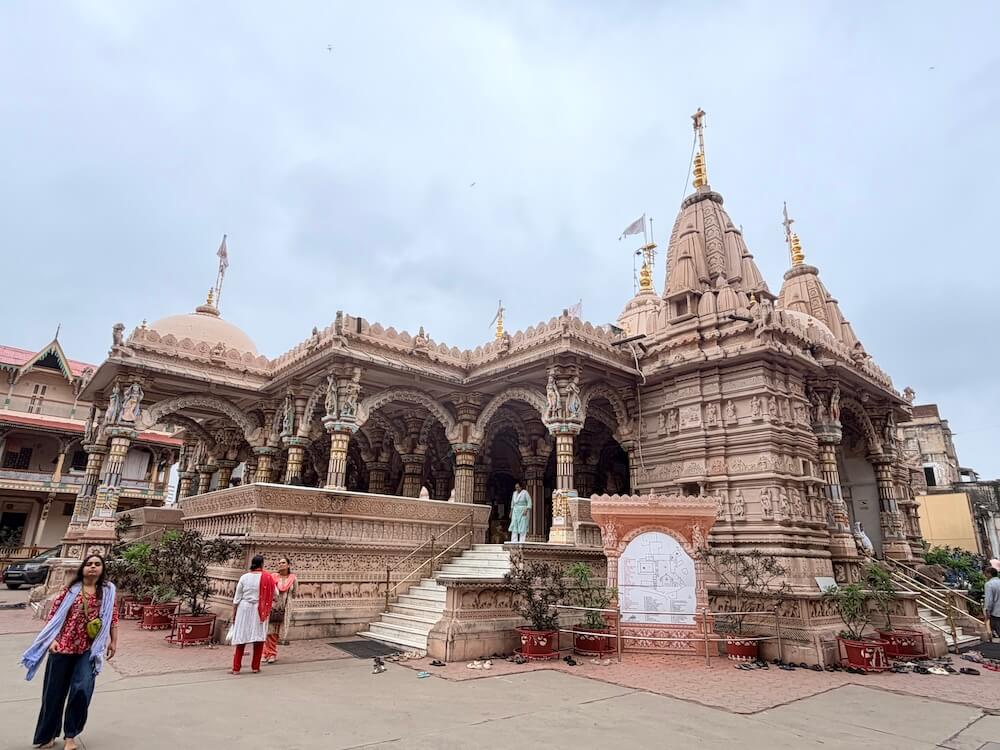
 The world’s first temple of the Swaminarayan Sampradaya, a religious tradition founded on the principles of devotion, righteous conduct, non-violence and social welfare, stands in the Kalupur area of Ahmedabad in Gujarat. This Vaishnava shrine was established under the personal guidance of Sahajanand Swami, better known to devotees as Bhagwan Swaminarayan. The sect has its theological roots in the Vishishtadvaita philosophy propounded by Ramanujacharya and the Kalupur mandir has remained one of its foremost spiritual seats ever since its inception. In accordance with his formally documented wishes known as the ‘Desh Vibhag Lekh’, Bhagwan Swaminarayan divided the administration of the sampradaya into two main jurisdictions, namely the Nar Narayan Dev Gadi (Northern Division) and the Lakshmi Narayan Dev Gadi (Southern Division). The Kalupur shrine serves as the principal administrative and spiritual centre of the Nar Narayan Dev Gadi.
Within the religious tradition of the sampradaya, devotees worship Bhagwan Swaminarayan as a manifestation of Vishnu or Narayana. His earthly appearance is associated with Nara and Narayana, the divine sages mentioned in ancient scriptures such as the ‘Shrimad Bhagavata Purana’, the ‘Mahabharata’ and the ‘Harivamsha’. Scriptural lore relates that these two sages performed severe austerities at Badarikashrama for the welfare of humankind. 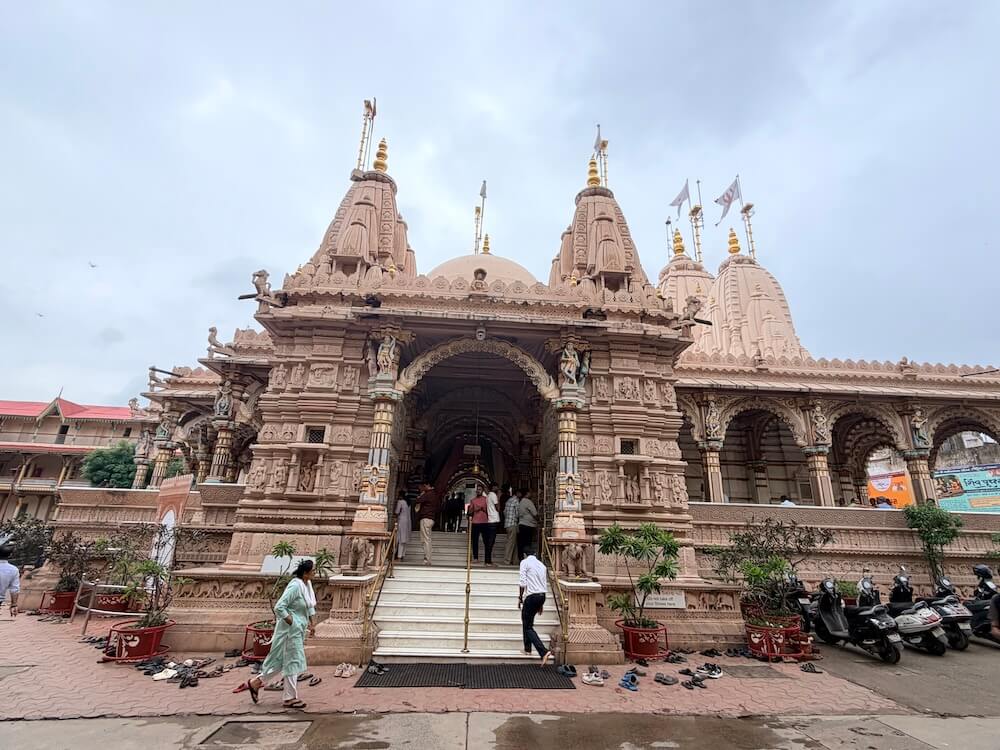 Followers of the sect also interpret specific passages in texts such as the ‘Skanda Purana’ and its ‘Vasudeva Mahatmya’ section as a prophecy of a divine incarnation who would arise to protect dharma during the Kali Yuga. Devotees believe that this foretelling was fulfilled in the person of Bhagwan Swaminarayan.
Bhagwan Swaminarayan was born as Ghanshyam Pande on 3 April 1781 in the village of Chhapaiya near Ayodhya in present-day Uttar Pradesh, a date corresponding to Vikram Samvat 1837, Chaitra Shukla Navami or Shri Ram Navami. Within the tradition, his father, Hariprasad Pande, was known as Dharmadev, while his mother, Premvati Pande, was venerated as Bhaktimata. Following the passing of his parents, 11-year-old Ghanshyam renounced his home and dedicated his life to spiritual pursuits. 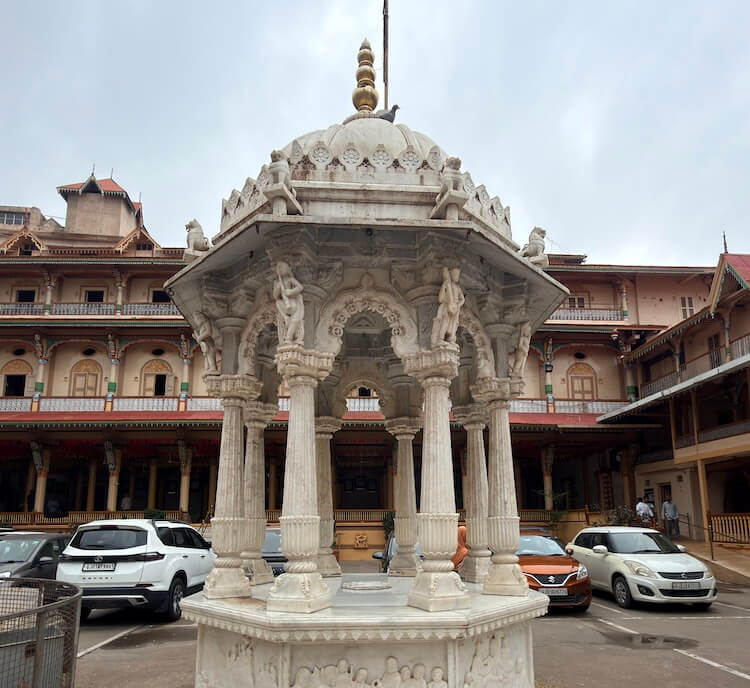 Taking the name Nilkanth Varni, he travelled across India and parts of modern Nepal for around seven years in search of a guru. This quest deepened his understanding of dharma at a tender age while he performed austerities in the Himalayas and studied Ashtanga Yoga under the ascetic Gopal Yogi.
Nilkanth Varni arrived at Loj in Gujarat in 1799, where he met Muktanand Swami, a senior disciple of Ramanand Swami and stayed at the ashram while awaiting an opportunity to meet the master. According to sectarian scriptures, the two finally met at Piplana in 1800. Within the Swaminarayan tradition, Ramanand Swami is venerated as an incarnation of Uddhava, the wise devotee and companion of Krishna. In October 1800, Ramanand Swami initiated Nilkanth Varni into the Vaishnava fold of the Uddhav Sampradaya and gave him the name Sahajanand Swami. At Jetpur in November 1801, shortly before passing away in December that year, 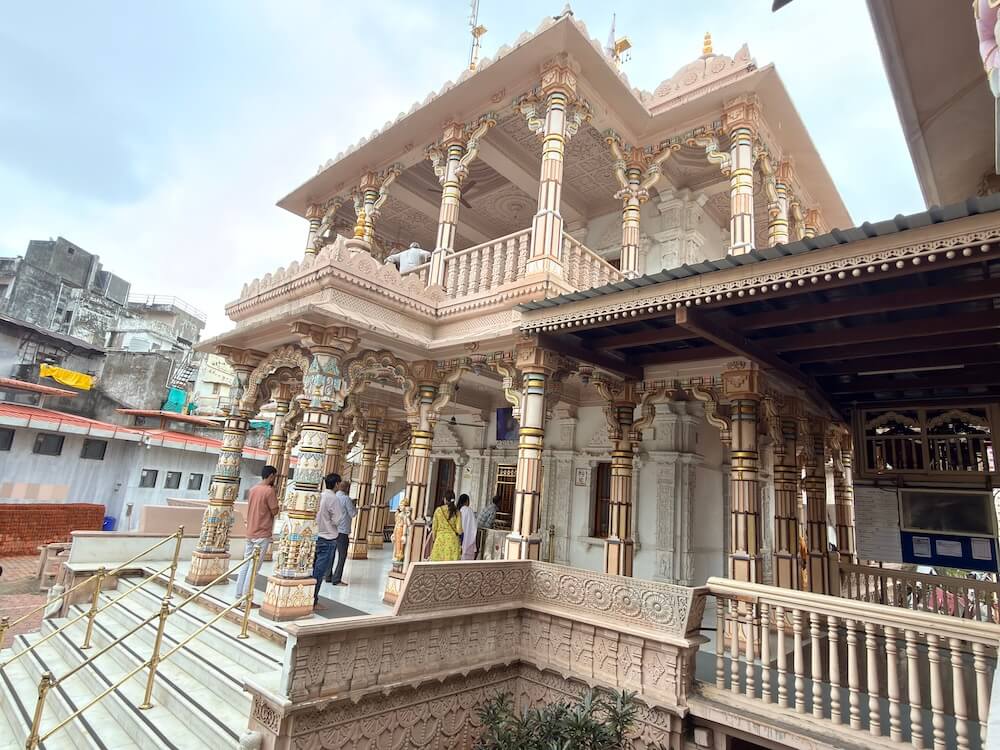 Ramanand Swami appointed Sahajanand Swami as his successor and head of the fellowship. On 31 December 1801, soon after his guru’s death, Sahajanand Swami introduced the Swaminarayan Mahamantra to devotees at Faneni and as the new mantra gained acceptance, both the master and the former Uddhav Sampradaya came to be popularly known as Swaminarayan.
The British East India Company took control of Ahmedabad in November 1817 and John Andrew Dunlop became the city’s first British Collector in February 1818. Impressed by the work undertaken by Bhagwan Swaminarayan and his followers to curb violence, addiction and harmful social customs, Dunlop helped secure a government land grant at Kalupur for the construction of a temple, which later temple accounts describe as comprising 5,000 acres. 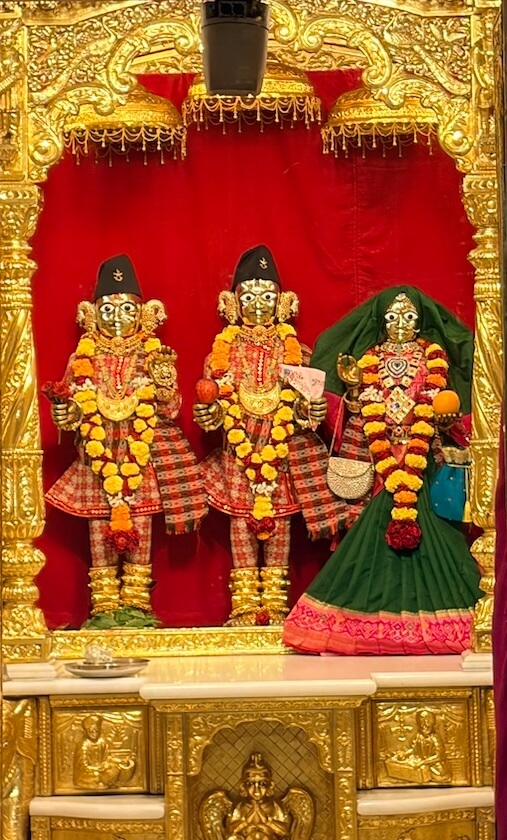 Bhagwan Swaminarayan entrusted the primary responsibility for building the shrine to his disciple Anandanand Swami. On 24 February 1822, corresponding to Vikram Samvat 1878, Phalguna Shukla Tritiya, Bhagwan Swaminarayan personally consecrated the temple and its deities. Contemporary reports record that a gathering of nearly 50,000 people accompanied him to Ahmedabad for the ceremony.
According to traditional history preserved by the shrine, Dunlop was so struck by the scale of the structure and the beauty of its woodwork that he arranged for a 101-gun salute in its honour. This episode is repeated in later institutional chronicles and is also recounted in the ‘Shri Hari Charitramrut Sagar’, an important devotional biography of Bhagwan Swaminarayan and the sampradaya. Temple accounts further state that when land was required for constructing the Kalupur railway station during the latter half of the 19th century, the temple administration returned part of its original grant to the British government and received 1,000 acres in Narayan Nagar as compensation. Earlier, in 1826, Bhagwan Swaminarayan had appointed Ayodhyaprasad Maharaj, the son of his elder brother Rampratap, as the first acharya of the Nar Narayan Dev Gadi, entrusting him with its spiritual and administrative duties. Acharya Koshalendraprasad Maharaj is the present acharya of the gadi. The complex also serves as the starting point of the Ahmedabad Heritage Walk, a cultural initiative launched by the Ahmedabad Municipal Corporation in association with the Foundation for Conservation and Research of Urban Traditional Architecture (CRUTA).
Facing Relief Road, the richly ornamented entrance gateway of the complex presents a graceful confluence of British, Mughal, Rajasthani and Maharashtrian architectural influences. Its columns bear the vertical fluting characteristic of the European Corinthian order, while the domed canopies of its projecting pavilions recall the elegance of Mughal design. Wooden sculptures across the gateway depict Gujarati and Rajasthani folk culture, particularly through their detailed rendering of regional attire. Carvings of women dressed in traditional cholis and ghagras and carrying children in their arms portray everyday domestic life in Gujarat during the period in which the complex was built.
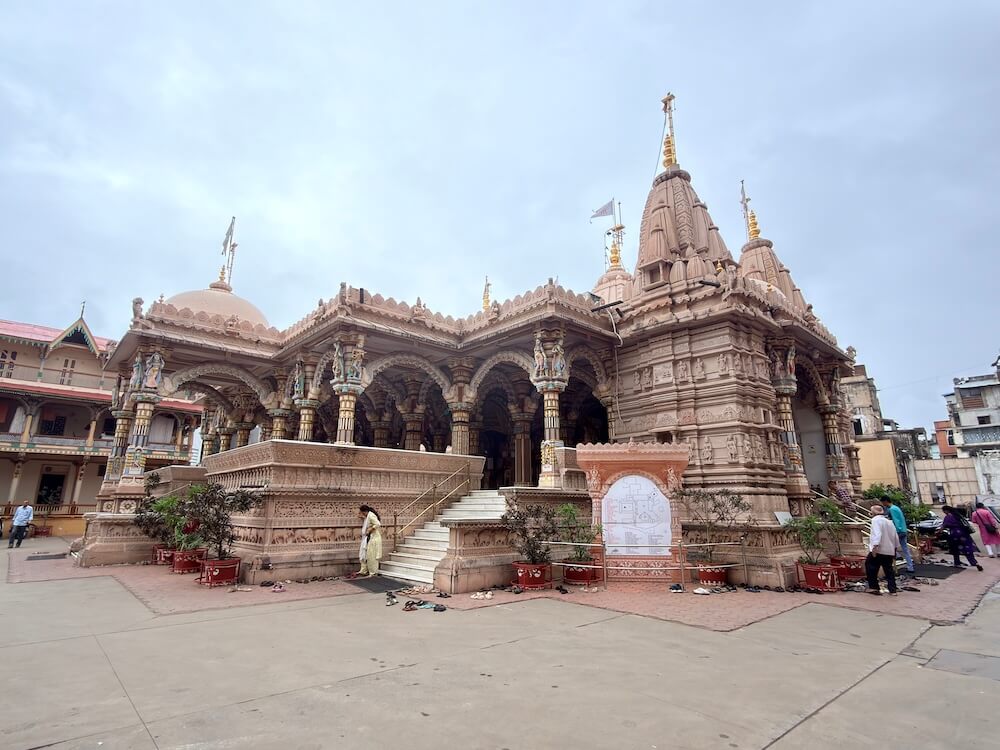
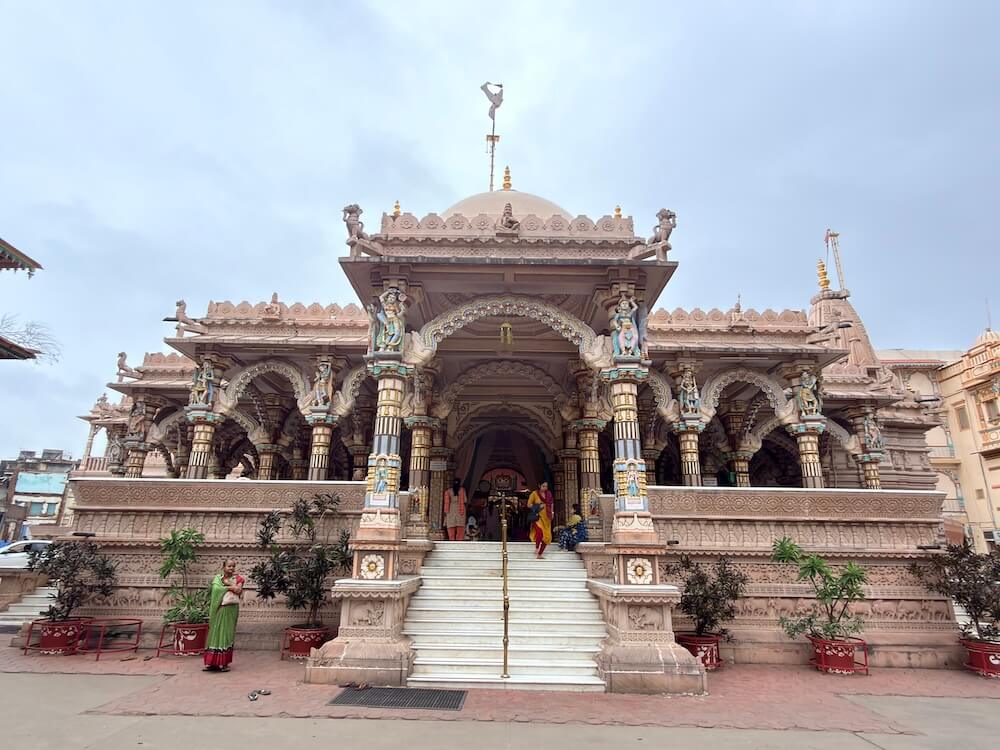
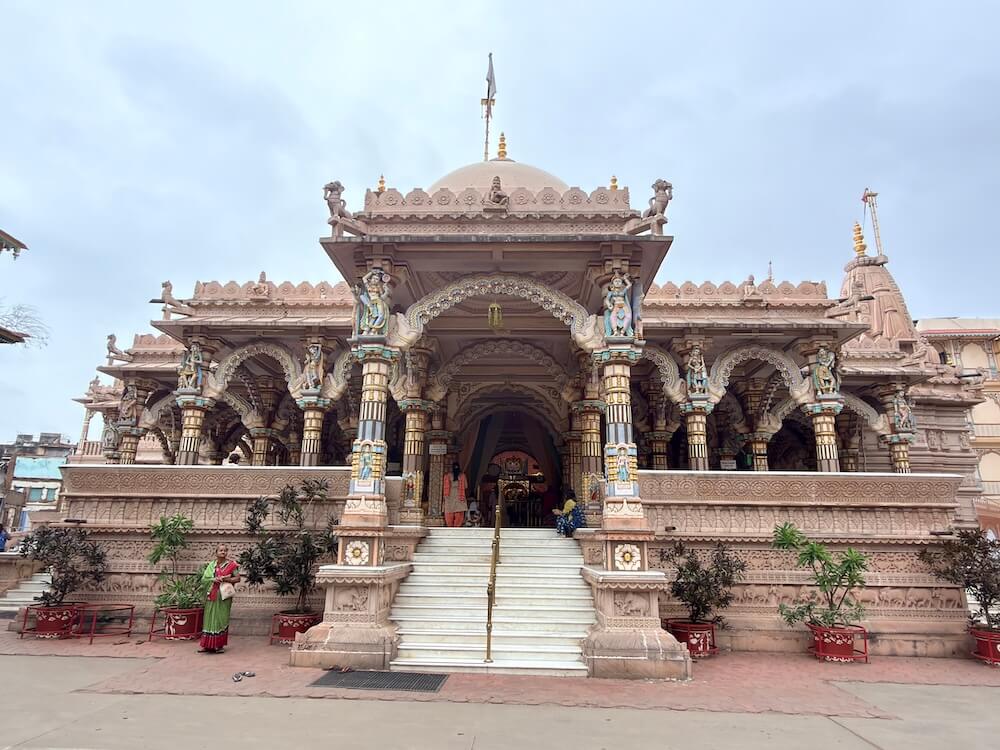
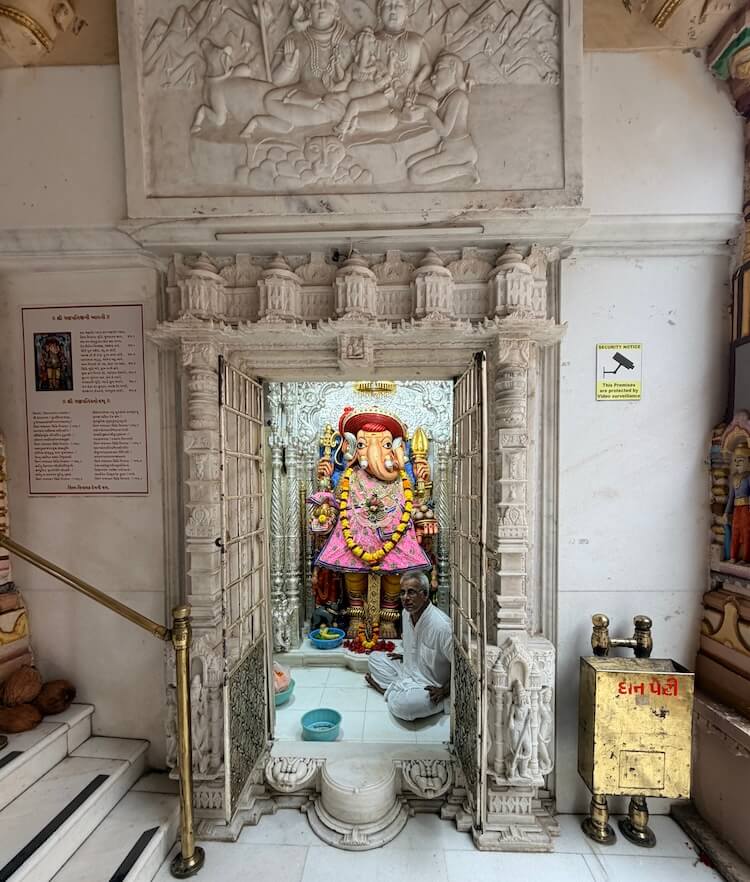
Beyond the gateway lies the spacious inner precinct, dominated by the principal temple with its three shikhars.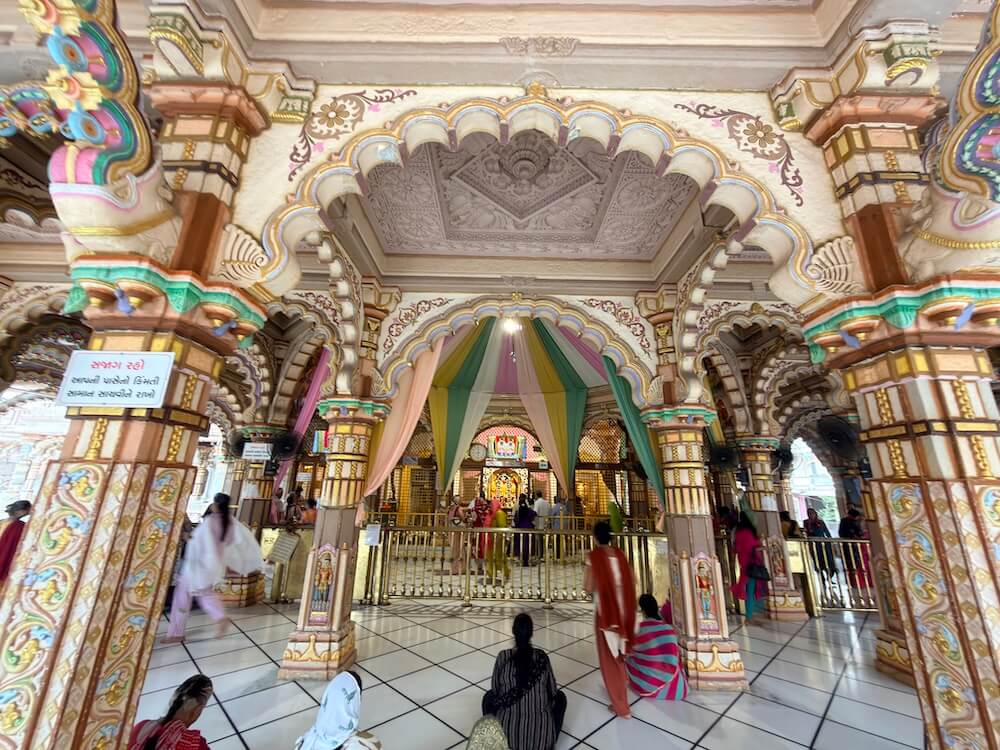 Stone sculptures of elephants flank the main steps, with a shrine dedicated to Lord Ganesha on the left and another dedicated to Lord Hanuman on the right. The sabhamandap leads to three separate sanctums. Situated on the right, the first garbhagriha houses the idols of Radha and Krishna, with Krishna fashioned from black marble and Radha carved from white marble.
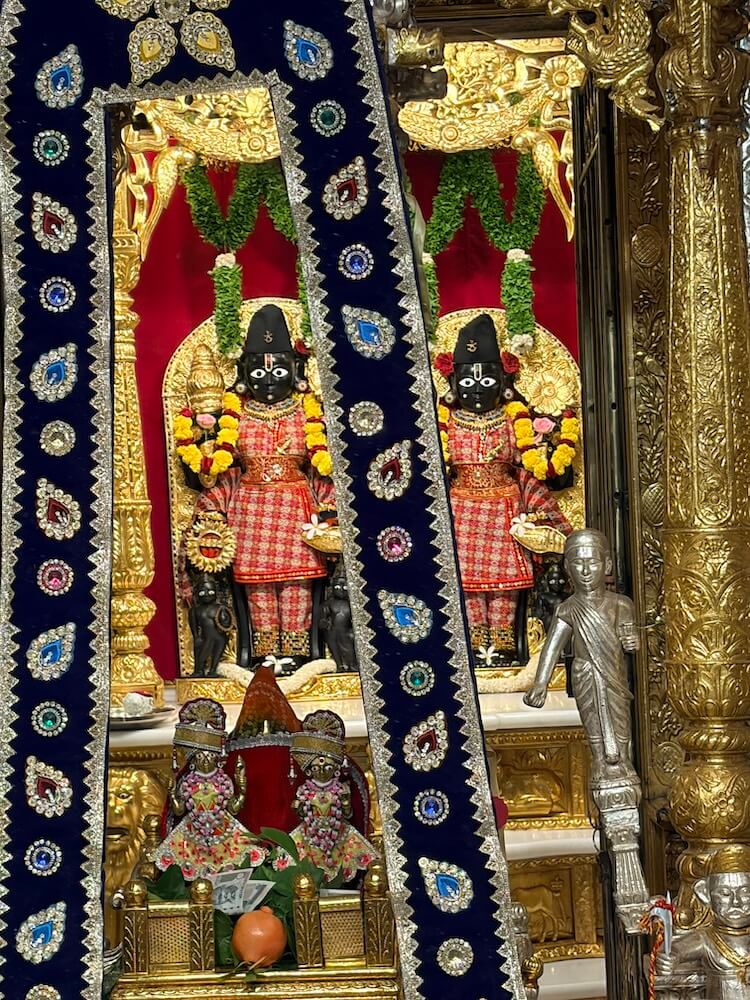
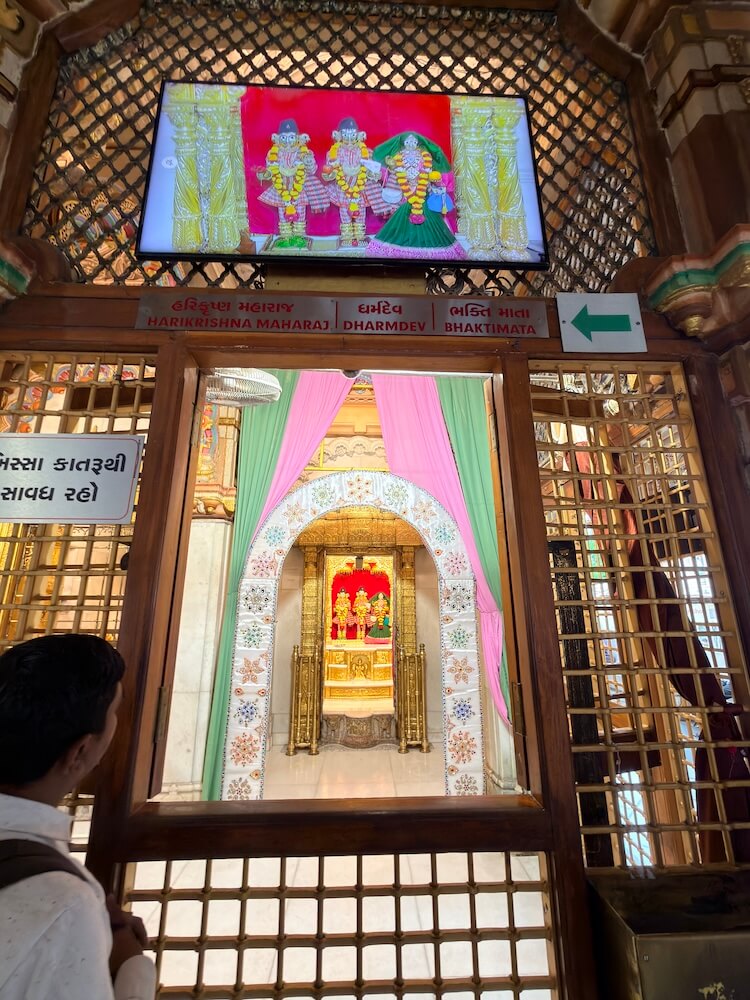
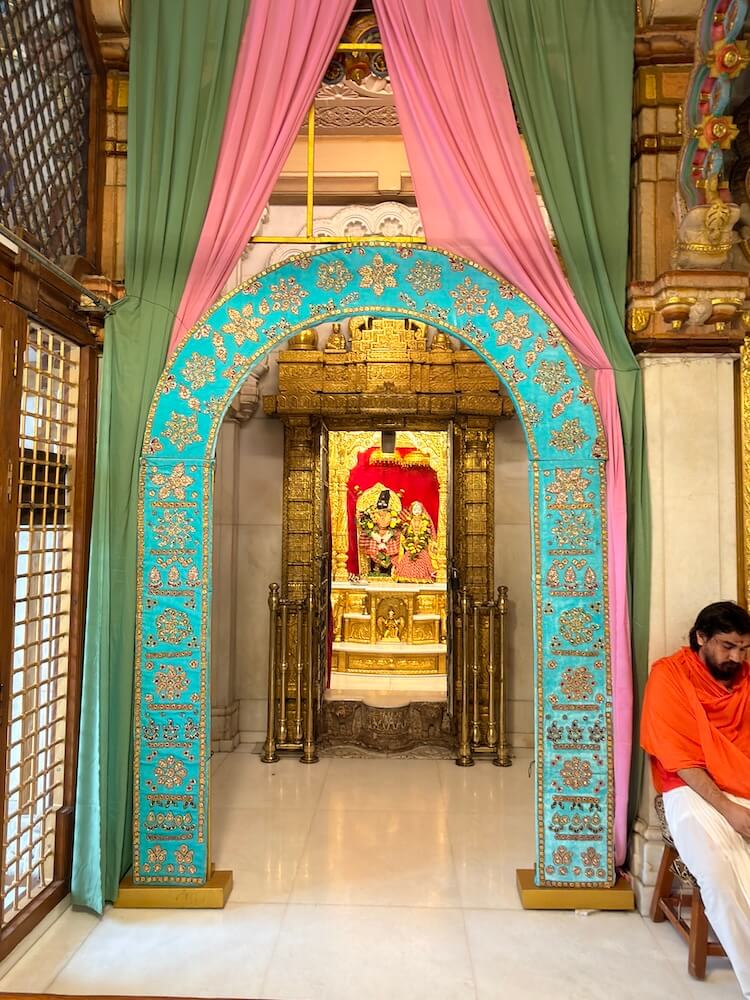
At the centre stands the principal sanctum of Nara and Narayana, framed by a finely carved wooden doorway. Carvings of kirtimukhs (protective mask motifs) appear near the base of the entrance, while a relief carving of Lord Ganesha adorns the lalatbimb (central lintel carving) above the doorway.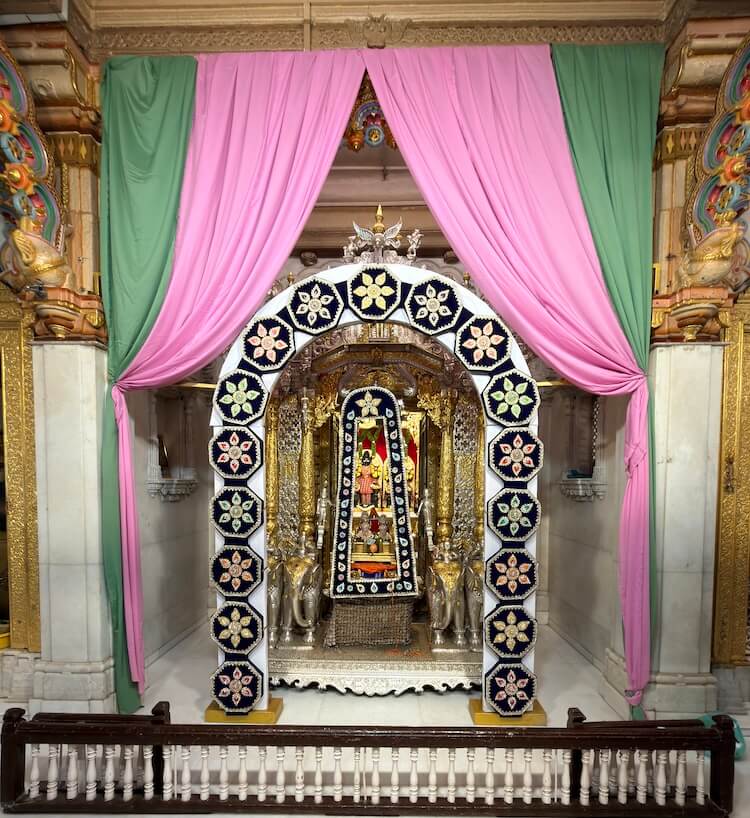 Inside the garbhagriha, the black-marble murtis of Nara and Narayana are enshrined within an ornamental gold-plated frame alongside a ceremonially installed Shiva Panchayatan (five-deity worship group) representing Shiva with four associated deities. Situated on the left, the third sanctum houses the idol of Harikrishna Maharaj, the form in which Bhagwan Swaminarayan is worshipped here, together with murtis of his parents Dharmadev and Bhaktimata. All these idols were sculpted at Dungarpur in Rajasthan from stone quarried in the Himmatnagar and Dhrangadhra regions of Gujarat.
The principal roof of the temple is domed and much of the fine carving throughout the structure is executed in Burma teak, giving the building its warm colour. Several historic havelis stand within the main complex, including the western haveli, which once served as the official residence of the acharyas of the Nar Narayan Dev Gadi. Its ground floor now houses administrative offices, while the inner quarters provide accommodation for Sankhya Yogi women devotees who follow a disciplined religious life. Completed under the guidance of Acharya Keshavprasad Maharaj in 1871, the three-storeyed haveli to the north of the main shrine features a principal assembly hall resting on 60 wooden pillars.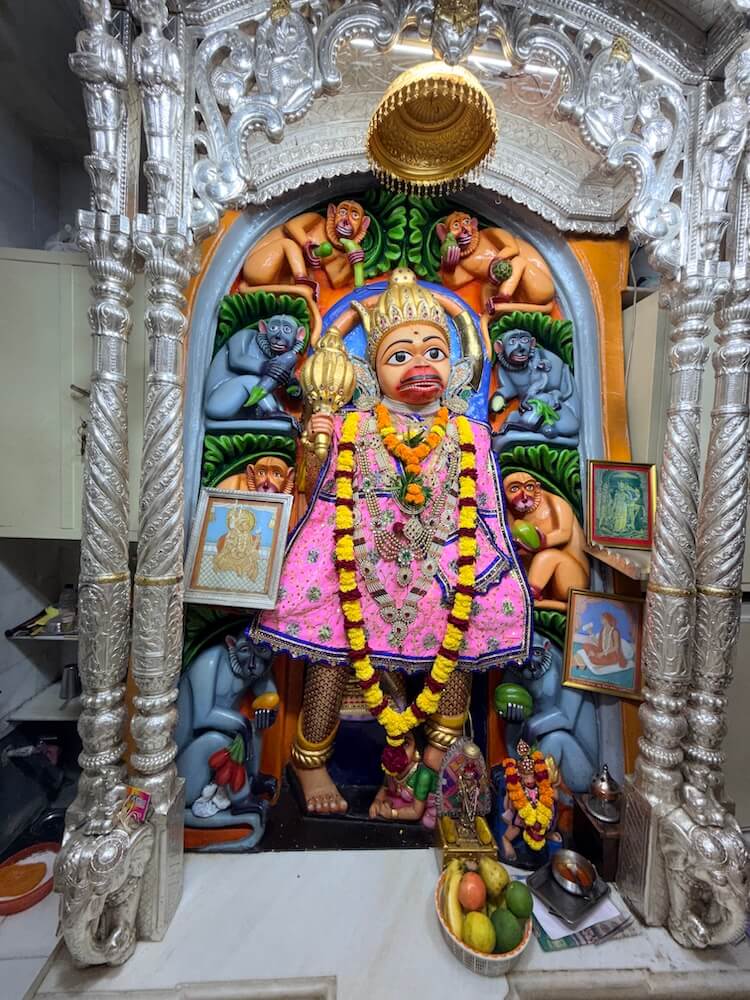 Twelve tall pillars in the front row supporting the portico bear large sculpted brackets and carvings of high artistic merit.
Nagpur-based archaeologist Onkar Chauhan studied these wooden carvings and interpreted them as veiled depictions of the Indian Uprising of 1857. In his book ‘Carved Wooden Pillars at Shri Swaminarayan Temple, Ahmedabad: A Testimony to the First War of Indian Independence’, he notes that one pillar portrays Rani Lakshmibai of Jhansi in the guise of Goddess Durga. Another pillar represents Tatya Tope through the form of Narasimha, the man-lion incarnation of Vishnu. Chauhan’s study links the religious iconography on these pillars directly to the political temper of the era in which the northern haveli was completed.
Rising to two upper levels, the eastern haveli preserves personal articles associated with Nar Narayan Dev in a small ground-floor museum collection. Its upper storeys accommodate a Sanskrit school, a music school and residential quarters for saints. Akshar Bhavan, another key building within the precinct, enshrines a white-marble idol of Ghanshyam Maharaj in his childhood form. Nearby, the Rang Mahal marks the residence where Bhagwan Swaminarayan stayed during his visits to Ahmedabad and preserves a rare, full-length wooden murti of him in a standing posture.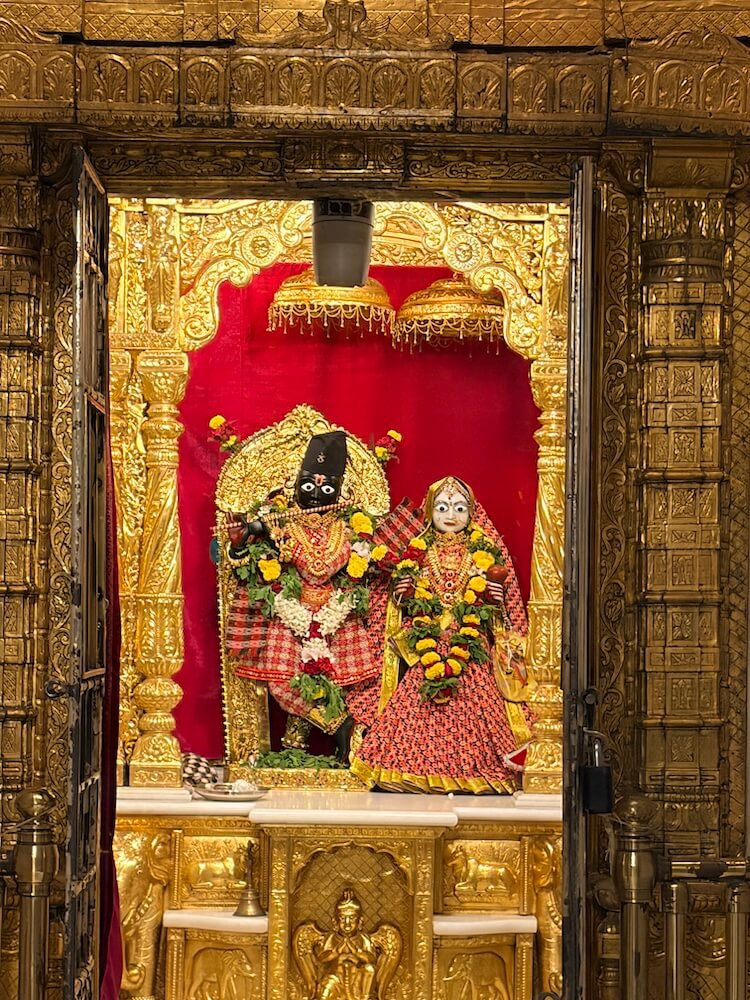
Daily observances at the Kalupur temple follow a carefully prescribed ritual order, with the shrine remaining open for darshan from 5 am to 12 pm and from 3 pm to 8.30 pm, though timings may change during festivals or special occasions. Mangala Aarti, performed to awaken the deities at daybreak, takes place at 5.30 am, followed by Shringar Aarti at 8.05 am and Rajbhog Aarti at 10.30 am. Between 12 pm and 3 pm, the sanctum doors remain closed while food is ceremonially offered to the deities and they rest. Evening worship includes Sandhya Aarti at 6.45 pm and Shayan Aarti at 8.30 pm. The vestments adorning Nar Narayan Dev and Radha-Krishna in the main sanctums are changed seven times daily and no ensemble is repeated on the same day, making each darshan visually distinct.
The entire complex is administered by the Nar Narayan Dev Gadi in accordance with the original rules of the Swaminarayan Sampradaya, with the hereditary acharya lineage overseeing both spiritual and administrative affairs. Major festivals celebrated here with great devotion and splendour throughout the year include Uttarayan on Makar Sankranti, the installation anniversary of Nar Narayan Dev, Guru Purnima, Shri Krishna Janmashtami, Radhashtami, Holi, Diwali and the special hindola (sacred swing festival) observed during the month of Shravan. During principal festivities, the deities are dressed in specially prepared brocaded garments and an annakut (festive food offering) featuring chhappan bhog (56-dish offering) is ceremonially presented. Religious assemblies, devotional kirtans and uninterrupted chanting of the divine name are also organised regularly within the precinct.
Useful Information :
- Located within walking distance of Ahmedabad Junction, also known as Kalupur railway station
- Connected with numerous cities across Gujarat and other states by ST buses, trains and flights
- City buses and autorickshaws are available from various parts of Ahmedabad
- Private vehicles can proceed up to the temple’s designated parking area
- Accommodation and refreshment facilities are available in the surrounding locality
- Contact : +91 82380 01666
श्री स्वामीनारायण मंदिर
कालूपुर, अहमदाबाद, ताल./जिला. अहमदाबाद
मंदिरे
Temples
मंदिर
મંદિરો
கோவில்கள்
దేవాలయాలు
ക്ഷേത്രങ്ങൾ
ದೇವಾಲಯಗಳು
মন্দিরসমূহ
ਮੰਦਿਰ
-
महालक्ष्मी मंदिर एलिस ब्रिजजवळ, रायखड, अहमदाबाद, जि. अहमदाबाद
अधिक माहितीMahalakshmi Temple Near Ellis Bridge, Raikhad, Ahmedabad, Dist. Ahmedabad
View Detailsमहालक्ष्मी मंदिर एलिस ब्रिज के पास, रायखड, अहमदाबाद, जिला। अहमदाबाद
विवरण देखेंMahalakshmi Temple Near Ellis Bridge, Raikhad, Ahmedabad, Dist. Ahmedabad
વિગત જુઓMahalakshmi Temple Near Ellis Bridge, Raikhad, Ahmedabad, Dist. Ahmedabad
விவரங்களைக் காண்கMahalakshmi Temple Near Ellis Bridge, Raikhad, Ahmedabad, Dist. Ahmedabad
వివరాలను చూడండిMahalakshmi Temple Near Ellis Bridge, Raikhad, Ahmedabad, Dist. Ahmedabad
വിശദാംശങ്ങൾ കാണുകMahalakshmi Temple Near Ellis Bridge, Raikhad, Ahmedabad, Dist. Ahmedabad
ವಿವರಗಳನ್ನು ವೀಕ್ಷಿಸಿMahalakshmi Temple Near Ellis Bridge, Raikhad, Ahmedabad, Dist. Ahmedabad
বিস্তারিত দেখুনMahalakshmi Temple Near Ellis Bridge, Raikhad, Ahmedabad, Dist. Ahmedabad
ਵੇਰਵੇ ਦੇਖੋ -
जुने बहुचरा मंदिर नवापुरा, गीता मंदिर रोड, अहमदाबाद शहर
अधिक माहितीOld Bahuchara Temple Navapura, Gita Mandir Road, Ahmedabad City
View Detailsपुराना बहुचरा मंदिर नवापुरा, गीता मंदिर रोड, अहमदाबाद शहर
विवरण देखेंOld Bahuchara Temple Navapura, Gita Mandir Road, Ahmedabad City
વિગત જુઓOld Bahuchara Temple Navapura, Gita Mandir Road, Ahmedabad City
விவரங்களைக் காண்கOld Bahuchara Temple Navapura, Gita Mandir Road, Ahmedabad City
వివరాలను చూడండిOld Bahuchara Temple Navapura, Gita Mandir Road, Ahmedabad City
വിശദാംശങ്ങൾ കാണുകOld Bahuchara Temple Navapura, Gita Mandir Road, Ahmedabad City
ವಿವರಗಳನ್ನು ವೀಕ್ಷಿಸಿOld Bahuchara Temple Navapura, Gita Mandir Road, Ahmedabad City
বিস্তারিত দেখুনOld Bahuchara Temple Navapura, Gita Mandir Road, Ahmedabad City
ਵੇਰਵੇ ਦੇਖੋ -
महाकाली मंदिर बापूनगर, अहमदाबाद, जि. अहमदाबाद
अधिक माहितीMahakali Temple Bapunagar, Ahmedabad, Dist. Ahmedabad
View Detailsमहाकाली मंदिर बापूनगर, अहमदाबाद, जिला. अहमदाबाद
विवरण देखेंMahakali Temple Bapunagar, Ahmedabad, Dist. Ahmedabad
વિગત જુઓMahakali Temple Bapunagar, Ahmedabad, Dist. Ahmedabad
விவரங்களைக் காண்கMahakali Temple Bapunagar, Ahmedabad, Dist. Ahmedabad
వివరాలను చూడండిMahakali Temple Bapunagar, Ahmedabad, Dist. Ahmedabad
വിശദാംശങ്ങൾ കാണുകMahakali Temple Bapunagar, Ahmedabad, Dist. Ahmedabad
ವಿವರಗಳನ್ನು ವೀಕ್ಷಿಸಿMahakali Temple Bapunagar, Ahmedabad, Dist. Ahmedabad
বিস্তারিত দেখুনMahakali Temple Bapunagar, Ahmedabad, Dist. Ahmedabad
ਵੇਰਵੇ ਦੇਖੋ