
पम्बुमेक्कट्टू मना
वडमा, जि. त्रिशूर
Pambumekkattu Mana
Vadama, Dist. Thrissur
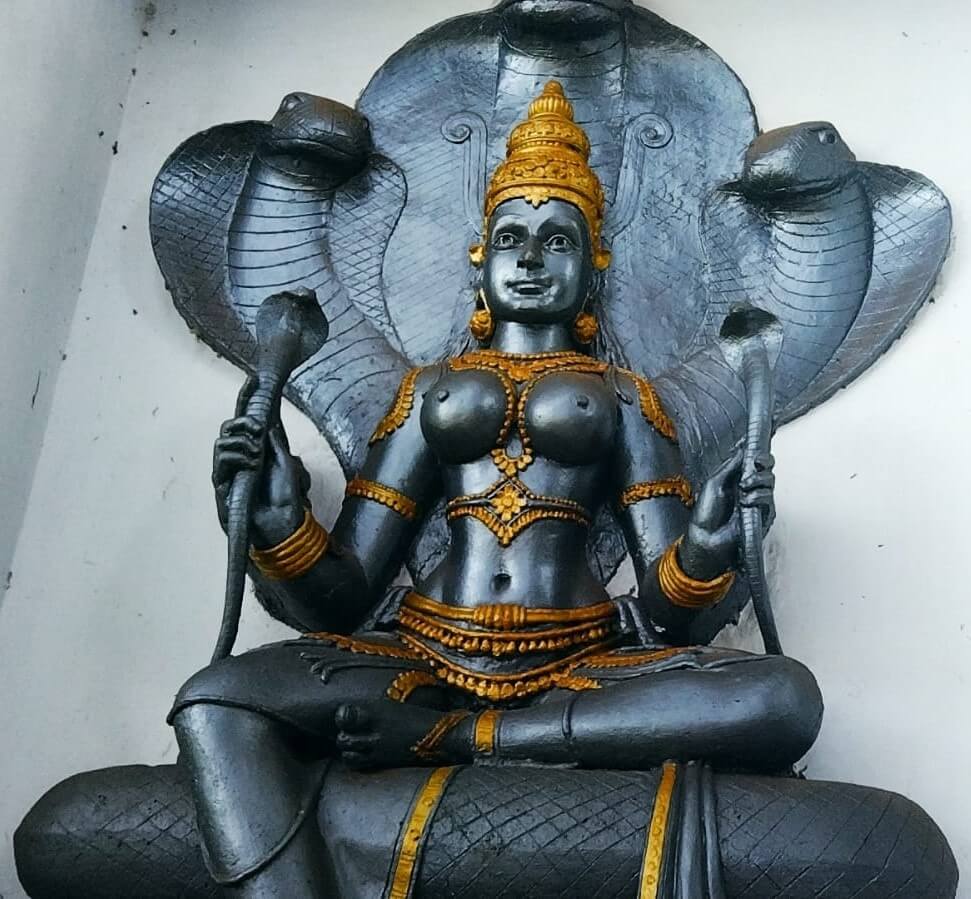 Pambummekkattu Mana, one of Kerala’s most renowned centres of Naga worship, is situated in Vadama Village of Mukundapuram Taluk in Thrissur district. The Mana is particularly associated with Nagaraja Vasuki and Nagayakshi, who are traditionally revered as its principal Naga deities. It is also an important centre for the preservation of Kerala’s traditional Naga-worship practices, including Sarppabali, Sarppam Pattu, Kalamezhuthu and Noorum Paalum.
Pambummekkattu Mana has long been regarded as an important centre of Kerala’s Naga-worship tradition. Traditional accounts associate the Mana with the ritual traditions of several Naga-worship centres and with the hereditary ritual practices surrounding Sarppakavus. Naga worship is an ancient religious tradition of Kerala, with practices that have developed within the wider Hindu religious tradition and are associated with both Shaiva and Vaishnava traditions. 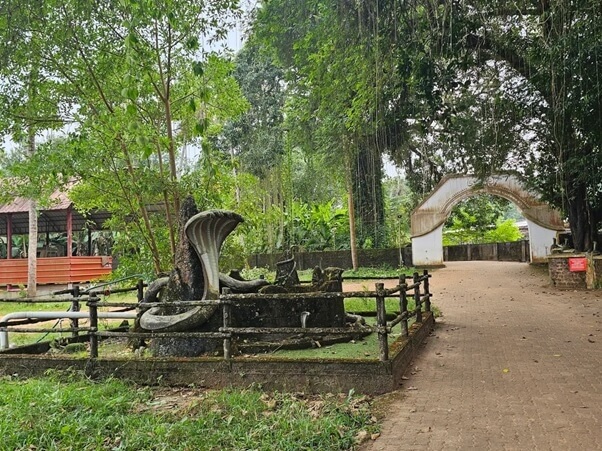 Sacred groves known as Nagakavus or Sarppakavus were traditionally maintained within or near ancestral residential compounds, where Naga deities were worshipped through hereditary rituals. Although Naga worship is found in various forms across India and elsewhere, Kerala is particularly distinguished by its tradition of preserving sacred Naga groves in association with ancestral homes and by the hereditary ritual practices connected with them. Traditional literature and legends also associate Kerala with Naga worship and sometimes refer to the region as Nagalokam, the Realm of the Nagas. The Keralolpathi tradition regards the Nagas as family deities. Naga symbolism also occurs in traditional ornaments such as Nagathali and Nagakkettu Mothiram. Within wider Hindu tradition, Vasuki is counted among the Ashta Nagas, the eight principal Naga deities traditionally identified as Ananta, Vasuki, Takshaka, Karkotaka, Padma, Mahapadma,
 Shankhapala and Gulika. Vasuki is particularly associated with the churning of the Ocean of Milk, in which he served as the churning rope.
The origin of Naga worship at Mekkattu Mana is preserved primarily through oral tradition and legend rather than documented historical records. The legend of Pambummekkattu Mana is believed to date back many thousands of years. In those days, no one could rival the members of Mekkattu Mana in the practice of mantravadam, the traditional discipline of ritual practice. 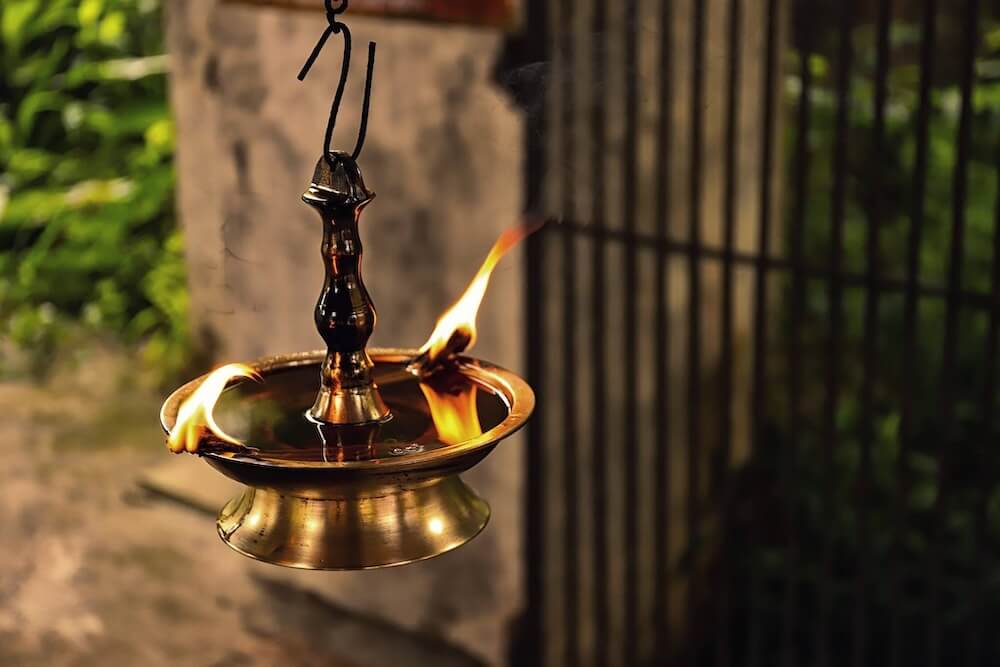 Yet, despite their mastery of the practice, the family lived in severe poverty, with a fire burning in the kitchen only occasionally. Troubled by the family’s hardship and unable to find a way out of it, the eldest Namboothiri decided to undertake a twelve-year period of bhajanam (devotional observance) at the historic Thiruvanchikulam Temple. As his devotional observance continued, the Naga king Vasuki appeared before him, holding a precious Manikya gemstone. The Namboothiri humbly appealed to Vasuki to relieve the family of its poverty. Vasuki then instructed him in the rituals and observances to be followed. The Namboothiri subsequently returned to Mekkattu Mana. On reaching the Mana, he placed his palm-leaf umbrella in the Kizhakkini and went for his bath.
 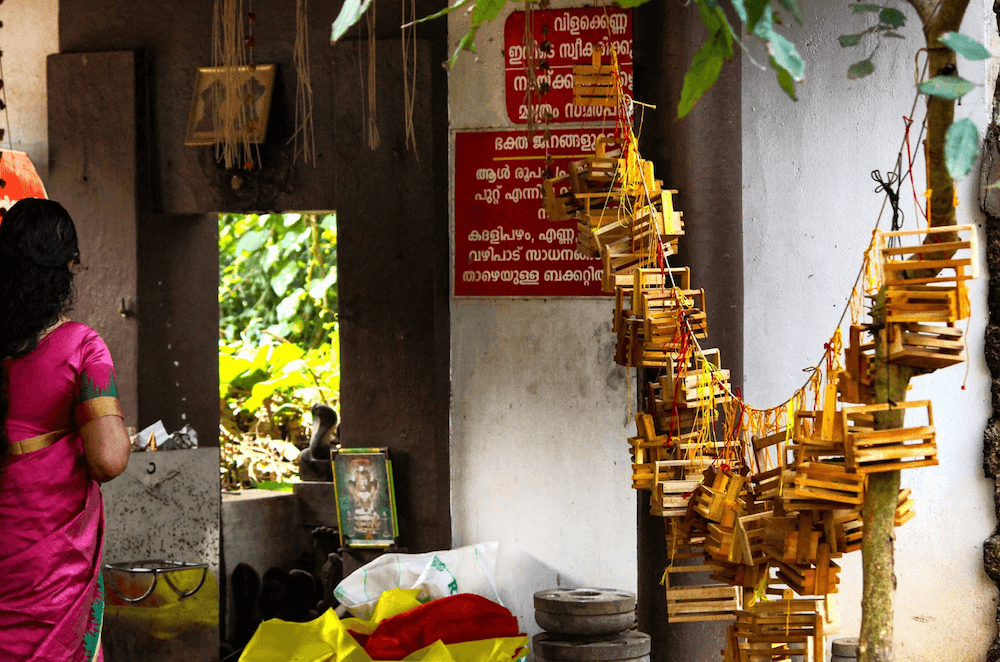 When he returned, he found a Naga coiled around the umbrella. The Naga revealed itself as Vasuki and told him that Nagayakshi would also manifest herself at the Mana.
Later, the eldest Antharjanam (senior woman of the household) returned from a visit to a relative’s home. After placing her palm-leaf umbrella in the portico, she too found a Naga upon it. The Naga moved towards the Kizhakkini and according to tradition, revealed itself as Nagayakshi. Vasuki and Nagayakshi instructed the Namboothiri to establish their presence in the Kizhakkini and to maintain perpetual lamps there. He followed their instructions and began the prescribed rituals, 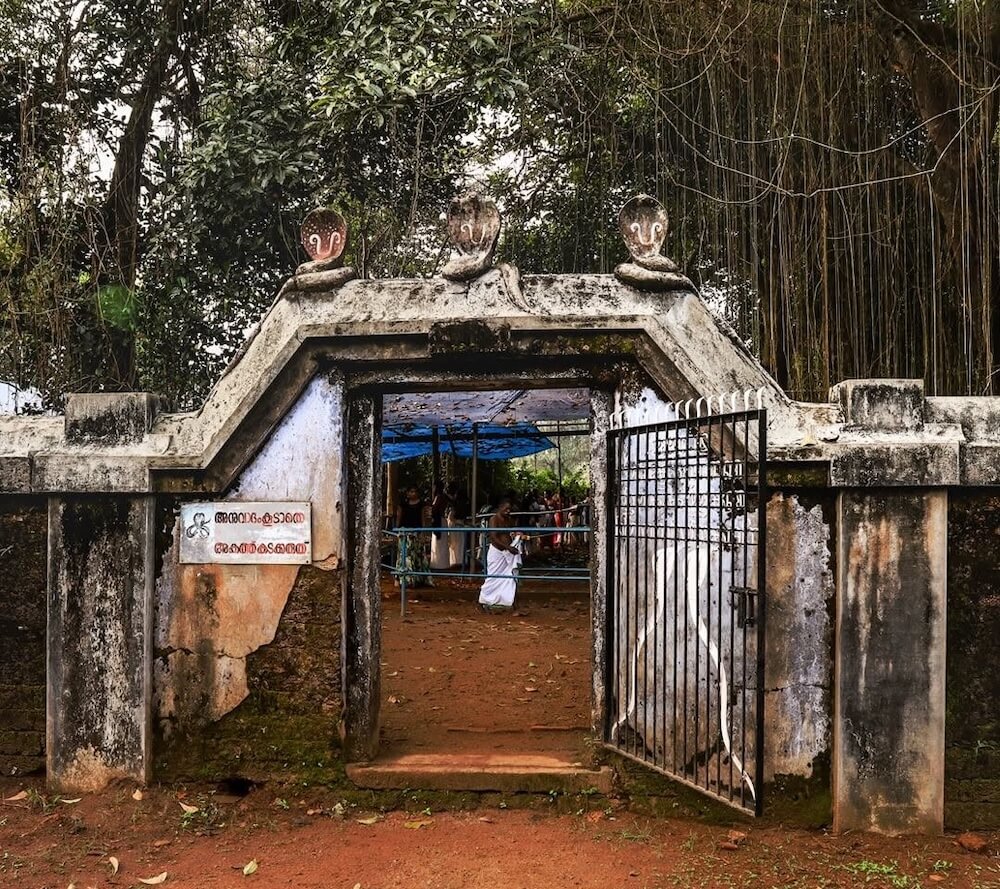 marking the beginning of the Mana’s enduring tradition of Naga worship.From then onwards, Vasuki and Nagayakshi came to be revered as the family’s Paradevata, or ancestral guardian deities. The Mana subsequently became known as Pambummekkattu Mana, derived from pambu, the Malayalam word for snake. Tradition holds that the household prospered thereafter and that the blessings of Vasuki and Nagayakshi continue to protect the Mana and its devotees. The precious Manikya gemstone said to have been given by Vasuki is also believed to be preserved within the Mana. The story is also associated with Kerala’s wider literary tradition and is recounted in Aithihyamala, the celebrated collection of legends, traditional stories, folklore and anecdotes compiled by Kottarathil Sankunni Menon (1855–1937).
Vasuki and Nagayakshi are traditionally associated with the Kizhakkini, the eastern chamber of the ancestral Nalukettu. There are no conventional sculptural images representing the two Naga deities.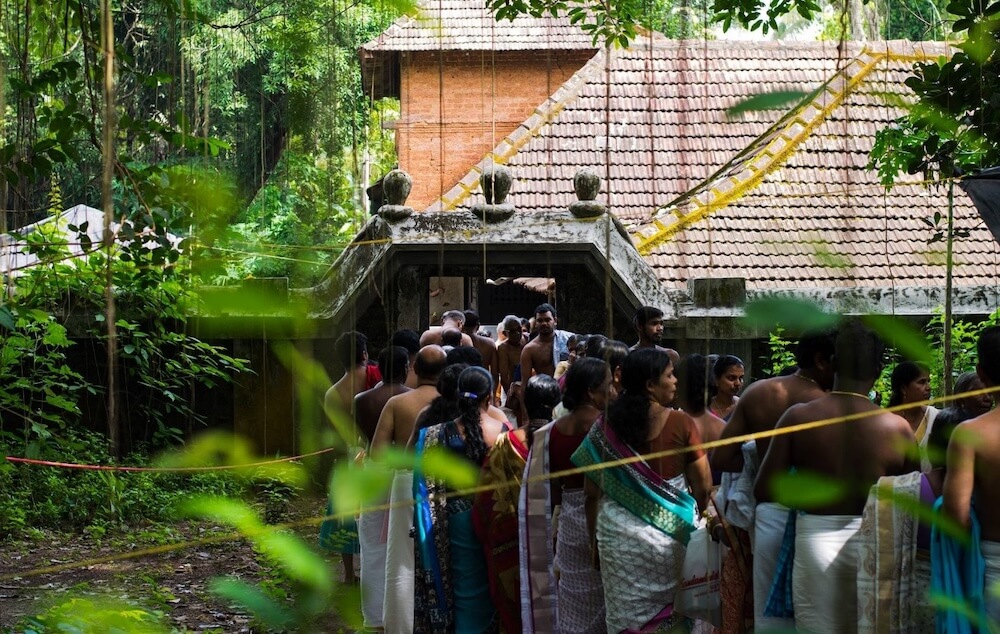 Instead, their sacred presence is traditionally represented by the Kedavilakku, an oil lamp that is kept perpetually burning. The lamp is regarded as the living sacred presence of Vasuki and Nagayakshi.
Mullaykkal Bhagavathi, enshrined in the central courtyard, is regarded as the principal deity of the household, while a shrine dedicated to Bhadrakali or Kali is also associated with the Mana. The inner Kizhakkini is traditionally restricted to members of the household. Five sacred Naga groves, or kavus, surround the Mana. Of these, the southern grove, known as Thekke Kavu, is regarded as the most important. According to tradition, Naga deities invoked from different regions are ritually installed here.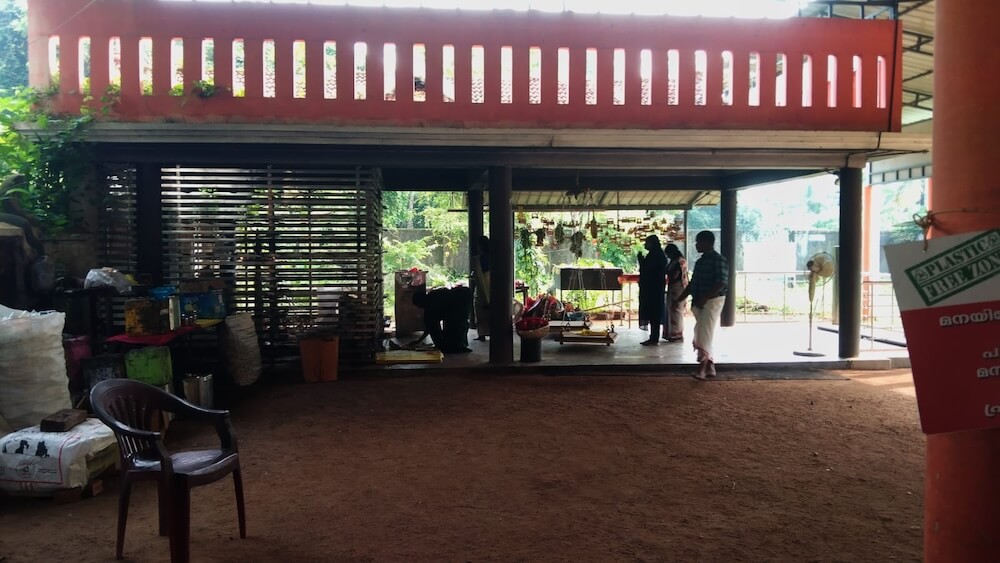 The household follows a traditional way of life intended to ensure that the Nagas are neither harmed nor disturbed. The grounds of the Mana are not to be dug or ploughed and no fire is permitted to be lit anywhere on the premises except in the kitchen of the Ettukettu, the traditional ancestral house with eight interconnected sections. Snakes that enter the Mana are not to be harmed under any circumstances. The members of Pambummekkattu Mana traditionally refer to the resident Naga beings as Parambarayangal, signifying ancestral beings associated with the lineage. It is believed that whenever a child is born into the household, the Parambarayangal come to welcome the newborn.
 Likewise, when a member of the family dies, tradition holds that one of the Parambarayangal also dies. Since fire is traditionally prohibited elsewhere on the premises, the funeral pyres of both the Namboothiris and the Parambarayangal are prepared in the southern compound known as Thekkekavu. This tradition is regarded as an expression of the spiritual bond believed to exist between the members of the household and the Naga deities.
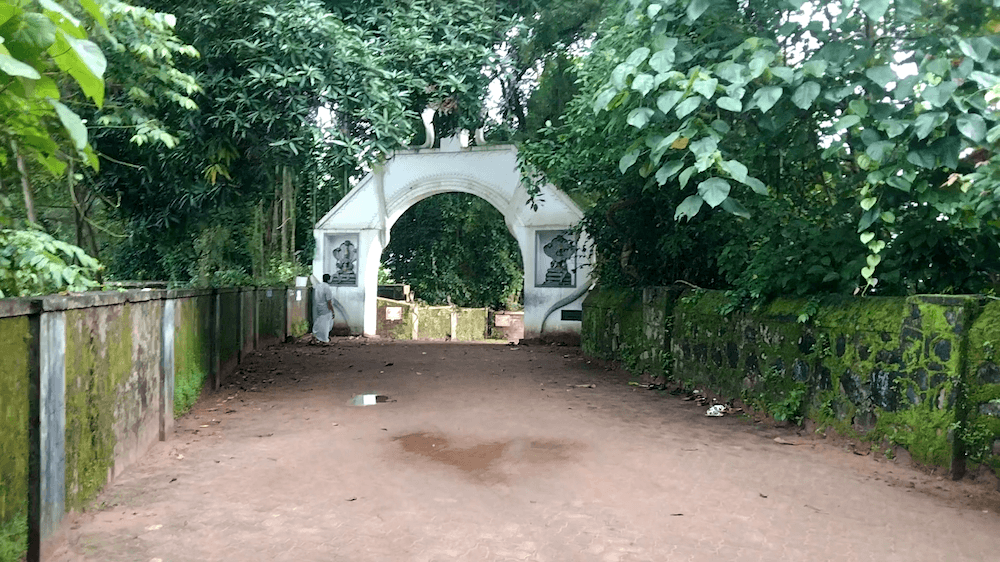
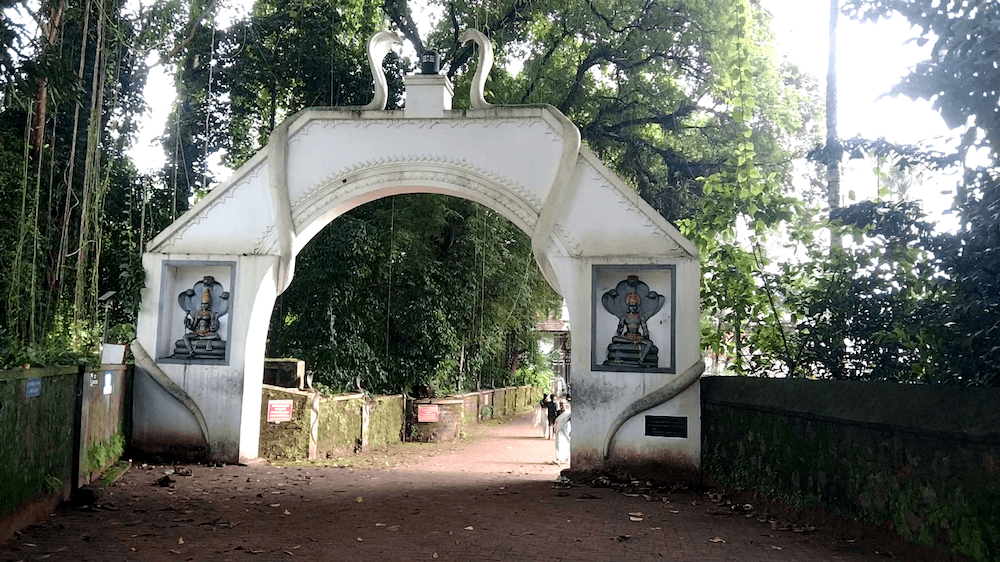
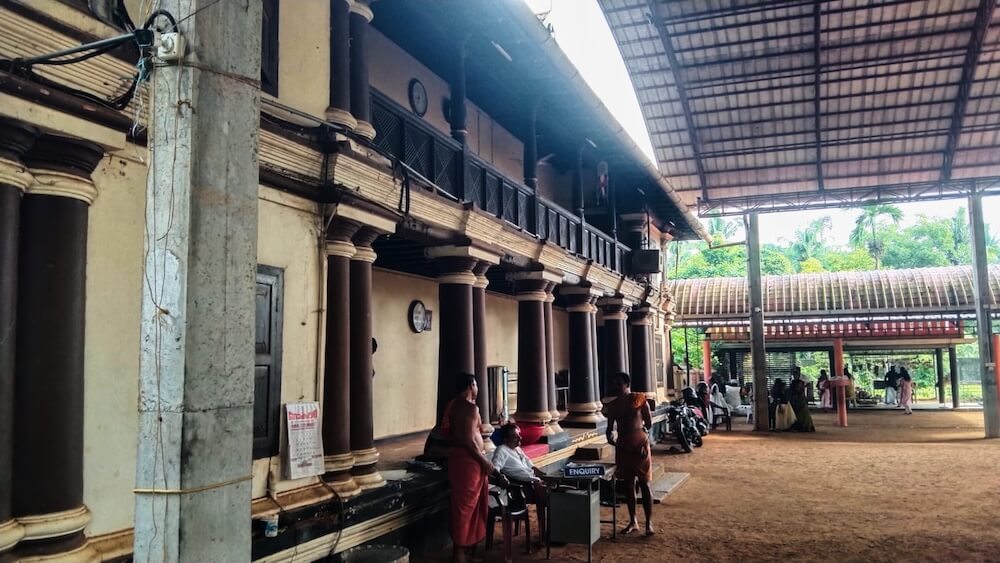 Pambummekkattu Mana is an ancestral residence rather than a conventional public temple and its sacred character is closely integrated with the traditional domestic architecture of the Mana. Cool breezes pass through the grounds beneath enormous trees covered with trailing vines, while representations of Naga deities appear on the surrounding walls. Beyond the Padippura Malika, the traditional entrance structure, stands the ancient Nalukettu, together with its associated Manimālika. The Mana itself is traditionally believed to be more than a thousand years old, while the Padippura Malika at its entrance is said to be around 250 years old. The traditional architecture, sacred groves and ancestral domestic spaces together form an integral part of the ritual landscape of Pambummekkattu Mana.
Pambummekkattu Mana does not follow the conventional festival calendar of a public temple. Instead, its ritual calendar is centred on specific days and periods associated with the worship of the Naga deities. The most important annual observance is held on the first day of the Malayalam month of Vrischikam. Special rituals are performed to propitiate the Naga deities, including Noorum Paalum. Sarppabali is traditionally performed according to the hereditary ritual practice of the Mekkattu family. From the first day of Vrischikam, Sarppabali is traditionally conducted every evening for 41 days during the Mandala period. Kalamezhuthum Pattum and Sarppam Pattu also form part of the ritual observances during this period. Another significant observance is Kanni Ayilyam, when special worship is offered to the Naga deities. Traditional offerings associated with the occasion include Noorum Paalum and Kadalipazham. The 10th day of Medam is another important occasion, when devotees are permitted to visit the sacred Naga groves. In the month of Meenam, the period from Thiruvonam to Bharani is also regarded as an important time for visiting the Mana and offering worship.
The principal offerings associated with Pambumekkattu Mana include Noorum Palum, traditionally consisting of rice flour, turmeric, banana and milk; Kadali Pazham Nivedyam, the offering of Kadali bananas; Vella Nivedyam; Koottupayasam; Palpayasam; Manjalpodi Charthal; Vilakkuvekkal; Sarppabali; Payasa Homam; Naga Prathishta; Pushpanjali; Ayilya Pooja; and Rahu Pooja. Among these, Kadali Pazham Nivedyam is traditionally regarded as one of the favourite offerings to the Naga deities, while Noorum Palum is particularly associated with important ritual occasions and festival days. The oil from the Kedavilakku in the Kizhakkini is distributed as prasadam. Traditionally, it is regarded as having medicinal properties, particularly for skin ailments believed to be associated with Naga-related afflictions. The black residue or collyrium formed from the burnt wick is also traditionally used for similar purposes. The use of the lamp oil follows specific traditional procedures and it is not regarded simply as ordinary temple oil.
As Pambummekkattu Mana is an ancestral household, access to its inner premises is restricted to specific days. According to published accounts of the Mana’s traditional access arrangements, devotees are permitted to enter on Ayilyam in the month of Kanni; the 10th day of Medam; the first day of the Malayalam months except Mithunam, Karkidakam and Chingam; the final day of Karkidakam; and during the period from Thiruvonam to Bharani in the month of Meenam. On Medam 10, access is permitted to the sacred kavus associated with the Mana. On other days, devotees may visit the areas open to the public and make the prescribed offerings according to the prevailing arrangements. The traditionally published visiting hours on permitted days are from 9:00 am to 5:00 pm
Key Highlights
- Located 15 km from Irinjalakkuda town.
- About 11 km from Irinjalakkuda Railway Station.
- KSRTC and local bus services are available.
- Dedicated parking is available for private vehicles.
- Accommodation and dining facilities are available nearby.
पम्बुमेक्कट्टु मन
वडामा, जिला. त्रिशूर
मंदिरे
Temples
मंदिर
મંદિરો
கோவில்கள்
దేవాలయాలు
ക്ഷേത്രങ്ങൾ
ದೇವಾಲಯಗಳು
মন্দিরসমূহ
ਮੰਦਿਰ
-
आला शंकरनारायण मंदिर आला, जि. त्रिशूर
अधिक माहितीAla Sankaranarayana Temple Ala, Dist. Thrissur
View Detailsआल्हा शंकरनारायण मंदिर अला, जिला. त्रिशूर
विवरण देखेंAla Sankaranarayana Temple Ala, Dist. Thrissur
વિગત જુઓAla Sankaranarayana Temple Ala, Dist. Thrissur
விவரங்களைக் காண்கAla Sankaranarayana Temple Ala, Dist. Thrissur
వివరాలను చూడండిAla Sankaranarayana Temple Ala, Dist. Thrissur
വിശദാംശങ്ങൾ കാണുകAla Sankaranarayana Temple Ala, Dist. Thrissur
ವಿವರಗಳನ್ನು ವೀಕ್ಷಿಸಿAla Sankaranarayana Temple Ala, Dist. Thrissur
বিস্তারিত দেখুনAla Sankaranarayana Temple Ala, Dist. Thrissur
ਵੇਰਵੇ ਦੇਖੋ -
श्री कूडलमणिक्यम मंदिर इरिंजलक्कुडा, जि. त्रिशूर
अधिक माहितीSree Koodalmanikyam Temple Irinjalakkuda, Dist. Thrissur
View Detailsश्री कुडलमानिक्यम मंदिर इरिंजलाक्कुडा, जिला. त्रिशूर
विवरण देखेंSree Koodalmanikyam Temple Irinjalakkuda, Dist. Thrissur
વિગત જુઓSree Koodalmanikyam Temple Irinjalakkuda, Dist. Thrissur
விவரங்களைக் காண்கSree Koodalmanikyam Temple Irinjalakkuda, Dist. Thrissur
వివరాలను చూడండిSree Koodalmanikyam Temple Irinjalakkuda, Dist. Thrissur
വിശദാംശങ്ങൾ കാണുകSree Koodalmanikyam Temple Irinjalakkuda, Dist. Thrissur
ವಿವರಗಳನ್ನು ವೀಕ್ಷಿಸಿSree Koodalmanikyam Temple Irinjalakkuda, Dist. Thrissur
বিস্তারিত দেখুনSree Koodalmanikyam Temple Irinjalakkuda, Dist. Thrissur
ਵੇਰਵੇ ਦੇਖੋ -
पायम्मल श्री शत्रुघ्न मंदिर पायम्मल, जि. त्रिशूर
अधिक माहितीPayammal Sree Shatrughna Temple Payammal, Dist. Thrissur
View Detailsपयम्मल श्री शत्रुघ्न मंदिर पयम्मल, जिला. त्रिशूर
विवरण देखेंPayammal Sree Shatrughna Temple Payammal, Dist. Thrissur
વિગત જુઓPayammal Sree Shatrughna Temple Payammal, Dist. Thrissur
விவரங்களைக் காண்கPayammal Sree Shatrughna Temple Payammal, Dist. Thrissur
వివరాలను చూడండిPayammal Sree Shatrughna Temple Payammal, Dist. Thrissur
വിശദാംശങ്ങൾ കാണുകPayammal Sree Shatrughna Temple Payammal, Dist. Thrissur
ವಿವರಗಳನ್ನು ವೀಕ್ಷಿಸಿPayammal Sree Shatrughna Temple Payammal, Dist. Thrissur
বিস্তারিত দেখুনPayammal Sree Shatrughna Temple Payammal, Dist. Thrissur
ਵੇਰਵੇ ਦੇਖੋ