कुरिंजी अंदावर मंदिर
कोडाईकनाल, जि. दिंडी.
Kurinji Andavar Temple
Kodaikanal, Dist. Dindigul.
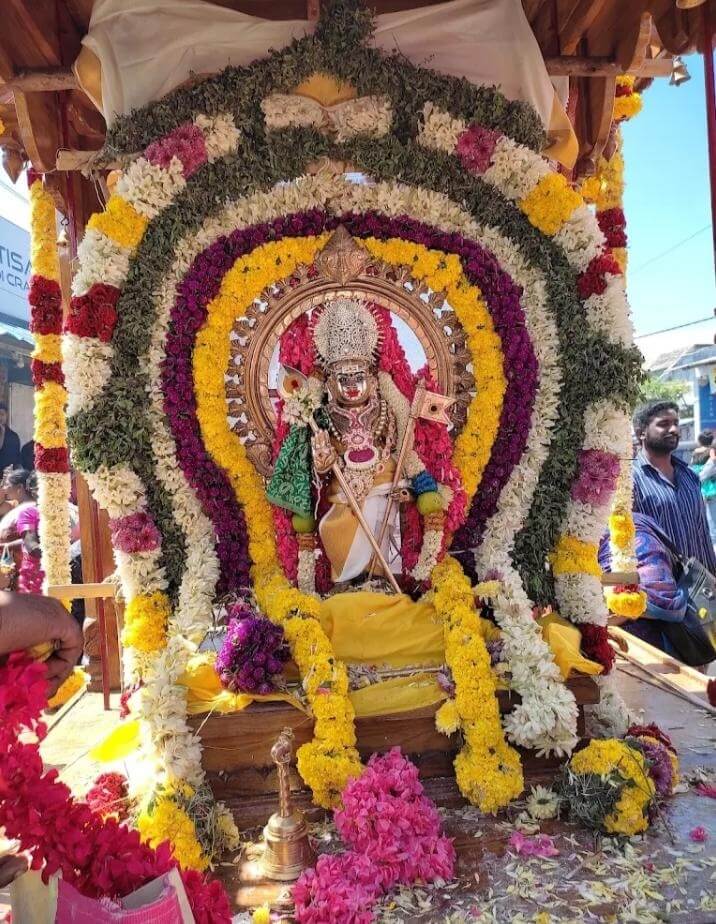 Kurinji Andavar Temple is a famous Hindu pilgrimage centre located in the beautiful hill station of Kodaikanal, Tamil Nadu. Lord Murugan (Subramanya), known as the ‘God of the Hills’, is the main deity. The temple has a strong connection with the rare Neelakurinji flowers, which bloom only once every 12 years.
In Tamil history and literature, especially in Sangam-era works, the hills and adjoining mountain regions were known as ‘Kurinji Thinai’. The Tamils worshipped Lord Murugan (Seyon) as the guardian deity of these hill regions. The Kodaikanal area has long been home to the Paliyan tribal community. The modern history of the temple began in 1936. Charlotte Dixon, who was born in Australia and raised in Europe, married Sir Ponnambalam Ramanathan, a well-known Tamil leader and legal expert from Sri Lanka. After her marriage, she adopted Hinduism and took the name ‘Lady Leelavathi Ramanathan’. After her husband’s death, she decided to build a Murugan temple in Kodaikanal in his memory and constructed the temple on a scenic hilltop in 1936. It was named ‘Kurinji Andavar’, reflecting Lord Murugan’s association with the hills. The temple’s daily worship and rituals were arranged according to Tamil traditions.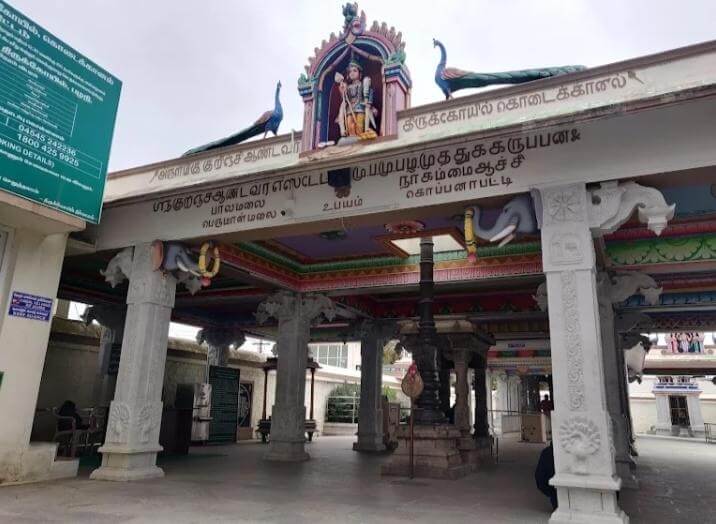
After Lady Leelavathi Ramanathan passed away in 1953, her daughter Sivagamisundhari and her husband, S. Natesan Pillai, looked after the temple. Their family continued to manage the temple for some time. In 1976, Lady Leelavathi Ramanathan’s granddaughter and her husband, Bhaskaran, donated the temple to the administration of the Arulmigu Dhandayuthapani Swamy Temple, Palani. According to official records of the Hindu Religious and Charitable Endowments (HR&CE) Department of the Government of Tamil Nadu, the transfer took place in 1976. Since then, the temple has been under the administration of the Palani Dhandayuthapani Swamy Temple and functions as one of its sub-temples.
According to Tamil traditions, Lord Murugan fell in love with and married Valli, the daughter of the chief of the hill-dwelling hunters, in a mountainous region known as Kurinji. 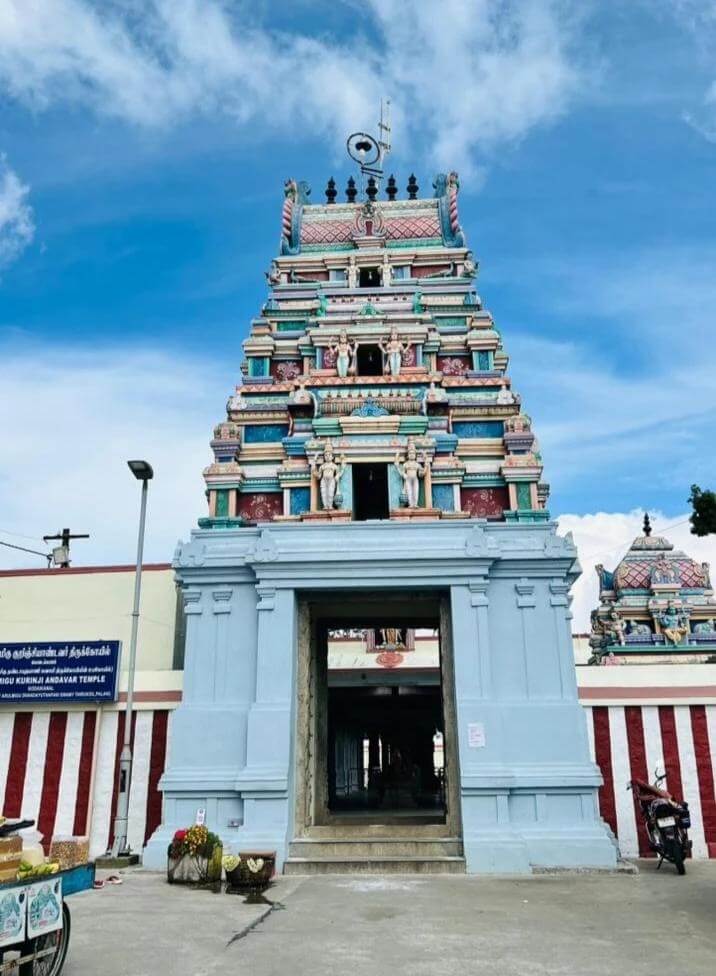 It is believed that Murugan, dressed as a hunter, met Valli in such a hill region. This gives the area special spiritual importance in the worship of Murugan. There is also a legend associated with the Neelakurinji flowers, which bloom only once every 12 years. According to the belief, when Murugan married Valli, the hunters of her tribe welcomed him by presenting him with a garland made of Neelakurinji flowers. Therefore, devotees regard the blooming of these flowers as a natural sign of Murugan’s presence. The temple also has a spiritual connection with Palani, as the famous Palani Hills can be seen from the hilltop. According to tradition, Palani is the place where Murugan came to stay after leaving Mount Kailash following the story of the fruit of wisdom. There is also a local belief that the same form of Murugan who resides at Palani came to rest on this hilltop at Kodaikanal. Although the temple itself is relatively modern, the site has a strong background of ancient legends associated with Tamil worship of Murugan.
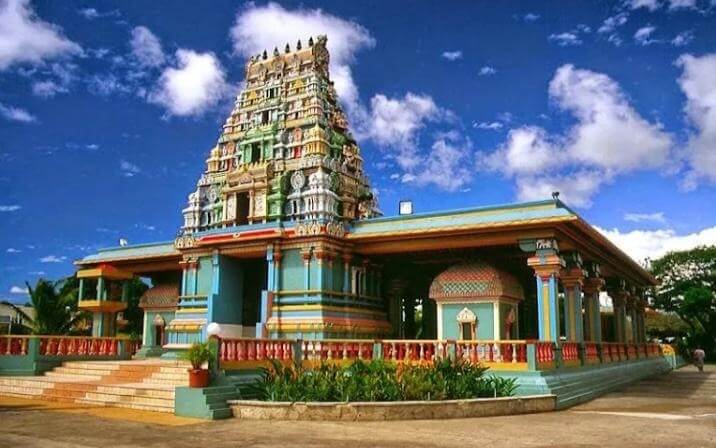
The temple is mainly built in the traditional Dravidian style of architecture. As it is located in a hilly area, it is smaller and more compact than the larger temples of Tamil Nadu. The first feature seen from the road is a small, tall Rajagopuram. Decorated in shades such as light blue, yellow and red, the gopuram has sculptures of various Hindu deities. The temple compound walls, painted with the traditional red and white stripes seen at Tamil Nadu temples, are also visible from the roadside. Small shops selling flowers, pooja items and handicrafts line both sides of the road leading to the temple. Inside, there is an entrance mandapam with beautifully carved stone pillars, with colourful decorative paintings on the upper sections of the pillars.
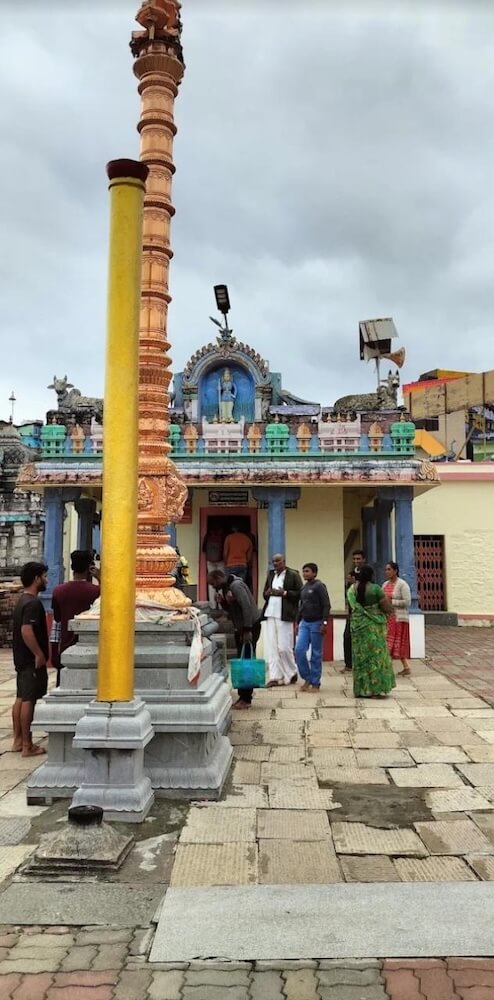
The Sreekovil is built in the traditional Dravidian style. It is a small, square Garbhagriha made of black stone, with a small Vimana above it. A small Ardha Mandapam with four stone pillars stands directly in front of the Sreekovil. A large Vel, the divine spear of Lord Murugan, is fixed in the ground facing the entrance of the Sreekovil, following the Tamil tradition.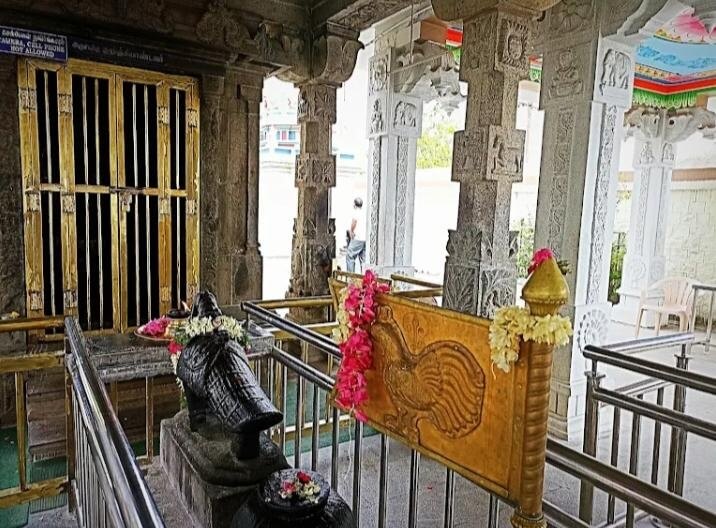 Behind it are the Dwajasthambam and an idol of the peacock, the vehicle of Lord Murugan, both facing the Sreekovil. The main deity is Lord Murugan (Subramanya), worshipped here as ‘Sri Kurinji Andavar’. The deity is a beautiful black stone idol in a standing posture, similar in form to Dhandayuthapani at the Palani Temple. He holds his main weapon, the Vel, in his hand. The idol is decorated with jewellery and flowers at different times of the day.
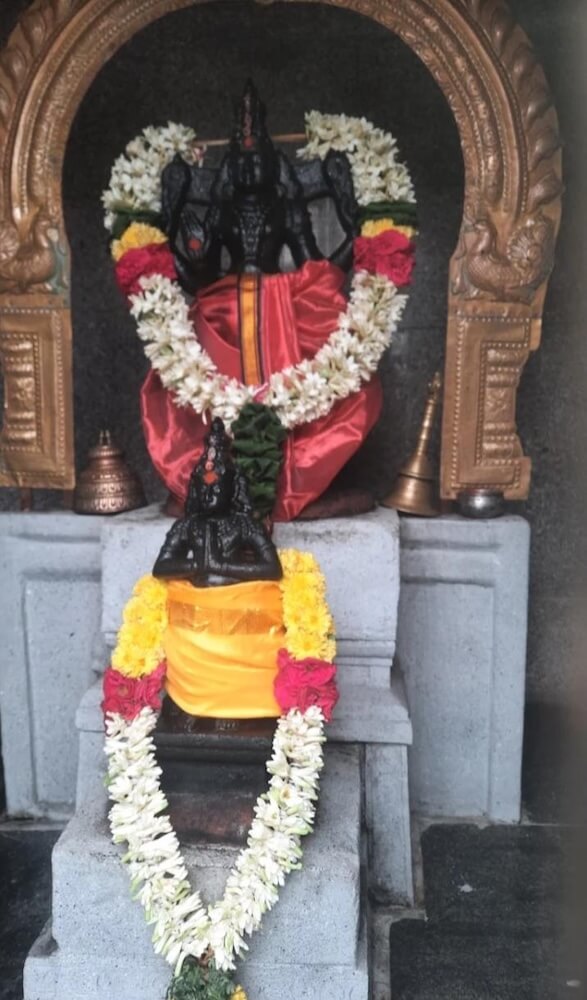
To the left of the main Sreekovil, in the south-west corner, there is a shrine for Vighneswara (Ganesha) housed in a small black stone mandapam. A simple shrine dedicated to Mahavishnu is located behind the main Sreekovil, on the western side. A small idol of Hanuman Swamy is placed directly opposite Mahavishnu, 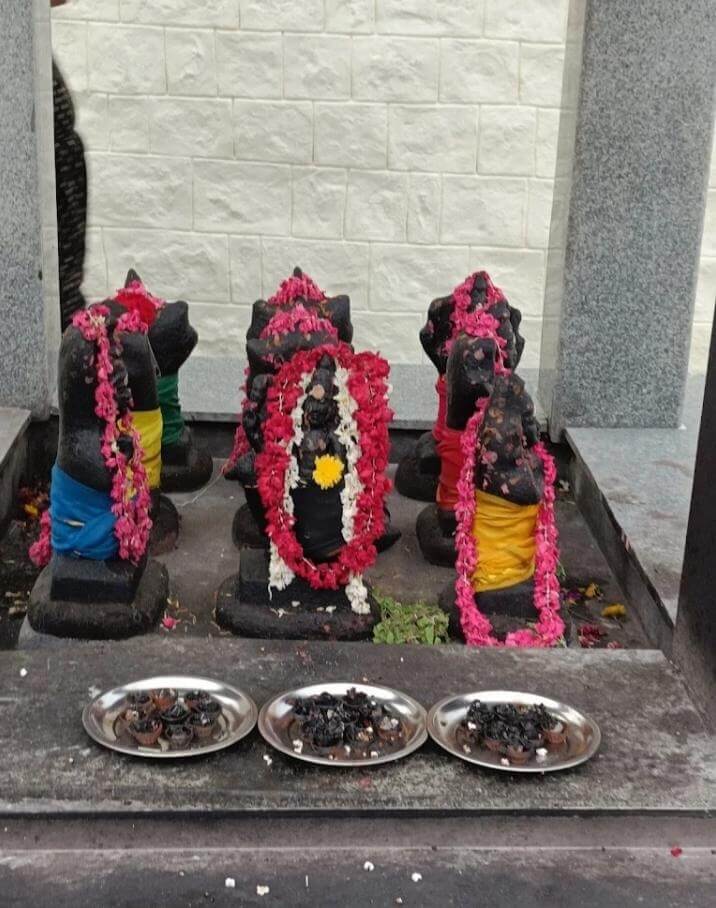 allowing devotees to worship Hanuman after offering prayers to Mahavishnu. The Navagrahas are installed in the north-east corner of the temple. The nine planetary deities are arranged on a single pedestal in the traditional Tamil style, facing different directions. Devotees offer prayers and light lamps here. Near the entrance of the temple, there is also a shrine dedicated to Bhairava, a form of Lord Shiva, who is worshipped as the guardian deity.
The main annual festival of the temple is Vaikasi Visakam, celebrated on the Visakam star day in the Tamil month of Vaikasi (May–June). The day is considered the birth anniversary of Lord Murugan and includes special Kavadi Attam, Paal Kudam processions and a chariot festival. Thaipusam is celebrated on the Poosam star day in the Tamil month of Thai (January–February). It is associated with Murugan receiving the Vel and devotees visit the temple carrying Kavadis, while special abhishekams and Annadanam are also held. Skanda Sashti is observed in the Tamil month of Aippasi (October–November) and commemorates Murugan’s victory over the asura Surapadman. The six-day observance includes fasting and prayers. Karthigai is celebrated on the Karthigai star day in the Tamil month of Karthigai (November–December), when numerous oil lamps are lit in and around the temple.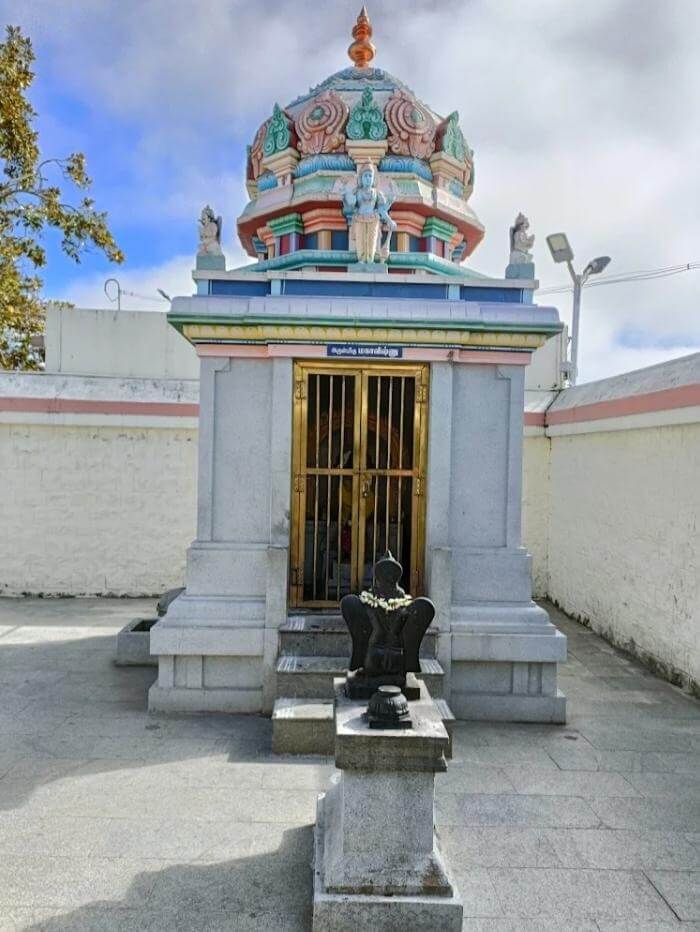 Maha Shivaratri is also observed with special poojas, as Murugan is the son of Lord Shiva. In addition, the blooming of Neelakurinji flowers once every 12 years is an important occasion associated with the temple. Although it is not an official festival, many devotees visit the temple during this period to offer special poojas and seek darshan during the flowering season.
One of the main offerings at the temple is Kavadi Attam. An important part of Tamil devotion to Lord Murugan, devotees carry the Kavadi as a way of giving thanks for prayers answered or making new prayers. They carry flower-decorated Kavadis on their shoulders and come to the temple singing and dancing to Murugan devotional songs. Paal Kavadi and Panneer Kavadi are the main types. Paal Abhishekam is another important offering. Devotees carry pots of milk (Paal Kudam) on their heads, take them around the temple in procession and hand them to the priest for the abhishekam. Panchamirtham Abhishekam is also given special importance due to the temple’s connection with the Palani Temple. Panchamirtham is made from ripe bananas, rock sugar, dates, honey and ghee. After being offered to the deity as abhishekam, it is distributed to devotees as prasadam. Offering the Vel, the main weapon of Lord Murugan, is another important offering. Devotees offer small Vels made of copper, silver or brass. 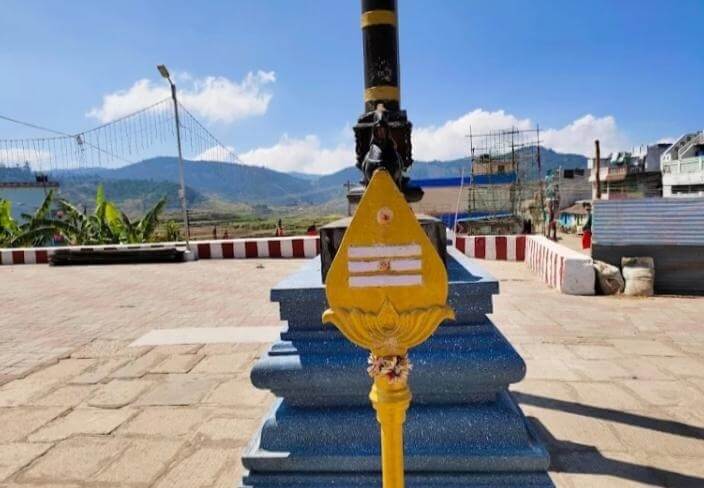 Saravana Bhava Archana, performed while chanting the six-syllable mantra ‘Om Saravana Bhava’, is also offered. The priest performs the archana using flowers, rock sugar and Vibhuti after taking the devotee’s name and birth star. Mottai Nerthikadan or head-shaving, is another important offering, performed as an act of devotion and surrender to the deity. The first hair-cutting ceremony for children, known as Choulam, is also performed here as an offering.
The temple is open every day from 6:30 AM to 7:30 PM and remains open throughout the day without closing at noon. The daily poojas begin with Viswaroopa Darshan from 6:30 AM to 7:00 AM, followed by the Palliyunarthal ceremony and simple poojas. Kalasanthi Pooja is held from 8:00 AM to 8:30 AM, with abhishekam using milk and rose water, along with special archana. Uchakala Pooja and the main offering are performed from 12:00 PM to 12:30 PM, followed by special decoration of the deity and Deeparadhana. Sayarakshai Pooja and Deeparadhana are held from 6:00 PM to 6:30 PM. The final pooja of the day, Ardhajama Pooja, takes place from 7:15 PM to 7:30 PM, after which the temple closes for the night. Pooja timings may change on festival days and special occasions such as Saravana Sashti and Karthigai.
Key highlight :-
- Located about 3 km from Kodaikanal, 20 km from Poombarai and 65 km from Palani.
- The nearest railway station is Palani, about 65 km away.
- TNSTC and local bus facilities are available to the temple.
- Limited parking facilities are available near the temple.
- Accommodation and food facilities are available near the temple.
- Contact number +91 4542242236