 Nestled near the Ramkund Teerthdham, a vital stop on the Narmada Parikrama pilgrimage route, lies the Kshipra Ganesh Temple. Steeped in antiquity, this sacred ground is said to have been graced by Lord Rama during his exile. It was also the site where the great sage Maharishi Mandavya performed his penance. Such legends lend the location profound religious weight. This shrine stands as Gujarat’s only Kshipra Ganesh temple and is regarded as one of the most significant of its kind in India. In Sanskrit, ‘Kshipra’ signifies ‘the one who grants boons swiftly’. Devotees believe that those who serve this deity with a pure heart find their deepest wishes fulfilled.
Ganesha remains one of Asia’s most beloved deities. 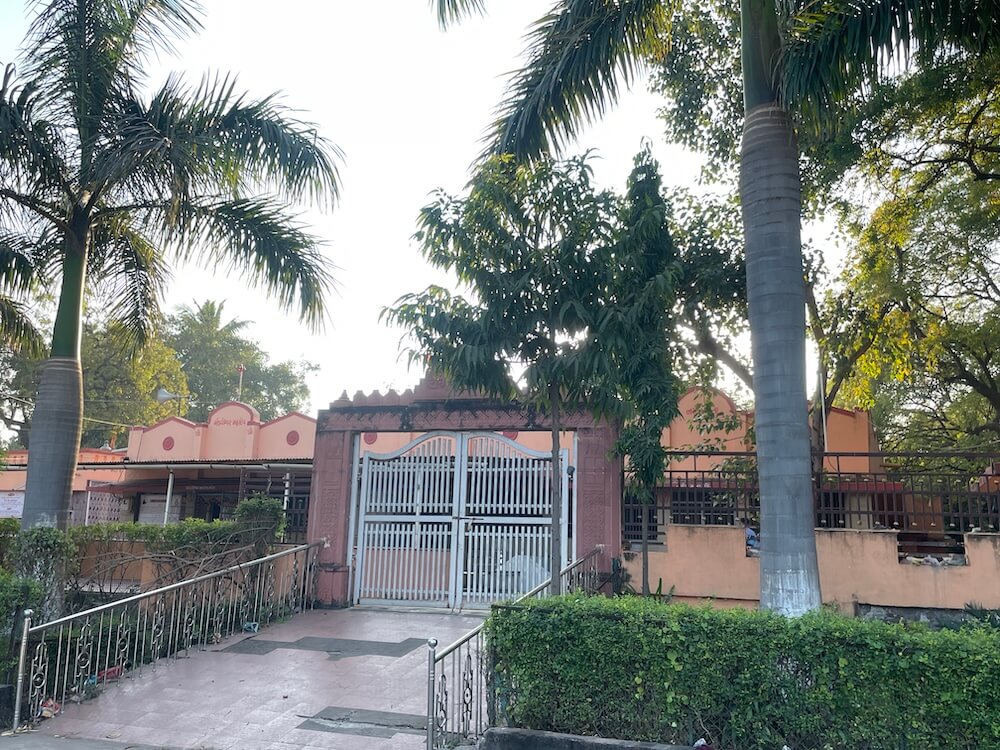 According to the eminent orientalist Dr. R. G. Bhandarkar, Ganesha worship gained popularity from the 5th century AD, while the historian V. K. Rajwade dates its origins back nearly two and a half millennia. Mentions of this Shaivite deity appear in ancient texts like the ‘Shukla Yajurveda’, ‘Taittiriya Samhita’ and ‘Shatapatha Brahmana’. The ‘Atharvashirsha’ from the ‘Atharvaveda’ is well known.
Puranas such as the ‘Ganesha Purana’ and ‘Mudgala Purana’ describe his various incarnations. The Mudgala Purana details sixteen specific forms for meditation, including Bala, Taruna, Bhakta, Vira, Shakti, Dhvaja, Siddhi, Ucchista, Kshipra, Heramba, Lakshmi, Maha, Vighna, Vijaya, Kalpahasta and Urdhva.
 As per the ‘Shodasha Dhyana’ verses, Kshipra Ganesh possesses a complexion as radiant as a red flower. He holds a branch of the Kalpavruksha (wish-fulfilling tree) in one hand, while the tip of his trunk cradles a pot filled with jewels. Here, He is also known as Gautam Ganesh.
It is said that once at this very spot stood an old shrine of Gautam Ganesh. When it became dilapidated, a new temple was built and the sacred installation of Kshipra Ganesh was performed.
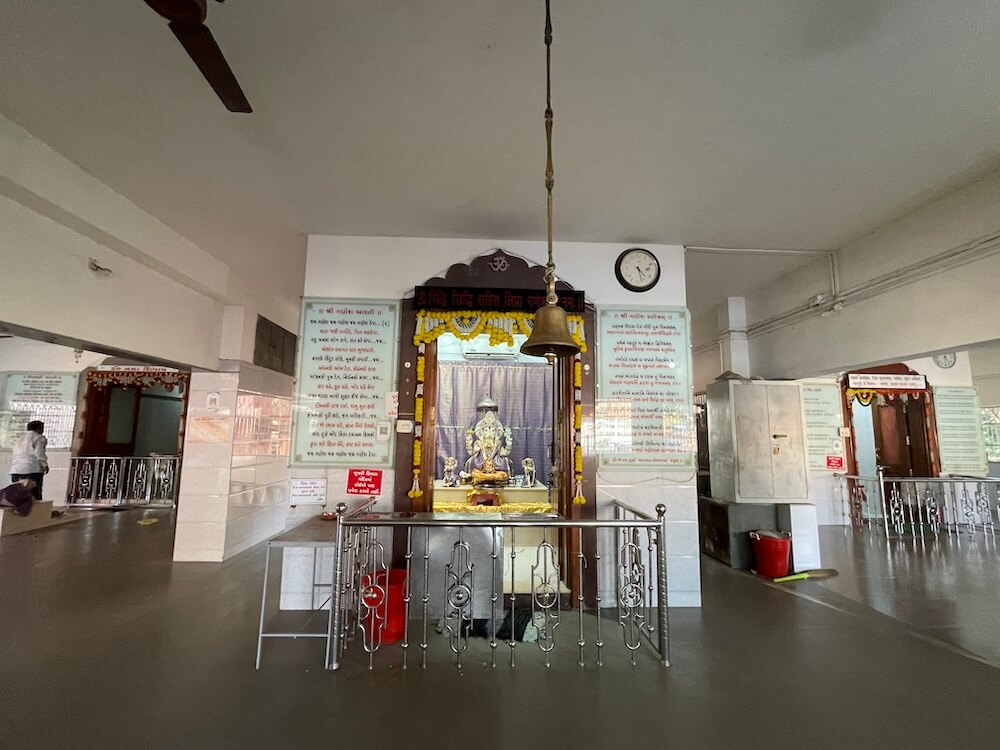
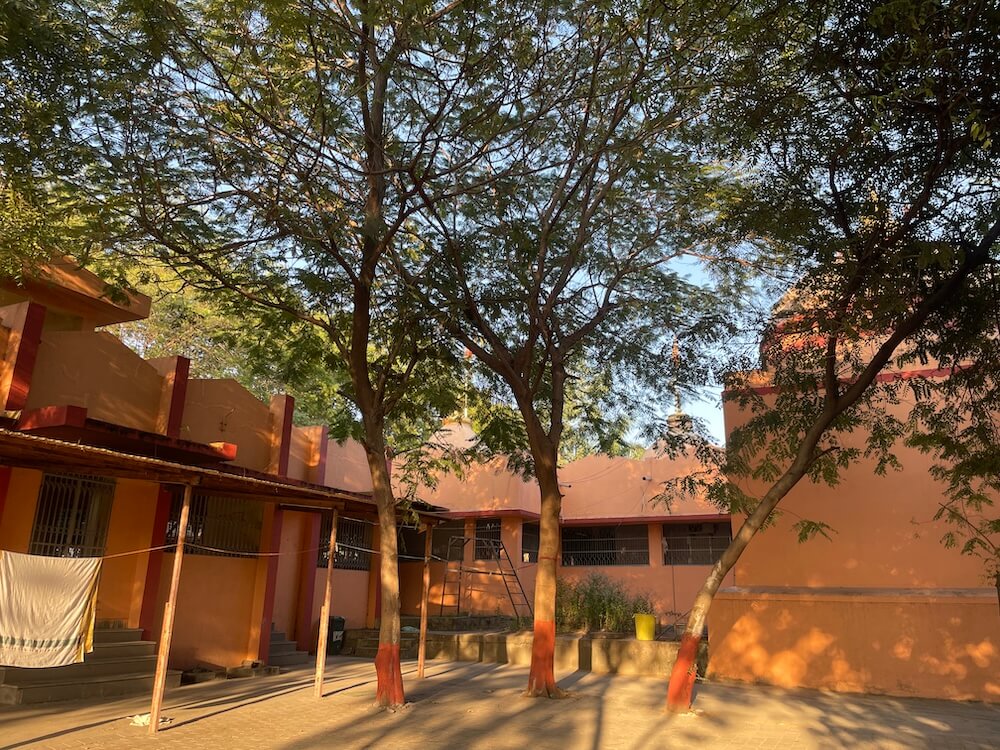
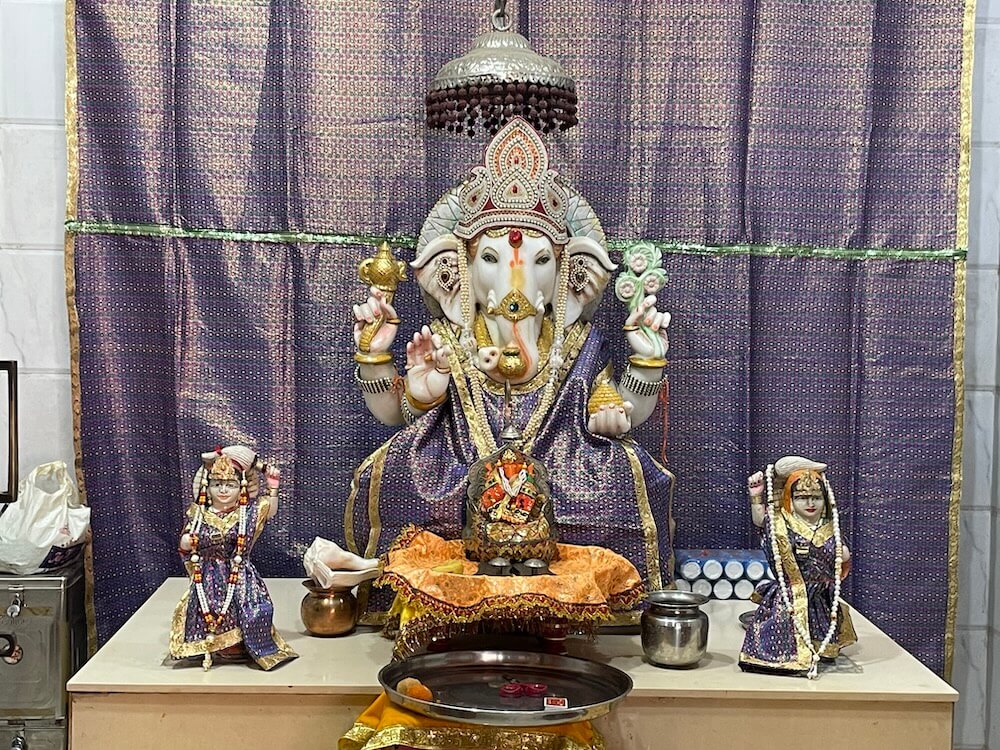
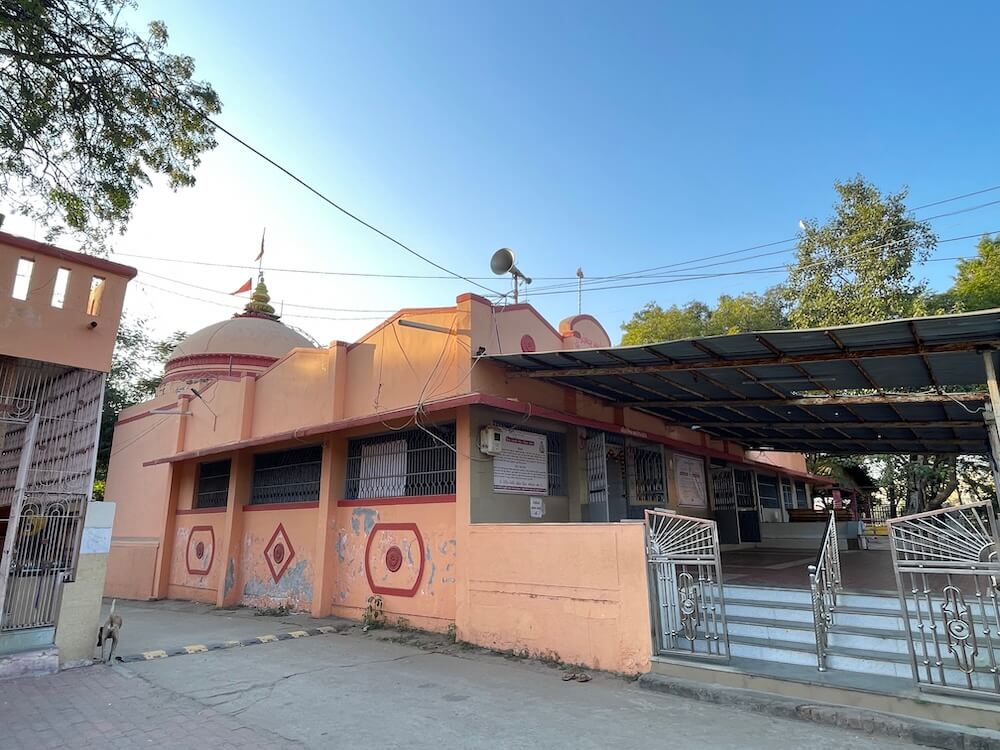
The temple stands in a spacious complex, built in a modern architectural style. A strong boundary wall surrounds it, with a grand entrance gate. In front lies a high and broad platform with a protective tin-shed. The design includes a Sabha Mandap (assembly hall), the central Garbhagriha (sanctum) and two side sanctums. The Sabha Mandap has three entrances and bears a domed shikhara above. In its centre stands the main Garbhagriha. On the platform before it rests the sacred Mooshak (mouse, a divine vehicle of Ganesh). Inside, on an elevated pedestal, sits the idol of Kshipra Ganesh. With a right-curved trunk, his hands hold Pash (noose), Ankusha (goad), and Modak (sacred sweet), while his one hand blesses in Abhaya Mudra. The idol is adorned with rich clothes and ornaments, crowned with a beautiful crown. A special feature of this temple is that the main idol is carved in pure white marble, not crimson as traditionally described. Yet before it stands a smaller idol of Kshipra Ganesh exactly as described in scripture, glowing in red. On both sides are small, beautifully decorated idols of Riddhi and Siddhi.
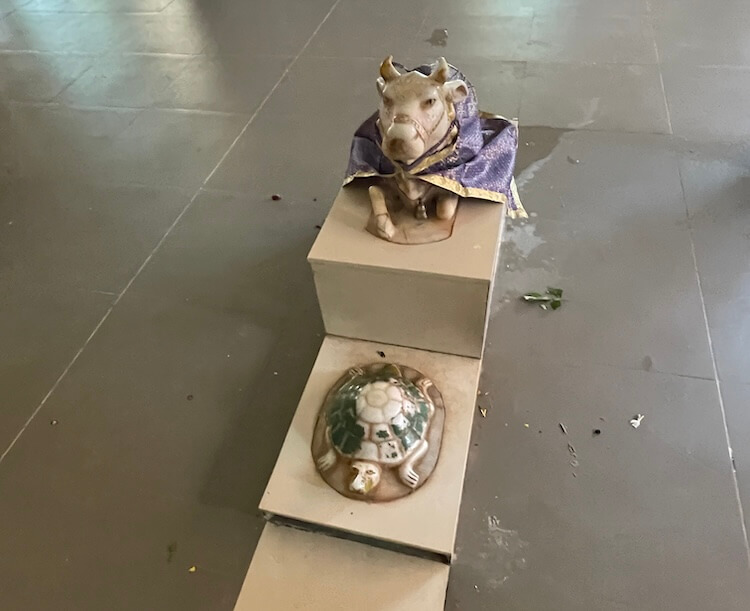
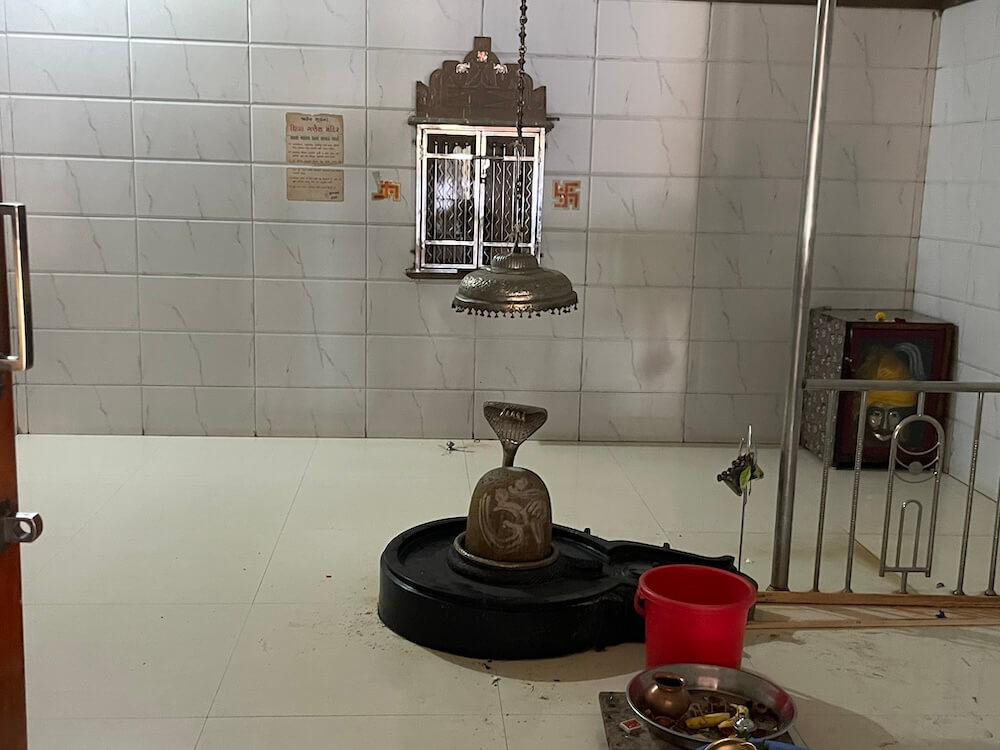
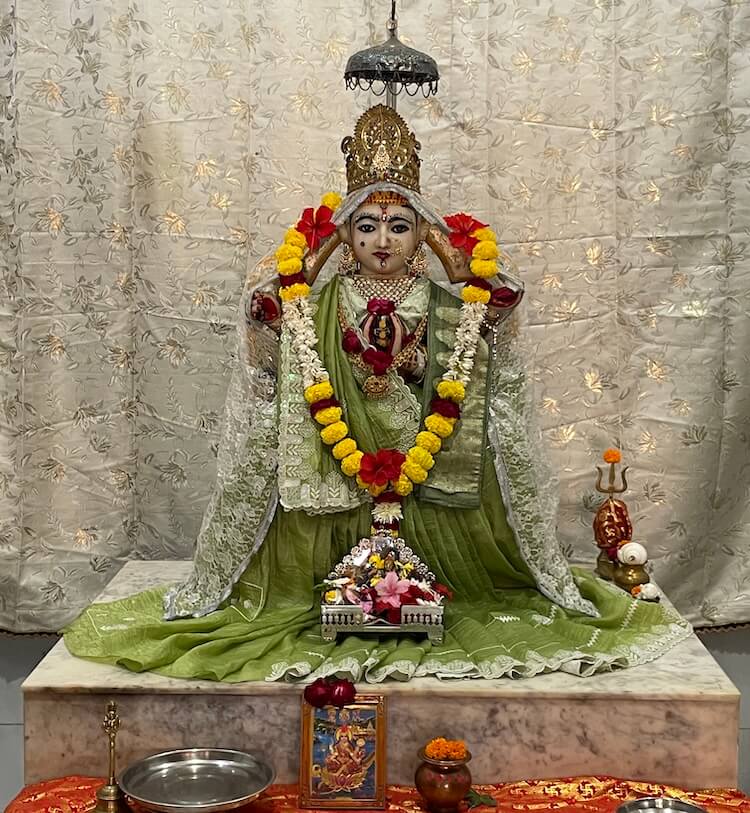
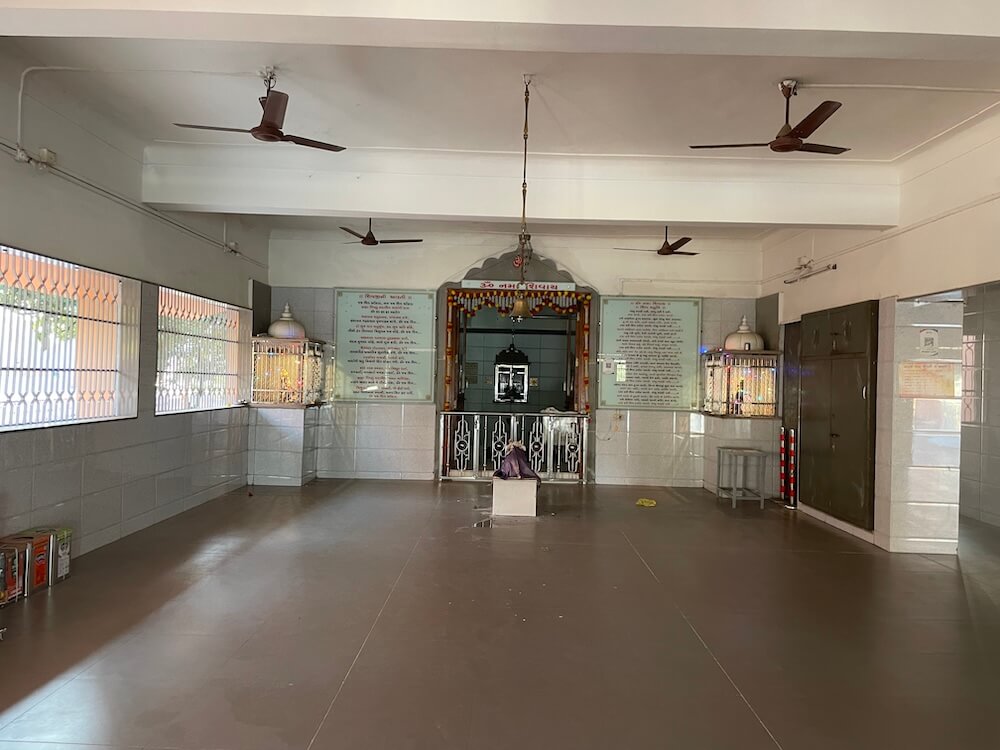 In the right side sanctum rests the idol of Narmada Mata, draped in a rich sari, adorned with ornaments and crowned in gold, beneath a silver canopy. In the left side sanctum stands the sacred Shivling of Siddhanath (Mandavyeshwar) Mahadev. Set within a black stone Shalunka, it holds a Shaligrama stone. A serpent spreads its hood above, with a silver canopy above that. On the rear inner wall of this sanctum is the idol of Parvati Mata, while near the entrance platform of the Garbhagriha sits a marble idol of Nandi. A domed shikhara crowns the sanctum, finished with a two-tiered Amalaka and Kalash.
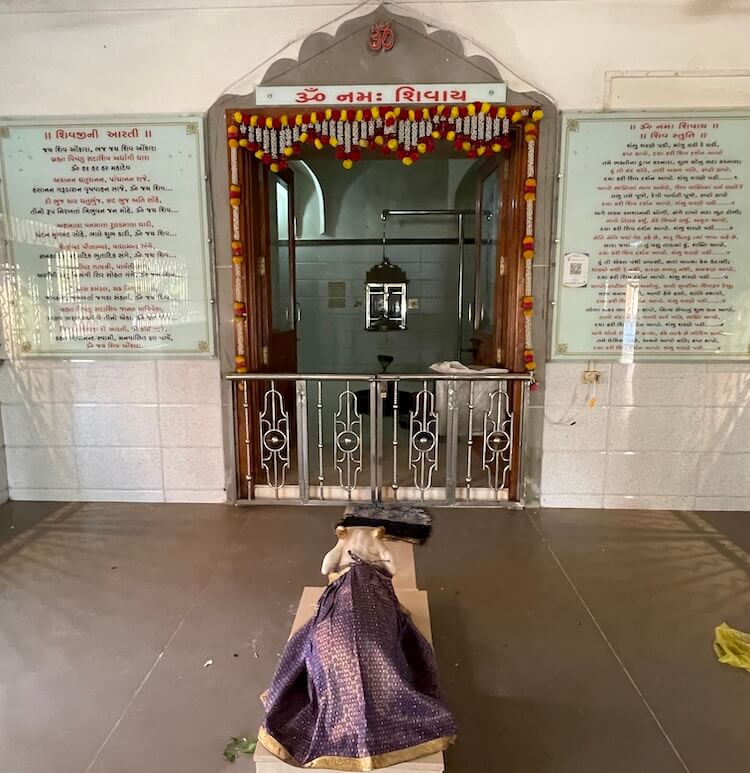
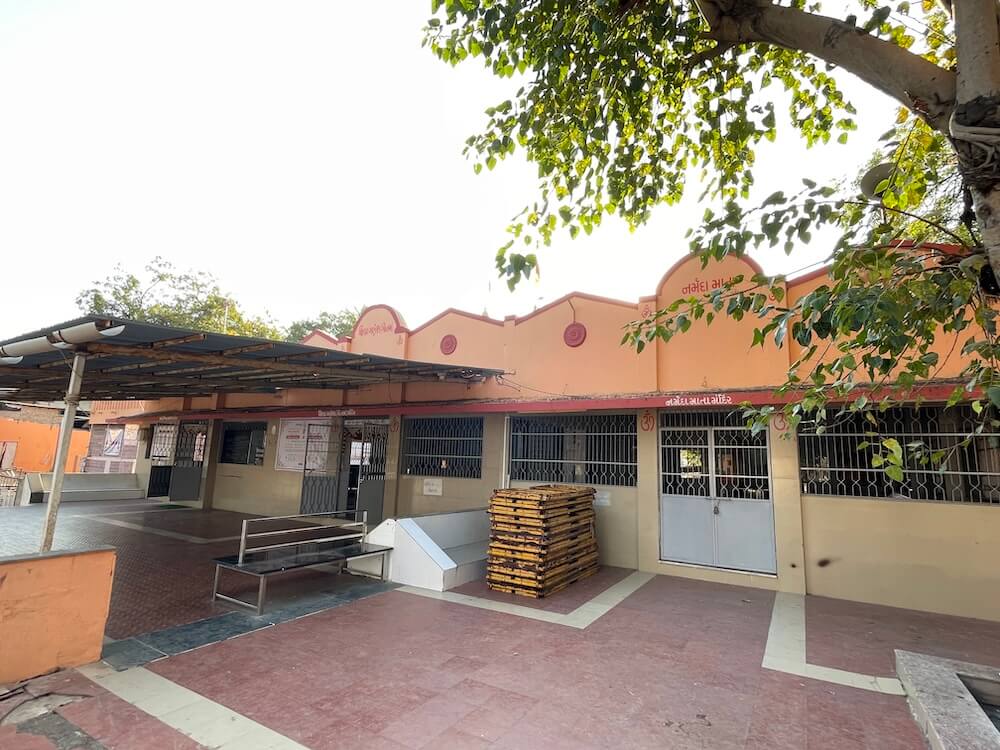
On the left side of the temple runs the path towards ‘Ramkund Tirthdham’. Close by stands the combined shrine of Kalbhairav, Mahakali and Mandavyeshwar Mahadev. 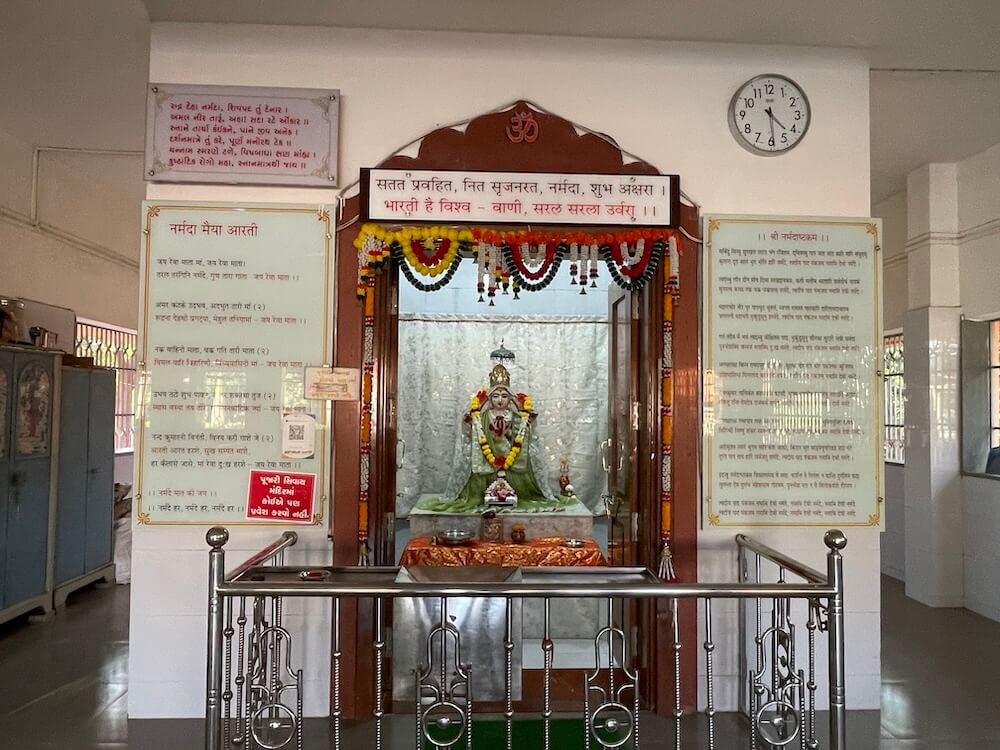 Built on a high plinth, five steps lead into its Sabha Mandap, which is semi-open with steel lattice work. At the inner entrance, two seated lion figures stand guard. There are three sanctums here. In one of the sanctums, stone idols of Kalbhairav and Mahakali reside within a beautiful stone canopy built at ground level. Both idols are coated in traditional vermillion. Silver parasols are positioned above the heads of the deities. To the left, in a small shrine, is a marble idol of Ganesh. On the outer wall of this temple, five idols of the Goddess are enshrined. In the remaining two sanctums are Shivlings, with small Nandi idols before them. Each sanctum is crowned with a domed shikhara.
The temple pulses with life during Ganesh Jayanti and the annual Ganesh festival. Thes festivals are celebrated with grandeur and devotion, along with many sacred rituals. Special celebrations mark the ‘Termo Patotsav’ on Paush Shuddha Shashti, alongside festivals dedicated to Mother Narmada. These occasions involve elaborate fire rituals (Ganesh Yag, Yagya-Havan), Maha Aarti (prayers) and Mahaprasad Bhandara (community feasts). Special ceremonies are also held for Angarki Chaturthi, Mahashivratri and Narmada Jayanti, drawing pilgrims from across the region to this swift granter of prayers.