
कोलाणी श्रीकृष्ण मंदिर
थोडुपुझा, जि. इडुक्की.
Kolani Sree Krishna Temple
Thodupuzha, Dist. Idukki.
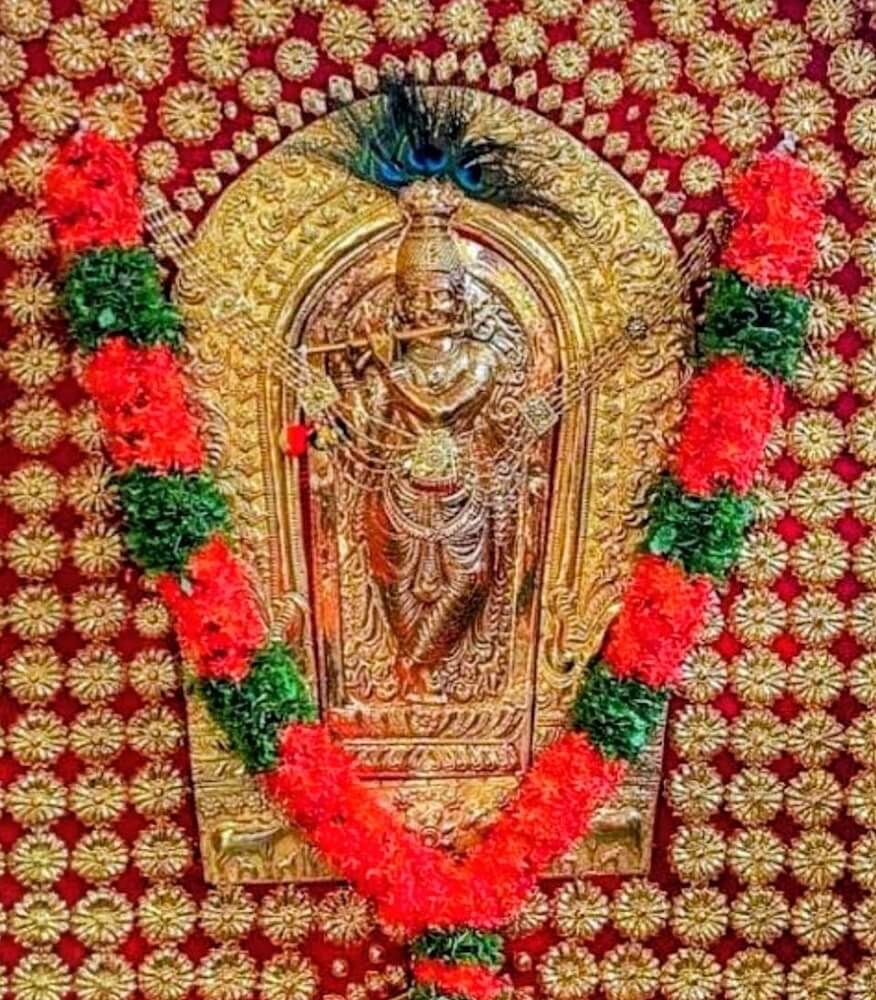 Kolani Sree Krishna Temple is a very old and historic Hindu place of worship located near Kolani Junction in Thodupuzha Municipality, Idukki district. The legend of the temple is linked to the Pandavas during their period of exile. Lord Krishna is the main deity of the temple. The idol is believed to have been installed by Bhimasena and is a four-armed form of Lord Krishna, facing east.
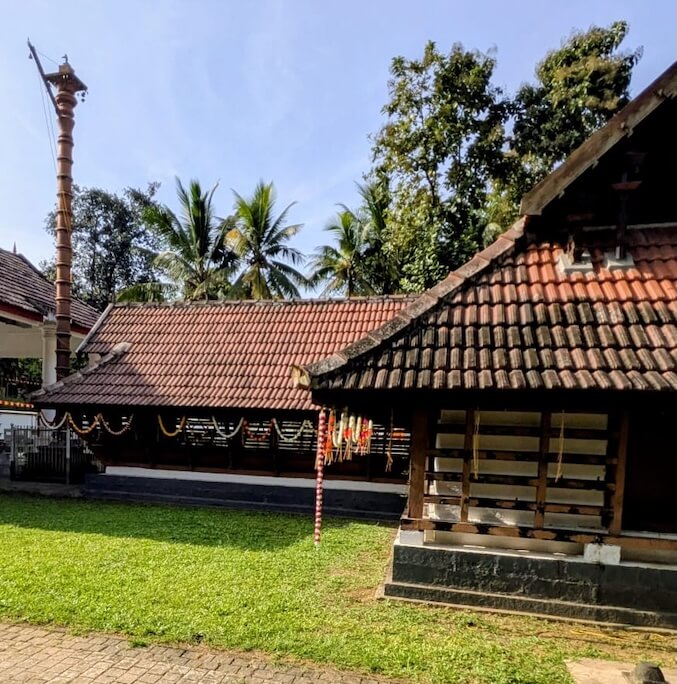
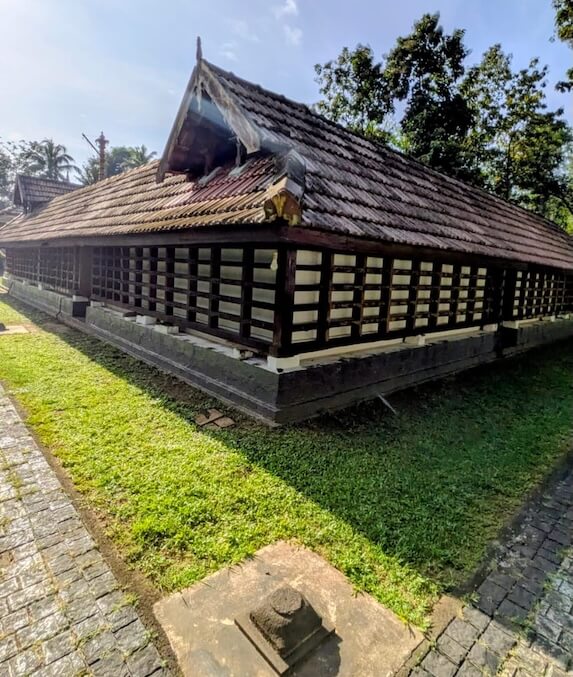
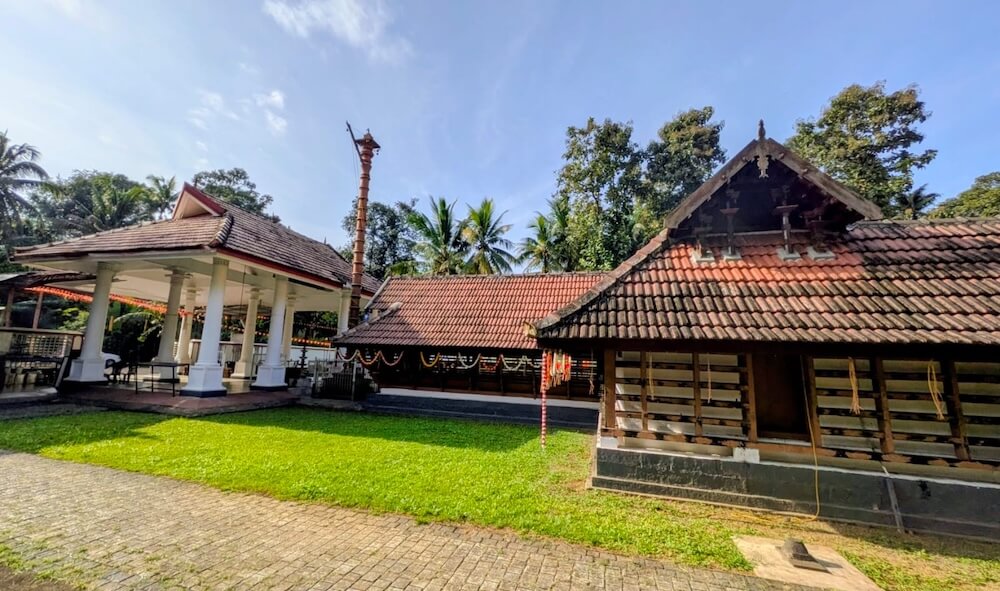
Based on available historical references, the temple is believed to have been built in the 11th century or around that period. Its history is closely linked with the Keezhmalanadu Kingdom, which ruled this region in earlier times. The rulers of the kingdom provided construction support and land for the temple. Built in the traditional Kerala architectural style, the temple has a square Sreekovil, Chuttambalam, Namaskara Mandapam and an Anakkottil near the entrance, all showing traditional building methods. Thodupuzha was once an important agricultural and trading centre in central Travancore and the temple played an important role in the growth of settlements and social life in the area. The large temple pond within the temple grounds is also an old historical structure and has been preserved for temple rituals since ancient times.
 In earlier times, the administration and management of the temple were mainly under the Keezhmalanadu Kingdom. Local rulers and prominent people under the kingdom managed the temple affairs. Later, as with many ancient temples in Kerala, the administration of the temple came under local Brahmin families known as Ooralans and other local chiefs. During this period, the temple owned large areas of land and agricultural fields as Devaswom land. Kolani Sree Krishna Temple is an independent temple. At present, the temple is managed and supervised by a local Board of Trustees along with a devotees’ committee.
The legend of Kolani Sree Krishna Temple is linked to the Pandavas during their period of exile in the Mahabharata. It is believed that the Pandavas spent part of their exile in and around Thodupuzha and that the five brothers installed five Sree Krishna temples in the area for worship during this time. These temples are known as the Anjambalangal of Thodupuzha. Kolani Sree Krishna Temple is associated with Bhimasena. 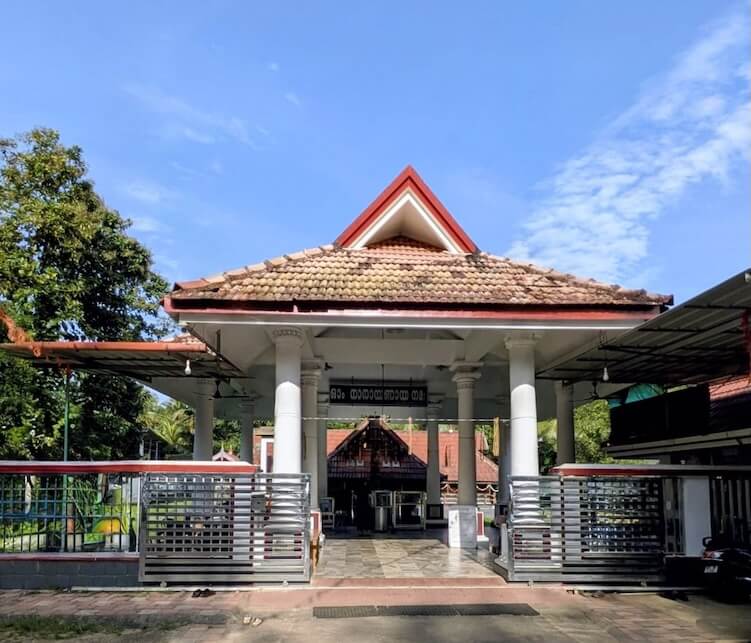 The main legend says that Bhimasena, the son of Vayu, installed the idol of Lord Krishna here. According to the legend, a large footprint of Bhimasena can be seen on the hilltop of Uravappara near Kolani. It is also believed that when Draupadi was thirsty during their exile, Bhimasena struck the rock with his foot and brought out the spring of water found there. There is also a belief among devotees that Vanadurga of the nearby Amaramkavu Devi Temple protected the forest in this area.
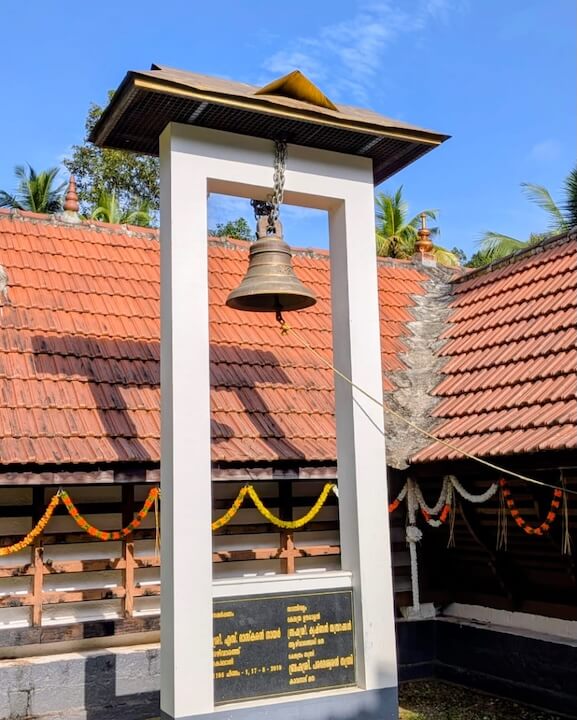
Kolani Sree Krishna Temple is a simple village temple built in the traditional Kerala architectural style. From the road, instead of a large gopuram, the first thing seen is a simple tiled entrance or Padippura. After entering through the gateway, there is a large tiled Anakkottil (Nadappura) supported by large pillars. This area is used to accommodate elephants during festivals and provides shelter for devotees from the rain and sun. A tall flagstaff with the figure of Garuda, the vehicle of Lord Krishna, stands at the centre of the Anakkottil. Beyond the Anakkottil, the main temple area has a square Nalambalam or Chuttambalam surrounding the Sreekovil. Its walls have traditional wooden and metal lamp stands for placing oil lamps. Inside the Nalambalam, directly in front of the Sreekovil, is a square Namaskara Mandapam supported by four pillars and covered with a tiled roof. Brahmins sit here to chant mantras and perform temple rituals.
The Sreekovil is built in the traditional square shape using granite. Its sloping roof, built in the Kerala architectural style, has a tiled pyramidal design that also helps rainwater drain away easily. The Sreekovil faces east. The temple is arranged in such a way that devotees entering through the main entrance can have a direct view of the deity. Beautiful steps carved from granite lead up to the Sreekovil. A large Keda Vilakku, which is kept burning at all times, is placed in front of the Sreekovil. The main deity is Lord Krishna. The deity is installed in the four-armed form of Lord Vishnu, holding a conch, Chakra (Sudarshana), mace and lotus in the four hands. 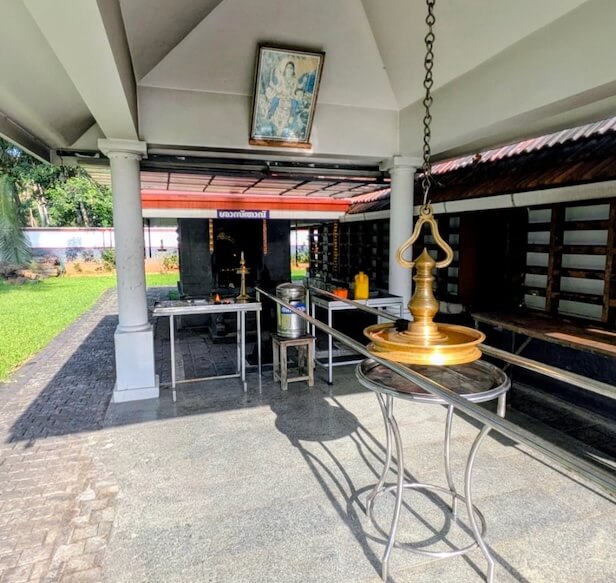 The stone idol is in a calm standing posture on a pedestal and is made entirely of granite. The path around the Nalambalam is also paved with granite and devotees use it to circumambulate the temple.
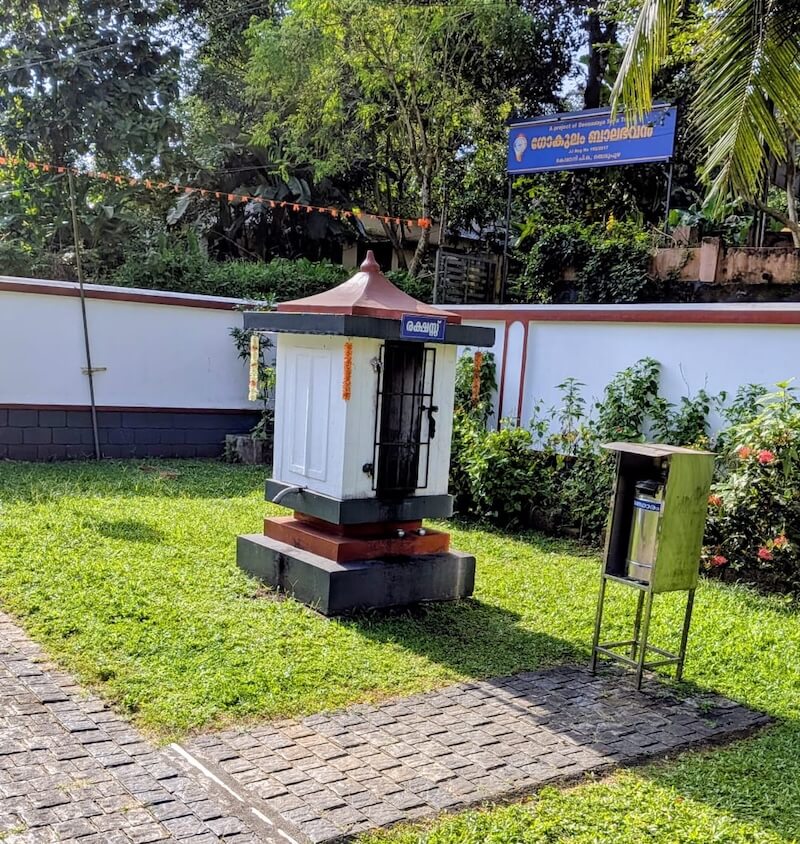
Along with Lord Krishna, the main deity of the temple, several sub-deities also have their own places of worship. Lord Ganapati is installed at the south-west corner inside the Nalambalam. He is worshipped in a sitting form, as commonly seen in Kerala temples. Lord Shiva is also one of the main sub-deities of the temple and is worshipped here in the form of a Shiva Linga. Lord Sastha (Ayyappan) is also present outside the main temple area. The Brahmarakshas is also worshipped in linga form. In addition, the presence of Vanadurga at the historic Amaramkavu Devi Temple, located next to the temple, is spiritually connected with this temple. After circumambulating and worshipping the main deity, devotees also offer prayers to the sub-deities as part of the traditional darshan.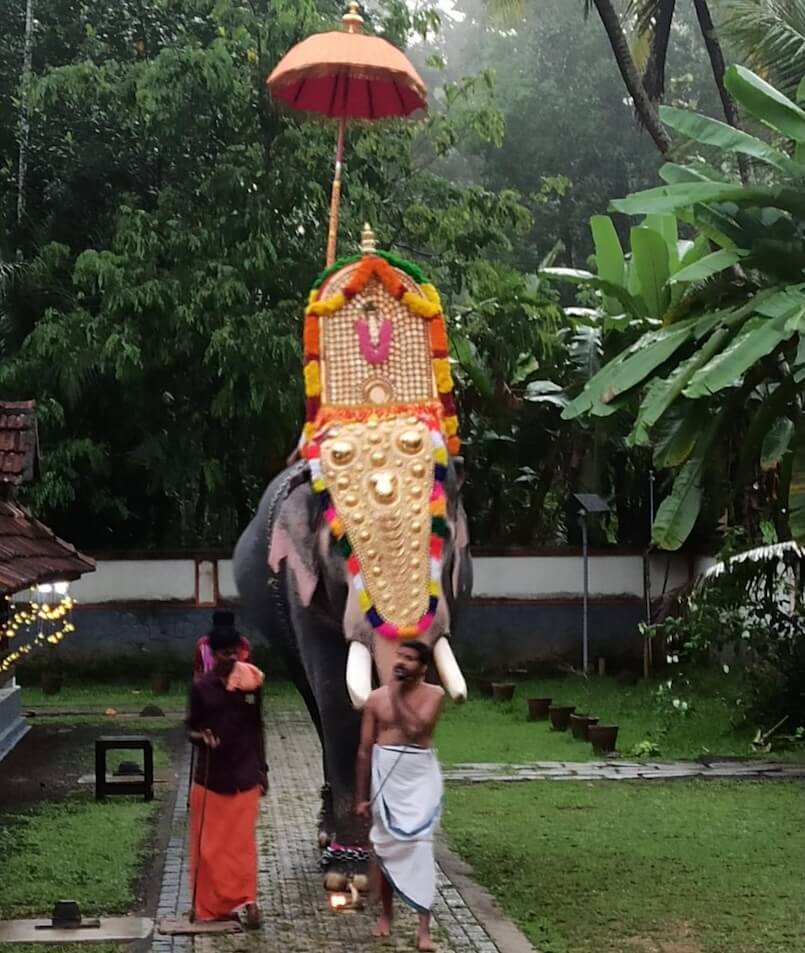
The main annual festival of the temple is the Vishuvilakku Mahotsavam, held in the Malayalam month of Medam (April–May). The eight-day festival begins with the flag-hoisting ceremony and includes various special rituals. On the first day, a devotional Kalabhabhishekam is performed for the deity. On the following days, important rituals such as Utsavabali and Pallivetta are held. One of the main ceremonies of the festival is the Arattu or ceremonial bath of the deity, held on the day after Vishu. The special Utsava Darshan arranged during the festival and the large Prasada Oottu (Annadanam) served to devotees are among the main features of the festival.
In addition to the main annual festival, the Vishuvilakku Mahotsavam, Vishukkani, Ashtami Rohini, Mandala Kalam and Ramayana Masam are also important special occasions at the temple. The early morning Vishukkani Darshan on Vishu day (April) is an important occasion and many devotees come from distant places to have the Vishukkani Darshan of the deity. Ashtami Rohini, the birthday of Lord Krishna, is celebrated in the Malayalam month of Chingam (August–September) with special poojas, Laksharchana and a birthday feast (Prasada Oottu) for devotees.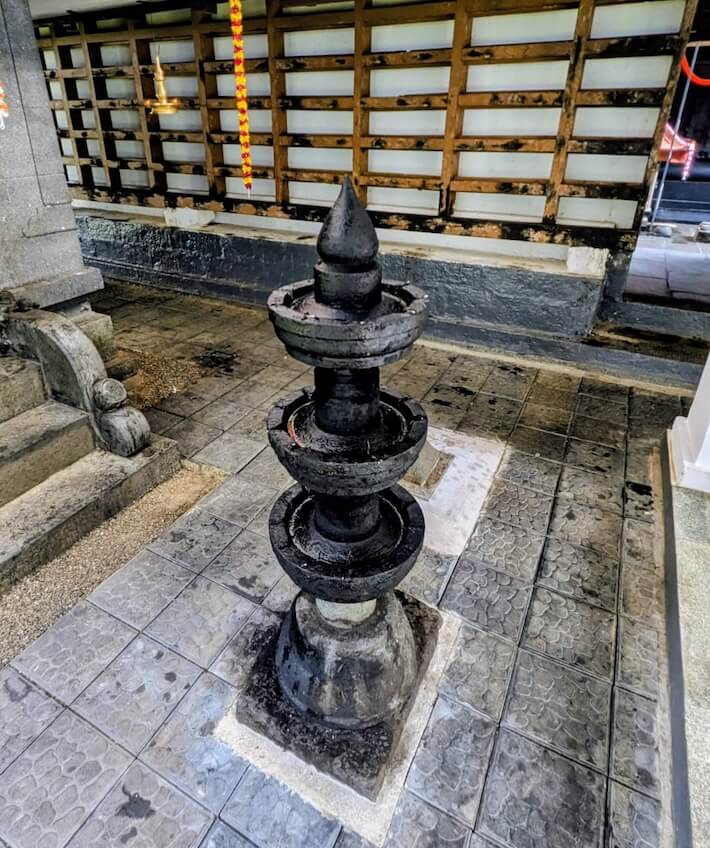 During the 41-day Mandala Kalam from Vrischikam 1 to Dhanu 11 (November–January), special lamp offerings and poojas are performed for the sub-deity Sastha. During Karkidakam (July–August), daily Ramayana recitation and special prayers are held as part of the Ramayana Masam observance.
The main offerings at the temple include Palpayasam, Butter Offering, Thulasi Mala, Neyvilakku and Aval Nivedyam. Palpayasam is offered to Lord Krishna for His blessings, with devotees believing that it brings long life and family prosperity. Butter, which is dear to Unnikrishna, is offered with the belief that it brings blessings for wisdom, children’s health and the fulfilment of wishes. Offering a Thulasi Mala to the deity and lighting a Neyvilakku at the shrine are important offerings made to please Lord Krishna. Aval Nivedyam, recalling the story of Sudama (Kuchela), is offered for relief from poverty and financial prosperity. Among the sub-deities, Ganapathy Homam and Karukamala are important offerings to Lord Ganapati for the removal of obstacles. Dhara and Koovalamala are offered to Lord Shiva for marital blessings, good health and relief from doshas. Neerajanam, performed by lighting sesame wicks, is an important offering to Lord Sastha for relief from Saturn-related doshas.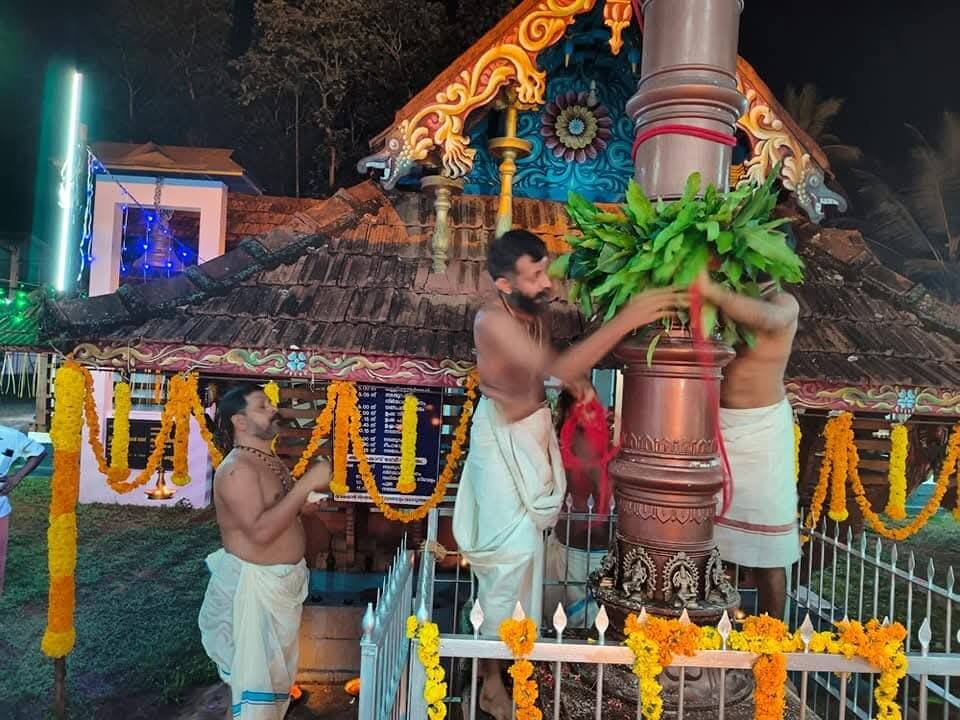
The temple is generally open for darshan from 06:00 AM to 11:30 AM and from 05:30 PM to 07:30 PM. Nirmalya Darshan takes place at 06:00 AM when the temple opens. This darshan, after removing the previous day’s decorations, is considered highly sacred. Usha Pooja is performed from around 06:30 AM to 07:00 AM, followed by Ucha Pooja from 11:00 AM to 11:30 AM before the temple closes. The temple remains closed after the Ucha Pooja. It reopens at 05:30 PM, followed by Deepaaradhana at around 06:15 PM to 06:45 PM in the evening. During Deepaaradhana, the temple lamps are lit and camphor aarati is offered to the deity. Athazha Pooja and the offering are performed at around 07:15 PM, after which the temple closes at 07:30 PM. On special occasions such as Vishuvilakku Mahotsavam, Ashtami Rohini and Mandala Kalam, the darshan timings may change due to additional poojas and the Arattu.
Key highlight :-
- Located 3 km from Thodupuzha, 20 km from Muvattupuzha and 26 km from Pala.
- 30 km from Vaikom road railway station.
- KSRTC and local bus facilities are available to the temple.
- Private vehicles can be parked near the temple.
- Accommodation and food facilities are available in the nearby towns.
कोलानी श्री कृष्ण मंदिर
थोडुपुझा, जिला. इडुक्की.
मंदिरे
Temples
मंदिर
મંદિરો
கோவில்கள்
దేవాలయాలు
ക്ഷേത്രങ്ങൾ
ದೇವಾಲಯಗಳು
মন্দিরসমূহ
ਮੰਦਿਰ
-
श्रीकृष्ण स्वामी मंदिर थोडुपुझा, जि. इडुक्की.
अधिक माहितीSree Krishna Swamy Temple Thodupuzha, Dist. Idukki.
View Detailsश्री कृष्ण स्वामी मंदिर थोडुपुझा, जिला. इडुक्की.
विवरण देखेंSree Krishna Swamy Temple Thodupuzha, Dist. Idukki.
વિગત જુઓSree Krishna Swamy Temple Thodupuzha, Dist. Idukki.
விவரங்களைக் காண்கSree Krishna Swamy Temple Thodupuzha, Dist. Idukki.
వివరాలను చూడండిSree Krishna Swamy Temple Thodupuzha, Dist. Idukki.
വിശദാംശങ്ങൾ കാണുകSree Krishna Swamy Temple Thodupuzha, Dist. Idukki.
ವಿವರಗಳನ್ನು ವೀಕ್ಷಿಸಿSree Krishna Swamy Temple Thodupuzha, Dist. Idukki.
বিস্তারিত দেখুনSree Krishna Swamy Temple Thodupuzha, Dist. Idukki.
ਵੇਰਵੇ ਦੇਖੋ -
श्री नेल्लिकावू दुर्गा भद्रकाली मंदिर पुथेनपेरियाराम, थोडुपुझा, जि. इडुक्की.
अधिक माहितीSree Nellikkavu Durga Bhadrakali Temple Puthenperiyaram, Thodupuzha, Dist. Idukki.
View Detailsश्री नेल्लिक्कावु दुर्गा भद्रकाली मंदिर पुथेनपेरियाराम, थोडुपुझा, जिला। इडुक्की.
विवरण देखेंSree Nellikkavu Durga Bhadrakali Temple Puthenperiyaram, Thodupuzha, Dist. Idukki.
વિગત જુઓSree Nellikkavu Durga Bhadrakali Temple Puthenperiyaram, Thodupuzha, Dist. Idukki.
விவரங்களைக் காண்கSree Nellikkavu Durga Bhadrakali Temple Puthenperiyaram, Thodupuzha, Dist. Idukki.
వివరాలను చూడండిSree Nellikkavu Durga Bhadrakali Temple Puthenperiyaram, Thodupuzha, Dist. Idukki.
വിശദാംശങ്ങൾ കാണുകSree Nellikkavu Durga Bhadrakali Temple Puthenperiyaram, Thodupuzha, Dist. Idukki.
ವಿವರಗಳನ್ನು ವೀಕ್ಷಿಸಿSree Nellikkavu Durga Bhadrakali Temple Puthenperiyaram, Thodupuzha, Dist. Idukki.
বিস্তারিত দেখুনSree Nellikkavu Durga Bhadrakali Temple Puthenperiyaram, Thodupuzha, Dist. Idukki.
ਵੇਰਵੇ ਦੇਖੋ -
मुल्लाकल श्री धर्मसंस्था मंदिर थोडुपुझा, जि. इडुक्की.
अधिक माहितीMullackal Sree Dharma Sastha Temple Thodupuzha, Dist. Idukki.
View Detailsमुल्लाकल श्री धर्मसंस्था मंदिर थोडुपुझा, जि. इडुक्की.
विवरण देखेंMullackal Sree Dharma Sastha Temple Thodupuzha, Dist. Idukki.
વિગત જુઓMullackal Sree Dharma Sastha Temple Thodupuzha, Dist. Idukki.
விவரங்களைக் காண்கMullackal Sree Dharma Sastha Temple Thodupuzha, Dist. Idukki.
వివరాలను చూడండిMullackal Sree Dharma Sastha Temple Thodupuzha, Dist. Idukki.
വിശദാംശങ്ങൾ കാണുകMullackal Sree Dharma Sastha Temple Thodupuzha, Dist. Idukki.
ವಿವರಗಳನ್ನು ವೀಕ್ಷಿಸಿMullackal Sree Dharma Sastha Temple Thodupuzha, Dist. Idukki.
বিস্তারিত দেখুনMullackal Sree Dharma Sastha Temple Thodupuzha, Dist. Idukki.
ਵੇਰਵੇ ਦੇਖੋ