
किळथळी महादेवाचे मंदिर
किळथळी, कोडुंगल्लूर, जि. त्रिशूर.
Keezhthali Mahadeva Temple
Keezhthali, Kodungallur, Dist. Thrissur.
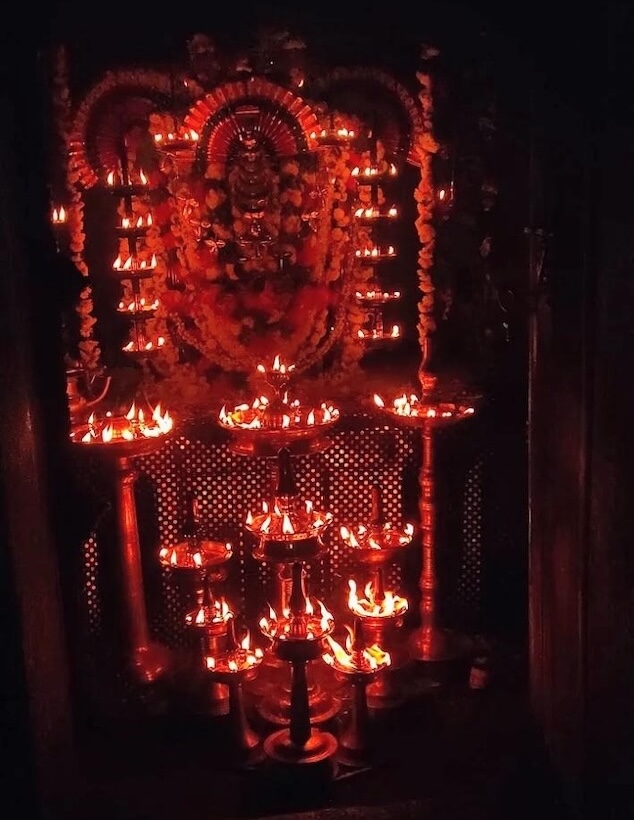 Keezhtali Mahadeva Temple is a historic and ancient Hindu temple located in Kodungallur in Thrissur district, Kerala. It is one of the 18 Thali temples that played an important role in the administration of ancient Kerala and was part of Mahodayapuram, the capital of the Chera Empire, in present-day Kodungallur. Keezhtali Mahadeva Temple is also regarded as one of the four important Thali temples mentioned among the 108 Shiva temples of ancient Kerala.
According to historians and archaeological studies, the remains of the temple seen today, including its granite base (adhishthana), date back to the 9th century. This gives the surviving structure a documented history of more than 1,100 years. At the same time, historical texts such as Keralolpathi mention that a place of worship existed in this area even earlier, possibly before the 4th century. The temple was developed into a large complex during the rule of the Kulasekhara Chera kings of the Second Chera Empire. It was under the supervision and protection of the Cheraman Perumals, who ruled from Kodungallur (Mahodayapuram). The development of the Thali temple was led by Brahmin assemblies that served as advisers to the Chera kings and held authority in administrative matters.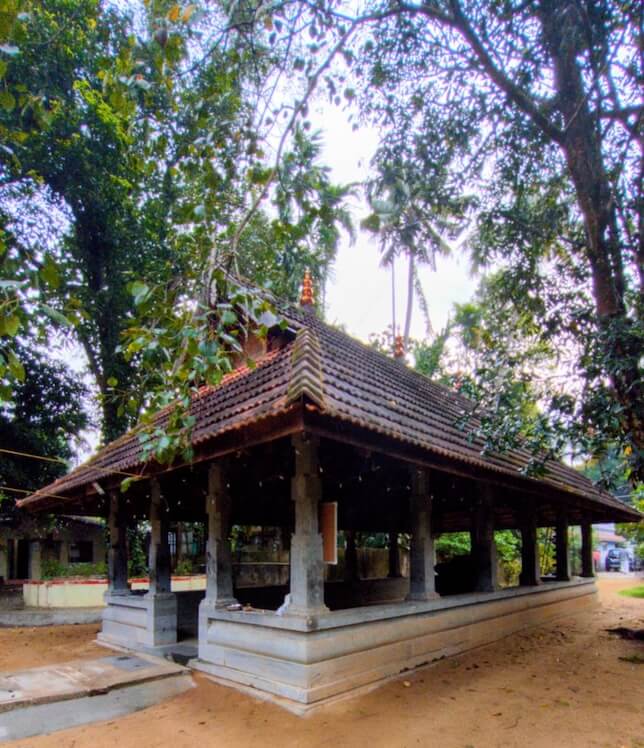 Historical accounts also state that Kerala was divided into 64 villages during this period and that the daily administration of the temple and its construction works were carried out under the leadership of the Thaliyathiris, a committee responsible for the administration of the Kodungallur region and its temple affairs.
During the rule of the Chera kings, Keezhtali Temple was not only a place of worship but also an institution of administrative importance. Historical records state that a governing body known as the ‘Keezhtali Sabha’ functioned here and held land and the authority to collect taxes. Keezhtali is among the surviving temple ruins in Kerala with one of the largest square Sreekovils and front halls. The granite carvings on the adhishthana also show the influence of Pallava and Chola architectural styles. Vattezhuthu inscriptions dating to the 9th century, found in the temple premises, provide important historical evidence about land transfers and administrative systems of the period.
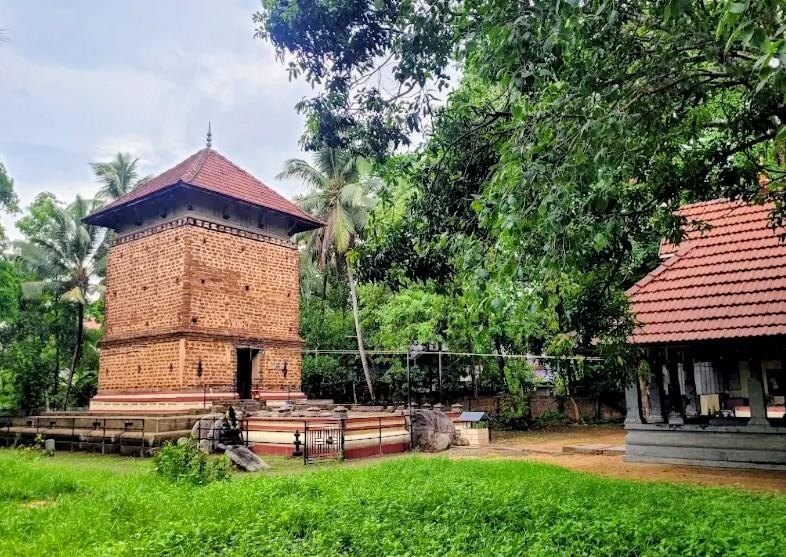
After the temple was damaged during Tipu Sultan’s campaign, it was not fully rebuilt in its original form. Later, after the Archaeology Department took responsibility for its preservation,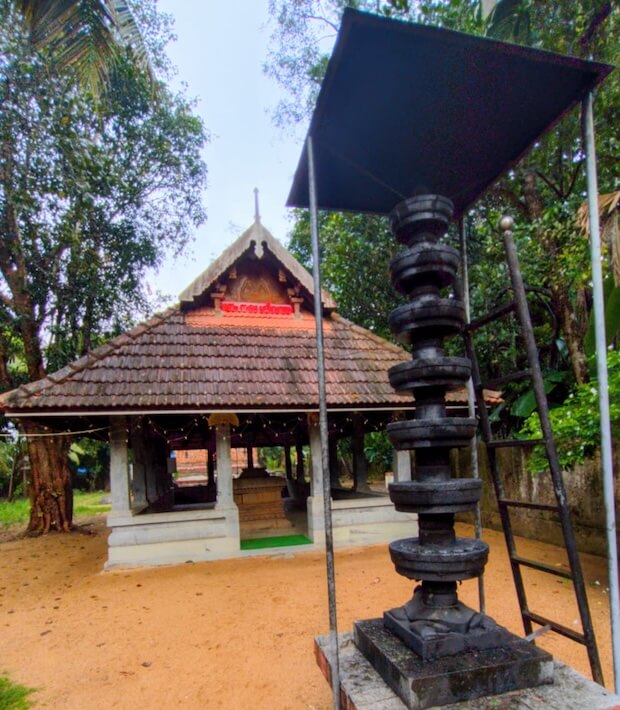 conservation work was carried out to prevent further damage to the remains, along with strengthening of the adhishthana. As the upper part of the Sreekovil was damaged, a temporary tiled roof was installed with the permission of the Archaeology Department to protect the large Shiva Lingam from rain and sunlight. Due to legal restrictions aimed at preserving the original character of the ancient remains, major changes or new construction are not permitted at the site. The temple land and historical remains are under the protection of the Kerala State Archaeology Department. Under archaeological laws, new idols cannot be installed and new sub-temples cannot be built at sites containing protected historical remains. The local temple committee is responsible for the daily conduct of regular worship and rituals.
According to local tradition, Keezhtali Mahadeva Temple is one of the 108 Shiva temples believed to have been established by Parashurama. Shiva is worshipped here in the form of Kirata or a hunter, who is believed to have appeared before Arjuna to grant him the Pashupatastra. Devotees believe that praying before this deity helps remove obstacles and the effects of enemies.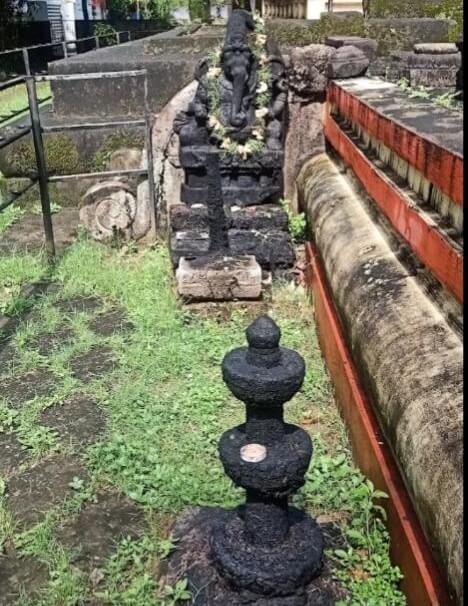 Another tradition associated with the decline of the temple is known as the ‘curse of the Thaliyathiris’. According to this story, following an internal conflict between the Brahmin Thaliyathiris and the king during the Perumal period, the Thaliyathiris cursed the king and the land before giving up their authority and leaving. The story further holds that later foreign attacks led to the destruction of the temple. There is also a popular belief in the Kodungallur region that gold, treasures and idols from the time of the Chera kings were hidden in the ancient well near the temple to protect them from foreign attacks.
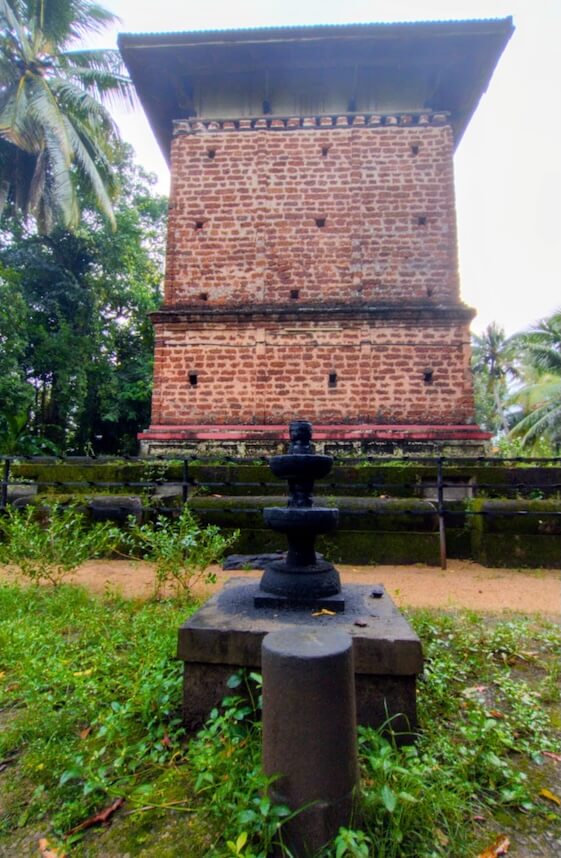
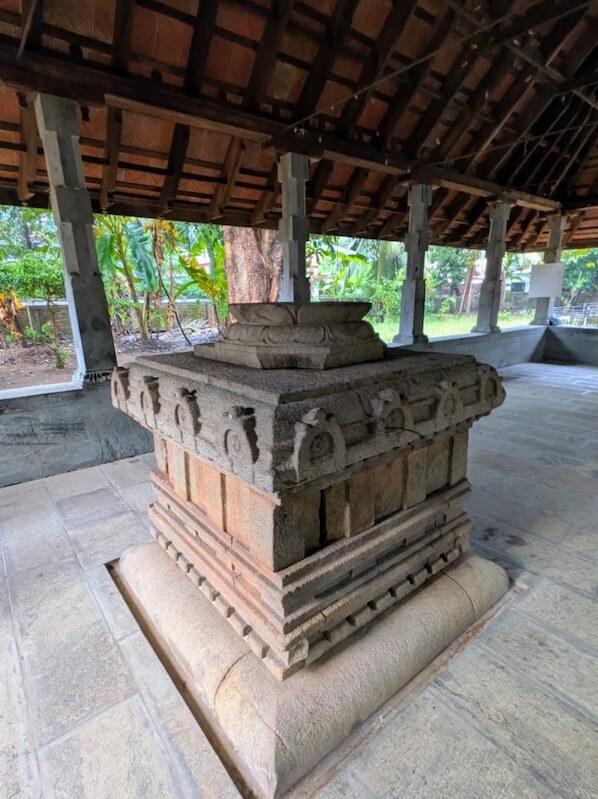
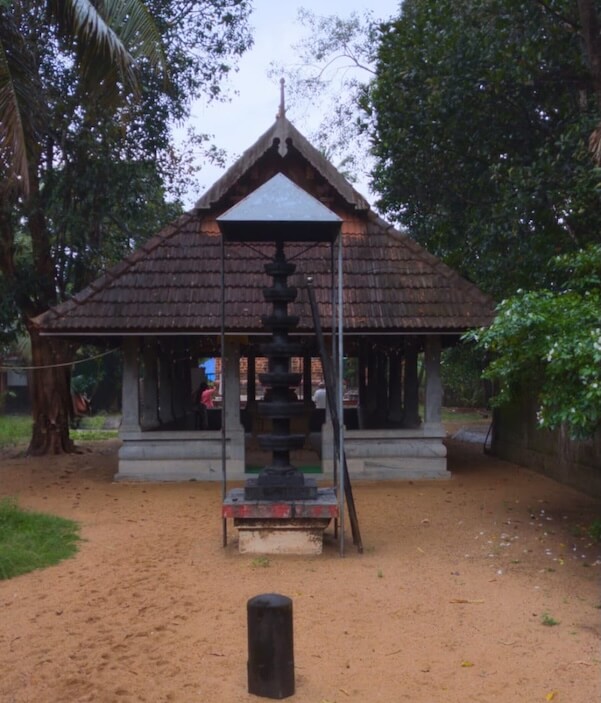
Keezhtali Mahadeva Temple is not a complete temple today but a historic monument that survives as an archaeological ruin. Therefore, features commonly found in traditional temples, such as a flagstaff, surrounding structures and large gateways, are not seen here. The main feature of the temple is its granite adhishthana (base). It is one of the largest surviving bases of a square Sreekovil in Kerala and has carvings showing the influence of ancient South Indian architectural styles. Figures of Simha Vyala, vine patterns and other decorative carvings can be seen on the granite walls. As the upper part of the Sreekovil has collapsed, the Archaeology Department has installed a temporary tiled roof supported by pillars to protect the Shiva Lingam. The remains of the front hall or Mukhamandapa, can also be seen in front of the Sreekovil, with the lower parts of its granite pillars still surviving.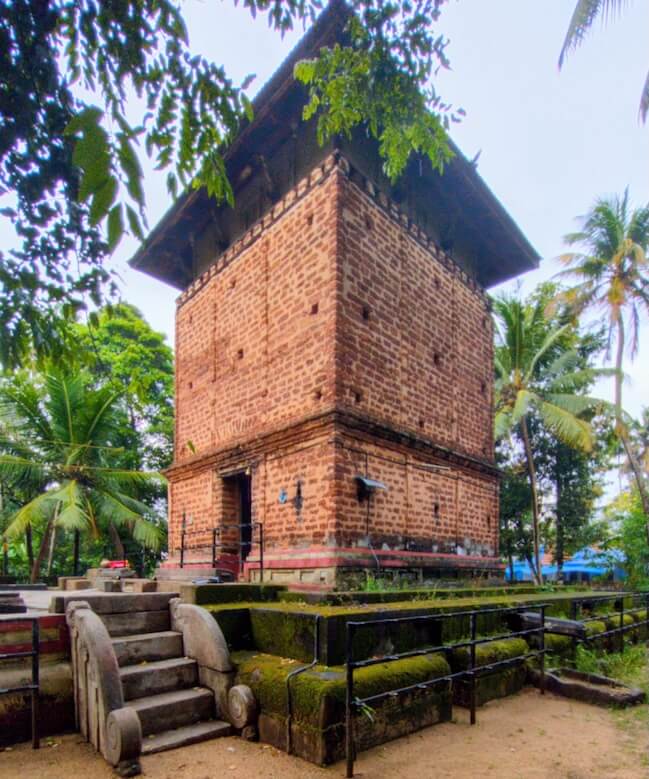
The main feature inside the Sreekovil is the huge granite Shiva Lingam. Standing approximately taller than a person, it is one of the largest Shiva Lingams in Kerala. The granite pedestal on which the Shiva Lingam is placed is also large. As the surrounding walls have collapsed, the Lingam now stands within a wide, open structure. Signs of the temple’s earlier damage can also be seen on the inner granite surfaces, with some areas showing traces of damage associated with foreign attacks and fire. There are no sub-deity installations in the temple.
Due to the strict regulations of the Archaeology Department and the fact that the temple has not been fully rebuilt, large flag-hoisting festivals and elephant processions, as seen at other major Shiva temples, are not held here. Maha Shivaratri is the main special day at the temple. From early morning, devotees from different parts of Kerala and Tamil Nadu visit the temple for darshan. Special poojas, Laksharchana, Annadanam and lamp worship continuing through the night are held as part of the Shivaratri observances. On Thiruvathira in Dhanu (December–January), special abhishekams and poojas are performed for Mahadeva.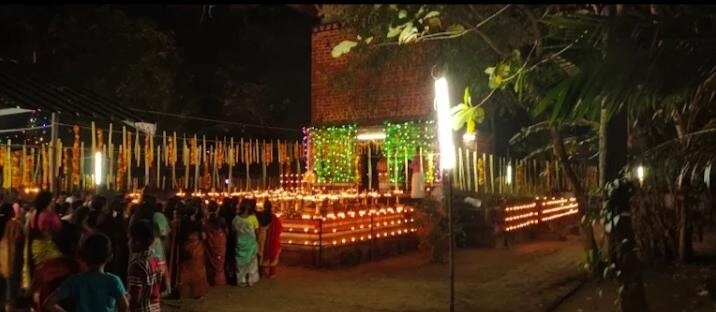 Married women and young women consider visiting the temple on this day particularly auspicious. Special poojas, Deeparadhana and offerings are also held on Pradosham days every month, especially on Shani Pradosham. During Karkidakam (July–August), Ramayana recitation and special prayers are conducted throughout the month.
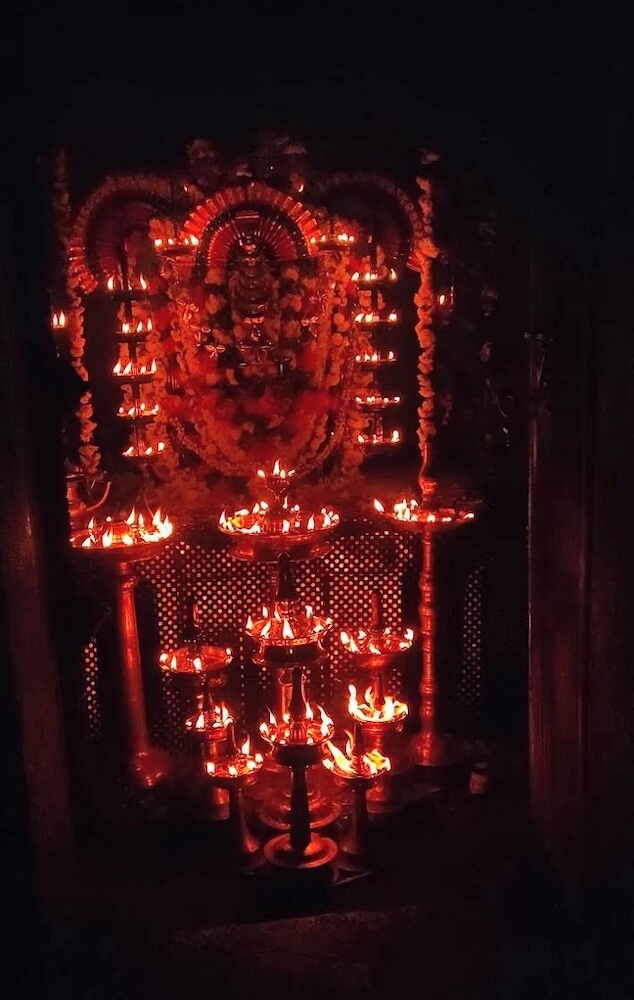
The main offerings at the temple include Dhara (Shiva Dhara), in which water or other sacred substances are continuously poured over the large Shiva Lingam.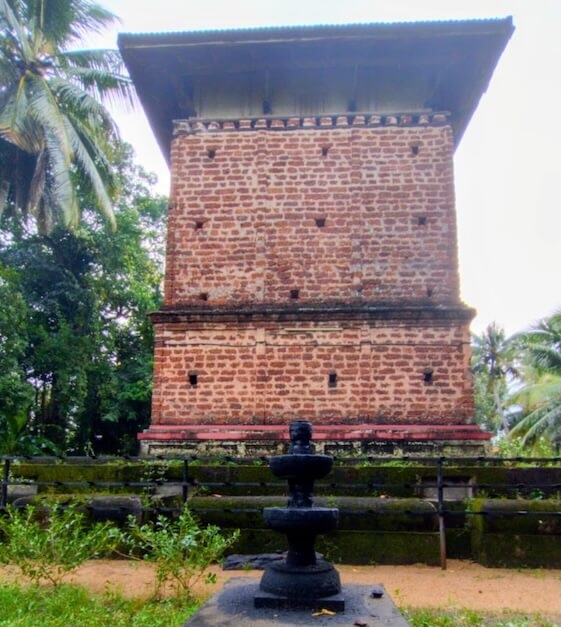 Devotees perform this offering for mental peace and to remove obstacles. Koovalamala is another important offering, in which a garland made of Bilva leaves is offered to Shiva. Devotees perform it for relief from illness and for good health and long life. Pinvilakku and Neyvilakku are also important offerings. In particular, lighting a lamp behind the Sreekovil for Kirata Murthy is considered important for removing the effects of enemies. Shankhabhishekam is an offering performed on special days and Pradosham days, in which sacred water is poured over the Shiva Lingam using a conch. Umamaheswara Pooja is a special pooja performed for marital harmony and family well-being.
The temple’s public darshan hours are generally from 05:30 AM to 11:00 AM and 05:30 PM to 07:30 PM. After the temple opens in the morning, Nirmalya Darshan and abhishekam are conducted, followed by Ushah Pooja at around 06:30 AM–07:00 AM. At around 10:30 AM, Ucha Pooja and the offering of nivedyam are performed before the temple closes at 11:00 AM. The temple reopens at 05:30 PM, followed by Deeparadhana at around 06:30 PM. At around 07:15 PM, Athazha Pooja is performed, after which the temple closes at 07:30 PM. On special days such as Pradosham and Maha Shivaratri, the pooja schedule and darshan hours may vary.
Key highlight :-
- Located 12 km from North Paravur, 40 km from Guruvayur and 38 km from Thrissur city.
- 22 km from Irinjalakkuda railway station.
- 28 km from Cochin International Airport.
- KSRTC and local bus facilities are available to the temple.
- Private vehicles can be parked in the temple’s parking area.
- Accommodation and food facilities are available near the temple.
कीझथली महादेव मंदिर
कीज़थली, कोडुंगल्लूर, जिला। त्रिशूर.
मंदिरे
Temples
मंदिर
મંદિરો
கோவில்கள்
దేవాలయాలు
ക്ഷേത്രങ്ങൾ
ದೇವಾಲಯಗಳು
মন্দিরসমূহ
ਮੰਦਿਰ
-
श्री श्रीनिवास पेरुमल कुलशेघरा अलवर मंदिर त्रिकुलशेकरापुरम, कोडुंगल्लूर, जि. त्रिशूर.
अधिक माहितीSri Srinivasa Perumal Kulasheghara Alwar Temple Thrikulashekarapuram, Kodungallur, Dist. Thrissur.
View Detailsश्री श्रीनिवास पेरुमल कुलशेघरा अलवर मंदिर त्रिकुलशेखरपुरम, कोडुंगल्लूर, जिला। त्रिशूर.
विवरण देखेंSri Srinivasa Perumal Kulasheghara Alwar Temple Thrikulashekarapuram, Kodungallur, Dist. Thrissur.
વિગત જુઓSri Srinivasa Perumal Kulasheghara Alwar Temple Thrikulashekarapuram, Kodungallur, Dist. Thrissur.
விவரங்களைக் காண்கSri Srinivasa Perumal Kulasheghara Alwar Temple Thrikulashekarapuram, Kodungallur, Dist. Thrissur.
వివరాలను చూడండిSri Srinivasa Perumal Kulasheghara Alwar Temple Thrikulashekarapuram, Kodungallur, Dist. Thrissur.
വിശദാംശങ്ങൾ കാണുകSri Srinivasa Perumal Kulasheghara Alwar Temple Thrikulashekarapuram, Kodungallur, Dist. Thrissur.
ವಿವರಗಳನ್ನು ವೀಕ್ಷಿಸಿSri Srinivasa Perumal Kulasheghara Alwar Temple Thrikulashekarapuram, Kodungallur, Dist. Thrissur.
বিস্তারিত দেখুনSri Srinivasa Perumal Kulasheghara Alwar Temple Thrikulashekarapuram, Kodungallur, Dist. Thrissur.
ਵੇਰਵੇ ਦੇਖੋ -
श्रींगापुरम श्रीकृष्ण स्वामी मंदिर श्रींगापुरम, कोडुंगल्लूर, जि. त्रिशूर.
अधिक माहितीSringapuram Sree Krishna Swamy Temple Sringapuram, Kodungallur, Dist. Thrissur.
View Detailsश्रृंगापुरम श्री कृष्ण स्वामी मंदिर श्रींगापुरम, कोडुंगल्लूर, जिला। त्रिशूर.
विवरण देखेंSringapuram Sree Krishna Swamy Temple Sringapuram, Kodungallur, Dist. Thrissur.
વિગત જુઓSringapuram Sree Krishna Swamy Temple Sringapuram, Kodungallur, Dist. Thrissur.
விவரங்களைக் காண்கSringapuram Sree Krishna Swamy Temple Sringapuram, Kodungallur, Dist. Thrissur.
వివరాలను చూడండిSringapuram Sree Krishna Swamy Temple Sringapuram, Kodungallur, Dist. Thrissur.
വിശദാംശങ്ങൾ കാണുകSringapuram Sree Krishna Swamy Temple Sringapuram, Kodungallur, Dist. Thrissur.
ವಿವರಗಳನ್ನು ವೀಕ್ಷಿಸಿSringapuram Sree Krishna Swamy Temple Sringapuram, Kodungallur, Dist. Thrissur.
বিস্তারিত দেখুনSringapuram Sree Krishna Swamy Temple Sringapuram, Kodungallur, Dist. Thrissur.
ਵੇਰਵੇ ਦੇਖੋ -
पारंबीकुलंगरा श्रीकृष्ण स्वामी मंदिर पदकुलम, कोडुंगल्लूर, जि. त्रिशूर.
अधिक माहितीParambikulangara Sree Krishna Swamy Temple Padakulam, Kodungallur, Dist. Thrissur.
View Detailsपरम्बिकुलंगरा श्री कृष्ण स्वामी मंदिर पदाकुलम, कोडुंगल्लूर, जिला। त्रिशूर.
विवरण देखेंParambikulangara Sree Krishna Swamy Temple Padakulam, Kodungallur, Dist. Thrissur.
વિગત જુઓParambikulangara Sree Krishna Swamy Temple Padakulam, Kodungallur, Dist. Thrissur.
விவரங்களைக் காண்கParambikulangara Sree Krishna Swamy Temple Padakulam, Kodungallur, Dist. Thrissur.
వివరాలను చూడండిParambikulangara Sree Krishna Swamy Temple Padakulam, Kodungallur, Dist. Thrissur.
വിശദാംശങ്ങൾ കാണുകParambikulangara Sree Krishna Swamy Temple Padakulam, Kodungallur, Dist. Thrissur.
ವಿವರಗಳನ್ನು ವೀಕ್ಷಿಸಿParambikulangara Sree Krishna Swamy Temple Padakulam, Kodungallur, Dist. Thrissur.
বিস্তারিত দেখুনParambikulangara Sree Krishna Swamy Temple Padakulam, Kodungallur, Dist. Thrissur.
ਵੇਰਵੇ ਦੇਖੋ