 Saint Jalaram Bapa, whose life reflected the perfect harmony of selfless service to society and unwavering devotion to the Almighty, is revered across Gujarat, where numerous temples are dedicated to him. His sacred icons are enshrined in many sanctuaries, among which the well-known Jalaram Temple at Ankleshwar holds a place of distinction. As Jalaram Bapa was a devout follower of Shri Ram, this temple complex also features a shrine dedicated to Hanuman, another supreme devotee of the Lord. Many legends speak of the miracles performed by Jalaram Bapa during his lifetime and the faithful continue to believe that even today, when called upon with sincere devotion, he responds with compassionate grace.
The life of Jalaram Bapa traces back to the small village of Virpur in Rajkot district, where he was born on Kartik Shuddha Saptami, 4 November 1799, into a Lohna family. At that time, Rajkot was a princely state ruled by Thakorsahib Ranmalji II Mehramanji. Jalaram Bapa’s father was Pradhan Thakkar and his mother was Rajabai. From childhood, Jalaram displayed a strong inclination towards spirituality, 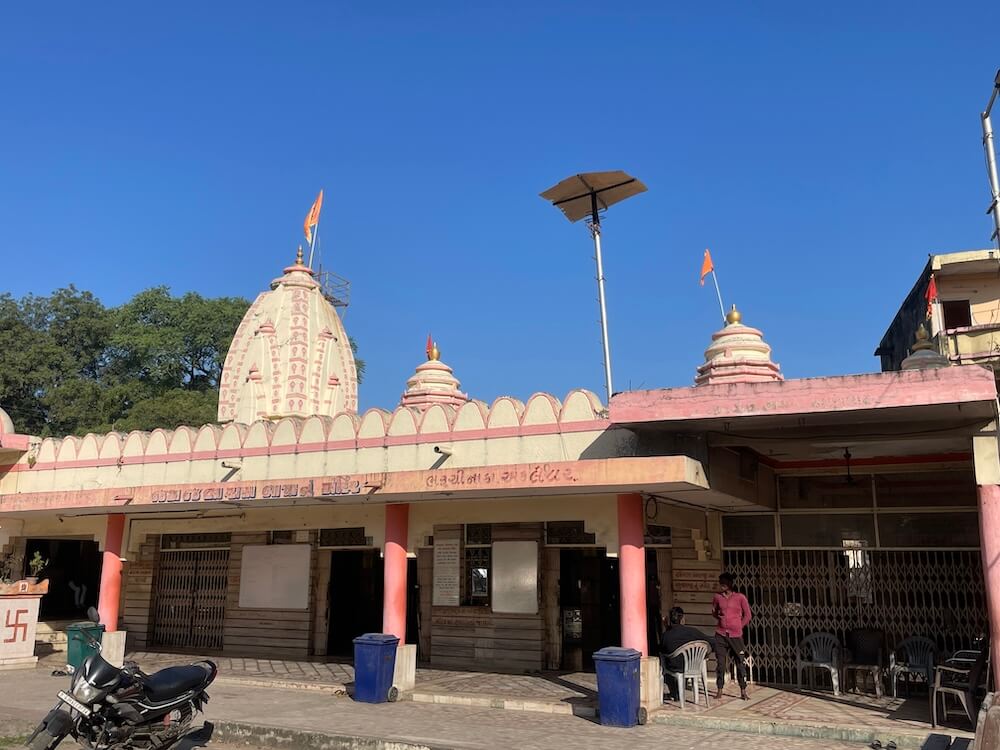 with the same fondness as his parents for serving saints and holy men. At the age of sixteen, he was married to Virbai. Just two years later, in 1817, his life took a decisive turn when he accepted Bhojalram (Bhoja Bhagat) of Fatehpur as his guru.
Following his guru’s command, he began the constant chanting of the holy name of Ram. Service to humanity already flowed through his veins and now he offered himself entirely to the service of society. On the instructions of his guru, he started a ‘Sadavrat’ (annakshetra – free community kitchen) at Virpur. He made no distinction of caste or religion; feeding every hungry person who came to him became his sacred duty. At times, 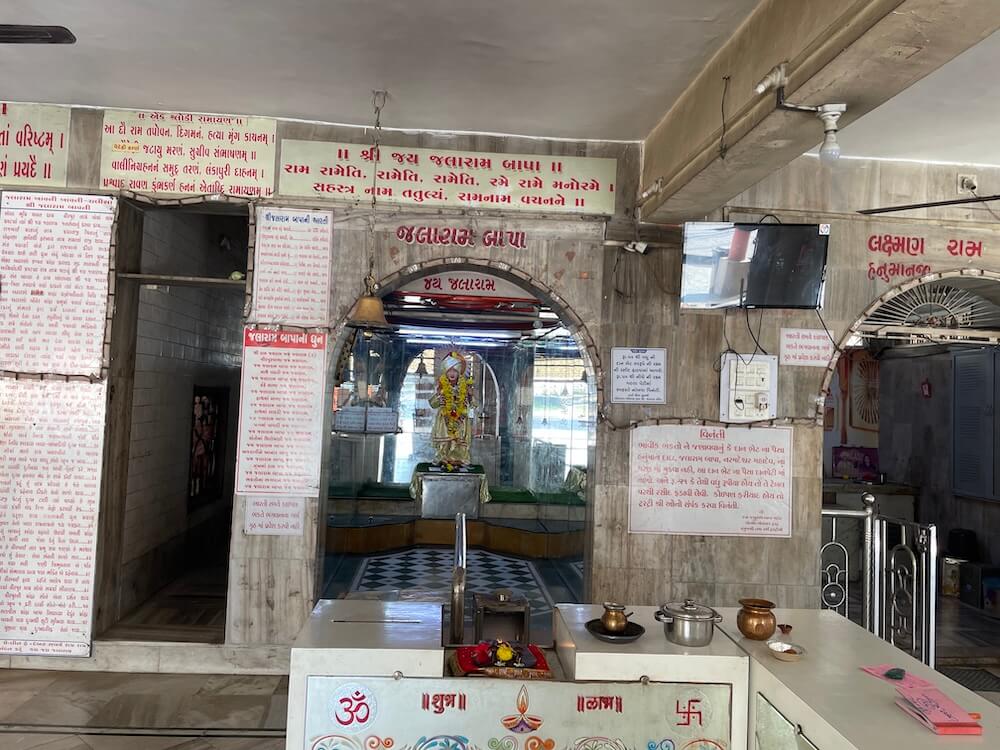 he even had to sell his wife’s gold ornaments to continue this service, yet he never allowed the noble work to cease. Countless miracles are said to have occurred in his life, popularly known as ‘Parcha’. One well-known tale narrates that once an elderly saint came to Jalaram Bapa in Virpur and demanded, as part of service that Bapa surrender his wife Virbai to him. True to his unflinching spirit of serving saints without hesitation, Jalaram entrusted Virbai to the ascetic. The saint walked some distance with her, then suddenly vanished, leaving behind only a staff and a cloth bag. A divine voice then proclaimed that this was a test of sacrifice and devotion and Jalaram had excelled in it. It was the Lord Himself who had come disguised as the old ascetic. The sacred staff and bag he left behind are preserved even today at Virpur Temple.
 Many narratives also speak of Jalaram Bapa curing innumerable afflictions and of his annakshetra continuing unbroken even during severe famine. Through the grace of Goddess Annapurna, it is said, his food store never ran empty. Because of his boundless compassion and service, not only Hindus but also Muslims revered him as a saint and many among them were his devoted followers. At the age of eighty-one, on 23 February 1881, Jalaram Bapa passed away while chanting Ramanama. Much like Shirdi’s Sai Baba, his followers are today spread across the globe. Jalaram Bapa was born in the Kathiawad region, the same land that later gave birth to Mahatma Gandhi. Gujarati devotional heritage, saints such as Narsi Mehta, the Pranami tradition, the ideals of Ram devotion, universal brotherhood and service embodied by Jalaram Bapa deeply influenced Mahatma Gandhi.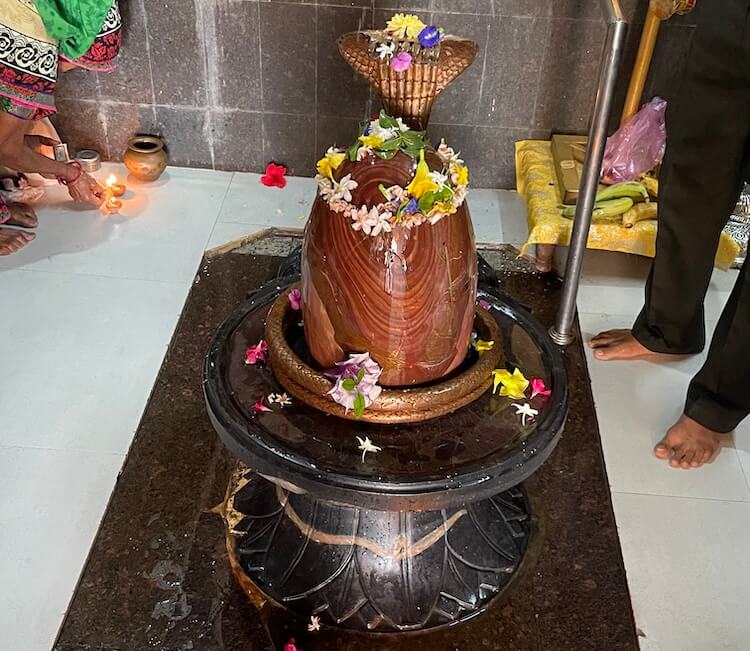
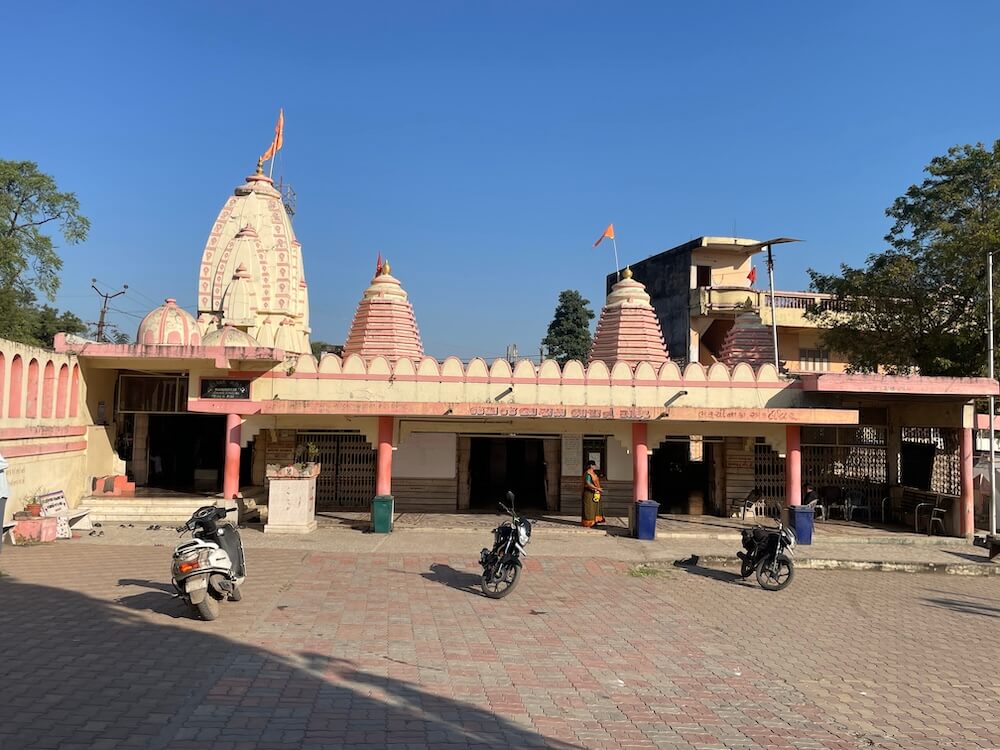
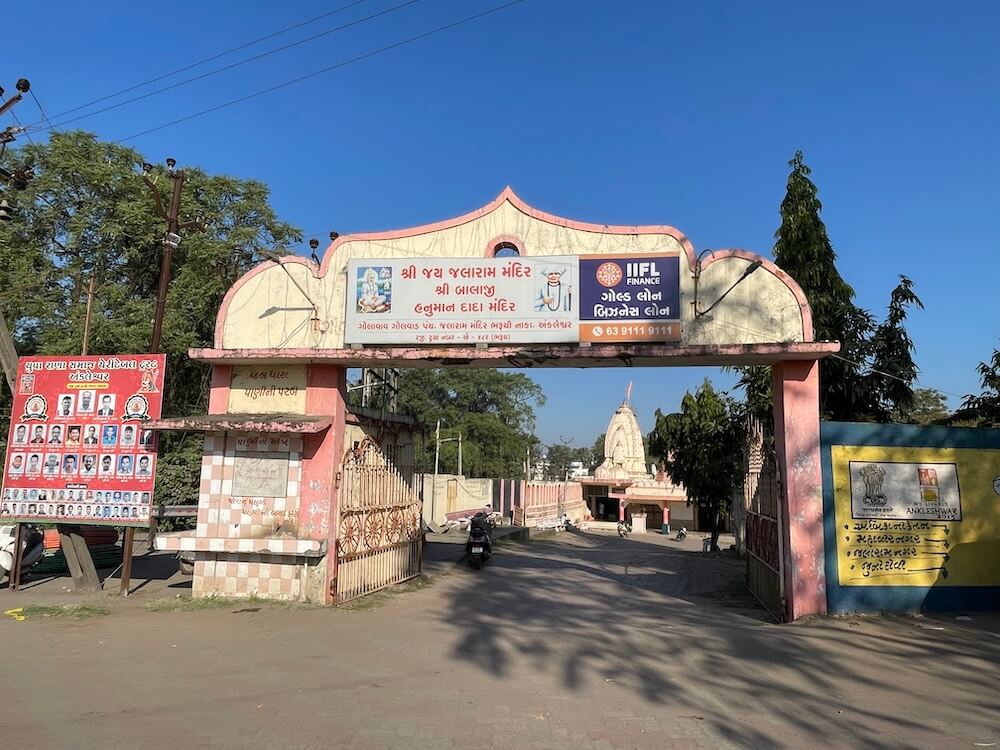
The Jalaram Bapa Temple at Bharuchi Naka in Ankleshwar is set within a spacious precinct. Located slightly below the highway level, the temple complex is enclosed by a high boundary wall with a grand entrance arch. A short walk from the gateway leads to the imposing main temple. The structure bears four shikhars (spires), three of smaller size and one tall urushringa type spire. To the extreme left stands a small temple of Narmadeshwar Mahadev.
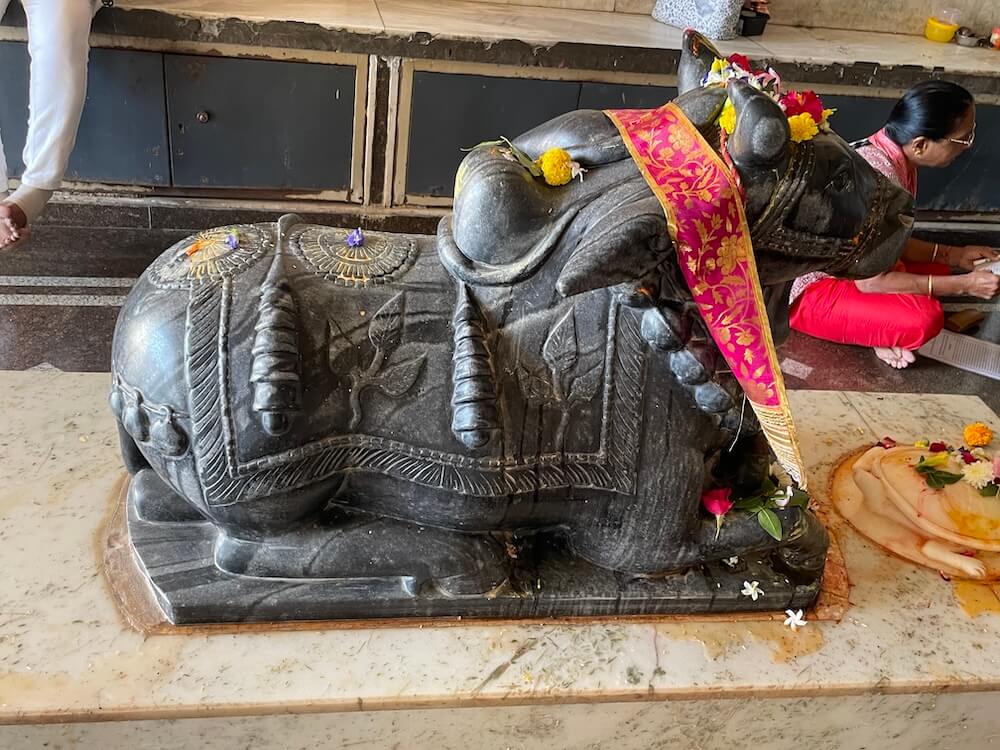
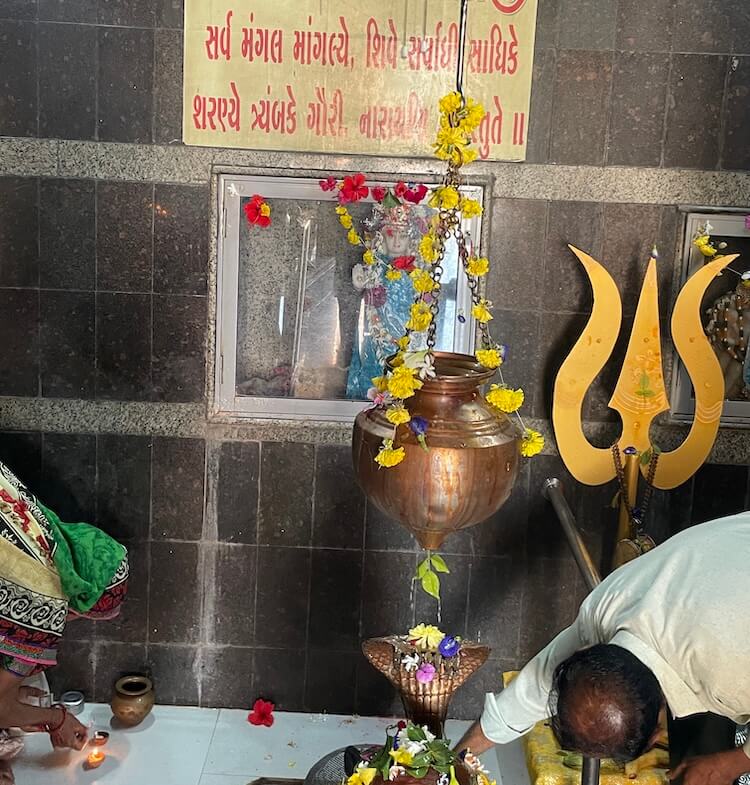
Its Mukhamandap is crowned with a domed shikhar. In the Sabhamandap stands a beautifully carved stone idol of Nandi, with a sculpted tortoise before him. In the Garbhagriha, upon the ground, is an elevated pindi of Narmadeshwar Shiva, distinct from many others, for its shalunka (base) is shaped like a damaru.
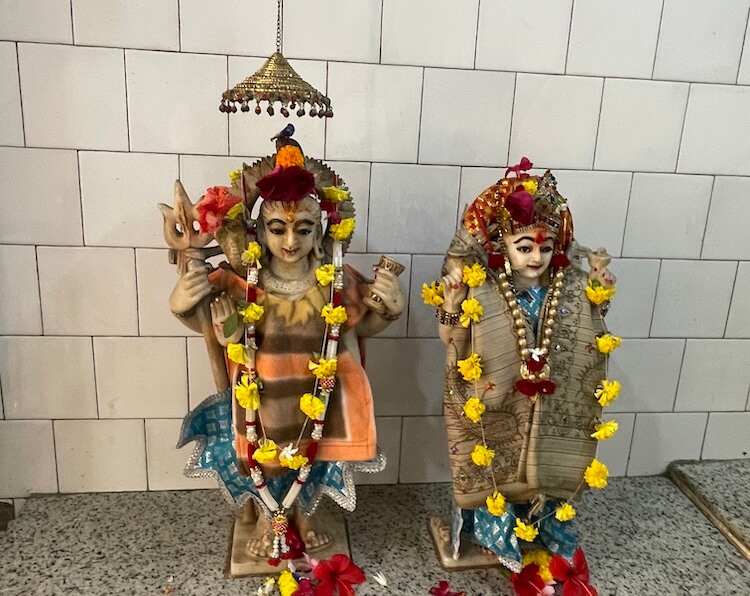
Upon it rises a tall cylindrical Shivalinga of shaligram, sheltered by a brass serpent hood. Above the pindi is a brass vessel for abhishek and a large trident is placed beside it.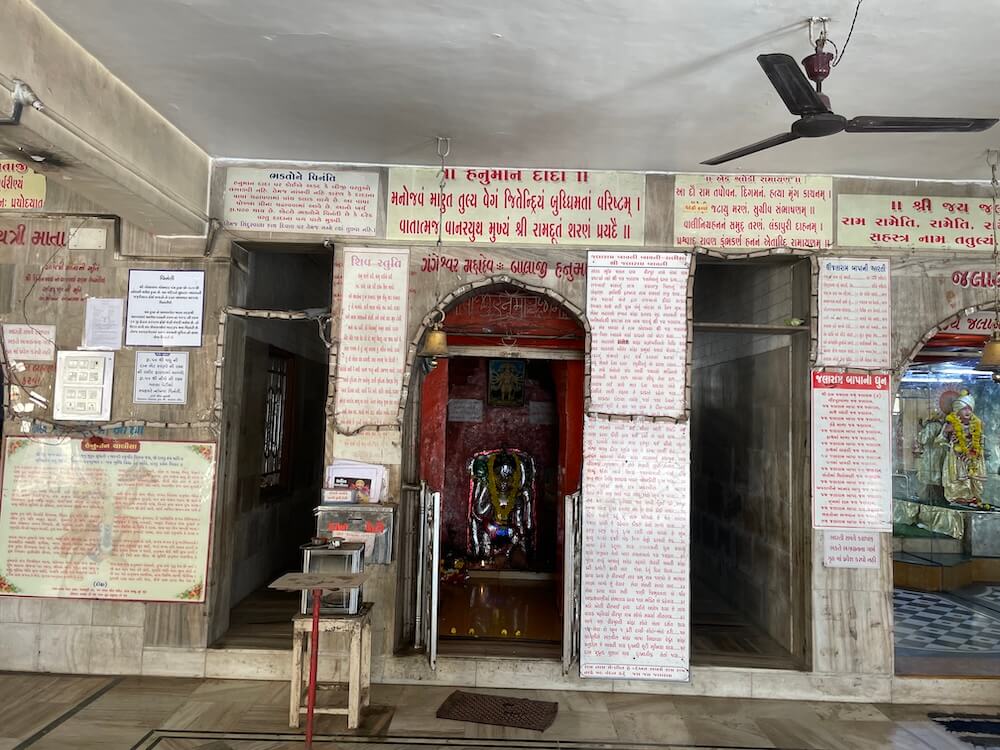 In the shrine behind the sanctum are idols of Parvati and Ganesh.
Adjoining this shrine stands the Jalaram Bapa Temple. Its design includes a long ovari (verandah), a Sabhamandap and multiple sanctums. Outside the ovari is a large Tulsi Vrindavan. The Sabhamandap has three grand entrances.
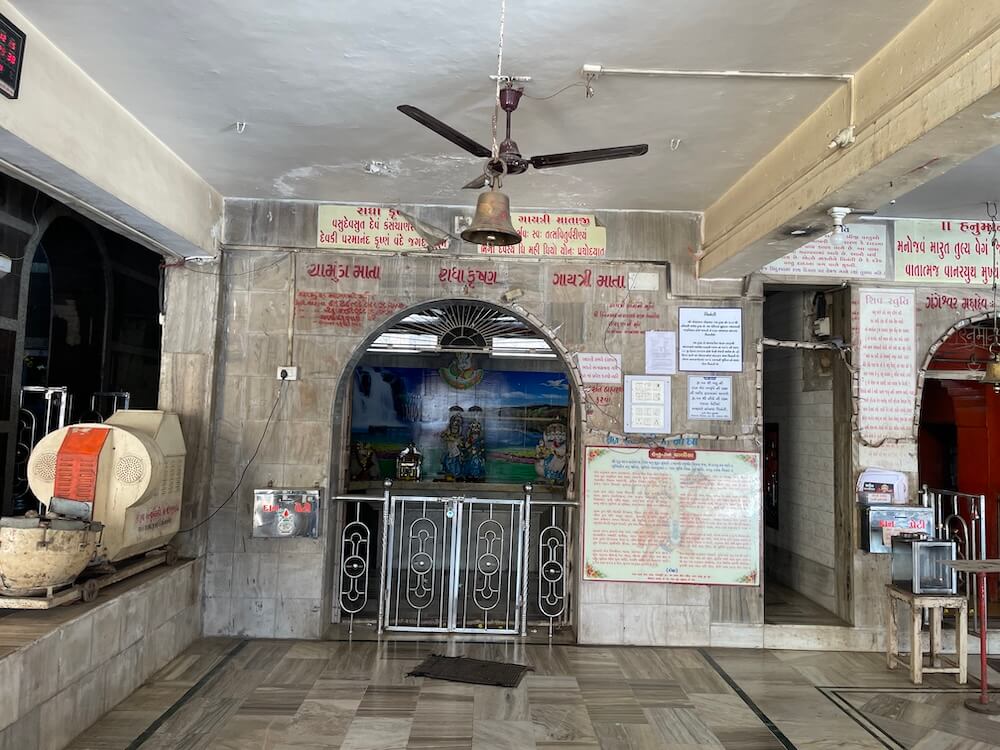
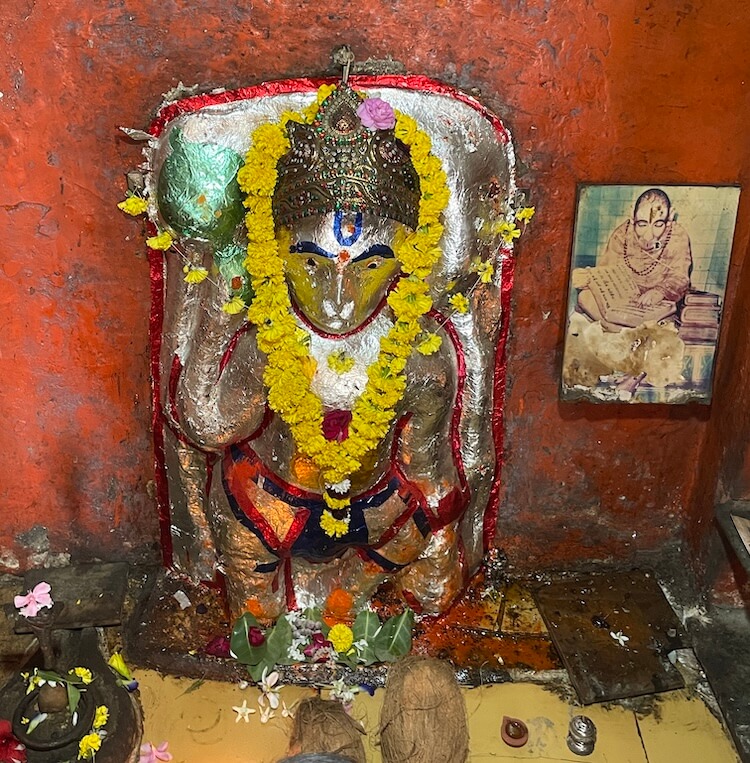
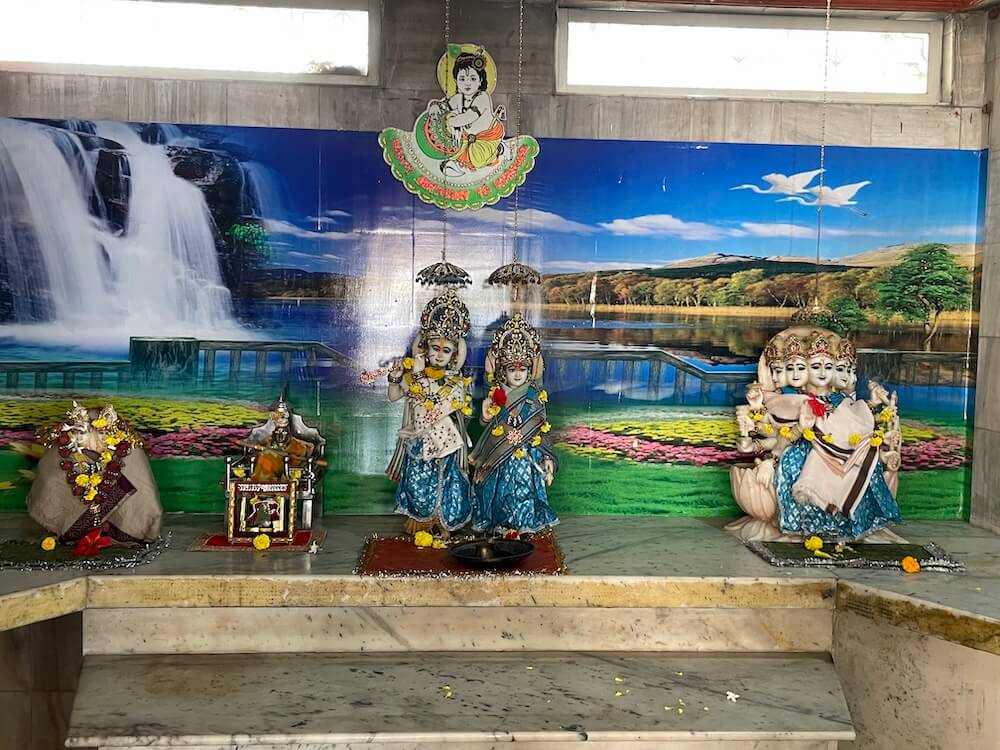
Within, there are four Garbhagrihas. In the leftmost sanctum, upon a high pedestal, are idols of Chamunda Mata, Radha-Krishna and Panchamukhi Gayatri Mata. In the next sanctum stands a stone idol of Balaji Hanuman.
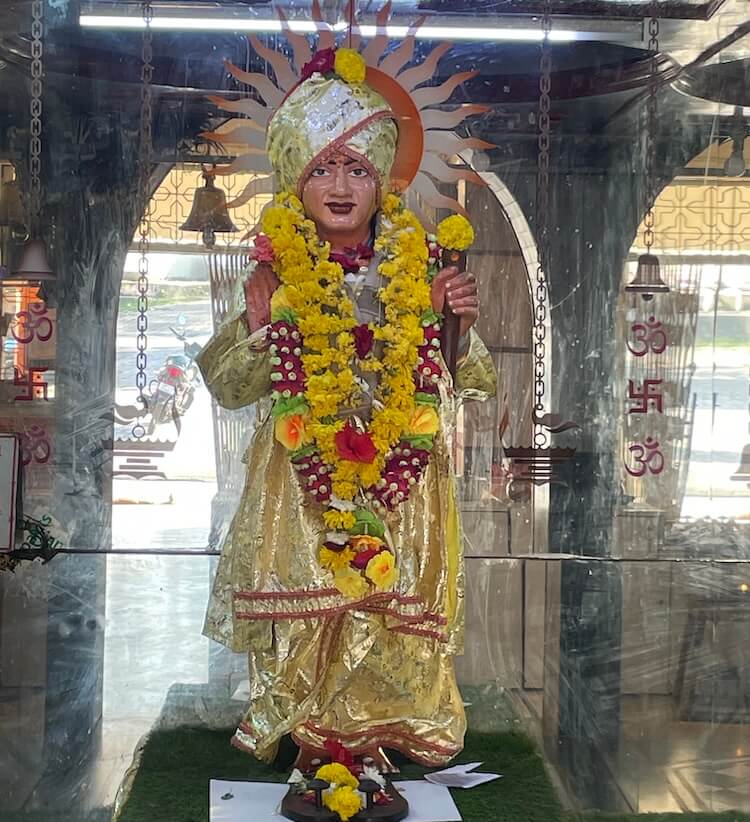
In the neighbouring sanctum, on an elevated marble platform, is the standing idol of Saint Jalaram Bapa, adorned in resplendent garments,
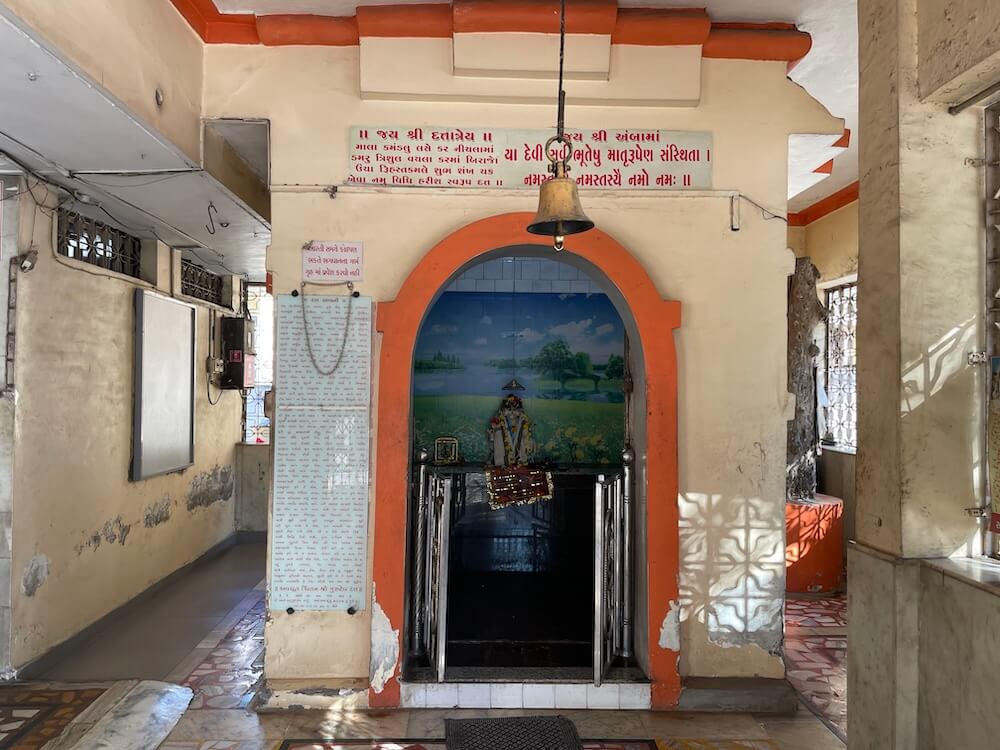
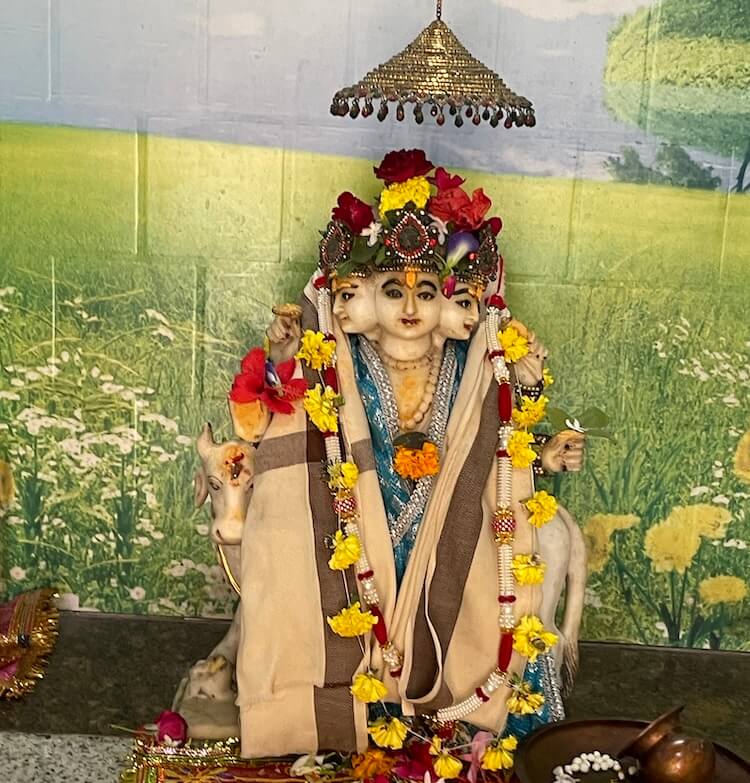
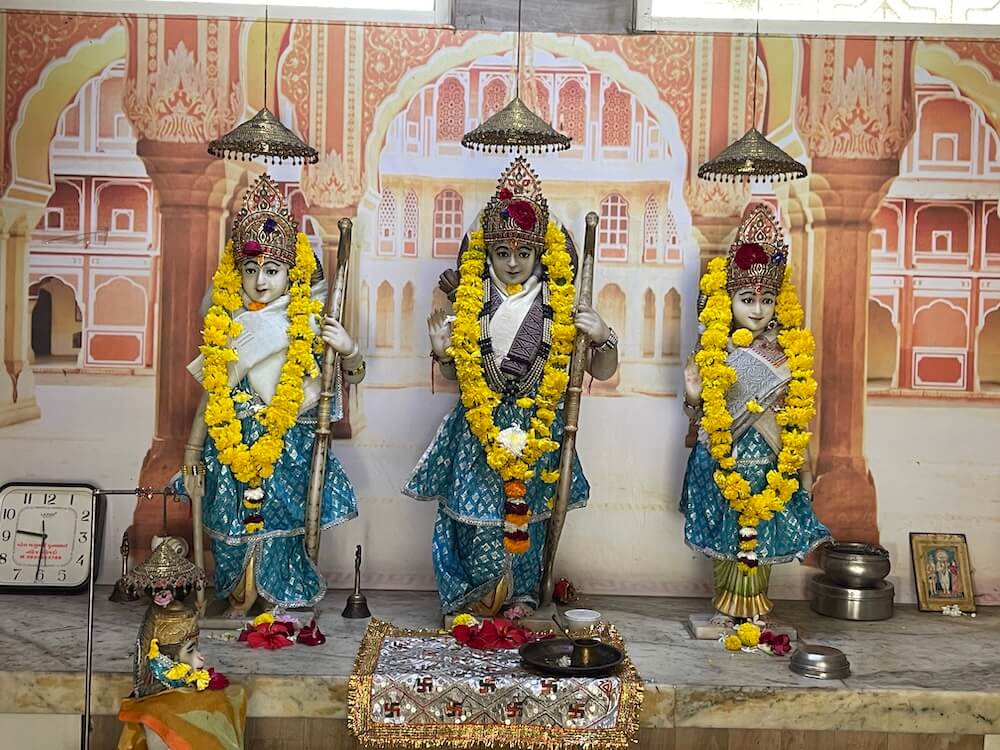
with a turban upon his head, a staff in one hand and a rosary in the other, beautifully decorated with garlands.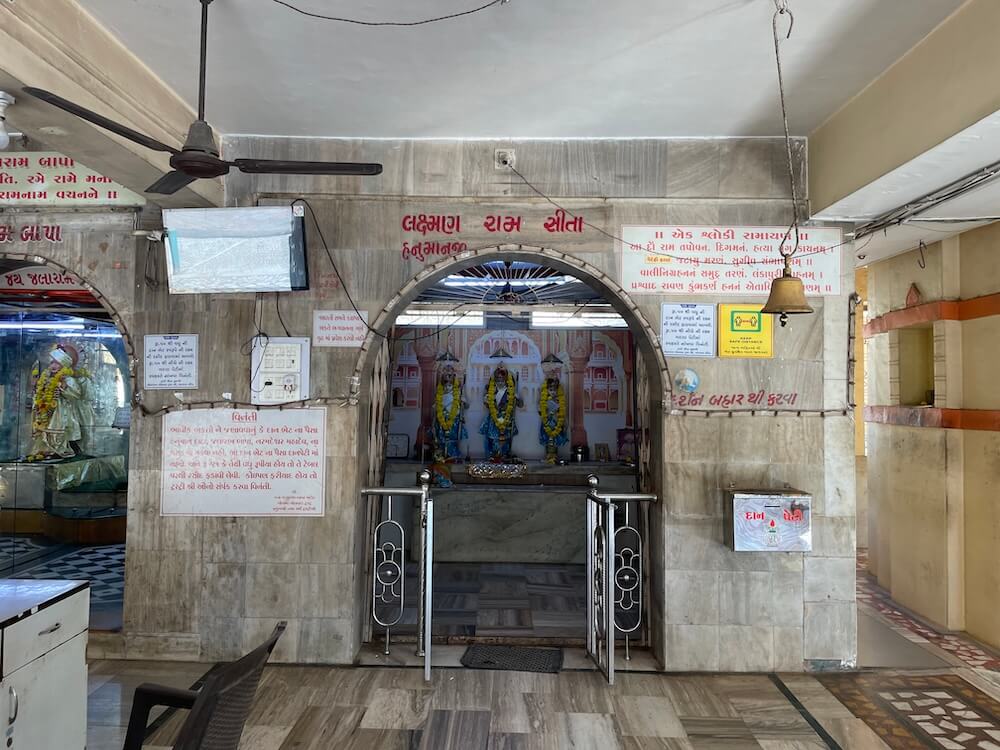 To the right of this sanctum is the shrine of Shri Ram, the deity Jalaram Bapa most adored. Here, upon a lofty marble pedestal, are the graceful idols of Shri Ram, Lakshman, Sita and Hanuman. In addition to these, there is also a shrine of Trimukhi Dattatreya.
Various religious festivals such as Hanuman Jayanti, Mahashivratri, Diwali and Dattajayanti are celebrated here with enthusiasm and devotion. The grandest celebration, however, is Jalaram Bapa Jayanti, which falls on the seventh day of the bright fortnight of Kartika.
On this sacred day, bhajan-kirtan and food distribution programmes for the poor are organised. Devotees gather in large numbers, chanting ‘Hari Bol’ and ‘Jai Jalaram Bapa’ with heartfelt fervour.