 According to the ‘Srimad Bhagavata Puran’, Lord Vishnu assumed the Hansa (swan) incarnation to impart divine knowledge to Sanatkumar. The swan is traditionally revered as the celestial vehicle of Lord Brahma. Mythological chronicles suggest that the Hanseshwar Mahadev at Hansot was established by the Hansa itself. It is said that the village derived its name, Hansot, from this very deity. Devotees maintain a steadfast belief that the Shivalinga in this ancient temple, referenced in several scriptural texts, is Jagrut (spiritually ever-awakened and responsive). They believe that sincere worship and devoted service to this Shivalinga absolves one of sins and fulfils heartfelt wishes and therefore countless devotees come here in faith.
 In antiquity Hansot was known as Hansnagari. The Periplus of the Erythraean Sea, a maritime travelogue written in the first century AD, mentions Bharuch, referring to it as Barygaza. A flourishing trade was conducted from this great port situated at the mouth of the River Narmada. Owing to the heavy traffic of ships, many vessels often had to wait for anchorage and some would be diverted towards the open coastline of Hansot. Thus, even in ancient periods this village enjoyed considerable importance. Over the centuries, the settlement was held by the Peshwas and later by the British. The surrounding dense forests once teemed with deer and other wildlife. Thus in the latter half of the sixteenth century, the area was preserved as a royal hunting ground.
 The mythological legend of this holy site is intimately connected with the penance of the Hansa. It is narrated that the Hansa was born to Dakshayani of the Kashyap lineage. Through his austerities he attained the privilege of becoming the celestial vehicle of Brahmadev. However, during the Yajna (sacrificial ritual) organised by King Daksha, which Lord Brahma attended, Goddess Sati immolated herself in the sacrificial pit. Incensed by this tragedy, the Shivaganas unleashed a wave of destruction. Terrified, the Hansa fled the scene, an act for which Lord Brahma stripped him of his celestial status. Saddened, the Hansa implored Brahmadev to restore his honour. Brahmadev instructed him to go to the banks of the River Reva (Narmada), consecrate a Shivalinga and perform penance. Obeying this command, the Hansa came here, consecrated the Shivalinga and immersed himself in austerities.
 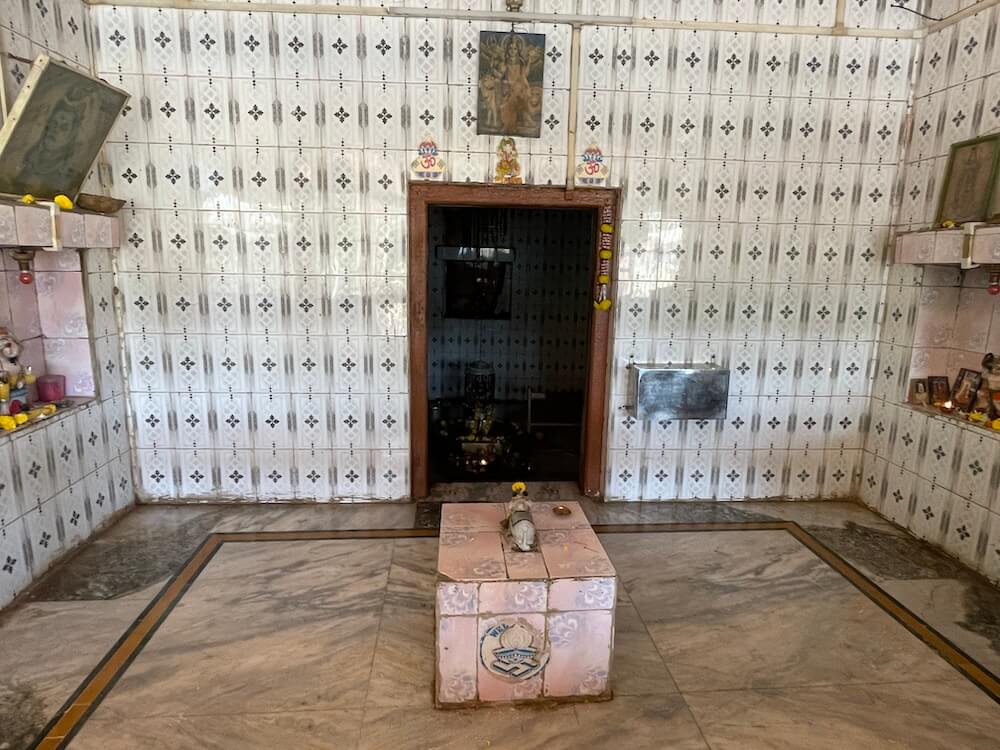 Pleased with his devotion, Bhagwan Shankar liberated him from all afflictions and restored his celestial dignity. Since then, the Shivalinga here came to be revered as Hanseshwar Mahadev. Over the passage of centuries, the temple underwent several renovations and after the restoration in December 2002, it attained its present form.
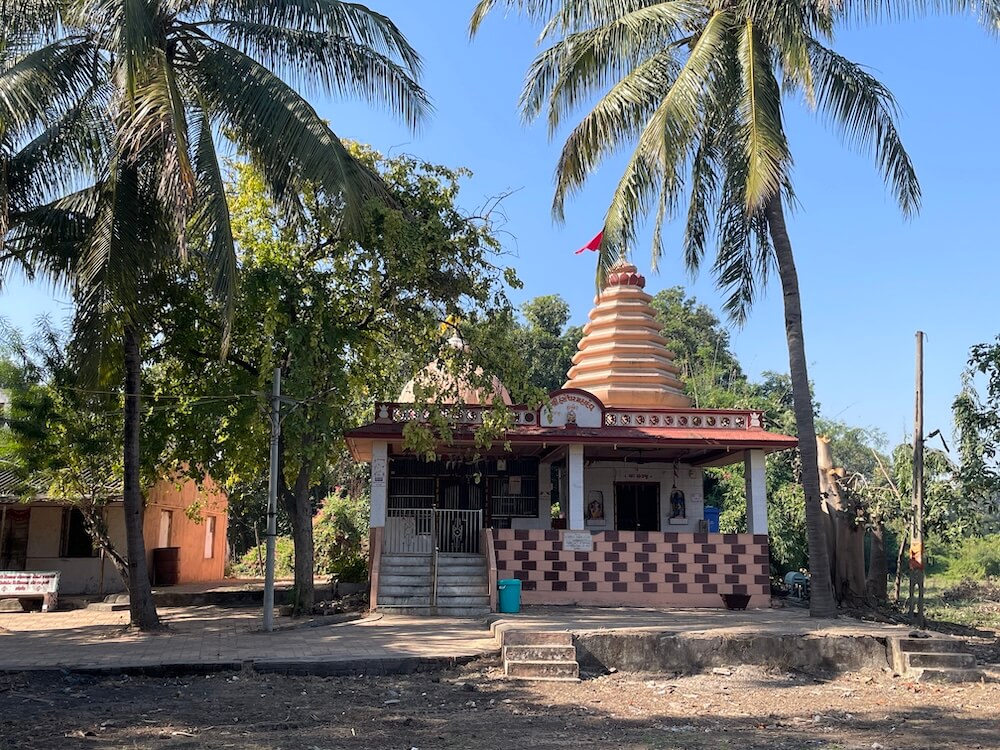
Situated near the highway that passes through the village, the Hanseshwar Mahadev Temple stands within a spacious precinct. Entering through an iron gateway, one walks along a paved pathway bordered on both sides by trees of various kinds. The temple itself stands upon a lofty plinth. Architecturally, it comprises the Sabha mandapa (assembly hall), Antarala (vestibule) and Garbhagriha (sanctum). The principal sanctum is crowned by a tapering hexagonal spire, while the subsidiary sanctum bears a domed spire. 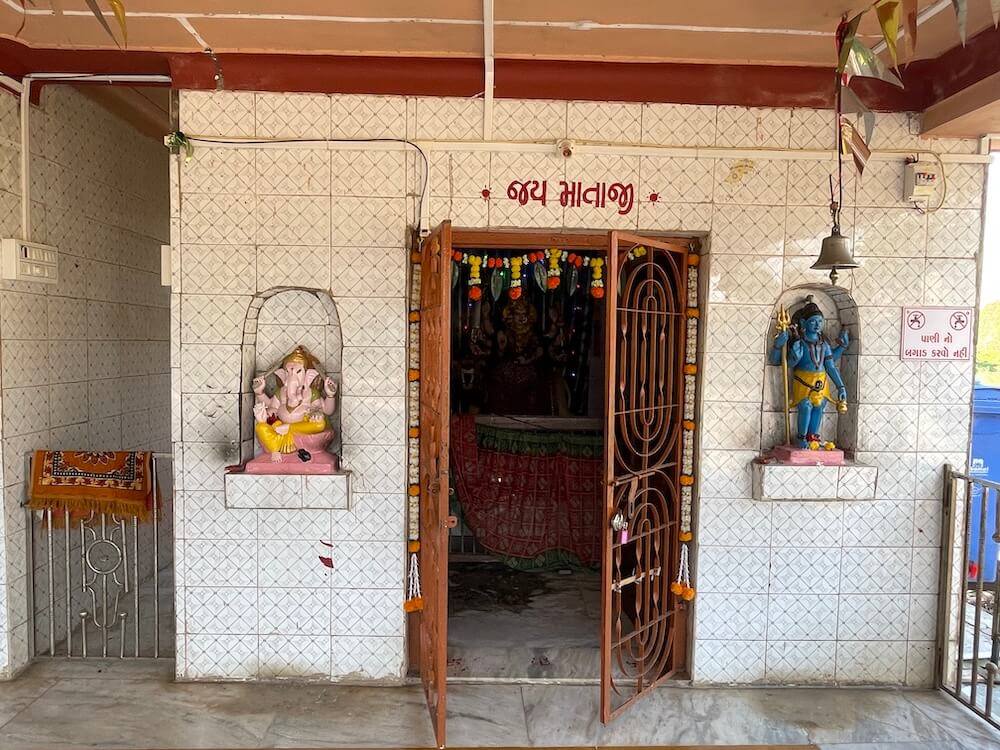 Ascending five steps, one enters the assembly hall. Directly ahead lies the vestibule of the main sanctum. In the shrine niche on the left is the idol of Ganesh and in the right niche the idol of Hanuman is enshrined. At the centre, upon a marble platform, stands a small idol of Nandi.
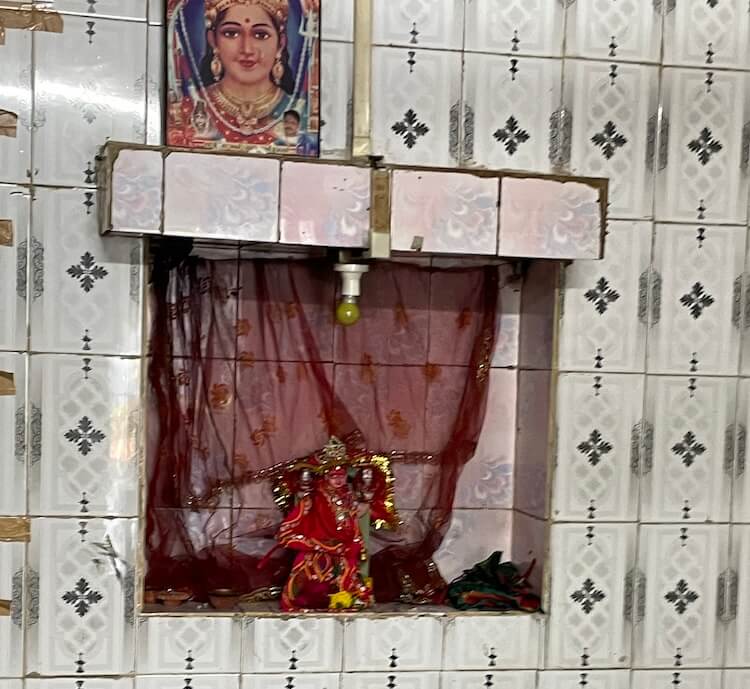
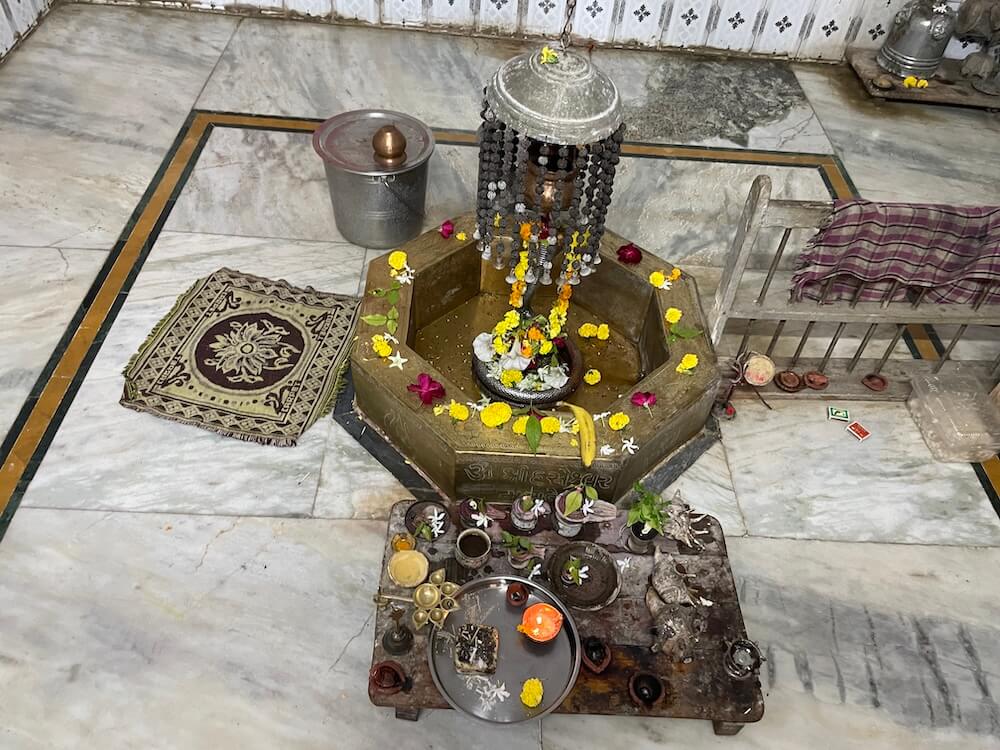
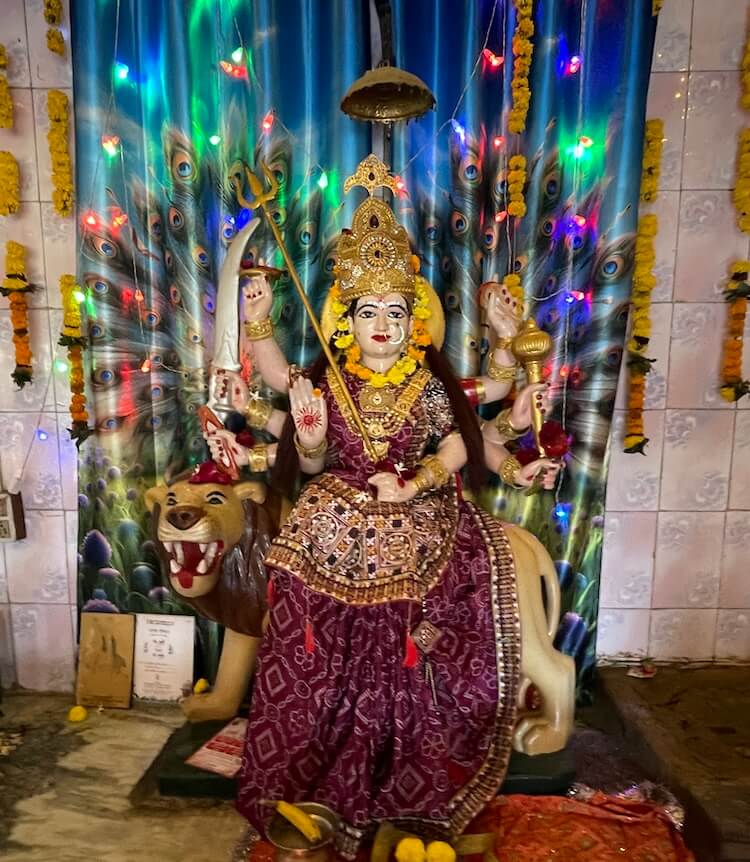
The sanctum lies slightly lower than the level of the Sabha mandapa. Within it is consecrated the stone Shivalinga of Hanseshwar Mahadev. Beside it is an octagonal shalunka sheathed in brass. A metallic serpent canopy is raised above the linga, above which is placed a copper abhisheka vessel, surmounted by a silver canopy. On the rear wall niche behind the Shivalinga is the idol of Parvati Mata. In the subsidiary sanctum to the right is enshrined the idol of Durga Mata. At the entrance to this sanctum, the left wall niche houses Ganesh, while on the right wall niche is an idol of Lord Shiva. Upon a pedestal within this sanctum stands a radiant marble idol of Durga Mata, smiling serenely, adorned in rich garments and ornaments. 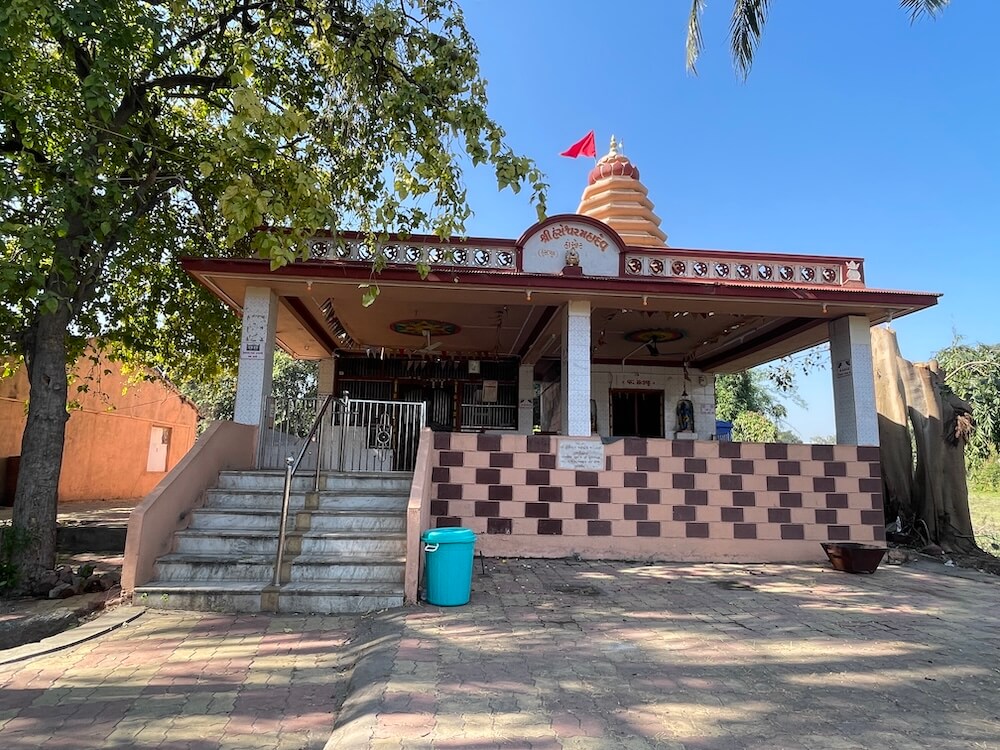 The eight-armed goddess is seated upon a lion, holding in her hands weapons such as the chakra, sword, pasha and gada, while in two hands she bears flowers.
Daily puja and rituals are performed at the temple. Devotees from the surrounding region visit to offer belpatra (leaves of the wood-apple tree) and perform abhisheka upon the sacred Shivalinga. A grand celebration is held here on Mahashivaratri. Every Monday during the holy month of Shravan, the temple precinct overflows with devotees. On the auspicious day of Margashirsha Shuddha Shashthi, the temple anniversary is celebrated with great devotion and enthusiasm. On that day, various religious rituals, including yajna, are performed and Mahaprasada is distributed to the devotees.