 In Gujarati, the word ‘guman’ signifies ego, pride or arrogance. The Hanuman who is believed to humble such arrogance resides at Jhagadia in Bharuch district. Revered as the Hanuman who brings the conceited to their senses, Gumandev here is widely famed. More than four centuries old, this temple houses a svayambhu (self-manifested) and jagrut (spiritualy living, awakened) idol of Hanuman, whom devotees believe fulfils every heartfelt wish. Hence, devotees from different parts of Gujarat flock here especially on Tuesdays and Saturdays. During every Saturday of the month of Shravan, the surroundings assume the lively atmosphere of a pilgrimage fair.
There are two or three prominent legends associated with this temple. According to one account, approximately four hundred years ago, Saint Gulabdasji Maharaj of the Ramananda sect from Hanumangarhi in Ayodhya arrived near the village of Mota Sanja, close to Jhagadia. While he was resting, he was suddenly disturbed by a great commotion.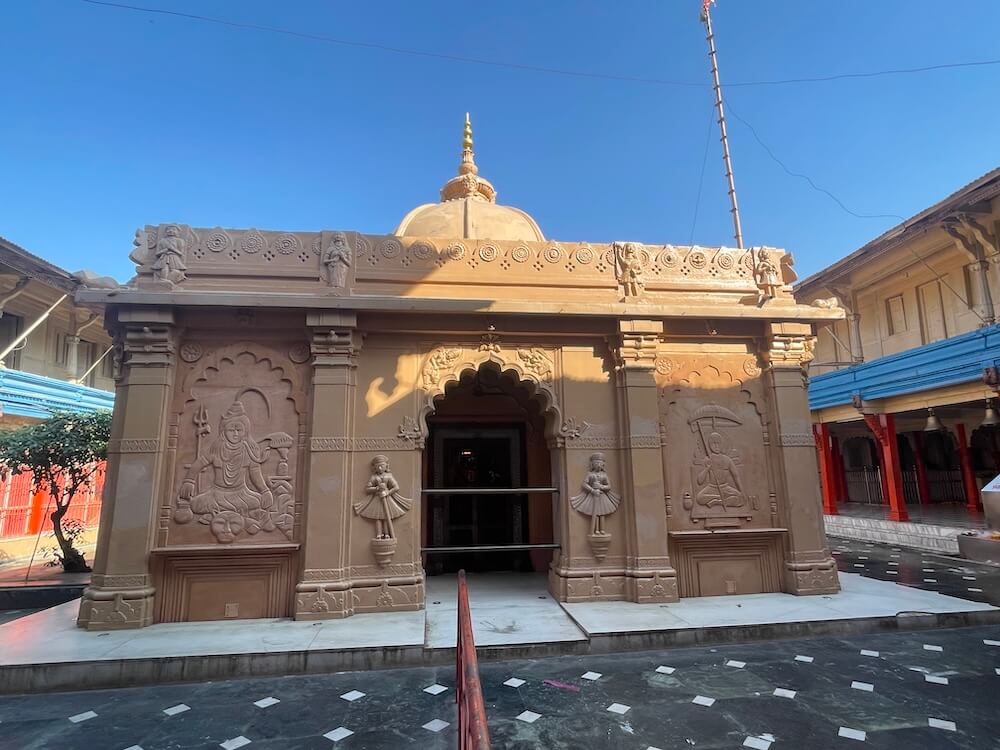 Upon investigation, he observed a wolf repeatedly charging at an idol of Hanuman, while a group of locals attempted to beat the animal. He was informed that the wolf habitually struck the idol in this manner. To this, Gulabdasji Maharaj remarked to the people, “The wolf has already received the punishment for its Karma (deeds); let him go now.” Subsequently, the saint brought the idol to its current location and constructed a small shrine. The formal Pratishthapana (consecration) of the idol took place here in 1615, on the auspicious day of Chaitra Purnima, celebrated as Hanuman Jayanti.
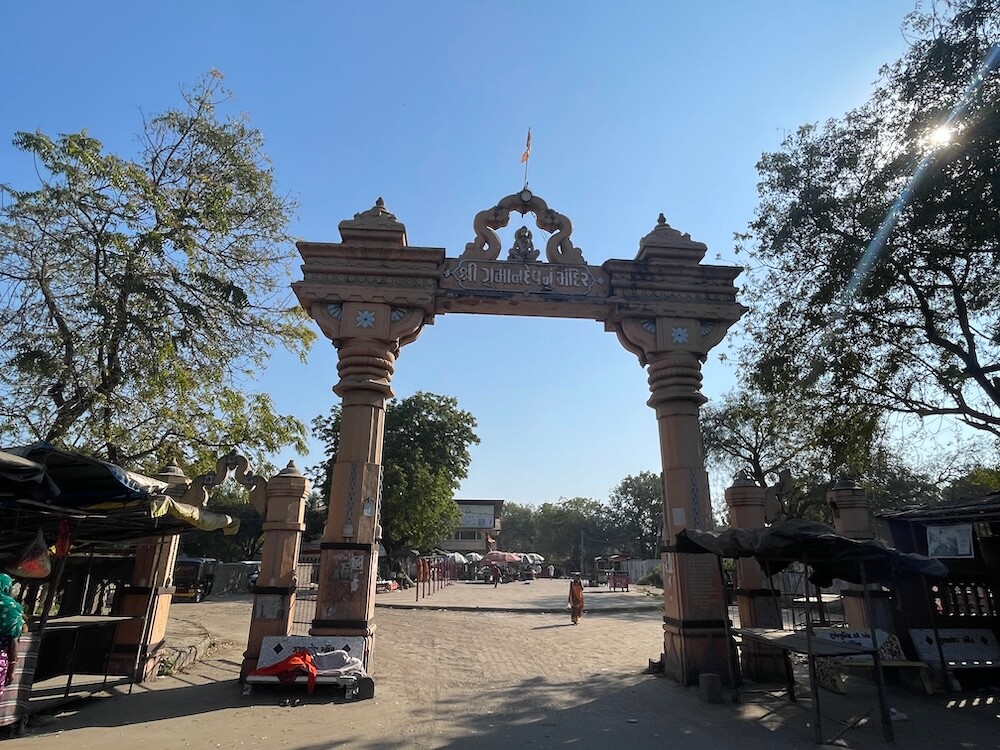
Another legend tells of a merchant named Guman Singh, a steadfast devotee of Hanuman. Once, when he found himself in great peril, Hanuman is said to have protected him. Out of gratitude, Guman Singh established this temple here and in time Hanuman came to be known by his devotee’s name. The temple today stands in a vast precinct. 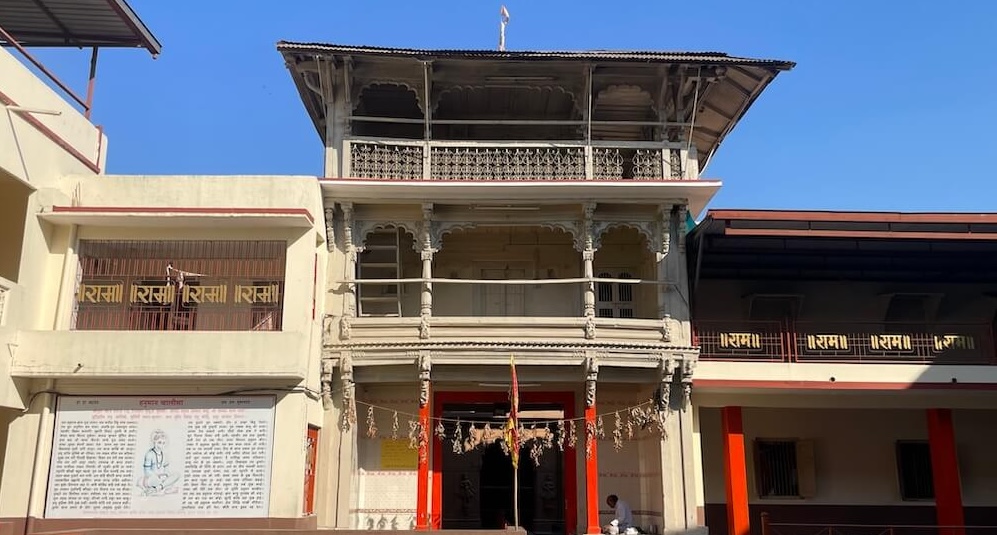 A magnificent gateway greets visitors, above which, within the gracefully arched structure, sits a meditative image of Hanuman. Inside lies an open courtyard spacious enough for vehicles to be parked and beyond it stretches a bustling fruit and vegetable market, through which one proceeds to reach the temple premises.
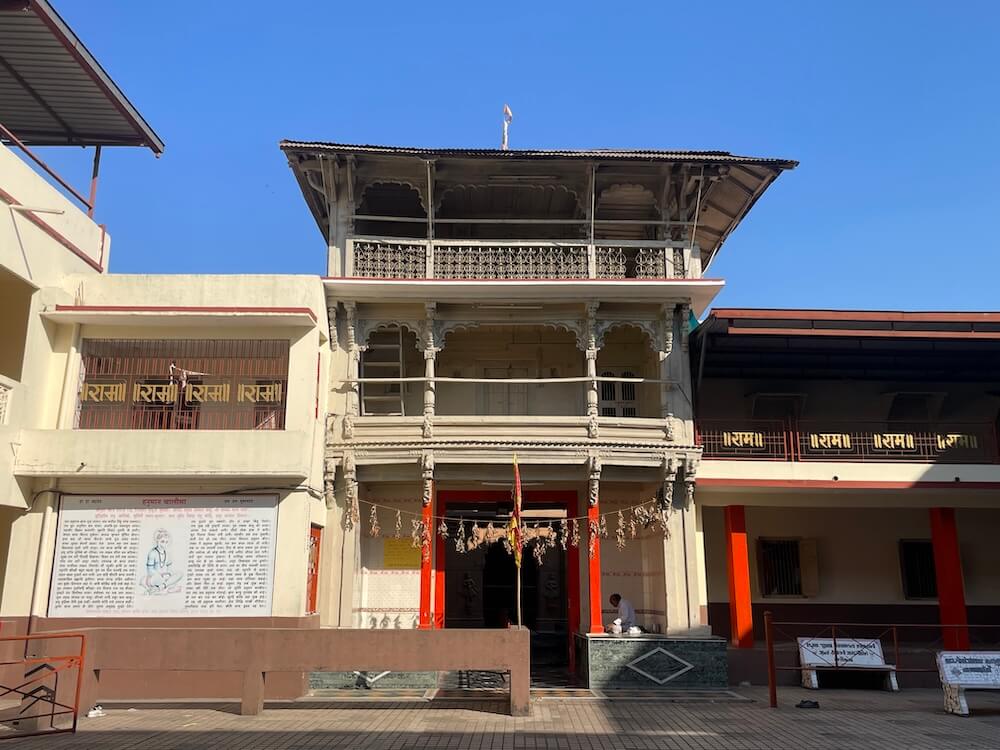
The temple courtyard is expansive. At its centre lies a broad paved square laid with paver blocks. On all four sides stand double-storeyed buildings comprising dharmashalas (pilgrim rest houses) and the temple office. 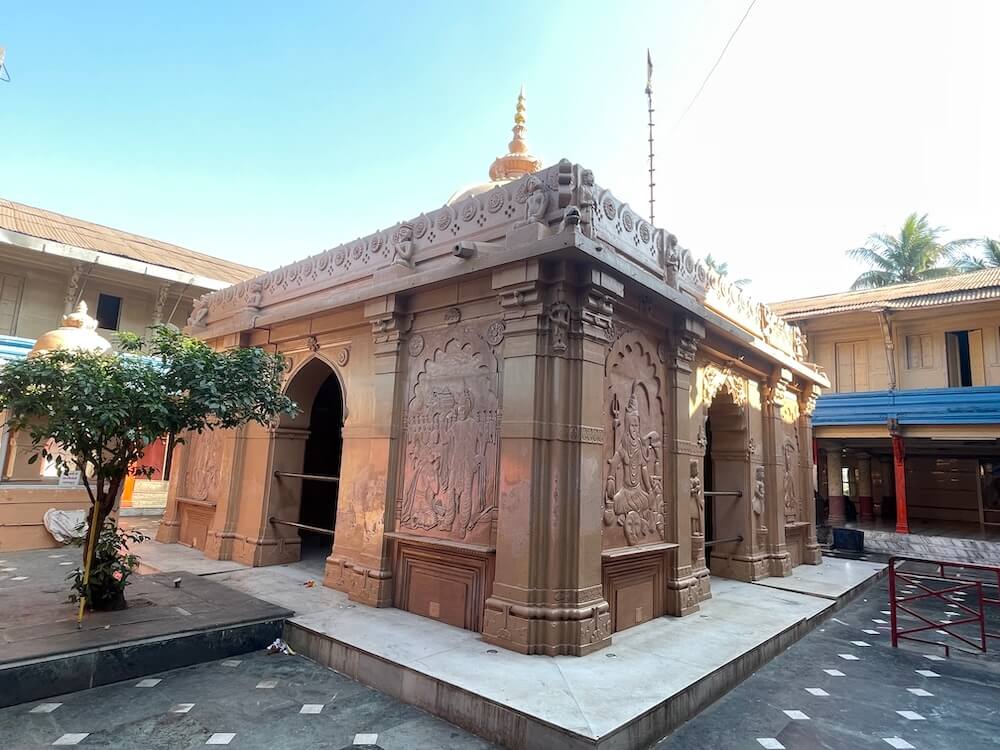 To the left rises a three-storeyed structure reminiscent of an old mansion. Through its entrance one steps into the principal courtyard of Gumandev Hanuman Mandir. At the centre of this courtyard, upon a high plinth, stands the newly built square sanctum of Gumandev. The temple bears a dome-shaped shikhar (spire), crowned with an amalaka (ribbed stone disc) and a tall kalash (sacred finial). On three sides are arched entrances adorned with decorative mahirapi style arches. The adjoining walls depict carved reliefs of Lord Shiv, Shankaracharya, Shri Krishna imparting the Gita to Arjuna, Sage Valmiki composing the Ramayana, Surya Narayan and Hanuman tearing open his chest to reveal the image of Shri Ram. Exquisite carvings embellish both the exterior walls and the upper friezes of the structure. Directly opposite the main entrance rises a tall dhvajastambha (flag pillar) and a little further stands a small shrine of Kalabhairava.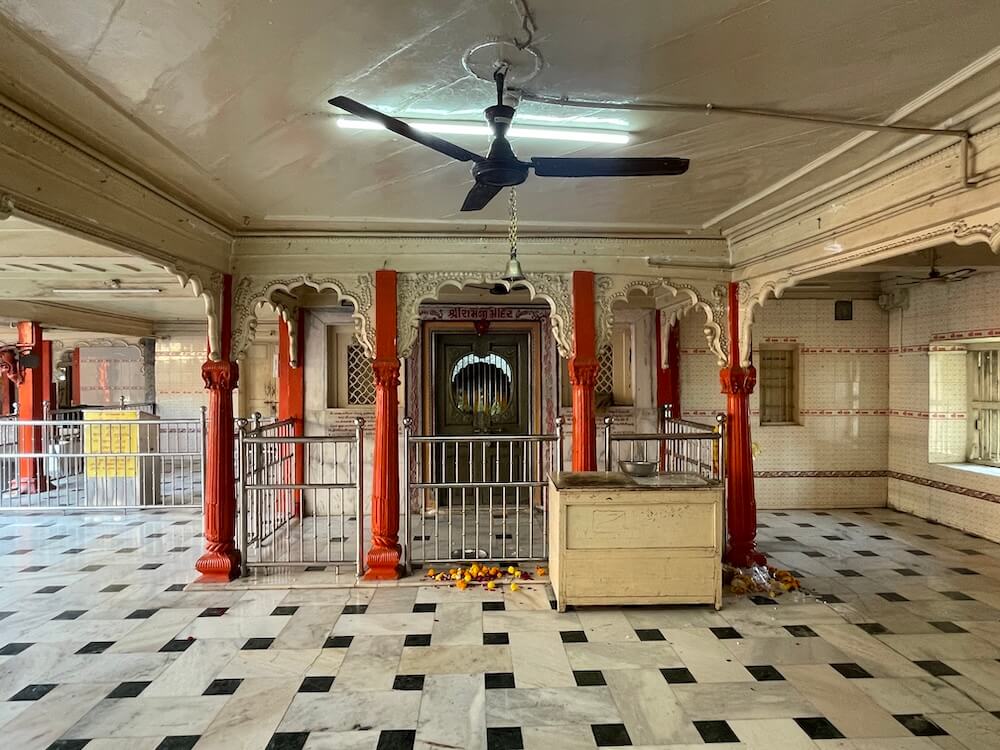
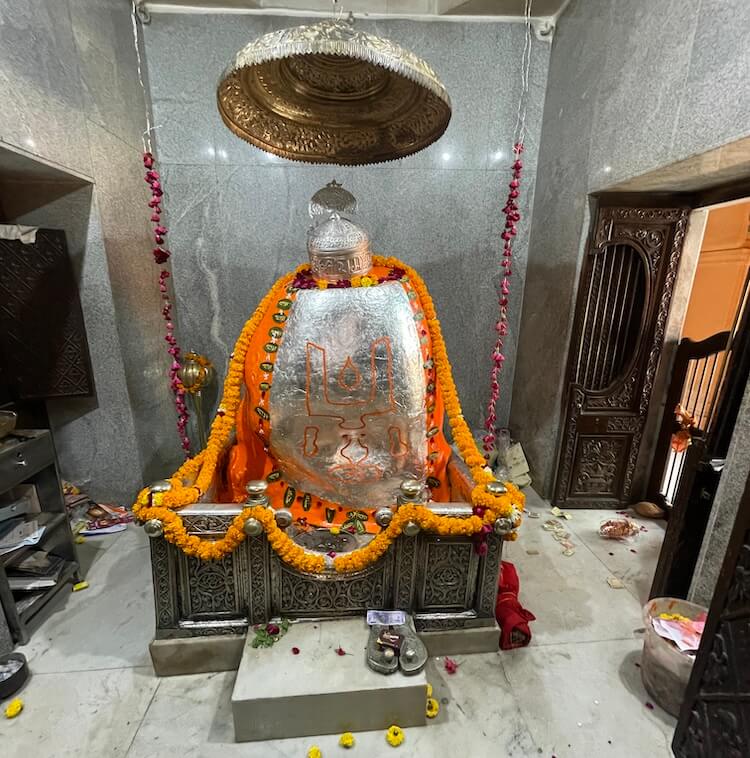
Within the modest sabhamandap (assembly hall) lies the garbhagriha (sanctum sanctorum), encircled by a circumambulatory path. Within the sanctum, the vermilion-coated stone of Gumandev Hanuman is enthroned upon a square silver pedestal. The front of the stone is adorned with silver leaf and a silver crown rests upon its head. Above the deity hangs a large silver Chhatra (ceremonial umbrella). On a small platform before the idol, silver Padukas (sacred footprints) are placed, while Hanuman’s Gada (mace) stands in a corner behind.
On one side of the courtyard, atop a raised platform, are two large shrine-like structures resembling lofty meghadambari pavilions, 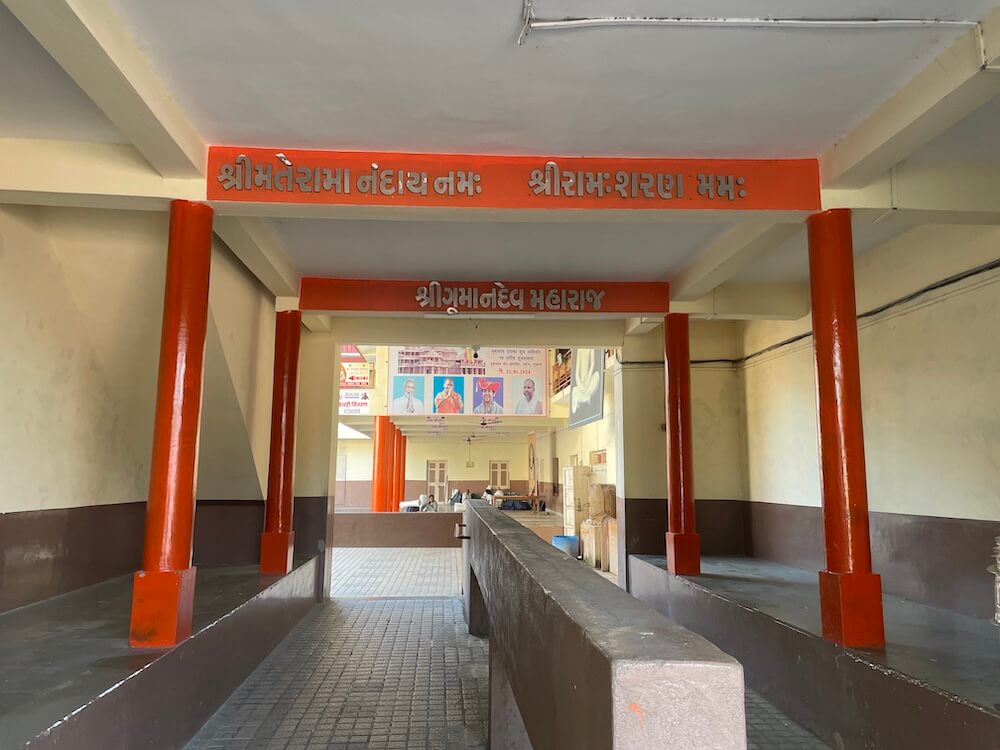 which enshrine the sacred charanpadukas (holy footprints) of revered mahants who attained Saketa (the divine abode). Around the courtyard are more mansion-like buildings. In the wide verandah of one such old edifice lies a temple of Shri Ram. Wooden carved pillars, arches adorned with delicate woodwork and a wooden ceiling together create the atmosphere of a dignified assembly hall. This Shri Ram temple contains a small antaral (antechamber) and sanctum, in which the marble idols of Shri Ram, Lakshman and Sita are enthroned upon a raised platform. A continuous chanting of Ramdhoon gently reverberates here.
In this same veranda-hall, a large statue of the late Mahant Ramlakshmandas Maharaj is seated in the Abhaymudra (gesture of fearlessness). There is also a small museum on-site, which preserves ancient cannons, swords, axes, maces and various other weapons alongside sacred religious texts.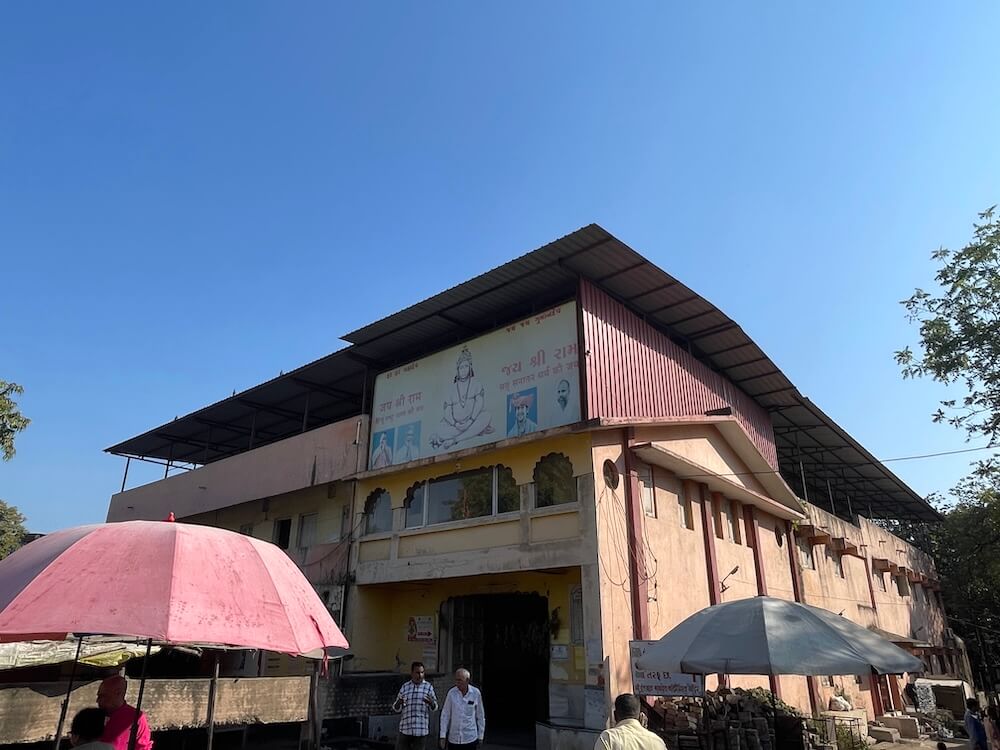
Devotees may seek Darshan (holy viewing) at the temple between 7:30 am and 8:30 pm. Regular Puja and Aarti (rituals of worship) are performed daily. Pilgrims from districts such as Surat, Vadodara and Bharuch frequent this spiritually potent site. The crowds swell significantly on Tuesdays and Saturdays and on every Saturday of the month of Shravan, the area becomes so densely packed during the fair that there is hardly room to move. On Hanuman Jayanti, a grand celebration takes place, accompanied by numerous religious events. It is a traditional custom for many devotees to travel to this temple on foot to pay their respects.
The temple’s Dharmashala provides free lodging and boarding for devotees. Many pilgrims undertaking the Narmada Parikrama (circumambulation of the Narmada River) also seek shelter here. A large Bhojanalaya (dining hall) serves Prasad (consecrated food) consisting of Jowar Bhakri (sorghum flatbread), dal and buttermilk. A large Goshala (cowshed) is also maintained within the precincts. The Temple of Dantnath Mahadev is located a short distance from this site.