डोलमाता मंदिर, झुलसन, ता. कडी, जिल्हा. मेहसाणा
 A true symbol of India’s syncretic ‘Ganga-Jamuna Tehzeeb’ (the cultural harmony between Hindus and Muslims) is the Dolamata Mandir located in Jhulasan, Gujarat. This temple is considered one of a kind in the entire state, perhaps in the country, as it reveres a Muslim woman as a deity in divine form, known as Dolamata. Said to be nearly 800 years old, this temple draws countless devotees from both Hindu and Muslim communities. Devotees believe that Dolamata is a protective goddess who fulfills all their wishes.
Jhulasan is also famously known as the ancestral village of Sunita Williams, the Indian-origin American astronaut. Interestingly, nearly every household in this small village has at least one member settled abroad. A strong belief circulates among devotees here is that worshipping Dolamata with pure devotion helps secure an overseas visa swiftly. For this reason, the goddess has also earned the moniker ‘Dollar Devi’.
As the legend goes, about eight centuries ago, Dolamata was born into a Syed Muslim family in the nearby village of Pansar. During those times, political instability had gripped the region due to invasions by Mohammad Ghori. 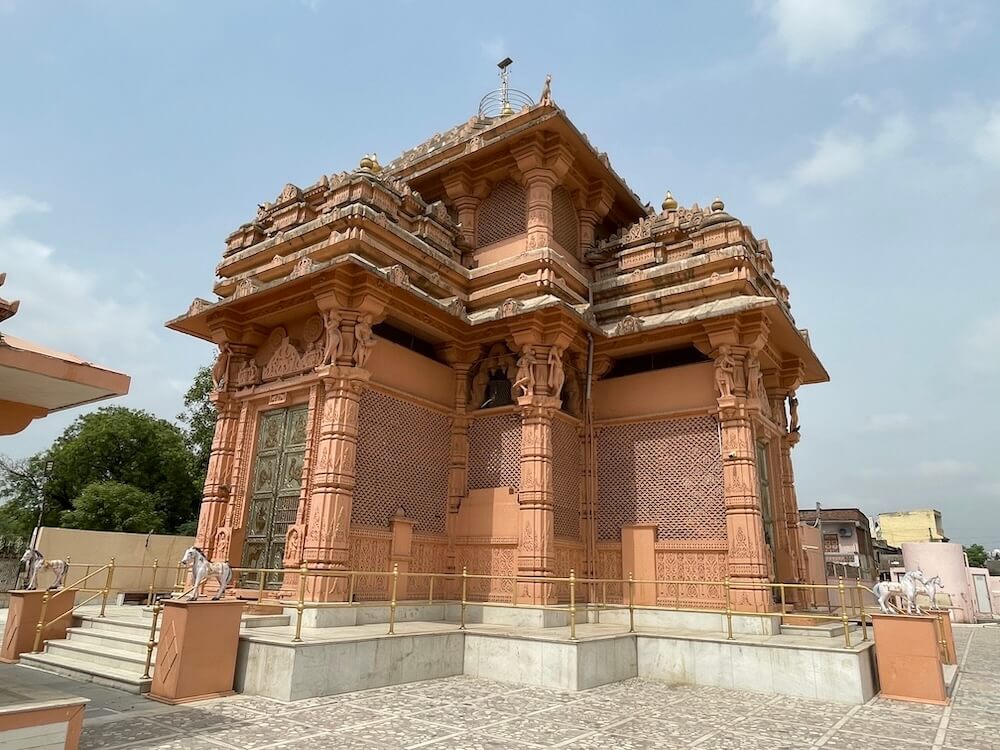 Taking advantage of this chaos, robbers and plunderers began raiding the villages. Once, such a group attacked the area around Jhulasan. Dolamata, in a fierce act of resistance, fought them bravely and attained martyrdom in the process. After her death, her body is said to have transformed into a flower. The villagers, moved by her sacrifice and the miracle that followed, built a shrine at the very spot where the flower was found. Thus began the veneration of Dolamata as a divine protector.
Another local tale adds more intrigue to her story. It is said that one day while walking through the village, Dolamata was followed by bandits enticed by the ornaments she wore. In a bid to escape, she sought refuge near a banyan tree where a shrine dedicated to Sati Mata already existed. Desperate, Dolamata prayed for protection.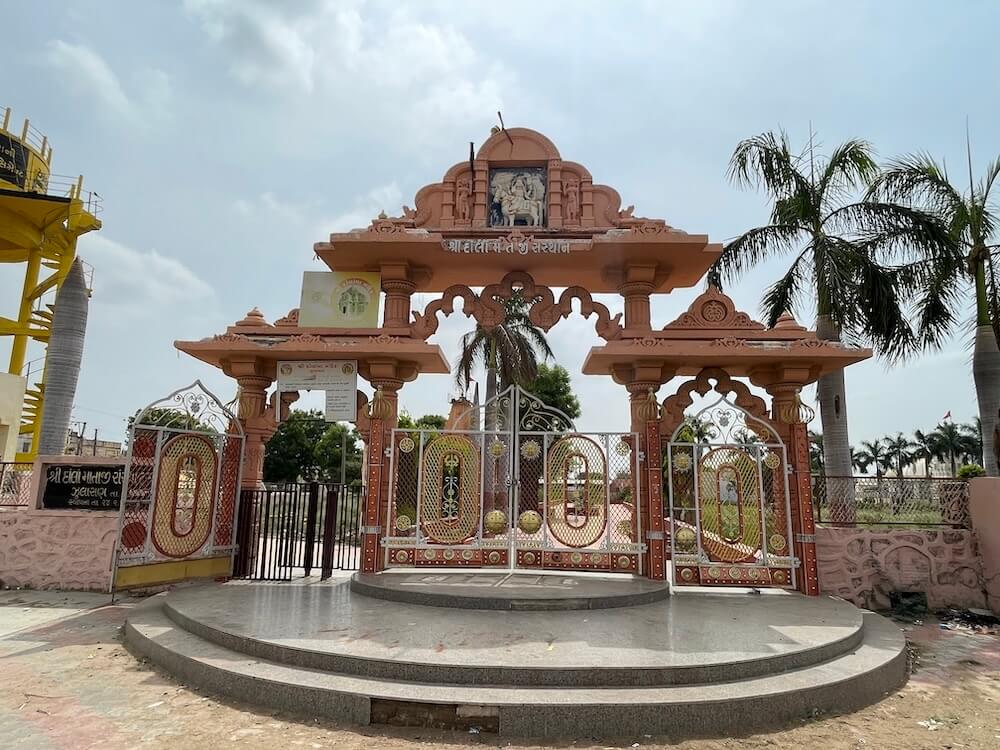 In response, the goddess is believed to have absorbed Dolamata into her divine self. Ever since, no bandit is said to have dared enter the village again.
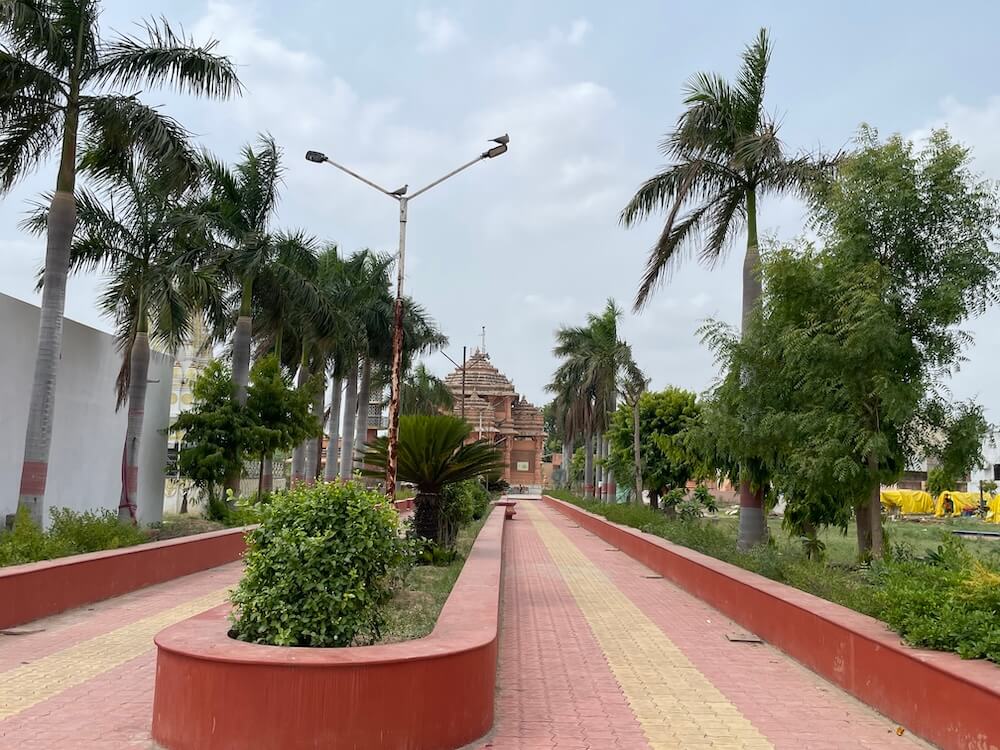
Originally, the temple bore a design similar to that of a maqbara (tomb). At one point, the villagers envisioned constructing a grand temple modeled after Gandhinagar’s Akshardham. Funded by locals as well as overseas residents from Jhulasan, the temple underwent complete renovation in 2002. Situated on a large tract of land on the edge of the village, the temple complex features an impressive entrance with three grand archways. At the top, a domed structure holds an idol of Dolamata seated on a horse. A paved path leads from this gateway to the temple, flanked on both sides by lush gardens.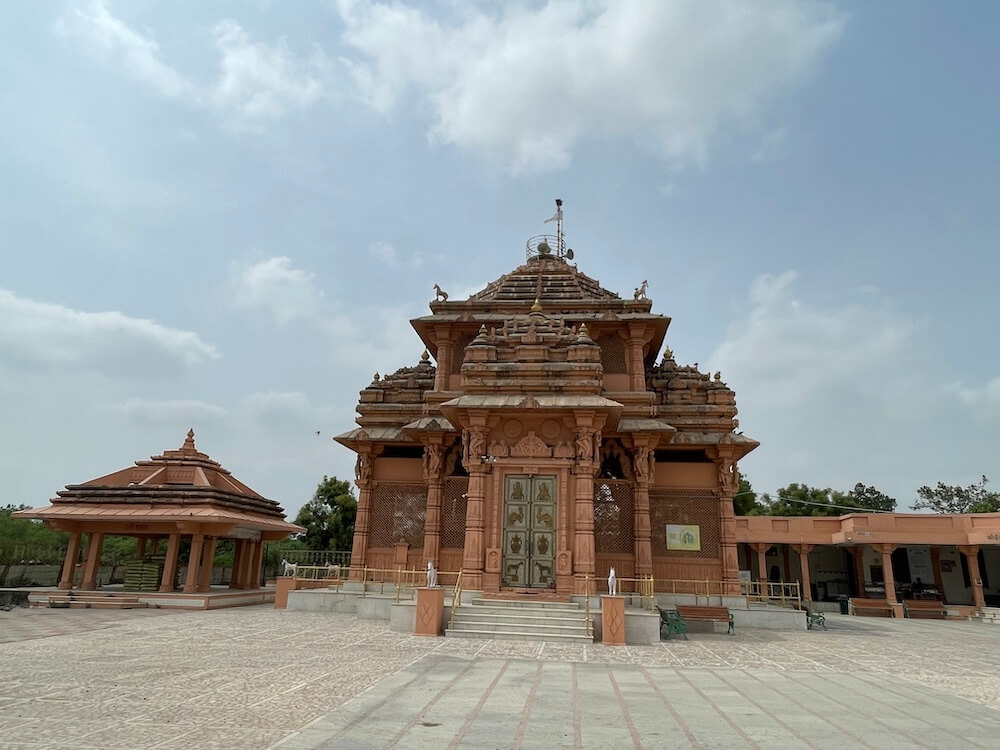
A short walk along this path brings one to the left, where the magnificent temple of Jogani Mata stands. Built in Nagara style using Rajasthani sandstone, this temple comprises a mukhamandap, sabhamandap and sanctum (garbhagriha). Jogani Mata, a local folk deity, is enshrined here and worshipped with deep reverence.
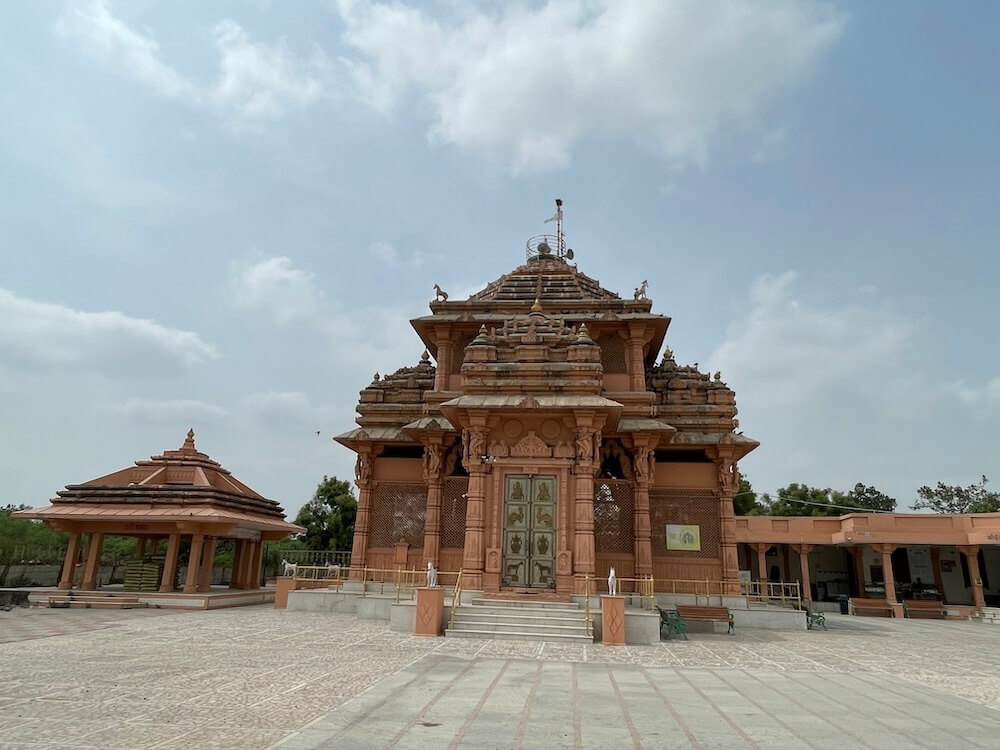
Further along stands the expansive Dolamata temple, constructed using red sandstone from Rajasthan, influenced by Dravidian architectural aesthetics. The temple’s entrance has a towering gopuram-like structure. The doorway, pillars and columns are adorned with exquisite carvings. At the base of the door’s pillars are guardian sculptures, while the lintel showcases an image of Goddess Gajalakshmi. High-relief carvings of Ganesha, elephants, 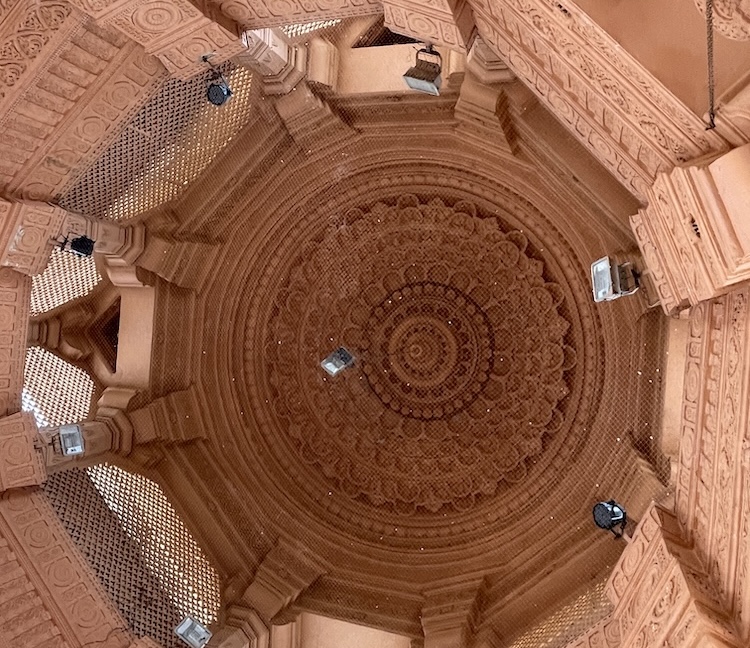 mangal kalash and horses—Dolamata’s vahana—decorate the temple’s main doors. Notably, horse motifs can be seen throughout the complex, at the entrance steps and even on all four sides of the spire.
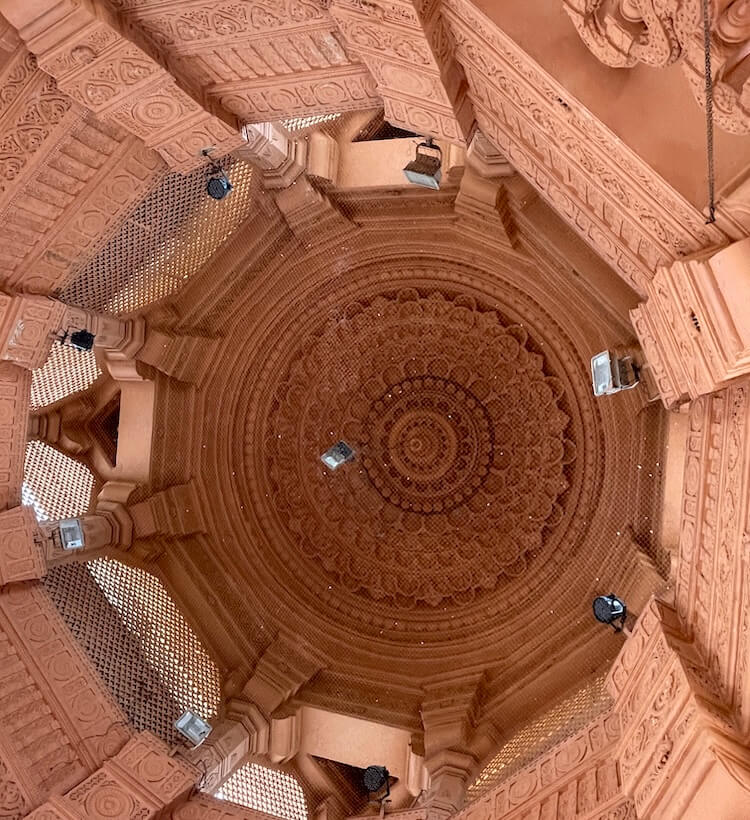
The columns in both the entrance and assembly halls bear intricate carvings of surasundaris (celestial maidens) in various poses. These pillars also feature delicately sculpted makartoran (arch decorations). The ceiling of the sabhamandap has ornamentation resembling a chandelier. The hall remains airy and well-lit, with latticework on the upper sections. Above it rises a layered spire shaped like a step-pyramid, topped with a carved amala and a golden urn.
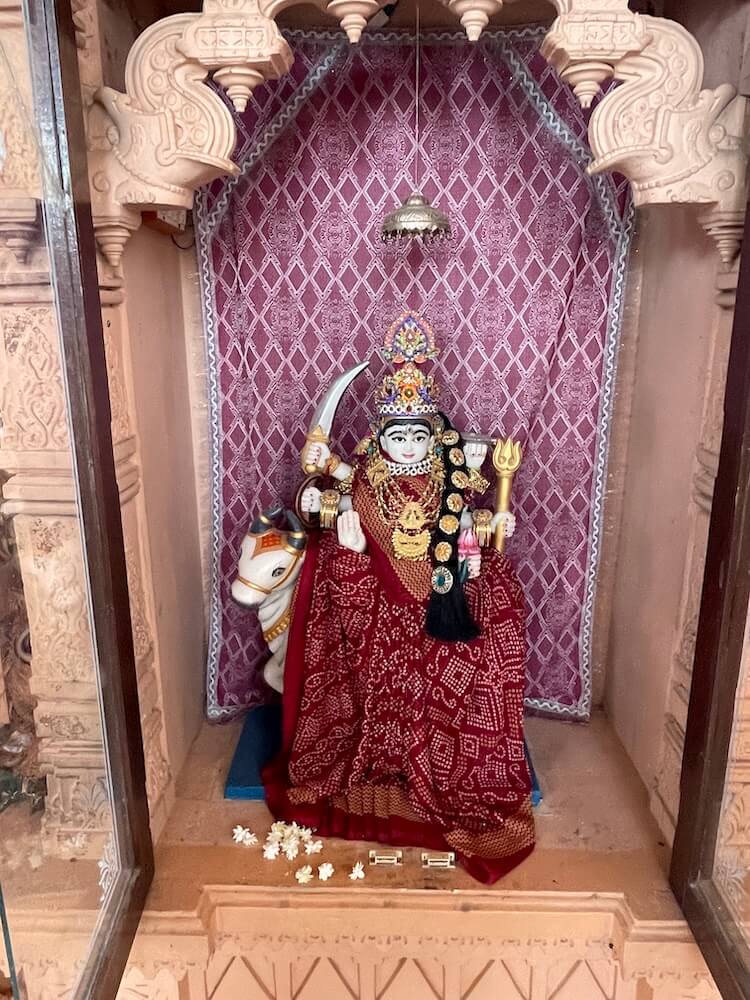
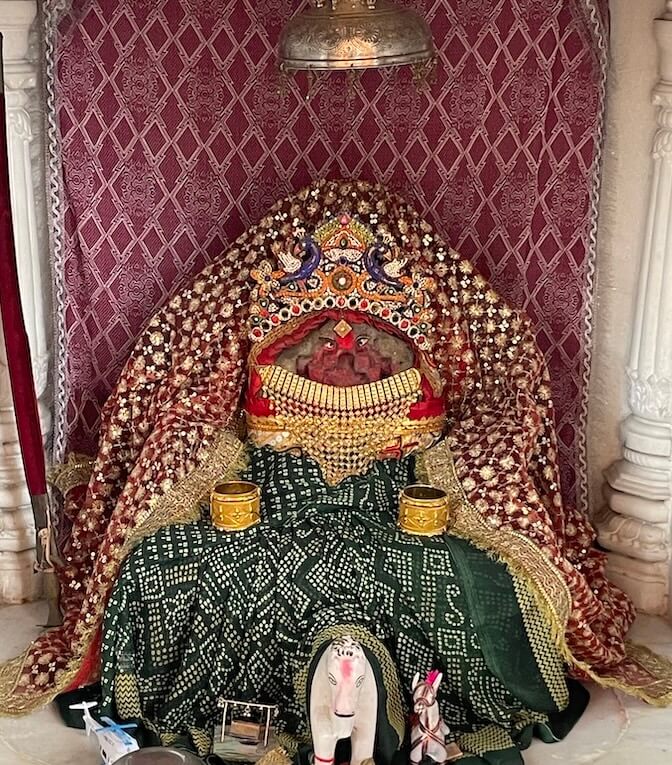
At the center of the sabhamandap is a brass-railed platform supporting three marble sanctums. The central sanctum enshrines the main idol of Dolamata—a stone figure seated on an altar, 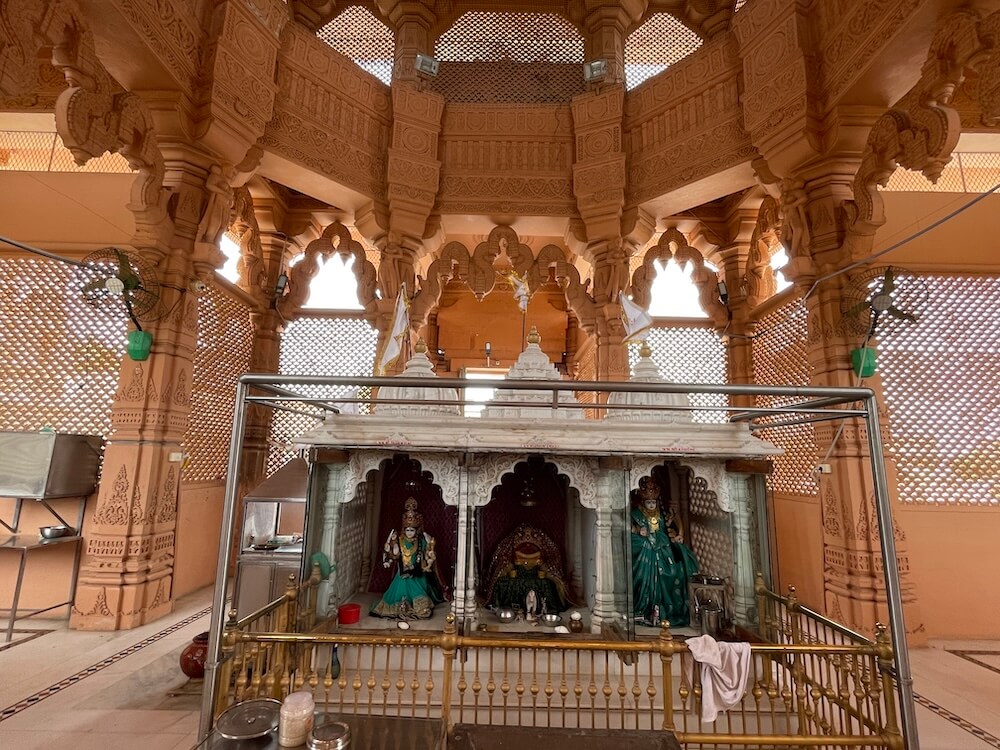 adorned with a brightly colored saree. In front of her sits a horse idol. The shrine on the left houses a four-armed standing idol of Goddess Ambaji, depicted with weapons. Elegantly adorned in fine attire and ornaments, she wears a magnificent crown. The shrine on the right features the idol of Sati Mata. A sacred flame (jyot) continuously burns before the goddess. The smaller shrines within the sabhamandap house deities like Amba Mata, Umiya Mata, Bhairav and Ganesh.
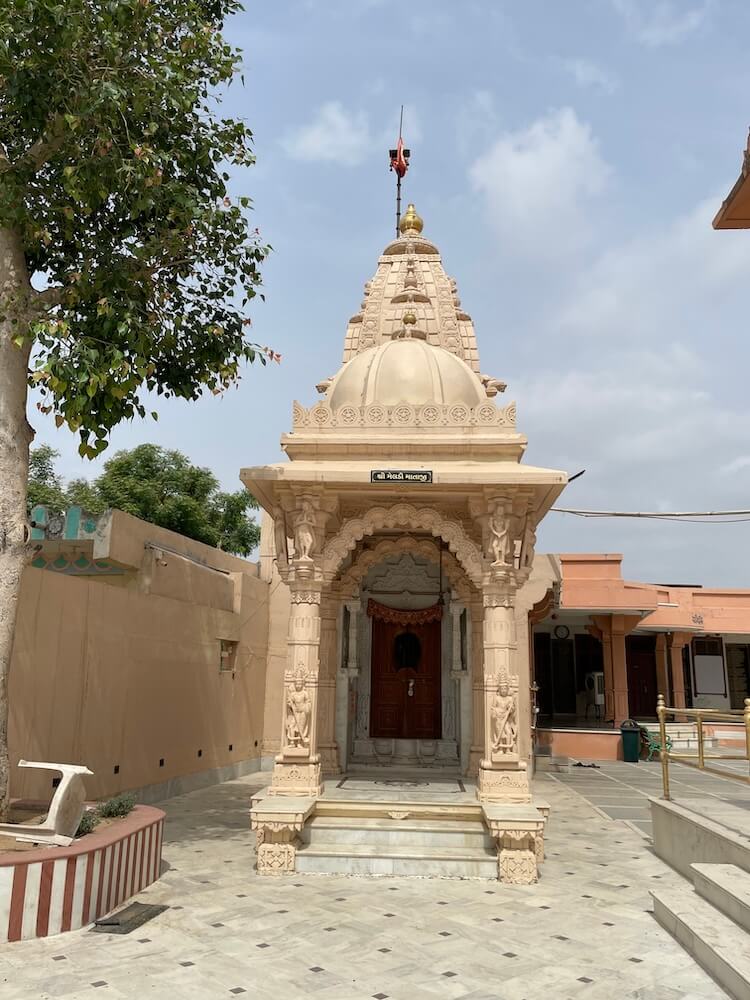
The temple courtyard also includes a yagyashala, along with separate shrines for Gargadia Hanuman and Meladi Mata. Nearby is a beautifully gilded temple dedicated to Varai Mata, its walls adorned with intricate golden designs.
The Dolamata temple is maintained by the Shri Dolamataji Sanstha Trust, which oversees the daily rituals and aartis. 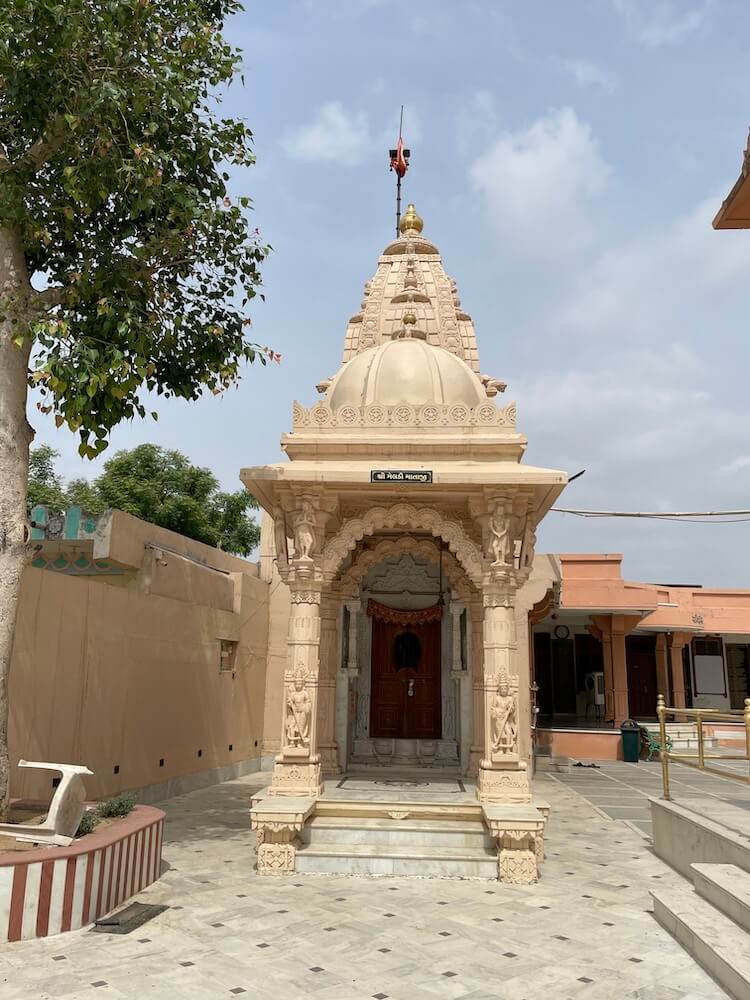 The local community begins all auspicious ceremonies only after seeking the blessings of Dolamata. Devotees firmly believe that she protects the village from illness and disaster. Hundreds of people visit the temple every day. Notably, astronaut Sunita Williams visited this temple before embarking on her space mission. Her father, Deepak Pandya, originally from Jhulasan, lived there until the age of 22 before settling in the U.S. When Sunita was in space, villagers kept an akhand jyot burning at the temple for her safe return—a flame that stayed lit for nearly four months. Upon her successful return, Sunita herself came back to offer her prayers at the temple.
On Sundays and Thursdays, many Muslim devotees from neighboring villages visit the temple to offer prayers and make vows. Hindu devotees offer coconuts and sukhdi (a sweet), while Muslim devotees present a chadar to the goddess. This cloth is respectfully placed near the goddess’s head by the priest. A unique tradition involves offering cloth-made horse figurines once a vow is fulfilled. Because of the widespread belief that Dolamata facilitates quick visa approvals, devotees from Gujarat, Rajasthan, Punjab and Haryana flock here. Various festivals are celebrated throughout the year, with Navratri being the most grand. During this nine-day celebration, numerous programs are organized and a local fair is held within the temple grounds.
डोलामाता मंदिर,
झुलासन, ताल. कड़ी, जिला. मेहसाणा