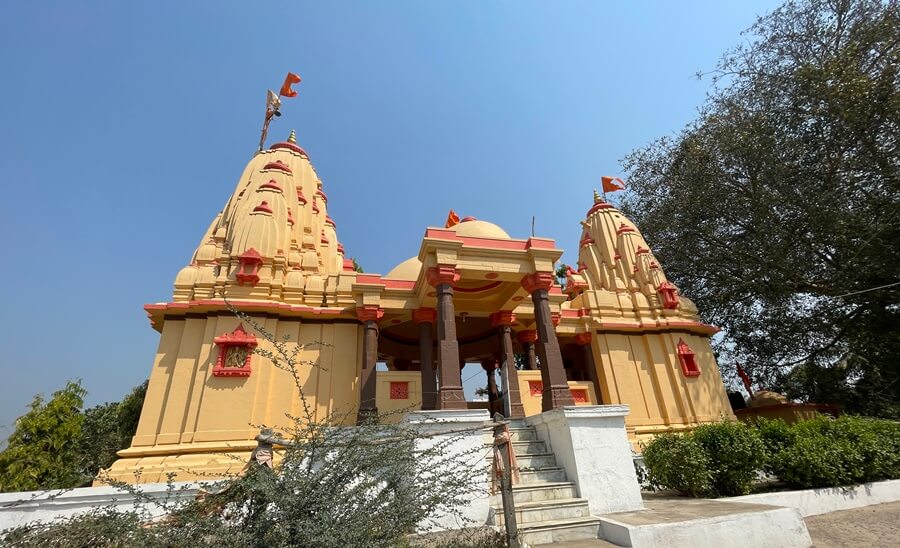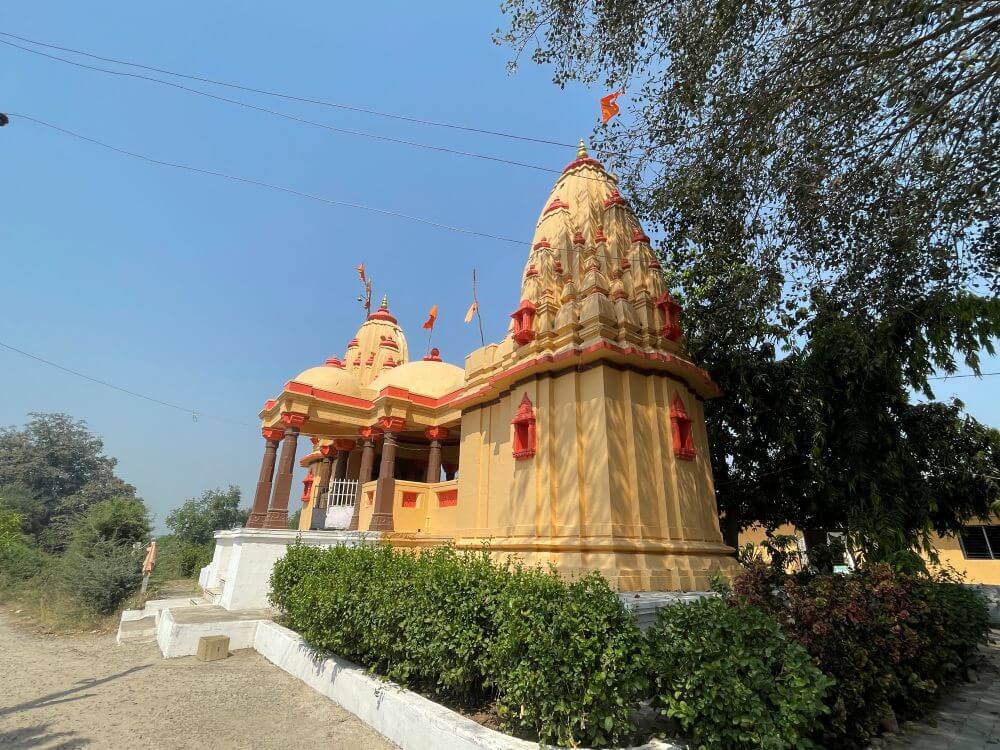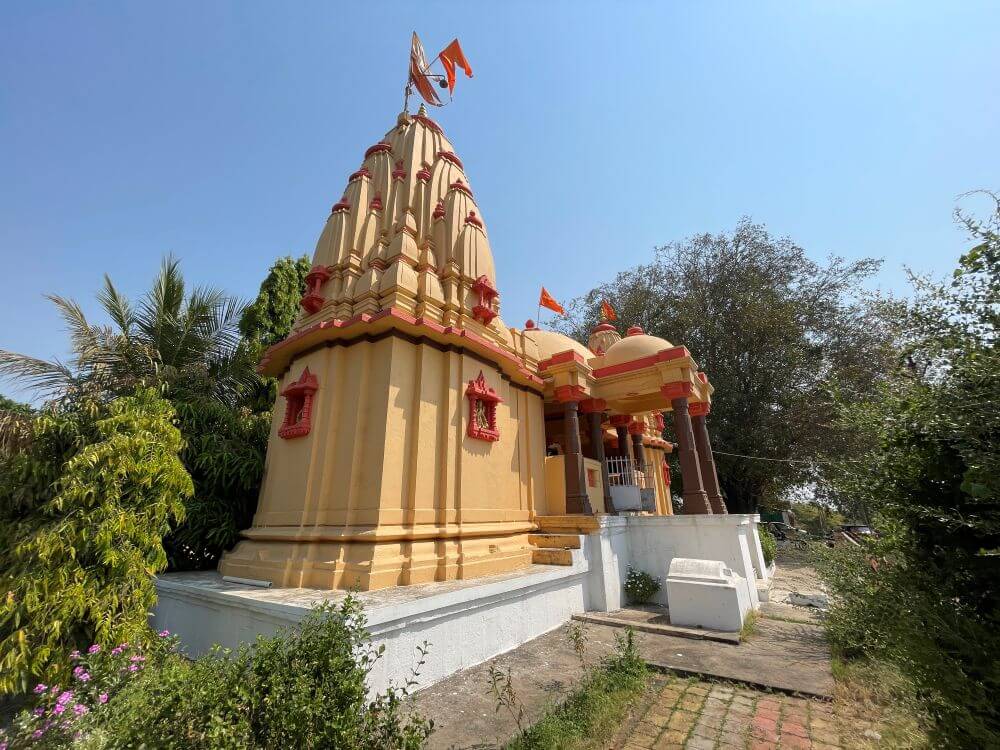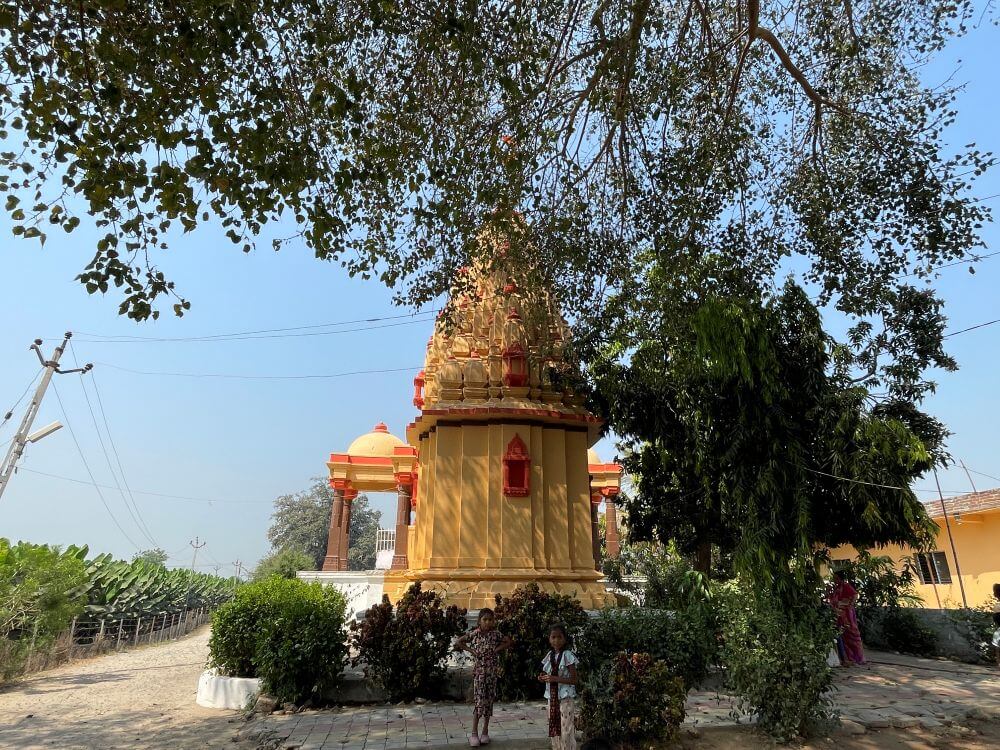
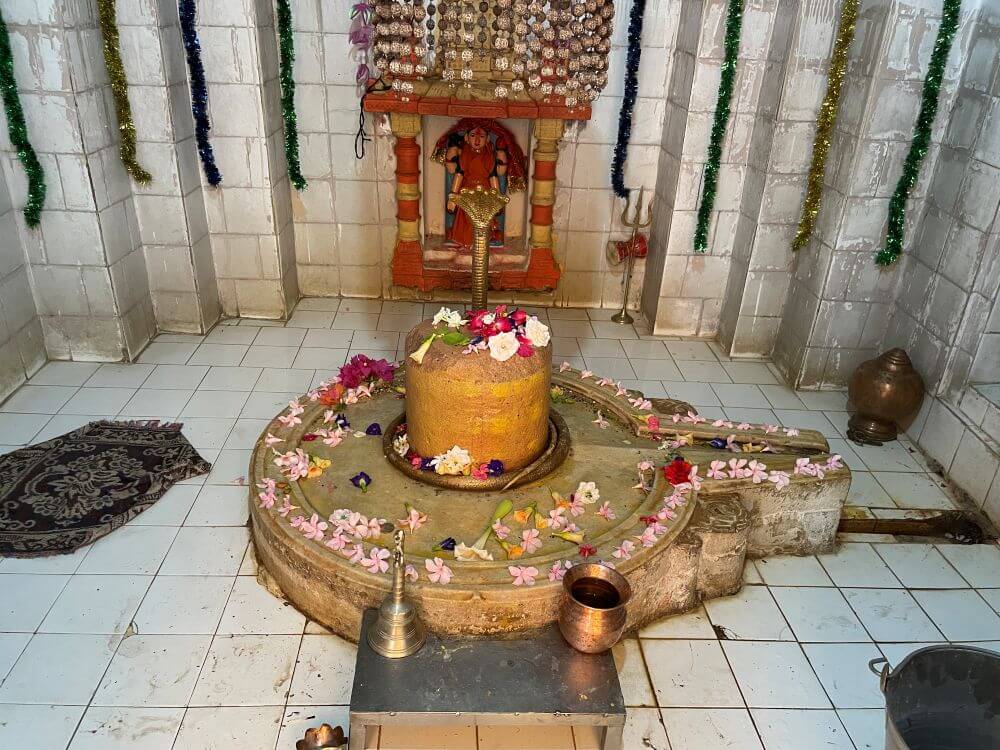
Located in Rampura (Mangrol) in Gujarat, this unique temple features two Shivlings Dhaneshwar Mahadev and Lokeshwar Mahadev placed face-to-face under one roof. Devotees believe that darshan of both forms of Shiv grants good fortune and liberation. It is also believed that offering food to Brahmins here removes all ancestral curses (Pitrudosh). Situated along the Narmada Parikrama route, there are also two Shivlings established by Goddess Parvati nearby. All four Shivlings are believed to be active (jagrit) and present since the Treta Yuga. Devotees, especially those on the Narmada Parikrama, chant ‘Narmade Har’ as they bow before Lord Shiv at this sacred site.
Located on the southern bank of the Narmada River, this place is mentioned in both the 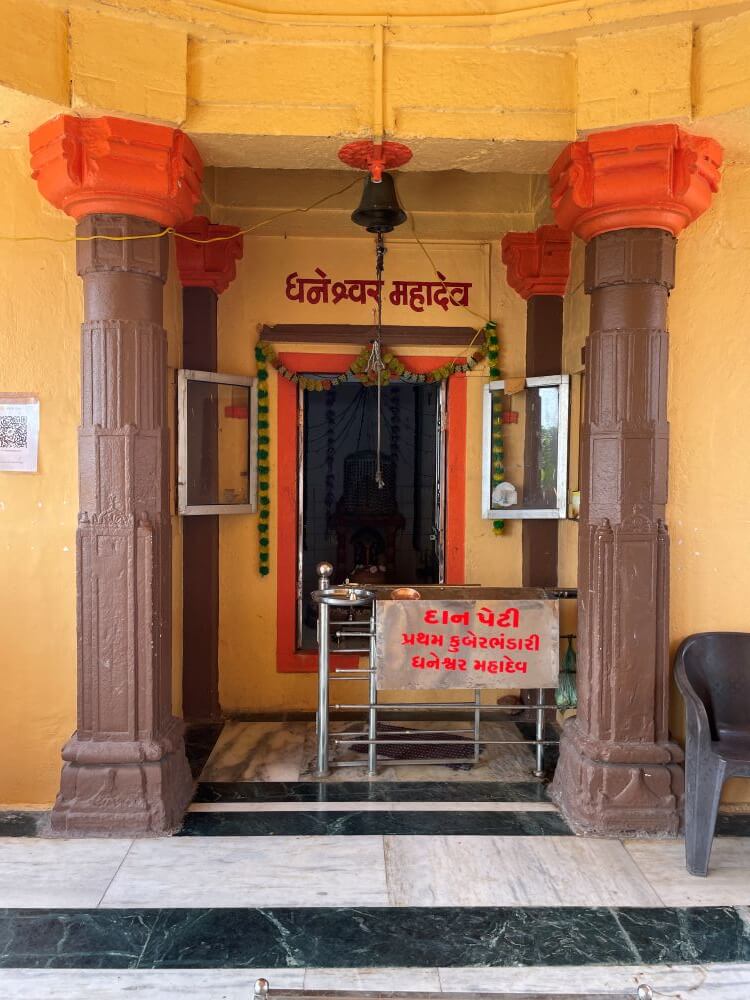 Narmada Purana and Shiv Mahatmya Purana. Each of the four Shivlings has its own legend. The Shivling of Lokeshwar Mahadev is considered more ancient than that of Dhaneshwar Mahadev. As per mythology, Bhasmasur performed severe penance to please Lord Shiva. He received a boon from Shiva stating, “Whoever I place my hand upon will turn to ashes.” After receiving this boon, Bhasmasur wanted to test its truth by placing his hand on Shiva’s own head. Terrified, Shiva fled and hid in the bushes by the Narmada River, calling for help from Lord Vishnu. Vishnu took on the form of Mohini and ensnared Bhasmasur.
Enamored by Mohini’s beauty, Bhasmsur proposed marriage to her. Mohini replied, “To marry me, you must dance as I do.” Bhasmasur agreed but requested Mohini to teach him how to dance since he was not skilled at it. While teaching him, Mohini placed her hand on her head, prompting Bhasmasur to do the same, leading to his immediate destruction as per Shiva’s boon. The spot where Shiv hid became known as Lokeshwar Mahadev.
The mythological story regarding Dhandeshwar (Dhaneshwar) Tirth is that Shiv secretly resided in the waters of the Narmada here. To regain his golden Lanka, which was taken by Ravana, Kubera came here and performed penance for Shiv. 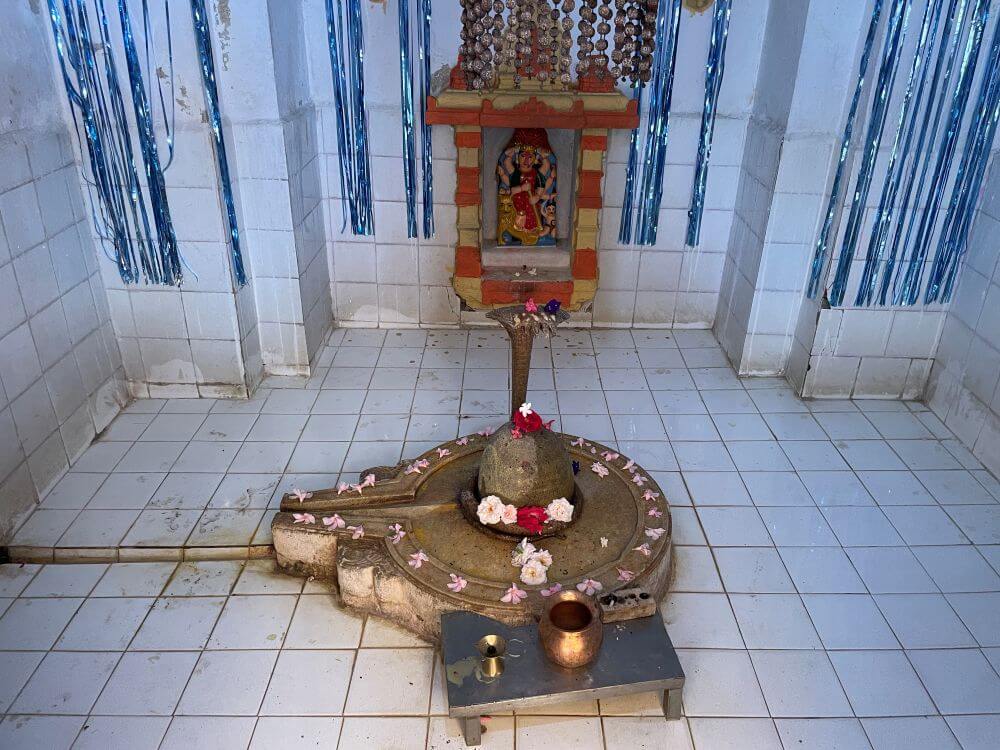 During this time, he established the lingam of Dhaneshwar Mahadev to the north of Lokeshwar Mahadev. Devotees believe that visiting Lokeshwar Mahadev, as well as Dhaneshwar Mahadev makes all pilgrimage sites fruitful. Observing vows here on the thirteenth day of the waxing moon in Chaitra month is said to yield merit. Offering meals to Brahmins here alleviates suffering and fulfills all wishes.
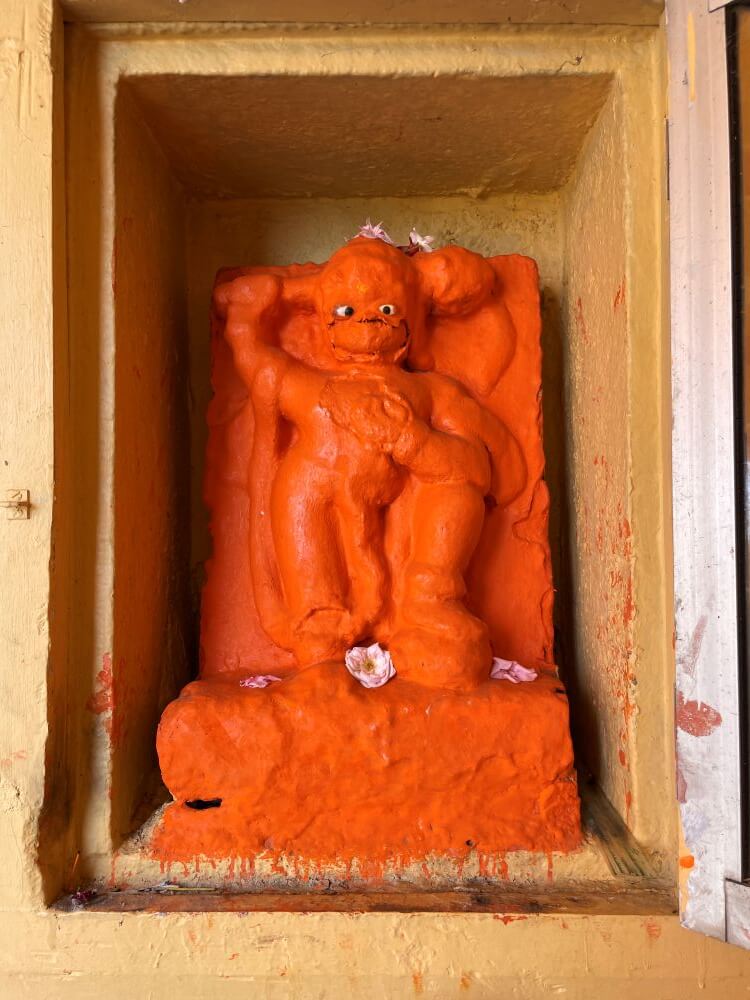
This site is about 15 km from Rajpipla and offers a peaceful environment with many trees and banana groves surrounding it. The temples are entirely made of stone with two spires and subsidiary spires. A single half-mandap serves as an assembly hall connecting both temples. The walls of the temple feature images of various deities. 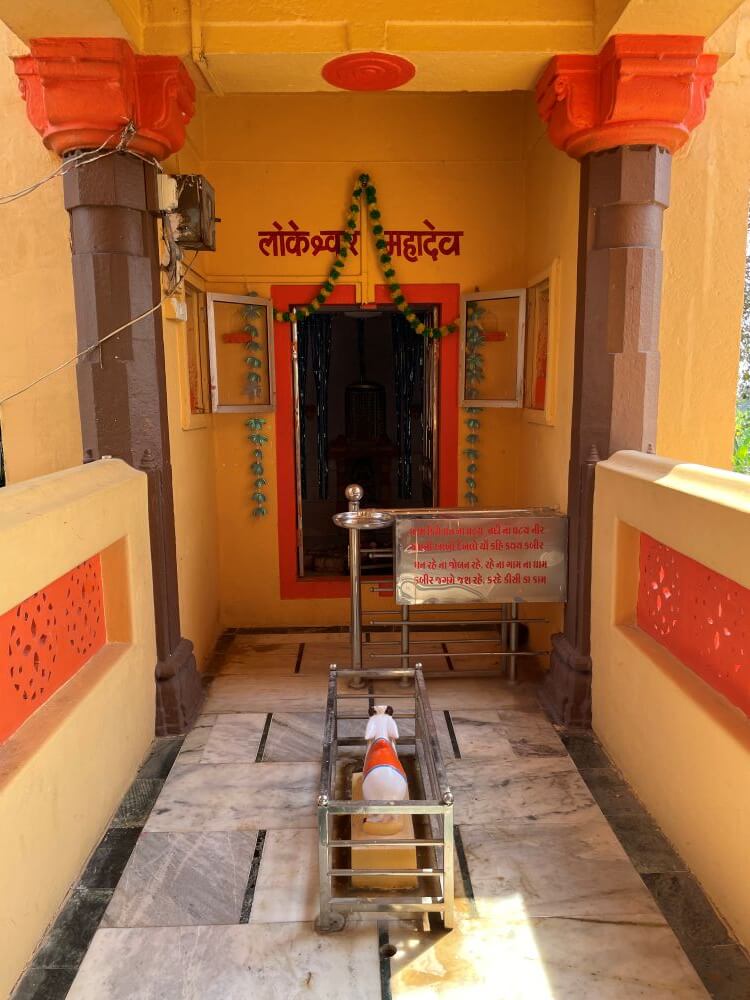 The assembly hall has a dome-shaped ceiling with different Nandi (bull) and tortoise idols placed before both Shivlings. On the left side near both temples’ sanctums are idols of Hanuman and Ganesha respectively, while behind both Shivlings on their rear walls is an idol of Goddess Parvati. The Shivling of Dhaneshwar Mahadev is larger than that of Lokeshwar Mahadev and features a face (mukhvata) as well.
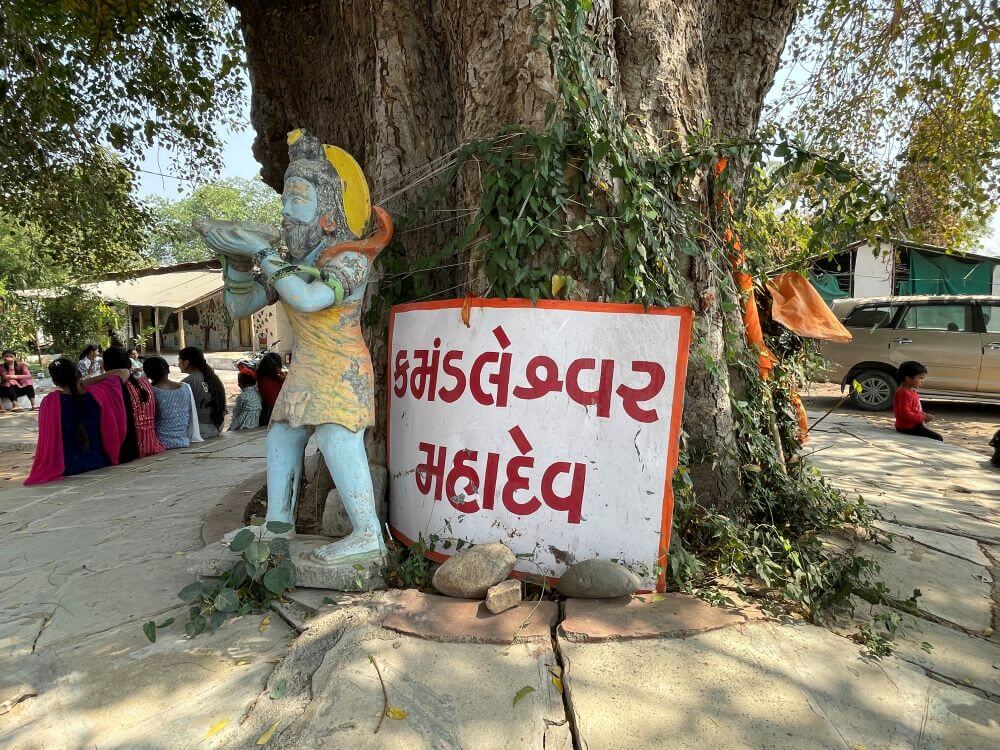
To the south of this temple is a shrine for Nagadevta (the serpent deity), while to the north lies Balayadev’s place. Behind these temples, under a peepal tree, is Kamandaleshwar Mahadev, near which is Jateshwar Mahadev’s shrine. According to legend, Parvati came here to bring back Shiv Shankar who had fled from Bhasmasur. Exhausted from fleeing, ShivShankar dropped his kamandalu (water pot) here and his hair became disheveled, with sweat dripping down. Parvati tied his hair back and established Kamandaleshwar Mahadev’s lingam where his pot fell and Jateshwar Mahadev’s lingam where his sweat dripped.
There is a cow shelter within this temple complex as well as an ashram dedicated to Dhaneshwar Mahadev established around 1930. In 1943, a sage named Jayramdasji Maharaj (Tapasvi Baba) arrived here after learning about the northern flowing Narmada parikrama from the Narmada Purana and began this pilgrimage journey. Since 1943, services have been provided for cow protection and pilgrims coming for parikrama at this ashram which also houses Ram Darbar and Jayramdasji Maharaj’s samadhi.