
दक्षिणा मूकांबिका मंदिर
कचेरीपाडी, अर्नाकुलम
Dakshina Mookambika Temple
Kacheripady, Dist. Ernakulam
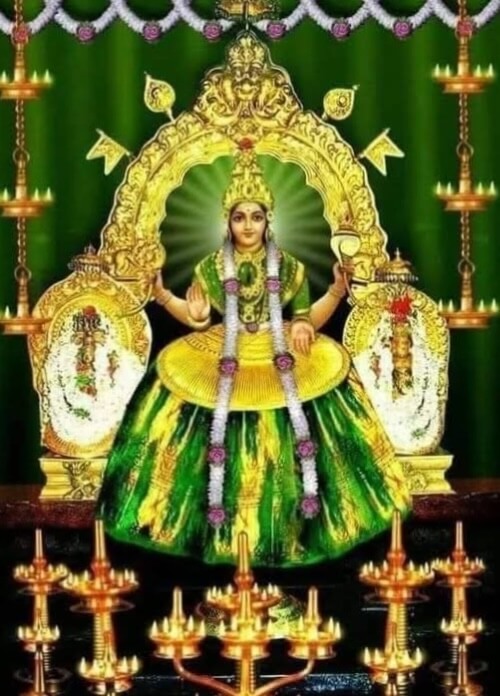 Located in the Ernakulam district near North Paravur, the Dakshina Mookambika Tem-ple is one of the most renowned Devi temples in Kerala. The temple, dedicated to Goddess Mookambika—the embodiment of knowledge and wisdom—is also popularly known as “the Mookambika of Kerala.” Devotees believe it to be the southern presence of the famous Kollur Mookambika Temple in Karnataka. The principal deity is God-dess Mookambika, worshipped in the form of Saraswati. The temple is especially famous for Vidyarambham, Saraswati Pooja, and Navaratri celebrations, attracting students and artists with deep devotion. The tantric rights of the temple are held by the Thripunithura Puliyanur Mana, and it functions under the Travancore Devaswom Board.
Situated slightly away from the busy town area of Paravur, the temple lies in a serene and spiritually uplifting environment. It is believed to be over five centuries old and was constructed by the ruler of the ancient Paravur kingdom, the Paravur Thampuran. Originally under the Paravur Swaroopam, the temple later came under the administration of the Travancore Devaswom Board. Over the centuries, it has remained a centre of devotion, wisdom, and inner peace.
The Thampuran who ruled Paravur and nearby regions was a devoted follower of the Kollur Mookambika Temple. He used to visit Kollur every month without fail.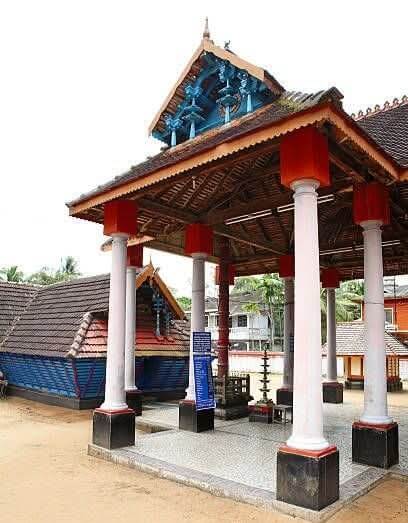 However, due to old age, he was no longer able to undertake the long journey and became deeply saddened. After his final visit to Kollur, he spent his days immersed in devotion and prayers to the Goddess. It is believed that Goddess Mookambika established her presence here as the Goddess of Speech and Knowledge. As the temple lies to the south of the Kollur Mookambika Temple, it came to be known as the “Dakshina Mookambika Temple.”
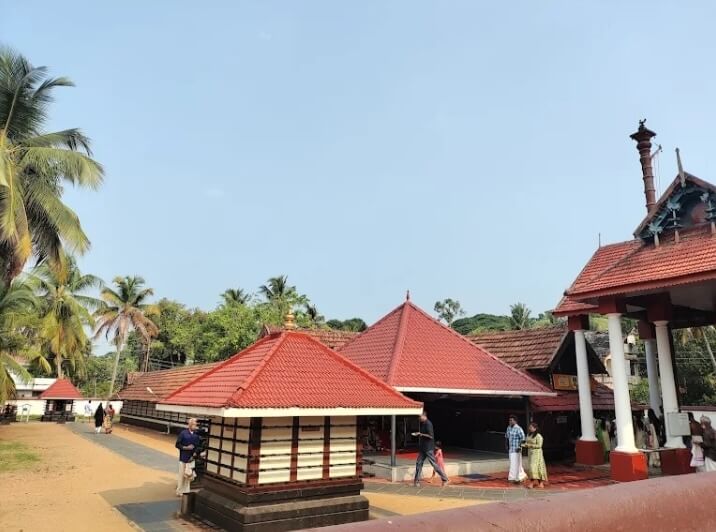
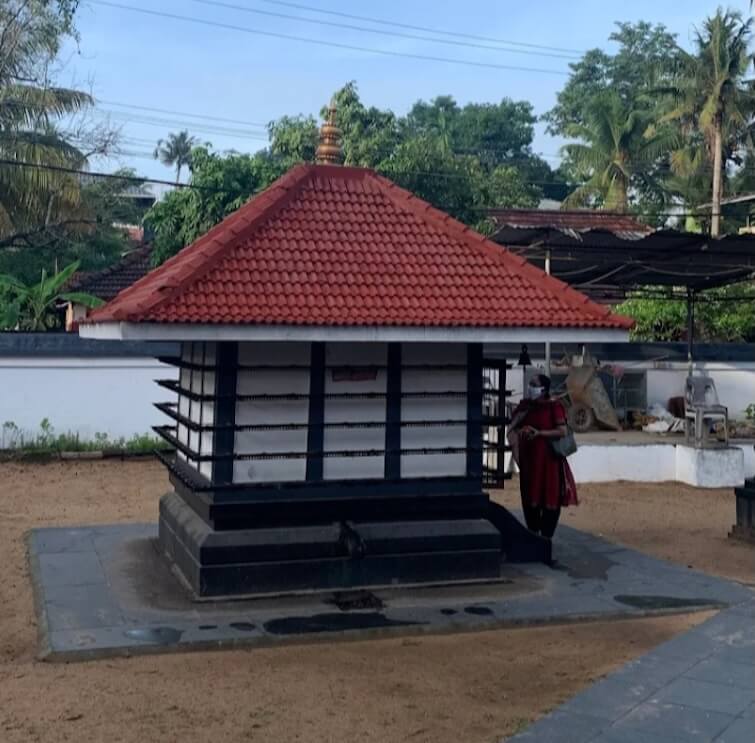
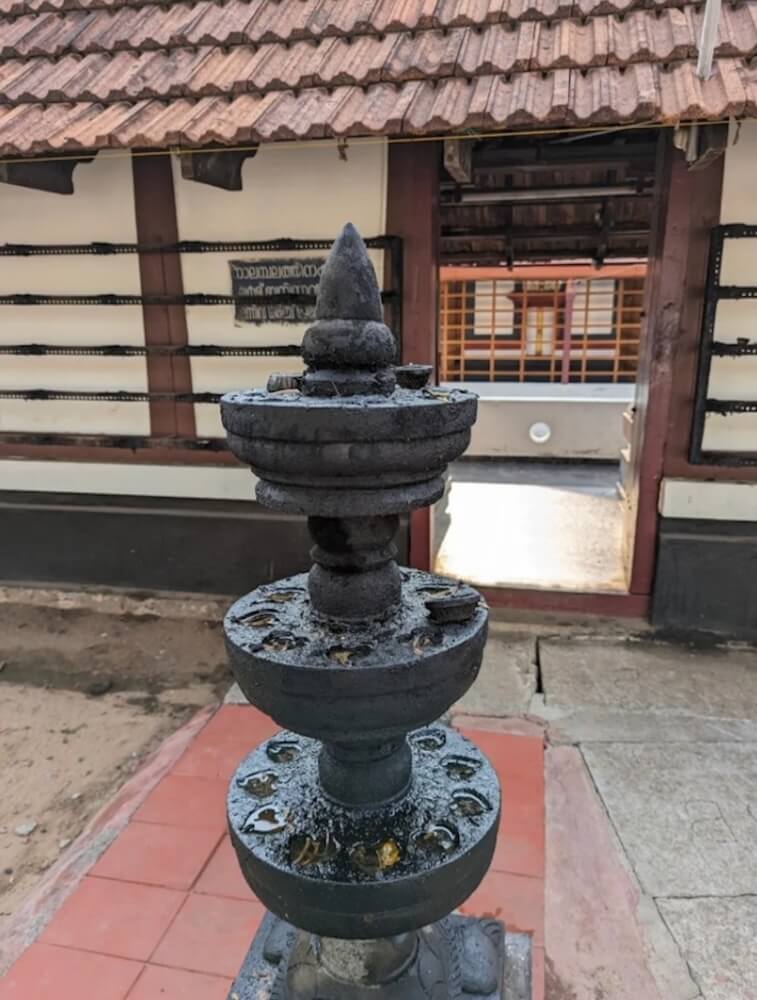
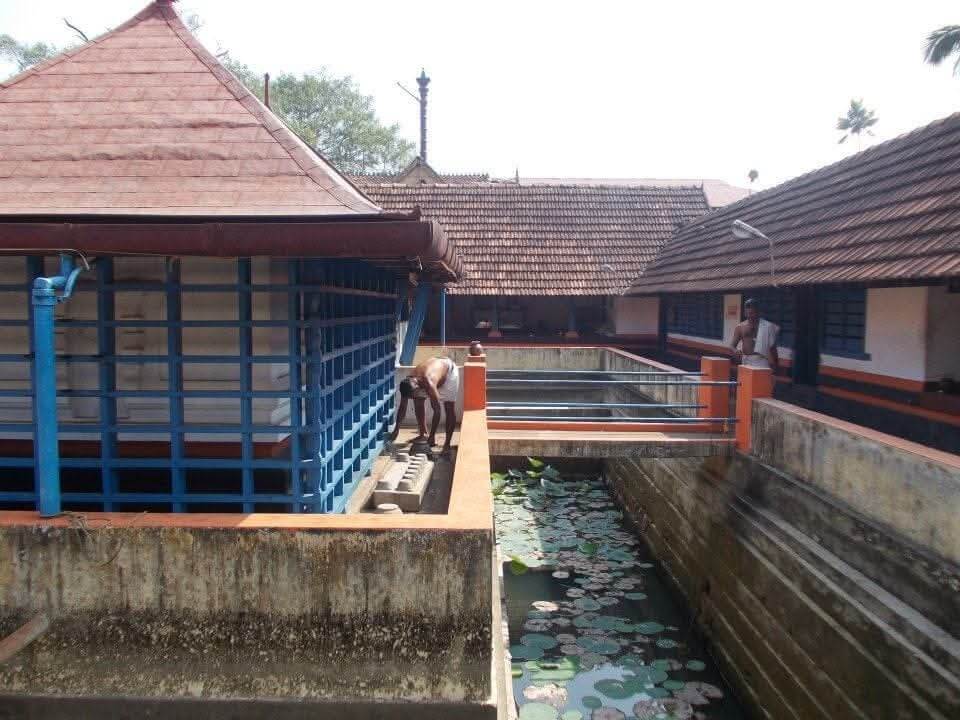
The temple, when viewed from outside, reflects the beauty of traditional Kerala temple architecture. Built without excessive grandeur, it embodies simplicity and spiritual ele-gance. The sloping copper-roof structures and wooden carvings give it a timeless classical appearance. From the entrance, one can see a peaceful temple courtyard, the lamp tower, and the surrounding greenery and banyan trees, creating a deeply calming atmosphere.
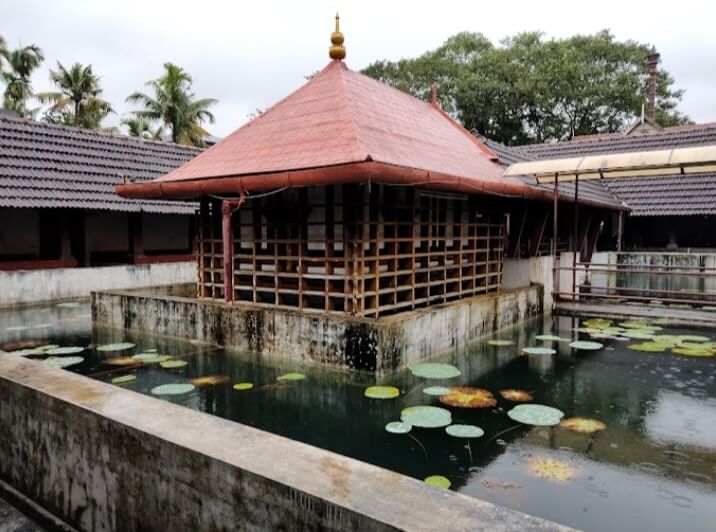
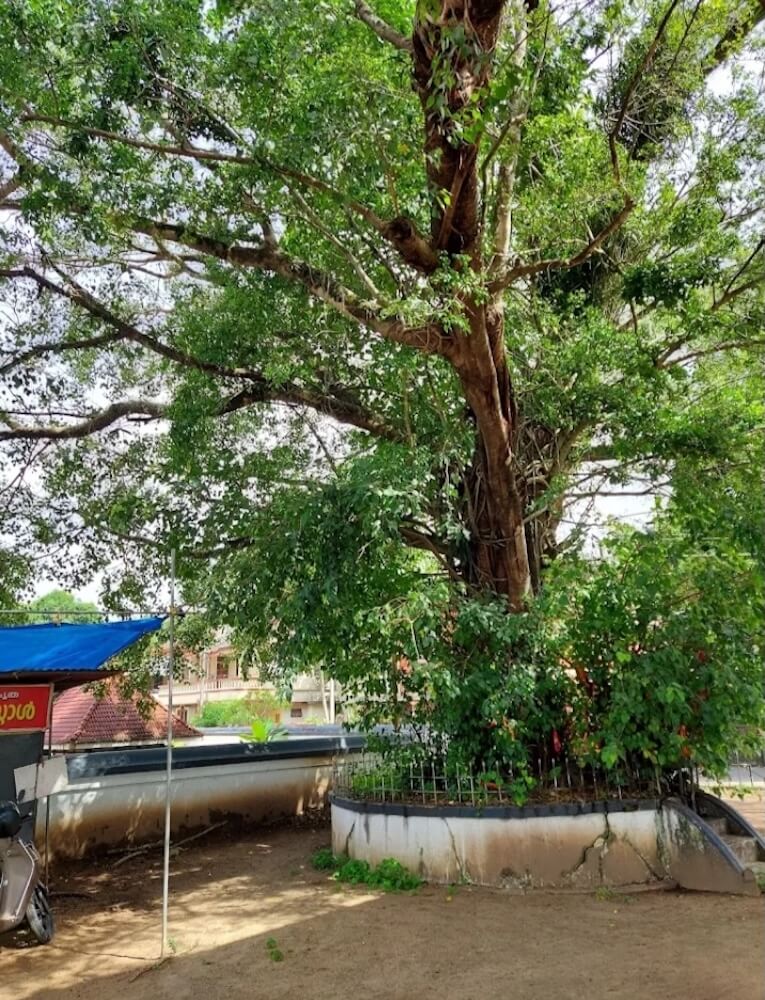
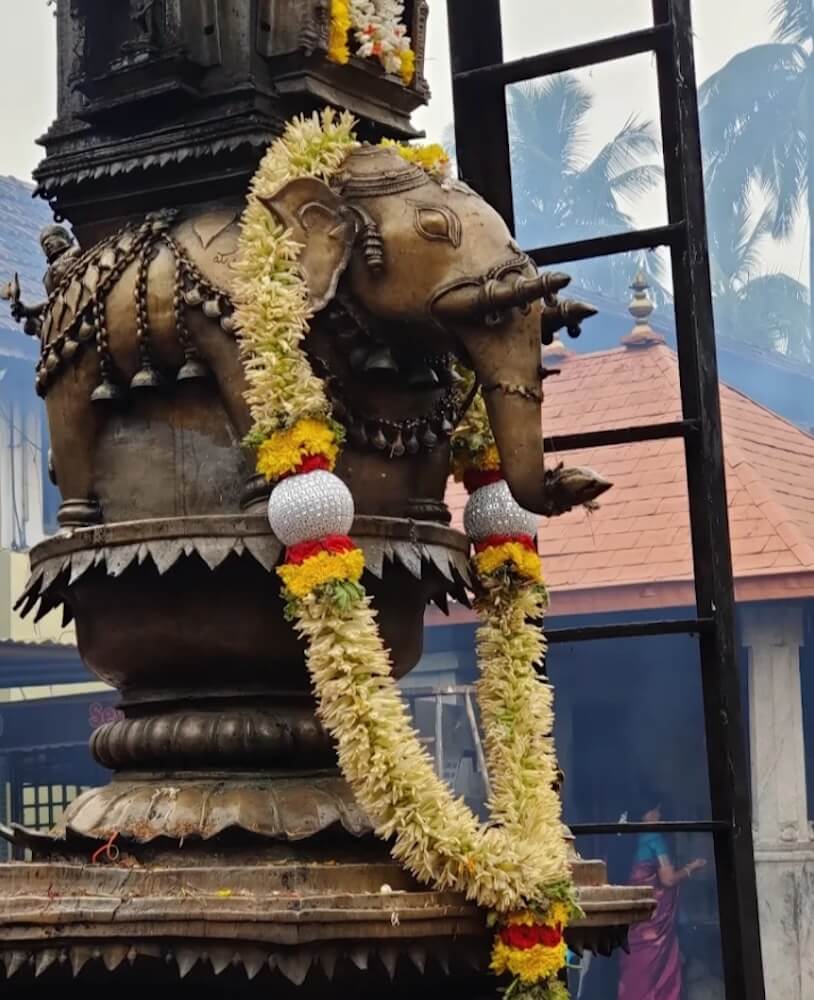
The main entrance of the temple faces east. In front of it lies a vast temple pond, one of the most beautiful features of the temple, spreading over nearly four acres and enhancing the serenity of the surroundings. Opposite the pond stand the Navarathri Mandapam and the elephant pavilion. On the north-eastern side of the main entrance stands an ancient banyan tree, beneath which the Nava Naga deities are enshrined and worshipped with great devotion. After entering the main gate, the first structure visible is the elephant pavilion
Key highlight
- Located 17 km away from Aluva town and 20 km away from Cochin international airport.
- 20 km away from Aluva railway station.
- State Transport (KSRTC) and local transportation available to this temple.
- Private vehicles can park near the temple.
- Accommodation and food facilities are also available.
दक्षिणा मूकाम्बिका मंदिर
कचेरीपाडी, एर्नाकुलम
मंदिरे
Temples
मंदिर
-
पेरुमपदवोम भगवती मंदिर पेरुंबदावोम, एलांजी, जि. एर्नाकुलम.
अधिक माहितीPerumpadavom Bhagavathi Temple Perumbadavom, Elanji, Dist. Ernakulam.
View Detailsपेरुम्पदावोम भगवती मंदिर पेरुंबदावोम, एलानजी, जिला। एर्नाकुलम.
विवरण देखें -
आजीकाल श्री वराह देवस्वोम अळेकल, चेराई, जि. एर्नाकुलम.
अधिक माहितीAzheekal Shree Varaha Devaswom Azheekal, Cherai, Dist. Ernakulam.
View Detailsअज़ीकाल श्री वराह देवस्वोम अज़ीकल, चेराई, जिला। एर्नाकुलम.
विवरण देखें -
व्यत्तिला शिव सुब्रह्मण्य स्वयंभू क्षेत्रम् विट्टीला, जि. एर्नाकुलम.
अधिक माहितीVyttila Shiva Subrahmanya Swayambhu Kshethram Vyttila, Dist. Ernakulam.
View Detailsव्यत्तिला शिव सुब्रह्मण्यं स्वयंभू क्षेत्रम् विट्टिला, जिला. एर्नाकुलम.
विवरण देखें