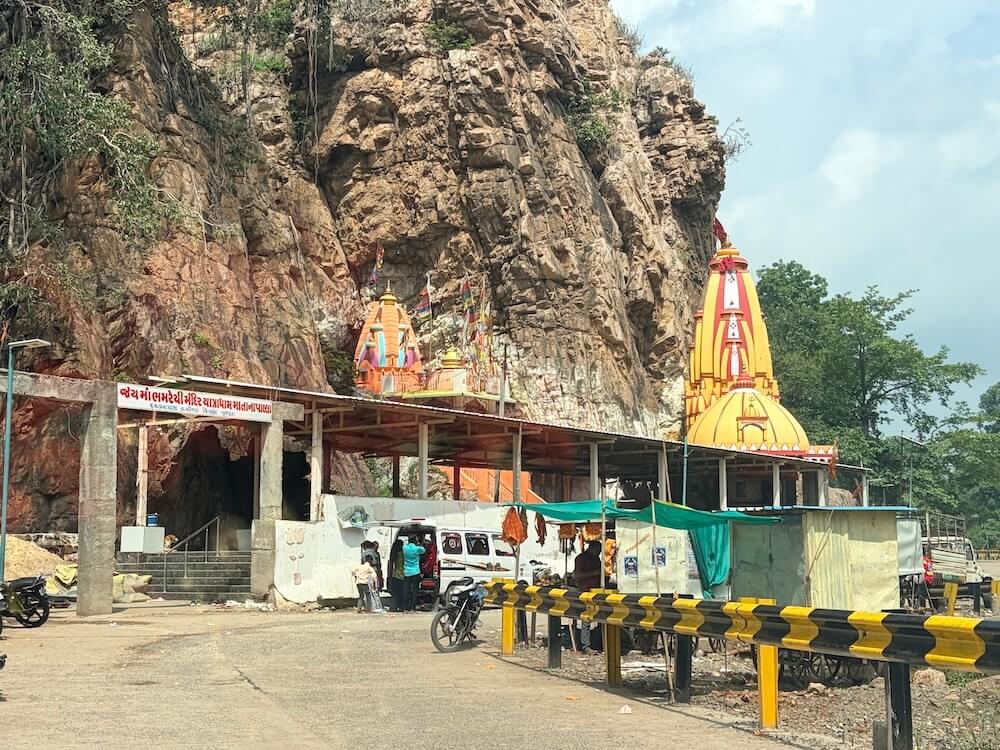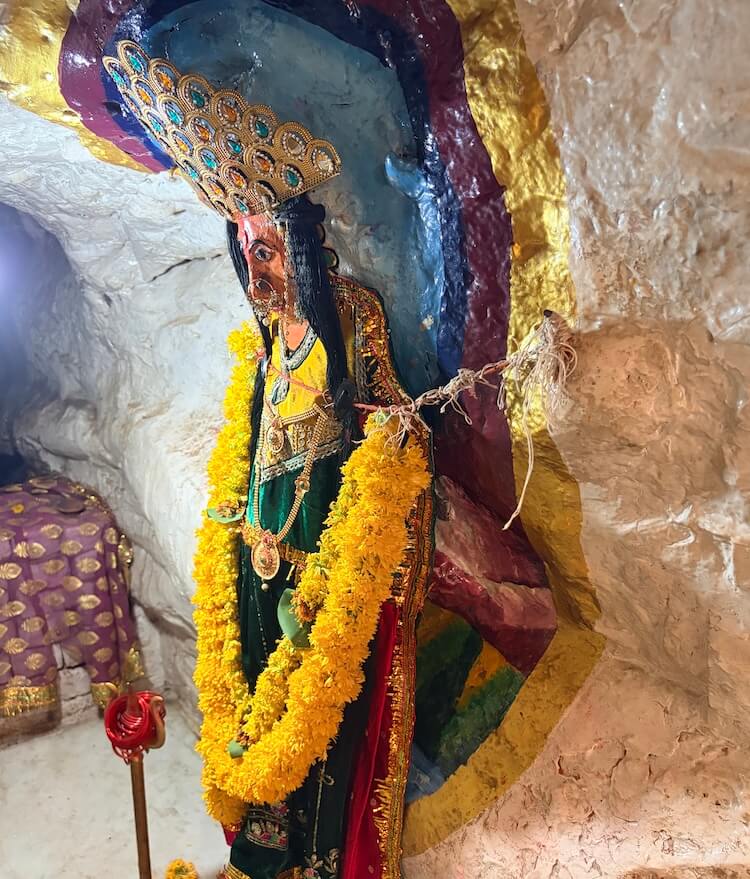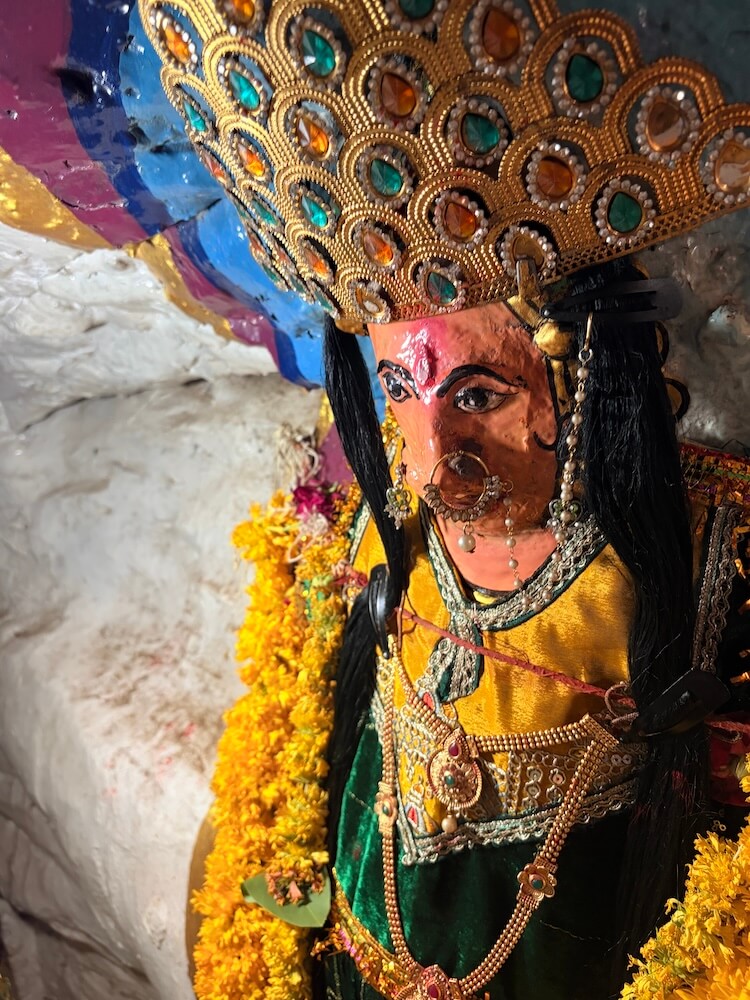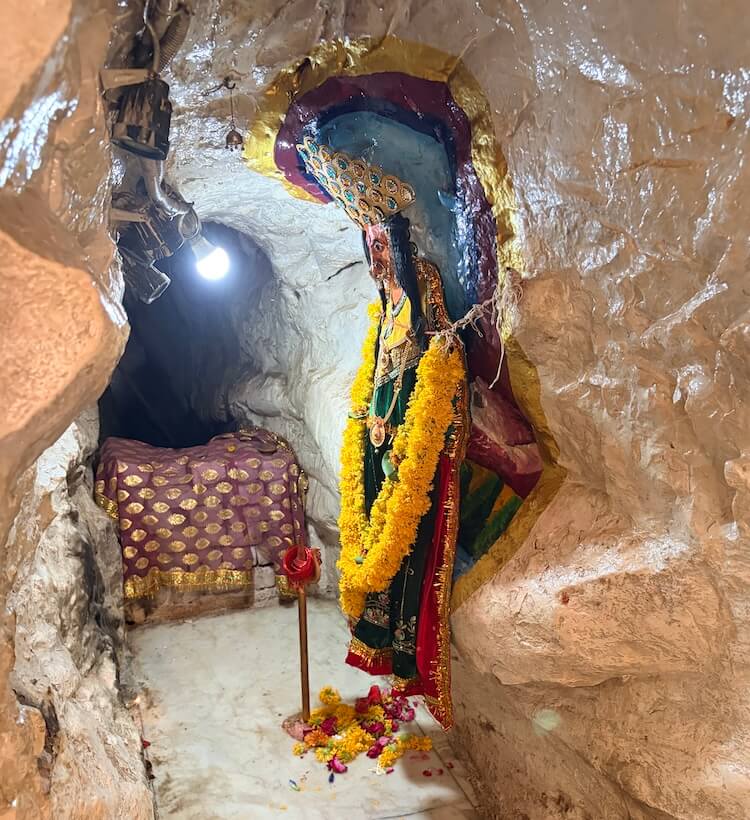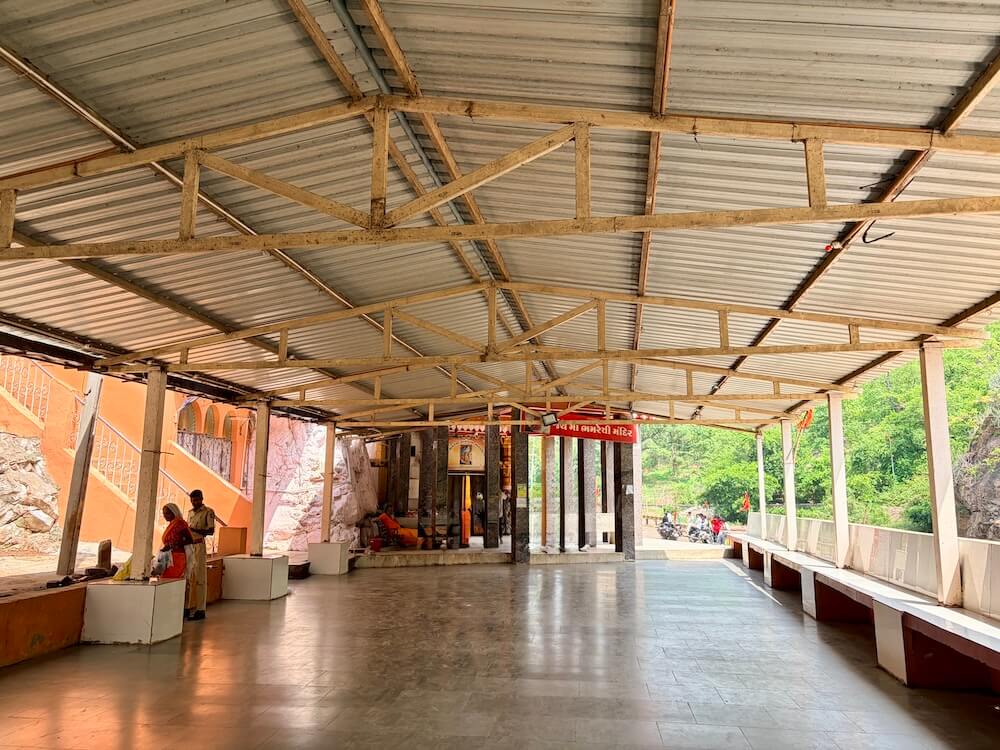
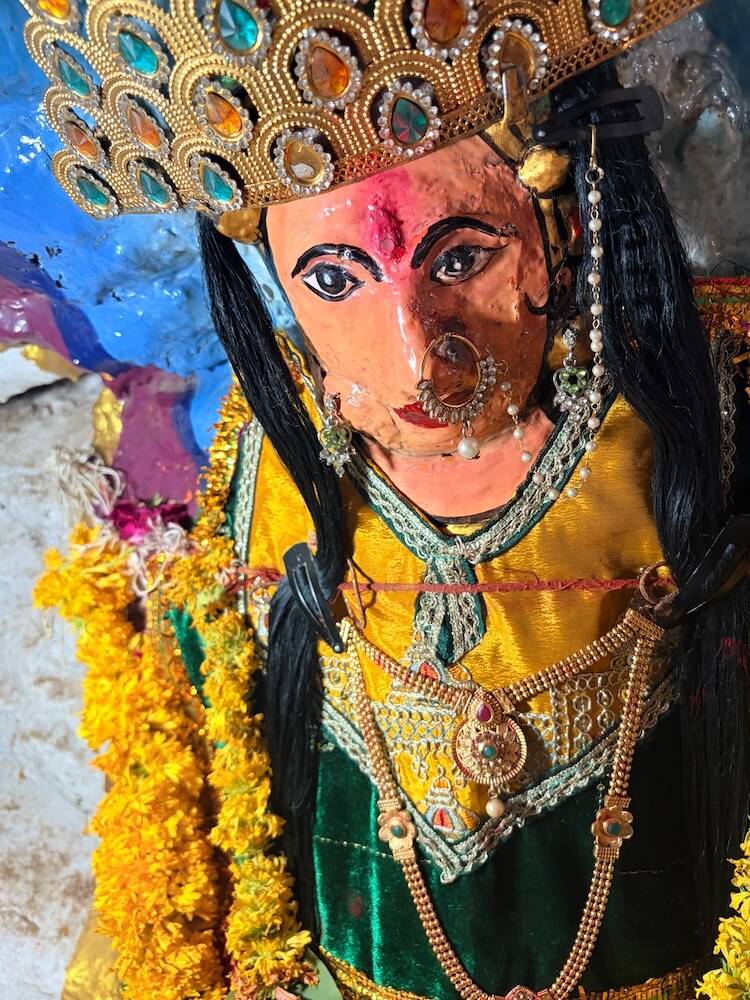
 Nestled near Randhikpur in Dahod district, a region renowned for its rich tribal heritage, historical legacy and natural beauty, stands the ancient temple of Bhamrechi Mata. The shrine is popularly known as ‘Bhamrechi Yatra Dham, Matana Palla’. Bhamrechi Mata is revered as the ‘Aradhya Devata ’ of the tribal communities of the region. Her shrine is located within a cave in the hills and devotees believe that the Goddess manifested there in a self-existent (Swayambhu) form. Worshipped since ancient times, the deity has gradually become associated with a Puranic identity, according to which Bhamrechi Mata is regarded as none other than the celebrated Goddess Bhramari, also known as Bhramaramba.
Dahod is one of Gujarat’s predominantly tribal districts. It was constituted in 1997 after the tribal areas of the erstwhile Panchmahals district were carved out to form a separate administrative district. The Bhil and Patelia communities constitute the majority of the tribal population. Nature worship has been an ancient tradition among these communities. They venerate nature in its many manifestations and their religious practices have evolved from a combination of reverence for natural forces, fear of their destructive power, gratitude for their benevolence and deeply rooted animistic beliefs. Bhamrechi Mata represents one such expression of this faith. 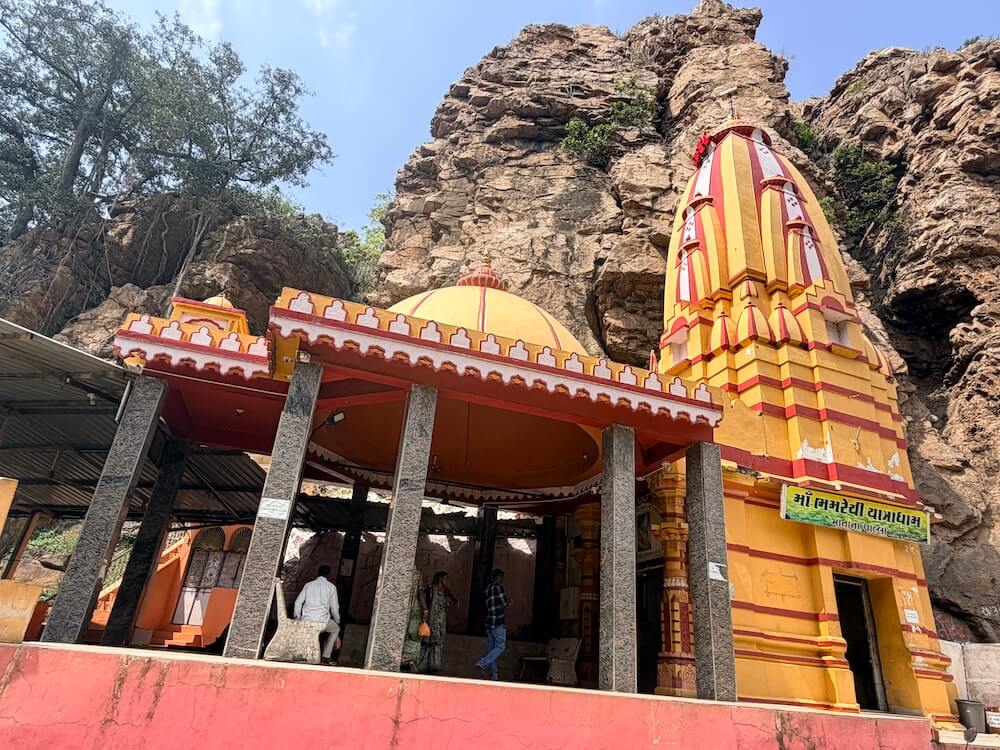 Enshrined within a cave in the hills near Randhikpur, the Goddess continues to be worshipped as the guardian deity of the region. According to some scholars and local traditions, the name ‘Bhamrechi’ is a regional variation of ‘Bhramari’ or ‘Bhramaramba’ and the Goddess is regarded as a manifestation of Adi Shakti, the Primordial Divine Mother.
The story of Goddess Bhramari is narrated in the ‘Shrimad Devi Bhagavata Purana’ (Skandha 10, Chapter 13). According to this account, thousands of years ago, a mighty demon named Arunasura performed severe penance on the banks of the River Ganga in the Himalayas to propitiate Lord Brahma. Pleased with his austerities, Brahma granted him the boon that he would not meet his death in battle, by any weapon, at the hands of any man or woman, or by any two-footed or four-footed creature. 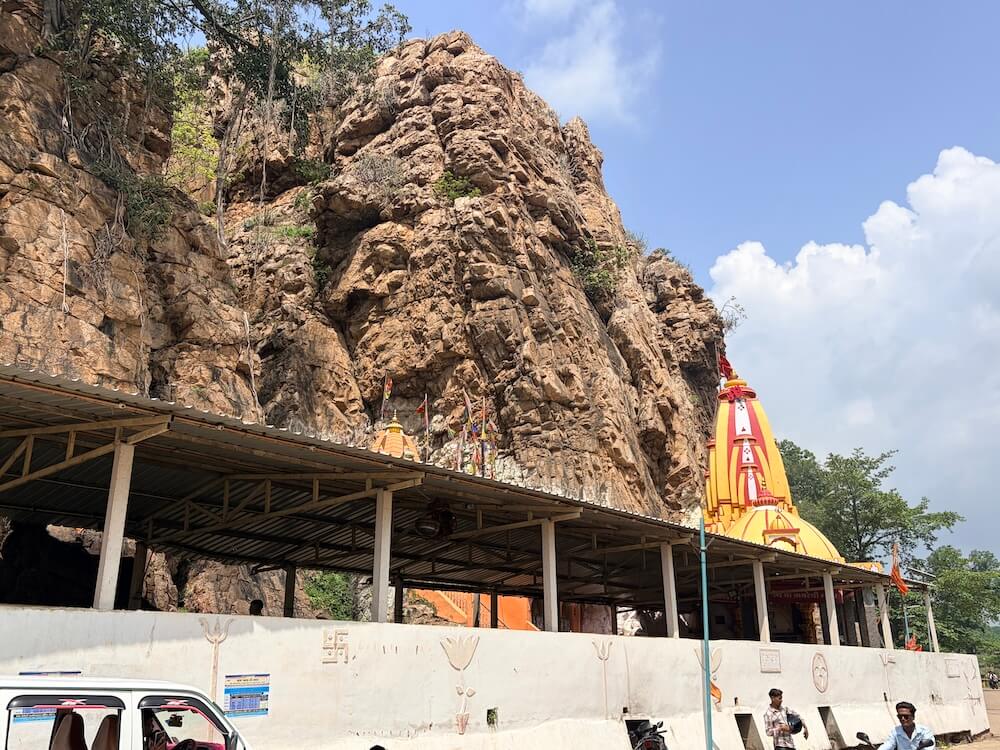 Having obtained this boon, Arunasura came to regard himself as invincible. Blinded by pride, he began persecuting sages and the gods. He attacked heaven and drove the deities from their celestial abode. Helpless, the gods sought the protection of Goddess Bhagwati. Hearing their earnest prayers, the Goddess assumed a majestic divine form. Knowing that any two-footed or four-footed being could not slay Arunasura, She brought forth from Her hands countless six-legged creatures, including bees and bumblebees. These innumerable insects spread across the earth and attacked Arunasura and his army, destroying them completely. It was this manifestation of the Goddess, who liberated the world from tyranny, that came to be worshipped as Goddess Bhramari.
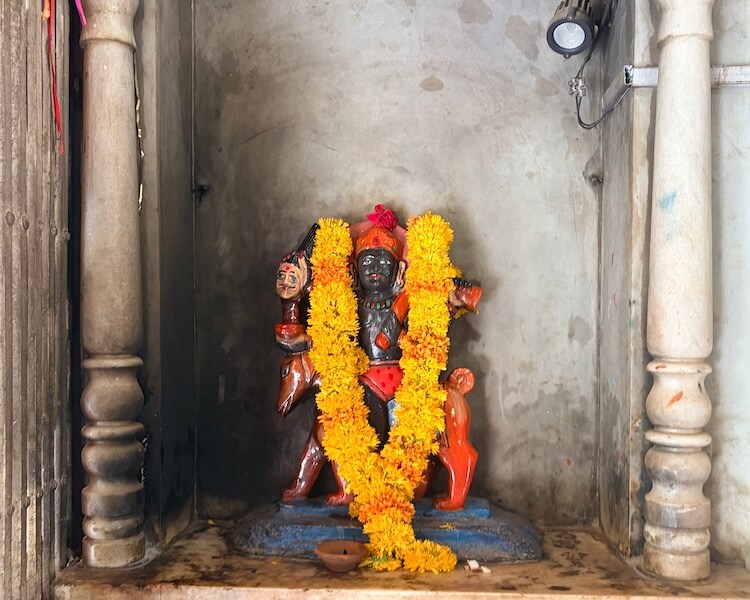 A major temple dedicated to Bhramari Mata stands on the banks of the Teesta River at Trisrota in West Bengal. It is traditionally regarded as one of the fifty-one Shakti Peethas.
According to ‘Devikosha – Volume II’ by Prahlad Krishna Prabhudesai, the principal shrine of Goddess Bhramaramba is situated at Srisailam in Andhra Pradesh, within the sacred complex of the Mallikarjuna Jyotirlinga. The names ‘Mallika’ and ‘Arjuna’ are traditionally understood to refer to Goddess Parvati and Lord Shiva, who are believed to reside there together. Prabhudesai suggests that the name ‘Bhramaramba’ may have originated from the belief that Goddess Parvati roams this sacred place on the night of the full moon. Another interpretation derives the name from Bhramara, meaning a bee or bumblebee. Significantly, the hill behind the temple is home to numerous natural beehives.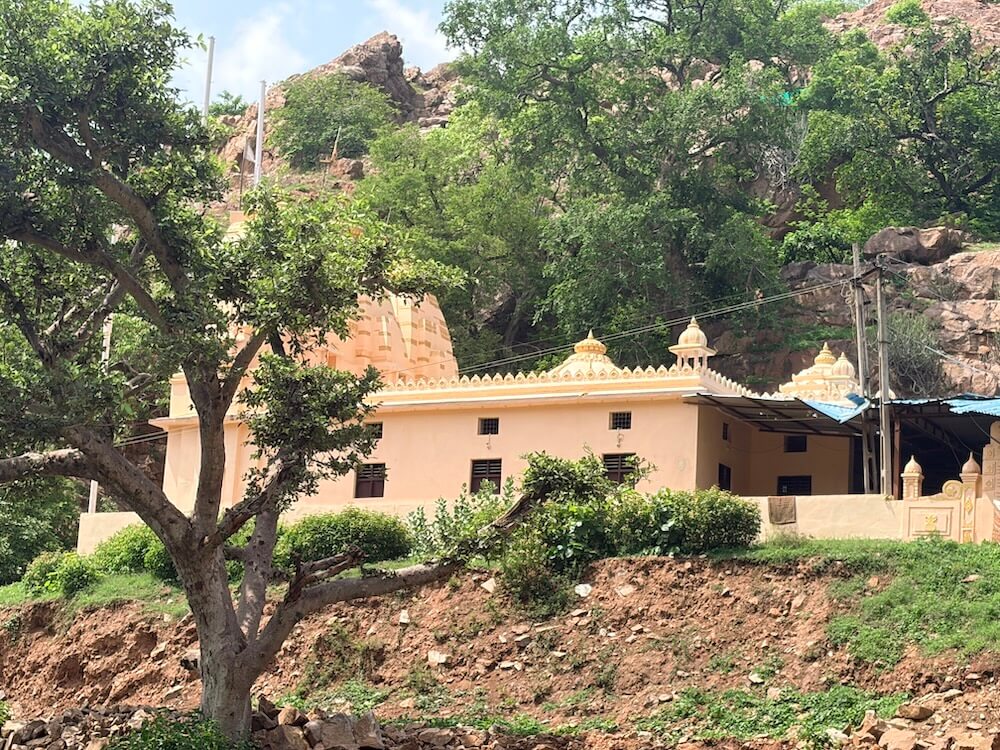
A local legend concerning Bhamrechi Mata is also narrated in the region. In ancient times, a demon dwelt in the dense forests surrounding this place. He mercilessly tormented the local inhabitants. The distressed people fervently prayed to the Goddess for protection. Responding to their prayers, She manifested here to destroy the demon. The demon possessed the power to assume an exceedingly minute form and could conceal himself within the smallest of crevices. To overcome him, the Goddess assumed the form of a bee, searched out his hiding place and slew him. It is said that, because of this divine act, She came to be known as Bhamrechi Mata.
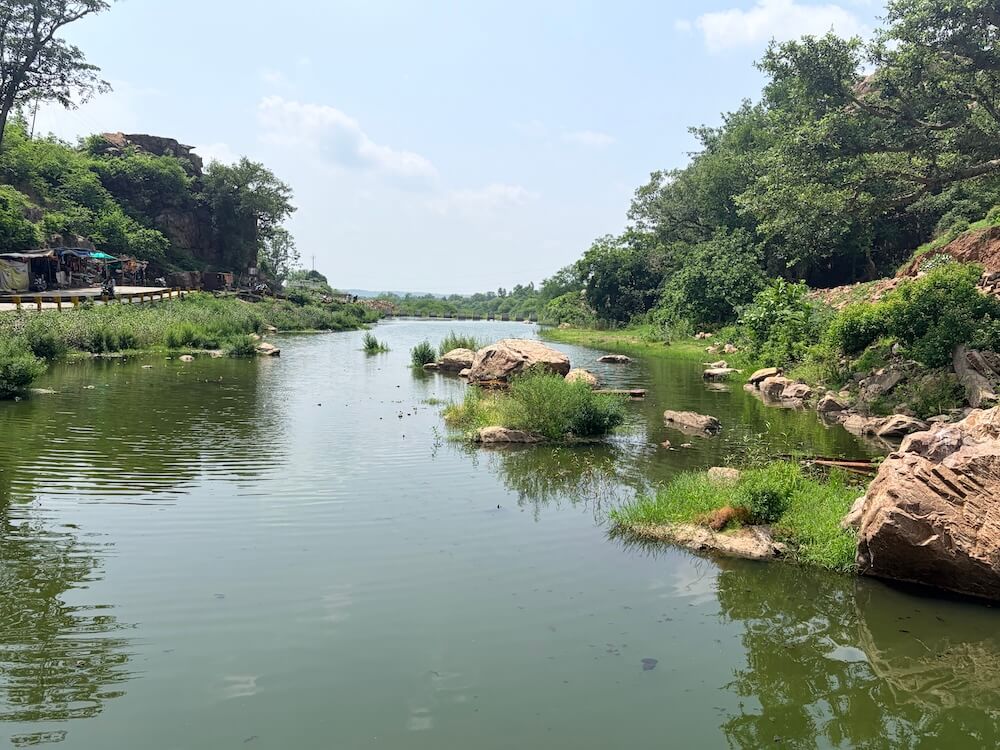
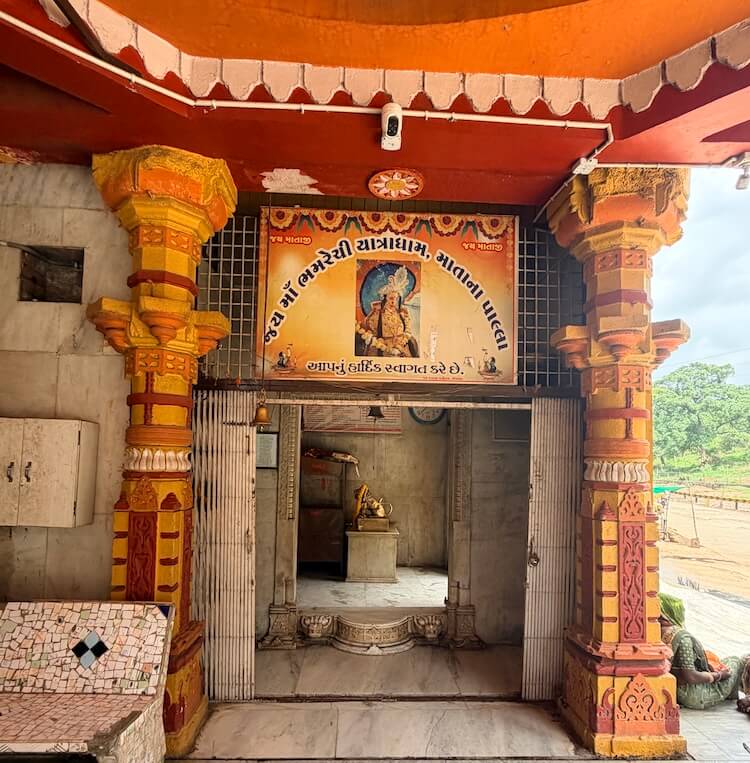 The temple stands beside the hills on the banks of the Kabutari River, which flows through the surrounding landscape. The temple is traditionally believed to be between four and five centuries old. To reach the temple, devotees must cross a bridge spanning the river. A perennial spring emerges from the hillside nearby and flows continuously through a Gomukha(cow’s-mouth spout). Shops selling offerings and Prasad are located within the temple precincts.
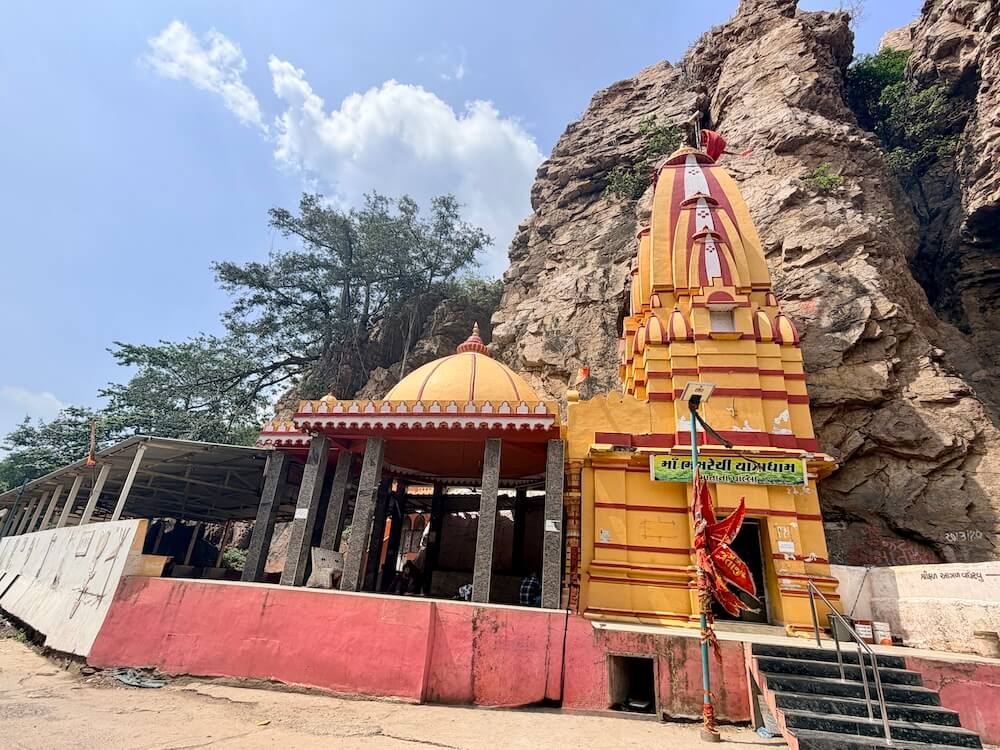
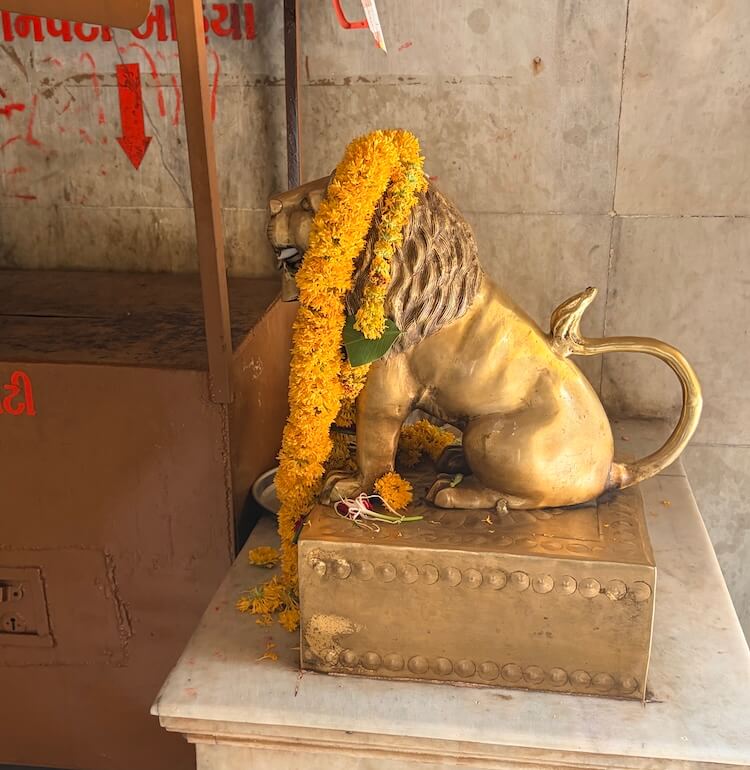
The temple itself stands upon an elevated plinth. In front of the original shrine is a Darshan Mandapa, where seating has been arranged for devotees. Beyond it is a semi-open assembly hall (Sabha Mandapa), which houses a Yajna Kunda. Further ahead lie the vestibule (Antarala) and the sanctum (Garbhagriha). Within the vestibule, directly facing the sanctum, is a brass image of the lion, the divine vehicle (Vahana) of the Goddess, placed upon a raised platform.
The sanctum is situated within a natural cave. Its entrance has been constructed at the mouth of a natural rock cleft in the hillside.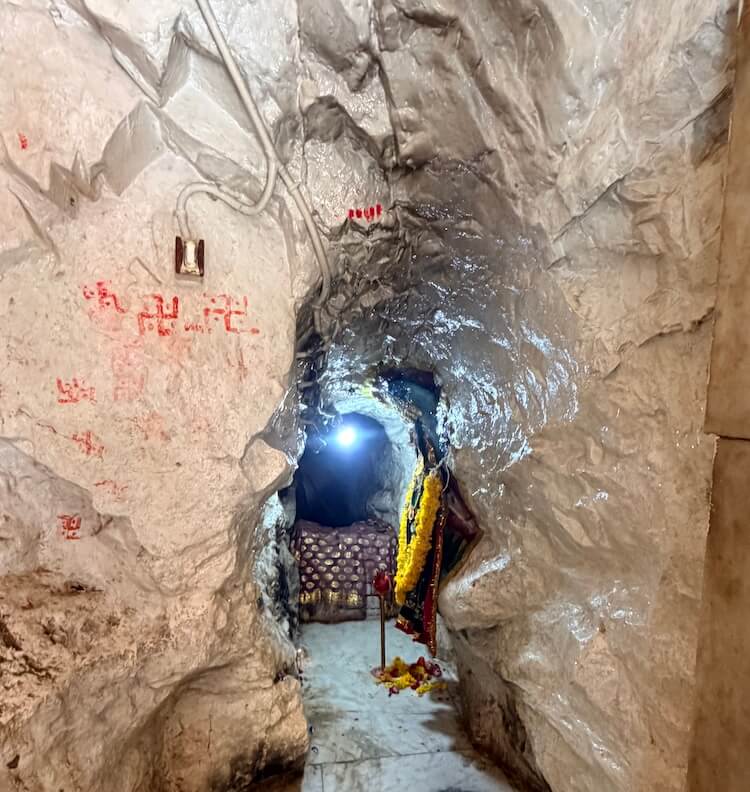 Inside the cave stands the stone image of Bhamrechi Mata. The Goddess bears various weapons in Her hands, while one hand is raised in the Abhaya Mudra, symbolising divine protection. She is adorned with rich garments and ornaments and a crown rests upon Her head.
The roof of the assembly hall is crowned by a domed spire surmounted by a Kalasha. Above the sanctum rises a tall square tower tapering elegantly towards the summit, with subsidiary spires (Angashringas) projecting from all four sides. In front of the temple, adjoining the Ranga Mandapa, stands a shrine dedicated to Lord Hanuman.
A short distance from the temple, atop a lofty rocky outcrop in the hills, stands a shrine dedicated to Baba Ramdev Pir. A flight of steps leads to the temple. Ramdev Pir was a revered saint worshipped across Gujarat, Rajasthan and the Malwa region of Madhya Pradesh. He is generally believed to have lived between AD 1352 and 1385. Born into a Rajput family, he is venerated by devotees as an incarnation of Lord Krishna. Significantly, he is also revered by Muslims under the name Ramsha Pir. His Samadhi is located at Ramdevra, about 10 km from Pokhran in Rajasthan.
Chaitra Navratri and Sharad Navratri are the main annual festivals at the Bhamrechi Mata temple. During these celebrations, thousands of devotees from Gujarat and Rajasthan visit the shrine for darshan and to fulfil their vows.
Devotees offer ceremonial garments and ornaments to the Goddess, along with sweets and coconuts as sacred offerings. On these occasions, the temple organises Shata Chandi Yajna, recitations of the Durga Saptashati, traditional Garbadances and various other religious programmes.
In addition, Diwali, the holy month of Shravan, Baba Ramdev Jayanti and other festivals throughout the year are celebrated with devotion. Devotees may have darshan of Bhamrechi Mata every day from 6.00 a.m. until 8.00 p.m. Owing to its scenic natural surroundings, the temple attracts large numbers of devotees and visitors throughout the year.