 Lord Ayyappa is revered as the divine progeny of Lord Shiva and Mohini, the celestial female avatar of Lord Vishnu. Known also as Hariharaputra and Manikandan, His most magnificent sanctuary in the country is situated at Sabarimala in Kerala. With the noble intent of providing the South Indian diaspora residing in Gujarat—particularly the Malayali community—the spiritual grace of beholding their beloved deity, this temple was established two decades ago at Gadkhol Patia near Ankleshwar. During the annual Mandala Puja festival, a vast multitude of Malayali citizens from across the state participate in the celebrations with great fervour.
Lord Ayyappa is venerated as a radiant symbol of unity between the Shaiva and Vaishnava traditions. A sacred legend narrates that the Vaishnava king Rajasekhar of Pandalam in Kerala once heard a child weeping on the banks of the Pamba river while out hunting. 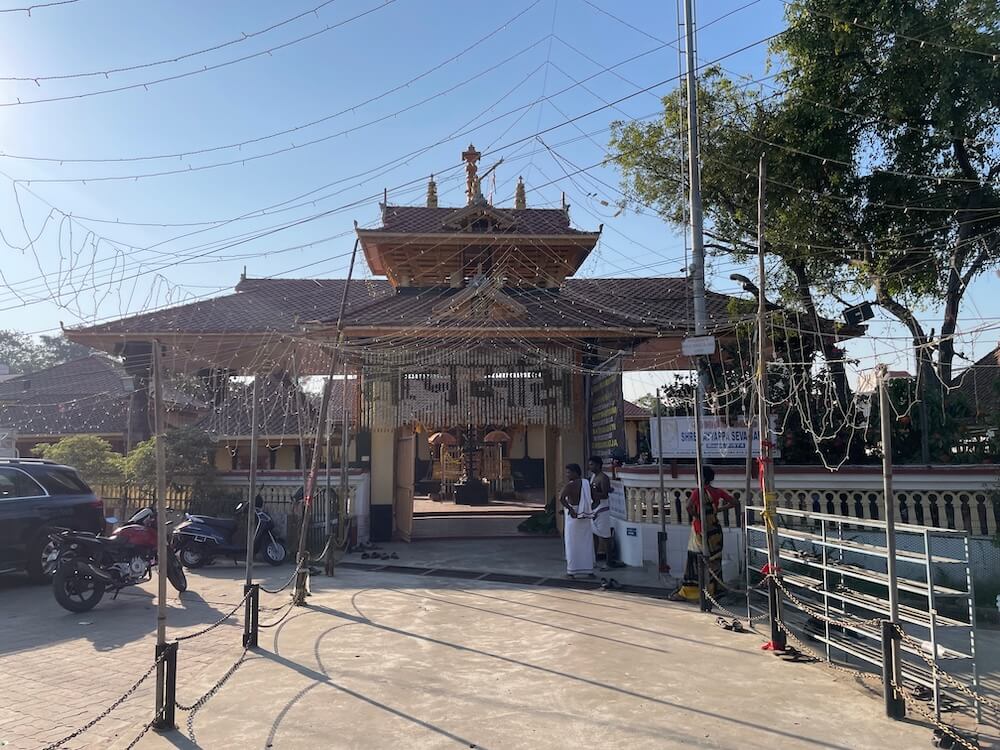 Around the child’s neck was a divine garland and a brilliant aura encircled his face. Though the king had no children, he hesitated to take the child with him. At that moment Sage Agastya appeared and revealed that the child was divine and must be accepted. As there was a radiant mani-mala (beaded gem garland) around the boy’s neck, he was named Manikanta. In due course, the queen later gave birth to a son; yet King Rajasekhar regarded Manikanta as his elder son and even decided to anoint him as crown prince. However, Manikanta himself had no desire to enjoy royal power.
Meanwhile, certain malicious ministers influenced the queen with wicked counsel and plotted to eliminate him. They persuaded the king that the queen suffered from a grave ailment that could only be cured with tigress’ milk. 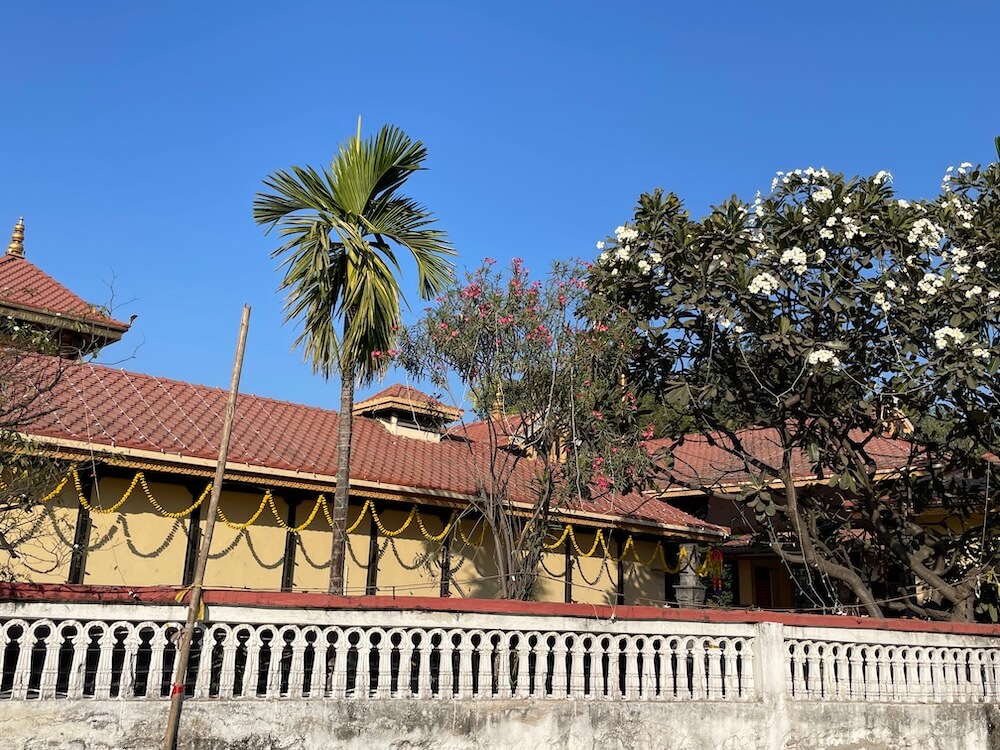 Manikanta willingly undertook the daunting task of bringing it. During his journey into the forest, he encountered the fearsome demoness Mahishi, sister of Mahishasura. After Goddess Durga had slain Mahishasura, Mahishi performed fierce penance and obtained a boon from Brahmadev that none but a son born of Shiva and Vishnu could kill her. Knowing such a union to be seemingly impossible, she became arrogant and tyrannical. Finally, the gods prayed earnestly to Vishnu for deliverance. Vishnu, who had once assumed the Mohini form during the churning of the ocean, decided to incarnate as a son born from His union with Shiva and entrusted this divine child to the childless king of Pandalam. As Ayyappa was thus the son of both Shiva and Vishnu, he alone could destroy Mahishi and he did so.
 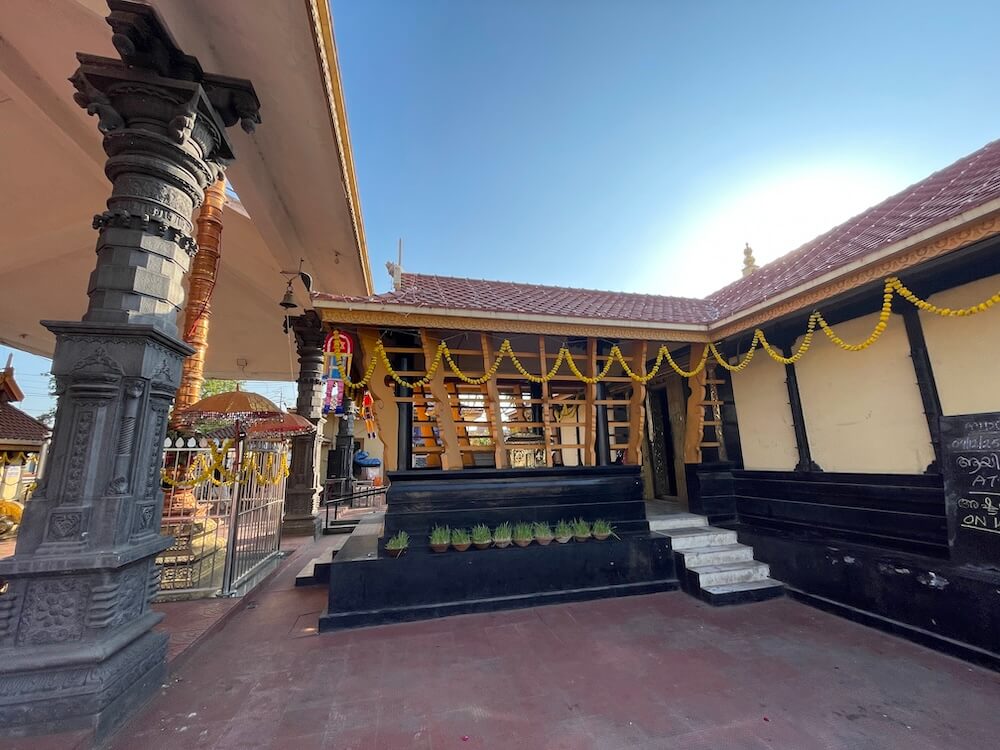 Thereafter he returned to the palace with tigress’ milk, revealing conclusively his divine nature. Having fulfilled the purpose of Mahishivadh, Ayyappa chose to withdraw from royal life. Before leaving, he instructed the king to build his temple at Sabarimala. Today, millions of devotees visit this sacred Kerala shrine every year.
Over recent decades, many Malayalam-speaking families have settled in Gujarat for work and business. According to the 2011 Census, the state is home to around 65,000 Malayalam speakers, with Ankleshwar—being a major industrial centre—hosting a comparatively larger population among them. In 1985, a group of devotees established the ‘Ayyappa Seva Samiti’ here. Every year, on 13 January, they gathered to celebrate the Ayyappa Pooja festival.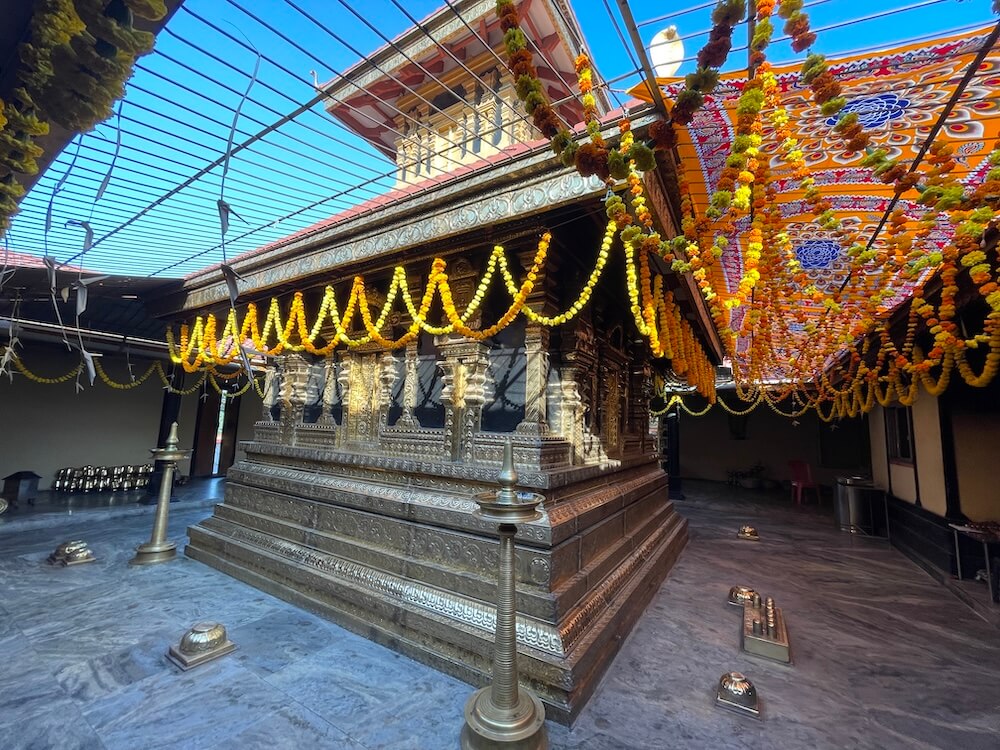 From this devotional unity arose the aspiration to construct a grand temple. In 1996, the committee purchased a large plot of land and temple construction began in 1998. Within four years the work was completed and under the guidance of Brahmashree Shri Azhakathu Shastrasharman Namboothirippad of Thanthra Vidya Peethom, Kerala. The pranapratishta (consecration ceremony) was performed on 18 February 2002. Thereafter, the dhwajastambha (sacred flag mast) was installed on 21 November 2007, the consecration of the Navagrahas took place on 27 February 2012 and the installation of the Shri Krishna idol was carried out on 15 February 2013.
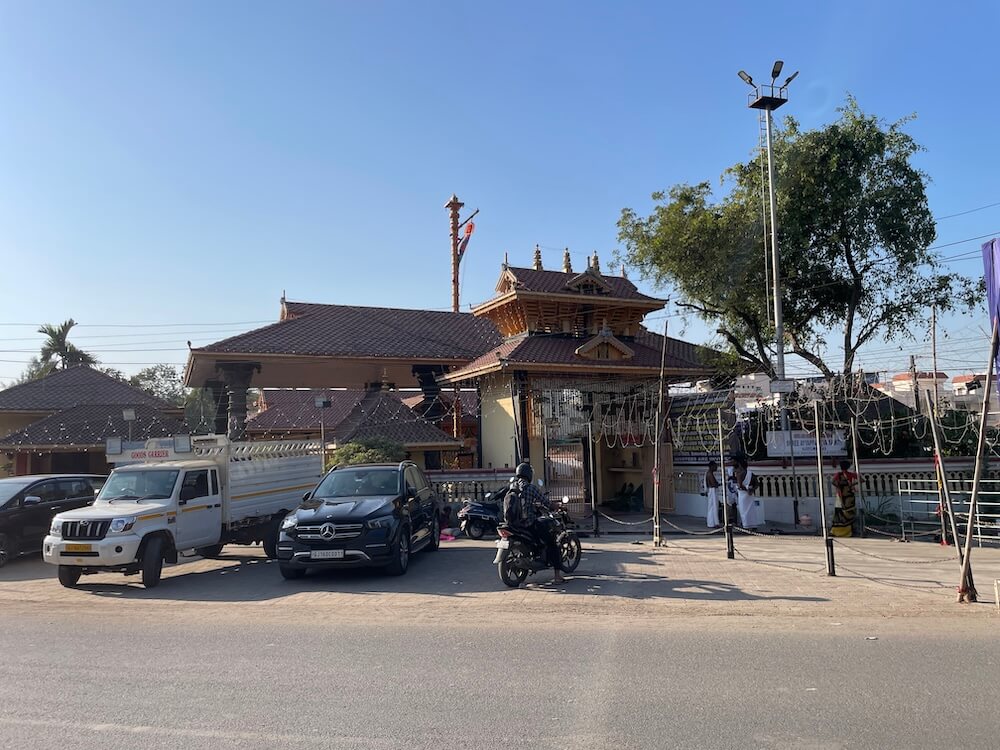
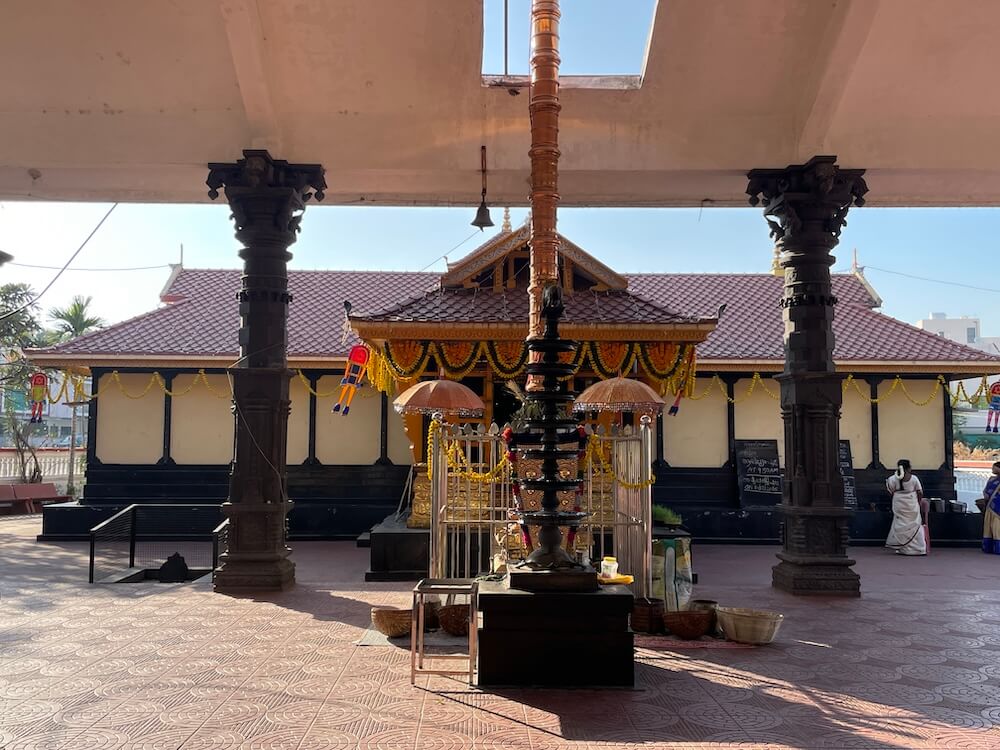
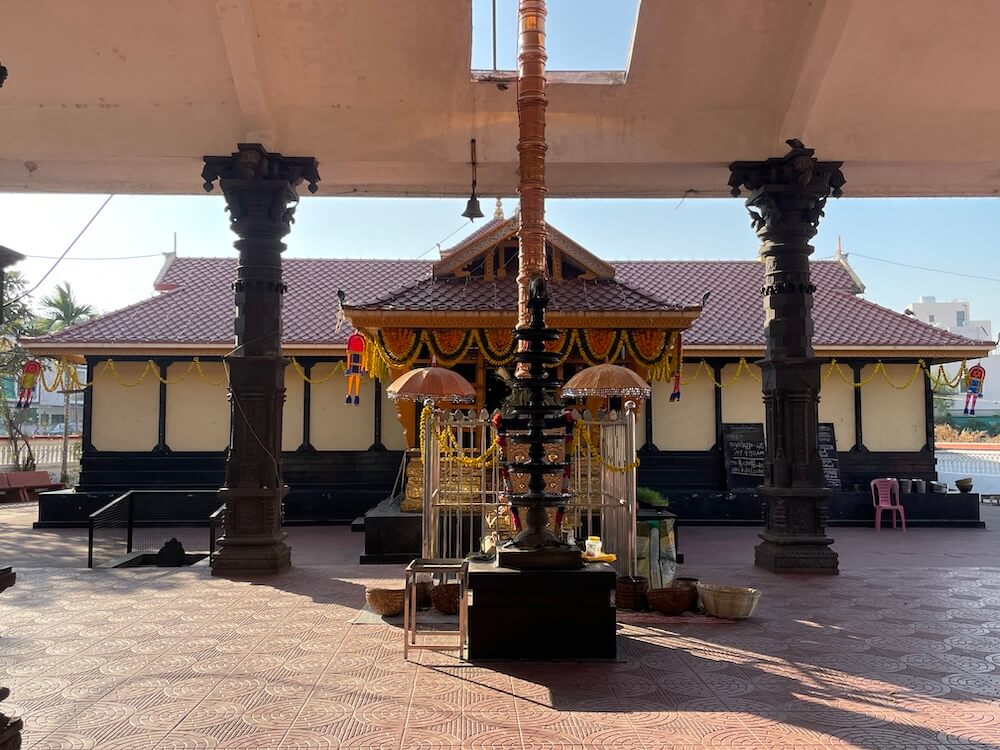
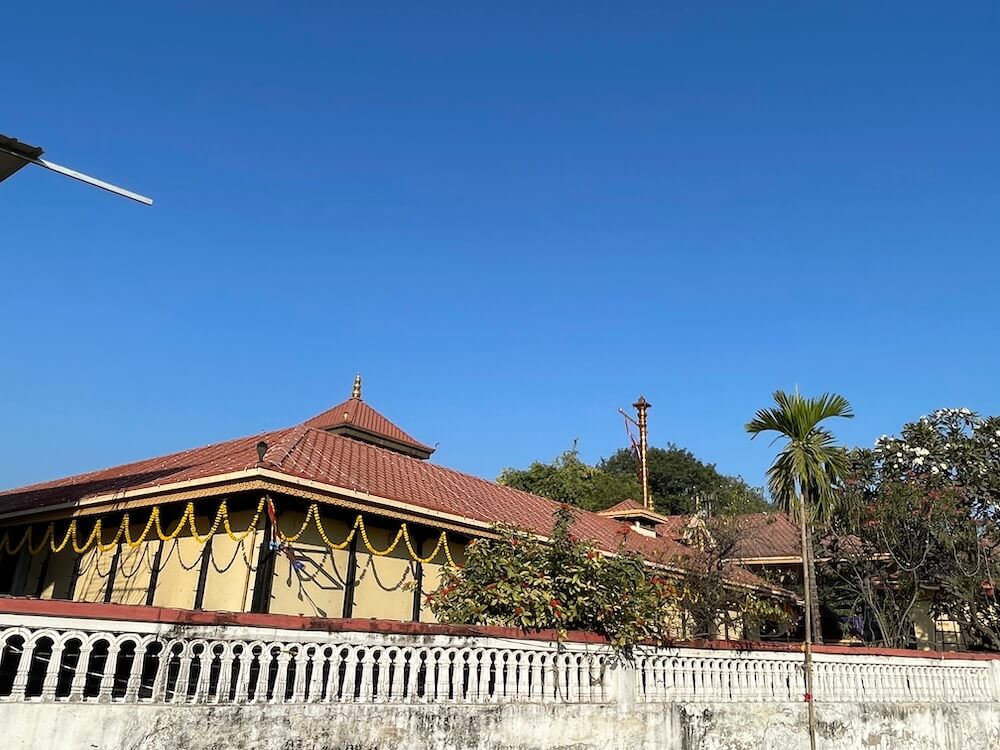
The temple is meticulously crafted in the traditional Kerala architectural style, adhering to the principles of Vastu Shastra and Thachu Shastra (the science of carpentry).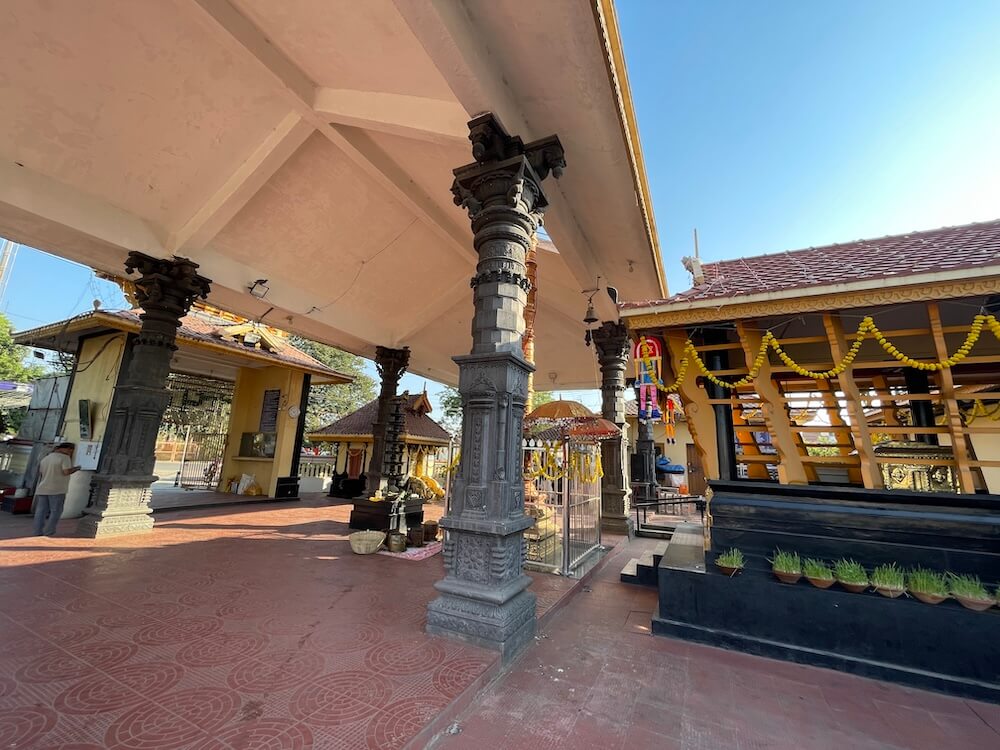 The precinct is enclosed by a perimeter wall known in Kerala architecture as Puram Matil (boundary). It features a Gopuram (ornate gateway). As Kerala is a region of heavy rainfall, temple roofs are traditionally sloped on all sides. The gopuram roof here too follows the same descending, double-tiered design. Entering through it, one first beholds an elevated platform bearing a tall oil lamp. Beyond it rises the towering Kodimaram (flag mast), sheathed in gleaming golden plates, flanked by two large pillars and directly ahead stands the sanctified temple of Ayyappa Swami.
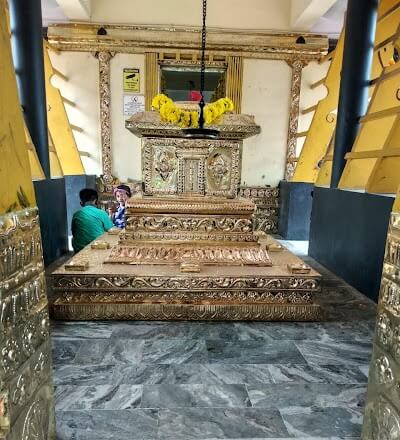
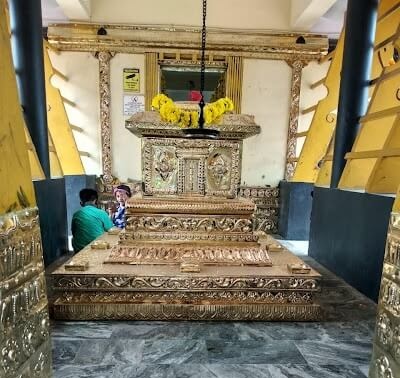
The temple layout comprises the Sopanam (steps), the Mukhamandapam (front hall) and the Srikovil (sanctum). Steps ascend from either side to the Mukhamandapam. In the Srikovil, upon a lofty Vajra Peetham (sacred pedestal), 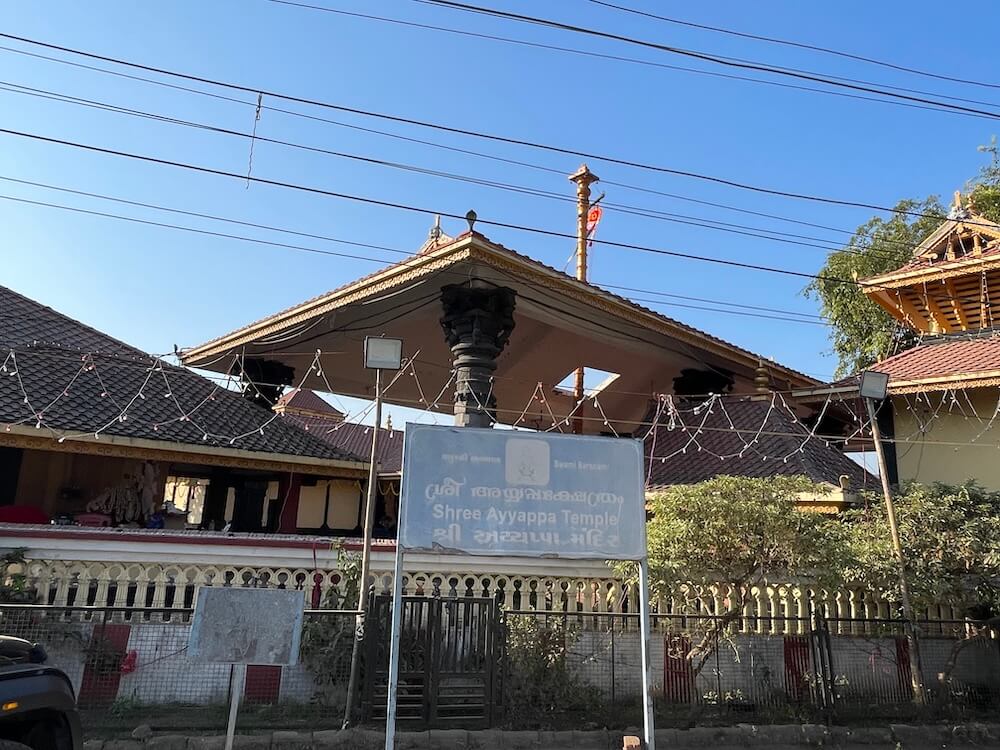 resides the idol of Ayyappa Swami. He is depicted seated with knees folded, one elbow resting upon the left knee and the other hand raised in a gesture of blessing. A resplendent crown adorns his head and a semi-circular halo forms the background of the shrine, while numerous lamps burn luminously around the idol.
Within the temple precinct, along with Lord Ayyappa as the principal deity, are sanctums dedicated to Ganapati, Devi Bhadra (Durga Mata), Shri Krishna, Subramanyam (Murugan/Kartikeya) and Vettakkoru Makan (a form of Shiva). These shrines too follow the traditional Kerala style of Sopanam, Mukhamandapam and Srikovil. In the north-eastern part of the enclosure lies the sacred seat of the Navagrahas. On the first Saturday of every Malayalam month, Shani Dosh rites are performed here. The worship of the serpent deity—an ancient and revered tradition in South India—is also observed at the Ayyappa Temple. Near the Navagraha installations stands the shrine of Nagadevata, enshrining the idols of Nagaraj and Nagayakshi, revered as a divine couple, worshipped for auspiciousness, prosperity and protection.
Devotees may seek darshan (sacred viewing) daily between 5:30 am to 10:30 am and 5:30 pm to 9:00 pm. Daily rituals include Ganapathy homam, Bhagavathi seva, Nityapooja, Abhishekam and Archana. In the Malayalam calendar, the fourth month, Vrischikam (mid-November to mid-December), is of great significance. The Mandala Puja Mahotsav is celebrated annually from the first day of Vrischikam until the Ekadashi of the following month, Dhanu. A highly popular event is the Lakshaarchana, held on the first Sunday of Vrischikam, which sees the enthusiastic participation of hundreds of devotees from the Ankleshwar region.