
आयलूर अखिलेश्वर शिव मंदिर
चित्तूर, नेनमारा, जि. पलक्कड.
Ayalur Akhileshwara Shiva Temple
Chittoor, Nenmara, Dist. Palakkad.
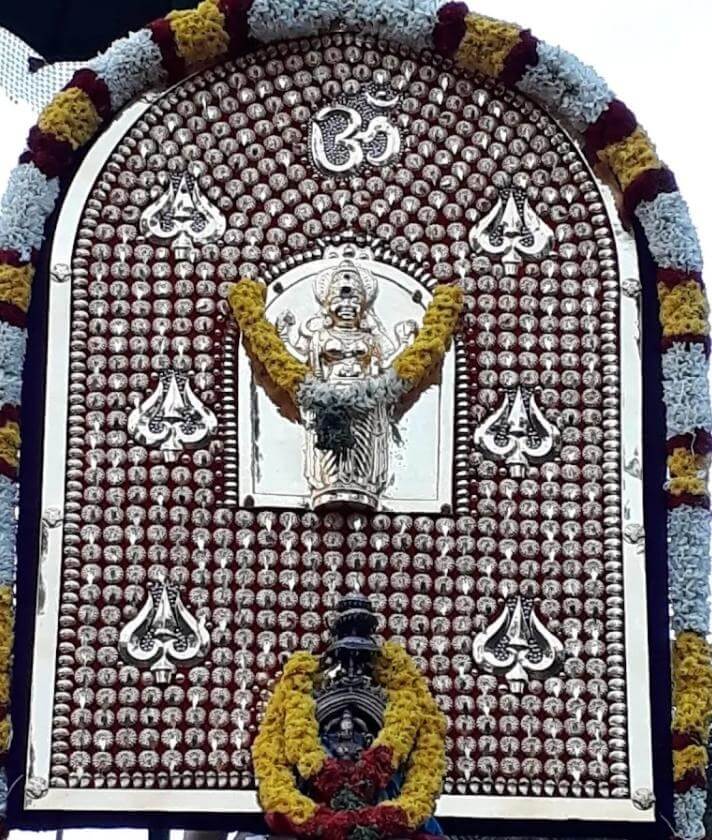 Ayalur Akhileshwara Shiva Temple, popularly known as Aylur Mahadeva Temple, is a very ancient Shiva temple located in Aylur village near Nenmara in Chittur taluk of Palakkad district. The temple stands on the banks of the Aylur River, a tributary of the Bharathapuzha. It is believed to have been built during the reign of the Pallava kings, around 1,000 years ago. Lord Shiva, along with Goddess Parvati, is the main deity. Shiva here is also known as ‘Akhileswaran’, meaning ‘God of all’.
According to historians, the temple was built during the reign of the Pallava kings (Pallava Dynasty). The wood and stone carvings in the Sreekovil and entrance structure show similarities to the architectural styles of the Pallava and Chola periods. Ancient murals, believed to be several centuries old, can also be seen on the eastern walls of the temple. These paintings are believed to have been created by a devotee of the Thripallavoor Shiva Temple and highlight the historical importance of the temple. During the British period and before that, the temple was under the direct ownership of the Cochin Royal Family. The king appointed local chieftains such as Kodakara Nair and Kulangatt Nair to oversee the temple affairs. 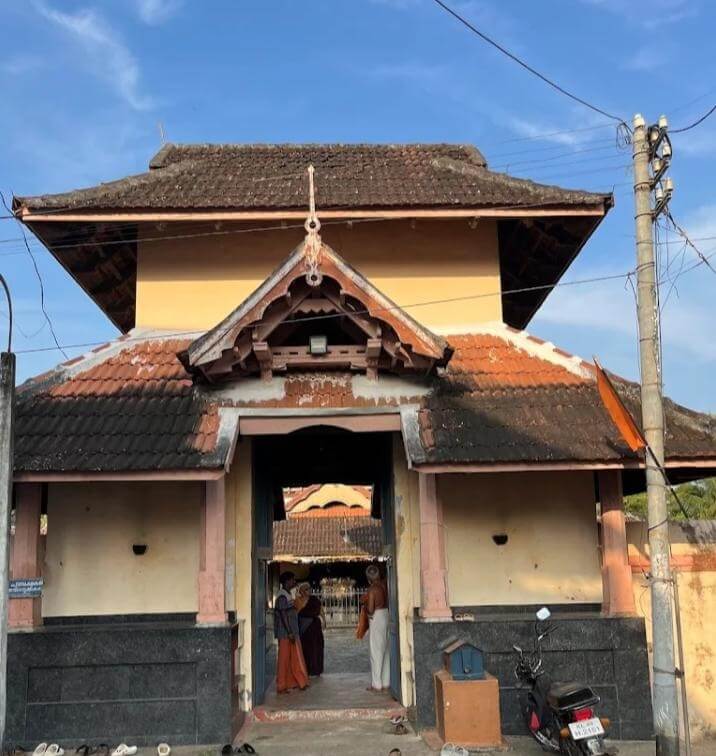 Before 1947, the area was part of the Cochin State. It later became part of Palakkad district during the reorganisation of the states. Today, the temple comes under the Oppanallur (Nenmara) Group of the Cochin Devaswom Board, under the Government of Kerala. A Devaswom Officer and staff appointed by the Devaswom Board manage the daily affairs and regular worship at the temple. A Temple Advisory Committee formed by local devotees also functions here. With the approval of the Devaswom Board, the committee organises festivals, including the Aylur Rathotsavam, as well as renovation and other development activities.
According to legend, Khara, an asura who lived during the Ramayana period, performed intense penance and received three divine Shiva Lingas from Lord Shiva. While returning to Lanka, he found the Lingas too heavy to carry and is believed to have placed them on the ground in a straight line at equal distances from each other. It is believed that he placed one with his right hand at Thripallavoor, another with his left hand at Thrippaloor, and the third after holding it in his mouth at Aylur. 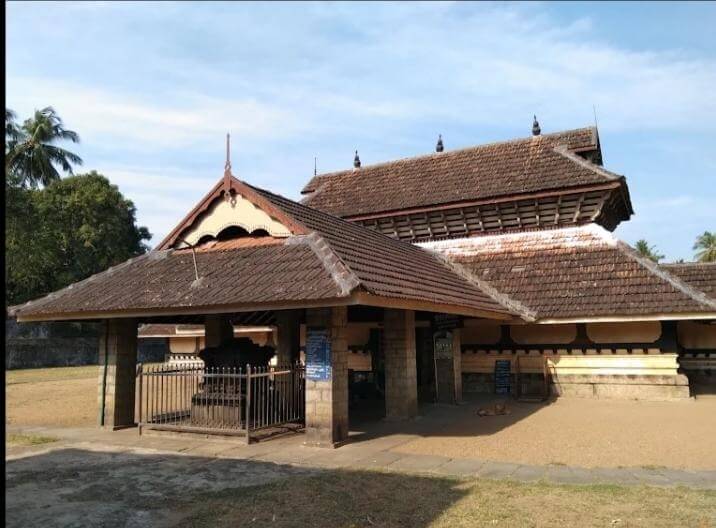 As the Shiva Linga was placed after being held in his mouth, the place was first known as ‘Anakkalloor’ and later became known as ‘Aylur’. Devotees consider it highly auspicious to visit all three temples on the same day.
According to legend, this area was once a dense forest where a sage performed penance among groups of ‘Akhil’ trees. It is believed that Lord Shiva, pleased with the sage’s penance, appeared before him. As Lord Shiva, the Lord of the universe, appeared in the Akhil forest, he came to be known as ‘Akhileswaran’, meaning ‘the Lord who appeared in the Akhil forest’ or ‘God of all’. The forest area later came to be known as ‘Akhileswarapuram’ and over time, as ‘Aylur’. There is also a legend associated with the famous Rathotsavam held at the temple.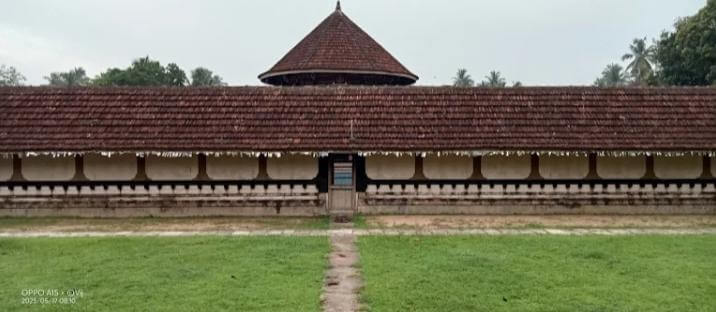 Centuries ago, the Paradesi Brahmins (Tamil Brahmins) who migrated to Aylur from Tamil Nadu wished to conduct a chariot festival in Aylur similar to the grand Rathotsavams held in places such as Kumbakonam and Madurai in their homeland. It is believed that Lord Shiva, pleased with their devotion, gave them permission to conduct the festival. Thus, the large wooden chariot, a part of Tamil culture, became part of this temple, which follows the traditional Kerala architectural style.
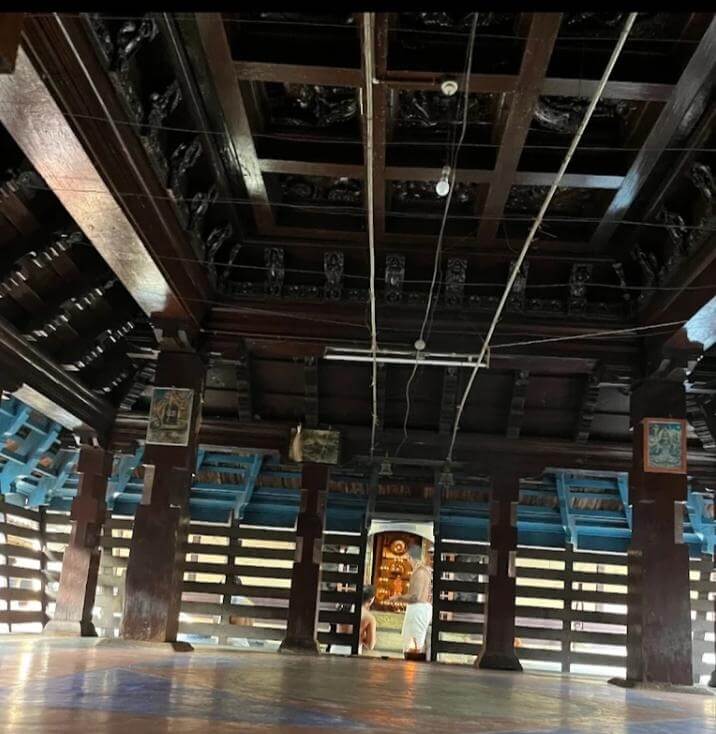
Unlike many large temples, this temple does not have tall gopurams. From the road, the entrance appears as a simple traditional Kerala-style Padippura with a tiled roof. After passing through the Padippura, a large Aanappandal can be seen. It is used to keep elephants and conduct various ceremonies during festivals. A large tiled Chuttambalam, resembling an enclosed wall, surrounds the temple. Small wooden structures for placing lamps can also be seen along its walls. After passing through the Padippura and the large Balikkallu, the inner area of the Chuttambalam can be entered. Directly in front of the Sreekovil is a square-shaped Namaskara Mandapam, with fine woodwork and beautifully carved pillars. Nandi is usually placed directly in front of the Sreekovil in Shiva temples, but here the Nandi idol is placed on the southern side of the Sreekovil, 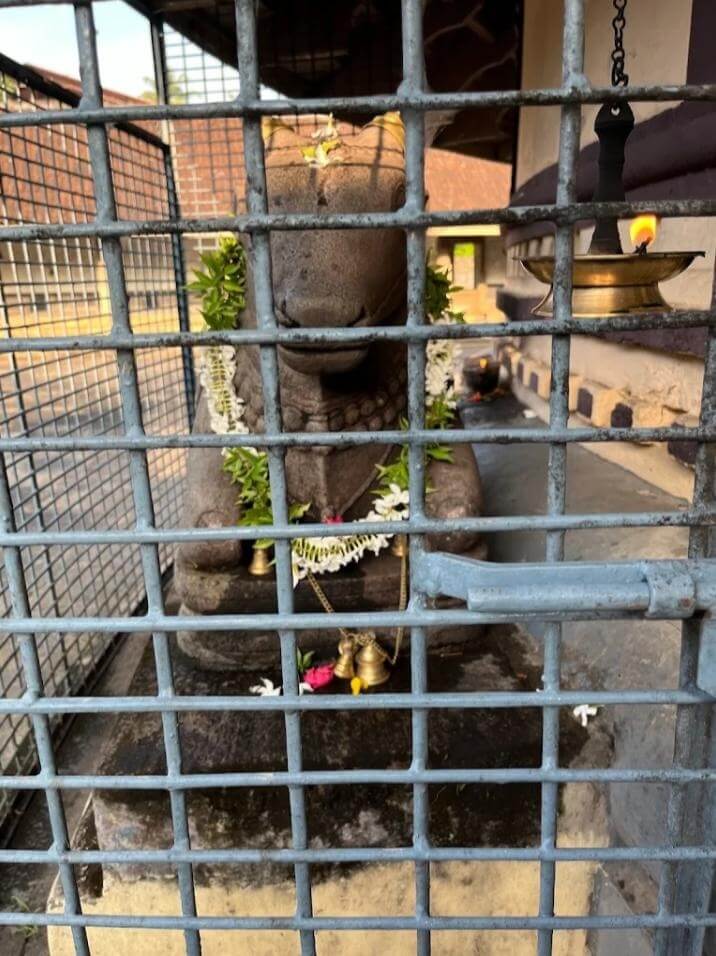 which is one of the temple’s notable features. Ancient Kerala-style murals, believed to be several centuries old, can also be seen on the eastern walls of the Chuttambalam.
The Sreekovil here is circular in shape, a feature found in only a few temples in Kerala. Such structures are considered notable examples of medieval Kerala architecture. The Sreekovil has a two-tiered roof, with the lower tier covered with tiles and the upper tier covered with copper plates. Above it is a large gold-plated finial. The base of the Sreekovil is built entirely of granite, while the walls above it feature beautiful wooden carvings. Two Dwarapalaka sculptures carved from granite stand on either side of the main entrance. Their style shows the influence of Pallava-Chola period architecture. Ancient Kapota carvings, resembling rows of pigeons, can also be seen along the lower part of the roof. Lord Shiva, along with Goddess Parvati, is the main deity and it is believed that the Lord is worshipped here in the form of Sadashiva. At the centre of the sanctum is a Shiva Linga placed on a large granite pedestal. It is believed to be a Manusha Linga, meaning a Linga made by human hands, rather than a Swayambhu Linga. A silver covering is placed over the Shiva Linga, with a vessel above it from which water continuously drips onto the Linga. This Jaladhara is performed as a symbolic way of cooling the Lord and calming his heat and anger. 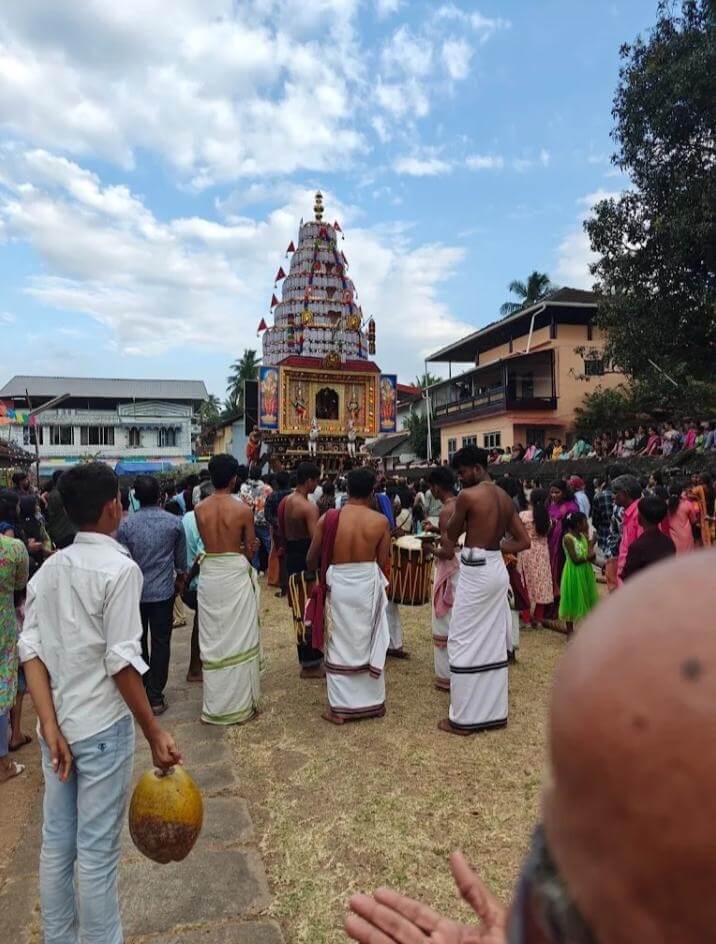 Although there is no separate idol of Goddess Parvati, her presence is symbolically believed to be behind the Shiva Linga and worship is performed based on the concept of Shiva and Shakti.
The idol of Lord Ganesha is located at the south-western corner of the main Shiva Sreekovil, facing east. As commonly seen in Shiva temples, Ganesha is worshipped here in the form of Kanniga Ganapathy. The shrine of Lord Subramanya is located at the north-western corner inside the Nalambalam. Nandi is usually placed directly in front of the Sreekovil, but here Nandikesan is placed on a separate pedestal on the southern side of the Sreekovil. Outside the Nalambalam, within the temple’s large enclosure, a separate shrine for Lord Ayyappa is located on the south-western side. A Nagathara dedicated to Naga Raja and Naga Yakshi can be seen at the north-western corner. The Sreekovil of Lord Krishna in the form of Parthasarathy is located to the north, next to the main Shiva temple. The Parthasarathy shrine has a separate Namaskara Mandapam and Chuttambalam.
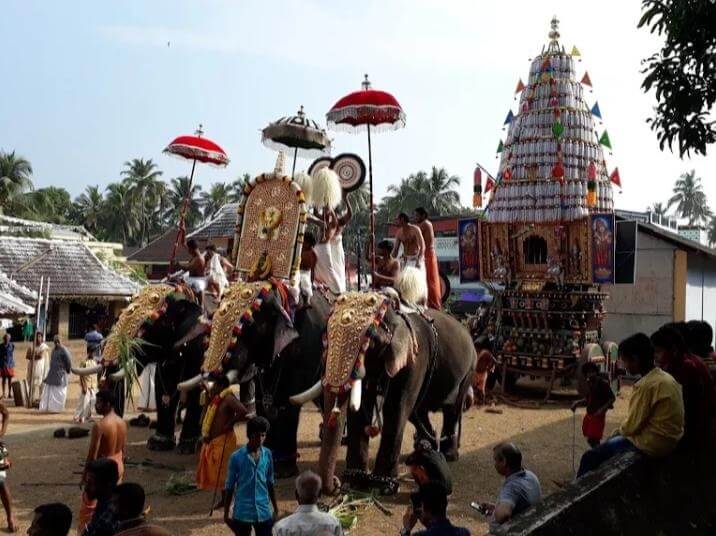
Aylur Rathotsavam is the most important festival of the temple. Usually held every year in the month of Vrischikam (November–December), the main attraction of the festival is the large wooden chariot, reflecting the Tamil cultural tradition, at this Kerala-style temple. 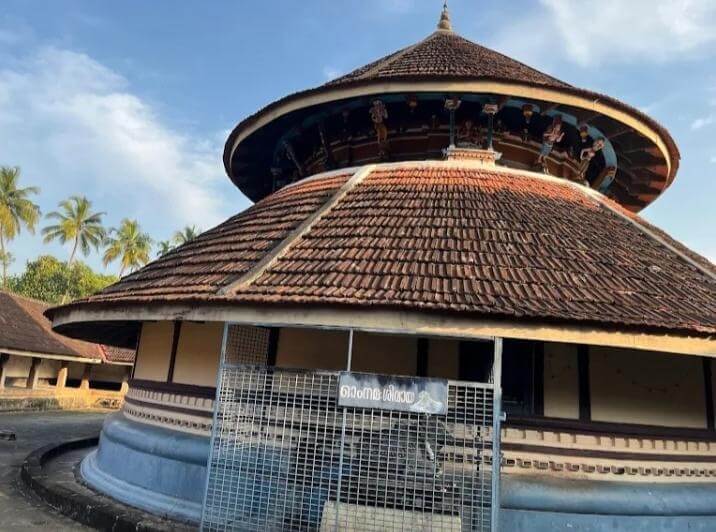 On the main day of the festival, the idols of Akhileswaran and Parthasarathy are taken in procession on large chariots, which devotees enthusiastically pull with ropes through the Agraharam streets of Aylur. Maha Shivaratri, celebrated in the month of Kumbham (February–March), is another important occasion. The temple remains open throughout the night, with Yama Poojas and special Abhishekam being performed. Devotees stay awake throughout the night, chanting the name of Shiva and spending the night at the temple. During the 41-day Mandala season, from the 1st day of Vrischikam to the 11th day of Dhanu (November–December), special poojas are performed for Lord Ayyappa, one of the deities of the temple. The Ayyappan Vilakku festival, organised by local devotees during the Mandala season, is another important celebration.
 During the Navaratri festival in the month of Kanni (September–October), special poojas are performed for nine days at both the Shiva temple and the Parthasarathy temple. On Durgashtami, books and traditional items are placed for worship, while Vidyarambham is held on Vijayadashami. Special poojas and processions for Lord Shiva are held on Pradosham days every month. As the temple also has a Parthasarathy shrine, Ashtami Rohini in the month of Chingam is also celebrated here.
The main offerings to Lord Shiva include Jaladhara, Ksheeradhara, Rudrabhishekam, Pinvilakku, Koovala Mala and Uma Maheshwara Pooja. Devotees perform Jaladhara and Ksheeradhara to seek mental peace and relief from obstacles. Rudrabhishekam, a special Abhishekam performed while chanting Rudra mantras, is believed to be beneficial for relief from illnesses and for good health and longevity. Pinvilakku, performed with the presence of Goddess Parvati symbolically placed behind the Shiva Linga,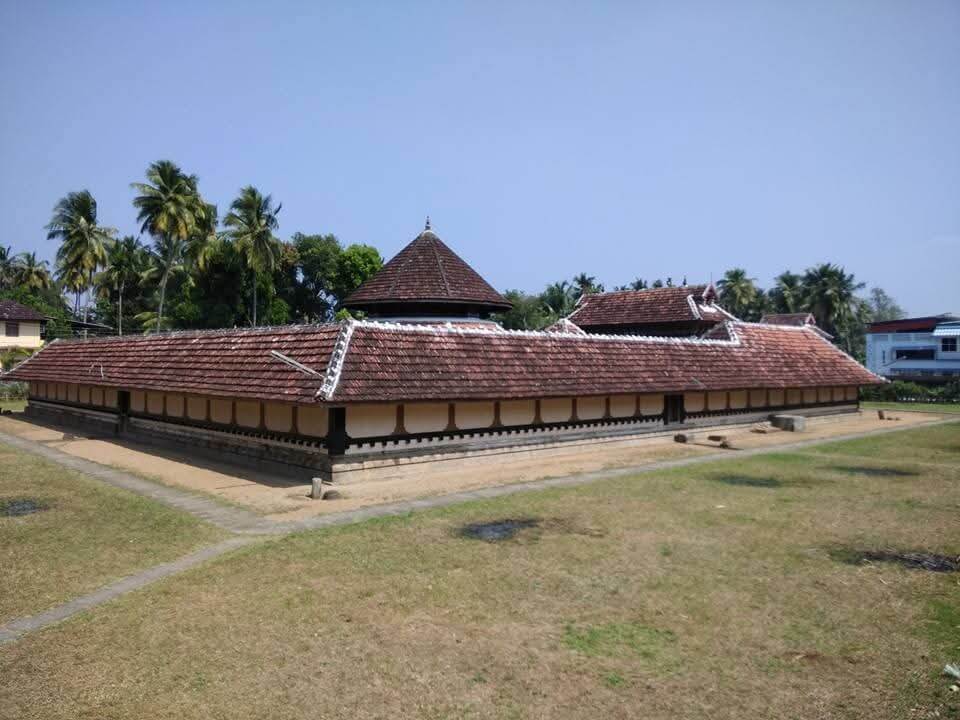 is considered an important offering for marital harmony and overcoming marriage-related obstacles. Offering a garland made of Koovalam leaves, which are dear to Lord Shiva and performing Uma Maheshwara Pooja for marital well-being are also important offerings. The main offering to Parthasarathy is Neyyappam, which devotees mainly offer for the fulfilment of their wishes. Palpayasam is also commonly offered to Lord Krishna. For Lord Ganesha, devotees offer garlands made of Karuka to remove obstacles, while Appam Moodal is performed on special days. Neerajanam using sesame wicks is an important offering to Lord Ayyappa on Saturdays, performed to seek relief from the effects of Shani Dosha.
The temple opens at 05:30 AM with Nirmalya Darshan. Usha Pooja and the morning offering are performed at 06:00 AM. At 07:30 AM, Jaladhara and other special Abhishekams are performed for Lord Shiva. Ucha Pooja and the offering are performed at 08:30 AM, after which the temple closes at 09:00 AM, marking the end of the morning session. The temple reopens at 05:00 PM for the evening darshan. Deeparadhana is performed at 06:30 PM. This is followed by Athazha Pooja and the evening offering at 07:15 PM and the temple closes at 07:30 PM after the Thrippuka ceremony. On special days such as Maha Shivaratri, Aylur Rathotsavam and Pradosham, the pooja timings may change and the temple usually remains open for longer than usual.
Key highlight :-
- Located 18 km from Alathur, 18 km from Kollengode and 30 km from Palakkad town.
- The nearest railway station is Kollengode, about 18 km away.
- Local bus services are available to the temple.
- Private vehicles can be parked near the temple.
- Accommodation and food facilities are available in the nearby towns.
अयालूर अखिलेश्वर शिव मंदिर
चित्तूर, नेनमारा, जिला। पलक्कड़.
मंदिरे
Temples
मंदिर
મંદિરો
கோவில்கள்
దేవాలయాలు
ക്ഷേത്രങ്ങൾ
ದೇವಾಲಯಗಳು
মন্দিরসমূহ
ਮੰਦਿਰ
-
श्री त्रिपालूर महा शिव मंदिर कट्टुसेरी, पुलोड, जि. पलक्कड.
अधिक माहितीSree Thrippalur Maha Shiva Temple Kattusseri, Pullode, Dist. Palakkad.
View Detailsश्री त्रिप्पलुर महा शिव मंदिर कट्टूसेरी, पुलोडे, जिला। पलक्कड़.
विवरण देखेंSree Thrippalur Maha Shiva Temple Kattusseri, Pullode, Dist. Palakkad.
વિગત જુઓSree Thrippalur Maha Shiva Temple Kattusseri, Pullode, Dist. Palakkad.
விவரங்களைக் காண்கSree Thrippalur Maha Shiva Temple Kattusseri, Pullode, Dist. Palakkad.
వివరాలను చూడండిSree Thrippalur Maha Shiva Temple Kattusseri, Pullode, Dist. Palakkad.
വിശദാംശങ്ങൾ കാണുകSree Thrippalur Maha Shiva Temple Kattusseri, Pullode, Dist. Palakkad.
ವಿವರಗಳನ್ನು ವೀಕ್ಷಿಸಿSree Thrippalur Maha Shiva Temple Kattusseri, Pullode, Dist. Palakkad.
বিস্তারিত দেখুনSree Thrippalur Maha Shiva Temple Kattusseri, Pullode, Dist. Palakkad.
ਵੇਰਵੇ ਦੇਖੋ -
श्री पनामकुरुसी भगवती मंदिर चेथल्लूर, मन्नारक्कड, जि. पलक्कड.
अधिक माहितीSree Panamkurussi Bhagavathy Temple Chethalloor, Mannarkkad, Dist. Palakkad.
View Detailsश्री पनमकुरुस्सी भगवती मंदिर चेथल्लूर, मन्नारक्कड़, जिला। पलक्कड़.
विवरण देखेंSree Panamkurussi Bhagavathy Temple Chethalloor, Mannarkkad, Dist. Palakkad.
વિગત જુઓSree Panamkurussi Bhagavathy Temple Chethalloor, Mannarkkad, Dist. Palakkad.
விவரங்களைக் காண்கSree Panamkurussi Bhagavathy Temple Chethalloor, Mannarkkad, Dist. Palakkad.
వివరాలను చూడండిSree Panamkurussi Bhagavathy Temple Chethalloor, Mannarkkad, Dist. Palakkad.
വിശദാംശങ്ങൾ കാണുകSree Panamkurussi Bhagavathy Temple Chethalloor, Mannarkkad, Dist. Palakkad.
ವಿವರಗಳನ್ನು ವೀಕ್ಷಿಸಿSree Panamkurussi Bhagavathy Temple Chethalloor, Mannarkkad, Dist. Palakkad.
বিস্তারিত দেখুনSree Panamkurussi Bhagavathy Temple Chethalloor, Mannarkkad, Dist. Palakkad.
ਵੇਰਵੇ ਦੇਖੋ -
तिरुवाझियाड श्री नरसिंहमूर्ती मंदिर तिरुवाझियाड, नेनमारा, जि. पलक्कड.
अधिक माहितीThiruvazhiyad Sree Narasimhamoorthy Temple Thiruvazhiyad, Nenmara, Dist. Palakkad.
View Detailsतिरुवझियाड श्री नरसिम्हामूर्ति मंदिर तिरुवझियाड, नेनमारा, जिला। पलक्कड़.
विवरण देखेंThiruvazhiyad Sree Narasimhamoorthy Temple Thiruvazhiyad, Nenmara, Dist. Palakkad.
વિગત જુઓThiruvazhiyad Sree Narasimhamoorthy Temple Thiruvazhiyad, Nenmara, Dist. Palakkad.
விவரங்களைக் காண்கThiruvazhiyad Sree Narasimhamoorthy Temple Thiruvazhiyad, Nenmara, Dist. Palakkad.
వివరాలను చూడండిThiruvazhiyad Sree Narasimhamoorthy Temple Thiruvazhiyad, Nenmara, Dist. Palakkad.
വിശദാംശങ്ങൾ കാണുകThiruvazhiyad Sree Narasimhamoorthy Temple Thiruvazhiyad, Nenmara, Dist. Palakkad.
ವಿವರಗಳನ್ನು ವೀಕ್ಷಿಸಿThiruvazhiyad Sree Narasimhamoorthy Temple Thiruvazhiyad, Nenmara, Dist. Palakkad.
বিস্তারিত দেখুনThiruvazhiyad Sree Narasimhamoorthy Temple Thiruvazhiyad, Nenmara, Dist. Palakkad.
ਵੇਰਵੇ ਦੇਖੋ