आशापुरा माता मंदिर / आशापुरा माता-नी-वाव
बापूनगर, अहमदाबाद, जि. अहमदाबाद
Ashapura Mata Temple / Ashapura Mata-ni-Vav
Bapunagar, Ahmedabad, Dist. Ahmedabad
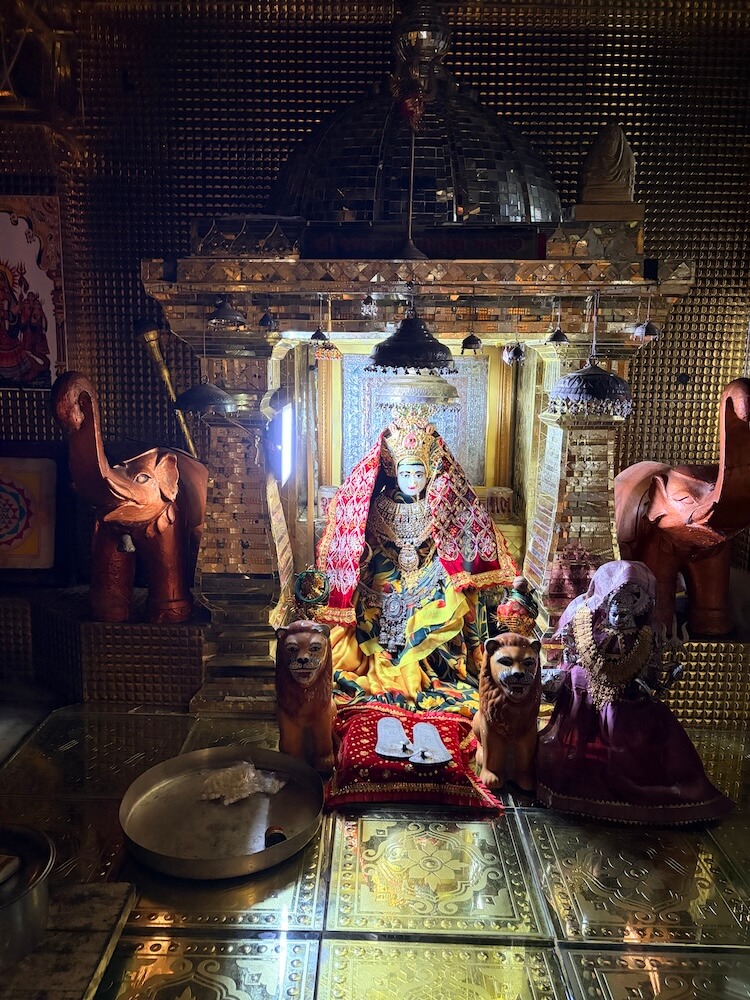
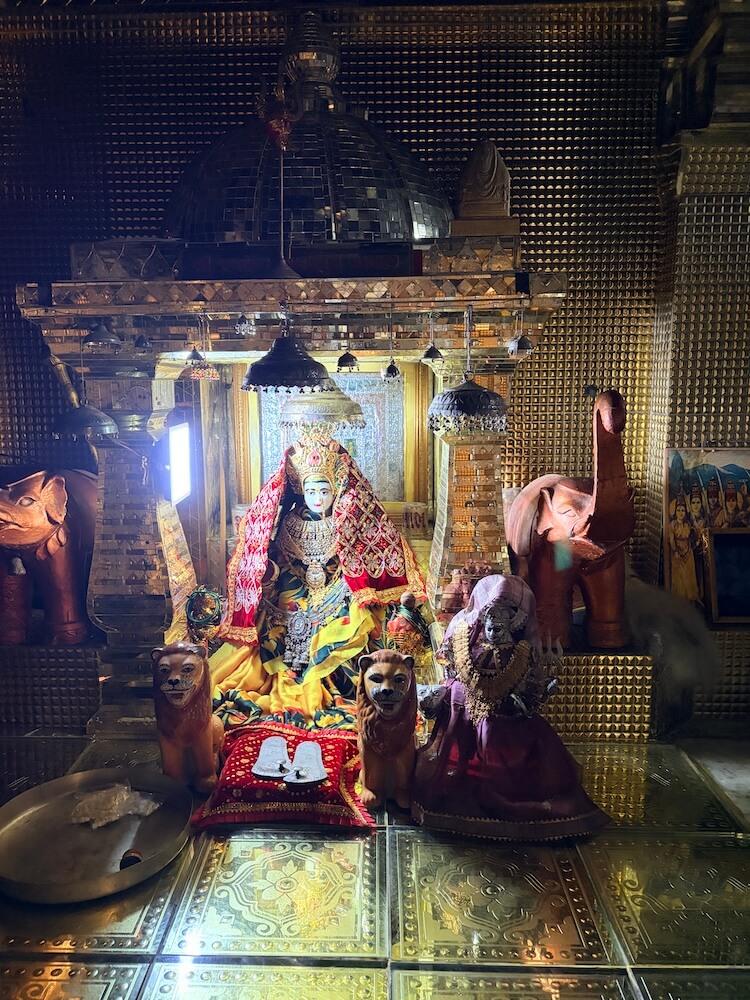 On Anil Starch Road in the Bapunagar area of Ahmedabad stands Ashapura Mata-ni-Vav, a temple incorporated into a historic stepwell. Enshrined here is Ashapura Devi, who is regarded as a manifestation of Shakambhari Devi and worshipped as the family deity of Kshatriyas, Jadeja Rajputs and several other communities across the Kutch and Rajasthan regions. Devotees revere the Goddess as one who fulfils their wishes and the shrine draws worshippers throughout the year, particularly during religious festivals. The temple occupies the first kuta (stepwell pavilion) of Ashapura Mata-ni-Vav, which is recognised among Ahmedabad’s important historic stepwells. Independent heritage documentation dates the stepwell to the 15th to 16th century. Shri Ram Navami and Sharadiya Navratri are the shrine’s principal annual festivals.
The history of Ahmedabad and its surrounding region is linked to the ancient settlement of Ashapalli, or Ashaval, on the eastern bank of the Sabarmati. According to the 1879 ‘Bombay Presidency Gazetteer: Ahmedabad’ and ‘A History of Gujarat’ by Khan Bahadur M. S. Commissariat, the 11th-century Solanki-Chaulukya ruler Karna I defeated the Bhil chief Asha Bhil of Ashaval and founded the city of Karnavati in the basin of the Sabarmati, Vatrak and Khari rivers. Regarding themselves as Suryavanshi, or descendants of the solar dynasty,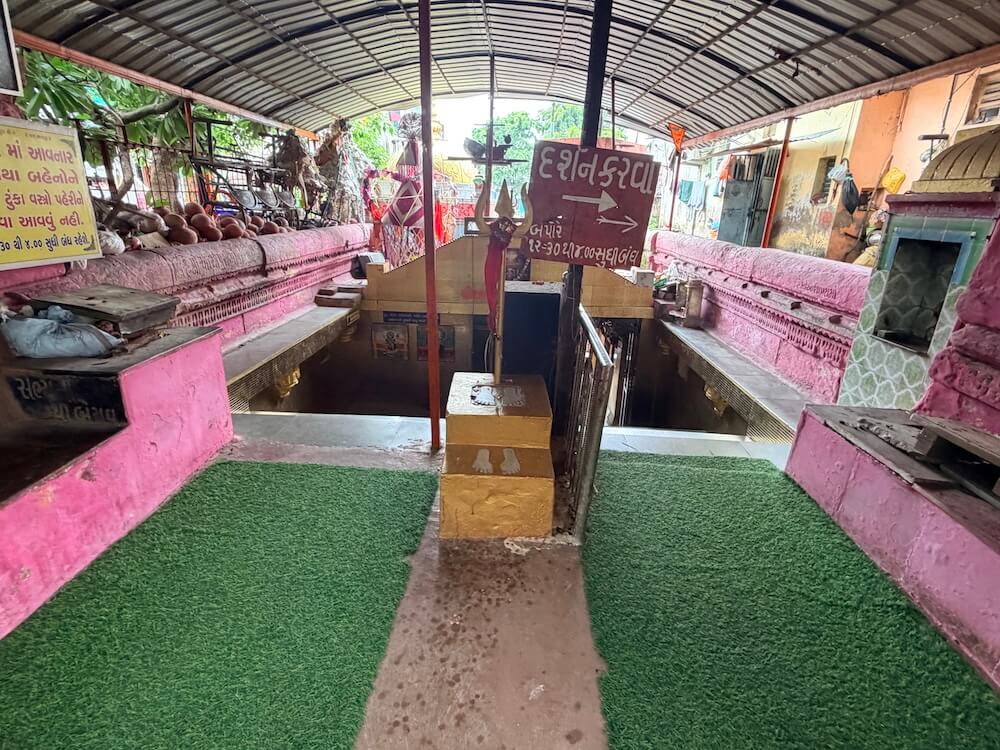 the Solanki kings worshipped Surya as their family deity. In keeping with this historical tradition, the Solanki ruler Bhimadeva I commissioned the Sun Temple at Modhera on the banks of the Pushpavati, south of Patan, in the early 11th century. At Bapunagar, the devkoshtaks (wall niches) of the Ashapura stepwell contain lotus carvings and motifs associated with Surya, leading to a historical association between the site and the Solanki period.
Later, in the 15th century, Sultan Ahmad Shah laid the foundations of Ahmedabad near Karnavati. The gazetteer records that wealthy merchants and patrons supported the construction of stepwells to overcome the region’s dry climate and provide reliable water resources. Ashapura Mata-ni-Vav forms part of Ahmedabad’s wider chain of historic stepwells, which includes Bai Harir-ni-Vav at Asarwa, Mata Bhavani-ni-Vav at Asarwa, Jethabhai-ni-Vav at Isanpur, 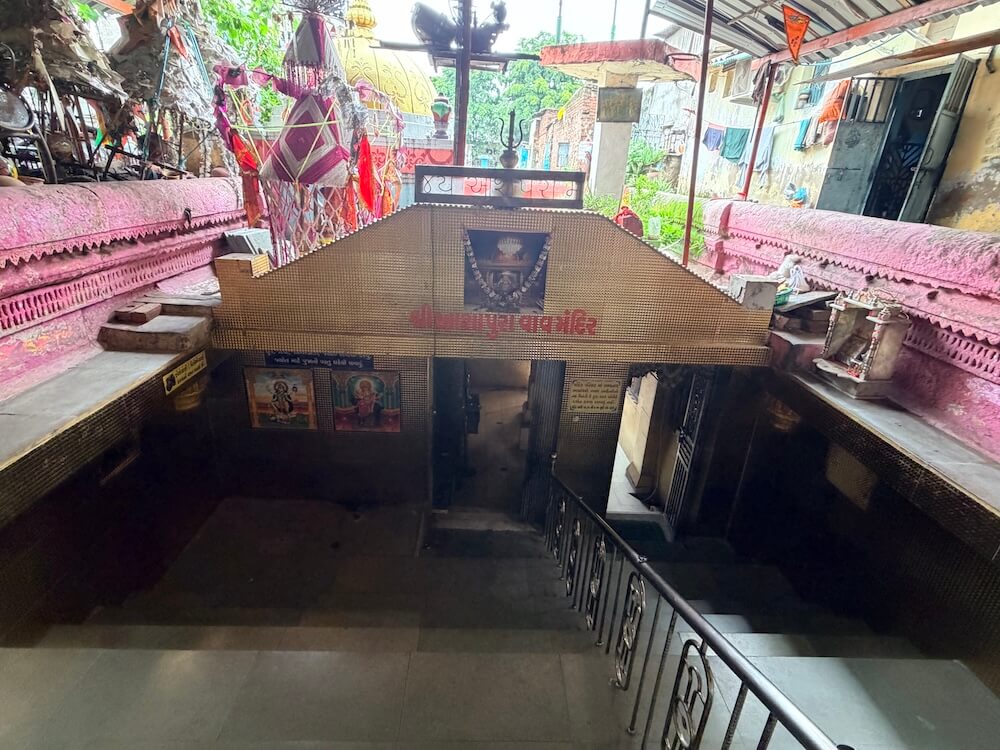 Amritavarshini Vav in the Panchkuva area, Khodiyar Mata-ni-Vav, Pauranik Vav, Ambe Mata-ni-Vav near Malav Talav and Gandharva Vav at Saraspur.
A local tradition attributes the four-storeyed vav (stepwell) to the Suryavanshi rulers. An old inscription in the Nagari script is said to be found inside the stepwell, though its lettering has grown indistinct over time and historians have reportedly not yet been able to decipher it in full. According to a local legend associated with the inscription, if the text were ever read correctly, the lotus-shaped discs on the ceiling would begin to move and reveal a hidden treasure supposedly preserved by the Suryavanshi rulers. Local tradition also holds that the Goddess has been enshrined here since the stepwell was constructed. Architectural documentation of the site, however, 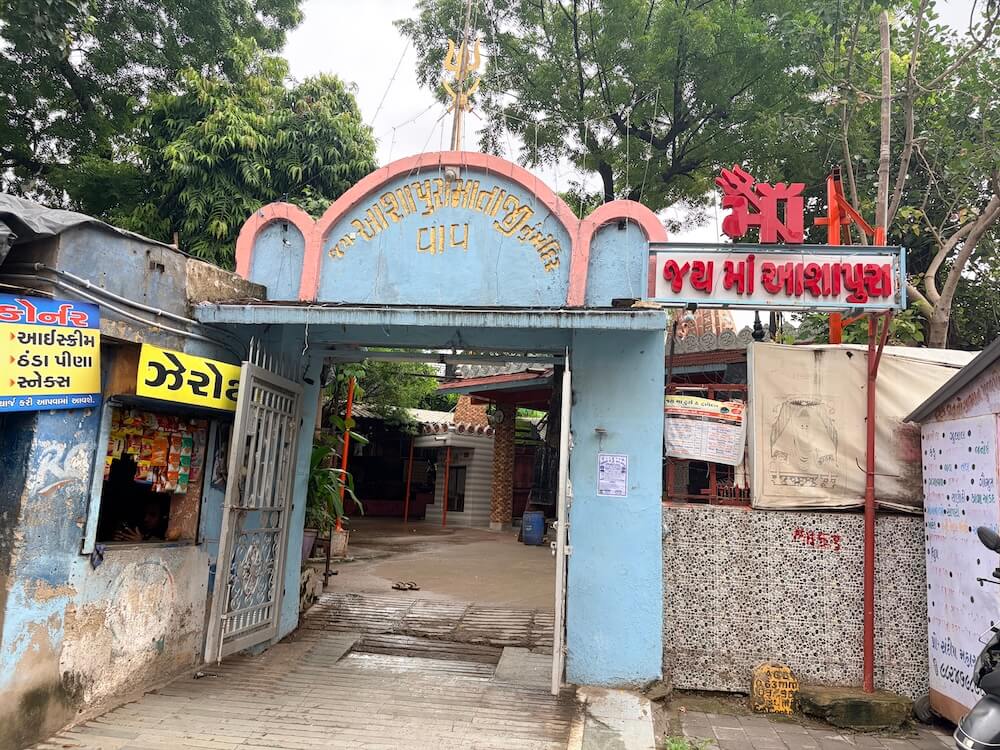 dates its construction to the 15th to 16th century and does not corroborate the treasure legend.
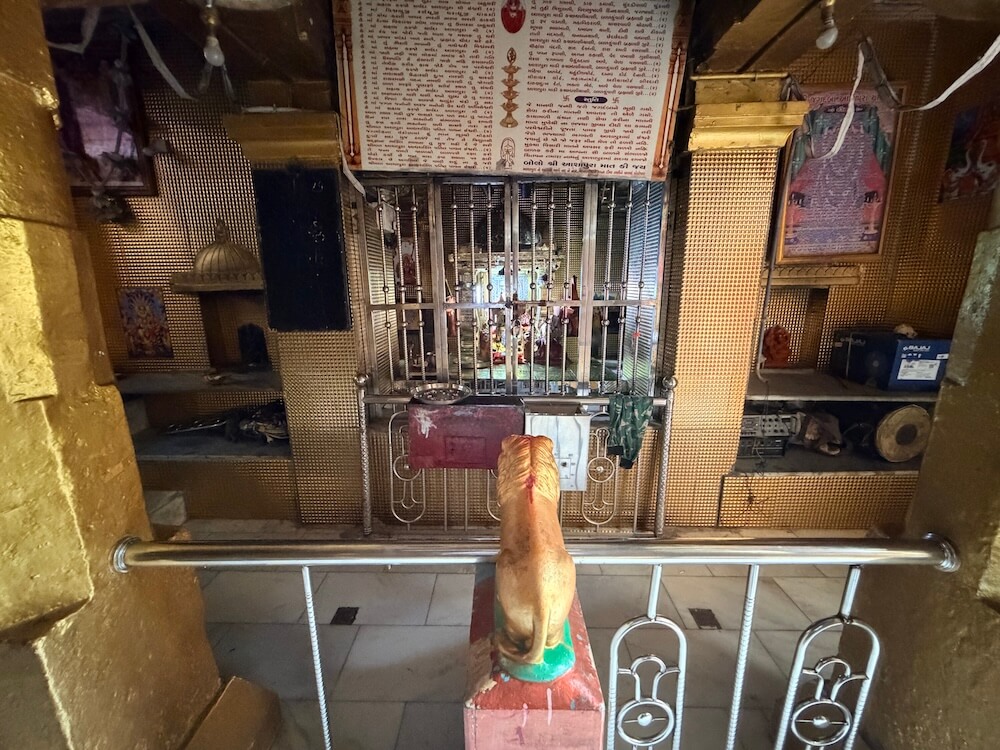
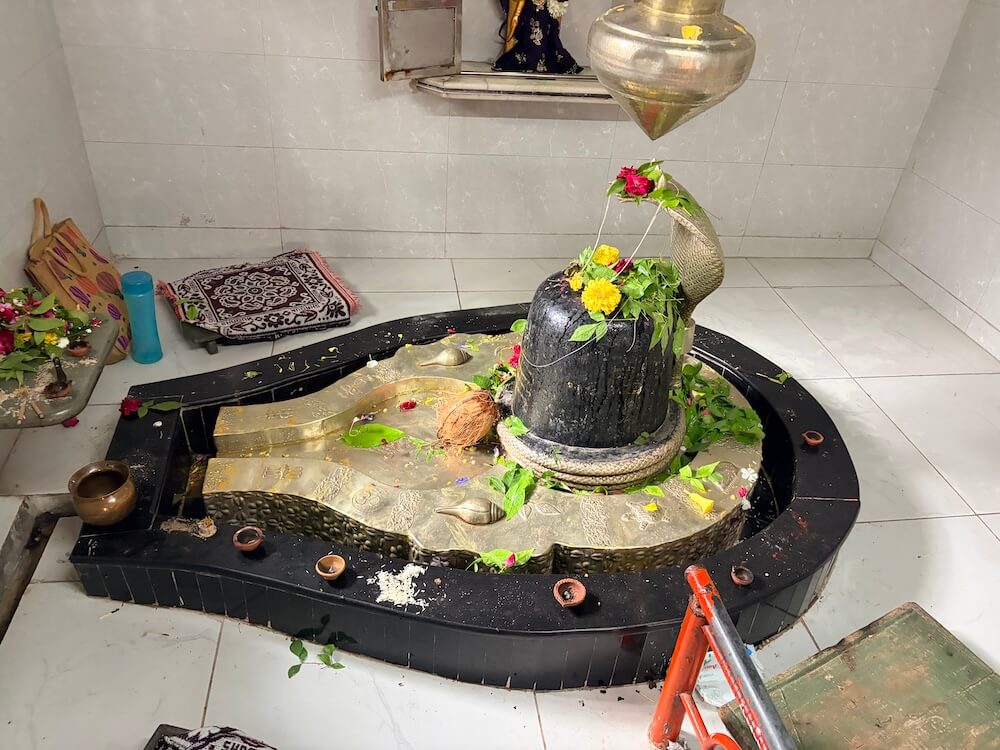
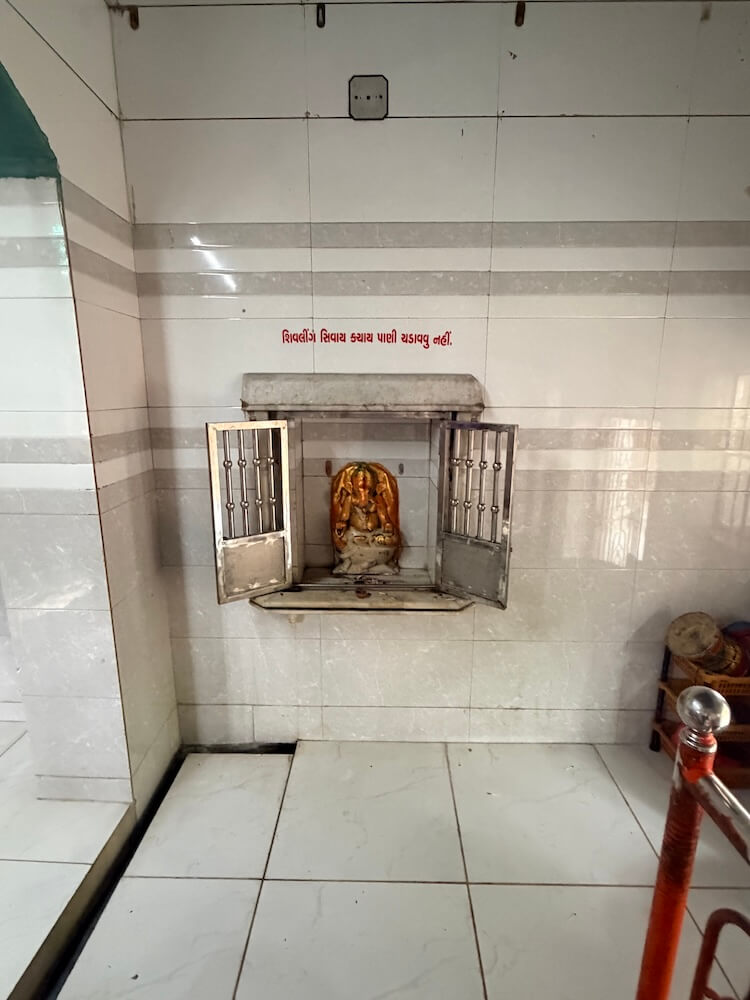
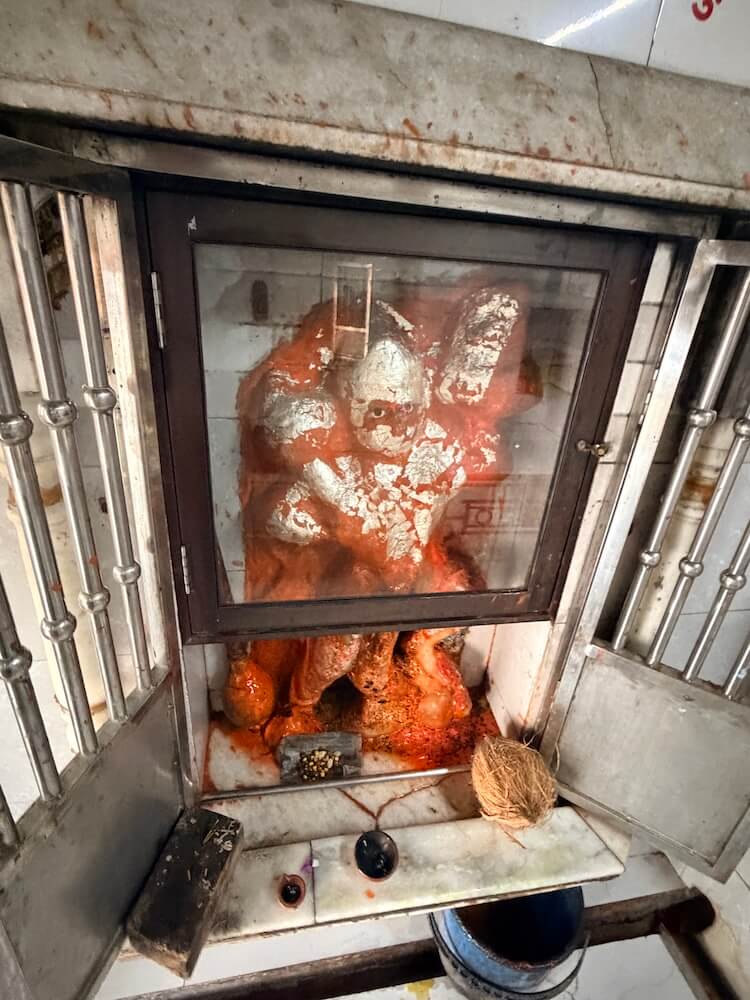
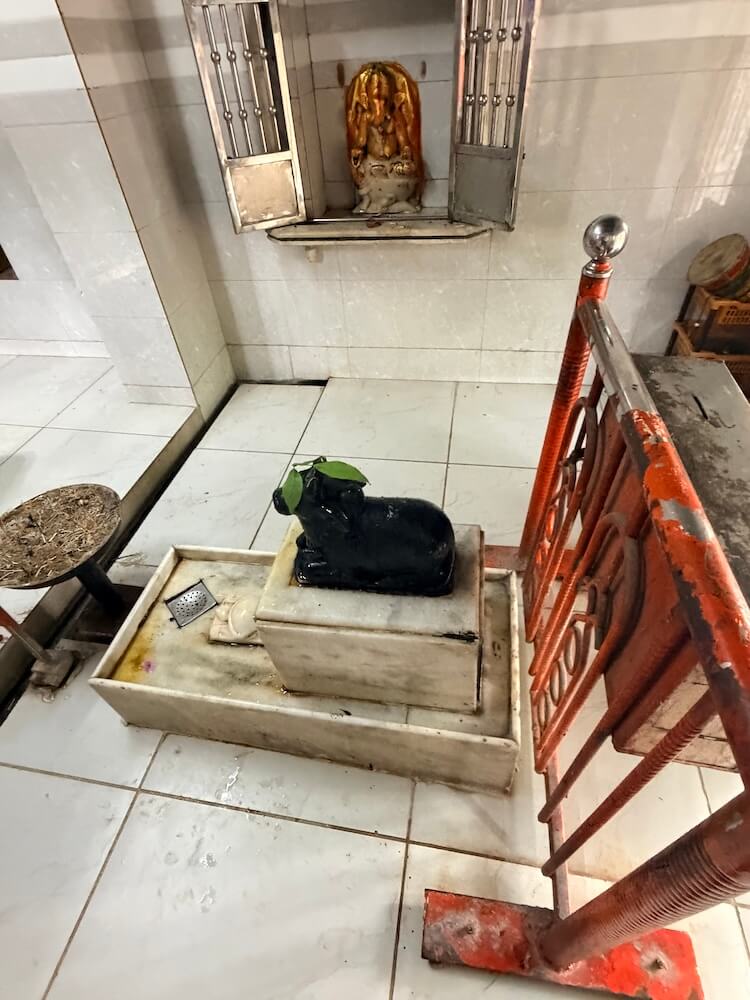
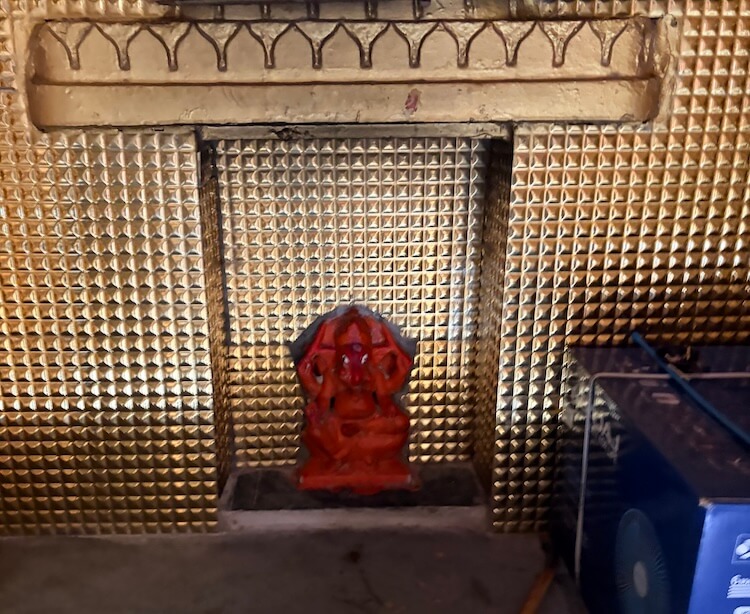
The gateway from Anil Starch Road opens into the temple courtyard, where the first shrine is Ashapurneshwar Mahadev. It houses a large shivalinga set in a black-marble yoni-pitha (shivalinga pedestal base), while the rear devkoshtak of the sanctum contains a stone idol of Parvati alongside idols of Ganesha, Hanuman and Shani. A gaushala is also maintained in the compound. Beyond the Mahadev shrine, a flight of steps descends to a platform bearing a stone sculpture of a lion, the Goddess’s mount. The sanctum of Ashapura Mata occupies the first kuta of the stepwell and features a carving of the Goddess at the centre of the door lintel. Inside the sanctum, a crowned marble idol of Ashapura Devi is enshrined within a stone makhar (decorative frame) flanked by elephant sculptures,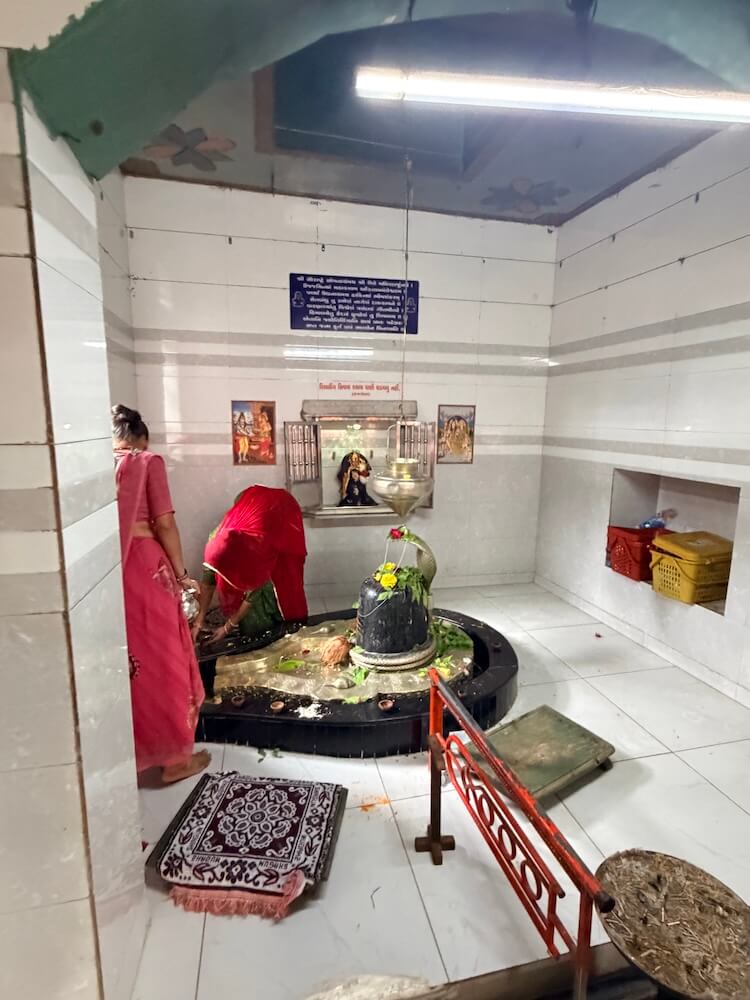 with a smaller metal idol standing to her left.
Built of brick and sandstone, the vav descends through four kutas to a depth of 20 metres (about 65 feet). Toda-style carved pillars stand on either side of the entrance, while the stepwell walls bear geometric designs, floral ornamentation, mithuna (amorous couple) sculptures and celestial motifs. At the lower level are a principal circular well shaft and a secondary well surrounded by a carved stone seat around its mouth. A spiral staircase provides access upwards from the well and stone domes have been constructed over portions of the steps at ground level to protect them from rainwater.
Ashapura Mata Temple remains open for darshan every day from 6 am to 1.30 pm and from 2 pm to 8.30 pm. Bhog is offered to the Goddess at 7 am, followed by the morning aarti at 8 am and the evening aarti at 8 pm. On Shri Ram Navami in the month of Chaitra, special worship is conducted at the temple, with a Navachandi yajna (Vedic Chandi fire ritual) held in the morning and a mahabhandara (community feast) in the evening. During Sharadiya Navratri, nine days of religious rituals and devotional singing take place, with garba (traditional folk dance) organised at night. Rows of lamps illuminate the entire stepwell and temple precinct during Navratri and Dev Diwali, when local devotees, heritage researchers and tourists visit the site in considerable numbers.
Useful Information :
- Located 2.9 km from Kalupur (Ahmedabad Junction) Railway Station
- BRTS and AMTS bus services are available from various parts of Ahmedabad
- Private vehicles can reach the temple
- Several accommodation and dining options are available in Bapunagar and the Kalupur area