अरुल्मिगु श्री आगतेश्वर मंदिर
आंबेडकर नगर, विल्लीवक्कम, जि. चेन्नई.
Arulmigu Sri Agatheeswarar Temple
Ambedkar Nagar, Villivakkam, Dist. Chennai.
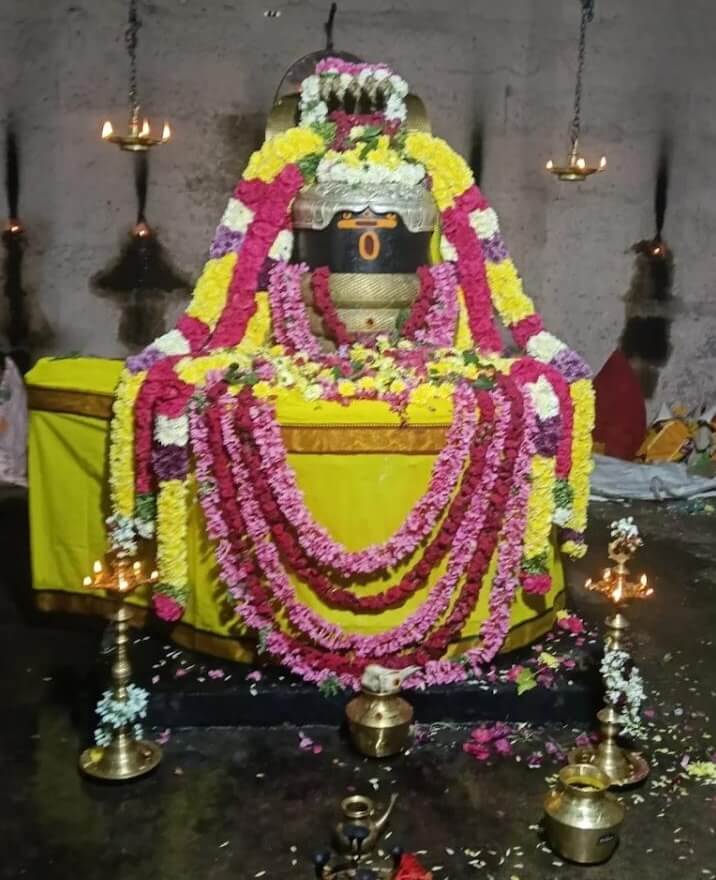 Arulmigu Sri Agatheeswarar Temple is an ancient Shiva temple located in Villivakkam, Chennai. Believed to have been consecrated and worshipped by Sage Agasthya, the temple is known for its special Tuesday poojas and worship performed for relief from Sevvai Dosham (Mars-related dosha). It is believed that temples named Agatheeswarar are associated with places where Sage Agasthya worshipped Lord Shiva. Several temples with the name Agatheeswarar are found in different parts of Chennai, mainly in Villivakkam, Nungambakkam, Kolapakkam and Pozhichalur, among which the temple at Villivakkam is considered one of the most prominent.
Based on the temple’s structure and architectural style, it is believed to have been built during the Chola period. Inscriptions found on the inner walls and the Jagathy, the base of the temple, suggest that it may have been built in the 12th or 13th century. Ancient Tamil inscriptions from the periods of Kulothunga Chola and the Pandya king Veera Pandya have also been found here. Some of these inscriptions are partly damaged due to their age. It is believed that the temple was originally built with bricks and was later rebuilt in stone during the Chola period. 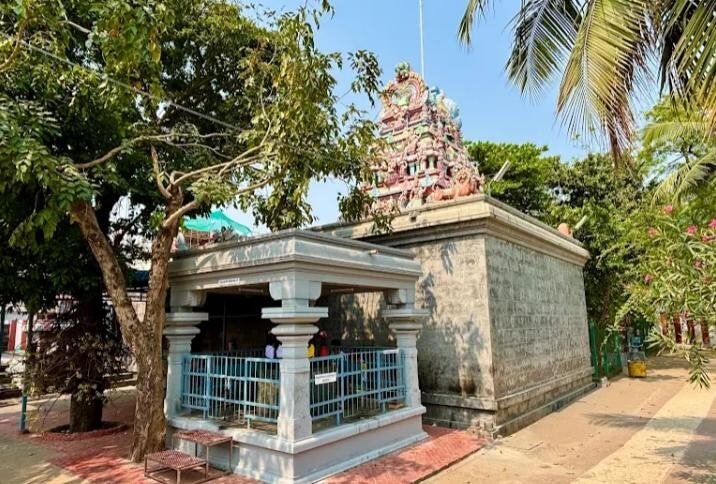 In royal records, the area was known as ‘Vilvavanam’ or ‘Vilvaranyam’ and it came to be known as Villivakkam in later times.
In modern times, various repair and renovation works have been carried out with the support of devotees and temple committees. Archaeologists have pointed out that some ancient inscriptions were moved or fixed upside down on the walls during these works. During the period of royal rule, the kings and local leaders appointed by them managed the temple’s daily affairs and land holdings. Later, during the British period, these responsibilities were handled by local trustees. At present, the temple’s administration, properties and other related matters are managed by the Hindu Religious and Charitable Endowments (HR&CE) Department of the Government of Tamil Nadu.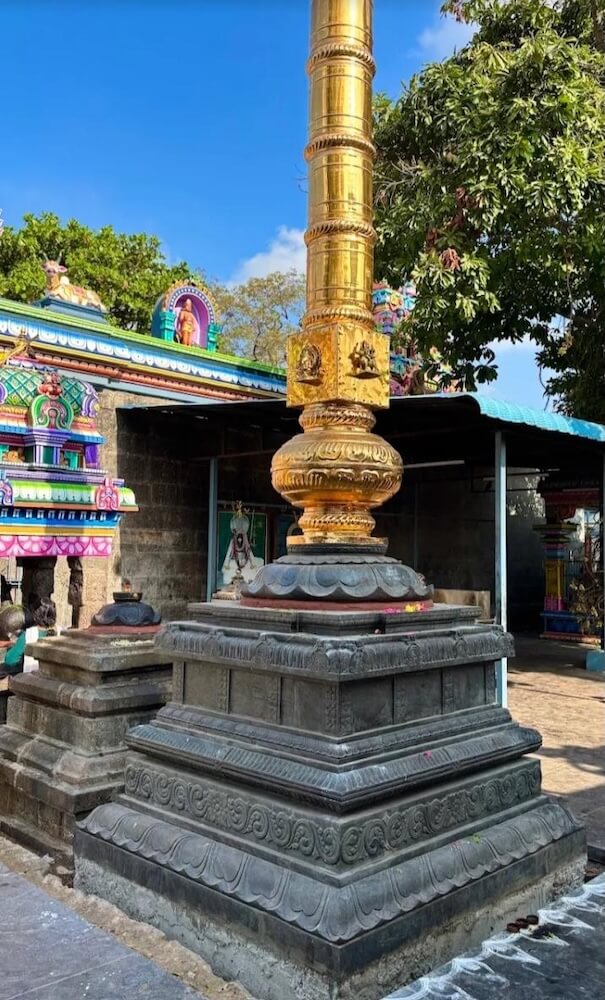
The main legend behind the origin of the name Villivakkam is associated with two Asura brothers, Vilvalan and Vatapi. It is said that they once frightened the people in this area and used a trick to kill and eat travellers. Vatapi would use his magical powers to take the form of a goat and Vilvalan would cook the meat and serve it to the sages. After they had eaten, Vilvalan would call out, “Vatapi, come out!” and Vatapi would tear open their stomachs and emerge, causing their death. When Sage Agasthya came along this route, the brothers tried the same trick on him. However, Agasthya understood their plan and after eating Vatapi’s meat, said “Vatapi Jeerno Bhava”, causing Vatapi to be digested within his stomach. When Vilvalan came to attack Agasthya after learning of his brother’s death, the sage defeated him with his spiritual powers. It is believed that, to remove the dosha caused by killing the Asuras, Agasthya consecrated a Shiva Lingam here and performed severe penance to attain relief from the sin. As Lord Shiva was worshipped by Sage Agasthya, the deity came to be known as Agatheeswarar, while the area was known as Vilvavanam, after the forest where Vilvalan was defeated, and later came to be known as Villivakkam.
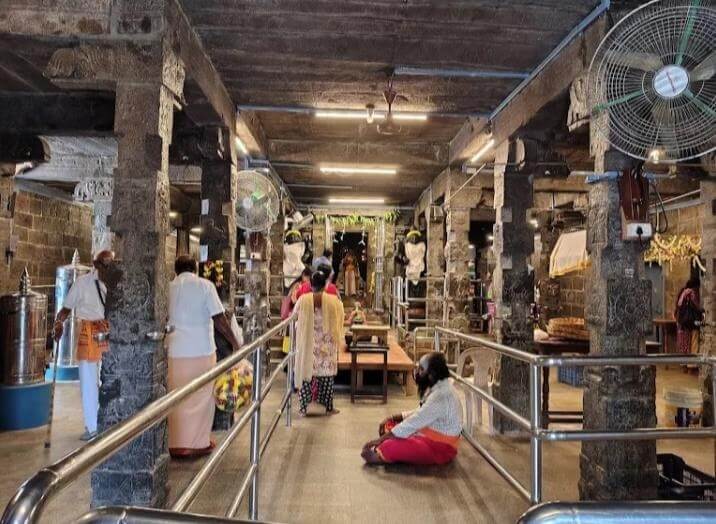
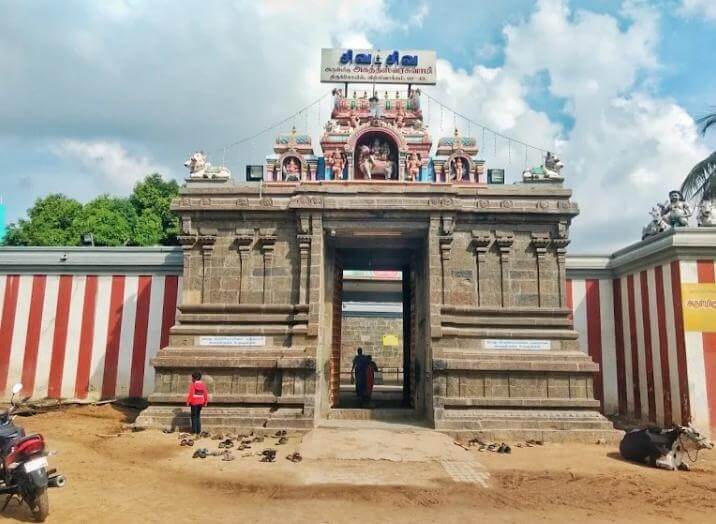
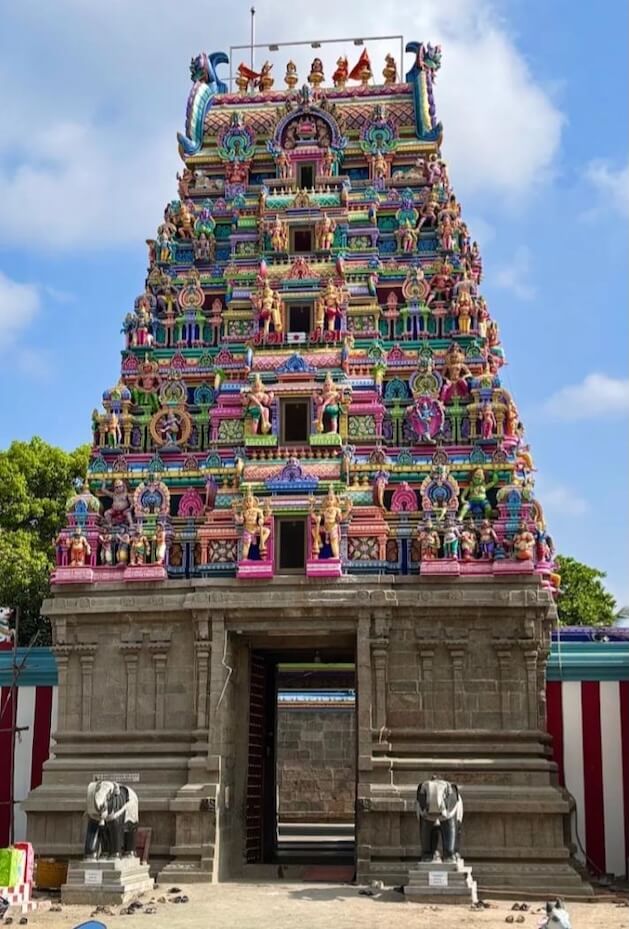
On reaching the temple, the first thing seen is not a tall Rajagopuram, but the ‘Mottai Gopuram’ on the southern side. Unlike the tiered and sculpted gateways commonly seen in Tamil Nadu temples, this is a flat-topped entrance built of granite. Near the temple is the large and ancient temple tank known as ‘Agasthya Theertham’. On entering the temple, a large Bali Peetam and a tall Dhwajasthambam can be seen facing the main shrine.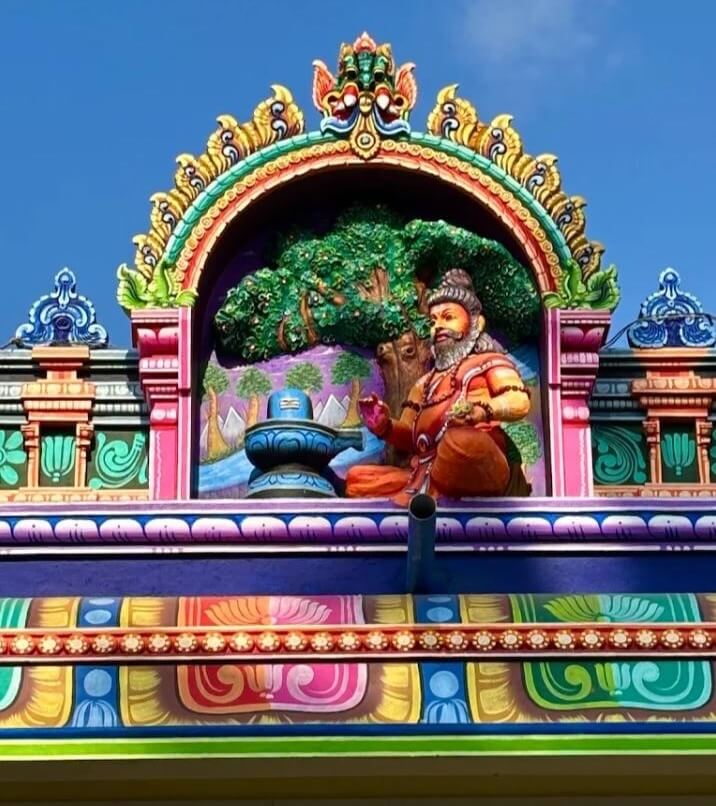 Near the Dhwajasthambam is a beautiful stone sculpture of Nandi facing the Sreekovil. Beyond this is the Mahamandapam, supported by large granite pillars and providing a spacious area for devotees to pray.
At the innermost part of the temple, the main deity, Sri Agatheeswarar, is enshrined as a Shiva Lingam in a square sanctum facing east. The Gajaprishtha Vimanam, seen while walking around the outer walls of the sanctum, is one of the main architectural features of the temple. Its semi-circular shape resembles the back of a seated or reclining elephant and is associated with the rare architectural style of the Pallava-Chola period. From the base of the Sreekovil to the Vimanam above, the structure is built with carefully cut and polished granite blocks placed one above another. The outer walls feature ancient Tamil inscriptions and stone sculptures of deities. Close to the main Shiva shrine is a separate shrine for Goddess Swarnambikai, facing south. A rare stone sculpture of Adhikara Nandi, with a human-like body and face, is carved in a small niche on the eastern wall. The Navagraha shrine also has a separate shrine for Chevvai Bhagavan (Mars), where devotees offer worship for relief from Sevvai Dosham.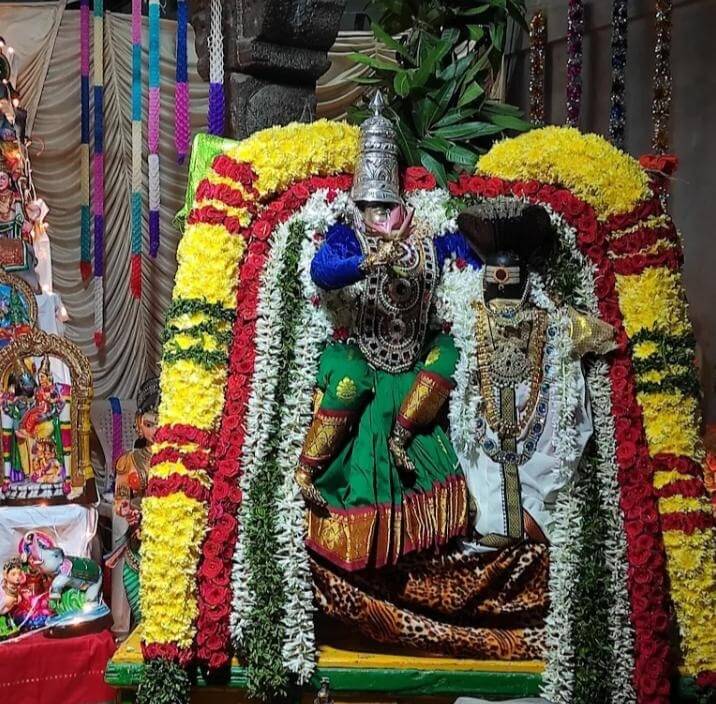
The main annual festival of the temple is the 10-day Brahmotsavam held in Vaikasi (May–June). During the festival, the deity is taken in procession on different vahanams, along with the traditional chariot procession. Maha Shivaratri, held in February–March, is observed with special abhishekams and night-long yama poojas. During Margazhi Thiruvathira in December–January, special abhishekam and a procession are held for Lord Nataraja. Thirukarthika or Karthigai Deepam is celebrated in November–December by lighting lamps throughout the temple and along the banks of the temple tank. During Navaratri in September–October, special alankarams and poojas are performed for Goddess Swarnambikai for nine days. Tuesdays are considered special days as special poojas are performed for relief from Sevvai Dosham. Pradosham, observed twice every month, is also an important occasion, with special abhishekams and a procession of Nandi, especially on Shani Pradosham.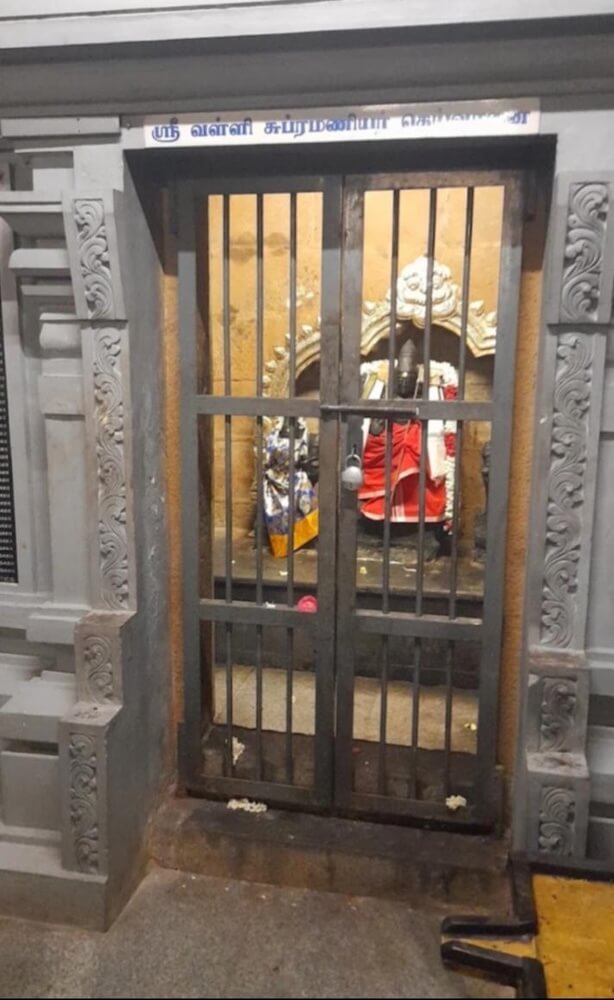
Special poojas and offerings are performed at the Chevvai Bhagavan shrine for relief from Sevvai Dosham. Devotees facing marriage-related difficulties due to Sevvai Dosham in their horoscope offer red clothes, perform a lamp offering with Thuar Dal as nivedyam and offer garlands made of red oleander flowers. Rudrabhishekam is one of the main offerings to Sri Agatheeswarar. The Shankhabhishekam performed with 1,008 conch shells during Karthika (November–December) is also well known. On Pradosham days, special abhishekam is performed for Lord Shiva using milk and other sacred substances. Laksharchana with kumkum is performed for Goddess Swarnambikai during Navaratri and on Tuesdays in the Aadi month (July–August). Devotees also perform special offerings at the shrine of Veerabhadra Swami inside the temple, where worship is believed to help remove obstacles and other difficulties.
The daily poojas at the temple begin with Ushathkala Pooja at 06:00 AM, soon after the temple opens. Kalasanthi Pooja and the main nivedyam are performed at 08:00 AM. Uchikala Pooja is held at 12:00 PM, after which the temple closes for the afternoon. The temple reopens at 06:00 PM for Sayarakshai Pooja and Deeparadhana. Second Kala Pooja and a special Deeparadhana are held at 07:30 PM, followed by Arthajama Pooja at 08:30 PM, after which the temple closes for the day. On Tuesdays, special archana and parihara lamp offerings are performed at the Angarakan (Mars) shrine during Rahu Kalam, from 03:00 PM to 04:30 PM, for relief from Sevvai Dosham. On Pradosham days, Mahabhishekam is performed for the main Shiva Lingam and Nandikeswarar with special chants from 04:30 PM to 06:00 PM. On special days such as Tuesdays, Pradosham and Maha Shivaratri, the afternoon closing time may vary.
Key highlight :-
- Located 6 km from Anna Nagar and 9 km from Ambattur.
- The nearest railway station is Villivakkam, about 2 km away, while Chennai Central is about 10 km away.
- Metropolitan Transport Corporation (MTC) bus services are available to the temple from different parts of Chennai.
- Paid parking is available near the temple.
- Accommodation and food facilities are available near the temple.
- Contact number +91 9952038155