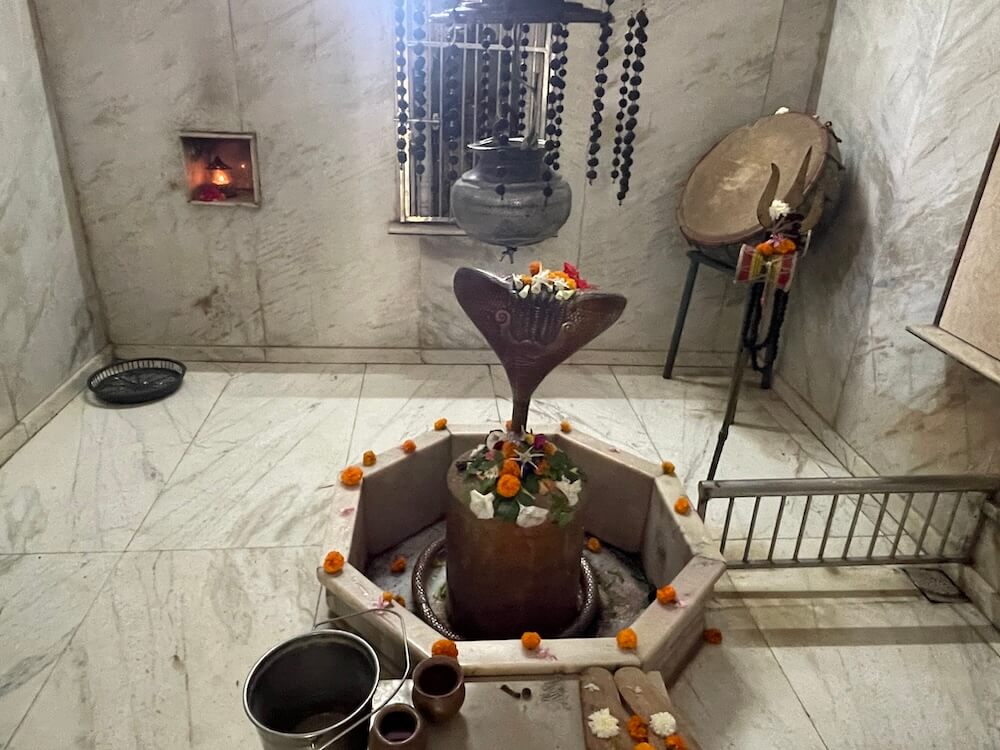
 Anarkeshwar Mahadev is the deity whose very Darshan (holy viewing) is believed to liberate a devotee from even the sight of the gates of hell. The ancient seat of this Anarkeshwar is located in the village of Mota Sanja. According to Puranic legend, the Shivalinga at this site was established by none other than Yamadeva (the God of Death) himself. Devotees hold a profound faith that worshipping this Shivalinga with sincere devotion grants absolution from all sins and ensures liberation from Naraka (hell). During the auspicious occasion of Mahashivratri and throughout the holy month of Shravan, hundreds of pilgrims congregate here to offer Belpatra (leaves of the wood apple tree) and perform Abhishek. It is said that the site of Yamaraja’s Taposthal (place of penance) lies just behind the main temple.
 Temples dedicated to Anarkeshwar Mahadev are rare in the country. One such revered shrine stands at Ujjain in Madhya Pradesh, a distinguished tirthakshetra (pilgrimage centre). Among the 84 Mahadevas of Ujjain, Anarkeshwar Mahadev holds the twenty-seventh place. The sacred legend associated with Anarkeshwar Mahadev at Mota Sanja narrates that Yamraj, distressed by the burden of his duties and the consequences of his karma, performed severe austerities here to attain the divine darshan of Shankar. Pleased with his penance, Shankar appeared before him and asked him to seek a boon. Yamaraja appealed, “What sin have I committed that I must endure the task of inflicting agony upon living beings? I beseech thee to grant me liberation from this duty.” To this, Mahadev replied, “O Yamadharmaraj, every soul must encounter heaven or hell as the fruit of the Karma (deeds) performed during its lifetime.
  Therefore, it is not appropriate for you to seek such a boon.”
Yamaraja then requested an alternative blessing: “May any person, even a great sinner, who worships You at this sacred spot where You manifested before me, never be forced to behold the gates of hell. May that person be cleansed of sin, and after death, reside eternally in Kailasa (the celestial abode of Shiva).” Granting this boon, Lord Shiva vanished. Subsequently, Yamaraja bathed in the waters of the sacred Narmada River and performed the Pratishthapana (consecration) of a Shivalinga at this site. This deity came to be known as ‘Anarkeshwar Mahadev’. It is said that the original temple was erected at this ancient site approximately six hundred years ago. The structure underwent Jirnoddhara (restoration) in 1982 and following a more recent renovation, the temple attained its current form.
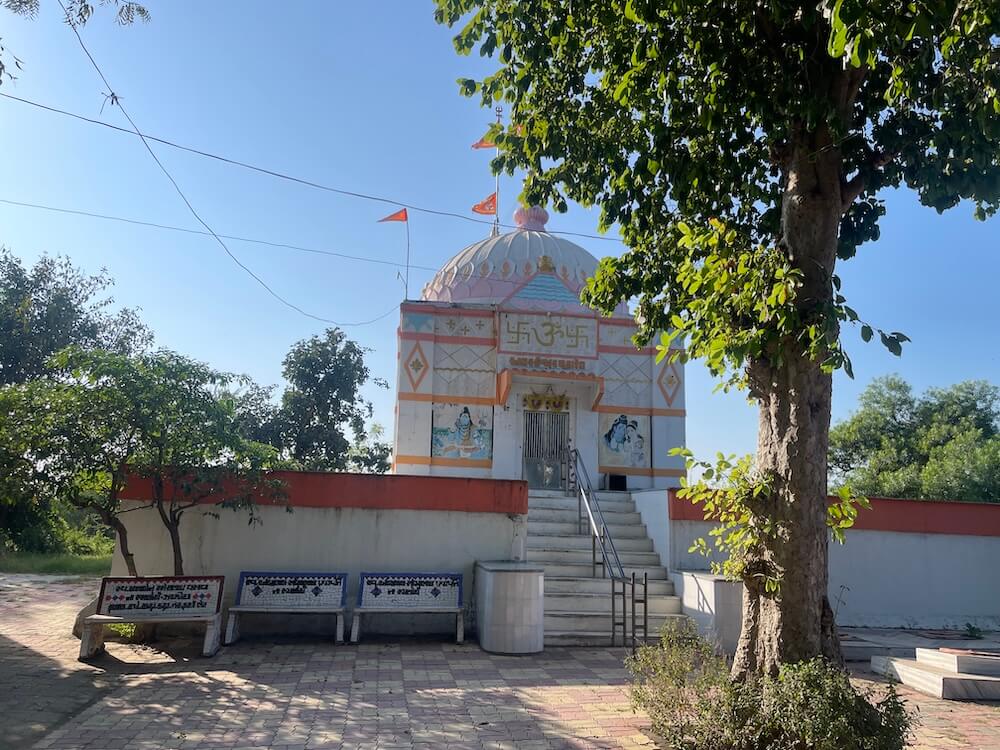
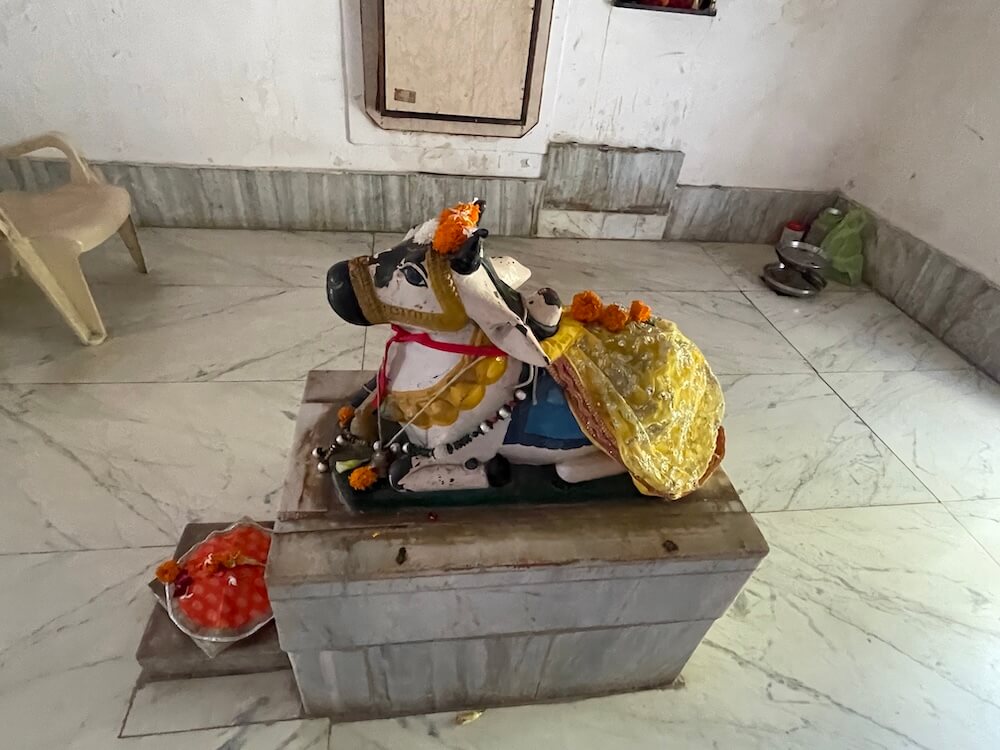
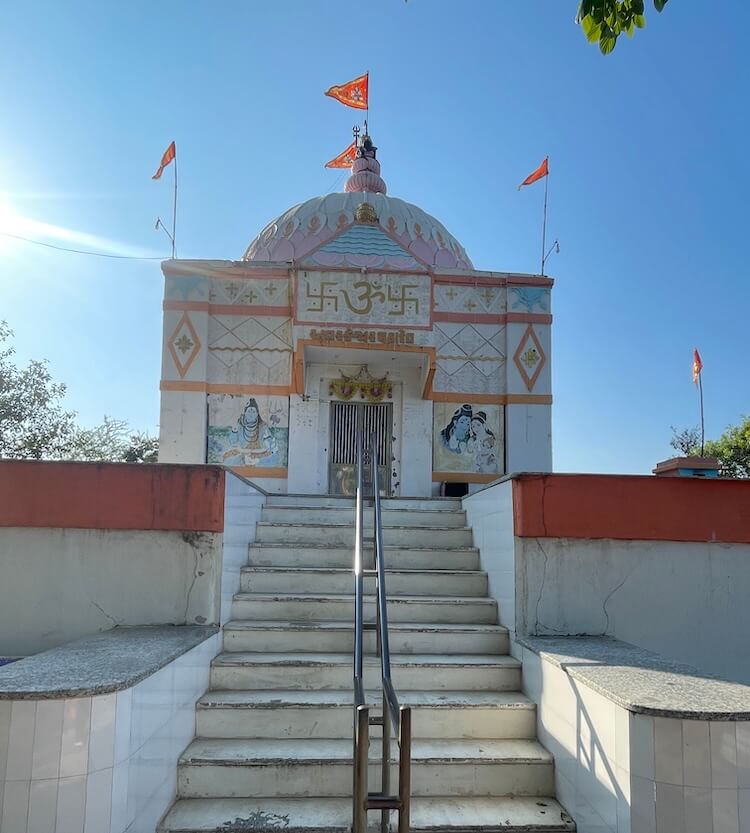
This ancient temple is situated to the west of Mota Sanja village, on the southern bank of the sacred River Narmada. Lush green fields surround the shrine and a wide open space lies before it. The temple stands upon a lofty and spacious plinth, reached by ascending eleven steps. On the front facade, a painting of Shankar adorns the left side, 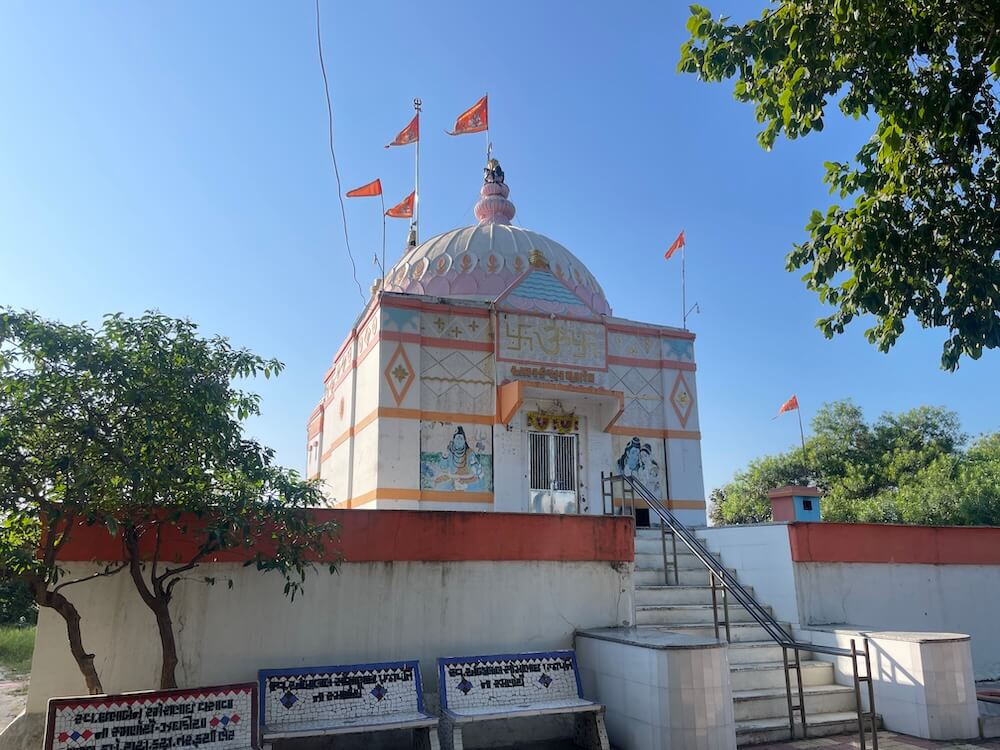 while an image of Shiv–Parvati with Ganesh graces the right. The temple bears a dome-shaped shikhar (spire), crowned with a three-tiered amalaka and kalash and five sacred dharmadhvajas (religious flags) flutter atop the summit. The temple comprises a Sabha mandap (assembly hall), Antaral (antechamber) and Garbhagriha (sanctum). Above the entrance to the sabha mandap, auspicious symbols of Omkar and Swastika are finely carved. The enclosed hall houses a beautifully sculpted stone Nandi seated upon a marble platform, with a tortoise idol placed before it. In one of the subsidiary shrines resides the idol of Annapurna Mata.
A large open expanse greets visitors in front of the temple, which stands majestically upon a high and imposing plinth. 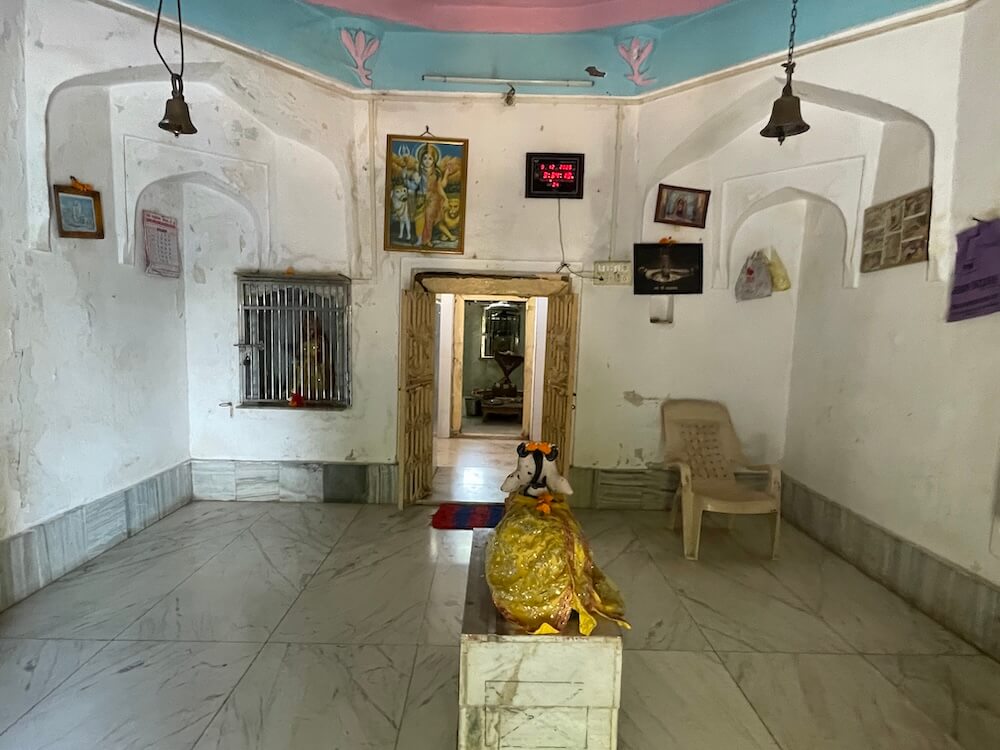 One ascends eleven steps to reach the main platform. The facade of the temple features a painting of Lord Shiva on the left and a depiction of Shiva-Parvati-Ganesha on the right. The temple is crowned by a domed Shikhara (spire), adorned with a three-tiered Amalaka (segmented stone disc) and a Kalash (pinnacle), with five Dharmadhvajas (religious flags) fluttering atop. The architectural layout comprises a Sabha mandapa (assembly hall), an Antarala (vestibule) and a Garbhagriha (sanctum sanctorum). Above the central entrance of the assembly hall, the auspicious symbols of Omkar and the Swastika are intricately carved. The Sabha mandapa is an enclosed space where a stone-carved Nandi sits upon a marble pedestal, facing an image of a tortoise.
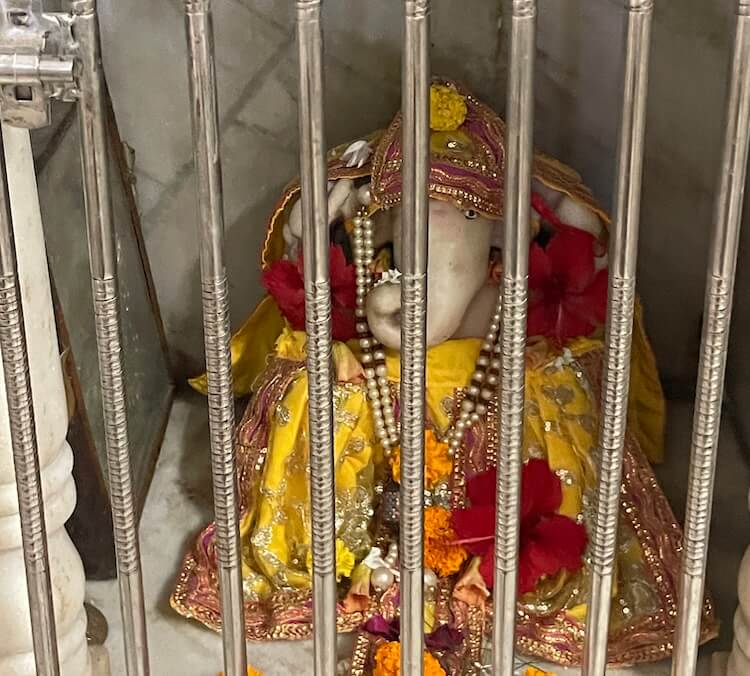
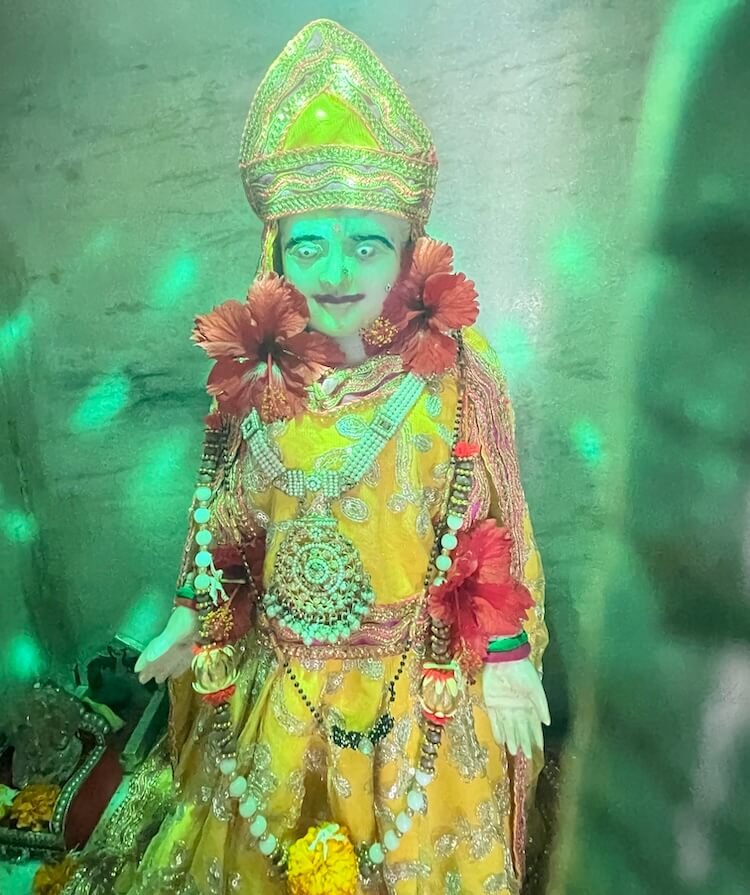
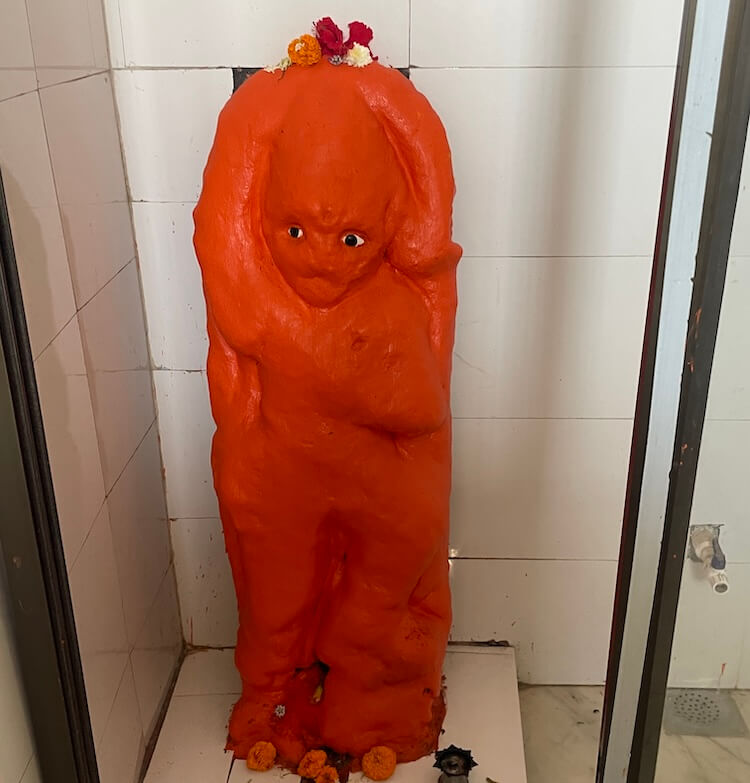
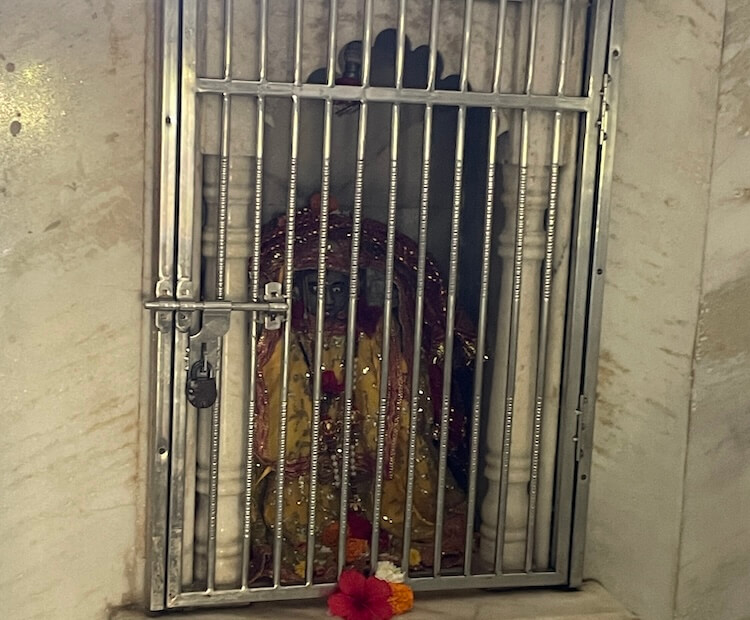
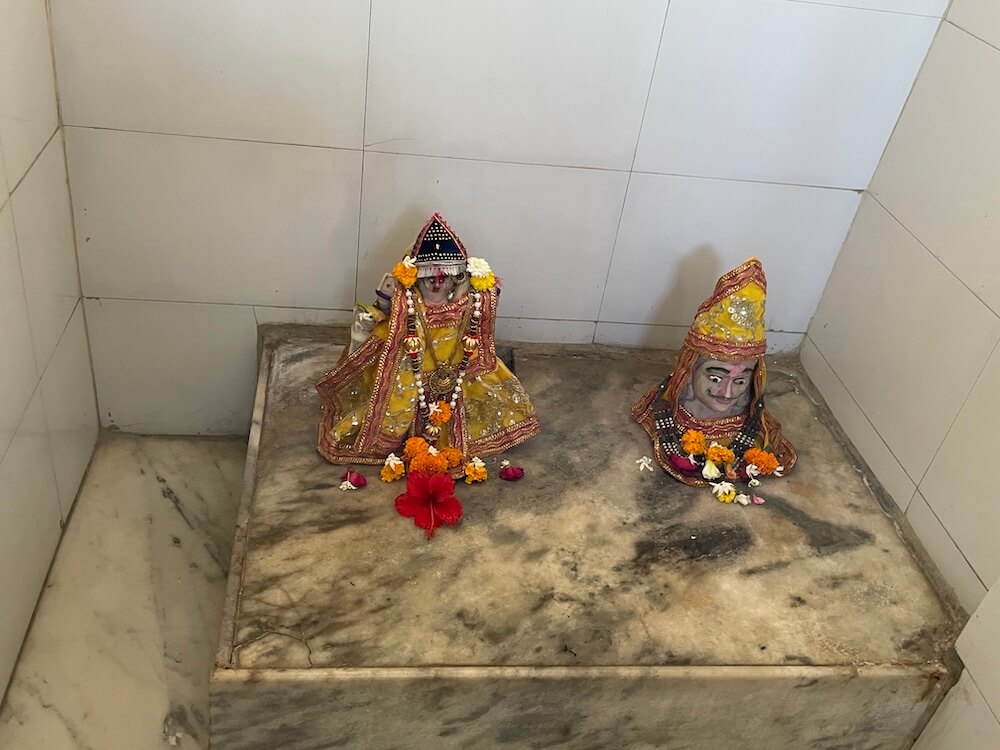
 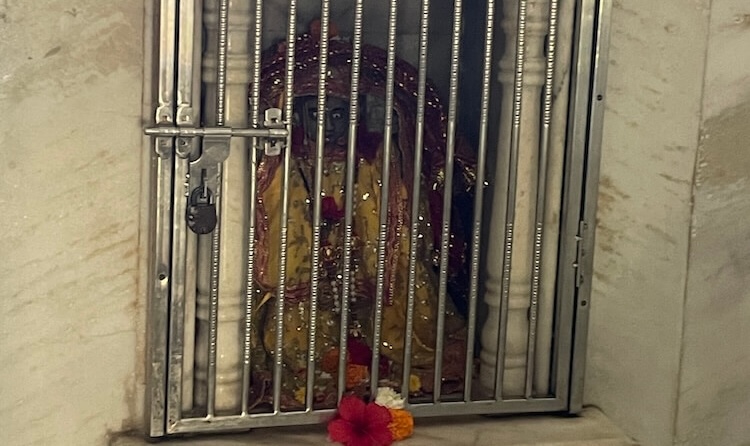 A small niche within the hall houses an idol of Mata Annapurna. Within the sanctum sanctorum, a large stone Shivalinga is enshrined in a recessed area, sheltered by the hood of a large serpent. An octagonal marble railing surrounds the Shivalinga. In a niche on the rear wall of the sanctum, Mata Parvati is enshrined, alongside idols of Lord Ganesha and Hanuman. Behind the main temple lies the Taposthal of Yamaraja, with a Nandi idol stationed before its entrance. Due to the modest height of the doorway, one must bow low to enter. Upon entering, one finds a small Shivalinga set within a marble Shalunka (base). From here, steps lead down into an underground cave.
Ritual worship and prayers are performed daily at the Anarkeshwar Mahadev temple and various religious events are organised throughout the year. The temple hosts a grand celebration on Mahashivratri. During the month of Shravan and the Adhik Maas (intercalary month), hundreds of devotees arrive to offer their prayers and perform sacred ablutions.