
परावुर कन्ननकुलंगारा श्रीकृष्ण मंदिर
उत्तर परावूर, जि. एर्नाकुलम.
Paravur Kannankulangara Sree Krishna Temple
North Paravur, Dist. Ernakulam.
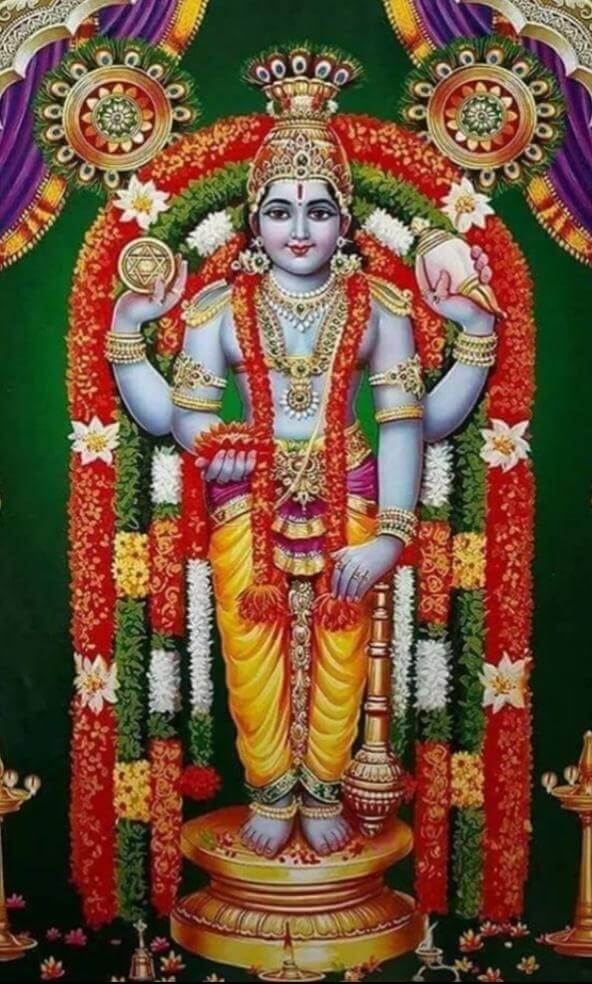 Paravur Kannankulangara Sree Krishna Swamy Temple, located in North Paravur in Ernakulam district, is around 600 years old. Known as ‘Dakshina Guruvayur’, the temple’s main deity is the four-armed Lord Krishna. Old Tamil Brahmin streets, known as Agraharams, are located near the eastern entrance of the temple. Along with daily poojas and special poojas, various festival rituals are also conducted at the temple. The history of the temple and its connection with the Agraharams are closely linked to the heritage of North Paravur.
The temple is around 600 years old. It was built in the architectural style of medieval Kerala, dating from the mid-14th to the 15th century. The temple was constructed during the rule of the old Paravur Swarupam. Later, the region became part of the Kingdom of Cochin and then the Kingdom of Travancore. The construction of the temple was led by prominent local feudal lords and Urāḷars, under the supervision and support of the rulers of Paravur. The Tamil Brahmin community that migrated from Tamil Nadu also played an important role in the development of the temple and its daily affairs. The old Agraharam streets that still exist near the eastern entrance of the temple are evidence of this connection. Although the temple suffered damage at different times due to age and political changes in the region, the Sreekovil and Chuttambalam were later restored with the support of the rulers and devotees. In recent years, repair and renovation works have also been carried out on the wooden and stone structures while retaining the traditional architectural style of the temple.
In the early period, the administration of the temple was under the control of local landlord Urāḷa families.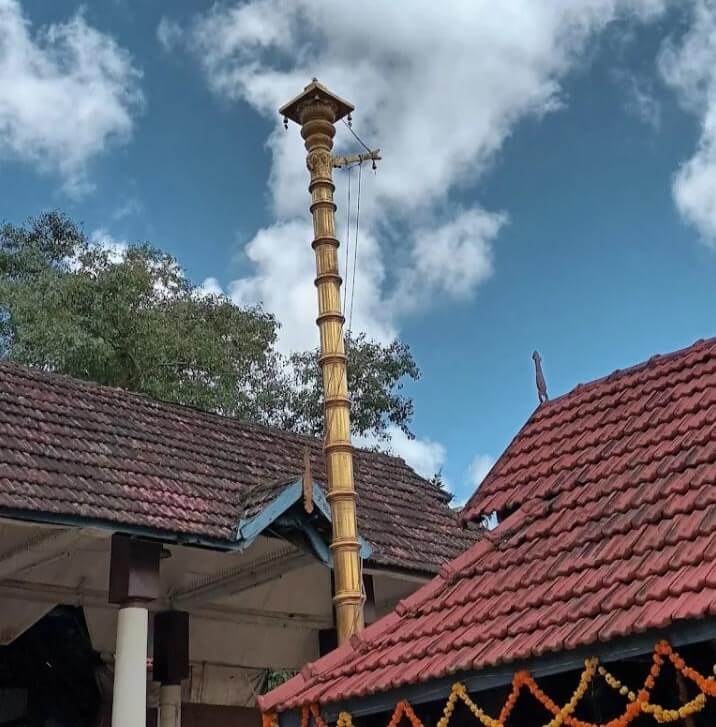 Later, after the decline of the Paravur Swarupam and the region became part of Travancore, the administration of the temple was transferred from the Urāṇma system to royal administration and came under the direct control of the Travancore royal family. At present, the administration and maintenance of the temple are fully under the Travancore Devaswom Board (TDB). The temple comes under the Paravur Group of the Devaswom Board and its daily affairs are managed under the supervision of the Sub Group Officer appointed by the Board. A Temple Advisory Committee consisting of devotees also functions to coordinate the temple festivals, other ceremonies and development activities.
According to the legend, about 600 years ago, an elderly Brahmin woman who lived in this area had no children. She was saddened by her inability to have children and prayed devotedly to Lord Krishna at the temple. It is believed that the Lord was pleased with her prayers and that she later had a son. The Thottil Samarpanam, one of the main offerings at the temple, is performed as a reminder of this legend. 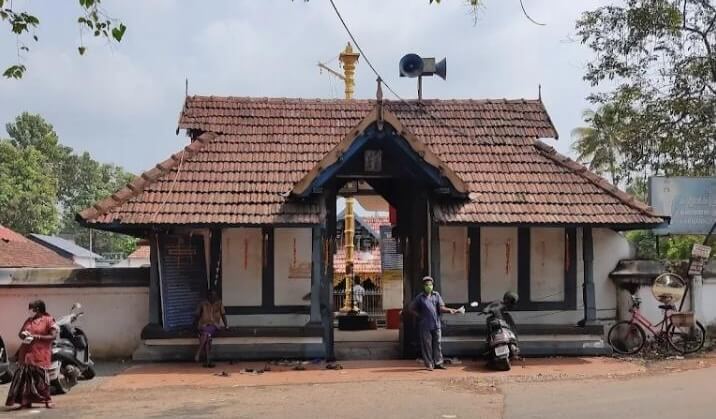 Devotees believe that childless couples who pray here and offer a small wooden cradle to the Lord will be blessed with children. There is also a belief that the form of the Sree Krishna idol and the pooja rituals here are similar to those at Guruvayur Temple and that those who are unable to visit Guruvayur will receive the same punya by worshipping here. Based on this belief, the temple is known as ‘Dakshina Guruvayur’.
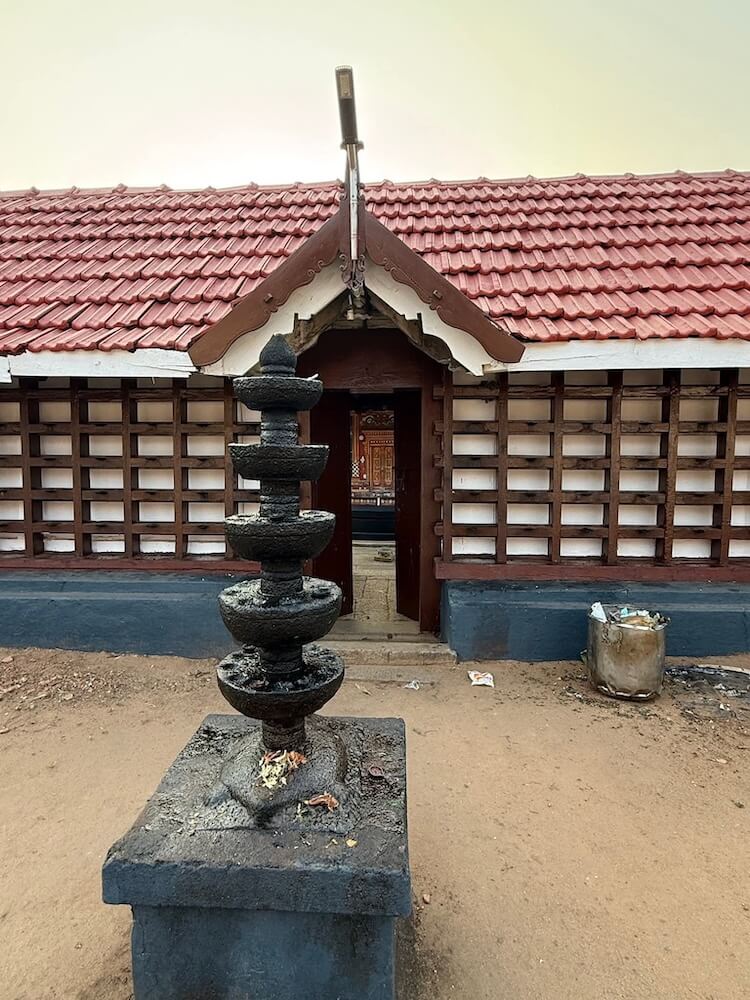
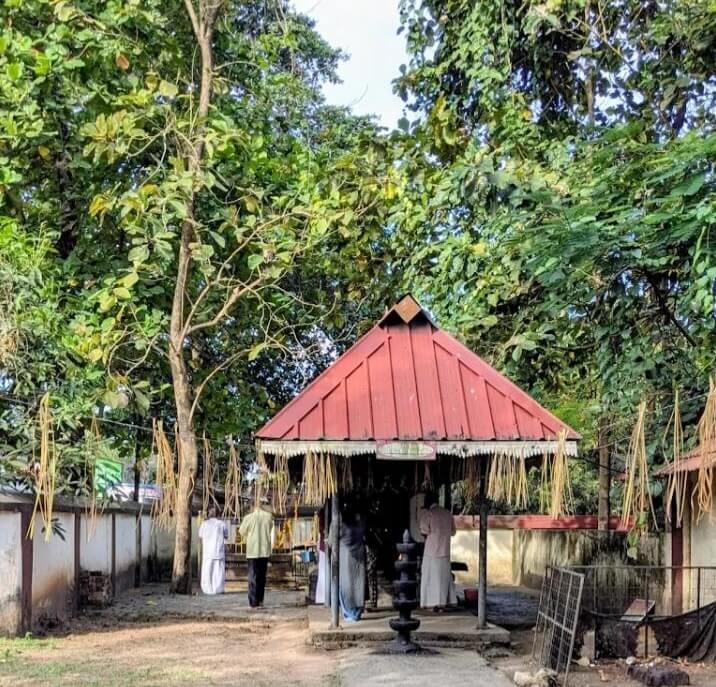
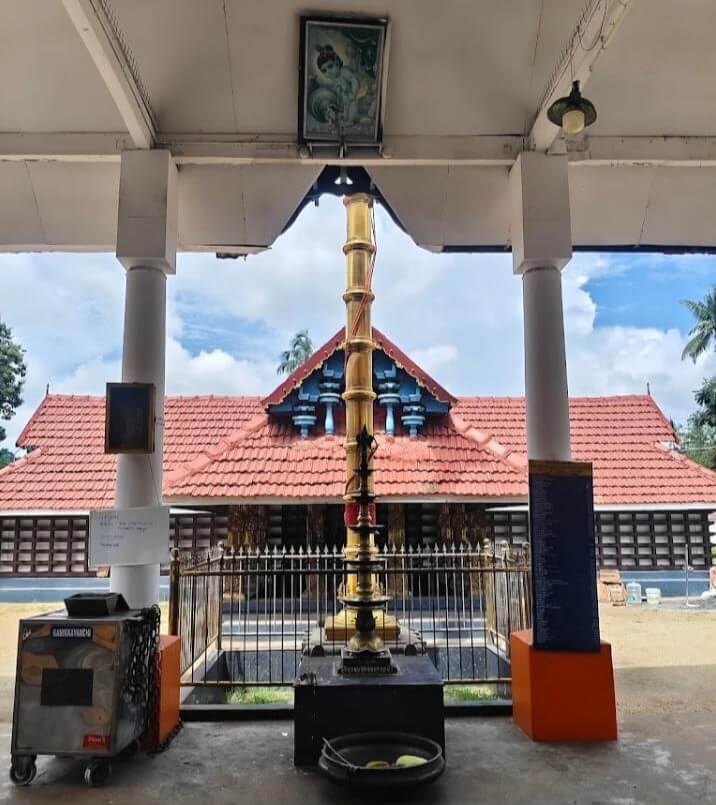
When looking towards the temple from the road, the traditional Kerala-style structures are noticeable. The first structure is a small entrance gateway called the Padippura, with a wooden and tiled roof facing the road. 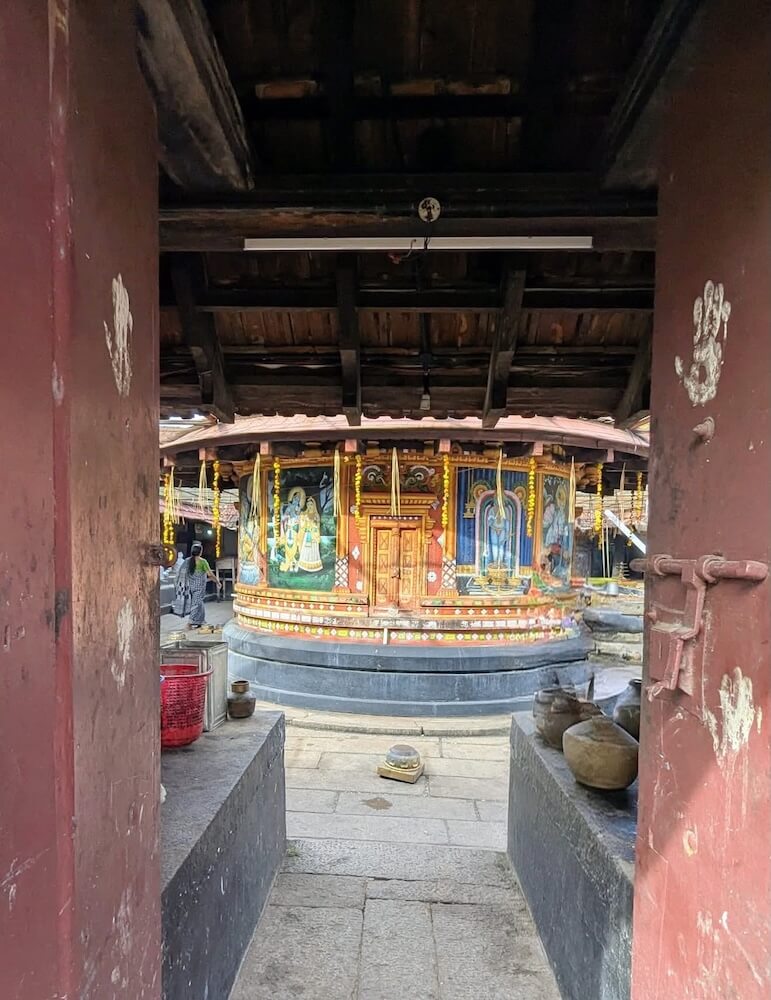 A large banyan tree and an altar are located in front of the temple near the Padippura. After entering through the main gateway, the large Aanakkottil can be seen. During festivals, this area is used to keep elephants and conduct traditional percussion performances. Beyond the Padippura and Aanakkottil is the main temple complex, the Nalambalam. A large Balikkallu stands in front of the Nalambalam and a Vilakkumadam surrounds the temple. The square-shaped Nalambalam has a tiled roof, with carved details on its wooden pillars and structures. The Namaskara Mandapam in front of the Sreekovil also has notable wooden carvings.
The temple has a square-shaped, single-tiered Sreekovil. Built with granite from the ground level, the Sreekovil has a pyramid-shaped roof completely covered with copper sheets, with a dome at the top. The steps leading to the Sreekovil are made of carved granite and form the Sopanam. The sides of the Sopanam have carved designs and Vyali figures. The Sreekovil is accessible only to the Santhikkars, while devotees receive darshan from outside. Another notable feature is the hundreds of small wooden cradles offered by devotees and hung from the sides of the roof of the Mukhamandapam in front of the Sreekovil. The main deity is the four-armed Lord Krishna, representing the divine presence of Lord Vishnu. The standing idol holds the conch and discus in the two rear hands and the mace and lotus flower in the two front hands.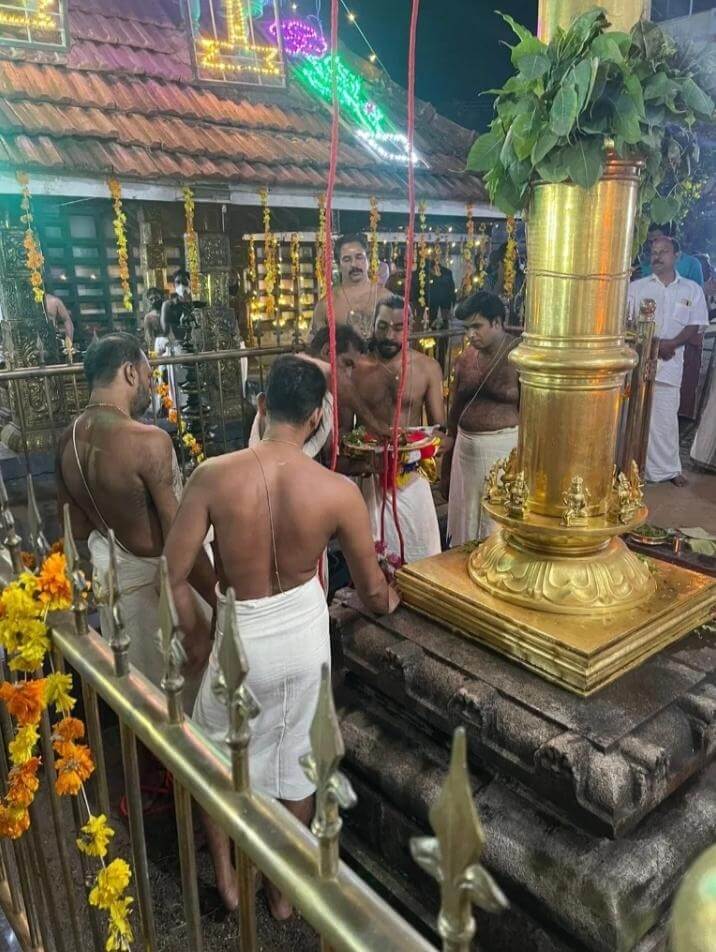
The other deities in the temple are also arranged in specific locations. The idol of Lord Ganapati is installed at the Kannimoola, the south-western corner of the main Sreekovil, inside the Nalambalam. Outside the Nalambalam, on the north-western side of the temple complex, there is a Naga Thara in an open area, with idols of Naga Raja and Naga Yakshi. The idol of Brahmarakshas is located outside the Nalambalam at the Eeshana Kona, the north-eastern corner of the temple.
The main celebration of the temple is the 10-day annual Mahotsavam held in the month of Makaram, usually during January–February. The festival begins with the Kodiyett and concludes with the Aarattu on the tenth day. During the festival, events such as elephant processions and traditional percussion performances, including Panchari Melam, are held along with cultural programmes such as Kathakali, Chakyar Koothu and devotional music programmes. Sree Krishna Jayanthi, also known as Ashtamirohini, is celebrated on the Rohini star in the month of Chingam with special poojas and a procession in which children dress up as Lord Krishna. On Vishu in the month of Medam, Vishukkani darshan and the offering of ‘Oru Kudam Venna’ are important ceremonies. 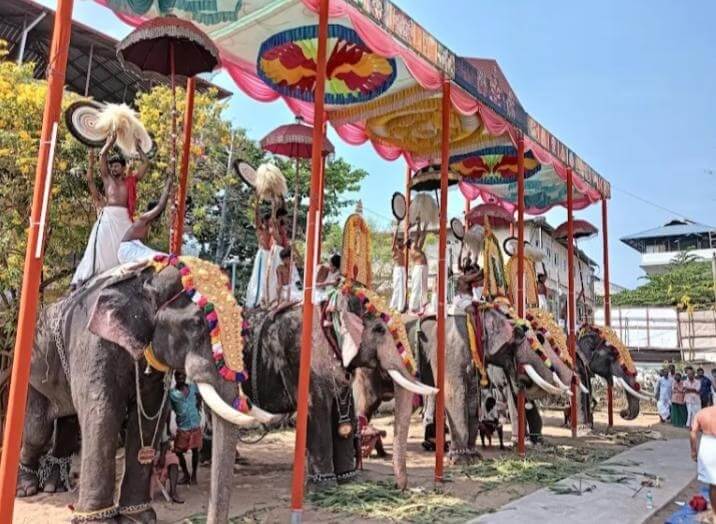 The first Wednesday of Dhanu is observed as Kuchela Dinam, when Aval Nivedyam is offered to the Lord. During the Mandala period from Vrischikam 1 to Makaram, special lamp poojas and lighting arrangements are conducted. In addition, on the Ayilyam star in the months of Kanni, Thulam and Vrischikam, rituals such as Sarpam Pattu, Naavoor and Ayilyam Pooja are conducted for the Naga deities.
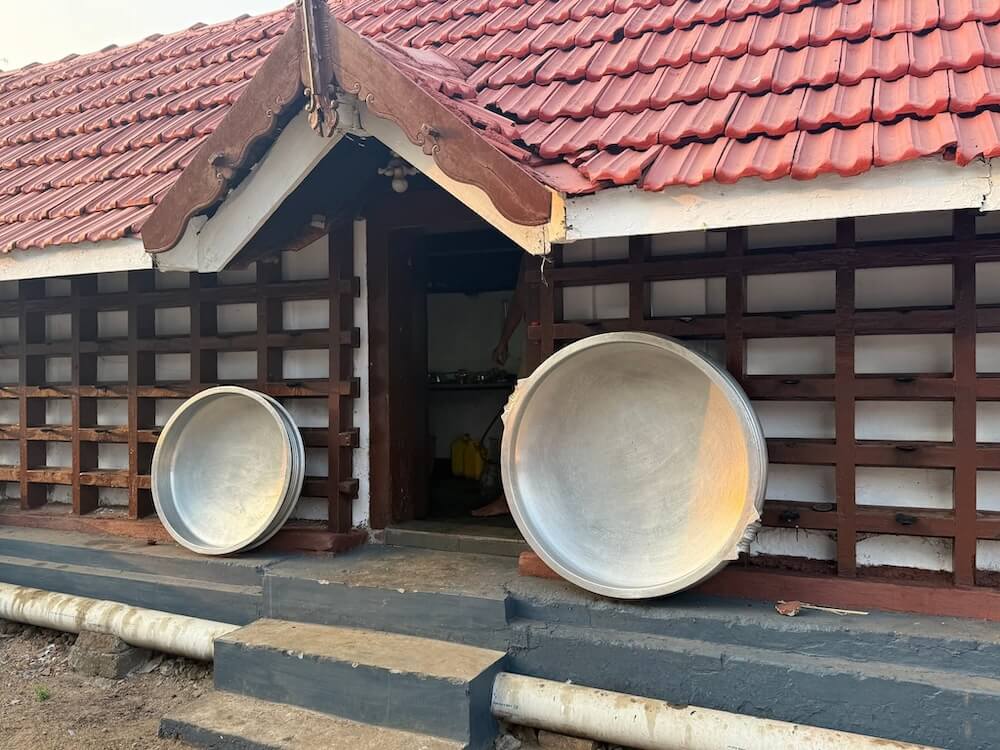
The main offerings at the temple include Thottil Samarpanam, Palpayasam, Karayila Appam and butter offering. As part of Thottil Samarpanam, couples who pray for children offer a small wooden cradle and hang it in front of the Sreekovil. Palpayasam is offered for the blessing of children and family prosperity. Karayila Appam, also known as Unniyappam, is another important offering, 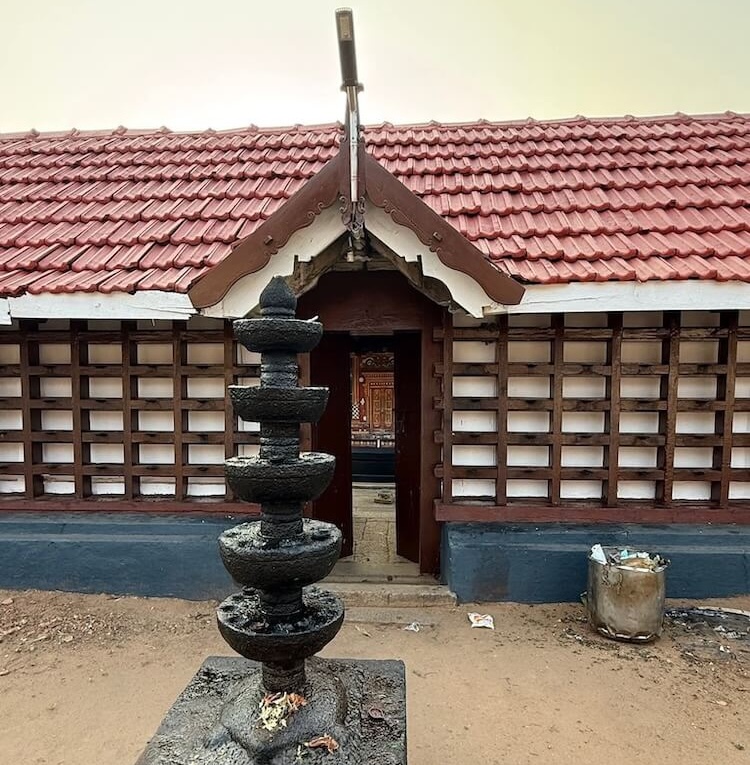 traditionally prepared under the supervision of the Antharjanams of the Agraharam and offered to the Lord. Butter is also offered on special days such as Vishu. Other offerings include Thulabharam for the fulfilment of wishes and relief from illness, Aval Nivedyam for relief from poverty and prosperity and lighting lamps at the temple’s Vilakkumadam. For Lord Ganapati, offerings such as Appam Moodal, Ottayappam and Karukamala are performed for the removal of obstacles. For the Naga deities, Paloot, turmeric powder abhishekam and special poojas on Ayilyam are performed for relief from Naga dosha. Palpayasam and cloth are also offered to Brahmarakshas.
The daily pooja rituals at the temple begin with the opening of the sanctum at 05:00 AM. Ushapooja is performed at 06:30 AM, followed by Pantheeradi Pooja at 08:00 AM and Uchapooja at 10:30 AM. Morning darshan concludes and the sanctum closes at 11:00 AM. In the evening, the sanctum opens again at 05:00 PM, followed by Deeparadhana at 06:30 PM and Athazha Pooja at 07:30 PM. The day’s pooja rituals are completed and the sanctum closes at 08:00 PM. The pooja rituals and timings may change on festival days and special occasions such as Ashtamirohini and Vishu.
Key highlight :-
- Located 17 km from Aluva, 8 km from Cherai and 22 km from Angamaly.
- 17 km from Aluva railway station.
- 21 km from Cochin International Airport.
- KSRTC and local bus facilities are available to the temple.
- Private vehicles can be parked in the temple’s parking area.
- Accommodation and food facilities are available in the nearby towns.
- Contact number +91 4842442472.
परवूर कन्ननकुलंगरा श्री कृष्ण मंदिर
उत्तर परवूर, जिला। एर्नाकुलम.
मंदिरे
Temples
मंदिर
મંદિરો
கோவில்கள்
దేవాలయాలు
ക്ഷേത്രങ്ങൾ
ದೇವಾಲಯಗಳು
মন্দিরসমূহ
ਮੰਦਿਰ
-
तिरुवरप्पेट्टी महादेवाचे मंदिर वरप्पेट्टी, कोठामंगलम, जि. एर्नाकुलम.
अधिक माहितीThiruvarappetty Mahadeva Temple Varappetty, Kothamangalam, Dist. Ernakulam.
View Detailsतिरुवरापेट्टी महादेव मंदिर वरापेट्टी, कोठमंगलम, जिला। एर्नाकुलम.
विवरण देखेंThiruvarappetty Mahadeva Temple Varappetty, Kothamangalam, Dist. Ernakulam.
વિગત જુઓThiruvarappetty Mahadeva Temple Varappetty, Kothamangalam, Dist. Ernakulam.
விவரங்களைக் காண்கThiruvarappetty Mahadeva Temple Varappetty, Kothamangalam, Dist. Ernakulam.
వివరాలను చూడండిThiruvarappetty Mahadeva Temple Varappetty, Kothamangalam, Dist. Ernakulam.
വിശദാംശങ്ങൾ കാണുകThiruvarappetty Mahadeva Temple Varappetty, Kothamangalam, Dist. Ernakulam.
ವಿವರಗಳನ್ನು ವೀಕ್ಷಿಸಿThiruvarappetty Mahadeva Temple Varappetty, Kothamangalam, Dist. Ernakulam.
বিস্তারিত দেখুনThiruvarappetty Mahadeva Temple Varappetty, Kothamangalam, Dist. Ernakulam.
ਵੇਰਵੇ ਦੇਖੋ -
पेरूवरम महादेवाचे मंदिर उत्तर परावूर, जि. एर्नाकुलम.
अधिक माहितीPeruvaram Mahadeva Temple North Paravur, Dist. Ernakulam.
View Detailsपेरुवरम महादेव मंदिर उत्तर परवूर, जिला। एर्नाकुलम.
विवरण देखेंPeruvaram Mahadeva Temple North Paravur, Dist. Ernakulam.
વિગત જુઓPeruvaram Mahadeva Temple North Paravur, Dist. Ernakulam.
விவரங்களைக் காண்கPeruvaram Mahadeva Temple North Paravur, Dist. Ernakulam.
వివరాలను చూడండిPeruvaram Mahadeva Temple North Paravur, Dist. Ernakulam.
വിശദാംശങ്ങൾ കാണുകPeruvaram Mahadeva Temple North Paravur, Dist. Ernakulam.
ವಿವರಗಳನ್ನು ವೀಕ್ಷಿಸಿPeruvaram Mahadeva Temple North Paravur, Dist. Ernakulam.
বিস্তারিত দেখুনPeruvaram Mahadeva Temple North Paravur, Dist. Ernakulam.
ਵੇਰਵੇ ਦੇਖੋ -
चटुकुलम श्री महादेवाचे मंदिर कडुंगल्लूर, अलुवा, जि. एर्नाकुलम.
अधिक माहितीChattukulam Sree Mahadeva Temple Kadungalloor, Aluva, Dist. Ernakulam.
View Detailsचट्टुकुलम श्री महादेव मंदिर कडुंगल्लूर, अलुवा, जिला। एर्नाकुलम.
विवरण देखेंChattukulam Sree Mahadeva Temple Kadungalloor, Aluva, Dist. Ernakulam.
વિગત જુઓChattukulam Sree Mahadeva Temple Kadungalloor, Aluva, Dist. Ernakulam.
விவரங்களைக் காண்கChattukulam Sree Mahadeva Temple Kadungalloor, Aluva, Dist. Ernakulam.
వివరాలను చూడండిChattukulam Sree Mahadeva Temple Kadungalloor, Aluva, Dist. Ernakulam.
വിശദാംശങ്ങൾ കാണുകChattukulam Sree Mahadeva Temple Kadungalloor, Aluva, Dist. Ernakulam.
ವಿವರಗಳನ್ನು ವೀಕ್ಷಿಸಿChattukulam Sree Mahadeva Temple Kadungalloor, Aluva, Dist. Ernakulam.
বিস্তারিত দেখুনChattukulam Sree Mahadeva Temple Kadungalloor, Aluva, Dist. Ernakulam.
ਵੇਰਵੇ ਦੇਖੋ