
उम्मन्नूर श्री अंशमूर्ती मंदिर
उम्मनूर, कोट्टारक्करा, जि. कोल्लम.
Ummannoor Sree Anchumoorthy Temple
Ummannoor, Kottarakkara, Dist. Kollam.
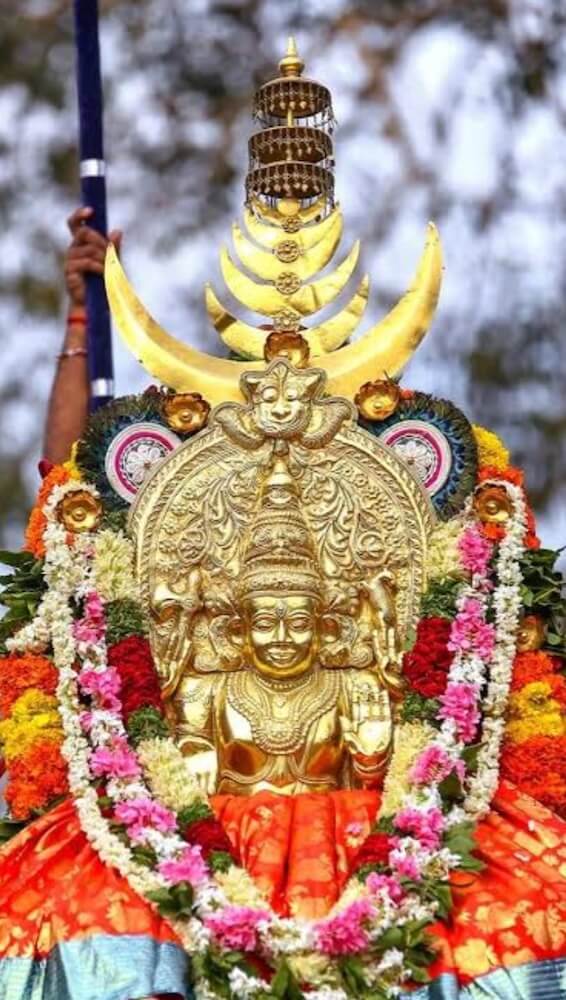 Ummannoor Sree Anchumoorthy Temple is a historic and ancient Hindu temple located at Ummannoor, near Kottarakkara in Kollam district. As its name suggests, it is one of the rare temples with five main deities. The temple is centuries old and has a long tradition and a history closely connected with local beliefs.
In medieval Kerala, the areas including Ummannoor came under the rule of the Ilayidathu Swaroopam, an independent branch of the Venad royal family formed in the 14th century AD. Based in Kottarakkara, the dynasty ruled these areas for more than 400 years, until the middle of the 18th century. The main construction and renovation works of the temple, along with related Vattezhuthu inscriptions, are recorded in the Malankara Era 717, corresponding to AD 1542. Inscriptions in old Malayalam scripts, including Vattezhuthu and Kolezhuthu, can be found on the foundation and stone pillars of the Sreekovil. These inscriptions include details about local rulers who donated land to the temple and provide important historical evidence about the language, social system and temple-based land system of medieval Kerala. Based on the historical information in these inscriptions, the main construction works of the present temple structure took place in AD 1542, giving it an age of about 484 years.
In AD 1742, Anizham Thirunal Marthanda Varma Maharaja conquered the Ilayidathu Swaroopam, which was based in Kottarakkara and added it to Travancore. As a result, the area became part of the Travancore kingdom. The temple then came under the direct control of the Travancore royal administration and received royal support. Before this, the temple was managed by the prominent Nair tharavads of Ummannoor, including the Ettuveettil Pillamar and the local Naduvazhis. 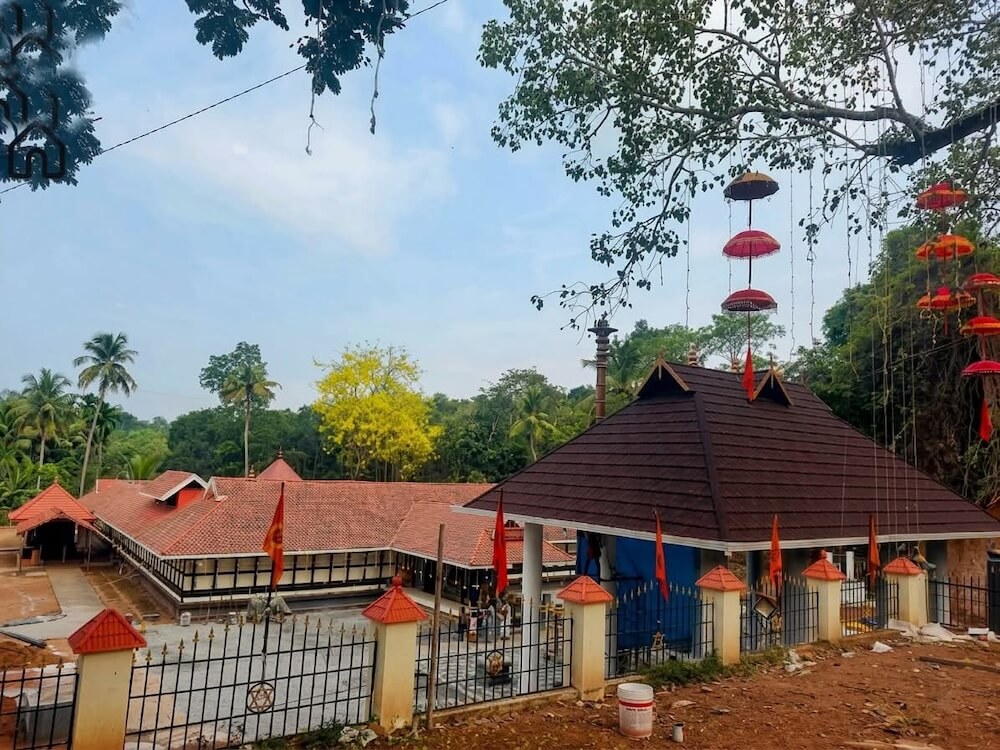 With the introduction of the Travancore-Cochin Hindu Religious Institutions Act, 1949, the administration of the temple came under the Travancore Devaswom Board. At present, the temple is under the supervision of the Kottarakkara Group of the Travancore Devaswom Board, which oversees its administration and daily activities.
The main legend associated with the origin of the temple is connected with Sage Kashyapa, one of the Saptarishis. It is believed that Sage Kashyapa came to this area and performed intense penance and that worship began here after the Lord appeared before him, pleased with his penance. This Vedic tradition is considered the spiritual foundation of the temple. There is also a legend behind the installation of five main deities within the same temple complex. It is believed that sages invoked and installed five deities in the same complex to resolve differences between Shaiva,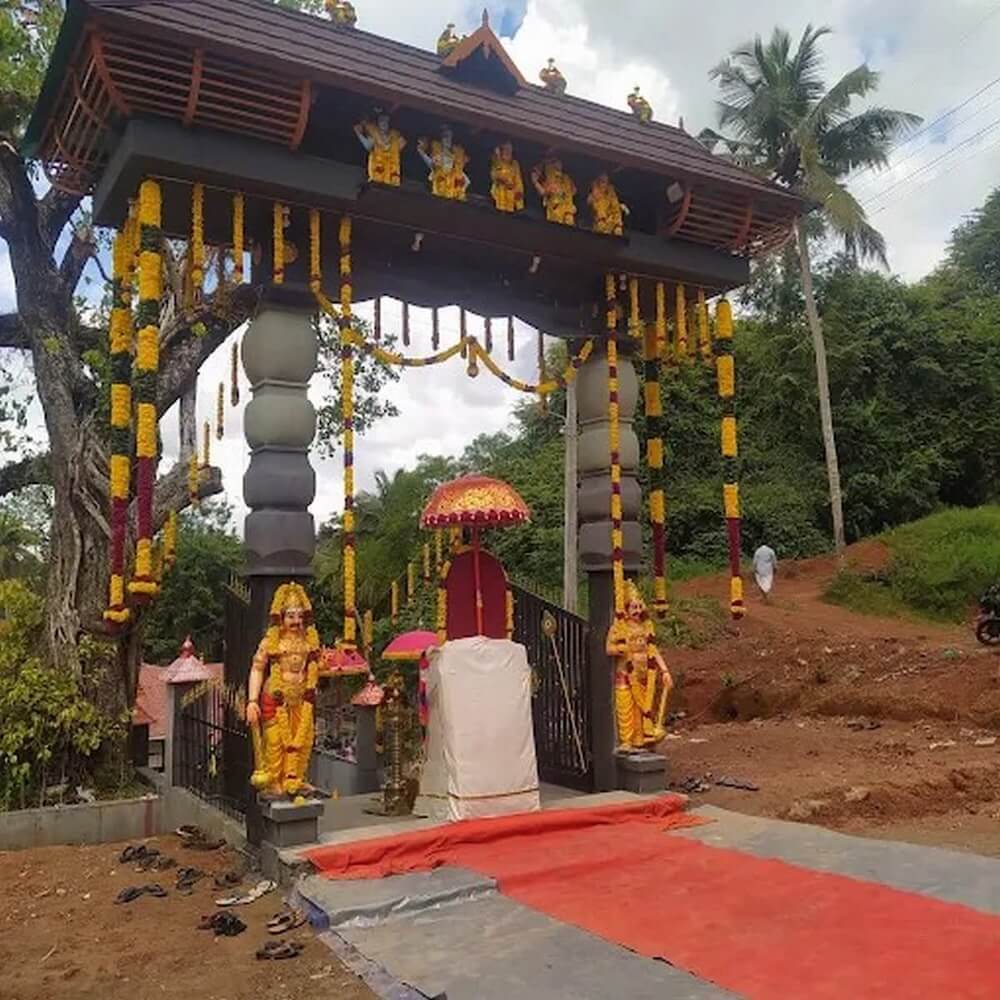 Vaishnava and Shakteya traditions and to bring together different forms of worship. Accordingly, Sree Subrahmanya, Mahadeva, Mahavishnu, Ganapati and Sastha have equal importance here. One of the main deities, Mahavishnu, is installed in a fierce form holding Panchajanya and the Sudarshana Chakra. The temple is also one of the rare temples in Kerala where the Sudarshana Chakra is worshipped with special rituals. Several local legends are associated with this form of the Lord holding the Chakra to destroy evil forces.
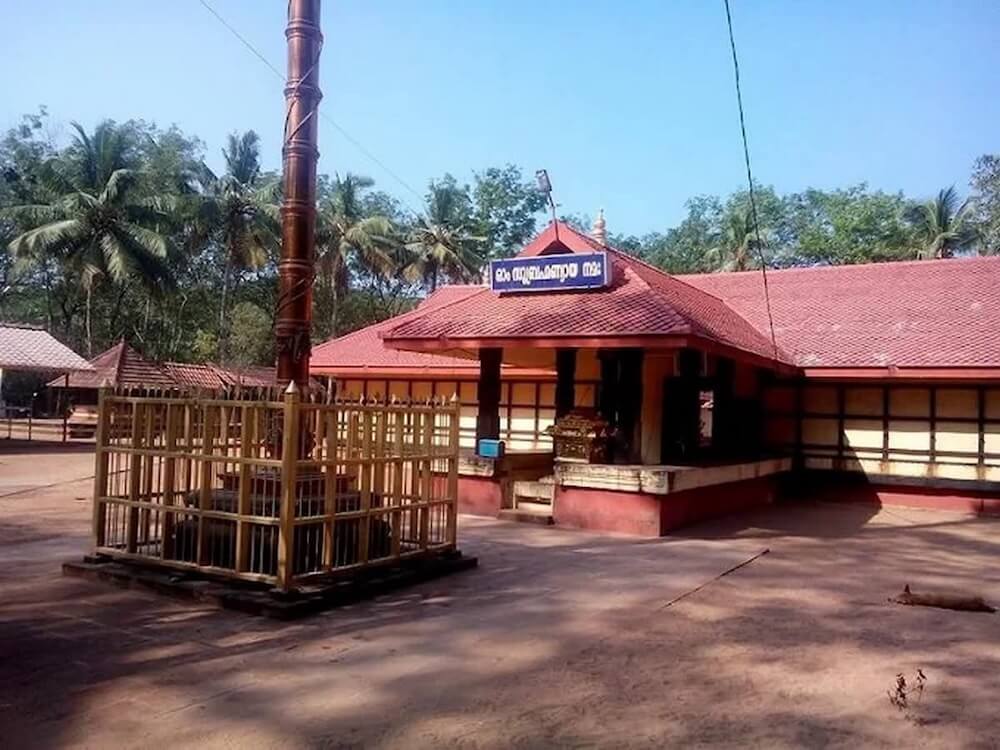
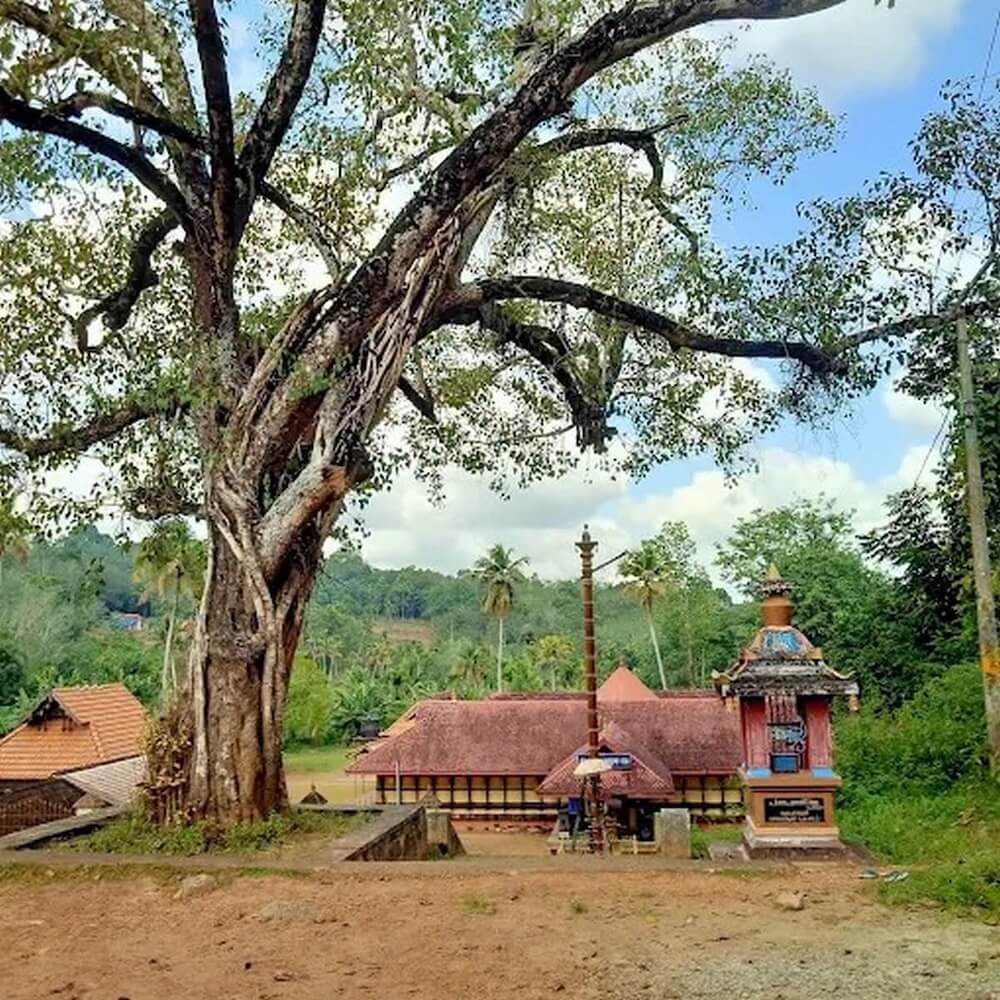
One of the main features of the temple is that the temple complex is located slightly below the level of the main road. From the road, the main features visible are the padippura-style entrance gate and the compound wall. To enter the temple, devotees have to descend a large set of granite steps. The spacious entrance courtyard and the temple complex become fully visible after reaching the lower level. A large lamp tower stands around the nalambalam. 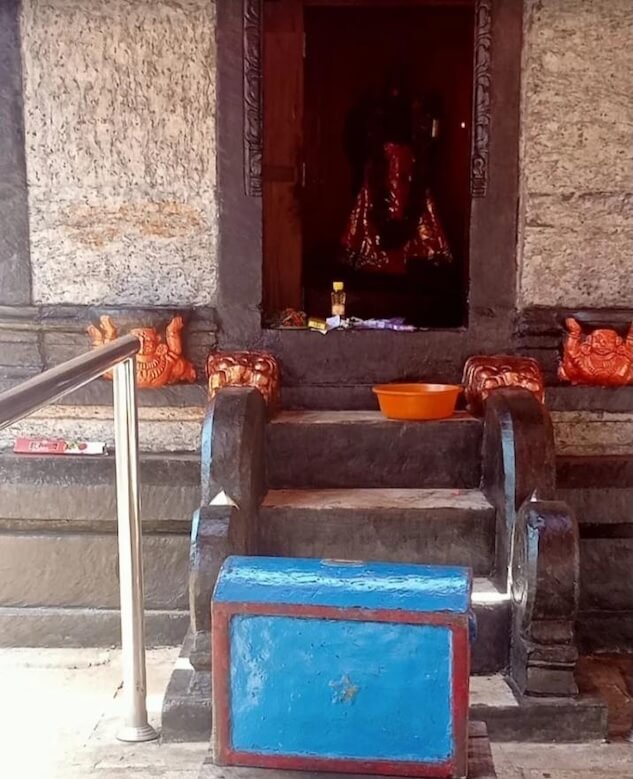 Just before entering the nalambalam, there is a balikkalpura with a large balikkallu. The roof of the balikkalpura has notable woodwork and carvings.
Unlike most temples, which have one main Sreekovil with other deities around it, this temple follows the Anchumoorthy concept and has specially arranged Sreekovil structures for five main deities within the nalambalam. The Sreekovils have square-shaped foundations, following traditional Thachu Shastra. The walls are built on strong Adhishtanas made of granite. The roofs are covered with copper sheets and topped with brass or gold stupikas. Granite-carved sopana steps lead to the entrance of the Sreekovil, with sculptures in the form of yali and elephant trunks on either side. Stone pranalas are also provided on the sides of the Sreekovils to drain the water used for abhishekam. Within the same nalambalam, Sree Subrahmanya is worshipped in child form, Mahadeva in the form of a Shiva Linga, Mahavishnu in four-armed form, along with Ganapati and Sastha, all with equal importance. The idols are mainly carved from Krishna-shila or black granite. Mahavishnu is depicted in four-armed form, holding a conch, chakra, gada and padma. Special poojas and worship are also performed for the Sudarshana Chakra. The five main deities are arranged facing east.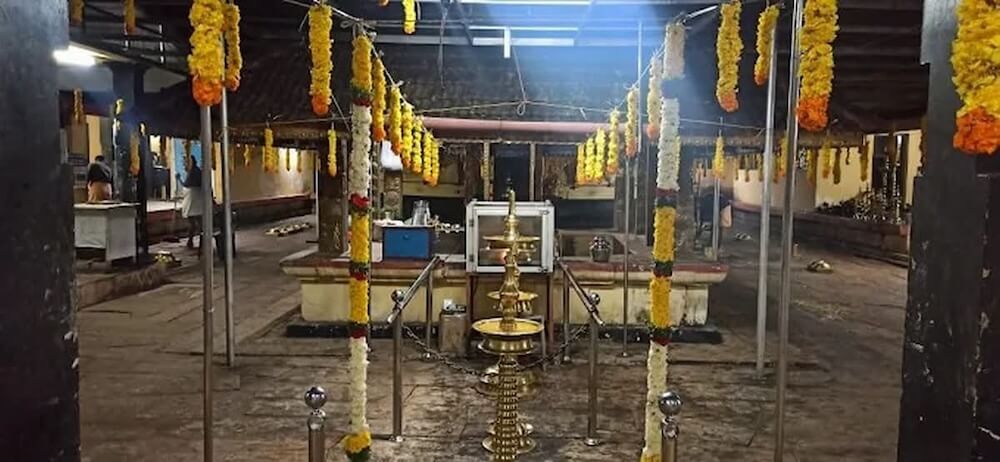
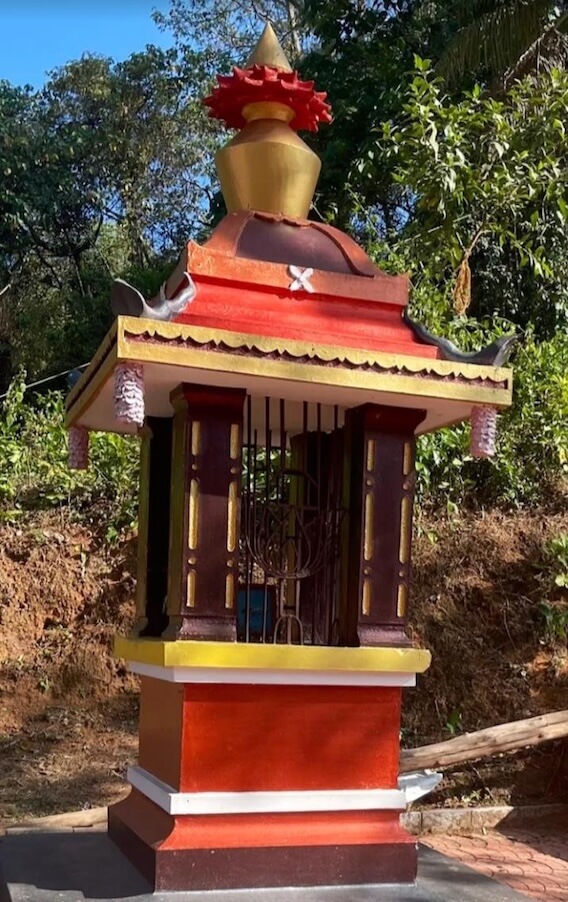
Besides the five main deities, other deities also have separate forms of worship. A special Naga kavu and Nagathara for Naga Raja and Naga Yakshi are located in the north-western part of the temple complex, known as the Vayukona. Outside the nalambalam, Sree Bhagavathy is worshipped in the peaceful form of Durga. A shrine for Brahmarakshas is located outside the nalambalam in the north-eastern part, known as the Eshanakona.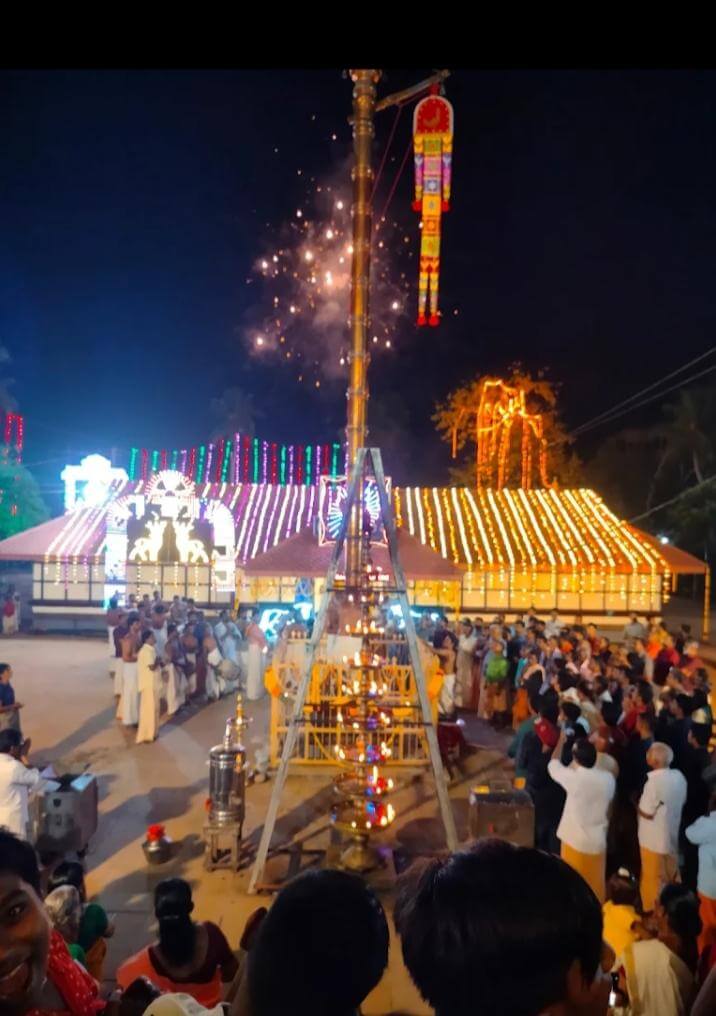 Outside the temple compound wall, Madan Thampuran, a local deity, is worshipped as a guardian deity.
The main celebration at the temple is the annual festival. It begins with the Kodiyettu and ends with the Aarattu, with special poojas and various rituals conducted during the festival days. Processions, Chendamelam, Panchavadyam and decorated elephants are important parts of the celebrations. Traditional temple art forms are also performed during this period. The use of a special bull-faced palanquin during the festival rituals is an important traditional feature of the temple. The Mandala-Makaravilakku period, from the 1st day of Vrischikam to the 11th day of Dhanu, is also observed with importance. Special poojas and worship are conducted during this period due to the presence of Sastha. Thrikkarthika is celebrated on the Karthika day of Vrischikam by lighting lamps around the temple. On Mahashivaratri, special Yama poojas and Laksharchana are performed for Mahadeva. During Karkidakam, Ramayana recitation and special prayers are held throughout the month, while Vidyarambham and Devi poojas are conducted during the Navaratri days in Kanni.
Special offerings are performed for the five main deities and other deities at the temple. Palabhishekam, Panchamritham, Narangamala and Bhasmabhishekam are important offerings for Sree Subrahmanya Swami. Palabhishekam and Panchamritham are performed for the Lord’s favour and relief from illness, 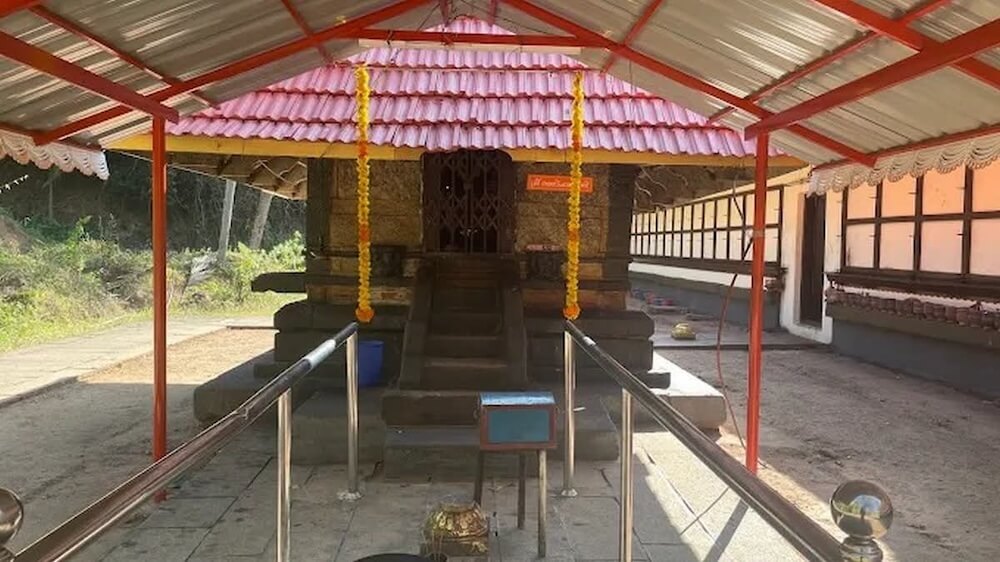 while Narangamala is offered for the removal of enemy-related doshas and obstacles and Bhasmabhishekam for peace of mind and prosperity. Dhara, Shankhabhishekam and Koovalamala are important offerings for Mahadeva; Dhara and Shankhabhishekam are performed for the removal of doshas, while Koovalamala is offered for long life and good health. Palpayasam and Tulasi mala are important offerings for Mahavishnu and are made for prosperity and family well-being. Ganapathi Homam is performed for the removal of obstacles, while Modakam and Karukamala are offered for education and intelligence. Neeranjanam, performed by lighting a sesame wick,
 is an important offering for Sastha for the removal of Shani dosha, while Ashtabhishekam is especially performed during the Mandala season. Noorum Paal is offered at the Nagathara to Naga Raja and Naga Yakshi for relief from Naga dosha, while Palpayasam is an important offering to Brahmarakshas.
The temple’s daily pooja rituals begin at 05:00 AM with Nirmalya Darshan as the temple opens. At 05:30 AM, abhishekam is performed for the five main deities using holy water and other offerings, followed by Malar Nivedyam. Ganapathi Homam is conducted at 06:00 AM, followed by Usha Pooja and nivedyam at 07:30 AM. Ucha Pooja and nivedyams are performed at 09:30 AM, after which the temple closes for the morning at 10:00 AM. The temple reopens at 05:00 PM for evening darshan. Deeparadhana with camphor lamps and chuttuvilakku is performed at 06:30 PM and Thrikkannu Darshan at the Shiva shrine is also held at this time. Athazha Pooja and nivedyam are offered at 07:00 PM, followed by Thrippuka, after which the temple closes at 07:30 PM.
Key highlight :-
- Located 10 km from Kottarakkara, 22 km from Punalur and 35 km from Kollam city.
- 13 km from Kottarakkara railway station.
- KSRTC and local bus facilities are available to the temple.
- Private vehicles can be parked in the temple’s parking area.
- Accommodation and food facilities are available in the nearby towns.
उम्मन्नूर श्री अंचुमूर्ति मंदिर
उम्मन्नूर, कोट्टाराक्कारा, जिला। कोल्लम.
मंदिरे
Temples
मंदिर
મંદિરો
கோவில்கள்
దేవాలయాలు
ക്ഷേത്രങ്ങൾ
ದೇವಾಲಯಗಳು
মন্দিরসমূহ
ਮੰਦਿਰ
-
श्री भूतनाथ स्वामी मंदिर वेंदर, कोट्टरक्करा, जि. कोल्लम.
अधिक माहितीSree Bhoothanatha Swami Temple Vendar, Kottarakkara, Dist. Kollam.
View Detailsश्री भूतनाथ स्वामी मंदिर वेंडर, कोट्टाराक्कारा, जिला। कोल्लम.
विवरण देखेंSree Bhoothanatha Swami Temple Vendar, Kottarakkara, Dist. Kollam.
વિગત જુઓSree Bhoothanatha Swami Temple Vendar, Kottarakkara, Dist. Kollam.
விவரங்களைக் காண்கSree Bhoothanatha Swami Temple Vendar, Kottarakkara, Dist. Kollam.
వివరాలను చూడండిSree Bhoothanatha Swami Temple Vendar, Kottarakkara, Dist. Kollam.
വിശദാംശങ്ങൾ കാണുകSree Bhoothanatha Swami Temple Vendar, Kottarakkara, Dist. Kollam.
ವಿವರಗಳನ್ನು ವೀಕ್ಷಿಸಿSree Bhoothanatha Swami Temple Vendar, Kottarakkara, Dist. Kollam.
বিস্তারিত দেখুনSree Bhoothanatha Swami Temple Vendar, Kottarakkara, Dist. Kollam.
ਵੇਰਵੇ ਦੇਖੋ -
पूवत्तूर भगवती मंदिर पूवत्तूर, कोट्टारक्करा, जि. कोल्लम.
अधिक माहितीPoovattoor Bhagavathy Temple Poovattoor, Kottarakkara, Dist. Kollam.
View Detailsपूवत्तूर भगवती मंदिर पूवत्तूर, कोट्टाराक्कारा, जिला। कोल्लम.
विवरण देखेंPoovattoor Bhagavathy Temple Poovattoor, Kottarakkara, Dist. Kollam.
વિગત જુઓPoovattoor Bhagavathy Temple Poovattoor, Kottarakkara, Dist. Kollam.
விவரங்களைக் காண்கPoovattoor Bhagavathy Temple Poovattoor, Kottarakkara, Dist. Kollam.
వివరాలను చూడండిPoovattoor Bhagavathy Temple Poovattoor, Kottarakkara, Dist. Kollam.
വിശദാംശങ്ങൾ കാണുകPoovattoor Bhagavathy Temple Poovattoor, Kottarakkara, Dist. Kollam.
ವಿವರಗಳನ್ನು ವೀಕ್ಷಿಸಿPoovattoor Bhagavathy Temple Poovattoor, Kottarakkara, Dist. Kollam.
বিস্তারিত দেখুনPoovattoor Bhagavathy Temple Poovattoor, Kottarakkara, Dist. Kollam.
ਵੇਰਵੇ ਦੇਖੋ -
आर्यंकवू संस्थान मंदिर तिरुमंगलम रोड, आर्यनकावू, जि. कोल्लम.
अधिक माहितीAryankavu Sastha Temple Thirumangalam road, Aryankavu, Dist. Kollam.
View Detailsआर्यंकावु संस्था मंदिर थिरुमंगलम रोड, आर्यनकावु, जिला। कोल्लम.
विवरण देखेंAryankavu Sastha Temple Thirumangalam road, Aryankavu, Dist. Kollam.
વિગત જુઓAryankavu Sastha Temple Thirumangalam road, Aryankavu, Dist. Kollam.
விவரங்களைக் காண்கAryankavu Sastha Temple Thirumangalam road, Aryankavu, Dist. Kollam.
వివరాలను చూడండిAryankavu Sastha Temple Thirumangalam road, Aryankavu, Dist. Kollam.
വിശദാംശങ്ങൾ കാണുകAryankavu Sastha Temple Thirumangalam road, Aryankavu, Dist. Kollam.
ವಿವರಗಳನ್ನು ವೀಕ್ಷಿಸಿAryankavu Sastha Temple Thirumangalam road, Aryankavu, Dist. Kollam.
বিস্তারিত দেখুনAryankavu Sastha Temple Thirumangalam road, Aryankavu, Dist. Kollam.
ਵੇਰਵੇ ਦੇਖੋ