
श्रीकृष्ण स्वामी मंदिर
थोडुपुझा, जि. इडुक्की.
Sree Krishna Swamy Temple
Thodupuzha, Dist. Idukki.
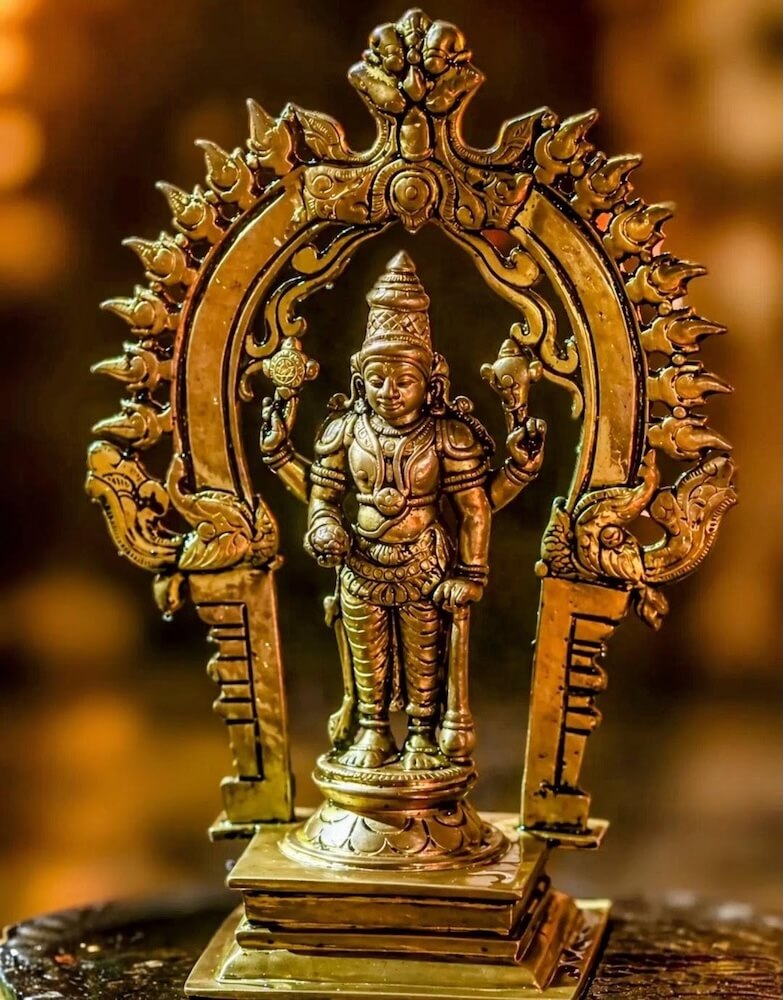 In the heart of Thodupuzha, the industrial capital of Idukki district, the historic Thodupuzha Sree Krishna Swamy Temple stands on the northern bank of the Thodupuzha River. The main deity is worshipped as Navaneetha Krishna, holding butter in his right palm. The Tantric rights of the temple belong to Aramalloor Kavanattu Mana. The daily poojas are performed by two monasteries, Padinjare Madham and Thuruthhel Madham.
The history of this region begins with the period of the Kingdom of Keezhmalainadu. The area was ruled by the kings of Keezhmalainadu from the 14th century until AD 1600. During this period, the Keezhmalainadu king built the first Sreekovil (sanctum sanctorum) for the deity and installed the idol. Historians date the construction of the temple to between AD 1400 and 1550. In the historic war of AD 1600, the Vadakkumkoor king defeated Keezhmalainadu and brought the region under his rule. The protection of the temple then passed to the Vadakkumkoor royal family and the temple was later managed in connection with their headquarters at Karikode. Towards the end of the 18th century, between about AD 1780 and 1790, several Brahmin families migrated south from northern Kerala to escape the invasion of Malabar by Tipu Sultan.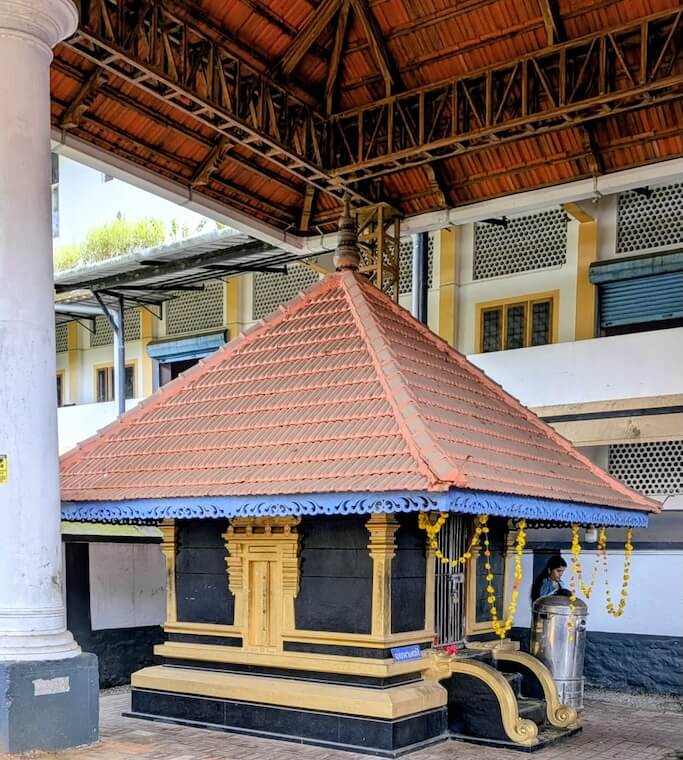 A spiritual teacher known as a Yogeeswaran was among those who came south and later carried out major spiritual restoration work at the temple.
When Maharaja Marthanda Varma defeated Vadakkumkoor, around AD 1750, this region and the temple came under the rule of Travancore. Later, with the formation of the Travancore Devaswom Board in the 20th century, the administration of the temple came under its control. In the modern period, the temple developed into one of the important cultural centres of Thodupuzha. The major modern renovation in the temple’s history took place in AD 1978, on Kumbham 26, 1153 in the Malayalam calendar. On this occasion, extensive renovation rituals (Naveekarana Kalasam), Jeeva Kalasabhishekam and re-consecration were carried out. The temple is officially administered by a Board of Trustees under Tharananelloor Mana and a Temple Advisory Committee elected from among the devotees.
The main legend associated with this region is linked to the Mahabharata. It is believed that the Pandavas stayed in this area during their exile and established five Krishna temples here. 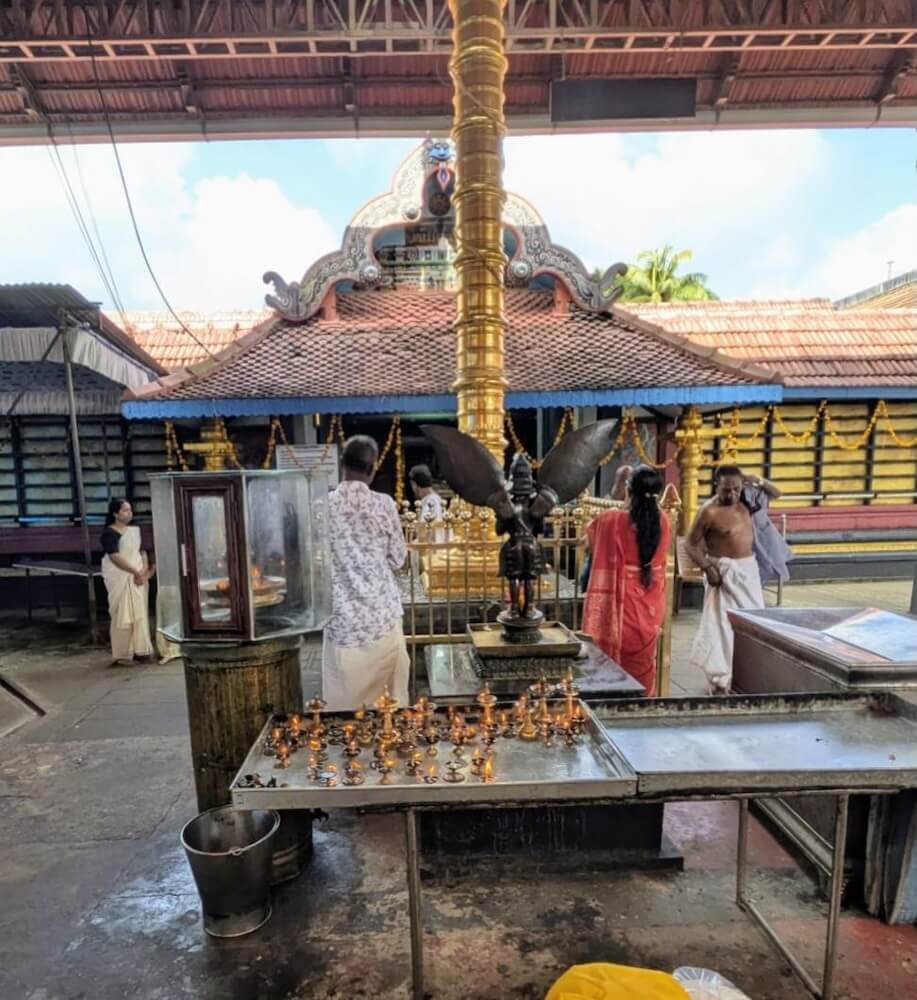 The main temple at Thodupuzha is traditionally said to have been established by the eldest Pandava, Yudhishthira (Dharmaputra). Another legend is associated with the form of the deity worshipped here. According to the Mahabharata, Bhima killed Asura Bakasura during the Pandavas’ exile. The deity here is traditionally worshipped in the form of young Krishna sitting with an intense hunger after the killing of Bakasura. The legend says that regular offerings and feasts are conducted at the temple to satisfy this unending hunger.
Another local legend is associated with the origin of the temple. In ancient times, a Brahmin spiritual teacher known as a Yogeeswaran, who had left Lakshmigramam in northern Kerala and travelled from place to place, reached the banks of the Thodupuzha River. There, he had a divine vision of Lord Krishna emerging from a hollow in a tree. Filled with joy, he entered the Thodupuzha River, purified himself, lit a lamp and offered the simple food he had with him to the deity. According to the legend, this happened on the Chothi nakshatra day in the Malayalam month of Meenam. The temple’s famous Chothioottu, a free feast for devotees, is held to commemorate this event. 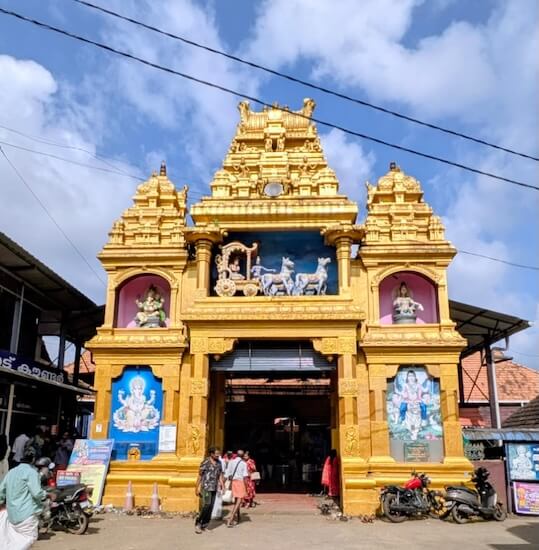 The deity is traditionally believed to protect devotees from serious dangers and provide quick relief in times of trouble. As part of this belief, parents also perform a special ritual of offering their children at the deity’s shrine, known as Adimayiruthal, seeking relief from childhood ailments and other difficulties.
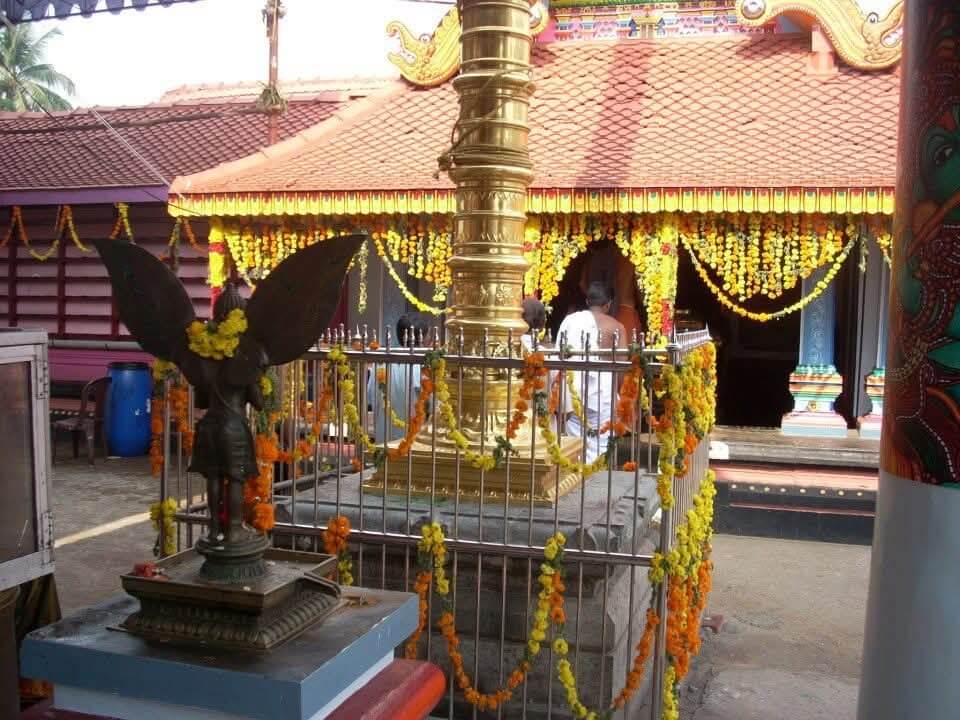
The temple is only a few yards from the main road in Thodupuzha town and faces east. From the road, the large gateway (padippura/gopuram) and the wide elephant shed beside it can be seen. A large banyan-tree platform stands in front of the temple. The Thodupuzha River, which flows along the southern and western sides of the temple and the temple’s aarattu kadavu beside the river can also be seen from outside. The temple’s own ‘Krishnatheertham’ auditorium, one of the larger wedding halls in central Travancore, is also visible from outside. After the elephant shed, the large flagstaff is the first feature seen, with the balikkalpura containing a large balikkallu directly behind it. During festivals, the deity’s thidambu is taken outside the Sreekovil and placed on the Nilapaduthara in the temple courtyard. The outer walls of the chuttambalam are decorated with a five-tiered lamp tower made of black stone. Lamps arranged on all five levels are lit during the evening Deeparadhana.
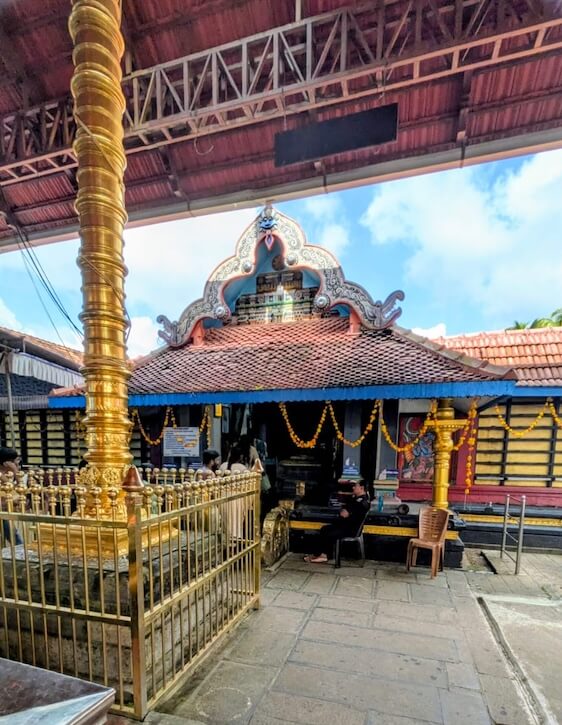
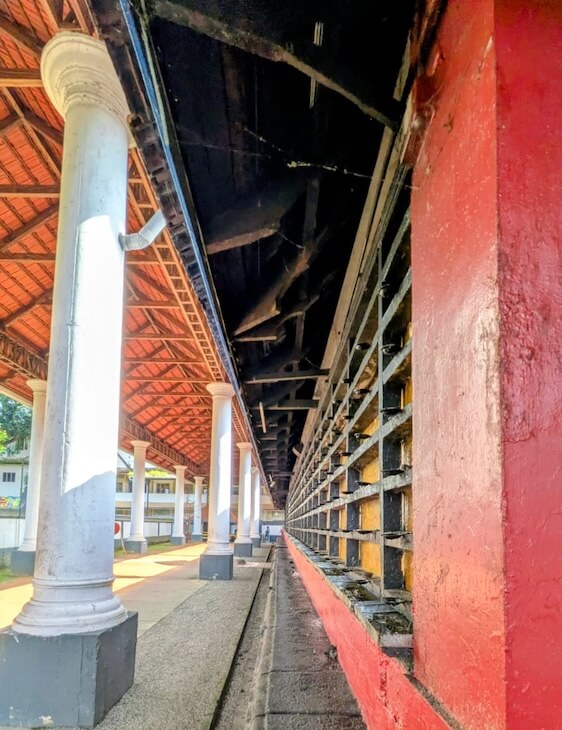
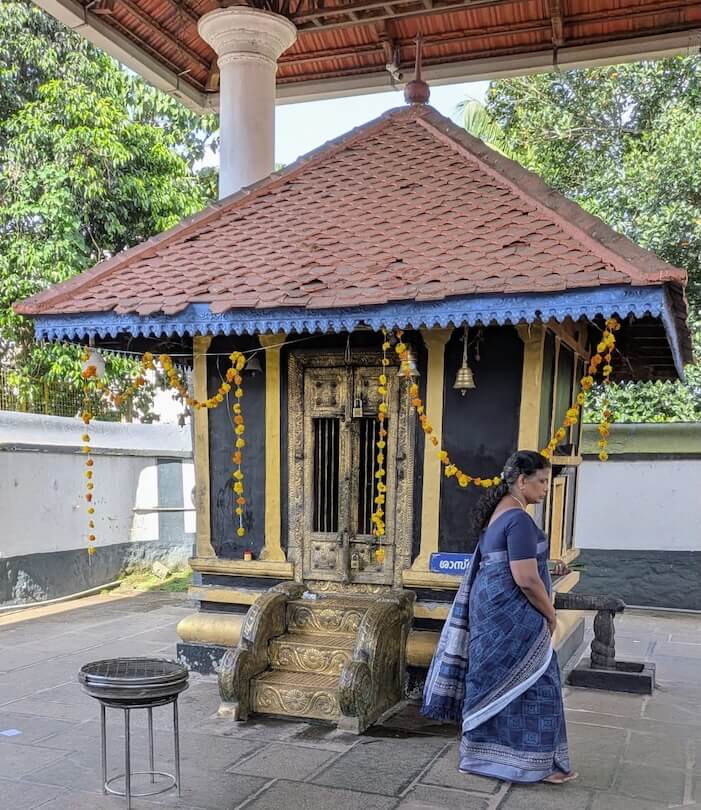
The Sreekovil housing the main deity is built in the dwithala square style of Kerala temple architecture. The two-storeyed Sreekovil has a foundation and walls made of black stone, while its roofs are covered with copper sheets and topped with golden thazhikakkudams. The steps leading to the garbhagriha are gold-plated, with vyali faces and carvings on both sides. Black-stone Dwarapalaka sculptures stand on either side of the doorway. A wide pradakshina path paved with black stone surrounds the Sreekovil, with a namaskara mandapam made of wood and black stone in front. The pillars and roof of the mandapam have wood carvings depicting stories from the Puranas. The four-armed idol, carved from Anjanashila, holds a conch, discus, mace and lotus and has the form of Mahavishnu. However, the poojas and mantras follow the Balakrishna concept and devotees worship the deity as Navaneetha Krishna, holding butter in his right palm. The idol faces east and the shrine is arranged so that the morning sunlight falls on the deity’s feet. A golden prabhavali surrounds the idol.
In the south-west corner (Kannimoola) of the main Sreekovil, Ganesha is installed facing east. Inside the nalambalam, a shrine for Parameswara is located in the north-west corner, while Parvathy Devi is worshipped as ‘Thooninmel Bhagavathy’ on one of the main pillars. Dharmasastha (Ayyappan) is installed in a separate Sreekovil outside the nalambalam on the southern side of the temple, with a shrine for Durga Devi nearby. In the north-west corner (Vayukona) of the temple compound, beside the sacred grove, is a naga thara with Naga Raja and Naga Yakshi. The Yogeeswaran associated with the origin of the temple is worshipped as an upadevata at a separate place within the temple grounds. A Salagrama, regarded as having the presence of Vishnu, is also kept at a special place for worship.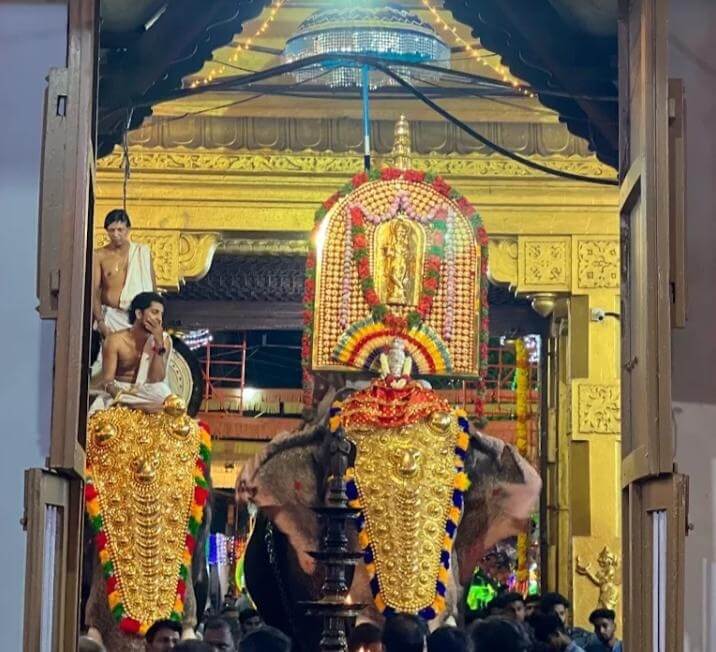
The annual festival is held every year in the Malayalam month of Meenam (March/April) and lasts for 10 days after the ceremonial flag hoisting. Utsavabali on the ninth day is one of the main ceremonies, while the festival concludes on the tenth day with aarattu in the Thodupuzha River. Elephant processions and various cultural programmes are also held during the festival. Chothioottu, held on the Chothi nakshatra day in Meenam, is an important ceremony linked to the history and legend of the temple. A large free feast is served to devotees on this day in memory of the offering made by the Yogeeswaran when he first received the vision of the deity. Sri Krishna Jayanthi is celebrated on Ashtamirohini in the Malayalam month of Chingam (August/September), with a special Appa offering and pushpabhishekam. In the evening, processions from different parts of the area meet in the temple courtyard. Prathishta Day is observed on the Uthrattathi nakshatra in Kumbham (February/March). Special poojas are performed on this day to commemorate the Naveekarana Kalasam and re-consecration carried out in AD 1978 (1153 in the Malayalam calendar). 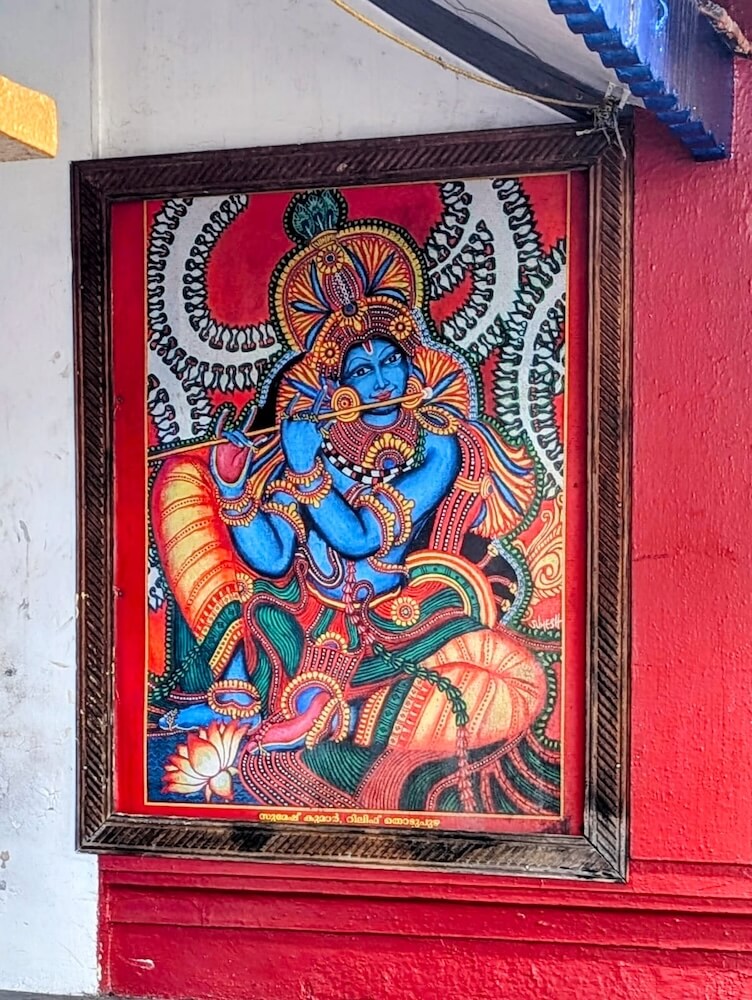 Special poojas are also held during the 41-day Mandala season from Vrischikam 1 through Dhanum (November–January). During this period, darshan hours are usually extended and Sabarimala pilgrims also visit the temple because of the separate Dharmasastha Sreekovil.
One of the main offerings at the temple is ‘Pullum Pravum Nadaykkuvekkal’, a rare offering found only in a few temples in Kerala. It is performed to relieve childhood ailments and to prevent young children from waking suddenly in fear and crying during sleep. Silver or metal figures of an owl and a dove are waved over the child’s head and then offered at the deity’s shrine. This offering is associated with the legend of the deity killing Bakasura, who appeared in the form of a bird. ‘Thrikayyil Venna Charthal’ is another important offering, based on the form of the deity holding butter in his right palm. Devotees offer butter to the deity for children’s intellectual development, fulfilment of wishes and family prosperity. Palpayasam is an important offering, while ‘Arunazhi Payasam’ is offered with elaborate poojas for the fulfilment of major wishes. Women offer silk cloth and a thali to Thooninmel Bhagavathy on the pillar inside the nalambalam for marital fortune and a long married life. Other important offerings include ‘Manjappattu Charthal’, in which yellow cloth, regarded as the favourite colour of the deity, is offered; 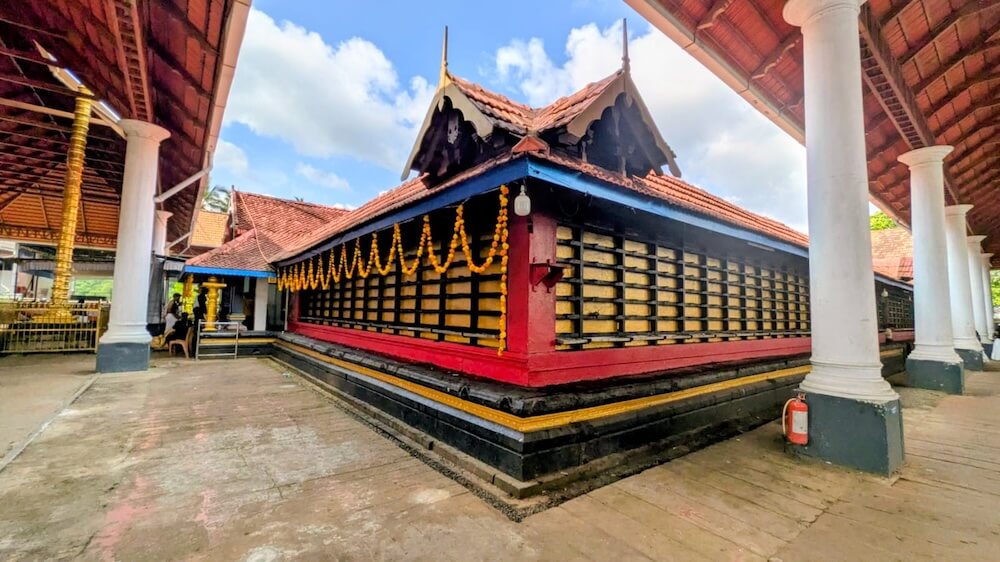 ‘Rajagopala Mantra Pushpanjali’ for career progress and prosperity; and ‘Adimayiruthal’, in which children are temporarily offered at the deity’s shrine with prayers for protection from illness and danger.
The temple’s daily pooja begins at 04:00 AM with the opening of the doors and Nirmalya Darshan. Abhishekam and Malar Nivedyam are performed at 04:15 AM, followed by Usha Pooja at 06:30 AM and Ucha Pooja at 11:30 AM. The doors close at 11:45 AM. In the evening, the doors reopen at 04:30 PM. Deeparadhana is held at 06:30 PM, although the time may vary according to sunset. Athazha Pooja is performed at 07:15 PM, followed by Tripuka, after which the doors close at 07:30 PM. During special periods and days such as the Mandala season from Vrischikam 1, Vishu and the annual festival, the Devaswom Board usually extends the darshan hours according to the number of devotees.
Key highlight :-
- Located 20 km from Muvattupuzha and 24 km from Koothattukulam.
- 54 km from Aluva railway station.
- KSRTC and local bus facilities are available to the temple.
- Private vehicles can be parked in the temple’s parking area.
- Accommodation and food facilities are available near the temple.
- Contact number +91 4862222488.
श्री कृष्ण स्वामी मंदिर
थोडुपुझा, जिला. इडुक्की.
मंदिरे
Temples
मंदिर
મંદિરો
கோவில்கள்
దేవాలయాలు
ക്ഷേത്രങ്ങൾ
ದೇವಾಲಯಗಳು
মন্দিরসমূহ
ਮੰਦਿਰ
-
मुथलियारमदम श्री महादेवाचे मंदिर मुथलियारमडम, थोडुपुझा, जि. इडुक्की.
अधिक माहितीMuthaliyarmadam Sree Mahadeva Temple Muthaliyarmadam, Thodupuzha, Dist. Idukki.
View Detailsमुथलियारदमम श्री महादेव मंदिर मुथलियारदम, थोडुपुझा, जिला। इडुक्की.
विवरण देखेंMuthaliyarmadam Sree Mahadeva Temple Muthaliyarmadam, Thodupuzha, Dist. Idukki.
વિગત જુઓMuthaliyarmadam Sree Mahadeva Temple Muthaliyarmadam, Thodupuzha, Dist. Idukki.
விவரங்களைக் காண்கMuthaliyarmadam Sree Mahadeva Temple Muthaliyarmadam, Thodupuzha, Dist. Idukki.
వివరాలను చూడండిMuthaliyarmadam Sree Mahadeva Temple Muthaliyarmadam, Thodupuzha, Dist. Idukki.
വിശദാംശങ്ങൾ കാണുകMuthaliyarmadam Sree Mahadeva Temple Muthaliyarmadam, Thodupuzha, Dist. Idukki.
ವಿವರಗಳನ್ನು ವೀಕ್ಷಿಸಿMuthaliyarmadam Sree Mahadeva Temple Muthaliyarmadam, Thodupuzha, Dist. Idukki.
বিস্তারিত দেখুনMuthaliyarmadam Sree Mahadeva Temple Muthaliyarmadam, Thodupuzha, Dist. Idukki.
ਵੇਰਵੇ ਦੇਖੋ -
श्री अन्नपूर्णेश्वरी नवग्रह भद्रकाली मंदिर थोडुपुझा, जि. इडुक्की.
अधिक माहितीSree Annapoorneswari Navagraha Bhadrakali Temple Thodupuzha, Dist. Idukki.
View Detailsश्री अन्नपूर्णेश्वरी नवग्रह भद्रकाली मंदिर थोडुपुझा, जिला. इडुक्की.
विवरण देखेंSree Annapoorneswari Navagraha Bhadrakali Temple Thodupuzha, Dist. Idukki.
વિગત જુઓSree Annapoorneswari Navagraha Bhadrakali Temple Thodupuzha, Dist. Idukki.
விவரங்களைக் காண்கSree Annapoorneswari Navagraha Bhadrakali Temple Thodupuzha, Dist. Idukki.
వివరాలను చూడండిSree Annapoorneswari Navagraha Bhadrakali Temple Thodupuzha, Dist. Idukki.
വിശദാംശങ്ങൾ കാണുകSree Annapoorneswari Navagraha Bhadrakali Temple Thodupuzha, Dist. Idukki.
ವಿವರಗಳನ್ನು ವೀಕ್ಷಿಸಿSree Annapoorneswari Navagraha Bhadrakali Temple Thodupuzha, Dist. Idukki.
বিস্তারিত দেখুনSree Annapoorneswari Navagraha Bhadrakali Temple Thodupuzha, Dist. Idukki.
ਵੇਰਵੇ ਦੇਖੋ -
श्री नेल्लिकावू दुर्गा भद्रकाली मंदिर पुथेनपेरियाराम, थोडुपुझा, जि. इडुक्की.
अधिक माहितीSree Nellikkavu Durga Bhadrakali Temple Puthenperiyaram, Thodupuzha, Dist. Idukki.
View Detailsश्री नेल्लिक्कावु दुर्गा भद्रकाली मंदिर पुथेनपेरियाराम, थोडुपुझा, जिला। इडुक्की.
विवरण देखेंSree Nellikkavu Durga Bhadrakali Temple Puthenperiyaram, Thodupuzha, Dist. Idukki.
વિગત જુઓSree Nellikkavu Durga Bhadrakali Temple Puthenperiyaram, Thodupuzha, Dist. Idukki.
விவரங்களைக் காண்கSree Nellikkavu Durga Bhadrakali Temple Puthenperiyaram, Thodupuzha, Dist. Idukki.
వివరాలను చూడండిSree Nellikkavu Durga Bhadrakali Temple Puthenperiyaram, Thodupuzha, Dist. Idukki.
വിശദാംശങ്ങൾ കാണുകSree Nellikkavu Durga Bhadrakali Temple Puthenperiyaram, Thodupuzha, Dist. Idukki.
ವಿವರಗಳನ್ನು ವೀಕ್ಷಿಸಿSree Nellikkavu Durga Bhadrakali Temple Puthenperiyaram, Thodupuzha, Dist. Idukki.
বিস্তারিত দেখুনSree Nellikkavu Durga Bhadrakali Temple Puthenperiyaram, Thodupuzha, Dist. Idukki.
ਵੇਰਵੇ ਦੇਖੋ