
अरुल्मिगु देवी कन्याकुमारी भगवती अम्मान मंदिर
कन्याकुमारी दक्षिण, जि. कन्याकुमारी
Arulmigu Devi Kanyakumari Bhagavathy Amman Temple
Kanyakumari South, Dist. Kanyakumari
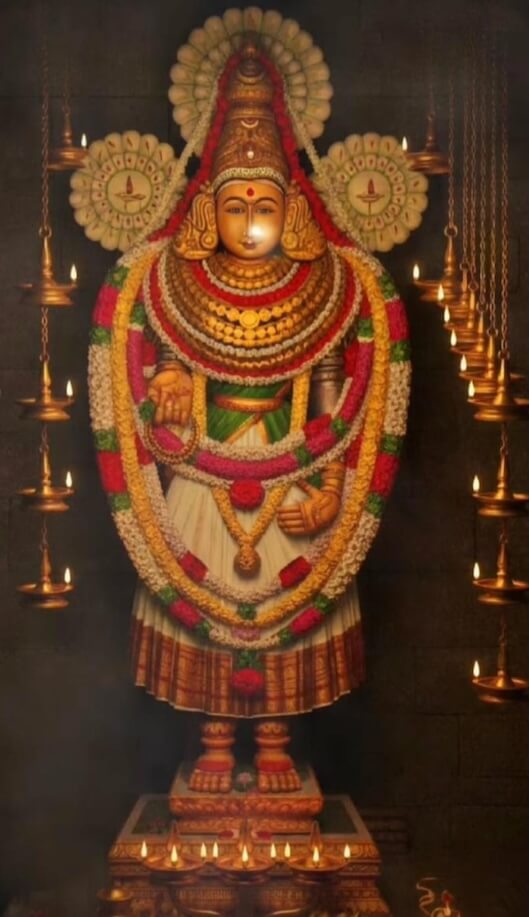 Located at the southern tip of Kanyakumari, the Arulmigu Devi Kanyakumari Bhagavathi Amman Temple is a sacred shrine believed to be more than 3,000 years old. The temple is situated near the Triveni Sangam, where the Arabian Sea, the Bay of Bengal and the Indian Ocean meet. According to Hindu belief, it is one of the 108 important Shakti Peethas.
Tamil classics such as Silappathikaram and Manimekalai, written in the 2nd century, mention this coastal temple and the worship of Kumari Devi here. The Greek traveller who lived in the 1st century CE also mentioned Kanyakumari in his work Periplus of the Erythraean Sea. Later, Ptolemy recorded Kanyakumari as an important port and a sacred place where a virgin goddess was worshipped. Vattezhuthu inscriptions found at the temple show that several South Indian dynasties renovated the temple and made administrative and financial contributions. The Pandya kings worshipped Bhagavathi as their family deity. Pandya king Maran Chadaiyan, who ruled between AD 765 and 815, is believed to have replaced the earlier structure made of earth and wood with the present Sreekovil built entirely of stone. Inscriptions from his period can be seen on the pillars of the Manimandapam in front of the Sreekovil. Inscriptions on the temple walls state that the temple received large donations of land and gold during the reigns of Rajaraja Chola and Rajendra Chola. Later, when Kanyakumari came under the rule of the Travancore royal family, several mandapams, funds for daily temple expenses and protective walls were built during the Travancore period.
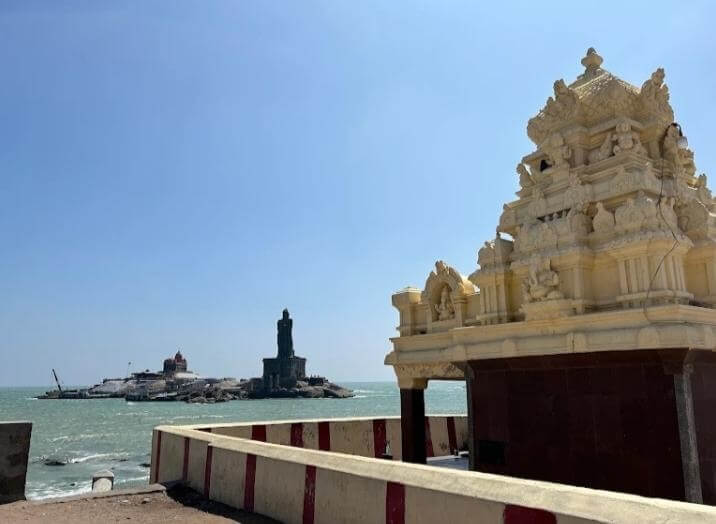
Historical records and local studies suggest that the temple was not originally located on the present coastline. It is said that the old temple stood in the area now known as Vivekananda Rock, also called Sripada Parai, in the sea. 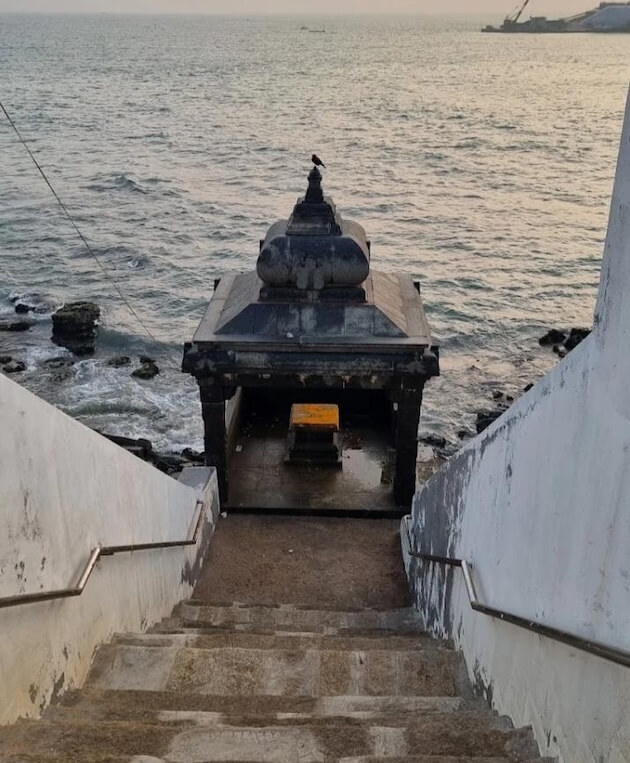 According to local historical accounts, the area was submerged due to severe sea attacks and geographical changes many centuries ago. The rulers of that period are believed to have moved the idol safely to the present land and reinstalled it there. In 1892, before travelling to America for his Chicago address, Swami Vivekananda is recorded to have visited the temple and meditated on Vivekananda Rock in the sea. The shine of the Goddess’s nose ring is also well known. It is said that, in the past, ships sometimes mistook its bright light for a lighthouse and struck the rocks near the shore. Therefore, the eastern door facing the sea is opened only on certain special festival days each year.
According to the Puranas, Banasura was a powerful asura king who performed severe penance to Brahma and received a boon that he could be killed only by a young unmarried girl. It is said that he asked for this boon out of pride, believing that women were weak and that a maiden could never defeat him. After receiving the boon, Banasura began troubling the gods and tried to take control of heaven. To seek protection from him, the gods prayed to Parashakti. In response to their prayers, Parashakti appeared as a young maiden at the southern tip of India and began severe penance and worship to defeat Banasura. Meanwhile, Lord Shiva of the Suchindram Temple was attracted by the Goddess’s beauty and devotion and wished to marry her. The Goddess agreed and the wedding was arranged. However, the gods realised that if the marriage took place, the Goddess would no longer be a maiden and would not be able to kill Banasura. To prevent the marriage, Narada, the divine sage, came up with a plan. Lord Shiva travelled from Suchindram to Kanyakumari for the wedding and had to reach there before the auspicious time at dawn. On the way, Narada took the form of a rooster and crowed at midnight. Believing that dawn had arrived and that the wedding time had passed, Lord Shiva returned to Suchindram.
The Goddess was waiting for Lord Shiva to arrive for the wedding, but when she realised that he had not come, she became deeply saddened. According to the legend, in anger, she threw the rice, pulses, other grains and dishes prepared for the wedding feast onto the seashore. Devotees believe that the multi-coloured sand and small stone-like objects found along the Kanyakumari coast are the remains of the wedding food that the Goddess threw away. As the wedding did not take place, the Goddess remained a maiden. Later, Banasura heard about the Goddess’s beauty and came to force her to marry him. 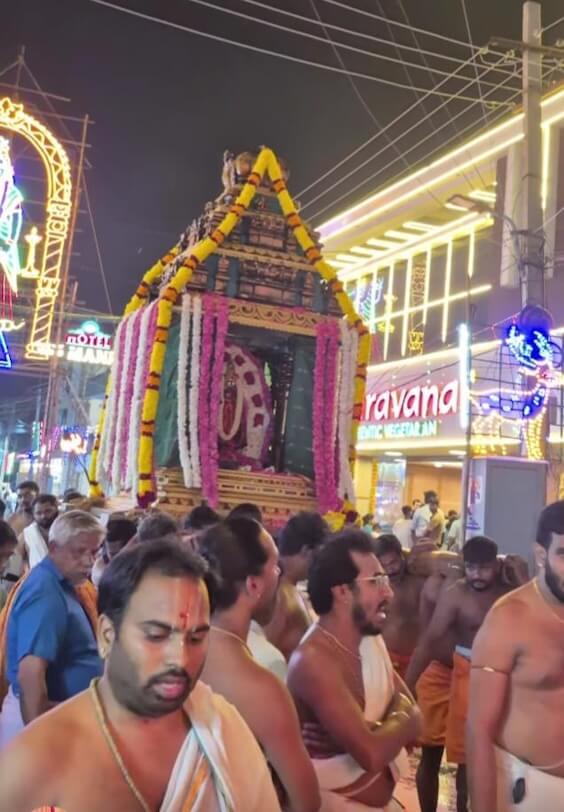 When she refused, a fierce battle took place between them. Finally, the Goddess killed Banasura with her discus. It is said that before his death, Banasura admitted his mistakes and asked the Goddess for forgiveness. Thereafter, it is believed that Bhagavathi continues to remain on this coast in the form of Balakumari, the eternal maiden, performing penance for the protection of the universe.
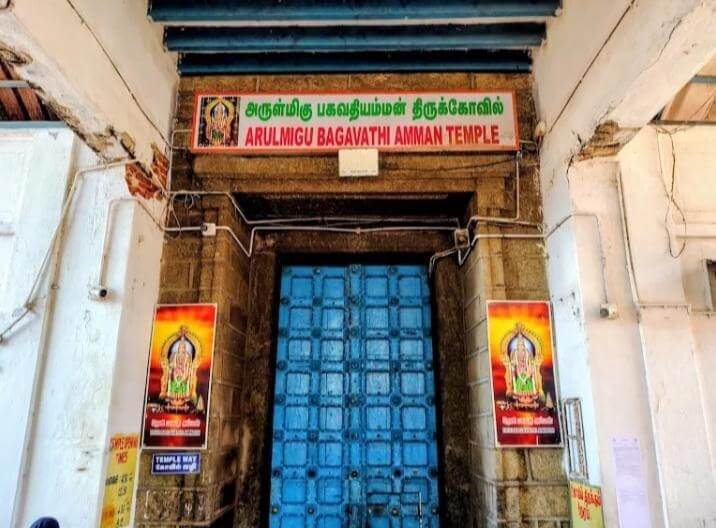
The temple is built entirely in the South Indian Dravidian architectural style. As it is located near the seashore, most of its structures are made of black stone. Different architectural styles of the Pandya, Chola and Travancore dynasties can be seen in the various mandapams. The temple does not have a large Rajagopuram. Instead of the tall towers commonly seen in South Indian temples, it has a smaller entrance decorated with beautiful stone carvings. The eastern door, facing the sea, is located on the eastern wall of the temple. This large wooden door usually remains closed. The door is opened only on five special days each year. At present, devotees enter the temple through the main entrance on the northern side. Security walls and covered areas where devotees can queue are located around the entrance. Inside, there is a wide black-stone paved path for circumambulation around the temple. Other deity shrines dedicated to Ganapathi, Kashi Vishwanathan and Thyagasundari can also be seen here. The main mandapams include the Navaratri Mandapam, which has beautifully carved black-stone pillars, and the Manimandapam in front of the Sreekovil. Some pillars of the Manimandapam produce different musical sounds when tapped and are therefore known as musical pillars.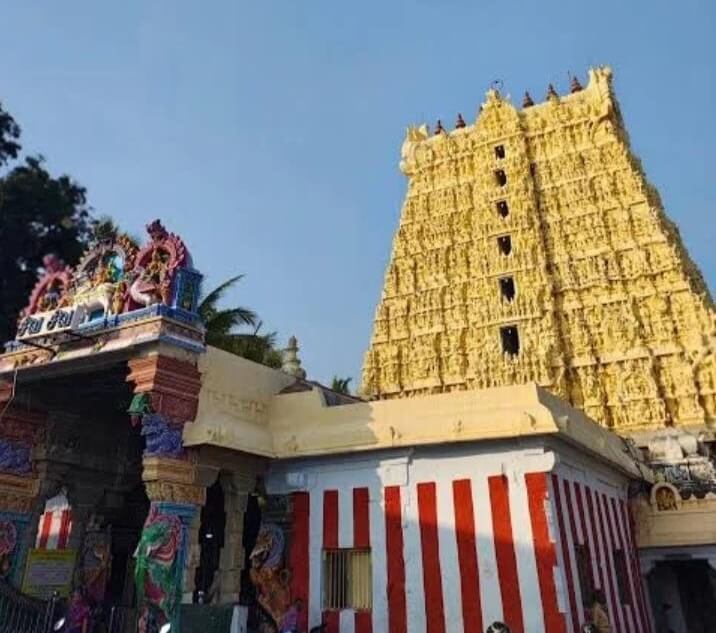 This mandapam is believed to date from the Pandya period.
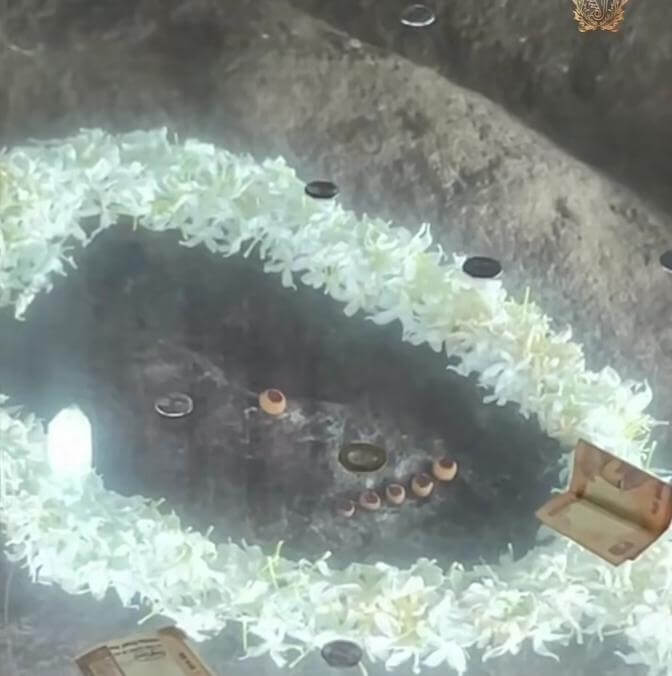
The tower above the Sreekovil is called the ‘Vimana’. Built in the traditional Tamil Pandya architectural style, it has a square structure decorated with figures of deities, small sculptures and other carvings. At the top is a gold-plated finial shaped like a lotus bud. To preserve the traditional character of old Dravidian temples, the Sreekovil is kept dark at all times. Ordinary electric lights are not used in front of the idol; devotees can see the Goddess only by the light of ghee lamps and camphor. In this dim light, the Goddess’s diamond nose ring shines brightly. The Sreekovil has two entrances. The eastern door directly faces the sea and according to legend, is the main entrance, but it usually remains closed for safety reasons. The northern door is currently used by priests to enter and by devotees to queue for darshan. 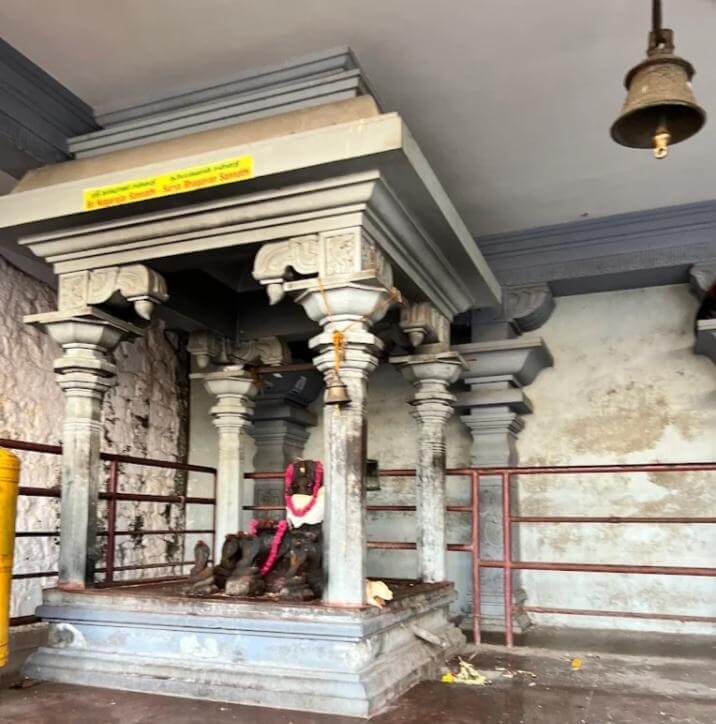 It is also said that, in the light of the lamps inside the Sreekovil, the shadow of the Goddess’s idol sometimes appears on the rear wall in the form of a large bird, particularly Garuda. According to belief, this shadow can be seen only during the pooja.
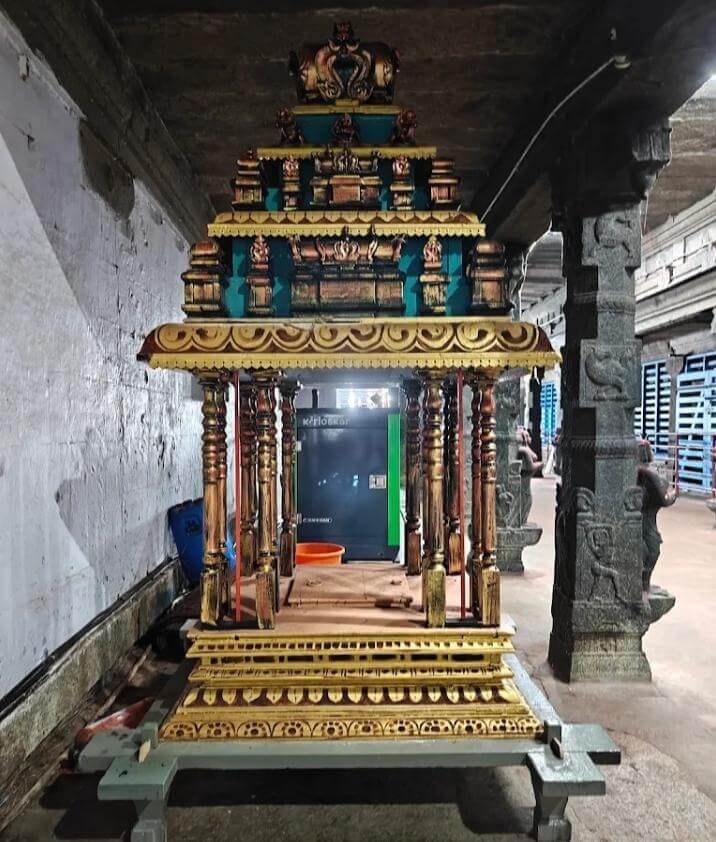
The Vaisakha Festival is the main annual festival of the temple. Held in the Tamil month of Vaikasi (May–June), it lasts for 10 days. On the ninth day, the historic Chariot Festival is held, during which the idol of the Goddess is placed on a large decorated chariot and taken through the streets of Kanyakumari. The festival concludes with the holy bath in the sea on the tenth day. The Navaratri Festival, held in October–November, lasts for nine days. During this festival, special poojas are performed in the Navaratri Mandapam, with the Goddess worshipped in different forms and decorations on each of the nine days. On Vijayadashami, Shoorasamharam is performed at a place called Papanasam. Kalabhishekam is held in the Tamil month of Aadi (July–August), when the idol of the Goddess is completely covered with sandal paste as part of a special abhishekam.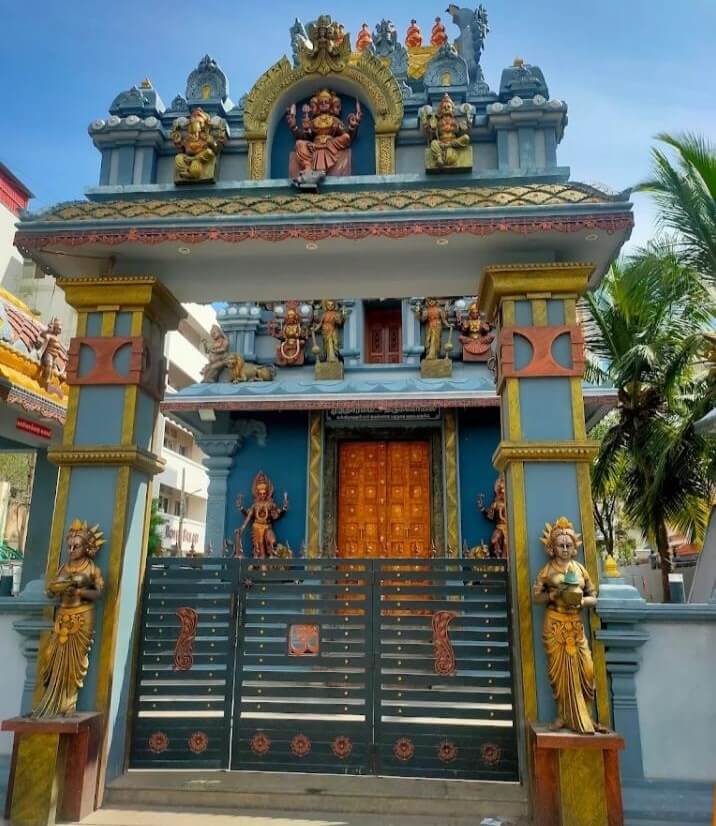 Samvatsarabhishekam is held in the Tamil month of Chithirai (April–May) on the Atham star and is observed as the consecration day of the temple. Special abhishekams are performed on the Goddess’s idol and the gold-plated finial above the Sreekovil on this day.
Due to the legend associated with the bright light of the Goddess’s diamond nose ring, the eastern door, which usually remains closed, is opened on five special days each year. These days are Tamil New Year, Thaipusam, the holy bath day of the Vaikasi Festival, Vijayadashami during Navaratri and Karthika Deepam. On these occasions, when the eastern door is opened, it is said that sunlight from the sea falls directly on the idol of the Goddess inside the Sreekovil.
The main offerings at the temple include Kumkumabhishekam, Pushpanjali, sandal paste offering, Payasam Nivedyam, silk saree offering, Thali offering, lighting of ghee lamps and Lalitha Sahasranama Archana. Kumkumabhishekam is one of the main offerings performed by devotees to seek the Goddess’s blessings. During this offering, kumkum is offered to the idol while special mantras are chanted. Married women perform this offering for a long married life, 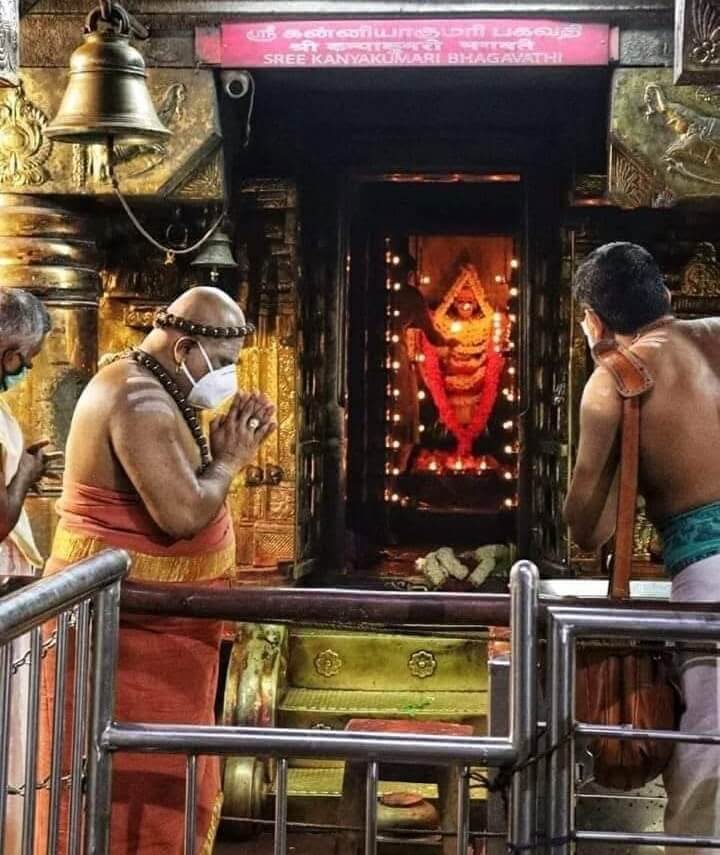 while unmarried girls perform it for a good married life. Pushpanjali is an offering of various fragrant flowers to the Goddess. Sandal paste offering involves applying sandal paste over the entire idol of the Goddess. Kadumpayasam, Neypayasam and Palpayasam can be offered as nivedyam and these are given to devotees as prasadam after the pooja. Devotees also offer silk sarees and gold or silver thalis to the Goddess. These offerings are made by devotees seeking an early marriage and a successful married life. Lighting ghee lamps and praying in front of the Sreekovil is another important practice. Lalitha Sahasranama Archana involves chanting the thousand names of the Goddess and is performed for the prosperity of the family and other needs. The offering ticket counter can be found near the northern entrance of the temple. Advance booking may be required for some major offerings, such as the silk saree offering.
The temple opens daily at 04:30 AM with Nirmalya Darshan. Vishwaroopa Darshan is held at 05:00 AM, followed by Abhishekam at 05:15 AM. Usha Pooja is performed at 06:00 AM and Ucha Pooja at 10:00 AM. After the Ucha Pooja, important offerings, including Kadumpayasam, are made to the Goddess. The temple closes at 12:30 PM and reopens at 04:00 PM. Sayaratchai Pooja and Deeparadhana are held at 06:30 PM, when camphor and ghee lamps are lit inside the Sreekovil and aarati is performed for the Goddess. Arthajama Pooja is held at 08:00 PM, followed by Palliyarai Pooja at 08:30 PM, after which the temple closes for the day. The pooja and darshan timings may change during special occasions such as Navaratri and the Vaisakha Festival.
Key highlight :-
- Located 12 km from Suchindram and 20 km from Nagercoil.
- The nearest railway station is Kanyakumari, about 1 km away.
- TNSTC and local bus facilities are available to the temple.
- Private vehicles can be parked in the temple’s parking area.
- Free general entry (nominal fees may apply for special lines or baggage counters).
- Strict traditional attire is enforced; male devotees must remove their shirts/upper garments and
- wear a dhoti or pants before entering the inner sanctum.
- Accommodation and food facilities are available near the temple.
अरुल्मिगु देवी कन्याकुमारी भगवती अम्मन मंदिर
कन्याकुमारी दक्षिण, जिला। कन्याकुमारी
मंदिरे
Temples
मंदिर
મંદિરો
கோவில்கள்
దేవాలయాలు
ക്ഷേത്രങ്ങൾ
ದೇವಾಲಯಗಳು
মন্দিরসমূহ
ਮੰਦਿਰ
-
अरुल्मिगु श्री नागराज मंदिर नागरकोइल, जि. कन्याकुमारी.
अधिक माहितीArulmigu Sri Nagaraja Temple Nagercoil, Dist. Kanyakumari.
View Detailsअरुल्मिगु श्री नागराजा मंदिर नागरकोइल, जिला. कन्याकुमारी.
विवरण देखेंArulmigu Sri Nagaraja Temple Nagercoil, Dist. Kanyakumari.
વિગત જુઓArulmigu Sri Nagaraja Temple Nagercoil, Dist. Kanyakumari.
விவரங்களைக் காண்கArulmigu Sri Nagaraja Temple Nagercoil, Dist. Kanyakumari.
వివరాలను చూడండిArulmigu Sri Nagaraja Temple Nagercoil, Dist. Kanyakumari.
വിശദാംശങ്ങൾ കാണുകArulmigu Sri Nagaraja Temple Nagercoil, Dist. Kanyakumari.
ವಿವರಗಳನ್ನು ವೀಕ್ಷಿಸಿArulmigu Sri Nagaraja Temple Nagercoil, Dist. Kanyakumari.
বিস্তারিত দেখুনArulmigu Sri Nagaraja Temple Nagercoil, Dist. Kanyakumari.
ਵੇਰਵੇ ਦੇਖੋ -
श्री थानुमलयन स्वामी मंदिर सुचिंद्रम, जि. कन्याकुमारी.
अधिक माहितीShree Thanumalayan Swamy Temple Suchindram, Dist. Kanyakumari.
View Detailsश्री थानुमालयन स्वामी मंदिर सुचिन्द्रम, जिला. कन्याकुमारी.
विवरण देखेंShree Thanumalayan Swamy Temple Suchindram, Dist. Kanyakumari.
વિગત જુઓShree Thanumalayan Swamy Temple Suchindram, Dist. Kanyakumari.
விவரங்களைக் காண்கShree Thanumalayan Swamy Temple Suchindram, Dist. Kanyakumari.
వివరాలను చూడండిShree Thanumalayan Swamy Temple Suchindram, Dist. Kanyakumari.
വിശദാംശങ്ങൾ കാണുകShree Thanumalayan Swamy Temple Suchindram, Dist. Kanyakumari.
ವಿವರಗಳನ್ನು ವೀಕ್ಷಿಸಿShree Thanumalayan Swamy Temple Suchindram, Dist. Kanyakumari.
বিস্তারিত দেখুনShree Thanumalayan Swamy Temple Suchindram, Dist. Kanyakumari.
ਵੇਰਵੇ ਦੇਖੋ -
श्री व्यंकटेश्वर स्वामी मंदिर चिन्नमुत्तम मेन रोड, विवेकानंतपुरम, जि. कन्याकुमारी.
अधिक माहितीSri Venkateswara Swamy Temple Chinnamuttom main road, Vivekananthapuram, Dist. Kanyakumari.
View Detailsश्री वेंकटेश्वर स्वामी मंदिर चिन्नामुट्टम मुख्य सड़क, विवेकानंतपुरम, जिला। कन्याकुमारी.
विवरण देखेंSri Venkateswara Swamy Temple Chinnamuttom main road, Vivekananthapuram, Dist. Kanyakumari.
વિગત જુઓSri Venkateswara Swamy Temple Chinnamuttom main road, Vivekananthapuram, Dist. Kanyakumari.
விவரங்களைக் காண்கSri Venkateswara Swamy Temple Chinnamuttom main road, Vivekananthapuram, Dist. Kanyakumari.
వివరాలను చూడండిSri Venkateswara Swamy Temple Chinnamuttom main road, Vivekananthapuram, Dist. Kanyakumari.
വിശദാംശങ്ങൾ കാണുകSri Venkateswara Swamy Temple Chinnamuttom main road, Vivekananthapuram, Dist. Kanyakumari.
ವಿವರಗಳನ್ನು ವೀಕ್ಷಿಸಿSri Venkateswara Swamy Temple Chinnamuttom main road, Vivekananthapuram, Dist. Kanyakumari.
বিস্তারিত দেখুনSri Venkateswara Swamy Temple Chinnamuttom main road, Vivekananthapuram, Dist. Kanyakumari.
ਵੇਰਵੇ ਦੇਖੋ