
श्री कूडलमणिक्यम मंदिर
इरिंजलक्कुडा, जि. त्रिशूर
Sree Koodalmanikyam Temple
Irinjalakkuda, Dist. Thrissur
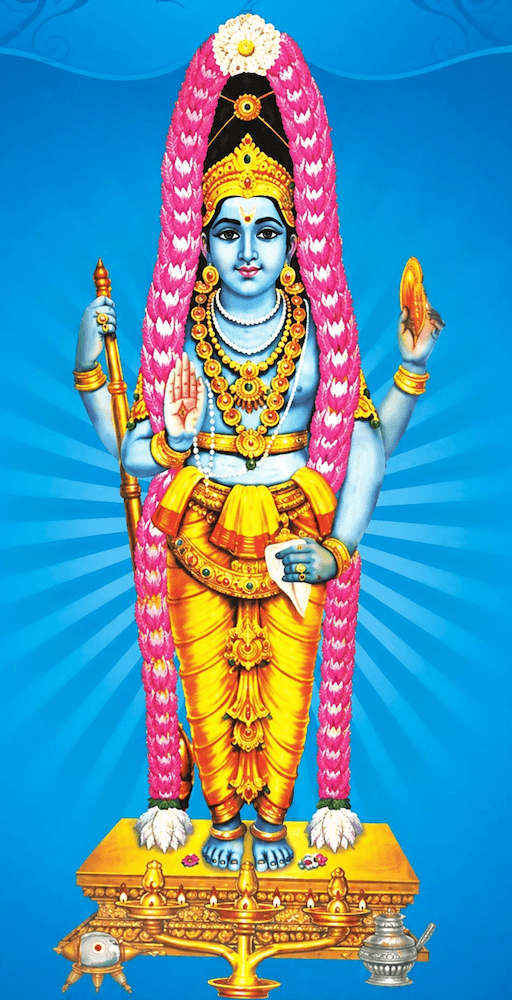 Koodalmanikyam Temple, situated at Irinjalakuda in Thrissur district, is one of the few temples in India dedicated to Bharata, the younger brother of Lord Rama, who is worshipped here as Sangameswara. Lord Bharata is worshipped here performing penance while chanting the sacred Rama Mantra. The stone idol, approximately six feet in height, is four-armed. In one of the right hands, the deity holds the Kodanda, the bow of Lord Rama, with its lower end resting upon the pedestal, while the other right hand displays the Abhaya Mudra, symbolising divine protection. One of the raised left hands bears the Sudarshana Chakra, while the other, resting against the thigh, holds the Shankha (conch). The idol is adorned with a magnificent emerald pendant and gold ornaments. A long lotus garland, draped from above the matted locks (Jatabhara), descends on either side between the arms and reaches the pedestal.
The early history of Koodalmanikyam Temple remains obscure, as the temple’s official records were destroyed on two occasions. The existing chronicles, preserved from the reign of Sakthan Thampuran (Maharaja Rama Varma IX, 1751–1805), one of the most distinguished rulers of the Kingdom of Cochin, are of comparatively recent origin. Renowned for his administrative reforms and patronage of religion, culture and public works, Sakthan Thampuran is widely regarded as the architect of modern Thrissur. Tradition attributes the foundation of the temple to Cheraman Perumal in the seventh century CE. A stone inscription recording a land grant made by a Chera ruler in Kollam Era 30 (AD 855), preserved within the temple, provides early epigraphic evidence of the temple’s antiquity. The temple originally belonged to the assembly of the forty-two illams (Brahmin households) of Irinjalakuda, of whom nine served as hereditary trustees, while the Cochin Raja also held a place among them. Historical records indicate that, in Kollam Era 512 (AD 1337), several offices of the temple assembly (Sabhayogam) were transferred to the Perumpadappu Swaroopam.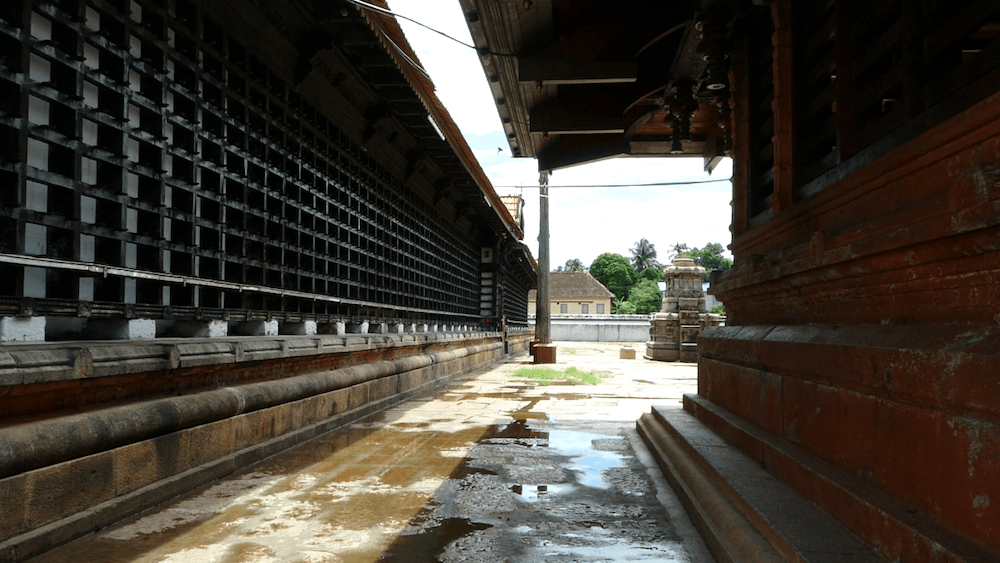
Five years later, in Kollam Era 517 (AD 1342), Thachudaya Kaimal came to the temple as the representative of the Perumpadappu Swaroopam and according to tradition, was entrusted with the construction of the present Sreekovil. Over the centuries, the temple has witnessed the changing course of Kerala’s history and served as an important centre for recording royal edicts. Stone inscriptions dating from the eighth and twelfth centuries are still preserved within the temple. Formerly embedded along the inner circumambulatory passage on the northern side of the Sreekovil, 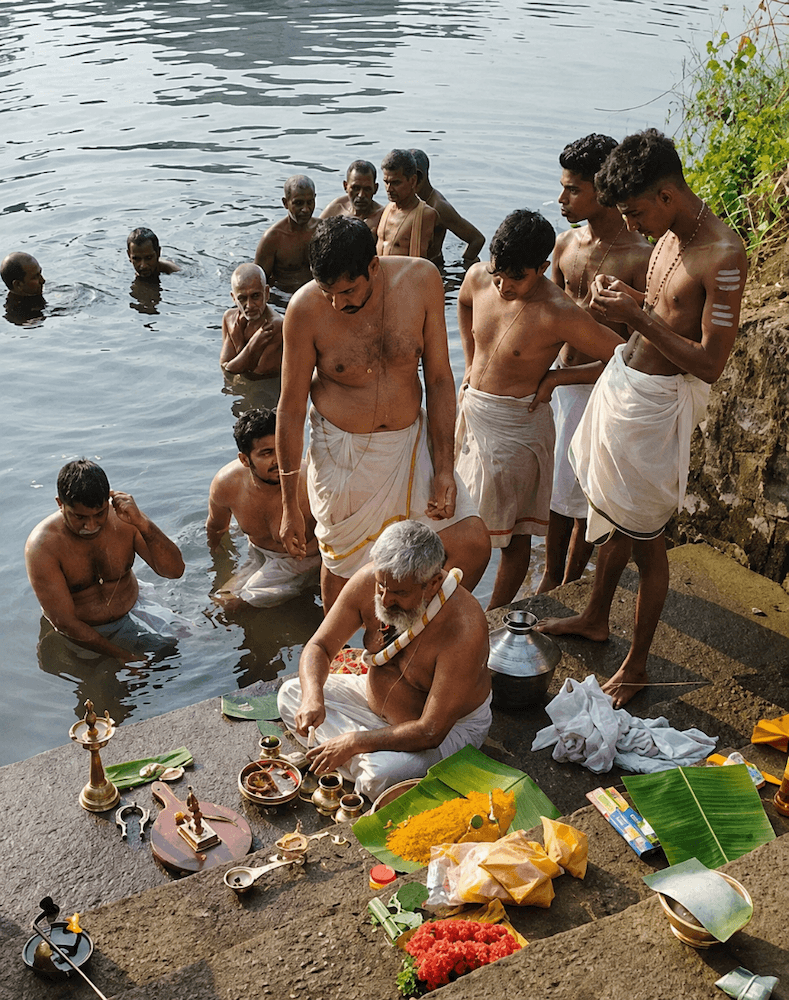 they were later relocated to the western wall for protection after centuries of wear caused by devotees walking over them.
According to temple tradition, when the ancient city of Dwaraka was submerged by the sea, the four sacred idols of the Dasharathis—Rama, Bharata, Lakshmana and Shatrughna—which had been worshipped by Lord Krishna, were set adrift upon the waters. Vakkayil Kaimal, a local chieftain of the Ponnani region, is said to have received a divine vision revealing the whereabouts of these four-armed idols. The following day, fishermen recovered the idols from the sea and presented them to him. Acting on the advice of learned astrologers, Kaimal installed the idols at four sacred sites: Thriprayar for Lord Rama, Koodalmanikyam at Irinjalakuda for Bharata, Thirumoozhikulam for Lakshmana and Payammal for Shatrughna.
Collectively known as the Nalambalam (literally, the four temples), these shrines form one of Kerala’s most revered pilgrimage circuits. Pilgrimage to all four temples during the Malayalam month of Karkidakam (the Ramayana Month) is considered especially auspicious. Another ancient tradition associates the temple with Sage Kulipini, who is believed to have performed a great yajna at Irinjalakuda in remote antiquity. 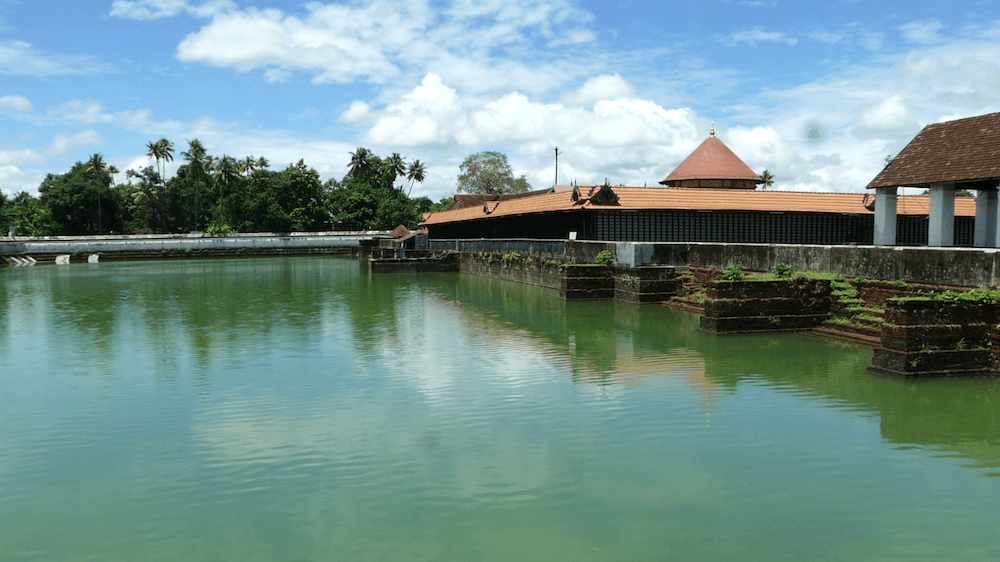 At the conclusion of the sacrifice, the sage prayed for the eternal presence of Lord Vishnu at the site. Pleased with his devotion, the Lord granted the boon and caused the sacred rivers Ganga, Yamuna and Saraswati to converge there, creating the holy tank known as Kulipini Theertham. The temple is believed to have been established at this sanctified spot at a later period. During the restoration of the sacred tank in 1996, the remains of an ancient Homakunda (sacrificial fire altar) were discovered, an archaeological finding traditionally regarded as lending support to this enduring legend. Koodalmanikyam Temple is a fine example of traditional Kerala temple architecture, set amidst a landscape of four large temple tanks.
 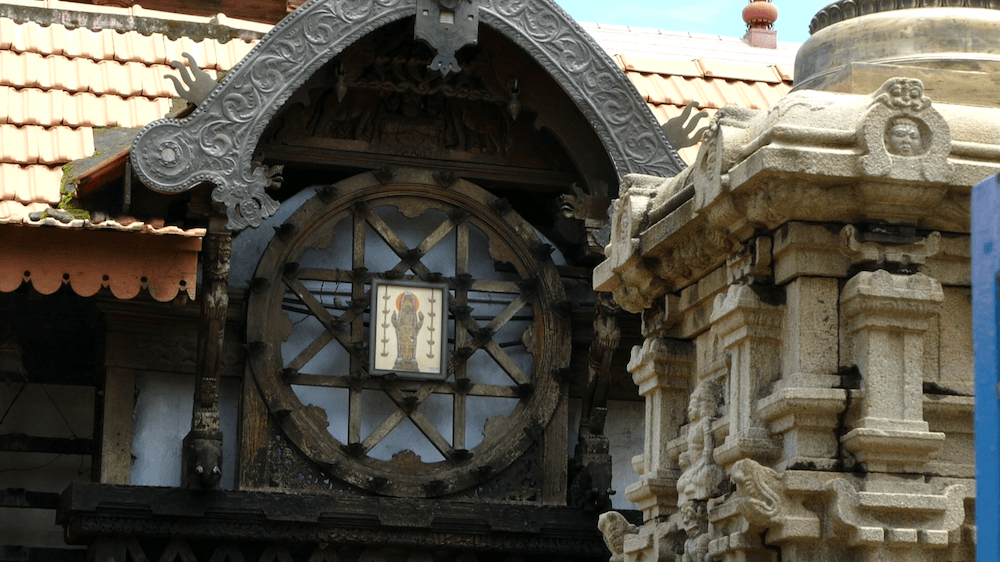 The most sacred of these is Kulipini Theertham, located within the temple precincts. According to tradition, it came into being after Sage Kulipini performed a great yajna at the site and its waters are believed to embody the presence of the sacred rivers Ganga, Yamuna and Saraswati. Water for the Arattu ceremony and other temple rituals is drawn from this sacred tank. Devotees believe that a Pradakshina (circumambulation) of the temple is complete only when it includes both Kulipini Theertham and the Koothambalam. To the east of the temple lies Kuttan Kulam, a historic pond associated with an ancient Dravidian deity,
  while two other tanks on the southern and western sides contribute to the perennial water resources of Irinjalakuda.
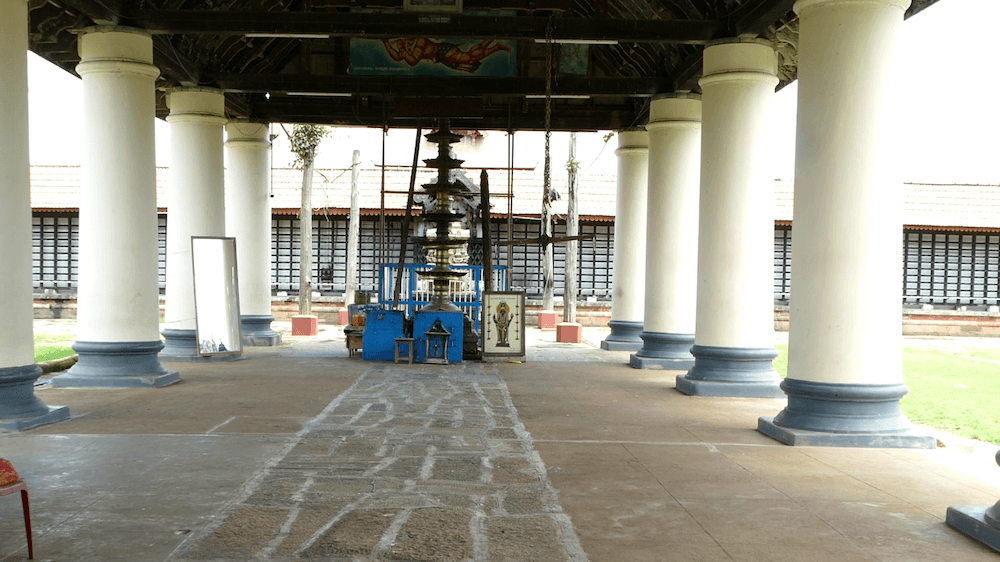
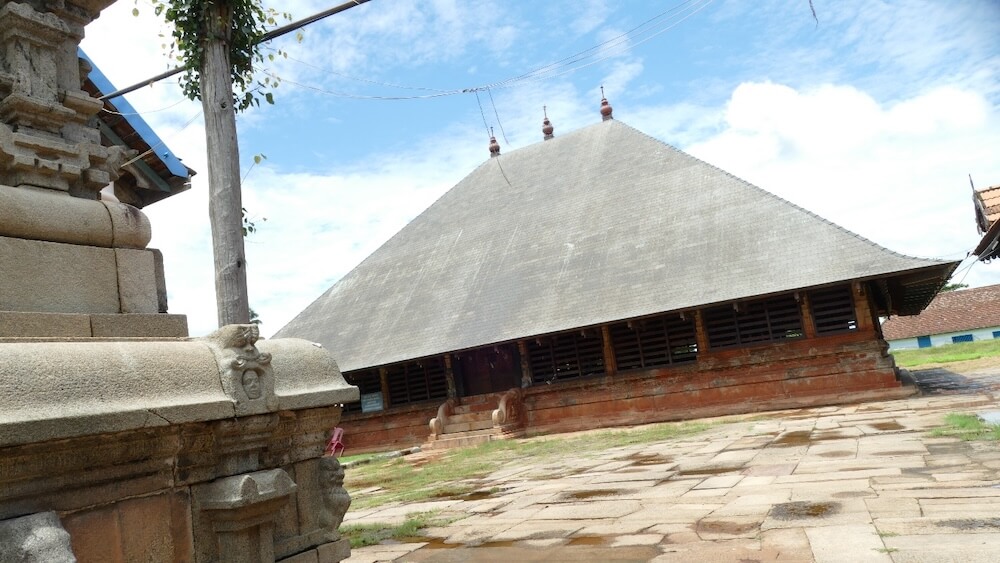
Entering the temple, one first encounters the sacred Koothambalam (temple theatre), an architectural masterpiece revered with the sanctity of the temple itself. Beyond it stand the spacious Nalambalam, Valiyambalam, Balikkalpura and the impressive Seeveli Mandapam, all exemplifying the elegance and harmony of Kerala’s classical temple architecture. The Balikkalpura and Valiyambalam are distinguished by their traditional copper-sheeted roofs. 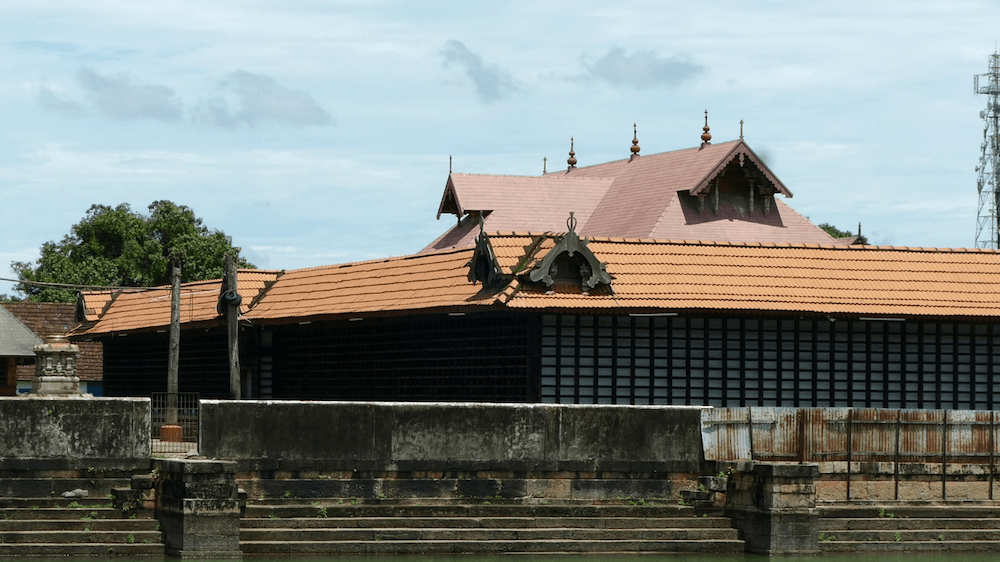 At the heart of the complex stands the magnificent two-storeyed circular Sreekovil, one of the temple’s most distinctive architectural features. The exterior walls of the sanctum are richly adorned with finely carved sculptures, reflecting the exceptional craftsmanship of Kerala’s traditional temple builders.
The presiding deity of Koodalmanikyam Temple is Bharata, the younger brother of Lord Rama. The east-facing idol, approximately the height of an adult, is adorned with a crown, traditional ornaments and a magnificent floral garland extending from above the crown to the feet. 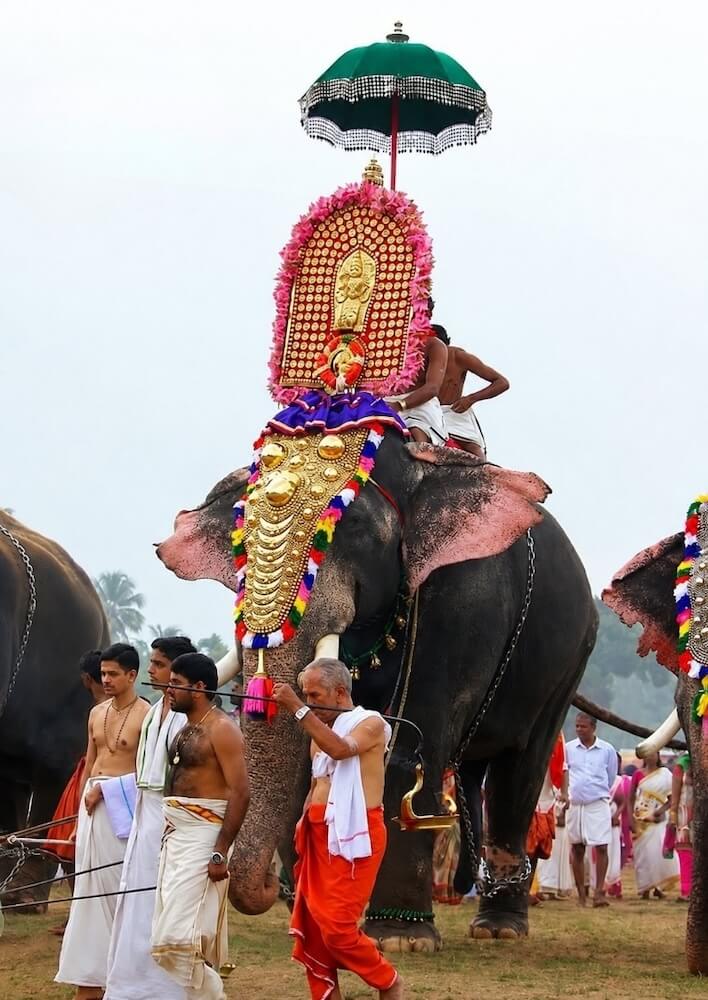 A distinctive feature of the temple is the absence of sub-shrines within the main temple precincts. However, Hanuman is traditionally believed to be present in the Thidappally (temple kitchen), while Durga and Bhadrakali are associated with the southern and northern entrances of the gateway pavilion. A shrine dedicated to Lord Ganesha stands beneath the sacred banyan tree in front of the temple.
The principal annual festival of Koodalmanikyam Temple is the eleven-day Thiruvutsavam, celebrated in the Malayalam month of Medam. Beginning with the ceremonial Kodiyettam (flag hoisting) on the Uthram star and concluding with the Arattu on Thiruvonam, the festival traditionally commences on the day following Thrissur Pooram. The celebrations begin with a performance of Koodiyattam in the temple’s sacred Koothambalam, followed by the Kodipurathu Vilakku, marking the deity’s first ceremonial procession into the temple courtyard. Nightly Vilakku Ezhunnallathu processions continue until the Valiya Vilakku, while daily Sreebali processions, accompanied by Panchari Melam and seventeen caparisoned elephants—seven adorned with gold caparisons and ten with silver—form one of the festival’s most distinctive spectacles. The Pallivetta, a symbolic royal hunt representing the triumph of righteousness over evil, is another of the festival’s unique ceremonies. Traditional performing arts, including Ottan Thullal, Chakyar Koothu, Kurathiyattam, Pathakam and all-night Kathakali performances, form an integral part of the celebrations. 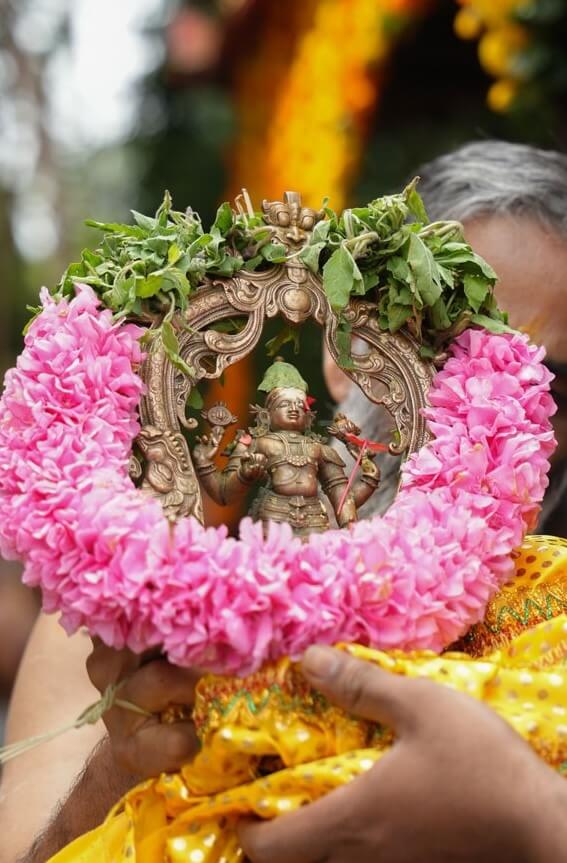 The temple also observes several important annual religious occasions, including Prathishta Dinam, the twenty-nine-day Ramayana Prabandham in Idavam, the Ramayana Month observances during Karkidakam and the Puthari festival in Thulam, followed by the distribution of the sacred Mukkudi Nivedyam, believed to bestow health and well-being upon devotees.
The temple’s principal offerings include Thamara Mala (lotus garland), Meen Oottu (feeding the sacred fish), Vazhuthananga Nivedyam (offering of brinjal), Koothu, Avil Nivedyam, Neyvilakku (ghee lamp) and Vedi Vazhipadu (ritual fireworks). Other important offerings include Kalabham, Koottu Payasam, Vella Nivedyam, prepared with four idangazhi of rice, Pal Payasam, Ney Payasam, Appam, Trimadhuram and Thulabharam. Offering prayers during the Athazha Puja continuously for forty-one days is also considered highly auspicious.
Among the temple’s most distinctive offerings is Meen Oottu, a ritual observed in only a few temples in Kerala. The fish inhabiting the sacred tank are revered as possessing a divine presence and feeding them is believed to fulfil cherished wishes and bless devotees with progeny. Another unique offering is the Thamara Mala. Devotees believe that Lord Sangameswara is especially pleased with lotus garlands and it is customary to offer a symbolic coin with the garland while praying for the fulfilment of heartfelt wishes. 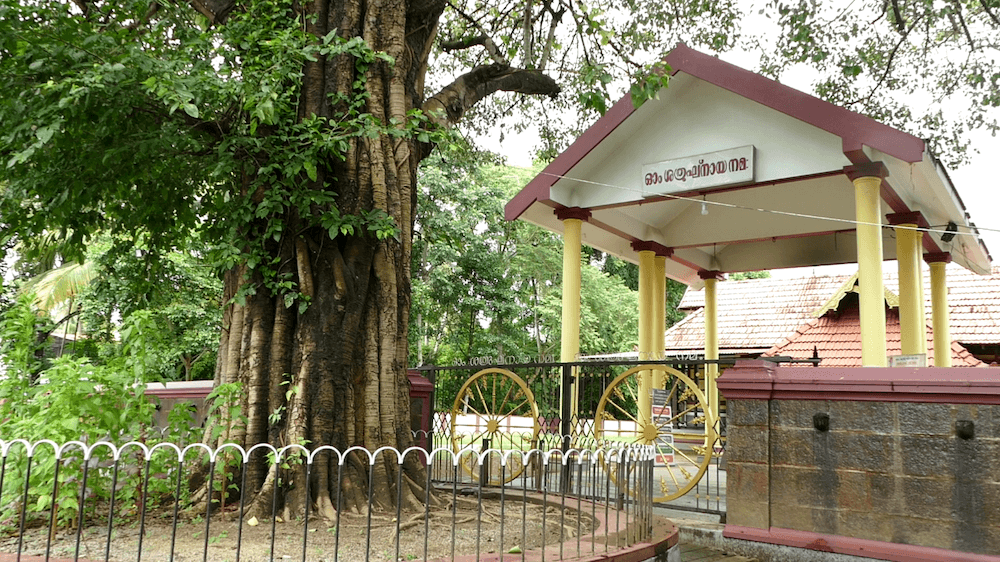 Local tradition also holds that this offering is made during the monsoon to seek divine grace for the postponement of rain during important ceremonies or other urgent occasions.
The Temple preserves several distinctive ritual practices that set it apart from most Kerala temples. Unlike the customary schedule of five daily pujas and three Sreebali processions, only Usha Puja, Ucha Puja and Athazha Puja are performed here. Rituals such as Ethirettu Puja, Pantheeradi Puja and Uthsava Bali are not observed, while the deity is taken out in procession only during the annual festival. Sree Bhootha Bali is the only bali performed. The temple opens at 4:00 a.m. for morning darshan. Ethirthu Pooja is conducted from 7:30 a.m. to 8:15 a.m., followed by darshan until the commencement of the Ucha Pooja at 10:45 a.m. After the midday worship, devotees may have darshan until 11:30 a.m., when the temple closes for the afternoon. It reopens at 5:00 p.m. for evening darshan and remains open until approximately 8:20 p.m. to 8:30 p.m., depending on the completion of the day’s rituals.
Key Highlights
- Located in the heart of the Irinjalakkuda town
- About 9 km from Irinjalakkuda Railway Station.
- Local and Kerala State Road Transport bus services are available.
- Dedicated parking is available for private vehicles.
- Accommodation and dining facilities are available nearby.
- Phone: 99617 44111
श्री कुडलमानिक्यम मंदिर
इरिंजलाक्कुडा, जिला. त्रिशूर
मंदिरे
Temples
मंदिर
મંદિરો
கோவில்கள்
దేవాలయాలు
ക്ഷേത്രങ്ങൾ
ದೇವಾಲಯಗಳು
মন্দিরসমূহ
ਮੰਦਿਰ
-
पम्बुमेक्कट्टू मना वडमा, जि. त्रिशूर
अधिक माहितीPambumekkattu Mana Vadama, Dist. Thrissur
View Detailsपम्बुमेक्कट्टु मन वडामा, जिला. त्रिशूर
विवरण देखेंPambumekkattu Mana Vadama, Dist. Thrissur
વિગત જુઓPambumekkattu Mana Vadama, Dist. Thrissur
விவரங்களைக் காண்கPambumekkattu Mana Vadama, Dist. Thrissur
వివరాలను చూడండిPambumekkattu Mana Vadama, Dist. Thrissur
വിശദാംശങ്ങൾ കാണുകPambumekkattu Mana Vadama, Dist. Thrissur
ವಿವರಗಳನ್ನು ವೀಕ್ಷಿಸಿPambumekkattu Mana Vadama, Dist. Thrissur
বিস্তারিত দেখুনPambumekkattu Mana Vadama, Dist. Thrissur
ਵੇਰਵੇ ਦੇਖੋ -
आला शंकरनारायण मंदिर आला, जि. त्रिशूर
अधिक माहितीAla Sankaranarayana Temple Ala, Dist. Thrissur
View Detailsआल्हा शंकरनारायण मंदिर अला, जिला. त्रिशूर
विवरण देखेंAla Sankaranarayana Temple Ala, Dist. Thrissur
વિગત જુઓAla Sankaranarayana Temple Ala, Dist. Thrissur
விவரங்களைக் காண்கAla Sankaranarayana Temple Ala, Dist. Thrissur
వివరాలను చూడండిAla Sankaranarayana Temple Ala, Dist. Thrissur
വിശദാംശങ്ങൾ കാണുകAla Sankaranarayana Temple Ala, Dist. Thrissur
ವಿವರಗಳನ್ನು ವೀಕ್ಷಿಸಿAla Sankaranarayana Temple Ala, Dist. Thrissur
বিস্তারিত দেখুনAla Sankaranarayana Temple Ala, Dist. Thrissur
ਵੇਰਵੇ ਦੇਖੋ -
पायम्मल श्री शत्रुघ्न मंदिर पायम्मल, जि. त्रिशूर
अधिक माहितीPayammal Sree Shatrughna Temple Payammal, Dist. Thrissur
View Detailsपयम्मल श्री शत्रुघ्न मंदिर पयम्मल, जिला. त्रिशूर
विवरण देखेंPayammal Sree Shatrughna Temple Payammal, Dist. Thrissur
વિગત જુઓPayammal Sree Shatrughna Temple Payammal, Dist. Thrissur
விவரங்களைக் காண்கPayammal Sree Shatrughna Temple Payammal, Dist. Thrissur
వివరాలను చూడండిPayammal Sree Shatrughna Temple Payammal, Dist. Thrissur
വിശദാംശങ്ങൾ കാണുകPayammal Sree Shatrughna Temple Payammal, Dist. Thrissur
ವಿವರಗಳನ್ನು ವೀಕ್ಷಿಸಿPayammal Sree Shatrughna Temple Payammal, Dist. Thrissur
বিস্তারিত দেখুনPayammal Sree Shatrughna Temple Payammal, Dist. Thrissur
ਵੇਰਵੇ ਦੇਖੋ