
तिरुनावया श्री नव मुकुंदा मंदिर
तिरुनावया, तिरूर, जि. मलप्पुरम.
Thirunavaya Sree Nava Mukunda Temple
Thirunavaya, Tirur, Dist. Malappuram.
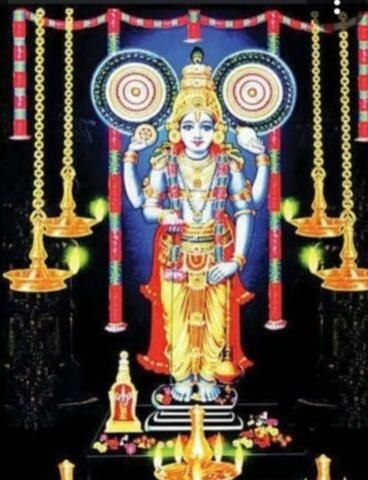 Thirunavaya Navamukunda Temple, situated on the banks of the Bharathapuzha River at Thirunavaya in Tirur Taluk of Malappuram district, is one of the oldest and most famous Vaishnavite temples in Kerala. The main deity is Lord Maha Vishnu, worshipped here as Navamukundan. One of the temple’s unique features is the presence of Goddess Mahalakshmi, the goddess of wealth and prosperity, as another principal deity. As Lakshmi is rarely enshrined in Vaishnavite temples, worship here is based on the concept of Lakshmi Narayana. The temple is also historically significant as the famous Mamankam festival was held in its surroundings, giving it an important place in the history and cultural heritage of Kerala.
According to historical records, Thirunavaya and the surroundings of Navamukunda Temple were once among the major political, cultural and religious centres of Kerala. Around 1,300 years ago, the Vettath Raja, who ruled from Tanur, extensively renovated the temple. The fine wooden carvings in the temple’s Chuttambalam are regarded as examples of this renovation. During the reign of the Cheraman Perumals in the 8th or 9th century, Thirunavaya developed into an important political centre in Kerala. At that time, the Mamankam was not merely a religious festival but also a major political gathering where the local rulers of Kerala assembled to recognise their supreme ruler.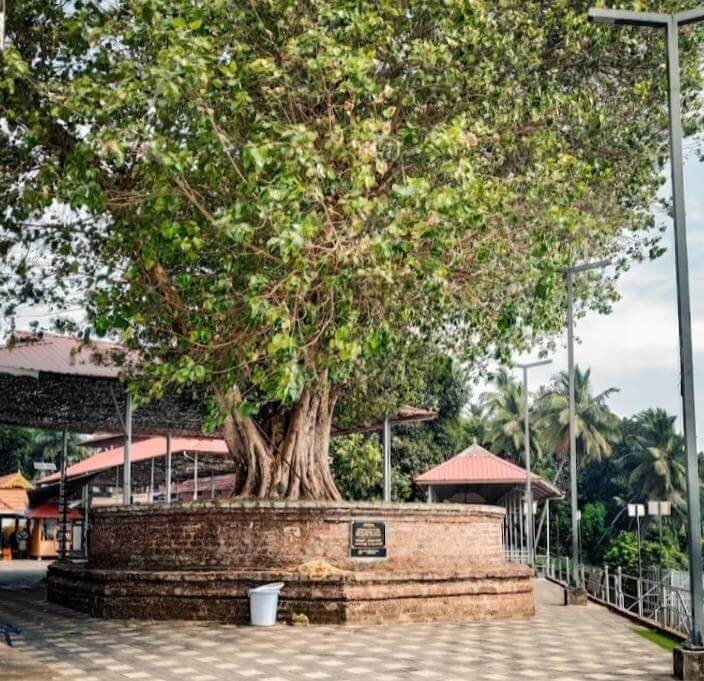 Historical records also indicate that goods brought by merchants from Arabia, China and Greece to the port of Ponnani were transported to the international trade fair held at Thirunavaya. After the end of the Cheraman Perumal rule, the right to conduct the Mamankam passed to the Valluvakonathiri, the ruler of Valluvanad. However, in the 13th century, the Zamorin of Kozhikode took control of Thirunavaya and the Mamankam, leading to the beginning of the famous Chaver battles.
In later years, Thirunavaya also served as one of the early capitals of the Perumpadappu Swaroopam (the Kingdom of Cochin). The last Mamankam festival was held here in 1766 under the leadership of the Zamorin. Towards the end of the 18th century, Tipu Sultan’s invasion of Malabar brought the Mamankam to a permanent end and the temple suffered extensive damage. Later, during the 1921 Malabar Rebellion (Mappila Rebellion), the temple was attacked again and sustained further damage.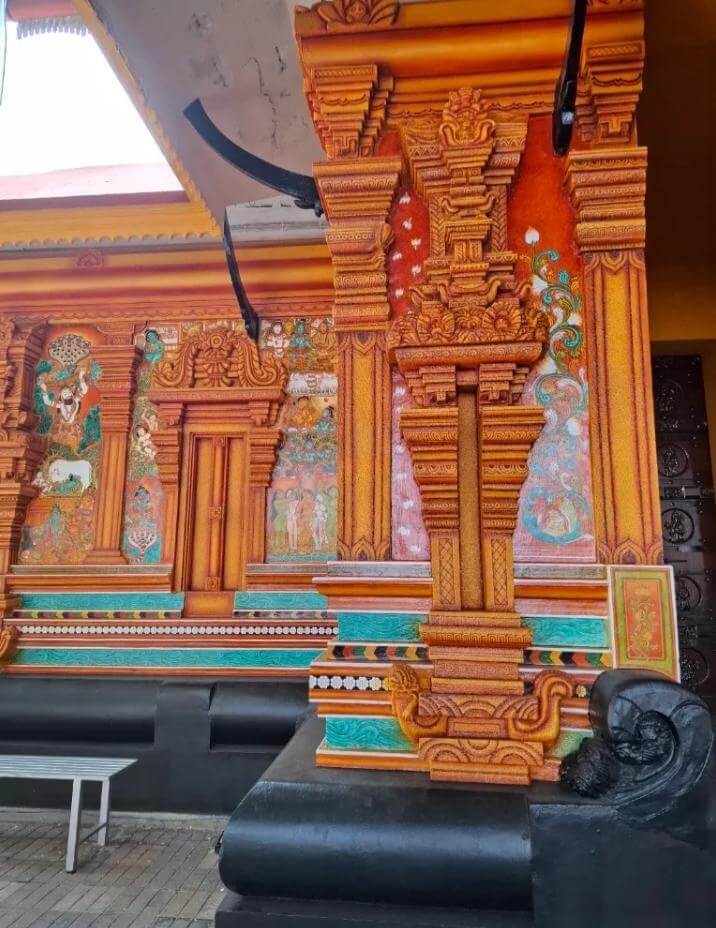 Even today, the Nilapaduthara, the Manikkinar (the well believed to have been used for disposing of the bodies of the Chaver warriors) and the Marunnara (the gunpowder store) within the temple grounds stand as reminders of these historical events.
According to the most well-known legend associated with Thirunavaya Navamukunda Temple, the temple idol was consecrated by the Navayogis (nine sages). It is believed that the idols consecrated by the first eight sages gradually sank into the earth. When the idol consecrated by the ninth sage also began to sink, he stopped it by applying force. As a result, only the portion of the idol up to the knees remains visible above the ground. According to this legend, the deity came to be known as Navamukundan, meaning “the ninth Mukunda”. It is also believed that the first eight idols still remain beneath the sanctum sanctorum.
Another well-known legend associated with the temple is about Goddess Mahalakshmi and Gajendra, the king of elephants. It is believed that Gajendra used to gather lotus flowers every day from the lotus pond near the temple to worship Lord Maha Vishnu.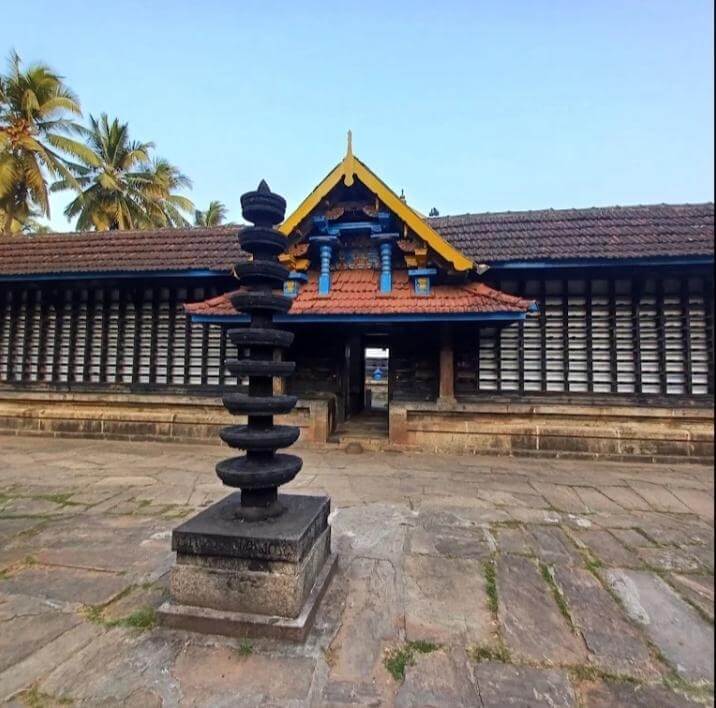 Later, Goddess Mahalakshmi began collecting all the lotus flowers early in the morning, leaving none for Gajendra. Moved by Gajendra’s prayers, Lord Maha Vishnu is believed to have appeared, seated Mahalakshmi on His left side and allowed Gajendra to continue his worship. This legend is believed to be the reason for the presence of Goddess Mahalakshmi within the sanctum. Another belief is that, after the destruction of the Kshatriyas, Parasurama performed Pithru Tharpanam on the banks of the Bharathapuzha here for his ancestors. It is for this reason that Thirunavaya is believed to have earned the title ‘Dakshina Kashi’ (Southern Kashi).
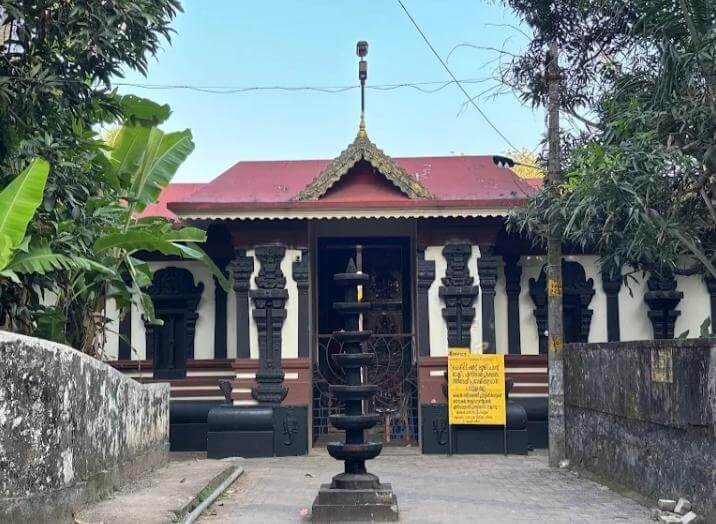
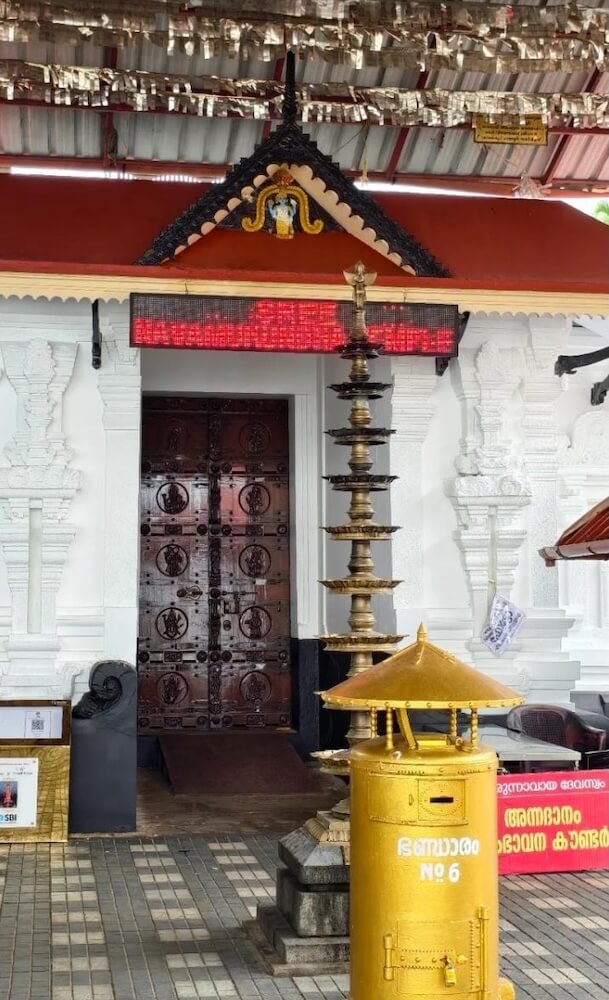
Situated on the banks of the Bharathapuzha River, Thirunavaya Navamukunda Temple is built in the traditional Kerala temple architectural style. The temple is enclosed by a stone wall with a traditional Kerala-style entrance gateway (Padippura). Inside the entrance are the Aanappanthal (elephant shelter) and a stone Deepasthambham (lamp pillar). As one side of the temple borders the Bharathapuzha River, stone steps lead down to the riverbank.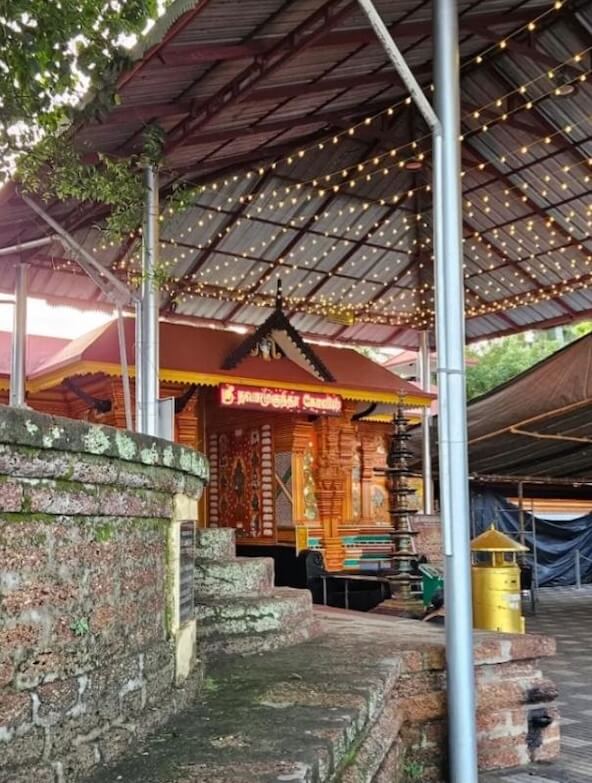 The tiled Chuttambalam surrounding the temple has rows of lamp niches along its walls. In front of the sanctum is a square Namaskara Mandapam, where the pillars and ceiling are decorated with traditional wooden carvings.
At the centre of the temple stands the square sanctum sanctorum, which is the main structure of the temple. It has a pyramidal roof covered with copper sheets and crowned with a golden finial. The outer walls of the sanctum and the lower part of the roof feature wooden carvings depicting scenes from the Ramayana and the Mahabharata. The sanctum is entered through a granite Sopanam (steps) decorated with Vyali carvings and ornamental designs. Inside, Lord Maha Vishnu is enshrined as Navamukundan in a four-armed form, holding the conch, discus, mace and lotus. A unique feature of the idol is that only the portion up to the knees is visible. Goddess Mahalakshmi is also enshrined inside the sanctum on the left side of Lord Maha Vishnu. The base and walls of the sanctum are mainly built using granite and laterite stone.
Apart from the main deity, the temple also has shrines for Thozhukai Ganapathi, Lord Dharma Sastha and Goddess Mahalakshmi. Thozhukai Ganapathi is enshrined on a pillar at the south-west corner inside the Nalambalam. Unlike in most temples, this shrine does not have a separate sanctum, making it a distinctive feature of the temple. A separate shrine for Lord Dharma Sastha (Ayyappa) is located at the north-west corner outside the main temple enclosure. 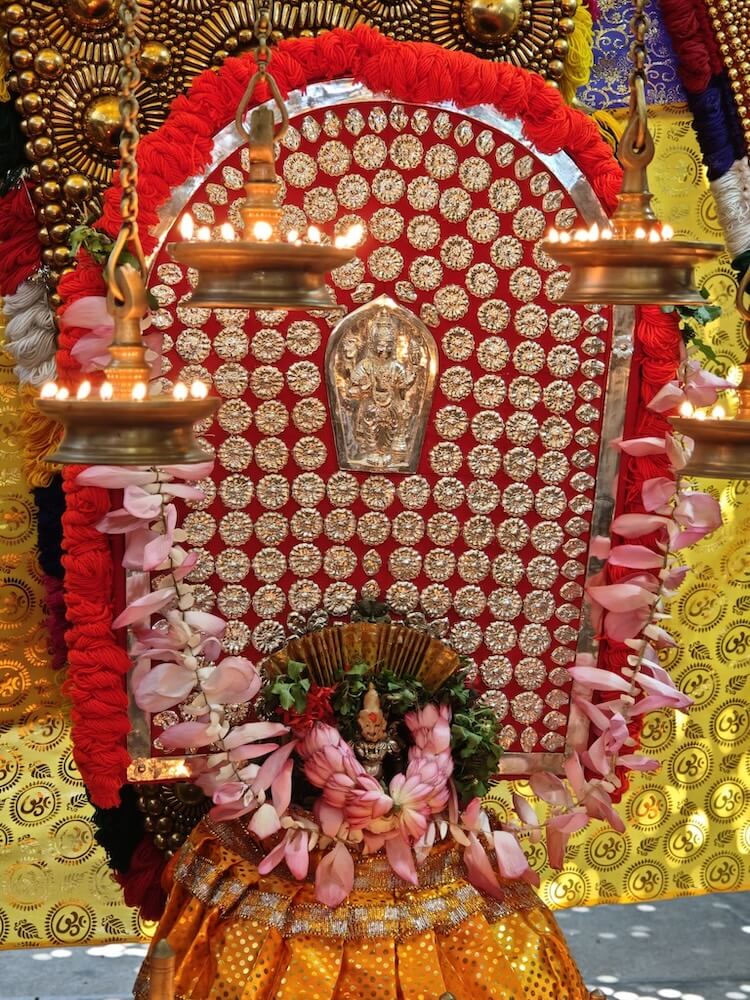 Goddess Mahalakshmi is enshrined inside the sanctum on the left side of Lord Maha Vishnu. The presence of Mahalakshmi within the sanctum itself is a rare feature in a Vaishnavite temple.
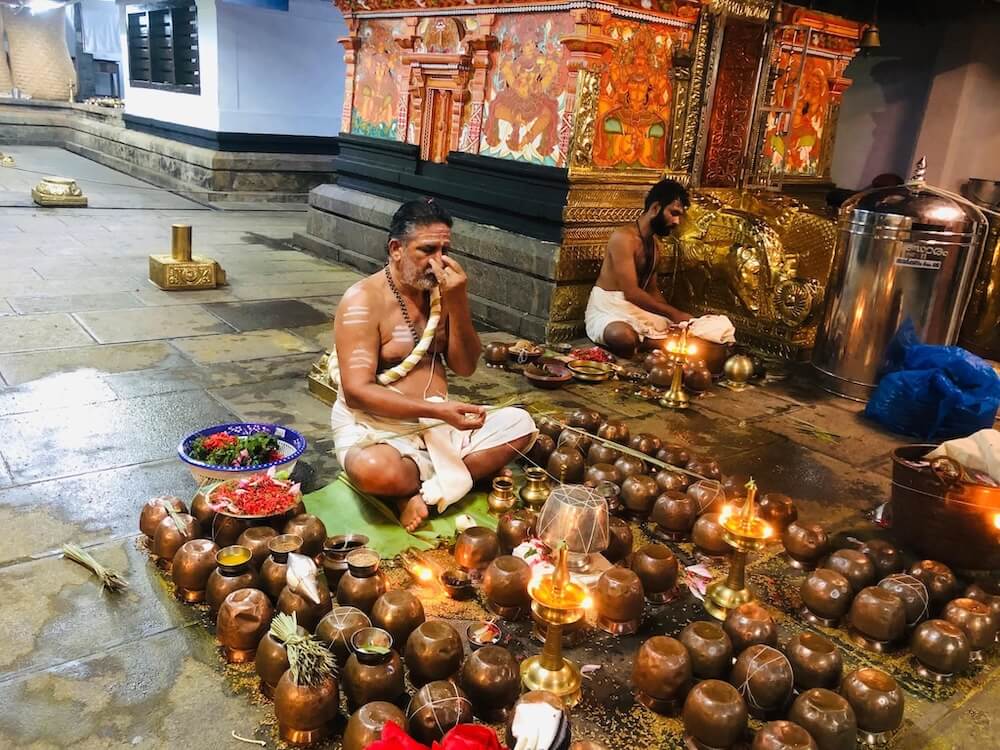
The temple’s annual festival is held during the Malayalam month of Meenam (March–April). It begins with the flag hoisting ceremony and continues for ten days, concluding with the Arattu ceremony in the Bharathapuzha River on the final day. Special poojas and elephant processions are held during the festival. Karkidaka Vavu Bali, observed on the new moon day of the Malayalam month of Karkidakam (July–August), is one of the temple’s most important rituals. On this day, tens of thousands of devotees from across Kerala gather on the banks of the Bharathapuzha to perform Bali Tharpanam for their departed ancestors. During the Mandala–Makaravilakku season, from the first day of Vrischikam to the first day of Makaram (November–January), special poojas and rituals are conducted for Lord Dharma Sastha. The temple also observes special poojas and offerings on occasions such as Ashtami Rohini, Vishu and Thiruvonam.
The main offerings at the temple include Chandanacharthu for Lord Navamukundan, performed for peace of mind and the fulfilment of wishes and Thamara Mala (lotus garland), offered for prosperity and as an act of devotion.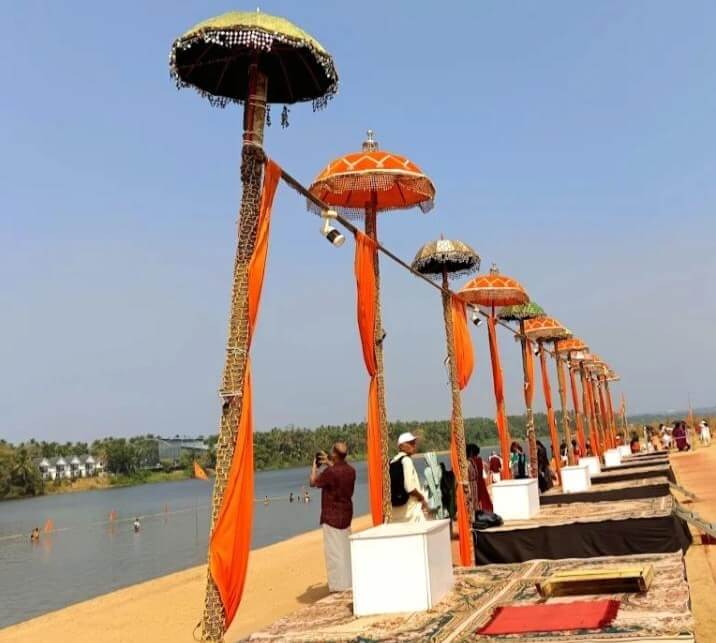 Palpayasam and Neypayasam are the main food offerings to the deity, while Purusha Sukta Pushpanjali is performed for good health and prosperity. For Goddess Mahalakshmi, Bhagya Sukta Pushpanjali is offered for wealth, prosperity and success in business and career, while Lalitha Sahasranama Archana is performed for family well-being and marital harmony. Pithru Tharpanam and Thila Havanam, conducted on the banks of the Bharathapuzha, are performed for the peace of departed ancestors and the welfare of the family. Other important offerings include Ganapathi Homam and Appam Moodal for Thozhukai Ganapathi to remove obstacles and Neyyabhishekam and Ellu Vilakku for Lord Dharma Sastha for relief from the effects of Saturn (Shani Dosha) and to seek divine blessings.
The temple opens daily at 05:00 AM with the Palliyunarthal (awakening ritual). The Usha Pooja is performed at 05:30 AM, followed by Ethirettu Pooja at 07:30 AM and Ucha Pooja at 09:00 AM, after which the temple closes at 10:00 AM. It reopens at 04:00 PM, with Deeparadhana at 06:30 PM and Athazha Pooja at 07:00 PM, before closing for the day at 07:30 PM. Pithru Tharpanam (ancestral rites) on the banks of the Bharathapuzha usually begin at 04:30 AM. Pooja timings may vary on festival days and during eclipses.
Key highlight :-
- Located 8 km from Tirur, 11 km from Kottakkal and 23 km from Malappuram.
- The nearest railway stations are Thirunavaya Railway Station, about 2 km away and Tirur
- Railway Station, about 8 km away.
- KSRTC and local bus services are available to the temple from Malappuram and Kottakkal.
- Private vehicles can be parked in the temple’s designated parking area.
- Accommodation and food facilities are available near the temple.
- Contact number + 91 4942603747
तिरुनवाया श्री नव मुकुंद मंदिर
थिरुनावाया, तिरुर, जिला। मलप्पुरम.
मंदिरे
Temples
मंदिर
મંદિરો
கோவில்கள்
దేవాలయాలు
ക്ഷേത്രങ്ങൾ
ದೇವಾಲಯಗಳು
মন্দিরসমূহ
ਮੰਦਿਰ
-
सुकापुरम श्री दक्षिणामूर्ती मंदिर सुकापुरम, एडप्पल, जि. मलप्पुरम.
अधिक माहितीSukapuram Sree Dakshinamurthy Temple Sukapuram, Edappal, Dist. Malappuram.
View Detailsसुकापुरम श्री दक्षिणमूर्ति मंदिर सुकापुरम, एडप्पल, जिला। मलप्पुरम.
विवरण देखेंSukapuram Sree Dakshinamurthy Temple Sukapuram, Edappal, Dist. Malappuram.
વિગત જુઓSukapuram Sree Dakshinamurthy Temple Sukapuram, Edappal, Dist. Malappuram.
விவரங்களைக் காண்கSukapuram Sree Dakshinamurthy Temple Sukapuram, Edappal, Dist. Malappuram.
వివరాలను చూడండిSukapuram Sree Dakshinamurthy Temple Sukapuram, Edappal, Dist. Malappuram.
വിശദാംശങ്ങൾ കാണുകSukapuram Sree Dakshinamurthy Temple Sukapuram, Edappal, Dist. Malappuram.
ವಿವರಗಳನ್ನು ವೀಕ್ಷಿಸಿSukapuram Sree Dakshinamurthy Temple Sukapuram, Edappal, Dist. Malappuram.
বিস্তারিত দেখুনSukapuram Sree Dakshinamurthy Temple Sukapuram, Edappal, Dist. Malappuram.
ਵੇਰਵੇ ਦੇਖੋ -
चंदनक्कावू भगवती मंदिर कुरुंबथूर, जि. मलप्पुरम
अधिक माहितीChandanakkavu Bhagavathy Temple Kurumbathur, Dist. Malappuram
View Detailsचंदनक्कवु भगवती मंदिर कुरुम्बथुर, जिला. मलप्पुरम
विवरण देखेंચંદનાક્કાવુ ભગવતી મંદિર કુરુમ્બાથુર, જિ. મલપ્પુરમ
વિગત જુઓசந்தனக்காவு பகவதி கோவில், குறும்பத்தூர், மலப்புரம் மாவட்டம்
விவரங்களைக் காண்கచందనక్కావు భగవతి దేవాలయం కురుంబత్తూర్, జిల్లా. మలప్పురం
వివరాలను చూడండిചന്ദനക്കാവ് ഭഗവതി ക്ഷേത്രം, കുറുമ്പത്തൂർ, മലപ്പുറം ജില്ല
വിശദാംശങ്ങൾ കാണുകಚಂದನಕ್ಕಾವು ಭಗವತಿ ದೇವಸ್ಥಾನ ಕುರುಂಬತ್ತೂರು, ಮಲಪ್ಪುರಂ ಜಿಲ್ಲೆ
ವಿವರಗಳನ್ನು ವೀಕ್ಷಿಸಿচন্দনাক্কাভু ভগবতী মন্দির কুরুম্বাতুর, জেলা. মালাপ্পুরম
বিস্তারিত দেখুনਚੰਦਨਾੱਕਾਵੂ ਭਗਵਤੀ ਮੰਦਰ ਕੁਰੂਮਬਾਥੁਰ, ਜ਼ਿਲ੍ਹਾ ਮਲੱਪੁਰਮ
ਵੇਰਵੇ ਦੇਖੋ