
पूवत्तूर भगवती मंदिर
पूवत्तूर, कोट्टारक्करा, जि. कोल्लम.
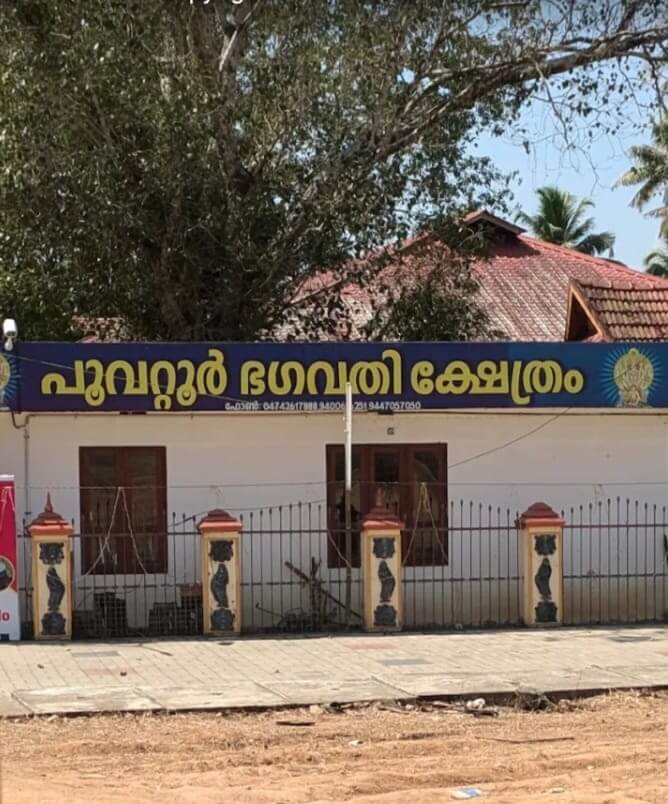
Poovattoor Bhagavathy Temple
Poovattoor, Kottarakkara, Dist. Kollam.
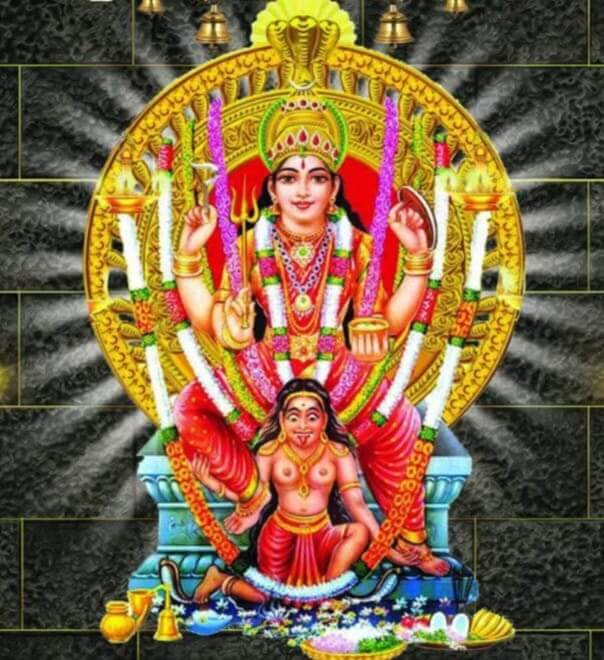 Poovattoor Sree Bhagavathy Temple is located in Poovattoor village, in Kulakkada Grama Panchayat of Kottarakkara Taluk, Kollam district, Kerala. The main deity of the temple is Goddess Bhadrakali, who is worshipped as the daughter of Lord Parashiva. Built in the traditional Kerala temple architectural style, the temple is one of the important Bhadrakali temples in the region. Daily rituals, annual festivals and various religious ceremonies are regularly conducted at the temple.
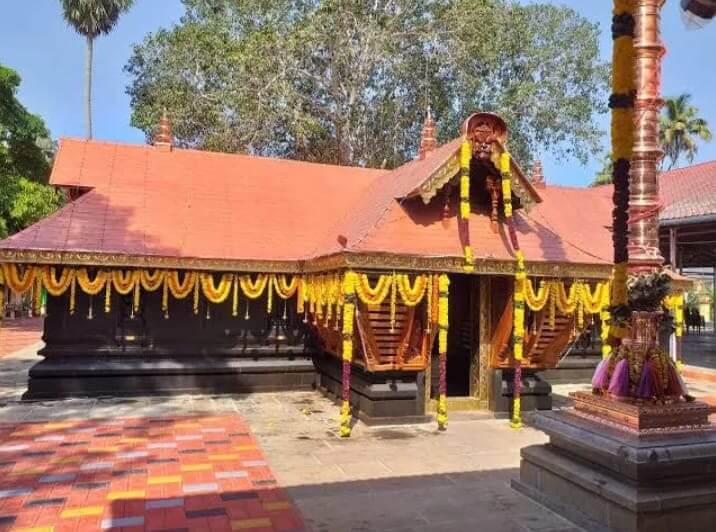
The temple’s Sreekovil (sanctum sanctorum) and Chuttambalam (inner courtyard) are built in the traditional Kerala architectural style. Based on these architectural features, the temple is estimated to be around 300 to 500 years old. Historically, the temple was managed and maintained by a collective of local Karakkars (community representatives). At present, it is administered by the Travancore Devaswom Board. The temple’s rituals and annual festival have traditionally been organised through a social system based on the three local divisions of Poovattoor East, Poovattoor West and Poovattoor.
 According to local legend, the Goddess of Poovattoor and the Goddesses of the nearby Pattazhy and Mannadi temples are believed to be sisters. It is said that while they were travelling through the sky, the younger sister, Poovattoor Bhagavathy, was attracted by the beautiful land below and wished to stay there. Seeing this, the elder sister threw the flowers she was holding onto the spot below and it is believed that Poovattoor Bhagavathy was consecrated where those flowers fell. According to the legend, the place was first known as “Pooattur” (the place where the flowers fell), which later became “Poovattoor”. In memory of this sisterly relationship, the annual festival at Poovattoor Temple is traditionally not held during the period of the festival at Pattazhy Temple.
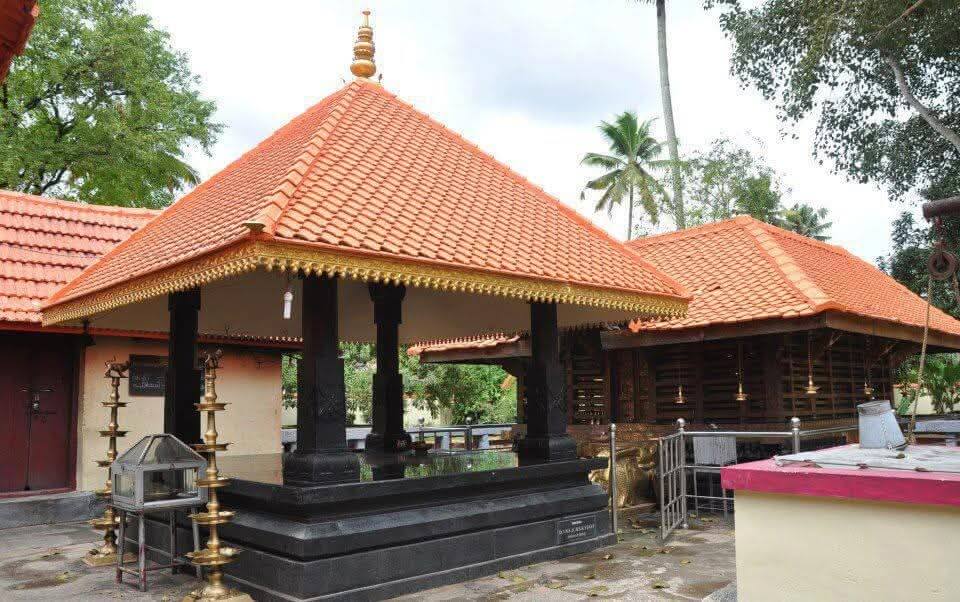
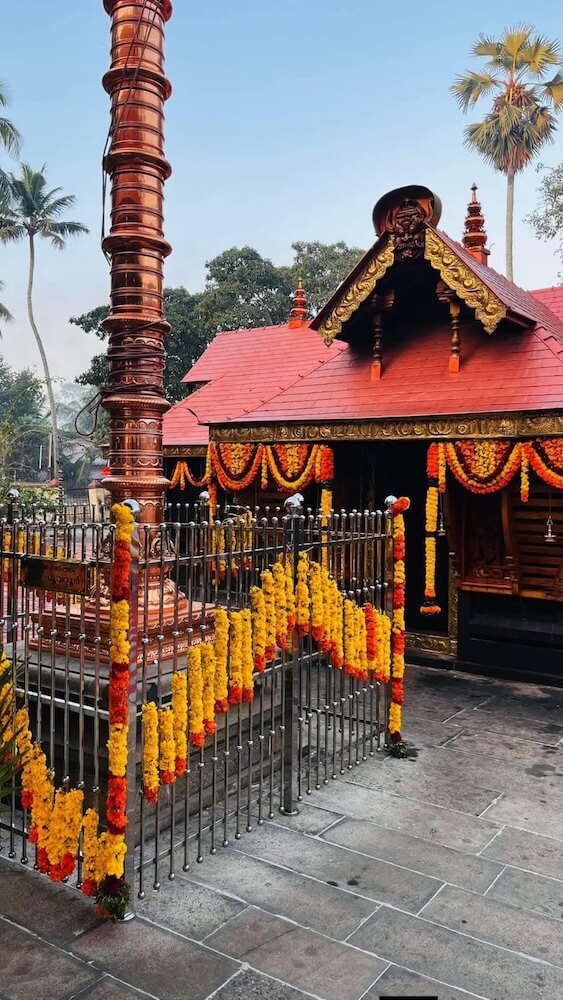
Poovattoor Sree Bhagavathy Temple is built in the traditional Kerala architectural style. 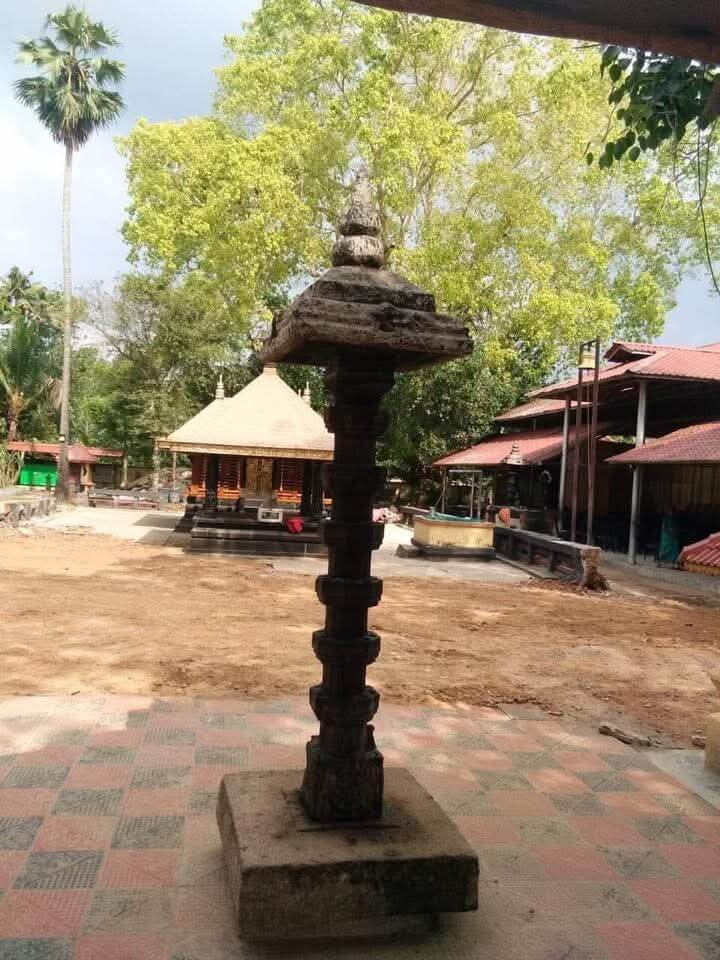 In front of the temple is a spacious elephant shelter, where devotees gather and festival ceremonies, including the stationing of elephants, take place. The temple is entered through a traditional Kerala-style Padippura (entrance gateway). Inside are the Chuttambalam (inner courtyard) surrounding the temple and rows of lamp holders built along its outer walls. The nearby Kallada River adds to the natural beauty of the temple surroundings. On entering through the main gateway of the Chuttambalam, the first structure seen is the large Balikkal (sacrificial stone). Surrounding the main Sreekovil (sanctum sanctorum) is the Nalambalam, a covered cloister built using natural timber and stone, which is an important feature of the temple’s traditional architecture.
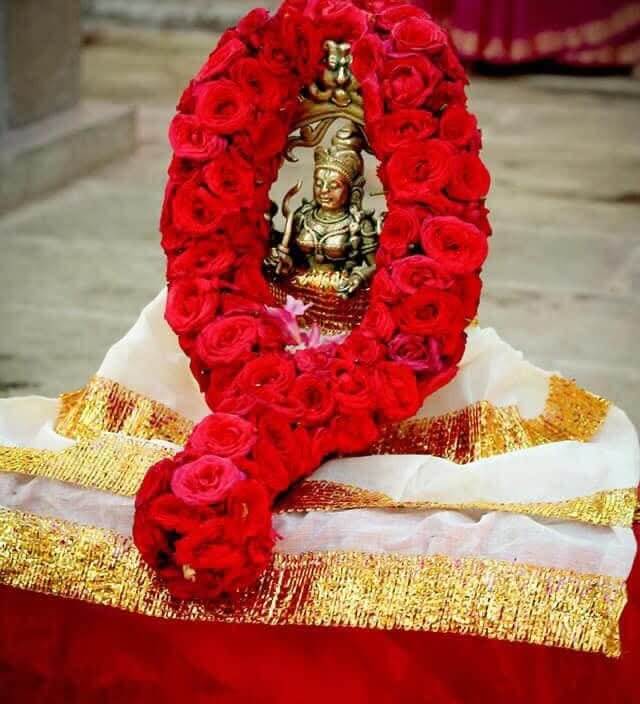
At the centre of the Nalambalam stands the main Sreekovil (sanctum sanctorum), which is square in shape and has a roof covered with copper sheets. The main consecrated form is a Kannadi Bimbam (mirror-shaped sacred stone), installed on a pedestal in the traditional manner followed in many Bhagavathy temples in Kerala. This sacred stone, which is slightly wider at the top and narrower towards the bottom, represents Goddess Bhadrakali adorned with all divine ornaments according to temple tradition. During the daily rituals and Deeparadhana, 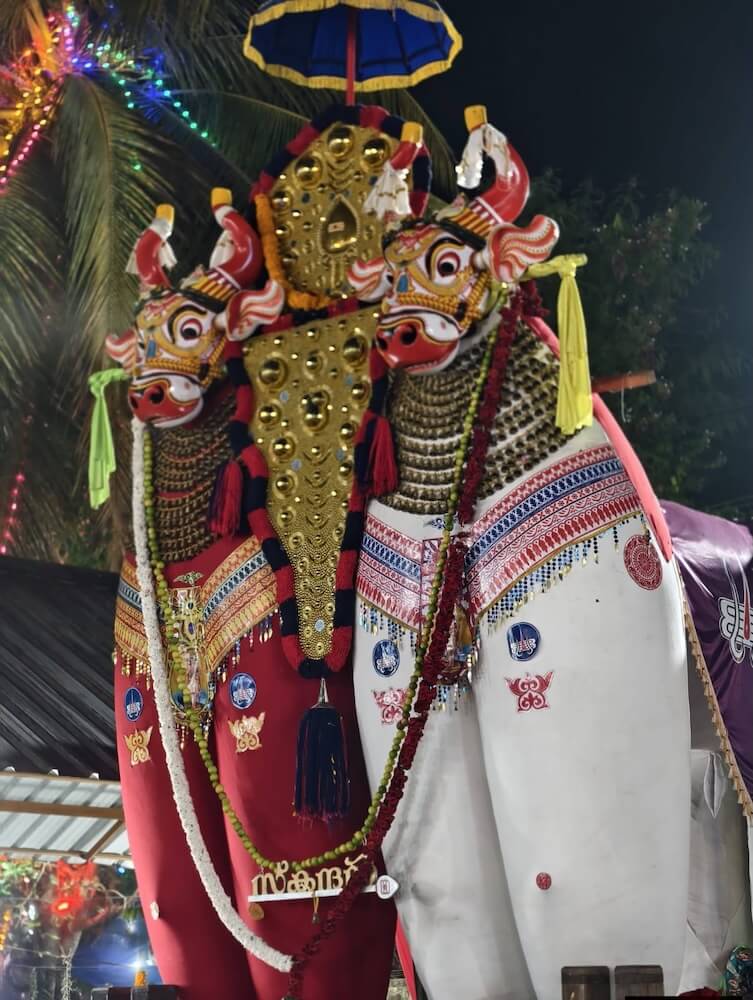 the Goddess is presented in her complete form by placing her weapons—a sword, shield and trident—in front of the sacred stone and decorating it with silk cloth and flower garlands for devotees to worship.
In addition to the main deity, the temple has several other deities. Inside the Nalambalam, Lord Ganesha is consecrated in the south-west corner (Kannimoola), facing east. On coming out of the Nalambalam, there is a shrine dedicated to Dharma Sastha (Lord Ayyappa) in the south-western part of the temple courtyard. Nearby are the shrines of Madan Thampuran and Yakshi Amma, who are worshipped as local guardian deities. Further towards the north-west is a sacred Naga grove with consecrated idols of Naga Raja and Naga Yakshi. A Navagraha shrine is also located elsewhere within the temple complex.
The temple’s main annual festival is celebrated every year during the Malayalam month of Makaram (January–February). The major attractions of the festival are the Kettukazhcha, in which beautifully decorated ceremonial horses are taken in procession to the temple under the leadership of the local Karakkars and the ceremonial procession of the Goddess’s rare Ponnin Thirumudi (golden head ornament) outside the Sreekovil. The Thottampattu festival, during which traditional songs based on the legend of Kodungallur Bhagavathy are sung to appease the fierce form of the Goddess, is another important observance.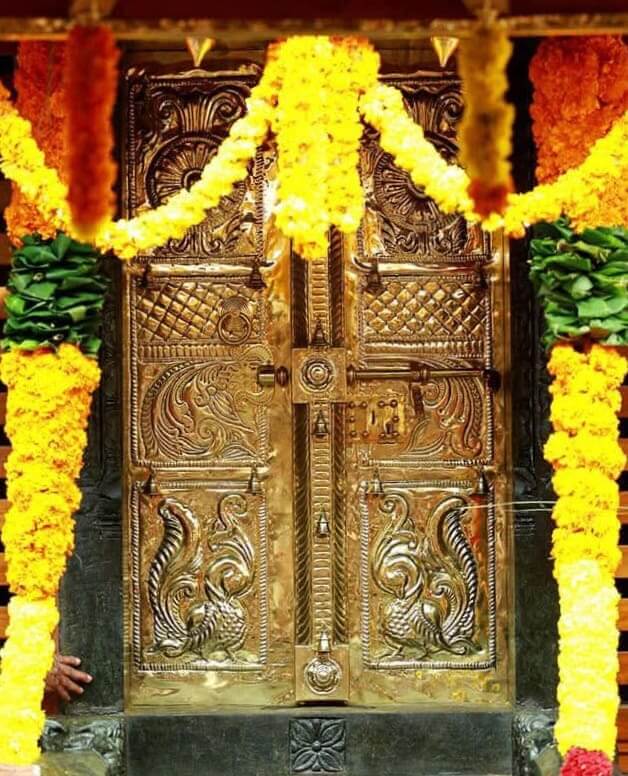 During the 41-day Mandala season, from the 1st of Vrischikam to the 11th of Dhanu (November–December), special poojas, Deeparadhana, Mandalavilakku and Sasthampattu for Dharma Sastha are conducted. The temple also celebrates Vidyarambham on Vijayadashami during Navaratri, while Noorum Palum is offered to the Naga deities on the Ayilyam star in the Malayalam months of Kanni, Vrischikam and Makaram. As this is a Bhadrakali temple, Tuesdays, Fridays and Sundays usually witness a larger number of devotees than on other days.
Among the temple’s offerings, Guruthi is the most important. Devotees perform this offering to appease the fierce form of Goddess Bhadrakali and to seek relief from hardships, the removal of negative influences and prosperity for their families. Raktha Pushpanjali, offered with red Thechi flowers, is performed to overcome enemies and obstacles and to fulfil wishes. Kadumpayasam and Aravana are among the main sweet offerings made to the Goddess. Devotees also offer silk cloth and a Thali (sacred marriage pendant) to pray for the removal of marriage obstacles and for a long and happy married life. Chuttuvilakku, in which lamps around the temple are lit during the evening Deeparadhana, is another important offering. Other major offerings include Ganapathi Homam and Appam Nivedyam for Lord Ganesha, Neeranjanam for Dharma Sastha and Noorum Palum for the Naga deities on Ayilyam days.
The temple opens daily at 05:00 AM and the day’s rituals begin with Nirmalya Darshanam. This is followed by Abhishekam and Malar Nivedyam at 05:30 AM, Ganapathi Homam at 06:00 AM, Usha Pooja at 06:30 AM and Ucha Pooja at 10:30 AM. The temple closes at 11:30 AM. It reopens at 05:00 PM, followed by Deeparadhana at 06:30 PM and Athazha Pooja at 07:00 PM. The temple closes for the day at 07:30 PM. Pooja timings may vary during the annual Makaram festival, the Mandala season and on other special occasions.
Key highlight :-
- Located about 12 km from Kottarakkara, 14 km from Punalur and 15 km from Adoor.
- The nearest railway station is Kottarakkara Railway Station, about 12 km away. Kollam Junction
- Railway Station is about 30 km from the temple.
- KSRTC and local bus services are available to the temple from Kottarakkara and Kollam.
- Private vehicles can be parked in the temple’s parking area.
- Accommodation and food facilities are available in the nearby towns.
पूवत्तूर भगवती मंदिर
पूवत्तूर, कोट्टाराक्कारा, जिला। कोल्लम.
मंदिरे
Temples
मंदिर
-
आर्यंकवू संस्थान मंदिर तिरुमंगलम रोड, आर्यनकावू, जि. कोल्लम.
अधिक माहितीAryankavu Sastha Temple Thirumangalam road, Aryankavu, Dist. Kollam.
View Detailsआर्यंकावु संस्था मंदिर थिरुमंगलम रोड, आर्यनकावु, जिला। कोल्लम.
विवरण देखें -
पोरुवाझी पेरुविरुथी मलानदा दुर्योधन मंदिर पोरुवाझी, एडक्कड, कोल्लम जिल्हा
अधिक माहितीPoruvazhy Peruviruthy Malanada Duryodhana Temple Poruvazhy, Edakkad. Dist. Kollam
View Detailsपोरुवाझी पेरुविरुथी मलानाडा दुर्योधन मंदिर पोरुवाझी, एडक्कड़, कोल्लम जिला
विवरण देखें